YouTuber turns hobby into Helene recovery

By John Wellbeloved

Click here for updates on this story

    SWANNANOA, North Carolina (WLOS) — One way that Swannanoa firefighter Larry Pierson likes to spend his free time is surfing YouTube for videos on topics he finds interesting.

Naturally, Pierson turned his love of repairing things into a YouTube channel of his own called “Larry Does Schtuff.”

On the channel, Pierson shows video of him digging ditches with his backhoe, repairing engines or hydraulic snow plows, and even spreading salt and scraping snow during the winter months.

Pierson eventually discovered an unexpected benefit from posting videos on his channel.

“I realized very soon that my dad could watch it. He liked actually watching things on YouTube, and he’s in another state in West Virginia, and when he would see me repairing my truck or doing something on it, when we talked on the phone, we could talk about that,” Pierson said. “So it was one way to where he could see what I was doing, and I felt a little more in touch with my dad as it gave us more to talk about.”

His interest in working with large machinery came into use with Swannanoa Fire and Rescue in their response to Helene.

Pierson describes the challenges of trying to reach his neighbors and his wife in the storm’s aftermath.

“We had to go through mudslides, landslides, dozens and dozens of trees. We’re still trying to get up in this area to find, you know, we don’t even know what’s going on in the area here if there’s people that need to be rescued,” Pierson said.

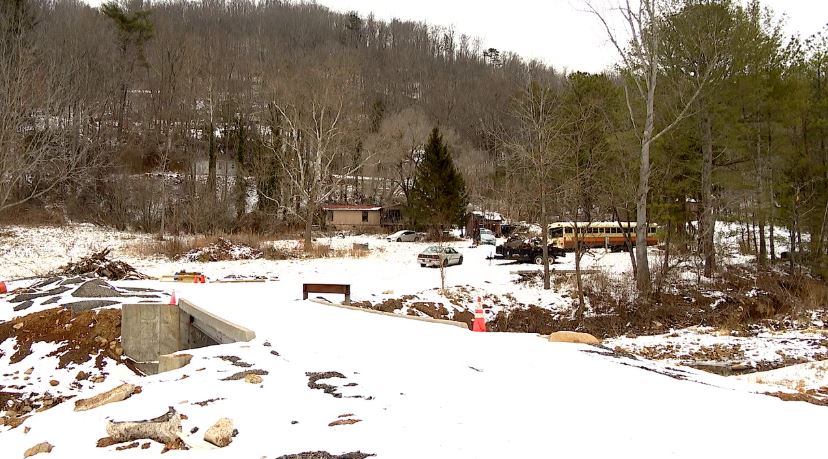
With time and determination, they were finally able to reach the residents of the Bee Tree area that had been cut off by the floodwaters washing out the upper part of Bee Tree Lake Road and multiple private bridges, including his own neighborhood bridge.

“The bridge was still standing, but it was dropped. We had to raise it like 27 inches. But we had the excavator in here, and we had to actually fill in with logs and junk to make a pathway to here that we were doing rescues across this bridge for the rest of the Bee Tree Lake community because the road was gone,” Pierson said.

As the Swannanoa area continued to recover, his attention turned to figuring out if the bridge could be repaired or if it had to be demolished and rebuilt from scratch.

After months of discussions and planning with his neighbors, they were able to secure funds from the Federal Emergency Management Agency to repair the bridge.

With the help of some members from the Army Corps of Engineers, they had a plan in place to raise one section of the bridge to level it out and make it structurally sound. Pierson was determined not to disappoint his fellow neighbors.

“This was an unknown. How much can this really be done, and it could’ve hit a wall at some point where it’s not working, and we’re gonna have to go from scratch on a new bridge,” Pierson said.

But through hard work and sheer determination, the bridge was repaired and is now as good as new.

“It was immensely satisfying, and I’m grateful that this did actually work for my neighbors, and piece by piece we’re getting back to normal,” Pierson said.

Every small victory that local residents earn is a welcome sight, especially for Pierson.

Please note: This story was provided to CNN Wire by an affiliate and does not contain original CNN reporting. This content carries a strict local market embargo. If you share the same market as the contributor of this article, you may not use it on any platform.
From the streets to the Puppy Bowl, a Bay Area dog finds a new home

By Itay Hod

Click here for updates on this story

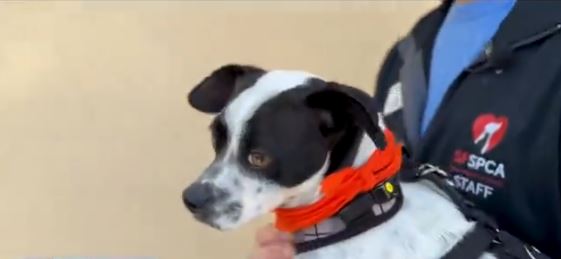
    FRESNO, California (KPIX) — Just a few months ago, Foggy — a small mixed-breed dog — was living on the streets of Fresno. She had no home, no plan and, seemingly, no clear future. Then someone noticed her.

That moment changed everything, not with a trip to the Super Bowl, but with an invitation to a much smaller field that draws a very big audience. It’s called the Puppy Bowl.

Now in its 22nd year, the Puppy Bowl has become one of Super Bowl Sunday’s most beloved traditions, pairing playful competition with a serious mission: promoting the adoption of shelter dogs.

This year, the San Francisco SPCA was selected to send one of its dogs to compete, and Foggy quickly stood out.

“She’s extremely fast,” said Robert Lightner, the director of adoptions at the San Francisco SPCA. “She runs quite a bit.”

The Puppy Bowl is designed as a high-stakes game with a bigger purpose, putting rescue dogs in front of millions of viewers and encouraging adoptions nationwide.

While there are teams, rivalries and even championships on the line, Lightner says the real goal goes far beyond the scoreboard.

Dan Schachner has served as the Puppy Bowl’s referee for the past 15 years or, as he likes to put it, 105 in dog years.

“The greatest thing about the Puppy Bowl is that we have a 100% adoption rate,” he said.

This year’s matchup is shaping up to be a close one. Longtime rivals Team Ruff and Team Fluff will face off once again, with Team Fluff currently holding a narrow championship lead, six titles to five.

And while the event is undeniably cute, its reach is anything but small.

Nearly 13 million people tuned in to the Puppy Bowl last year, according to Nielsen ratings, exposure that can make a real difference for shelters like the San Francisco SPCA.

That kind of national spotlight often translates into increased interest from potential adopters.

The shelter is now preparing its dogs for adoption, bracing for what staff describe as a post-Puppy Bowl bump.

Lightner says dogs like Dior, an impossibly cute recent arrival from Tulare County, tend to benefit from the surge in attention.

“I’m confident there will be an adopter lining up for her very soon,” he said.

As for Foggy, her story already has a happy ending. She was ultimately adopted by Lightner and his family themselves, proof that even an underdog can become an MVP, a Most Valuable Pup.

The Puppy Bowl airs Sunday at 11 a.m. Pacific on Animal Planet and affiliated networks.

Please note: This story was provided to CNN Wire by an affiliate and does not contain original CNN reporting. This content carries a strict local market embargo. If you share the same market as the contributor of this article, you may not use it on any platform.
Community members raising money to create a Yuba County history museum

By Kayla Moeller

Click here for updates on this story

    MARYSVILLE, California (KOVR) — Yuba County and Marysville have a long, rich history. Dating back to 1851, the city’s 175th birthday was just celebrated on Thursday.

Now, a group of community members is using that momentum by coming together to get a brick-and-mortar museum dedicated to the area’s history.

Neighboring Sutter County has had a history museum for more than 50 years. Now, historians and community members from Yuba County say it’s time for a museum of their own.

“It’s like a family reunion of history today,” said Judy Mann, one of the organizers.

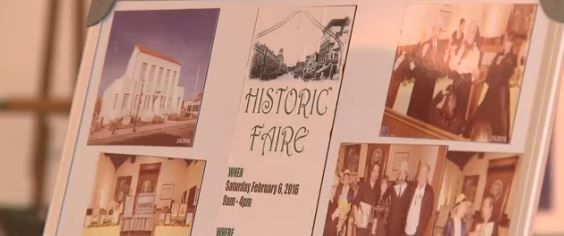
About a dozen local historical organizations came together Saturday for a shared goal of creating a physical location to preserve Yuba County’s history.

“A lot of the historians and history buffs have wonderful, valuable stuff at home. We just have it in our garage and we’re getting older and we want to donate it to a museum and preserve it and share it with the community,” said Mann.

The Yuba County Museum of History Organization began in 2009, but it’s been inactive for years. Now, a group of passionate community members is bringing it back for a good cause.

“This is a fundraiser for the Yuba County Museum of History. And we’ve been selling memberships and raising some money here,” said Dale Whitmore, president of the Yuba County Museum of History Organization. “We have been looking at a number of different buildings. We’ve got to raise some money if we’re going to buy a building or rent a building.”

“Because what will happen to the history? If there isn’t some place people can go and learn. I’m not going to be around that much longer to tell people about it,” said Marysville resident Charlotte Mattocks, who was born and raised there. “When I was a child growing up, Marysville was the center of everything; it had all the stores, the history. It makes me very happy to see the number of people here.”

More than 100 people showed up to pan for gold, learn about the county’s history and donate money toward a museum. Organizers even dressed up in period pieces.

Among the city’s rich history is the Marysville Cemetery, which is the second-oldest cemetery west of the Mississippi. Also buried there are members of the Macy family of the Macy’s department stores.

“Marysville was very important for the state of California,” said Mann.

The organizers are still working on counting up the money fundraised, but say they’re looking to use it to hire grant writers to secure funding for a physical location.

If you’re interested in joining the effort, the group meets on the third Monday of each month at the Veterans Center in Marysville.

Please note: This story was provided to CNN Wire by an affiliate and does not contain original CNN reporting. This content carries a strict local market embargo. If you share the same market as the contributor of this article, you may not use it on any platform.
Community rallies for boy with Down syndrome who had adaptive tricycle stolen

By Dean Fioresi

Click here for updates on this story

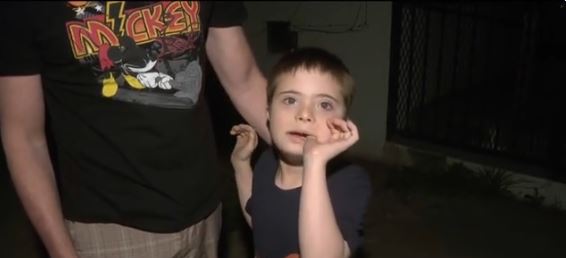
    LOS FELIZ, California (KCAL, KCBS) — A Los Feliz family is hoping to raise enough money to replace an adaptive tricycle that was stolen from their 9-year-old son Jack, who has Down syndrome and autism.

They say that the specially-designed blue tricycle was much more than a way for Jack to get around their neighborhood, but was a way for him to have independence on their family walks, which can sometimes be overstimulating.

“We’d cruise around the neighborhood, and he just loved this bike he was so proud of it,” said Jack’s father, Bobby Field. “Anytime we’d pass people, he’d just wave to everyone like he’s the mayor of Los Feliz. Everyone would light up and be so happy to see him having so much fun on his bike.”

“Having to explain something like this happened was rough, but the outpouring of love and care from the neighborhood and from our family and friends has been uplifting,” said Jack’s mother, Marie Field.

Jack is hoping that his replacement adaptive tricycle will be red, which is his favorite color. Family members say that they will keep the new bike locked away to try and prevent it from being taken again.

The online fundraiser created by Jack’s loved ones can be found by searching for the GoFundMe named “Help Jack Replace His Stolen Adaptive Tricycle.”

Please note: This story was provided to CNN Wire by an affiliate and does not contain original CNN reporting. This content carries a strict local market embargo. If you share the same market as the contributor of this article, you may not use it on any platform.
Wolf visits Los Angeles County for first time in 100 years, California wildlife officials say

By Dean Fioresi

Click here for updates on this story

    LOS ANGELES (KCAL, KCBS) — A wolf has visited Los Angeles County for the first time in at least 100 years, according to California Department of Fish and Wildlife officials.

They say that a 3-year-old female gray wolf was detected just northwest of Lancaster at around 6 a.m. Saturday morning, marking the first confirmed detection in the county in about a century, said CFDW’s State Gray Wolf Coordinator.

The visit is also the furthest south that a wolf has been tracked in California, according to Hunnicutt.

He says that the wolf was born in Plumas County, which is north of Lake Tahoe and in the Sierra Nevada region near the California-Nevada border. The wolf traversed through much of the Sierra Nevada and was part of a pack in Tulare County, which is located west of Fresno and just north of Bakersfield.

Hunnicutt believes that the wolf dispersed from the pack, as this is typically the time of year when wolves go off to look for mates.

He says that Saturday’s detection is a “milestone” in wolf conservation in California.

Please note: This story was provided to CNN Wire by an affiliate and does not contain original CNN reporting. This content carries a strict local market embargo. If you share the same market as the contributor of this article, you may not use it on any platform.
History Colorado exhibit shares stories of joy, resilience at historic Black-owned mountain resort

By Anna Alejo

Click here for updates on this story

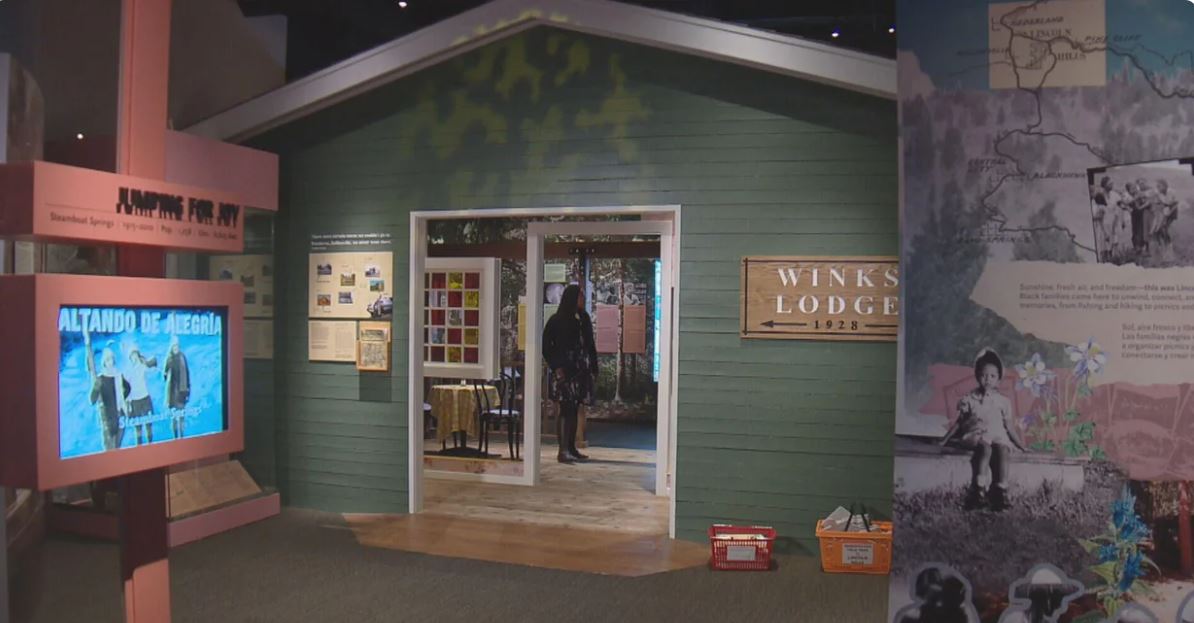
    DENVER (KCNC) — An exhibit showcasing a Colorado treasure has been re-imagined. Lincoln Hills, once the largest African American recreational resort west of the Mississippi, was created in response to segregation. Its enduring impact is now on display at History Colorado.

Lincoln Hills was established in 1922 as a thriving resort for Black Americans in Colorado’s foothills. It was also a symbol of resilience and served as a sanctuary from racial discrimination.

“The food and the environment and just such a wonderful place to experience happiness, experience fun, get out there and move around,” recalled Terri Gentry, who grew up visiting Lincoln Hills. “My grandparents bought the cabin back in the 1960s and took us up there. We were going up there almost every weekend during the summertime and hated coming back to Denver.”

Gentry says she still enjoys visits to Lincoln Hills.

When it opened, the 100-acre resort included 600 lots for campsites and cabins. Obrey Wendell “Winks” Hamlet and his wife, Naomi Hamlet, built the first full-service hotel, known as Winks Lodge, in 1928. The lodge hosted many famous Black Americans, including Duke Ellington, Langston Hughes and more.

History Colorado has remade the Lincoln Hills exhibit, beginning with the entrance. The KKK display that stood at the entrance is gone.

“I heard from a lot of previous visitors that they didn’t even want to come into the cabin,” said Acoma Gaither, who curated the new presentation of Lincoln Hills. “Even though the story of the KKK is very prominent in Colorado, and it should be told, it’s not really the story of Lincoln Hills. Lincoln Hills is about Black joy.”

“So this is another one of my favorite display cases here. This really talks about Camp Nizhoni. The girls would swim in South Boulder Creek,” Gaither shared.

The new version of the exhibit prioritizes uplifting personal stories.

“We held community listening sessions where we would record folks speaking to us at Shorter AME Church about their time at Lincoln Hills, and then they brought in pictures,” explained Gaither.

Generations of Coloradans will see their stories here and imagine the days when legendary Black actors and authors sought refuge in Lincoln Hills.

“We have the honeymoon cabin that they built and Lena Horne, that was her favorite hangout,” said Gentry.

“They would surround the barbecue pit and just talk about life, what was happening in the world at that time,” Gaither said.

Please note: This story was provided to CNN Wire by an affiliate and does not contain original CNN reporting. This content carries a strict local market embargo. If you share the same market as the contributor of this article, you may not use it on any platform.

Community aims to save landmark barbecue spot in danger of permanently closing

By Veronica Ortega

Click here for updates on this story

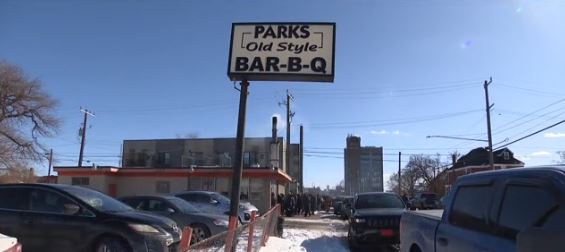
    DETROIT (WWJ) — The community is trying to save an iconic Detroit business before it closes for good on Sunday.

The Black-owned family business has been a staple in the city’s North End neighborhood for more than 60 years.

Ever since news spread of its imminent closure, dozens of people have been braving the bitter cold temperatures for one last chance to order food from Parks Old Style Bar-B-Q in Detroit.

“Hell yeah, it’s worth it. It is very much worth coming down and get something to eat. My wife cold, but I’m all right,” De-wan Rush, of Detroit, said.

Most people waiting in line outside the restaurant on Saturday said they have been visiting for decades.

“I’ve been coming to Parks since I was a little girl with my dad, my mom. It’s just an acquired taste. I mean, it’s good. I’ve been eating it all my life,” Denisha Powers said.

The business was founded in 1964 by Edward Parks. His children and grandchildren have carried on that legacy ever since.

“The people, the community, our customers, the love, the support, everyone, and people that stand out here now, this is how we still going,” Dominique White, daughter of the business owner, said.

According to a GoFundMe started by one of the employees of the barbecue joint, the owner is battling an illness, and rising costs are making it difficult to stay open.

“I know it’s sad for the community, but there’s really too much to go on,” White said. “You want to keep the support, the business, keep it open. That’s what I advise everyone to go do, to go share the GoFundMe.”

Many say the sauce is part of what makes the business special.

“They should sell they sauce in stores so we can at least get this sauce. I’m gonna cry if they close. Seriously, that’s how good they is,” Sharnice Swanson, long-time patron, said.

It’s down to the wire; the sign on the door Saturday said the business will close permanently on Sunday, Feb. 8, unless there’s a miracle.

“We’re showing out. We got to show off for them. We got to help them out. You know, we don’t know what the problem is, but we here,” Rush said.

Please note: This story was provided to CNN Wire by an affiliate and does not contain original CNN reporting. This content carries a strict local market embargo. If you share the same market as the contributor of this article, you may not use it on any platform.

Tow truck driver returns abandoned vehicles to families after ICE arrests

By Ray Campos

Click here for updates on this story

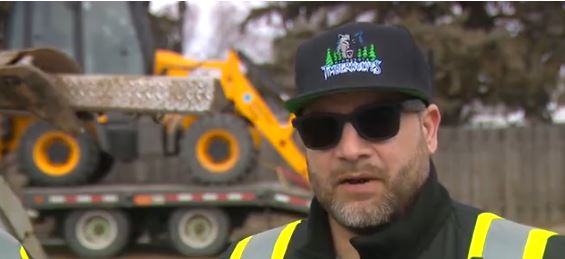
    MINNEAPOLIS (WCCO) — Juan Leon had only been running his Twin Cities tow truck business, Leo’s Towing, for a few months when he noticed a pattern that kept repeating itself.

Cars were being left behind across the metro area – parked on streets, in parking lots, sometimes for days at a time. The owners were gone, and in many cases, they had been arrested by the U.S. Immigration and Customs Enforcement.

“Seeing there was a need for someone to help out, help clear the streets and get the people back their vehicles. So we stepped up and started doing it,” Leon said.

By late December, Leon and his small towing crew decided to do something about it, all thanks to observers calling in and reporting these vehicles.

“Families reach out to us. If the family isn’t reaching out, we’ll find a way to get inside the vehicle and we’ll bring it back to their house and put it in a safe spot,” Leon said.

They began picking up vehicles and returning them to the families of those arrested, free of charge.

“We’re able to do this 24/7, so we don’t have to go back to our other jobs,” Leon said.

Donations began pouring in all across the country, supporting Leon’s cause, but not without a cost to their personal safety.

“When they doxxed me, they put all my information out there,” Leon said. “For the last three weeks, we have been getting nothing but death threats.”

Leon sends a “chase” car to check out where these abandoned vehicles are located and arranges discreet drop-offs. Since late December, he estimated they have dropped off 250 cars.

The drop-offs are often emotional for the families and Leon’s crew.

“All I can do is give them a hug and tell them hopefully things will get better,” said Gonzalo Villegas. “Sad isn’t even the word to use. It’s so much stronger than that.”

Despite the emotional strain, the team continues.

“We are going to figure it out day by day if we have to,” Leon said.

Leo’s Tow actively tries to locate family members on their Facebook page and hosts podcasts recapping their weeks returning vehicles.

Leo’s Tow will be hosting a charity event on Sunday at Lito’s Burritos in Minneapolis.

Please note: This story was provided to CNN Wire by an affiliate and does not contain original CNN reporting. This content carries a strict local market embargo. If you share the same market as the contributor of this article, you may not use it on any platform.

Tow truck driver returns abandoned vehicles to families after ICE arrests


WCCO

By Ray Campos

Click here for updates on this story

    MINNEAPOLIS (WCCO) — Juan Leon had only been running his Twin Cities tow truck business, Leo’s Towing, for a few months when he noticed a pattern that kept repeating itself.

Cars were being left behind across the metro area – parked on streets, in parking lots, sometimes for days at a time. The owners were gone, and in many cases, they had been arrested by the U.S. Immigration and Customs Enforcement.

“Seeing there was a need for someone to help out, help clear the streets and get the people back their vehicles. So we stepped up and started doing it,” Leon said.

By late December, Leon and his small towing crew decided to do something about it, all thanks to observers calling in and reporting these vehicles.

“Families reach out to us. If the family isn’t reaching out, we’ll find a way to get inside the vehicle and we’ll bring it back to their house and put it in a safe spot,” Leon said.

They began picking up vehicles and returning them to the families of those arrested, free of charge.

“We’re able to do this 24/7, so we don’t have to go back to our other jobs,” Leon said.

Donations began pouring in all across the country, supporting Leon’s cause, but not without a cost to their personal safety.

“When they doxxed me, they put all my information out there,” Leon said. “For the last three weeks, we have been getting nothing but death threats.”

Leon sends a “chase” car to check out where these abandoned vehicles are located and arranges discreet drop-offs. Since late December, he estimated they have dropped off 250 cars.

The drop-offs are often emotional for the families and Leon’s crew.

“All I can do is give them a hug and tell them hopefully things will get better,” said Gonzalo Villegas. “Sad isn’t even the word to use. It’s so much stronger than that.”

Despite the emotional strain, the team continues.

“We are going to figure it out day by day if we have to,” Leon said.

Leo’s Tow actively tries to locate family members on their Facebook page and hosts podcasts recapping their weeks returning vehicles.

Leo’s Tow will be hosting a charity event on Sunday at Lito’s Burritos in Minneapolis.

Please note: This story was provided to CNN Wire by an affiliate and does not contain original CNN reporting. This content carries a strict local market embargo. If you share the same market as the contributor of this article, you may not use it on any platform.

Retired officer fights to keep daughter out of Panama prison after gun found in luggage

By J.D. Miles

Click here for updates on this story

    DALLAS (KTVT) — A retired Dallas police officer is using his old investigative skills in a desperate effort to keep his daughter from spending more than a decade in a foreign prison.

Paul Inman, who spent 28 years with the Dallas Police Department working as a gang‑unit detective, now lives in Argyle. Three years into retirement, he has found himself investigating a case thousands of miles away in Panama, where his daughter is facing a minimum 12‑year sentence.

The 56‑year‑old says he is racing to keep his daughter, Sabrina Underwood, from spending years behind bars.

Underwood, a 34‑year‑old mother of three from San Antonio, traveled to Panama over the holidays to visit a family friend. Authorities at the airport found a loaded gun in her checked luggage, and she is now facing a smuggling charge that carries a mandatory 12‑year sentence if convicted.

“I thought that life was over, now I’m doing everything I can to defend this situation for my daughter,” Inman said.

Inman says the gun belonged to Underwood’s husband, a military service member and gun enthusiast.

“The handgun belonged to her husband, he is an avid gun person, and he’s in the military, and she was completely shocked,” he said.

Inman has been trying to convince Panamanian prosecutors that his daughter had no idea the gun was in her bag.

“The gun was on the outside bag, not in her clothing, not concealed, not in the zipper of the outside bag. Those are the things we have to show to them that say, ‘Hey, look, if she’s smuggling, wouldn’t she have concealed something in the bag, not on the outside?'” Inman said.

Underwood spent 23 days in a Panama prison before being moved to house arrest. Prosecutors have offered a plea deal that would still require her to serve 12 years.

“If she does 12 years, that would be devastating for the family, devastating. I don’t think emotionally she can make it,” Inman said.

Her three children, ages 14, 11, and 8, would be adults by the time she is released.

Inman says he has struggled to get help from the federal government, leaving him largely on his own as he tries to gather evidence and advocate for leniency.

“She makes a friend wherever she goes. If she goes to a party, everyone’s gonna know cause she’s loud, she’s fun, she’s a fun person,” he said. “It’s just a sad mistake, but it could cost her dearly, and that’s what I’m fearful of.”

The case also raises questions about how the loaded gun passed through security screenings at airports in Nashville and Houston before being discovered in Panama.

Please note: This story was provided to CNN Wire by an affiliate and does not contain original CNN reporting. This content carries a strict local market embargo. If you share the same market as the contributor of this article, you may not use it on any platform.