How one couple is helping grow the wheelchair tennis community

By Conor McGill

Click here for updates on this story

    ROSEVILLE, California (KOVR) — May was National Tennis Month, and for one Roseville couple, the sport is about far more than competition.

Marty and Alycia Anderson are working to grow the game of wheelchair tennis while challenging misconceptions about athletes with disabilities.

For Marty Anderson, every day starts inside his garage, a space filled with tennis racquets, adaptive sports chairs and years of experience.

“You can see I got a little this and that all over the place,” Marty said. “But I’ve become the guy in Roseville that has the knowledge and passes it on to players who want to get involved.”

The sport changed Marty’s life.

At just 22 months old, he suffered a spinal cord injury after falling from a moving vehicle. He grew up using leg braces and crutches before eventually discovering wheelchair tennis.

Now, he’s helping others find their own purpose through the sport.

The game also brought him something else: love.

Marty met his wife, Alycia, through wheelchair tennis, and together they’re showing people the sport is fast, physical and highly competitive.

“There’s a lot of clichés in adaptive sports,” Marty said. “We like to discourage that myth that this is all just charity. It’s not.”

Alycia said the sport gives her a sense of confidence and freedom.

“When I roll onto the court, I feel like I can dominate a lot of the game,” she said. “But I also feel like I can play with anybody.”

Alycia has been connected to wheelchair tennis since childhood. She said she was the first junior player to play with the sport’s founder, Brad Parks, who helped create wheelchair tennis after a skiing accident left him paralyzed.

The sport took Marty around the world.

He competed for Team USA at the 2010 World Team Cup in Turkey, was ranked number three in the country and won the U.S. Open as a high school senior.

After his competitive career, Marty founded the Adaptive Athletics Association in 2010 to help grow wheelchair sports across the country.

“We can all get out here,” Marty said. “We’re all faced with different challenges, but at the end of the day, those are leveled and we’re just having fun.”

The Adaptive Athletics Association was recently one of just 44 programs nationwide to receive grant funding from the United States Tennis Association.

Please note: This story was provided to CNN Wire by an affiliate and does not contain original CNN reporting. This content carries a strict local market embargo. If you share the same market as the contributor of this article, you may not use it on any platform.

Altadena’s Wind Phone offers healing, at no cost

By Jasmine Viel

Click here for updates on this story

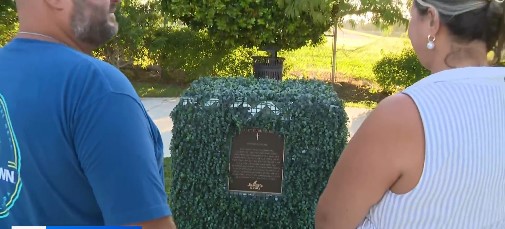
    ALTADENA, California (KCAL, KCBS) — A phone booth in Altadena has an old black rotary phone that doesn’t ring or have a busy signal, but it does offer healing for people carrying unimaginable loss.

Seamus Bozeman created a Wind Phone, where anyone can pick up the receiver and speak to loved ones who are gone too soon. He built it to connect to his father, who died from cancer two months before the Eaton Fire.

“It’s just the phone here, not connected to anything,” Bozeman explained inside the little booth he built at the Healing Arts Center of Altadena. “Don’t wait for a ring, start speaking what you want to say.”

Bozeman said just as he was mourning the loss of his father, the wind and flames came, forcing his family to flee their West Altadena rental home, which burned down in the Eaton Fire.

“We didn’t take much, and the next morning, the whole street was gone,” Bozeman said.

After struggling to process the grief, he decided to build something meaningful, a Wind Phone. He says it’s a quiet place where people can express their grief, joy, sorrow, or simply say the things left unsaid.

His mother, Leigh McDaniel, takes to the phone booth to express her grief.

“I miss you, the land you are on, miss you little house,” she said into the handset. She explained that with the help of family and friends, and donated materials, her son built the booth by hand.

Betty Corral had never seen a Wind Phone before, but moments after walking up, she stepped inside to call her father, who died 45 years ago. “Hi, Dad, talking to you, calling you,” she said.

The Wind Phone in Altadena is one of about 400 across the country, with a dozen in Southern California.

Please note: This story was provided to CNN Wire by an affiliate and does not contain original CNN reporting. This content carries a strict local market embargo. If you share the same market as the contributor of this article, you may not use it on any platform.

Victims in Brent Metz case in Colorado say lengthy judicial process has taken a toll

By Alan Gionet

Click here for updates on this story

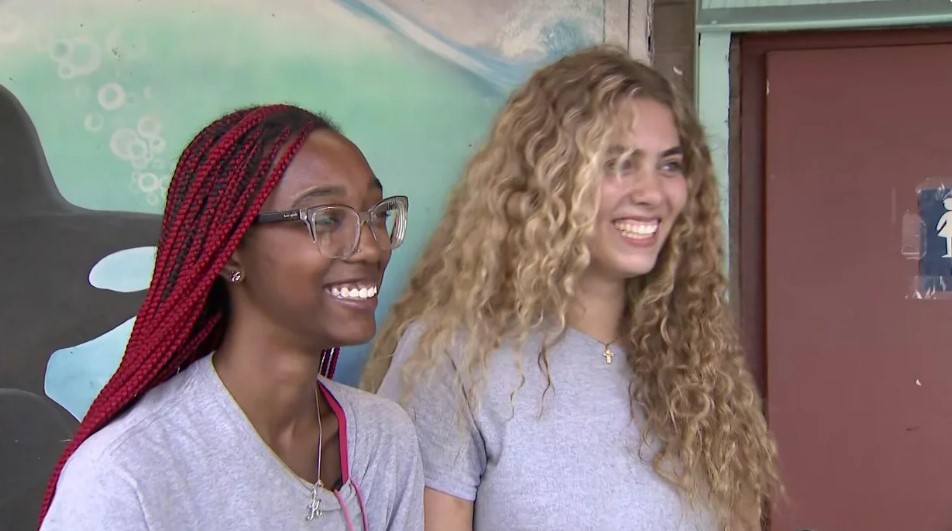
    JEFFERSON COUNTY, Colorado (KCNC) — After a Colorado jury reached a split verdict in the case against Brent Metz on Monday, the two teenage victims spoke about the case in the Jefferson County Courthouse. Jack and Luke (CBS Colorado is not using their last names) say the judicial process has taken a toll on them but they’re glad a verdict is behind them.

“Think we were pretty happy about it,” said Jack, the victim who has recovered well physically from being shot in the face.

Metz was found guilty of assault in the third degree for the shooting, which happened outside his property in 2024 when Jack sat in a car after he and his friend Luke had tried to ask permission to take homecoming photos on the property in the Conifer area.

“It’s been a long process. I’m happy we’re getting close to the end,” Jack said.

But it has been difficult. It took close to two years for the case to come to trial.

“I was very stressed out about the whole thing. It was a lot,” Jack said about the verdict. He said in addition to himself, the case has taken “a big toll on … everyone around me.”

The jury also found Metz guilty of illegal discharge of a firearm, but acquitted him on menacing charges.

Luke — now 17, but 15 at the time of the shooting — was a key witness in the trial for the prosecution. He told of how Metz, a former town councilman in Mountain View, got out of his truck in 2024 and pointed the gun at them as they sat in the car writing a note to the homeowner, who turned out to be Metz.

“For me personally, I’m shocked that the 2nd degree charge was dropped down to a 3rd degree,” he said of the assault conviction.

Attorneys for Metz attempted to show that Luke’s memory was faulty and he didn’t properly recall what happened. They tried to convince the jury that Metz never pointed the gun at the teenagers.

“We don’t measure this as a win of a loss. There was a conviction. We were adamant that Mr. Metz was not guilty of all of the crimes that were charged, so we’re not happy with that,” said defense attorney Christopher Decker.

They planned to ask for a new trial or appeal, claiming the jury’s finding of guilty of illegal discharge of a weapon includes elements that contradict the first count of the charges, the third-degree assault conviction. That conviction indicates Metz was negligent, but not reckless, said the attorneys. The weapons charge, however, does carry the conclusion of recklessness.

“We’re struggling to understand how it could not be reckless in count one, but he knowingly or recklessly in count four,” said defense attorney David Jones.

The defense made its case in court claiming the shooting was not the fault of Metz, but of the weapon he had, a Sig Sauer P320, which they claimed was defective and could fire “un-commanded.”

They believe the jury’s verdict left room for making that conclusion.

The negligence they believed is, “A far different thing than knowingly or purposefully discharging the firearm. They can find him negligent and agree that the firearm was a part of it. That the defectiveness of the firearm was part of it. Just by the way he handled it.”

The victims, meanwhile, credit their faith and the support of the community in getting through all of what they’ve had to deal with since the shooting. Jack told the court after the shooting he still has some trouble with his eyesight.

Luke talked about the support around them.

“Having people from the community reach out and just seeing how much the people do care about this and having people wondering if we’re OK, reach out to mutual people that we both know, just trying to check on us has really meant a lot,” said Luke.

They declined to comment on whether the justice system has worked for them. But their friendship clearly had.

“I think that it has always been a huge value for both of us. There’s never been a time in either of our lives we weren’t friends. And I think at the end of the day just understanding this whole process and going through this together only brought us closer,” Luke said before they headed off to get ice cream.

Metz is scheduled for sentencing in two weeks. He could get 1-3 years for the illegal discharge of a firearm charge and up to a year in a county jail for the assault charge. But there’s no requirement of jail time and could get probation, the defense believes.

Please note: This story was provided to CNN Wire by an affiliate and does not contain original CNN reporting. This content carries a strict local market embargo. If you share the same market as the contributor of this article, you may not use it on any platform.
Community supports grieving family after triple homicide

By Esteban Reynoso

Click here for updates on this story

    MODESTO, California (KCRA) — The Modesto community is rallying to support the Nuñez family after three members of their family were killed on Thursday. The victims include 23-year-old Fabiola Gonzalez-Nuñez, her 11-day-old son Mateo Escoto Gonzalez, and her mother, 54-year-old Maria Sylvia Nuñez-Villalobos.

Homeland Security confirmed that the suspect, Joaquin Escoto Vasquez, had previously been deported and re-entered the country illegally. Vasquez, who is accused of the murders and a prior DUI, appeared in court Monday morning and pleaded not guilty to all charges. He is being held without bail and is scheduled to return to court in late July.

As the case unfolds, the Nuñez family is grieving the loss of their loved ones. On McHenry Avenue, a major street in Modesto, friends and supporters gathered to sell tacos and sodas to raise funds for the family.

“It’s not just good, it’ll help the family, and I think it’s awesome everyone is out supporting the family,” said Leiana Bailey, a Modesto resident.

Joel Garcia, a Modesto content creator, shared his thoughts on the community’s efforts.

“Now, to see the support, all the people coming by. It’s pretty awesome, it just shows you how much we can get together and support the community,” he said.

The fundraiser featured $2 tacos and drinks, with proceeds going directly to the Nuñez family.

“Thursday was a wild day. It was shocking for the whole community,” Garcia said.

Sofia Nuñez-Villalobos, the sister of Maria and aunt to Fabiola, expressed her heartbreak over the loss of her nephew Mateo, whom she had been excited to watch grow up.

“Angry. Angry that you’re in front of the person who took the life of your sister, niece and nephew—and you can’t do anything,” Nuñez-Villalobos said.

She added that her family learned about Vasquez’s criminal history on Monday morning. While he was the father of the newest member of their family, she said the focus should remain on the victims.

“We don’t care right now if he was an immigrant, if he did this, we care about what he did to our family. We want respect, we want respect for their names,” Nuñez-Villalobos said.

She also shared her faith in divine justice. “I know God is the only one that will give him what he deserves and punish him the way he deserves,” she said.

The family plans to continue fundraising efforts with a car wash near their home on Tuesday and another taco sale on Wednesday. They welcome anyone who wishes to support their cause.

Please note: This story was provided to CNN Wire by an affiliate and does not contain original CNN reporting. This content carries a strict local market embargo. If you share the same market as the contributor of this article, you may not use it on any platform.
Former sheriff’s Lt. Sam Machado granted $1.5M bail in Esparto explosions case

By Daniel Macht, Cecil Hannibal

Click here for updates on this story

    WOODLAND, California (KCRA) — A former sheriff’s lieutenant facing murder and other charges in connection with the Esparto explosions is entitled to bail as he awaits trial, a judge determined on Monday.

Bail was set at $1.5 million.

Sam Machado owned the rural property in Yolo County where seven men were killed last July after a million pounds of illegal fireworks exploded.

Deputy District Attorney Deanna Hays argued in court that Machado was part of a 10-year conspiracy to profit off illegal fireworks, which led to the murder of the workers at the site.

Hays said he actively deceived the county and was a trained law enforcement official in how explosives are supposed to be managed. Family members of victims would fear retribution if he was granted bail, the prosecutor said.

Machado’s defense attorney David Fischer countered that he was “only a landlord in this situation” and “did not set off a single device.”

“This was caused by human error inside the building,” he said. “This is not something that Mr. Machado had anything to do with.”

Yolo Superior Court Judge Daniel Maguire ruled that Machado was entitled to bail because he believed there was not a substantial likelihood that he would inflict great bodily harm on others if released.

The court took a recess to show the prosecution information on Machado’s finances before deciding on the bail amount.

Five other men facing charges also appeared in the Woodland courtroom, and their arraignments were continued.

Investigators have said the “overcharged” explosives that blew up at the Esparto site belonged to Blackstar Fireworks and Devastating Pyrotechnics.

Craig Cutright, the owner of Blackstar Fireworks and a former volunteer firefighter, was among those in court, but is not currently in custody. He remains out on $400,000 bail.

Others in court included Devastating Pyrotechnics owner Kenneth Chee; Jack Lee, a longtime operations manager for Devastating Pyrotechnics; Gary Chan Jr., who held the federal license associated with Devastating Pyrotechnics; and Douglas Michael Tollefsen, who was also associated with the company.

Machado, Lee, Chan and Tollefsen are among those charged with murder.

Much of the hearing focused on the prosecution’s request for a gag order to prevent attorneys and defendants from speaking with reporters.

Defense attorneys also requested access to information collected from the defendants’ cellphones and electronic devices.

Please note: This story was provided to CNN Wire by an affiliate and does not contain original CNN reporting. This content carries a strict local market embargo. If you share the same market as the contributor of this article, you may not use it on any platform.

Maryland schools to implement AI guidance, training under new law taking effect Monday

By Breana Ross

Click here for updates on this story

    BALTIMORE, Maryland (WBAL) — Maryland’s Artificial Intelligence Ready Schools Act took effect Monday, creating statewide guidance for the technology’s use in schools.

The new law requires school districts to develop policies and prepare students for an AI-driven workforce.

The idea of using AI in schools is still something that gets mixed reactions.

“I think it’s used too much,” said Dara Hoffman.

“I think there is a gray area where it’s coming out and people should know how to use it, but also know how to use it carefully and not just use it for answers and cheating and things like that,” said Natalie Barber.

The legislation’s sponsor, Sen. Katie Fry Hester, D-District 9, explained her motivation for the law.

“As a mom, I have just been super concerned about my kids’ interaction with it,” Hester told WBAL-TV 11 News. “They’re older now, but I know it’s affecting all of the grades, and I think all of our students across Maryland, they’re going to graduate in a world where nearly every career uses AI in some way, and so, I felt like it was our responsibility to make sure that they were prepared to enter the workforce knowing how to use AI.”

The senator, who represents a district that encompasses portions of Howard and Montgomery counties, explained how districts across the state had varying policies.

“If we don’t teach kids how to use it, they’re going to learn on their own and not learn well.”

“(The law) embraces (AI) and it also puts the guardrails in place. What we found was that some of the districts across the state were using AI in a pretty aggressive way. Others were banning certain tools, and many of the teachers had, like, little or no training,” Hester told WBAL-TV 11 News. “I just didn’t want Maryland students falling behind simply because their system lacked that level of guidance.”

Maryland State Department of Education leaders will develop guidance on how schools should use AI for instruction in grades K-12. The school districts will have to develop policies, get AI tools that align with the guidance and appoint an AI coordinator.

The law also provides professional development in AI for educators and school leaders, incorporates AI literacy into workforce preparation and computer science standards for K-12 students, and establishes an AI collaborative to share lessons, best practices and recommendations statewide.

Some districts, like Howard County, have already started integrating AI into classrooms. High school students in Howard County have access to education-based Gemini AI accounts.

“If we don’t teach kids how to use it, they’re going to learn on their own and not learn well,” said Danielle Dunn, a media specialist at Hammond High School in Columbia.

Hester confirmed that MSDE has started developing the guidance, which is expected to be rolled out soon.

Please note: This story was provided to CNN Wire by an affiliate and does not contain original CNN reporting. This content carries a strict local market embargo. If you share the same market as the contributor of this article, you may not use it on any platform.

Rock band class changes lives for students at Diamond Ridge High School

By Deanie Wimmer and Ray Boone, KSL

Click here for updates on this story

    SANDY, Utah (KSL) — It’s not every day you run into a teacher who wants to chat about the metal band Black Sabbath.

“It’s the greatest band of all time,” said Brandon Lupus, a music teacher at Diamond Ridge High School. “I got to go see Black Sabbath for Ozzy’s last concert in England with my wife. I’ve never been out of the country, and we saved all of our money to go see Black Sabbath, and it was amazing.”

Nor is it every day you run into a teacher who wants to share that experience with an eager group of students.

“They’re all jealous right now, looking at me,” Lupus said. “The day I got back, I was like, ‘Everyone look at my videos! They’re amazing, here’s Ozzy!'”

It’s clear that Lupus fits in here. He knew that before he was even hired.

“I got to my interview, and Amy Boettger, our principal, goes, ‘OK. We want to do a rock band class.’ And that was when I knew I had my dream job,” he said.

The students he teaches aren’t exactly what comes to mind when you think of a traditional high school band, but this isn’t a traditional high school. Instead of trombones or saxophones, they’re playing drums and guitars while working on the solo portion of the Lynyrd Skynyrd song “Free Bird.”

“I think all these students here are absolutely underdogs,” said Lupus. “They’re coming from schools where some of them have like a 0.2 GPA.”

Diamond Ridge High School is a “school of choice” for students who may want a different type of school experience and environment. Whether it’s because of bullying or struggles with homelessness or simply feeling out of place, the students at Diamond Ridge left their schools and chose to be here.

They chose to give high school a second chance.

“I’m not here just to teach music,” Lupus said. “I’m here to change lives.”

The lives of students like Cash Butler, who transferred from a nearby high school.

“It really wasn’t a good place for me. I just didn’t really like it there,” Butler said. “I didn’t feel like I fit in. I felt like I was kind of invisible in this sea of people.”

Nearly half the student body is taking a music class, and what they’ve found here resonates.

“We’re an alternative school. We have alternative students who listen to alternative music, and it works best here,” Lupus said. “The students who don’t have an opportunity to express themselves otherwise, they get to express themselves in the music that they love, with the people that they love, doing what they love.”

And more than that, it’s given them an escape.

“You can let go of all that stress from life and school and stuff, and just play music,” Butler said.

What’s happening between the walls of Diamond Ridge seems to be striking the right chord. Over the past year, thanks in part to classes like this one, GPAs are up, graduation rates are up.

And, the regular attendance rate has risen a staggering 84%.

“Everyone’s showing up all the time. I don’t have to redo things. It makes the teacher’s job better, it makes the students happier,” Lupus said. “At first they needed to be here, now they want to be here.”

Music has brought these underdogs together, and being here has made them feel like someone believes in them.

If you want to hear the impact, all you have to do is ask Butler, who is graduating as the valedictorian of Diamond Ridge.

“It’s seriously changed my life for the better,” he said of the school. “I’m actually blown away by how much it’s changed my life. It just really put me in a good mental space, and a good positive outlook on my high school years.”

“Everyone’s friends, we know each other really well,” Butler said.

If you ask Lupus, it’s music that’s brought these underdogs together. But if you ask Butler, it’s Lupus himself that’s made the difference.

“He’s the best teacher I’ve ever had in my life,” Butler said. “And I’m not even saying that just because he’s right here. He’s genuinely such a caring guy. There’s been days where it’s just been off, and he literally checks with everyone, makes sure that they’re doing OK.”

Lupus believes the music is what brought the students together, to put in the hard work and accomplish something they hadn’t before, and ultimately created a familial dynamic.

“A lot of people say thank you to me, but they’re the ones putting in the hard work. They’re the ones showing up to class when they didn’t show up to class at their home school,” he said. “I know what music can do for people, and clearly it changes lives.”

Not just the lives of the students, but the life of their teacher, too.

“My brother actually went to this school. And as it kept going, I kind of realized that I found my family, and I found my place, and it’s really, really special what we got here,” Lupus said.

This may not be a traditional high school or a traditional band, but if you ask these musicians, it’s something much more.

“There’s a constant at Diamond Ridge: that there’s always people looking for a home,” Lupus said.

Please note: This story was provided to CNN Wire by an affiliate and does not contain original CNN reporting. This content carries a strict local market embargo. If you share the same market as the contributor of this article, you may not use it on any platform.

Emergency street takeover ordinance advances hours after bust near Paycor Stadium

By Emily Sanderson, Nicole Aponte

Click here for updates on this story

    CINCINNATI (WLWT) — An emergency ordinance on street takeovers has passed out of committee and will now go before Cincinnati city council.

It comes just hours after six people were arrested after a street takeover right by Paycor Stadium early Tuesday.

Cincinnati police say they managed to track down all of the suspects to the parking lot at the stadium after receiving calls throughout the night, including from stadium security.

WLWT’s cameras were rolling as officers loaded the suspects into police vehicles. Officers say they made at least six arrests, two women and four men.

Officers say they were racing, doing burnouts and more.

As for the charges, officers say they’ll differ from person to person, depending on their involvement.

“It’s very jarring to know that people are deciding to do this in communities,” Cincinnati Council member Meeka Owens said on the street takeovers.

Owens said they are taking the street takeovers seriously and working to increase civil penalties.

It’s an emergency ordinance, so Owens said that when passed, it will take effect immediately.

“If you’re going to come here and do this, you’re going to pay a cost,” Owens said.

The ordinance would increase fines and make participation in street takeovers a first-degree misdemeanor.

The measure comes about a month after city council passed a separate ordinance, adding new fines and vehicle impoundment requirements.

City leaders say the goal is to stop dangerous driving that has shut down intersections and put drivers and bystanders at risk.

The six suspects who were arrested will each be in court Tuesday at 12:30 p.m.

Please note: This story was provided to CNN Wire by an affiliate and does not contain original CNN reporting. This content carries a strict local market embargo. If you share the same market as the contributor of this article, you may not use it on any platform.

Grown safe haven baby shares story as Utah law commemorates 25 years

By Emily Ashcraft, KSL

Click here for updates on this story

    SALT LAKE CITY (KSL) — Sam Peterson said he is grateful to be “living proof” that Utah’s newborn safe haven law does what it was designed to do — it protected him when he was an infant.

Now, he is a 24-year-old engineering student at Brigham Young University who loves the outdoors and thanks the safe haven law for each birthday and opportunity.

“I believe this law was a blessing to everyone involved. It was a blessing to my parents, who were finally able to welcome a child into their family, it was a blessing for me because I was raised by parents who love and support me through everything that I do, and while I don’t know my birth mother, I hope it was a blessing to her as well. I hope she found peace knowing that her son is safe, loved, and given every opportunity to be successful,” Peterson said.

He told his story at a Utah Department of Health and Human Services event to commemorate the 25th anniversary of Utah’s newborn safe haven law and the many lives it has changed, on Monday — with his being one of the first. A statement said the mission of the law is: “No names, blame, or shame — only love and support.”

Peterson said his parents waited eight years trying to adopt and had decided to stop focusing on trying to adopt right before they got a call about him, and now he feels like he is where he was meant to be.

“I honestly just feel like it was planned, it was perfect, I fit right in,” he said.

To mothers who may take advantage of the law, Peterson said he understands the decision will be hard but encouraged them to have faith in it and to consider the beautiful things that could come from it.

Former Utah Rep. Patrice Arent sponsored the 2001 bill to create a newborn safe haven law and has since served as chair of the Newborn Safe Haven Advisory Board. She had heard about “dumpster babies,” babies left in restrooms or a bedroom drawer to die, and wanted to provide an alternative.

While working on the law, she said she received anonymous calls from mothers who didn’t have the option and told her about the guilt they face, which encouraged her to push to get it passed.

Arent said there was pushback from some people about the law who were worried about creating a drop-off zone for babies, as only a few states had similar laws, but ultimately it passed the first year she proposed it.

She said the state doesn’t have numbers on how many babies the law has saved, in part because officials also provide resources to help mothers find what they need to care for their babies themselves or connect them with adoption agencies. The state has also cared for babies who didn’t fit the infant age limits, which have expanded from 72 hours to around 90 days.

“We don’t know how many babies were saved, because we’ve saved them in so many other ways, and we also don’t know how many babies haven’t been saved,” she said. “We just want the babies to be alive, to end up in these safe, loving homes.”

Now she is “thrilled” that every U.S. state has some version of a safe haven law allowing a mother to anonymously give up custody of an infant.

“This is such a better alternative than what could happen to the baby,” Arent said.

Under Utah’s law, the only legal place to drop an infant off anonymously is a hospital; many states include fire stations, but in Utah, fire stations do not always have someone there, so the law restricts it to hospitals.

Not long after the law passed, Arent said she saw a group celebrating at a courthouse and recognized one of them — Sam Peterson’s grandfather, who told her about his grandson and said, “He is alive because of your law.” She said it didn’t just benefit him and his birth mother, but his extended family.

“Even if only one life had been saved under this law, I see the huge impact from just this one person,” Arent said.

Heather Peterson said they love sharing the story of her son, who she was able to watch grow from a newborn to a man because of an unknown woman’s courageous decision. She said it was “a miracle” when they got a call that there was a baby for them.

“Because somebody knew where to go and that she had a place to turn, and because there was a legal and compassionate option for her, our family was created,” she said.

She said the law did what it was supposed to do, protecting her son and his biological mother — who she said drove from another state to find a hospital that could help.

“I don’t know anything about what it took for you to get to that hospital and to make that decision, but I am so grateful for the courage that you showed. And I want you to know that your son is loved, that he has thrived, that he has been given opportunities in this life, and we are so grateful to you,” Heather Peterson said to the mother.

Please note: This story was provided to CNN Wire by an affiliate and does not contain original CNN reporting. This content carries a strict local market embargo. If you share the same market as the contributor of this article, you may not use it on any platform.

School employee accused of filming, sharing video of student in restroom

By Emily Sanderson

Click here for updates on this story

    DAYTON, Ohio (WLWT) — A school employee is facing charges, accused of sharing a video of a 12-year-old special needs student while they were partially undressed in a restroom stall.

27-year-old Tyheed Miller is facing charges including endangering children and illegal use of a minor in nudity-oriented material or performance.

Miller was working as a behavior technician with Centerville City Schools when the incident took place on April 20.

According to Montgomery County Prosecutor Mat Heck, Centerville Police were called to the school for a report that a school employee shared video of a student at Watt Middle School while the student was partially undressed.

Miller allegedly sent video of the 12-year-old student, who is autistic and has down syndrome, partially undressed in a restroom stall, through Snapchat.

“This defendant was employed to help and assist special needs children. Instead, he took a video of a special needs child in the restroom and shared it with Snapchat. This defendant should not be working at a school; he should be in prison,” Heck said.

Miller is currently being held at the Montgomery County Jail on a $500,000 bond.

His arraignment is set for June 4.

Please note: This story was provided to CNN Wire by an affiliate and does not contain original CNN reporting. This content carries a strict local market embargo. If you share the same market as the contributor of this article, you may not use it on any platform.