Colorado student injured in Evergreen High School shooting “still fighting for his life,” relative says

By Web Staff

Click here for updates on this story

    JEFFERSON COUNTY, Colorado (KCNC) — The uncle of Matthew Silverstone, one of the students shot by a fellow student at Evergreen High School in Colorado last week, talked about the teenager’s recovery one week after the shooting. At 12:24 p.m. Sept. 10, a 16-year-old student began shooting inside and outside the school, injuring two students before he turned the gun on himself and died.

Matthew was critically injured in the shooting and has what his family has called “a long road” ahead for his recovery.

“There’s so much more to Matthew than that. So much life. So much love,” said his uncle.

The comments came in a video of Kris Koehler was released by the Jefferson County Sheriff’s Office on Wednesday afternoon that showed him talking about his nephew and describing what kind of person he is, along with what remains to be a long road of recovery for the 18-year-old.

“He’s still fighting for his life every day, and we have glimmers of hope. We take every little baby step in the right direction and celebrate it,” said Koehler. “But to see him, to see him there, it’s great when he will squeeze a hand, but at the same time, it’s so painful to see that anyone, especially a kid, but anyone, would have to endure that.”

Koehler said in the video that he’s one of four proud uncles and said that he was talking on behalf of Matthew’s mom, his uncles, his sisters and the rest of the family.

Matthew’s uncle described the teen as an “ordinary teenage boy” who “loves his friends” and is at the skate park almost every day, until he’s told to go home.” He also said that Matthew would go out of his way to help anyone who needed it.

His uncle said that Matthew’s mother adopted him when he was just about six months old and that she hasn’t left his bedside at the hospital since the shooting.

“She has had this feeling of she failed him by not being there to protect him. To guard him from letting this happen,” said Kris Koehler.

Matthew is one of three children in a single parent family. All are adopted. Matthew was about six months old when his mother gained custody of him and his uncle says Matthew had been in an abusive situation.

“To know that history, to know that that’s the start he had, makes all of this just a bit even more unfair,” Koehler shared.

“She just has so much love, so much love to share with everybody, and that, really, Matthew, really has absorbed that that’s made him the person that he is. She’s the living example of that,” said Koehler.

Now there is a new challenge for Matthew and his family.

“Matthew is still fighting. My sister is going to do everything she can to help him in that fight. You know, as a single mother of three, she is the rock of our family. It’s now our turn to get as much support for her as we possibly can.”

Koehler also read some of the cards the family has received, some from students and others from the community, calling Matthew a hero for what he did the day of the shooting, “telling people to get away when they were coming back from lunch,” and to “please get better soon.”

Evergreen High School students do not have school this week with school officials informing students and families about the return to school process on Sunday, after all students have had the chance to take a school-wide survey.

In the meantime, Matthew remains in a hospital bed. So far, an online fundraising campaign has raised about half the goal.

“I want to people to know that Matthew is still fighting. It’s going to be a long road. We are coming to grips with what could potentially be a life-long recovery. And all of the needs and extra burdens that’s going to put on my sister.”

But his nephew remains an inspiration.

“Matthew is not only my nephew, but he’s now my hero,” said Koehler.

Please note: This content carries a strict local market embargo. If you share the same market as the contributor of this article, you may not use it on any platform.
Colorado family fights for access to lifesaving drug for infant with Barth syndrome

By Karen Morfitt

Click here for updates on this story

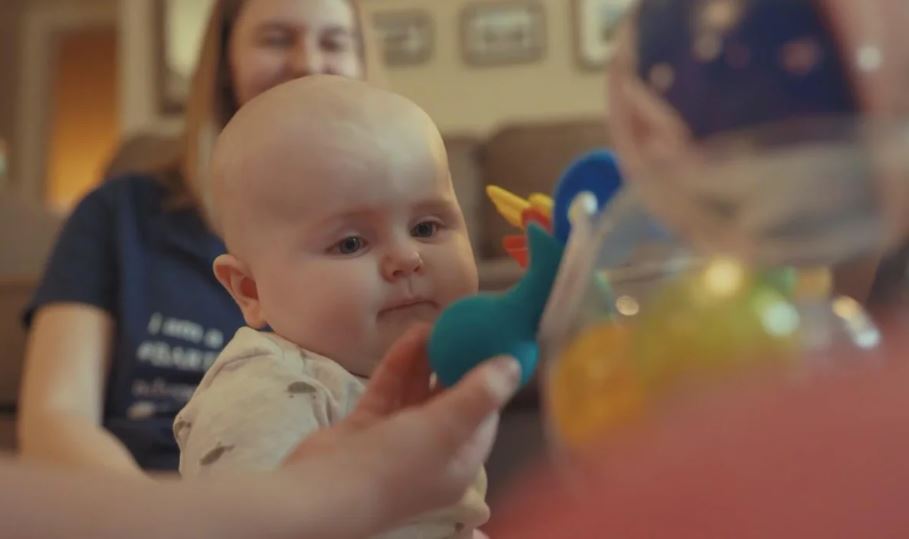
    COLORADO (KCNC) — A Colorado family is in a race against time to secure access to an experimental drug that’s keeping their infant son alive.

Gilbert Dryden was born with Barth syndrome — an ultra-rare genetic condition that affects only one in 300,000 births, almost exclusively boys.

The disease compromises the mitochondria — the energy-producing structures in nearly every cell — and can lead to heart failure, even in infancy.

For Gilbert’s mom Madison Dryden, the condition is one she feared. Her brother, Ben, died from heart failure as a baby — a tragedy that left the family without answers for decades.

“His heart basically turned … it was turning into scar tissue, kind of like turning into stone,” Madison’s mother, Jeanne Eiss said, “There was nothing we could do.”

When Gilbert was admitted to the NICU shortly after birth, Madison’s thoughts went immediately to her late brother.

“Once we were admitted to the NICU, that was immediately where my mind went — to my brother Ben,” said Madison Dryden.

“I think it would be worse for her because she has hope,” Eiss said through tears as she thought back to losing her son.

At Children’s Hospital Colorado, pediatric cardiologist Dr. Kathryn Chatfield helped identify Gilbert’s condition.

“It’s so rare that in any given state there may be only one or two patients diagnosed,” Chatfield said. “When the mitochondria can’t produce enough energy, the heart muscle weakens. If that dysfunction progresses, the heart can fail — and ultimately, patients may die or require a transplant.”

The drug, elamipretide, is not yet FDA approved. But for critically ill patients like Gilbert, the FDA has made it available under emergency use authorization.

Dr. Brian Stauffer, a cardiologist and researcher at the University of Colorado Anschutz Medical Campus, worked with Chatfield and others on initial research into the drug starting in 2015.

“When we treated hearts with elamipretide, we saw significant improvement in mitochondrial function. More energy production, which we believe improves heart function,” said Stauffer.

For the Dryden family, the results were immediate and dramatic.

“Within a month of being on elamipretide, he got his NG tube out. The next month, he came home,” Madison said.

Despite a recommendation from an FDA advisory panel last October, final approval was delayed and then rejected in May. The agency cited the small trial size — and requested more data.

“We don’t have the luxury of waiting many more months or years,” said Chatfield. “Companies must eventually turn a profit to stay in business. If this stalls too long, they may have to stop production entirely.”

Rep. Jason Crow, who represents Colorado’s 6th Congressional District, is now leading a bipartisan push for action, with almost all of Colorado’s congressional delegation signing on to a letter urging the FDA to make a timely decision.

“If this is the only drug keeping your child alive — give people the damn drug,” Crow said in a Zoom interview. “We understand there’s a process, but make government work.”

In August, the FDA agreed to reconsider and a new drug application was resubmitted under an accelerated pathway. A final decision is now expected Sept. 26.

In the meantime, the Dryden family is counting every remaining vial in their refrigerator.

“We get a three-month supply,” Madison said. “We are talking end of October.”

“We had to sit down with our daughters and say: ‘We’re working hard on this because if Gilbert doesn’t get his medicine, his heart might stop working. And if his heart stops working, he will die,'” she said.

The FDA did not respond to a request for comment when contacted for this story. CBS Colorado will provide updates as more information becomes available.

Please note: This content carries a strict local market embargo. If you share the same market as the contributor of this article, you may not use it on any platform.

Lake Tahoe neighbors protest California plan to euthanize mother bear Hope after home break-ins

By Ashley Sharp

Click here for updates on this story

    LAKE TAHOE, California (KPIX) — A mother black bear and her cub are causing quite the stir in South Lake Tahoe, as some neighbors are now rallying community support for the duo.

It comes as the California Department of Fish and Wildlife confirmed to CBS Sacramento on Wednesday that they are monitoring the bears and plan to euthanize the mother, which is identified by its tag number as bear number 753.

“CDFW had determined that the bear is ‘habituated’ – meaning it has learned to associate people, homes and neighborhoods as sources of food and has become completely reliant and dependent on those human food sources. Consequently, CDFW has determined that management action is required, and bear 753 has been approved for lethal removal,” a spokesperson for the agency told CBS Sacramento in a statement.

On both Tuesday and Wednesday evenings, Tahoe’s nonprofit BEAR League and south shore neighbors teamed up to call attention to the plans and send a message that bears should not be killed. They hosted a roadside protest near the Tahoe Keys Marina.

The Tahoe community has lovingly named the mother, Hope, and her playful cub, Bounce.

“We want to evolve. We want to coexist,” said Staci Baker at the roadside rally Wednesday night.

Baker is a veterinarian of 30 years in the greater Tahoe region.

“We can be kinder and smarter. We can do this as a community. We don’t want CDFW trapping and slaughtering anymore,” Baker said.

The CDFW said the approved “lethal removal” follows a series of more than a dozen home break-ins by the bears this summer.

“This sow and now its dependent cub have repeatedly broken into homes, including occupied homes and including situations that were no fault of the property owners. Obviously, this creates an unsafe situation when an adult bear is actively looking to break into homes and other buildings. From our long experience in the Tahoe Basin and other parts of the state, this conflict behavior is likely to continue and escalate over time as the bears persist in seeking out human food sources. While this bear has not shown aggressive behavior toward people, that is too often the outcome in situations such as this, once a bear has lost its natural fear of people,” a spokesperson for the agency told CBS Sacramento.

Kathi Zollinger, a volunteer team leader for the BEAR League, says she has been working round-the-clock daily to humanely ‘haze’ the bears with paintball guns, vehicles and other non-lethal options to help push the bears back to the wild where they belong.

“People call and we will go haze her out of mainly the keys, sometimes up to 9 hours a day,” said Zollinger, describing the work as a full-time job.

She says now it feels like time is running out since CDFW confirmed its plans to euthanize the mother.

“I cry regularly about it. It’s awful they think the only thing they can do is kill the bear,” Zollinger said. “She’s not the only one doing this. There are six moms in the area we are aware of. What are they going to do? Kill them all? That is ridiculous.”

Zollinger says the BEAR League would rather see the animals relocated and even offered to pay for it.

“It’s not the perfect answer but it’s better than her being dead,” Zollinger said. “You can’t kill your way out of this. That doesn’t solve the problem.”

CBS Sacramento asked CDFW what will happen to ‘Bounce’ the cub if its mother is euthanized.

“The cub will be evaluated if and when we are able to catch it. Our goal was to get the cub into a permitted wildlife rehabilitation facility – to break this generational pattern of human conflict and home invasions – and return it to the wild in the spring when it is big enough and old enough to care for itself and when there are a lot of natural resources on the landscape to support its transition to being a wild bear,” a spokesperson for CDFW responded.

The agency clarified it is not actively setting traps for any bears in this area at this time.

BEAR League advocates disagree with CDFW’s approach and say human error can be at least partly to blame for the “break-ins.”

Zollinger says in several cases their group believes home doors were left unlocked or windows were left open, which allowed the bears easy entry and says they cannot be blamed for searching for food to survive in bear country, where the loss of habitat is threatening their kind.

“We do want people to learn how to coexist with the bears. We do that through education. We want people to wire their homes now,” Zollinger said.

She says electric wiring homes in the Tahoe region, which will administer a non-lethal shock when the bears get too close, is the best way to save the animals and protect property.

They also advocate that Tahoe neighbors keep their doors and windows shut and locked, properly secure and dispose of garbage, clean up fallen fruit from trees in their yards and actively work to scare away any bears near a home so they do not get too comfortable.

Please note: This content carries a strict local market embargo. If you share the same market as the contributor of this article, you may not use it on any platform.
Vandalism against a Trump banner turns to gunfire at a Nantahala Gorge business

By Elijah Skipper

Click here for updates on this story

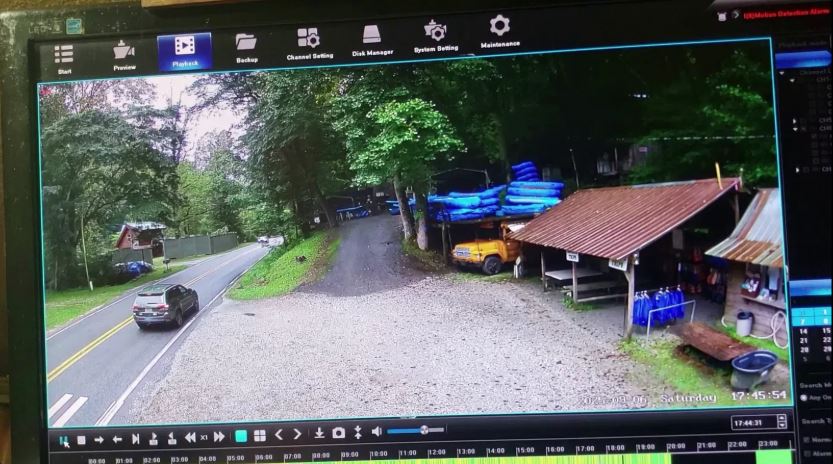
    SWAIN COUNTY, North Carolina (WLOS) — What began as vandalism outside a rafting company in the Nantahala Gorge escalated into gunfire, according to the Swain County Sheriff’s Office and the business owner who caught the incident on camera.

On Sept. 6, deputies were dispatched around 5:52 p.m. to the Paddle Inn Rafting Company on Highway 19 West for reports of shots fired. Sheriff Brian Kirkland said a deputy responded but did not see the suspect vehicle at the scene. Days later, investigators became aware of a video of the confrontation that was published on YouTube.

Owner Mark Thomas told News 13 he was watching his CCTV cameras when he saw a Jeep slam on its brakes and back up near his property. He said the driver got out, walked across the road, and tore down a Trump banner belonging to his 87-year-old mother.

“I got it up the screen and I’m like, okay, what’s this clown doing?” Thomas said. “And when he got a grip on it that first time he pulled the sign, I was like, I shouldn’t have waited. I could have saved mom’s sign.”

Thomas said he stepped onto his porch with a rifle but did not aim at the suspect. “I don’t want to kill anybody. My life has got to be in threat. I fired two shots in the air,” he added.

According to Thomas, the man in the Jeep fired back several rounds from the road. At one point, Thomas said he heard at least five or six more shots while he was on the phone with 911.

“Who in the world would be psycho enough to come back to a Trump supporter on a porch with a rifle?” Thomas said.

Despite what happened, Thomas said he is not looking for revenge.

“I don’t want to see him get 20 years in jail, but I want him to have some time to think a mark that he carries with him that reminds him I did some stupid stuff when I was young, and the opportunity to make it right, to live a normal life, be a productive citizen,” Thomas said.

Sheriff Kirkland confirmed to News 13 that the vehicle involved has been identified. “We are currently conducting a criminal investigation regarding this incident,” Kirkland said. “The vehicle involved has been identified, and we are coordinating with multiple law enforcement agencies to effectively bring this investigation to a close.”

Please note: This content carries a strict local market embargo. If you share the same market as the contributor of this article, you may not use it on any platform.
Ice cream shop tests new cocoa as shortage drives up costs

By Maria Sarrouh

Click here for updates on this story

    CHARLOTTETOWN, P.E.I. (CTV Network) — The global cocoa shortage has hit a Prince Edward Island ice-cream shop, jeopardizing a fan favourite.

Holman’s Ice Cream Parlour in Summerside, P.E.I. is testing new cocoa powders after its go-to was taken off the shelves amid a global shortage, owner Daniel Meister says.

The shop has backup batches in the freezer while it searches for the right replacement with similar fat content, pH and colour. Alternatives exist, but some cost up to four times more than before.

“We wouldn’t dare take chocolate ice cream out of the lineup. It’s a very, very popular flavour,” Meister said. “It’s a staple… it’s not really something we can take off the menu.”

Holman’s previously paid $9.99 for 700 grams. Over the last couple of years, that rose to $20. But the shop needs much bigger quantities. One product they’re testing goes for $600 for a 20-kilogram bag. Meister says that bag might cover five or six batches.

“It makes a significant difference in our cost,” he said. “Can we find something that matches the quality that we’re expecting while also not bankrupting ourselves or having to pass on that cost to our customers?”

Holman’s isn’t alone, Meister says. Recently, another business in the area couldn’t find cocoa and posted on social media asking for a supplier. The Holman’s team ran over with a few packages they had in store to tide them over.The math matters even more for small businesses managing their margins. Holman’s raised prices by $1 across the board earlier this year and hopes to keep them steady next.

Cocoa costs have surged since late 2023 due to production challenges in countries including Ghana and the Ivory Coast, which experts link to climate change.

Some companies have cut cocoa-related products altogether, says food expert Sylvain Charlebois, a visiting scholar at McGill University’s Faculty of Agriculture.

“They knew they couldn’t sell some of these products at a higher price, essentially. So, they stopped carrying some of these products,” Charlebois said.

His advice to businesses and manufacturers across the Maritimes and the country is not to rely on a single source. Instead, he said it’s safer to have a few suppliers for important ingredients.

“I wish I could say that there is some good news, but it’s quite problematic,” Charlebois said. “The same is happening with coffee…prices are way up.”

Holman’s is known for making more than 100 handcrafted flavours, with 16 on the daily rotation. The shop says that while some recipes may shift, the standard won’t.

Please note: This content carries a strict local market embargo. If you share the same market as the contributor of this article, you may not use it on any platform.
ctvnews.caproducers@bellmedia.ca
416 384 7070

What Prime Minister Mark Carney’s meeting with Mexico’s president could mean for North American trade

By Judy Trinh

Click here for updates on this story

    OTTAWA (CTV Network) — Prime Minister Mark Carney is embarking on a pivotal meeting with Mexican President Claudia Sheinbaum on Thursday, just as the United States officially launches the process to review the North American trade agreement.

The Office of the U.S. Trade Representative will seek public comments on the Canada-U.S.-Mexico Agreement (CUSMA) over 45 days and has scheduled a public hearing in November.

Public consultation is required by law and is a clear sign that the Trump administration is preparing to renegotiate, not just review, the trilateral agreement, says Eric Miller, president of Rideau Potomac Strategy Group.

“They’re trying to get stakeholders a list of all the things they have concerns about. It doesn’t mean all of them become priorities, but they’re starting with a big list and are going to shrink it down to a smaller list,” said Miller, whose client list includes Canadian exporters.

Under the current agreement, Canada’s trade with the U.S. is 85 per cent tariff free, but that could change when CUSMA expires next June.

“Donald Trump doesn’t have a commitment to a bigger vision of North American collaboration,” Miller said.

Diversifying trade with Mexico

Squeezed by Trump’s sectoral tariffs on steel, aluminum and autos, Canada’s GDP shrunk by 1.6 per cent in the second quarter of 2025.

It’s under this pressure that Carney is meeting with Sheinbaum to strengthen their bilateral relationship and increase trade.

Mexico is Canada’s third biggest trading partner and last year, the two countries did $56 billion in imports and exports.

Foreign Affairs Minister Anita Anand and Minister Dominic LeBlanc, the government’s point person for U.S. trade negotiations, will also be part of the meetings in Mexico City.

Ahead of the prime minister’s 36-hour whirlwind trip, senior government officials told reporters in a briefing that Carney and Sheinbaum will hold one-on-one meetings, followed by a working lunch with their cabinet ministers and secretaries.

A new strategic partnership will be signed that would include commitments for more frequent high-level contact between the two governments.

Other than in June, when Carney met with Sheinbaum on the margins of the G7, the last time there was an official meeting between the leaders of Canada and Mexico without the U.S. was in 2017.

The prime minister will also visit a train terminal to watch Canadian Pacific Railway offload a delivery of Canadian wheat, and host a reception to connect business leaders from both countries.

‘Aligning’ interests Goldy Hyder, CEO of the Business Council of Canada, says the government needs to use the meeting to better position itself for the CUSMA review by working “in tandem with Mexico to align” interests.

Hyder says Canada also needs to pitch itself as an “investment destination” for mining and energy, as well as for developing port infrastructure.

According to John Boscariol, who leads the International Trade and Investment Law Group at McCarthy Tetrault, Canada only represents five per cent of Mexico’s international trade.

As Canada looks to diversify its trade, Boscariol says Mexico is the “natural next best trading partner to the United States.”

Boscariol sees an opportunity for Canada to sell more auto parts to Mexico, along with agricultural products such as potash.

Co-operation vs. competition

But the two countries cannot replace the U.S. with each other.

Duncan Wood, with Washington-based Hurst International Consulting, has researched Mexican trade and supply chains. Wood says as CUSMA negotiations progress, tensions between the two smaller partners could increase.

“I find it very difficult to imagine how the two countries are going to find a lot of common ground. There’s so much pressure right now pushing them away from each other as each one tries to secure preferential treatment from Washington.”

Wood says Carney and Sheinbaum need to discuss aligning their policies on China if they want a stronger position when CUSMA is renegotiated.

“The big thing that matters in Washington is if you can show how Mexico and Canada can help with the United States’ geopolitical competition with China.”

Please note: This content carries a strict local market embargo. If you share the same market as the contributor of this article, you may not use it on any platform.

ctvnews.caproducers@bellmedia.ca
416 384 7070

Mother of child raped, beaten arrested; boyfriend already behind bars

By Web Staff

Click here for updates on this story

    SHREVEPORT, Louisiana (KTBS) — The mother of a young child who investigators say was raped and beaten nearly to death last month is now behind bars — along with her boyfriend who was previously accused in the crime.

Caddo Parish sheriff’s investigators arrested Shea Upshaw, 31, Wednesday on charges of accessory after the fact and obstruction of justice. She was arrested in Bossier Parish and booked into the Caddo Correctional Center. No bond is set.

Already in custody is Lucas Logan, 31, of Stonewall. He’s held in CCC on charges of first-degree rape, attempted first-murder, 16 counts of production of pornography involving juveniles and molestation of a juvenile.

Logan was arrested on Aug. 2 after deputies, who responded to a sexual assault complaint, found a nearly lifeless six-year-old child in a home on Farmridge Road in Keithville.

Deputies said the child had been sexually assaulted and suffered what was described as life-threatening injuries.

Logan was identified as the suspect in the child’s injuries.

Upshaw was interviewed multiple times during the investigation. She confessed to lying to protect Lucas, the sheriff’s office said, by cleaning and removing evidence related to the crime.

Caddo District Judge Chris Victory signed an arrest warrant for Upshaw on Sept. 10.

Please note: This content carries a strict local market embargo. If you share the same market as the contributor of this article, you may not use it on any platform.

50,000 pounds of marine debris sorted for science

By Kimber Collins

Click here for updates on this story

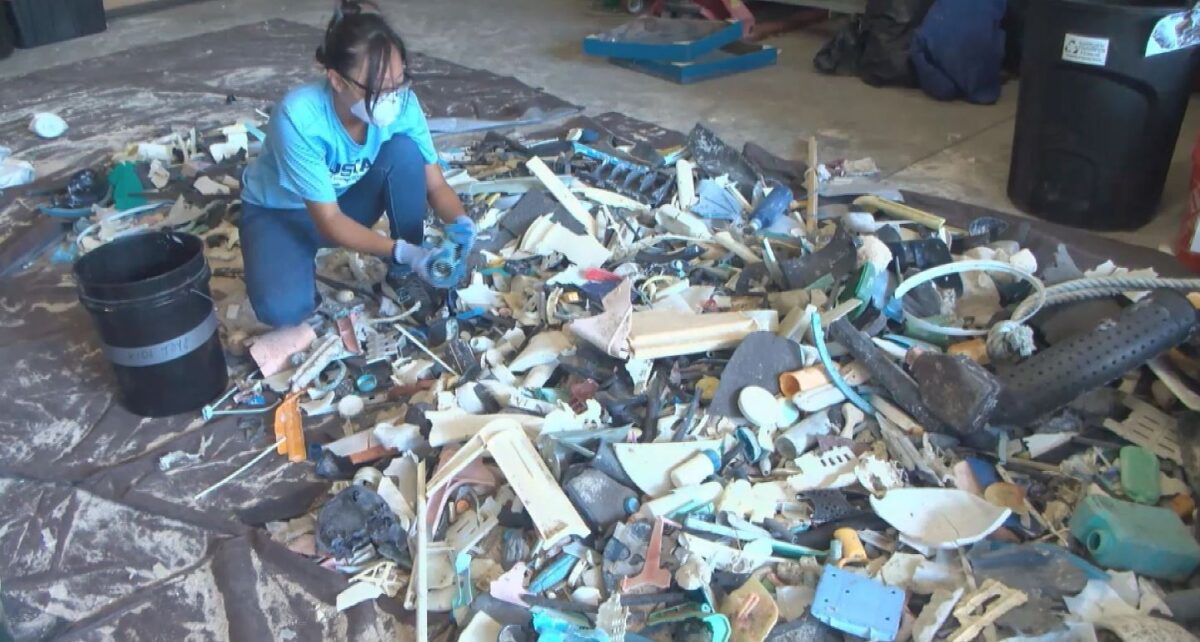
    KAILUA, Hawaii (KITV) — Inside a Windward Oʻahu warehouse, piles of trash cover the floor, fishing nets, oyster spacers, toothbrushes, toys, even mannequin heads and duck decoys.

It may look like garbage, but to scientists and volunteers, it’s valuable data.

“We have this incredible team that’s here that is sorting it all out and categorizing it by piece so that we can better understand what it is that shows up on our coastlines,” said Rafael Bergstrom, Sustainable Coastlines Hawaiʻi Executive Director.

Volunteers carefully dump debris, sift through the piles, and place each item into labeled bins. Some items come with unexpected surprises.

Sarah Jeanne Royer with The Ocean Cleanup pointed out a plastic bottle covered in clear bite marks.

“This bottle is really interesting because we can clearly see the bite marks,” Royer said.

Every piece is weighed, recorded, and logged into a global database to help researchers pinpoint the sources of marine debris.

This effort is part of Marine Debris Catch Analysis Volunteer Week, where Sustainable Coastlines Hawaiʻi (SCH) joined forces with The Ocean Cleanup and the Papahānaumokuākea Marine Debris Project (PMDP).

Together, they are processing debris collected from Laysan Island and Kalaupapa.

“It comes from Asia, the Aleutian Islands, Alaska, the Pacific Northwest, even all the way down to the equatorial region,” explained James Morioka, Executive Director of the PMDP.

According to SCH, 60% of the debris comes from commercial fishing vessels. The rest is man-made trash that has drifted across the Pacific.

This batch of debris alone weighed in at 50,000 pounds, but experts warn it’s just a small fraction of what the ocean holds.

“Our lifestyles, our world, is contributing this much plastic to the oceans, which has detrimental effects, from how it affects the animals in the ocean to how it affects us as we breathe in all of this plastic, or ingest the plastic,” Bergstrom said.

Every year, an estimated 115,000 pounds of marine debris accumulate in Papahānaumokuākea, according to Morioka.

“Our goal is to remove two years’ worth, we set our to catch up and keep up essentially. ” he added.

The debris doesn’t just end with cleanup. Researchers analyze the data and publish scientific papers that influence global decision-making.

“Once we analyze everything, this is to understand the main goal: where are these debris coming from, how they’ve been sitting out there. And then the idea is to use that scientific paper to have the large policy makers reading that and designing better laws to stop that pollution from the source,” said Royer.

After analysis, the debris is recycled, repurposed or incinerated, ensuring none of it returns to the ocean.

For Sustainable Coastlines Hawaiʻi, this work builds on a mission years in the making. The nonprofit has already removed more than 750,000 pounds of debris from Hawaiʻi’s shores, reached 55,000 students with educational programs, and mobilized 50,000 volunteers.

While the mountain of debris can feel overwhelming, organizers said efforts like these prove that solutions begin with understanding, and every piece of trash tells a story.

Please note: This content carries a strict local market embargo. If you share the same market as the contributor of this article, you may not use it on any platform.

‘We can’t control the city’: Family and football coach hoping for change after 11-year-old shot and killed

By Jacob Murphy

Click here for updates on this story

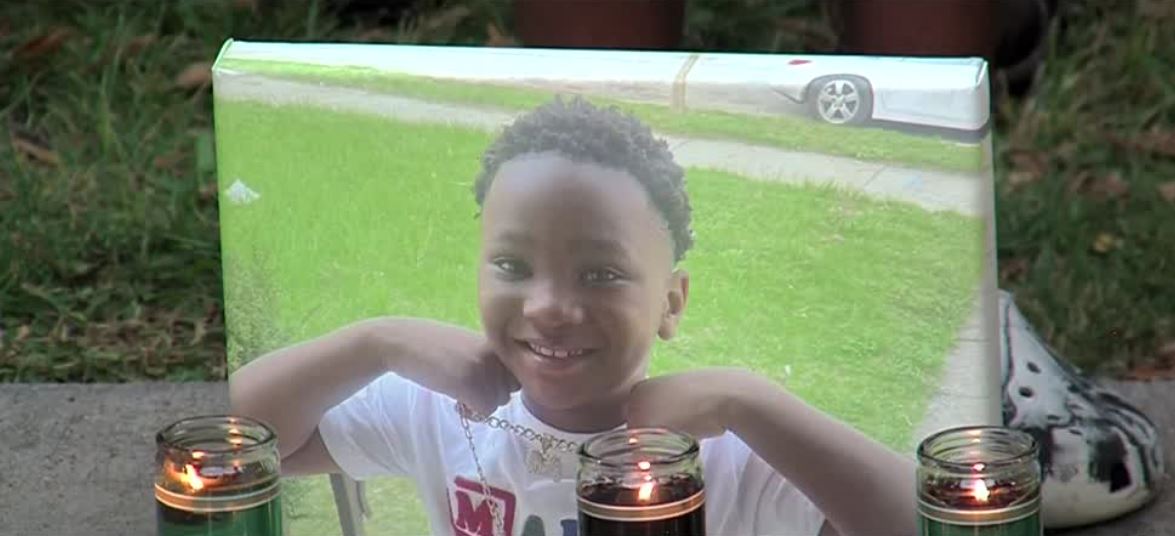
    MILWAUKEE (WDJT) — On Tuesday night, 11-year-old Deon Sargent was shot near the corner of 68th and Silver Spring and later died at the hospital.

According to Milwaukee police, a 13-year-old was arrested in connection to the shooting.

“At such a young age, a lot of lives are now changed, and these are children, they had their whole lives ahead of them,” Deon’s grandma, Kelli Thomas, said.

Thomas was one of several family members at a vigil Wednesday night, where the family was joined by football teammates and coaches.

“We try to avoid these situations the best we can,” CLE Panthers football coach Corey Collins said. “We can’t control the city.”

Collins was Deon’s 9U coach and won a championship with him. He said Deon was a leader on the field, which is part of the reason why friends and family called him “Mister.”

“That could have progressed all the way to college, to the NFL, somewhere, with the way his passion was for the sport. And it’s just sad to hear at 11 years old that’s just gone now,” Collins said.

Collins says the last 24 hours for the family have been filled with chaos and tears and hopes other families don’t have to go through the same pain.

“We have to be careful what our children are exposed to, we have to be careful of what they see, we have to be careful of who we have them around and the examples we are setting in front of our children,” Collins said. “They are sponges, they pick up everything.”

Please note: This content carries a strict local market embargo. If you share the same market as the contributor of this article, you may not use it on any platform.

Detroit siblings preserve father’s legacy with Black media archive

By Lauren Winfrey

Click here for updates on this story

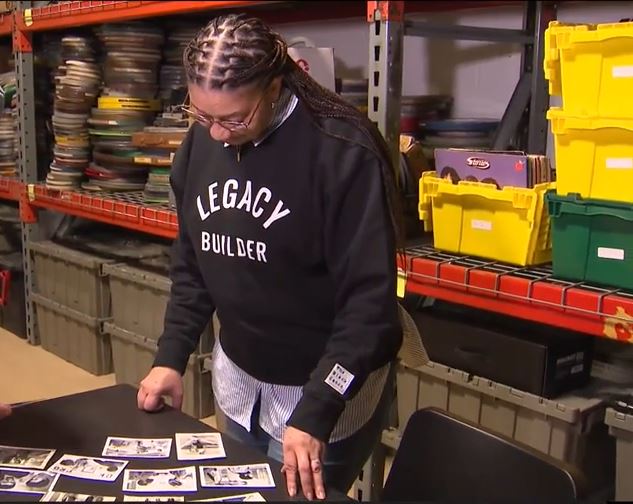
    DETROIT, Michigan (WWJ) — Two Detroit siblings are working to preserve and share their late father’s life’s work: tens of thousands of historic artifacts tied to Black media and entertainment.

James Wheeler, who moved to Detroit from Arkansas during the Great Migration in 1958, spent decades collecting film posters, photographs, and memorabilia. That lifelong passion is now the foundation of The Black Canon, a nonprofit launched by his children, Alima Wheeler-Trapp and Ali Wheeler.

“The Black Canon is basically my father’s life work,” Wheeler-Trapp said. “If we don’t preserve these artifacts, they could actually be lost.”

While other kids collected baseball gloves or cards, James Wheeler collected film posters and artifacts, building what his children say is a “crazy collection” of more than 40,000 pieces.

“Personally, it’s extremely meaningful,” Ali Wheeler said. “He spent more than half of his life collecting these items.”

The collection represents one of the largest archives of Black film and media. It includes rare photographs, scripts and posters from a century of Black artistry.

“A lot of this information, people just don’t know about,” Wheeler-Trapp said. “People don’t know that there were 350 to 400 race films with all-Black casts, Black directors, [and] Black producers showing Black people in a positive light.”

The siblings say continuing their father’s work is not only a way to honor him but also a source of pride.

“I think of [what] my father did to persevere and collect this, and what me and my sister are doing right now, and that’s what makes me ‘Detroit Proud,'” Ali said.

The Black Canon will be featured in “Portraits and Power,” an exhibition happening on Oct. 4 at the Detroit Historical Museum.

For more information, visit The Black Canon’s website.

Please note: This content carries a strict local market embargo. If you share the same market as the contributor of this article, you may not use it on any platform.