Pickleball waste is a problem on the Gulf Coast; 2 entrepreneurs may have a solution

By Channing Frampton
Click here for updates on this story
FORT MYERS, Florida (WBBH) — As pickleball’s popularity surges across the Gulf Coast, two young entrepreneurs with ties to Florida Gulf Coast University are tackling the resulting plastic waste problem by recycling broken pickleballs into new ones.
Birgitta Rausch-Montoto, a pickleball enthusiast, said, “It’s the outdoors. It’s the activity, but it’s also the community piece.” She has been playing the sport since shortly after Hurricane Ian and appreciates the community aspect the sport brings.
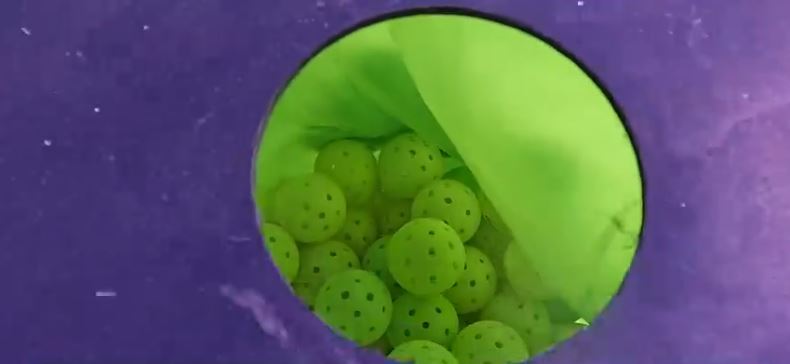
Dillon Rosenthal and Grant Twible have placed bright green collection bins at courts along the Gulf Coast to collect broken pickleballs. “Coming into the sport, we just found this problem,” Rosenthal said. They have already recycled over 1,000 pounds of pickleballs, diverting them from landfills.
“Our first placement was here at this very park, Three Oaks Park,” Twible said. The bins are designed to address the nationwide issue of thousands of pounds of pickleballs ending up in the trash each year. “There are 500 million of these balls that get made every year,” Rosenthal said. “So the amount of plastic waste and these balls are only made out of plastic. Anything we can do to prevent that is really the mission that we’re on.”
The process involves players placing their broken pickleballs in the bins, which hold up to 300 balls each. The collected balls are then ground into plastic powder and shipped overseas to be remolded into new pickleballs. “We just processed 70 pounds of balls for a test batch, yet remolded in China into the world’s first 100% recycled pickleball stop,” Rosenthal explained.
“We’re all outside, we all enjoy playing the sport, so why not clean up while we’re at it?” Rosenthal said. Their business venture, BounceBack, won a $15,000 prize from FGCU’s Azul Innovation Challenge, helping them grow and scale their initiative.
Lee County’s solid waste division recycled an estimated 6,937 tons of plastics last year, but it does not accept pickleballs in curbside recycling. Residents are encouraged to use private-sector resources like the green bins for recycling pickleballs. “By seeing people, even one ball, two balls, putting the balls in the bins, it means a lot,” Rosenthal said.
Rausch-Montoto supports the mission, saying, “I think our community is better for it, our environment and our health.” Rosenthal hopes to launch the recycled pickleballs into the market within the next six months and is working to partner with a U.S. manufacturer.
Please note: This story was provided to CNN Wire by an affiliate and does not contain original CNN reporting. This content carries a strict local market embargo. If you share the same market as the contributor of this article, you may not use it on any platform.