Michigan Gov. Whitmer proposes $88.1 billion budget to lawmakers

By DeJanay Booth-Singleton

Click here for updates on this story

    MICHIGAN (WWJ) — Michigan Gov. Gretchen Whitmer’s administration on Wednesday presented her final budget proposal to lawmakers that her office says would provide tax relief for seniors, support student literacy and protect access to Medicaid.

The $88.1 billion fiscal year 2027 budget, presented by State Budget Director Jen Flood, includes a $13.6 billion general fund, $21.4 billion on school aid and $5.8 billion for roads, Whitmer’s office said in a news release. The proposal also includes the Saving Michiganders Money Plan, which would establish a back-to-school sales tax and continue free lunches for over 1 million students.

The governor proposed a $400 million withdrawal from the state’s rainy day.

“Michigan is open for business and on the move, and this budget will deliver on the kitchen-table issues that make a real difference in people’s lives,” Whitmer said in a statement. “My balanced budget proposal will build on our strong record of bipartisan success. It doubles down on shared, long-term priorities to create good-paying jobs, fix roads, save Michiganders money, and ensure every child can read, eat, and succeed. Let’s work together to deliver another balanced, bipartisan budget on time and keep moving Michigan forward.”

The budget sets aside $625 million for student literacy, a topic that Whitmer said in December 2025 was her top priority. Additionally, the budget presents a 2.5% increase (an additional $250) in base per-pupil funding.

The budget proposes $780.4 million to “stabilize Medicaid funding, protecting access to health care for eligible Michiganders through revenue generated from a mix of funding mechanisms,” according to the news release. That includes seeking tax revenue from vaping and non-tobacco nicotine products ($73.6 million), digital advertising ($282 million) and sports betting ($192.8 million).

“Governor Whitmer is focused on the everyday things that matter most to Michigan families—lowering costs, ensuring our kids can succeed, and protecting Medicaid,” Flood said. “We’ve shown that we can work together to pass balanced, bipartisan budgets, and I look forward to continuing that work with our legislative partners to get the budget done ahead of July 1.” 

While Whitmer received praise for the budget proposal, some Republican lawmakers are pushing back on tax hikes.

“The governor calls this the ‘Saving Michiganders Money Plan,’ yet she’s proposing multiple new tax hikes,” Rep. Matt Maddock said in a statement. “This is absurd. You don’t need to raise taxes on anybody when millions in wasteful and fraudulent spending are still sitting in the state budget waiting to be cut.”

House Speaker Matt Hall also opposed tax hikes, saying, “I reviewed a number of these tax increase proposals when we were talking about roads. They’re gonna happen. We’re not gonna raise taxes on vape, alternative nicotine products and other tobacco products. We’re not gonna do a delivery tax, we’re not gonna raise taxes on internet gaming. We’re not gonna do any of that.”

Passage of the fiscal year 2026 budget last year proved challenging, with lawmakers struggling to approve the budget by the July 1 deadline. After missing that deadline, lawmakers were then given until Oct. 1, 2025, to pass the budget. They invoked a continuation budget to keep the state government operational while they worked through a vote.

Lawmakers passed the budget a few days after the Oct. 1 deadline.

Please note: This story was provided to CNN Wire by an affiliate and does not contain original CNN reporting. This content carries a strict local market embargo. If you share the same market as the contributor of this article, you may not use it on any platform.


San Francisco schools will be closed a 4th day as teachers’ strike continues

By Tim Fang, Jose Fabian

Click here for updates on this story

    SAN FRANCISCO (KPIX) — San Francisco schools will be closed for a fourth day on Thursday, said Laura Dudnick, San Francisco Unified School District director of communications on Wednesday afternoon.

Teachers have been striking for three days over wages and benefits.

“I will be very clear: We are making progress,” Dudnick said. “The items being discussed today are health care, salaries and special education.”

At a news conference earlier Wednesday, ahead of an expected meeting with the United Educators of San Francisco, Superintendent Maria Su made an urgent plea for an agreement to be reached.

“We are prepared and committed to getting this agreement done today. We all must act with urgency, we all must get together to get this done,” Su said.

Su described the district’s latest offer as “generous” and at the same time “fiscally responsible.”

“With our current proposal, we are putting money back into pockets of our educators, with a significant increase in compensation and healthcare benefits. This is about putting real money back into the pockets of educators. This is an investment in educators and their families in San Francisco,” she added.

At the news conference, Su said both State Superintendent of Public Instruction Tony Thurmond and Mayor Daniel Lurie urged both sides to get a deal reached.

Union president Cassondra Curiel said in a statement Tuesday night that the district’s negotiators had moved on issues involving sanctuary schools, housing protections, classified compensation, artificial intelligence and contracting out services.

“The administration told us for the past 11 months none of this was possible. Clearly it is — when we stand together,” Curiel said. “The time is now for SFUSD to fully funded family healthcare, address special education workloads and provide fair compensation for certificated staff that will stabilize our schools and end this strike.”

On Tuesday evening, Mayor Daniel Lurie said he met with the head of both the union and Su.

“They gave me an update on the progress that has been made today, and I made it clear – they can and they need to get this done. Every day in the classroom matters for our children,” Lurie said in an update posted to his social media. “Getting our schools open is the top priority, and we can do that while supporting our educators and keeping the school district on the path to fiscal stability.”

Lurie said the city would continue to provide support for impacted students.

About 6,000 teachers represented by the United Educators of San Francisco began walking the picket lines Monday, after the district and union were unable to reach an agreement over the weekend. Sticking points on an agreement include wages, healthcare for dependents, along with assistance for special education staff.

More than 50,000 students attend 122 schools in the SFUSD.

Dudnick said the district will be working with the state to ensure it provides students with the legally required number of instruction days.

Please note: This story was provided to CNN Wire by an affiliate and does not contain original CNN reporting. This content carries a strict local market embargo. If you share the same market as the contributor of this article, you may not use it on any platform.
Big Bear wildlife activist Sandy Steers, who spearheaded eagle nest cam, dies

By Matthew Rodriguez

Click here for updates on this story

    LOS ANGELES (KCAL, KCBS) — Wildlife activist Sandy Steers, who spearheaded the eagle nest cam, died on Wednesday night, according to the Friends of Big Bear Valley.

“It is with heavy hearts and great sadness to let our Friends of Big Bear Valley eagle family know that Sandy Steers passed away,” the nonprofit organization wrote in an Instagram post.

Sandy Steers has been the executive director of the Friends of Big Bear Valley for more than 20 years.

Steers served as the longtime executive director of the Friends of Big Bear Valley, overseeing the nonprofit’s mission of environmental advocacy through educational programs.

In 2015, she helped launch the organization’s livestream cameras, which provided a look into the daily life of the area’s bald eagles, Jackie and Shadow. She became the organization’s go-to wildlife expert as thousands watched the eagles’ passionate effort to keep their eggs warm through rain and snow.

The Outdoor Writers Association nominated Steers for the Outdoor Californian of the Year for her organization’s efforts to protect rare and endangered wildlife, including her work with the bald eagles.

“Sandy Steers truly exemplifies the spirit of the outdoors through her efforts to conserve the natural environment while helping to enhance and expand opportunities for outdoor recreation in California,” OWAC Member Barbara Steinberg wrote in 2023. “Her efforts to preserve nesting sites for Big Bear Lake bald eagles and open space in the region including helping to save a rare pebble plain and a threatened paintbrush flower which is listed on the federal and the state endangered list, and only exists in Big Bear Valley.”

Please note: This story was provided to CNN Wire by an affiliate and does not contain original CNN reporting. This content carries a strict local market embargo. If you share the same market as the contributor of this article, you may not use it on any platform.
Olympic legends inspire Salt Lake City students ahead of 2034 Games

By John Franchi

Click here for updates on this story

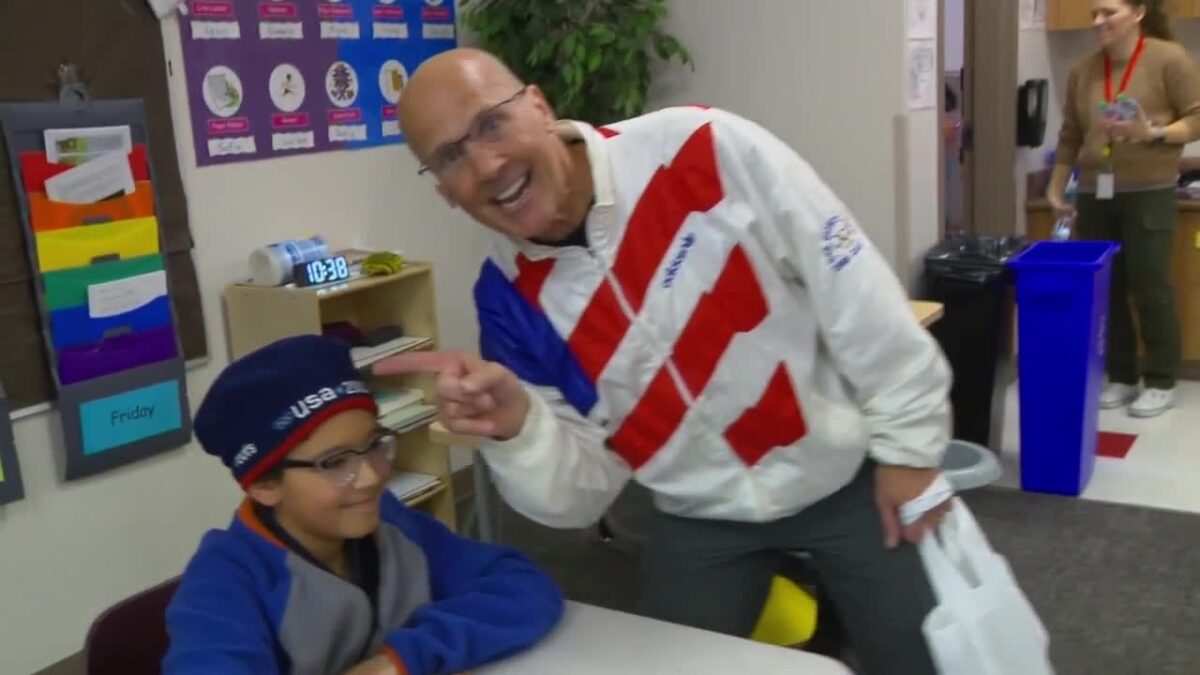
    SALT LAKE CITY (KSTU) — Olympic champions are sharing their stories with Utah elementary students, hoping to inspire the next generation of athletes who will come of age just as the 2034 Winter Olympics arrive in their home state.

When the Olympics are held in Utah in 2034, current 4th graders will be graduating from high school. This timing makes them the perfect students to learn about working toward goals that sometimes end with gold.

At Guadalupe School, students listened intently as Olympic legends shared their experiences and wisdom. “It’s the athlete against the mountain, it’s the athlete against gravity, it’s the athlete against themselves,” said Doug Lewis, who competed in the 1984 and 1988 Olympics.

Lewis loves sharing his Olympic stories with young audiences. “Olympians come from within themselves so if you can light that fire in a kid and just start their engine, start that work ethic, inspire them to go after that dream, there is nothing better than that,” Lewis said.

Lewis was joined by Tristan Gale, who won gold in skeleton at the 2002 Salt Lake Games. She believes the Olympics present Utah youth with unmatched opportunities. “When you grow up in Utah, because every venue is here, you can try all of it,” Gale said.

The Olympians want kids to know that anything is possible. Chris Mazdzer proved that in 2018 when his silver medal in luge made history.

“I am actually the only non-European man to medal in the men’s luge,” Mazdzer said.

His achievement demonstrates that Olympic dreams can come from anywhere. “100 percent an Olympian can come from anywhere,” Mazdzer said.

That’s the lesson PE teacher Amber Rigdon hoped students would learn when she invited the Olympians to her class. “I really stress they train for years, they don’t just go out there and do it. They train super hard,” Rigdon said.

Great results aren’t given – they are earned. When 4th grader Brentley was asked how hard someone has to work to get a gold medal, he understood the commitment required. “Really hard,” he said. “Years!”

The message wasn’t lost on these 4th graders who may go for gold in eight years. “When you try and keep working on it you’ll achieve it,” said Sofia, another 4th-grade student.

Utah 2034 organized the meeting with Olympic athletes at Guadalupe School.

This story was reported on-air by a journalist and has been converted to this platform with the assistance of AI. Our editorial team verifies all reporting on all platforms for fairness and accuracy.

Please note: This story was provided to CNN Wire by an affiliate and does not contain original CNN reporting. This content carries a strict local market embargo. If you share the same market as the contributor of this article, you may not use it on any platform.

One dead, dozens injured in crash involving Iowa Lakes Community College baseball bus

By KCCI staff

Click here for updates on this story

    CALHOUN COUNTY, Iowa (KCCI) — Iowa authorities confirmed to KCCI that one person was killed in the northern Iowa crash involving the Iowa Lakes Community College baseball team bus.

The crash was reported along Iowa Highway 4 near 220th Street, just west of Twin Lakes in Calhoun County, shortly before 11:30 a.m. Wednesday. Officials with Emmetsburg-based Iowa Lakes released a statement around 1:35 p.m. confirming that the school’s bus was involved.

Iowa State Patrol officials confirmed to KCCI around 2:30 p.m. that one person died in the crash. An official with UnityPoint Health said that two people were flown by air ambulance to Iowa Methodist Medical Center in Des Moines, and 10 others were taken to UnityPoint Health – Trinity Regional Medical Center in Fort Dodge.

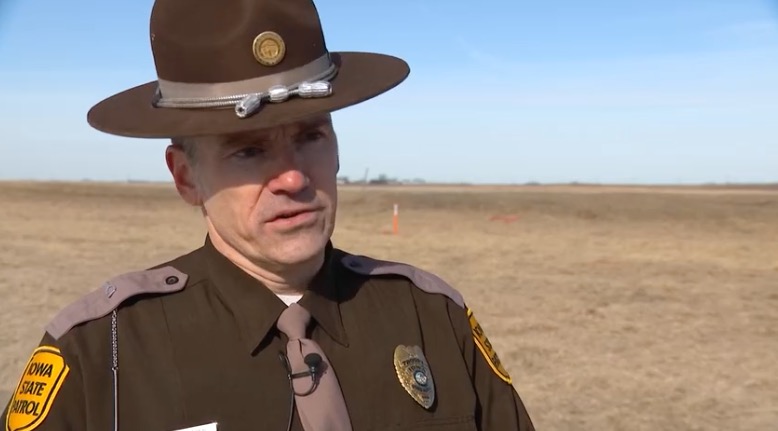
Iowa State Patrol Trooper Paul Gardner said in an interview with KCCI that 33 people were on board at the time of the crash; all sustained injuries that he said ranged from minor to serious.

No crash victims have been publicly identified.

Authorities are still investigating the cause of the crash. No other vehicles were involved.

Highway 4 reopened around 2:30 p.m.

“The safety and well-being of our students and staff remain our highest priority,” the Iowa Lakes statement said. “The College is actively supporting those affected and communicating directly with families.”

‘Our hearts are heavy’: Upcoming opponent reacts to deadly crash involving Iowa Lakes baseball team WATCH: Iowa State Patrol provides update on deadly Iowa Lakes bus crash

Iowa Lakes was scheduled to play next against North Arkansas College in Harrison, Arkansas, on Thursday.

North Arkansas provided this statement Wednesday afternoon:

“Our hearts are heavy as we grieve alongside the Iowa Lakes College community. The loss of a life is a tragedy that reaches far beyond one campus. We extend our deepest condolences to the family and loved ones of the individual who passed away, and we are lifting up in prayer those who were injured and all who are affected. During moments like this, we are reminded that the higher education community is a family, and we stand ready to support Iowa Lakes Community College in any way we can.”

The Pocahontas Police Department asked residents to avoid the area due to the crash.

The Pocahontas Community School District also confirmed that they sent a bus to the scene, but it was not involved in the accident. According to a post on the Pocahontas school Facebook page: “This was not a PACSD bus. Pocahontas Police Chief Leu asked Jeff Halder, PACSD transportation director, to help at the site of the accident by bringing a bus to the location. That is the only reason why one of our buses is at the site. Again, our bus was not involved in the accident, it is only there to provide support.”

Please note: This story was provided to CNN Wire by an affiliate and does not contain original CNN reporting. This content carries a strict local market embargo. If you share the same market as the contributor of this article, you may not use it on any platform.

Former Rexburg man remembers uncle, who oversaw construction of the Teton Dam

By Rett Nelson

Click here for updates on this story

    IDAHO FALLS (eastidahonews.com) — Richard Robison was 13 when he saw the collapse of the Teton Dam about 15 miles northeast of Rexburg. His uncle, Robert Robison, oversaw its construction in the 1970s, and its failure affected him for the rest of his life. Fifty years later, Richard hopes to transform one of the worst civil engineering disasters in American history into a cornerstone of Idaho’s future.

Robert Robison was the last man on the crest of the dam at the moment of failure on June 5, 1976. As an employee for the U.S. Bureau of Reclamation, Robert was involved in the construction of Willard Bay — the dam separating the fresh water from the salt water in the Great Salt Lake — more than a decade earlier. He’d worked on projects in Colorado and Nevada after that before moving to Rexburg in the early 1970s.

Richard, 63, lives in Cincinnati, Ohio, today, but grew up in Rexburg. He was about 9 years old when his uncle came to town to begin construction on the Teton Dam.

“I can still remember how exciting it was when dad told us Uncle Bob was moving to Rexburg,” Richard says.

Richard describes his uncle as a handsome man with a look similar to that of Rock Hudson or James Garner. Robert had a commanding presence and was intelligent and well-spoken, according to Richard. He and his siblings deemed him the favorite uncle because he’d spend time with them and take them fishing.

Although the Bureau had approved the Teton Dam project in 1964, political tensions had stalled its construction. Despite concerns about its design, funding was secured in 1971, and the project moved forward.

Richard, a retired engineer who has studied the Teton Dam for 40 years, attributes the project’s approval to one major factor.

“It was just hubris and overconfidence in their design,” he says.

Between 1950 and 1979, more than 40,000 dams were built across the country. The Bureau of Reclamation had built many of them, none of which had failed.

“The design they’d chosen for the Teton Dam was a pretty standard embankment design,” says Richard. “The design group didn’t feel like they needed to make any significant changes to compensate for the difficult geology.”

At the time, Richard says engineers considered the design a cost-effective and efficient way to build a dam, and it earned a major engineering award. That award was rescinded after its collapse.

Robert had expressed concerns about the dam’s design from the beginning. Since the designers and contractors were siloed in different buildings, they rarely communicated with each other. Robert’s feedback fell on deaf ears, and as the project manager, he had no other choice but to move forward with construction.

Richard has fond memories of riding in the car with his dad to see Robert at the Teton Dam site and get a behind-the-scenes tour.

“I remember standing at the top of the canyon looking down and Robert showing us the massive excavation that was going on to put in the foundation,” Richard recalls. “The enormousness of the excavation … was just unbelievable. It was the coolest thing an 11-year-old boy could see.”

In subsequent tours, Richard and his dad got to see the diversion channel being built along the Teton River and watch the reservoir rise as the dam was built.

The collapse and the aftermath Hours before its collapse, on June 5, the reservoir was nearly filled to capacity, and the dam was operating without a functioning outlet works or spillway gate. Without a mechanism to control water flow and pressure, the dam’s failure was imminent.

“Bob was fairly certain at 9 a.m. that morning that the dam was going to collapse,” says Richard.

Robert and several other contractors were on site that day. He, along with John Calderwood, Owen Daley and others, tried in vain to plug seepage holes on the downstream face of the dam. Richard says his uncle ended up being the last man standing on the crest of the dam.

“They were pushing what they called riprap — large boulders — into the whirlpool that developed. They hoped it would plug up the pipe,” says Richard.

Minutes before its failure, the group realized their efforts were futile and were forced to evacuate.

At 11:55 a.m., the dam burst, destroying about 3,000 homes and tens of thousands of acres of land. Eleven people died, along with 13,000 head of livestock, according to news reports at the time.

Robert’s home was among those affected. Once the floodwaters had permeated the area, Richard says his family’s driveway became the control center for the Bureau of Reclamation.

“I was feeling a lot of despair, and then my uncle showed up. They set up a trailer and radio systems,” Richard recalls. “(Robert) was completely professional in doing his job to manage the crisis.”

In the weeks that followed, Richard says Robert and his family received death threats.

According to Richard, Robert saved hundreds of lives and successfully fought to ensure the Bureau of Reclamation compensated those affected.

The total cost in damages was around $2 billion — more than $11 billion in today’s dollars.

Once the cleanup was finished and reparations had been made, Richard says his uncle expected to begin rebuilding the Teton Dam, but it never happened. Instead, the dam site was closed, and all the contracted employees lost their jobs. Richard says the tragedy became a “national embarrassment,” and major dam construction projects nationwide ceased.

“Our country lost its stomach to go out and build major dams like that again,” Richard says.

Congress passed the Reclamation Safety of Dams Act in 1978. It authorized the U.S. Secretary of the Interior to modify, repair, or replace Bureau of Reclamation dams to ensure structural safety.

Robert continued working for the Bureau for decades, but Richard says he carried the weight of the tragedy for the rest of his life. Although Robert never talked about it, Richard says it affected him until his passing in 2018.

“It traumatized him, but it never impacted his productivity or his role as a father or uncle,” says Richard. “He passed away at age 93, so that’s a long time to carry that weight.”

Reshaping a legacy Fifty years later, the Teton Dam collapse remains one of the most studied civil engineering disasters worldwide. A proposal to rebuild it co-sponsored by Idaho Senator Kevin Cook, R-Idaho Falls, in 2025, is gaining momentum and Richard is one of its most ardent supporters.

One of the reasons Richard became an engineer was because of his uncle and he sees the dam’s reconstruction as an opportunity to complete his uncle’s “unfinished business.”

“It was meant to be a promise to the Snake River Valley for water security and irrigation resilience. Fifty years later, it represents unfinished business and an unkept promise,” he says.

In a conversation with EastIdahoNews.com last week, Cook cited a 1996 study conducted by the Bureau of Reclamation. The report says that the Bureau had the necessary resources to build the Teton Dam back then and that it could be rebuilt safely in the same location.

“The Bureau had the necessary information available (in 1976) to develop an adequate defensive design. A safe dam could have been built at the site utilizing design concepts that were known at the time,” the report said.

During a presentation with water stakeholders in August 2025, Cook cited data that showed rebuilding the Teton Dam was the most cost-effective of any other proposed water storage project. That’s due, in part, to the infrastructure that’s still in place.

It would also store about 350,000 acre-feet of water — the most capacity of any other project.

“It gets the most bang for the buck,” says Richard. “So that really is the cornerstone project.”

He hopes to see the proposal gain support as he continues to advocate for it. Richard says he’s planning to return to Rexburg this summer to commemorate the disaster’s 50th anniversary.

Please note: This story was provided to CNN Wire by an affiliate and does not contain original CNN reporting. This content carries a strict local market embargo. If you share the same market as the contributor of this article, you may not use it on any platform.

Army investigating if military aircraft dropped fuel on Phoenix-area homes, burns woman’s eye

By Nicole Grigg

Click here for updates on this story

    PHOENIX (KGUN) — The U.S. Army is investigating an incident that possibly involved a military aircraft dropping fuel on multiple Valley neighborhoods, which left one woman with chemical burns to her eye.

Stephanie Bagorio was outside when she felt what she thought was rain falling on her hair and clothes — but the liquid ended up leaving her with an instant reaction that left her in the emergency room.

“The gas fell inside my eyelid,” Bagorio said.

Bagorio and several of her neighbors describe a fuel-like chemical that fell from a low-lying helicopter last Thursday that landed on cars and homes off 45th Street and Broadway.

The ABC15 Investigators have confirmed that first responders with the Phoenix Police Department and the Phoenix Fire Department were called Thursday night for medical evaluation after people came in contact with a substance believed to be fuel.

“I thought it was raining. I could feel the drops in my hair. I could feel it falling on my clothes,” said Bagorio.

Bagorio had to have her eye flushed after going to the emergency room for chemical burns to her eye.

“This morning when I woke up, my eye wasn’t even opening because of how inflamed and swollen it was. All the tissues, the gas fell inside my eyelid. So it was all inside the bottom of my eye, and I couldn’t even open my eye this morning at all,” Bagorio said.

She described the smell as “horrible” and said she felt like she was going to pass out.

“It was almost like I drank fuel,” Bagorio said.

The substance also landed on cars in the neighborhood, leaving a film that residents say still smells like gas.

ABC15 confirmed the incident involved a military aircraft, and after reaching out to every branch of the military, we have learned the U.S. Army is investigating whether it was theirs.

Neighbor Marketha Hendrix, who first reported the incident, said no one has communicated with them about how the fuel fell on the neighborhood. She suffers from respiratory issues, and said the smell of the fuel impacted her and her grandchildren.

“I’m hoping that we find out the solution or why the helicopter was flying so low, and why was it losing fuel in the neighborhood,” Hendrix said.

The City of Tempe said they are also aware of reports of fuel falling on Tempe neighborhoods, including Priest Drive and 10th Street, and 6th and Wilson streets.

A spokesperson for the U.S. Army said in a statement that they are aware of an incident “potentially involving an Army aircraft and fuel release near Tempe, Ariz. on Feb. 5, 2026.”

The Army did not say how or why fuel was released.

FULL STATEMENT:

“The U.S. Army is aware of an incident potentially involving an Army aircraft and fuel release near Tempe, Ariz. on Feb. 5, 2026. Coordination with the Tempe Fire Department and Environmental Services is ongoing to assess any possible impact. The Army is looking into the incident and will release more details as they become available. For additional questions about the clean-up, please contact the Tempe Fire Department and Environmental Services.”

A Spokesperson for the City of Tempe said there were no injuries reported in Tempe, and they directed any questions about the incident to the U.S. Army.

Please note: This story was provided to CNN Wire by an affiliate and does not contain original CNN reporting. This content carries a strict local market embargo. If you share the same market as the contributor of this article, you may not use it on any platform.

Wasatch County Republican Chair arrested for allegedly waterboarding teen daughter

By Michael Martin

Click here for updates on this story

    HEBER CITY, Utah (KSTU) — A 54-year-old Heber City man is facing aggravated child abuse charges after his 16-year-old daughter told police that he waterboarded her. FOX 13 News is not disclosing the name of the arrested party in an effort to protect the identity of the victim.

The Heber City Chief of Police confirmed to FOX 13 News that the arrested man was the Wasatch County Republican Party Chair.

According to court documents, on January 21, Heber City police received a mandatory child abuse and neglect report from the Utah Division of Child and Family Services. The report stated that the 16-year-old girl didn’t feel safe in her home and feared for her life.

Investigators spoke to the teen, who stated the incident happened one or two weeks prior to the interview.

The teen stated that she had gotten home from hanging out with friends when her father became upset that her room wasn’t completely cleaned. The teen stated that her father grabbed her by the back of her neck and took her into the bathroom, where a sink was filling with water.

The father allegedly dunked the teen’s head under the water before taking it out and splashing water on the teen’s face. The victim couldn’t remember how long this continued, but said she couldn’t breathe for about 20 to 30 seconds.

In addition to the recent incident, the victim told police that the same act had happened to her now 8-year-old brother following another argument. The victim told police that following the argument, her father grabbed the young child and forced his head underwater several times.

In another incident, the victim stated that a few years prior, her father backhanded her torso when she wasn’t compliant in doing something she was ordered to do.

The victim stated that after being struck, she started to cry, which prompted her father to make fun of her for crying. The incident allegedly caused bruising that lasted a week.

“I don’t feel very safe,” the victim told investigators. “When I go to bed, I feel like I can’t sleep because I don’t feel safe.”

The father was arrested on Tuesday and is being held without bail as detectives believe he may be a danger to the two younger children in the home.

Please note: This story was provided to CNN Wire by an affiliate and does not contain original CNN reporting. This content carries a strict local market embargo. If you share the same market as the contributor of this article, you may not use it on any platform.

Meet Lassie—the dog who helped LMPD find a missing 3-year-old

By DeAndria Turner

Click here for updates on this story

    LOUISVILLE, Kentucky (WLKY) — In January, the search for a missing 3-year-old ended in the best way possible, thanks to an unlikely hero.

Not all heroes wear capes. Some have four paws, and one dog played a critical role in the rescue.

“You a good boy,” said neighbor Sean Calloway.

We don’t know his real name, so for now, we’re calling him Louisville’s Lassie.

“You’re a hero,” Calloway added.

If you see paw prints winding through an Okolona neighborhood, there’s a good chance they belong to him.

“He’s always out here like this, but he’s a good dog,” Calloway said. “He’s always chasing me on my bike. He’s just having fun. He don’t bite nobody.”

According to Louisville Metro Police, the dog helped officers locate the missing 3-year-old on a cold January day.

“Anytime you have a kid that young, you’re fearful,” an officer said.

Officers used every resource: on-foot searches, a drone, and the air unit. Then, something unexpected happened.

“As I’m walking to the front, the craziest thing happened. A dog starts walking with me,” the officer said.

The dog wasn’t trained or commanded; he just moved with purpose, leading the officer to a backyard.

To the officers’ surprise, the boy was found in an SUV parked in the yard, terrified but safe.

“That’s God working through that animal,” Calloway said.

A search that could have ended in tragedy instead ended in relief, thanks to Louisville’s Lassie, who showed up when a little boy needed help the most.

According to neighbors, the dog has a home but wanders the neighborhood on warm days. A familiar face in the community, he is now a hero no one will forget.

Please note: This story was provided to CNN Wire by an affiliate and does not contain original CNN reporting. This content carries a strict local market embargo. If you share the same market as the contributor of this article, you may not use it on any platform.

Students say nicotine flavor ban could help peers

By James Maloney

Click here for updates on this story

    MONTPELIER, Vermont (WPTZ) — Some Vermont students are calling for a ban on flavored nicotine products on Tuesday. They said the use of nicotine in schools is harming their peers and want lawmakers to do something about it.

Students associated with ‘Our Voices Xposed’ gathered on the statehouse steps in Montpelier. The youth group is partnering with the Vermont Department of Health.

Health officials said as of 2023, 16 % of Vermont high school students used e-cigarettes recently. Of those students, 37% did so daily. 6% of middle schoolers also report using a vape.

Nearly 90% of teens who vape say they use flavored e-cigarettes. Bonni Lunna, a student at BFA St. Albans, said she does not blame her classmates who use tobacco, the companies that make the products.

“This is not a kids making dumb choices issue,” Lunna said. “This is an industry issue- big tobacco didn’t disappear, they just got smarter, they took addiction and turned it into something flavored, colorful and easy to hide.”

A Senate bill has been introduced at the state house that seeks to ban devices that don’t appear to look like an e-cigarette.

Gov. Phil Scott vetoed a flavor ban bill in 2024. He said it takes away from the rights of adults.

He also said raising the age to buy tobacco from 18 to 21 and increasing taxes on some tobacco products were reasonable steps to address youth and nicotine use.

Please note: This story was provided to CNN Wire by an affiliate and does not contain original CNN reporting. This content carries a strict local market embargo. If you share the same market as the contributor of this article, you may not use it on any platform.