As FIFA World Cup nears, some MARTA riders raise safety concerns after recent attacks on transit system

By Nakell Williams

Click here for updates on this story

    ATLANTA (WUPA) — Multiple recent attacks on MARTA have some riders questioning how safe they will feel using Atlanta’s public transit system as the city prepares to welcome thousands of visitors for the FIFA World Cup.

The tournament is expected to bring an unprecedented influx of travelers to metro Atlanta, putting additional attention on MARTA’s ability to safely move residents and visitors throughout the region.

Many Atlantans rely on MARTA every day as their primary mode of transportation.

“I ride the system every day to go to work and other places,” MARTA rider Joshua Hudson told CBS News Atlanta.

“It is kind of unsafe on the weekends, but weekdays it’s pretty fine,” rider Kimiya Sawanat said.

Concerns about transit safety intensified after a woman was fatally stabbed aboard a MARTA train on May 30. The attack prompted some riders to question what additional steps MARTA can take to prevent violence, particularly as the city prepares for major international events.

Several riders told CBS News Atlanta they would like to see more police officers stationed throughout the system, especially at high-traffic stations. While they acknowledged concerns about safety, many said they believe MARTA can strengthen its security strategies ahead of the World Cup.

“We have been on the trains when the Braves play, and it is packed, but this is going to be a different level. It is almost like the Olympics all over again,” Hudson said.

MARTA officials said the agency plans to enhance security during the World Cup by utilizing its Emergency Response Center, deploying its mobile command vehicle and increasing officer presence at stations. MARTA also expects support from law enforcement agencies across the region.

“I’m concerned but not worried,” Hudson said. “I think it will be a good time, but we just have to do public safety.”

Please note: This story was provided to CNN Wire by an affiliate and does not contain original CNN reporting. This content carries a strict local market embargo. If you share the same market as the contributor of this article, you may not use it on any platform.
California police roll out AI-powered body cameras that translate over 50 languages in real time

By Charlie Lapastora

Click here for updates on this story

    STOCKTON, California (KOVR) — Stockton police officers are now equipped with body cameras that can translate conversations in real time, making the city one of the first major law enforcement agencies in California to deploy the technology department-wide.

CBS News Sacramento spoke with Stockton Police Chief Stanley McFadden about why the department decided to adopt the new Axon AI-powered translator technology after officers have already spent a decade wearing body cameras.

“To bring something to our diverse community like this is a game-changer,” McFadden said.

The department has issued the AI-enabled body cameras to more than 300 sworn officers. The move comes in a city that ranks among the most diverse in the nation, with almost half of the population speaking a language other than English at home.

“It’s the number one reason why we got this, so we could provide a service to everyone,” McFadden said.

Chief McFadden said language barriers can present challenges during emergency calls and investigations, something Stockton police officers encounter regularly.

“With this, over 50 languages, that’s just going to help us get that information faster, get that message spread out to our responding officers as well,” Officer David Scott said.

The technology is designed to help officers communicate in situations where every second counts and waiting for a translator may not be practical.

“Having this allows us to get that critical information that can save lives,” McFadden said.

When activated, the body camera can detect the language being spoken, translate it in real time and facilitate a back-and-forth conversation between officers and community members.

“It’s just going to streamline how we do business,” Scott said. “The information is going to come out a lot quicker. The response is going to help get that information to the responding officers so they can respond properly.”

But, for the chief, having this tech is just the tip of the iceberg.

“Our job is to find a way to mitigate situations, to reach every community member,” McFadden said. “It’s a never-ending challenge for us that we will continue to onboard new technology or new resources that can help us do this. But this is a great step in the right direction.”

Please note: This story was provided to CNN Wire by an affiliate and does not contain original CNN reporting. This content carries a strict local market embargo. If you share the same market as the contributor of this article, you may not use it on any platform.

Colorado team uses sonar, underwater drone to recover drowning victims and evidence

By Olivia Young

Click here for updates on this story

    DENVER, Colorado (KCNC) — A Colorado water recovery team is preparing for what they worry could be a busy summer season.

CBS Colorado tagged along with Colorado Parks and Wildlife’s Marine Evidence Recovery Team for a training demonstration on Chatfield Reservoir, covering how the team recovers drowning victims and evidence.

From above, it’s not possible to clearly see what’s underwater. But a special drone equipped with sonar and a camera gives responders eyes below the surface.

CPW’s Grant Brown, Michael Haskins and Brian Phillips oversee boating safety in Colorado.

“Collectively, we’re the boating safety program statewide,” said Brown, Colorado Boating Safety Program manager.

They serve on the Marine Evidence Recovery Team (MERT), with 14 members based across the state who are ready to respond to tragedies on the water anywhere in Colorado within 24 hours. But they’re not the rescuers. They’re there to recover bodies, boats and other evidence.

“If someone has drowned in a lake, and we are requested, we will go out to assist with recovering that drowning victim. We can also just find any underwater evidence, so if a boat sinks, or if we’re looking for something that is underwater that needs to be either detected or recovered,” Brown said.

Their boats are equipped with a basic sonar transducer commonly used by anglers called a Humminbird, as well as a towable sonar torpedo that can be deployed.

“These bright white dots right there, those are probably fish,” said Phillips, MERT team leader and flatwater investigator, reading the sonar image from the torpedo. “We can go down here, we can zoom in and look at it, see what it is.”

And most importantly, they use a remote-operated vehicle, or ROV. It’s an underwater robot and drone equipped not just with sonar but also with a camera.

“We’re gonna function test our robot before we throw it over. So Brian’s gonna run through the propellers and run the claw, and I’m just gonna let him know it’s working,” said Haskins, a MERT team member and swift water investigator.

After the test was successful, the men threw the device into the water.

“You see, I’ve got a little bit of a shadow right there, so I know I’m close to an object. Well, now I’m just going to switch to the camera, and then I’m just going to move forward a little bit,” Phillips said, reading the ROV’s monitor. “So there it is, that’s the boat, there’s the bow eye, that’s the bow, it’s actually sitting, the rear end of it is down into the silt right there.”

Earlier this year, the team discovered a boat that sank in 2016 and was never recovered after its occupants were rescued.

“This is where we kind of exposed that registration number,” Phillips said. “That’s how we figured out what boat it was.”

Brown says it’s still being decided whether this boat will be removed, and it may be recovered as part of a training exercise with South Metro Fire’s dive team.

The ROV also has a grabber arm that largely replaces the need for a human diver.

“We can get right up to it. We can poke it, we can bump it,” Phillips said.

“So we manipulate that, you can grab on to the person, ideally clothing, and we have that tether we’re pulled into the surface and then recover them,” Brown said.

He says the team got their first ROV in 2018, and while they still may work with dive teams in some cases, the robot has made their jobs easier.

“Tricky part with [before 2018] is, we’re getting a diver ready to go and all geared up. If let’s say we’re looking for a drowning victim, though. Sometimes on sonar, we’re like, ‘That could be the person!’ But sometimes it’s not, it’s going to be a tree, some other anomaly underwater,” Brown said.

The team records and preserves everything as evidence.

“It is, until proven otherwise, a crime scene. So, [an] underwater crime scene, it is filming that bottom and everything around what we’re looking for,” Brown said.

A March drowning at Lake Pueblo was the first time the team was dispatched this year. They don’t just respond to state-owned bodies of water; they will also come out at the request of any municipality or law enforcement agency, even assisting in criminal investigations where evidence or bodies may be underwater.

The team wants to do as few recoveries as possible this summer. So Brown wants everyone to remember important safety tips.

“Please wear a life jacket, even if you can swim, wear a jacket. Oftentimes, the drowning victims that we have recovered, they were great swimmers. So, I think that’s a common misconception that people that drown just can’t swim. So, wear a life jacket, take a boater safety class, don’t drink and boat, and just know before you go,” Brown said.

He adds that while it may feel hot on the boat, the cold water can shock your body if you get into or fall into it. Try to stay calm and catch your breath. He reiterates that the single best thing you can do to save your life is wear a life vest.

Please note: This story was provided to CNN Wire by an affiliate and does not contain original CNN reporting. This content carries a strict local market embargo. If you share the same market as the contributor of this article, you may not use it on any platform.
Community gets first look at Obama Presidential Center at My Brother’s Keeper Alliance Family Reunion

By Shardaa Gray

Click here for updates on this story

    CHICAGO, Illinois (WBBM) — The Obama Presidential Center does not open to the public for another two weeks, but a group of young men and community leaders recently held a panel discussion inside on how they can make an impact on their communities.

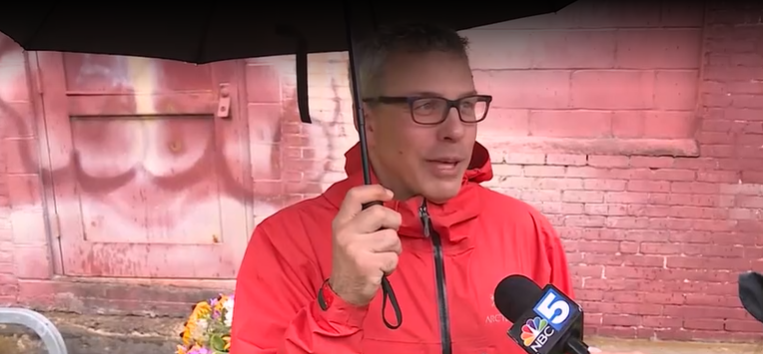
“I honestly just want more. I want to see more progress being done in my community,” said Justin Harris, a recent college graduate who was part of the discussion.

Harris also shared his story of how he met former President Barack Obama.

“When I actually had the moment to actually be in the same room with him, I shared that moment with him, and that was captured live on TV. So, I still have that video, and that holds dearly to my heart to this day,” he said.

Last Wednesday, Harris joined others from the mentoring group My Brother’s Keeper inside the Obama Center. The My Brother’s Keeper Alliance Family Reunion was the first such event to be held there. The Obama Foundation launched My Brother’s Keeper in 2014 to help improve the lives of boys and young men of color.

The group opened their panel discussion with the Leo High School Choir performing on stage.

“I think it was fitting, because the grand opening of the presidential center and having all of this energy even before it opens, and to christen the place was pretty special,” said My Brother’s Keeper director Vondale Singleton.

Trey Baker led the panel discussion, talking about how young men can make a difference in their own communities, an inspiration from former President Obama.

“I think when you have that level of storytelling, it inspires you. And I think it inspired everybody in the room as we were talking about how MBK Chicago was going to be situated to be a part of that mission,” he said.

The My Brother’s Keeper Alliance Family Reunion is a major gathering hosted by the Obama Foundation. It serves as an empowering convening for youth advocates, change-makers, and young men of color to connect, discuss leadership, and build strategies for their communities.

“It brought so much joy to my heart to see so many familiar faces, and not just any faces, but boots on the ground; organizational leaders and young people, ambassadors sharing their stories about change and hope, which is what I believe our president represents,” Singleton said.

A massive “Welcome Home” message inside the Obama Presidential Center let the next generation know it is a safe place.

“It’s for all of us, because when you have resources like the museum, and the recording studio, and the basketball court, and the community garden; all of these spaces, what it tells me is that it’s not just about access, it’s about empowering connection,” Baker said.

The Obama Presidential Center opens to the public on June 19. Officials expect 1 million people to visit every year.

Please note: This story was provided to CNN Wire by an affiliate and does not contain original CNN reporting. This content carries a strict local market embargo. If you share the same market as the contributor of this article, you may not use it on any platform.

World Cup fans may need more than an hour to go through security at Boston Stadium

By Riley Rourke, Paul Burton

Click here for updates on this story

    BOSTON, Massachusetts (WBZ) — It could take fans over an hour to go through security for the FIFA World Cup matches at Boston Stadium, according to Foxboro Police Chief Michael Grace.

“We want your experience to be memorable for all the right reasons. Plan ahead, know your transportation route and arrive early,” Grace said. “These layered security protocols are in place to ensure your safety. So give yourself time and be patient.”

Grace said that fans should plan to arrive in time to watch the pre-match entertainment.

Police will be stationed at the entrances and exits of Boston Stadium throughout the tournament, and the stadium will close to non-ticket holders starting Tuesday. Fans will also be unable to board a Boston Stadium Train without an accompanying match ticket. Patriot Place and the Mass General Brigham Healthcare Center will remain open to the public during match days.

“We strongly encourage you to utilize the many fan zones across the Boston, Providence and surrounding communities,” Grace said.

There will be no ticket sales at the stadium.

Security for World Cup at Boston Stadium Over 50 local police departments, federal agencies, and State Police will be involved in the security effort across the state. Around 85 National Guard members will also be available to help provide any additional security throughout the tournament.

Police will be stationed on public transportation to the events as well as at any entrances/exits to Boston Stadium.

“Massachusetts is no stranger to hosting large-scale events; however, the scope and duration of the World Cup does make it unique,” Massachusetts State Police Colonel Geoffrey Noble said.

Boston Police Commissioner Michael Cox said to expect a larger police presence throughout the city, with officers in uniform and plain clothes on bikes, motorcycles, and more.

“Remember all laws apply – public drinking, providing alcohol to minors, and open containers of alcohol or consumption of marijuana in public and use of fireworks are illegal and will be enforced,” Cox said.

Local, state, and federal officials will also host daily meetings with security officials in other host cities to ensure everyone remains safe during the tournament. The FBI is not currently aware of any threats against the Boston Stadium matches.

State Police ask that anyone call 911 if they notice anything suspicious. He said that it may take longer for international numbers to get through, but said there are interpreters available if people do not speak English.

Reusable water bottle ban Deputy Commissioner of the Department of Public Health, Dr. Jess Zeidman, at the press conference emphasized the importance of drinking enough water during the hot summer games.

“The most important advice to all the fans and visitors during the World Cup is to drink plenty of water,” Dr. Zeidman said. “Drink water, not soda, not beer, nor margaritas. They don’t count for hydration; in fact, they can worsen dehydration.”

But on Wednesday, FIFA announced that it would ban reusable water bottles from all matches, citing safety concerns.

Boston 2026 vice president and chief security officer Ryan Winmall said they are looking for ways to ensure that the public, staff, referees and teams remain fully hydrated during the games without having to purchase water.

Zeidman recommended that people refrain from spending too much time out in the sun. She emphasized that urban areas and the Boston Stadium could reach temperatures of over 90 degrees on some days.

“Our summers can be really, really intense,” Zeidman said.

What items are banned from the World Cup matches? Drones, fireworks, smoke devices, flares, weapons, noisemakers and any other pyrotechnics are banned from both World Cup matches and the FIFA Fan Festival at Boston City Hall Plaza.

Some other items that are banned include:

Matches and lighters Professional camera equipment including lights, tripods and cameras Seat cushions with zippers/pockets Banners larger than 6.5 x 5 ft unless pre-approved Alcohol Folding chairs Laser pointers Umbrellas Strollers/baby seats Scooters, bikes, rollerblades, skateboards Inflatable items such as balloons, balls, and more Drugs unless medically approved Outside food or drink unless medically necessary For a full list, click here. FIFA emphasized that anyone attempting to enter the stadium with a banned item may be denied entry.

Boston Stadium bag policy Boston Stadium and FIFA have a strict clear bag policy. The approved bags are:

Small wallets or wristlets no bigger than 6.5″ x 4.5″ One gallon clear freezer bags no larger than 11″ x 11″ Clear, vinyl or PVC bags no larger than 12″ x 12″ x 6″

Please note: This story was provided to CNN Wire by an affiliate and does not contain original CNN reporting. This content carries a strict local market embargo. If you share the same market as the contributor of this article, you may not use it on any platform.

Where do the fish at the New England Aquarium in Boston come from? They’re not plucked from the ocean.

By Alyssa Andrews

Click here for updates on this story

    BOSTON, Massachusetts (WBZ) — Have you ever wondered where all the fish in the New England Aquarium in Boston come from? If you think they’re all just plucked from the ocean, think again.

Twelve miles down the road, away from the hustle and bustle of the city, you’ll find a quiet aquaculture center located in Quincy.

“Our giant ocean tank is our largest exhibit at the aquarium and 80% of the population in that tank was raised here in Quincy,” says Monika Schmuck, the Manager of Sustainability in the Fishes Department.

Raising fish in Quincy Sustainability is a top priority at this facility. And it’s her job to make sure that happens.

“The whole program is to bolster fish in our own exhibits and pick species that we like to display for the public, but also take less from the wild and be able to do things sustainably behind the scenes,” Schmuck said.

Plenty of firsts happen here in Quincy. Right now, they’re working on becoming the first team to raise Creole Wrasse fish.

As the Curator of Aquatic Collections, Michael O’Neill is working through questions that nobody has the answer to yet. With over 35 thousand species of fish, there’s a lot left to discover.

“In our spare time, we’re going to focus our efforts on a species that’s never been done before, but folks would love to be able to show in their exhibits. And so we are chipping away at learning what it takes to raise this species,” O’Neill said.

Creating breeding conditions for fish It’s an incredibly precise craft to create the best breeding conditions possible. Something the ocean does naturally with ease.

“The long process that it takes to raise an animal from egg to adulthood, it takes years. And it takes a lot of really tiny little food. It takes a lot of people, you know, tinkering and trying to understand the science behind it and trying again and again,” Schmuck said. “There’s a lot of failures.”

And some conditions just can’t be replicated. While you can control for the temperature, food and lighting, some fish need a specific season to mate. Or even the correct moon phase.

“When we have a full moon, and around the full moon, we’re going to start to see more breeding activity from this group of fish. So we’ll come in next morning and check the screens and if we have a bunch of eggs, we’ll move them along,” O’Neill said.

All of the planning pays off in the end when they get to send the fish off to the aquarium and add to aquaculture research.

“It definitely is hard to raise fish from eggs, but it adds to the science for other public aquariums to use, and also other researchers. It adds to being able to understand fish in the wild better, because we understand where they come from, where their life history is, as we see how they progress through larvae,” Schmuck said. “And then when we get to put them back on exhibit, it’s really rewarding.”

Please note: This story was provided to CNN Wire by an affiliate and does not contain original CNN reporting. This content carries a strict local market embargo. If you share the same market as the contributor of this article, you may not use it on any platform.

Employers Added 172,000 Jobs in May as Inflation Remains a Concern

By Tom LoBianco | Quincy News Correspondent

Click here for updates on this story

    Washington (Quincy News) — U.S. employers added 172,000 new jobs in May, the Bureau of Labor Statistics (BLS) reported Friday, offering positive news for job-seekers after months of a “no-hire, no-fire” labor market.

Economic forecasters had expected closer to 100,000 new jobs, but the BLS reported substantially stronger hiring, while the unemployment rate held steady at 4.3%. March and April payroll estimates were also revised upward by a combined 93,000 jobs.

But the latest numbers also added to worries that inflation would continue ticking upward, potentially leading to interest rate increases. Stocks fell Friday following the report, with the S&P 500 falling 2.6% while Big Tech stocks also moved lower, marking the market’s worst day in nearly eight months.

President Donald Trump, who has frequently criticized the Federal Reserve during his second term, wrote on his online media platform Friday, “With a great Jobs Report, like just announced, stocks should go up, not down.” The administration had launched investigations into several Federal Reserve officials, including former Chair Jerome Powell, though the inquiry into Powell was ultimately dropped.

But the latest indicator of how businesses have adapted to Trump’s economic policies, including broad tariffs and increased immigration enforcement, feeds concerns that stronger hiring will boost consumer spending, leading to further inflation.

“That’s the interesting thing about inflation, it feeds on itself,” David Mitchell, Professor of Economics and Director of the Bureau of Economic Research at Missouri State University, told Quincy News. “It’s a really interesting economic problem.”

Rising prices can encourage businesses to increase production and add workers, he said. As employment and wages grow, consumers have more money to spend, boosting demand and potentially contributing to an upward price spiral.

BLS reported strong growth in the leisure and hospitality sectors in May, something Mitchell pegged to the typical ramp-up for the summer vacation season, and a drop in construction hiring, which could be attributed to interest rate concerns.

The concern among investors, which helped drive Friday’s stock sell-off, is that one of the Federal Reserve’s tools for combating persistent inflation is raising interest rates to cool consumer spending, as it did during the high-inflation period of the early 1980s, Mitchell said.

Mitchell pegged much of the current economic environment to the continuing ripple effects of the COVID-19 pandemic shock across the globe, something he said economists and others will likely be studying for a long time, much like research on the Great Depression.

The Federal Open Market Committee (FOMC), which sets interest rates, will meet again June 16 and 17. At its April meeting, then-Chair Jerome Powell and the committee kept interest rates steady at 3.50% to 3.75% as inflation remained above the Fed’s long-standing 2% target.

The BLS’ Consumer Price Index (CPI) showed consumer prices were up 3.8% from a year earlier in April. Core inflation, which excludes food and energy prices, rose 2.8% over the same period. The May CPI report is scheduled for release June 10.

Rising energy costs have also contributed to inflation pressures. Economists point to a range of factors, including higher utility bills, growing electricity demand from data centers, and disruptions in global energy markets linked to the war with Iran.

The stronger hiring figures over the past three months seemed to indicate an end to the “no-hire, no-fire” labor market pattern which persisted since Trump’s return to office, Mitchell said. He attributed it to businesses now having a greater sense of certainty.

“Businesses, as a general rule, do not like uncertainty,” Mitchell said, noting that even if businesses do not like tariffs and policies stifling immigrant labor, “if they’re around long enough, (those policies) are no longer an uncertainty.”

Please note: This story was provided to CNN Wire by an affiliate and does not contain original CNN reporting. This content carries a strict local market embargo. If you share the same market as the contributor of this article, you may not use it on any platform.

92-year-old heart recipient to compete in poker and trivia at Transplant Games for Team Nebraska

By Mary Nelson

Click here for updates on this story

    BENNINGTON, Nebraska (KMTV) — A 92-year-old Bennington woman is preparing to compete in the Transplant Games in Denver this month, representing Team Nebraska more than three decades after receiving a heart transplant.

Shirley Kramer received her transplanted heart in October of 1991, after a life-changing diagnosis where all other options failed.

“I had cardiomyopathy and it eventually deteriorated the heart,” Kramer said.

“Then my heart filled with blood clots and the doctor said my only chance was a transplant,” Kramer continued.

She waited on a transplant list for 13 months. In her own words, the call came just in time.

“I remember saying, ‘God, if it doesn’t happen soon…’ and I got the phone call that noon,” Kramer said.

To date, Kramer has lived with her transplanted heart three times longer than the average recipient. Her neighbor and friend, Rita Muff, who dedicated her career to healthcare, said she recognizes what that represents.

“She’s so strong. She’s been through so much,” Muff said.

“She celebrates life. There’s no doubt about it. She knows the meaning of life and she celebrates it,” Muff smiled.

The Transplant Games began in 1990 and are held every two years, modeled after the Olympics. States and regions field their own teams. This year, more than 3,000 competitors are expected to participate when the games begin June 18 in Denver.

Kramer is proud to represent Team Nebraska. In past games, she has competed in badminton, table tennis, bocce ball, and cornhole, and more recently in Texas Hold’em and trivia. At the last games, she received the award as the oldest recipient in the field.

To prepare, Kramer has been practicing trivia with friends and neighbors at Ridgewood Senior Living in Bennington.

Kramer credits her donor — a man from Wisconsin — for everything she has experienced in the decades since her surgery.

“Every step I take, everything I do, next to God, is because of that donor,” Kramer said.

“I would not have seen all of my grandchildren and great-grandchildren and great-great-grandchildren.”

This story was reported on-air by a journalist and has been converted to this platform with the assistance of AI. KMTV’s editorial team verifies all reporting on all platforms for fairness and accuracy.

Please note: This story was provided to CNN Wire by an affiliate and does not contain original CNN reporting. This content carries a strict local market embargo. If you share the same market as the contributor of this article, you may not use it on any platform.

‘Failed to protect’: Former student sues Blue Valley School District, alleges ex-teacher sexually assaulted her

By Chloe Godding

Click here for updates on this story

    Missouri (KMBC) — A former high school student in the Blue Valley School District has filed suit against the school district for its role in her alleged sexual assault by a former teacher.

In the lawsuit, the student, referred to as Jane Doe, alleges that the school’s former theater teacher sexually assaulted her in 2018 while she was a student at the school and a minor.

The former teacher allegedly got the student alone while at the school late at night and assaulted her. She then reported it to the administration.

The lawsuit alleges that the district learned this was not an isolated incident, and that the teacher had been sending inappropriate communications to other students.

“The District stands in place of a student’s parents and has a duty to take reasonable steps to protect those individuals when the custodial circumstances limit an individual’s ability to do so,” the lawsuit says.

However, the district reportedly knew or had reason to know of “red flags that (teacher) was unfit or posed a risk of undue harm to the young women at the school.”

The lawsuit says the teacher was criminally charged with sexual battery in 2019 but pleaded guilty to a lesser charge.

His teaching license was revoked in August 2021 as a result of the assault of Jane Doe.

She is now seeking $750,000 in damages as a result of the district’s “negligence,” and demands a jury trial for applicable issues.

“Defendant put (teacher) in a position of trust and authority over Plaintiff when she was in a vulnerable state as a minor child/student at Defendant’s school,” the lawsuit says.

It also says the district failed to supervise the teacher and “failed to protect” Jane Doe.

The Blue Valley School District shared a statement with KMBC 9, denying allegations of negligence.

“Blue Valley Schools takes all reports involving student safety seriously and acts accordingly. The district denies the allegations that it was negligent in how it dealt with its former employee (who didn’t even work at the school identified in the lawsuit). The district stands ready to defend itself through the appropriate legal channels.”

Please note: This story was provided to CNN Wire by an affiliate and does not contain original CNN reporting. This content carries a strict local market embargo. If you share the same market as the contributor of this article, you may not use it on any platform.

3 men face murder charges in connection with Arcadia Lake mass shooting

By Jonathan Greco

Click here for updates on this story

    EDMOND, Okla. (KOCO) — Murder charges have been filed against three men involved in a mass shooting at Arcadia Lake that left one person dead and almost two dozen others injured.

The Oklahoma County District Attorney’s Office announced that 18-year-old Jaylan Davis and 21-year-old Daviion Wyckoff were charged with first-degree murder for their involvement in the shooting.

A third person, 23-year-old Breonn Morton, faces one count of accessory to a felony—first-degree murder. All three are being held on a $10 million bond.

“My office has filed charges to hold those responsible accountable for the devastating violence that occurred at Lake Arcadia,” Oklahoma County District Attorney Vicki Zemp Behenna said in a news release. “What should have been a gathering of young people ended in tragedy because firearms were brought into a situation where they never should have been. Avianna lost her life and our community continues to feel the effects. These charges are an important step toward justice.”

A 20-year-old woman, Trinity Brown, was also arrested and charged in connection with the shooting.

She was charged with assault with a dangerous weapon and possession of a firearm after juvenile adjudication.

Court documents state that she was reportedly seen on camera threatening to kill a victim.

Arcadia Lake Mass Shooting Around 9 p.m. on May 3, 24 people were shot after when a fight led to gunfire during a party at the scissortail campgrounds at Arcadia Lake. The victims were 15-28 years old.

One person, 18-year-old Avianna Smith-Gray, died two days following the shooting.

Police collected approximately 80 spent casings at the crime scene. No suspects were immediately taken into custody, and an investigation led to all four being taken into custody.

“We are grateful to the Edmond Police Department and its detectives for their diligent work, the Oklahoma State Bureau of Investigation for their timely laboratory analysis, as well as our prosecution team,” Behenna said. “The hard work, professionalism, and commitment by all involved to move this case forward without unnecessary delay have helped bring us to this point.”

Please note: This story was provided to CNN Wire by an affiliate and does not contain original CNN reporting. This content carries a strict local market embargo. If you share the same market as the contributor of this article, you may not use it on any platform.