Dating costs rise as cuffing season begins, with Americans spending over $2,000 yearly on romance

By Jeffrey Lindblom

Click here for updates on this story

    ROYAL OAK, Michigan (WXYZ) — Experts say the cost of dating is on the rise, with some studies suggesting single Americans are spending upwards of $2,000 a year searching for love.

Right now, it’s a very popular time to look for a romantic partner. It’s the beginning of “cuffing season” in the dating world – when one hopes to find a special someone to get through the lonelier, colder months. But will the cost of going out prevent the possibility of finding a match?

Although the digital world offers lots of options, dating apps have some singles feeling exhausted in their search for romance.

“So, for me the apps are out,” one woman said.

Logging out presents an opportunity for finding a match in a real-world scenario. Dating experts recommend leaving yourself open and available while going about your day.

“I call it happy feet on the street,” said Kurt Kazanowski.

Kazanowski has been in the dating business for 12 years through his dating agency, Dolce Vita, and admits it can be tricky to date while balancing a budget.

“It’s two fold… money and time,” Kazanowski said.

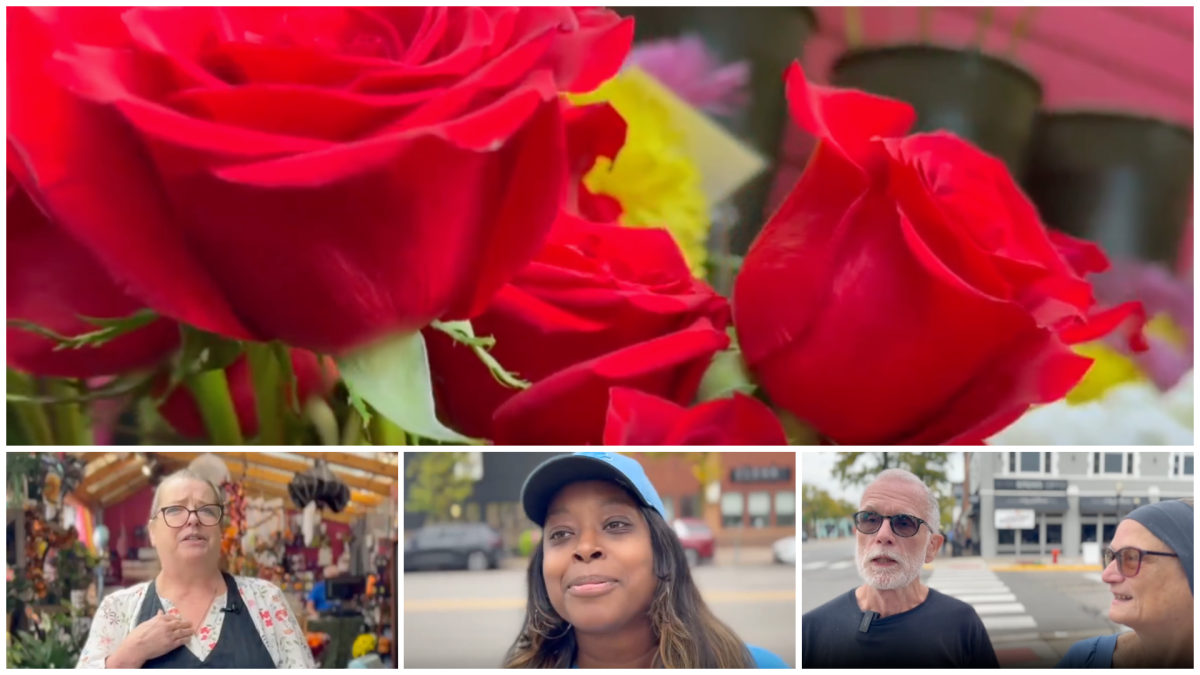
Jeanie Mundy, who has been working at a flower shop since she was a girl, believes growing a bond goes beyond the bank.

“You never want to show up on a date empty-handed. You walk in with something flowers… it says I want to get to know you and spend time with you,” Mundy said.

Mundy says knowing your flowers really counts for something, because what you pick can be a reflection of what it is you’re trying to say.

“If you really want to show a person you like them, show up with a dozen or two roses,” Mundy said.

If you’re lucky enough to find a potential love match to give flowers to – whether online or in person – if you’re paying for the date, it could set you back.

According to a 2025 study by BMO Real Financial Progress Index, the “all in” price of a date – from the pre-date grooming to the gas money – is nearly $168.

On average, a single American spends $2,279 on dates in a year.

If you find that special loved one, a couple married for over 40 years has this advice.

“Whatever she says, I just say ‘I understand,'” said Ed and Marie Newcomb.

——————

“This story was reported on-air by a journalist and has been converted to this platform with the assistance of AI. WXYZ’s editorial team verifies all reporting on all platforms for fairness and accuracy.”

Please note: This content carries a strict local market embargo. If you share the same market as the contributor of this article, you may not use it on any platform.

Homeless shelter on Chicago’s North Side offering first-of-its-kind dorm room model

By Dana Kozlov

Click here for updates on this story

    CHICAGO (WBBM) — A North Side shelter is using a first-of-its-kind dorm room model to bring stability and restored dignity to men who are homeless.

Shelter leaders said providing clients with their own personal space offers much more than a place to sleep inside a former Rogers Park medical clinic.

“It’s just a stepping stone. It’s just a place to help me move forward in life,” Resident Ray Smith said.

Instead of sleeping in a large room on cots like other men’s shelters, the residents share a room with one other person.

“It’s that sense of living a normal life is a motivator to get these gentlemen to think, I want this for myself. I’m gonna get a job, I’m going to get my own apartment, I’m going to live like this for the rest of my life,” Peter Marchese, North Side Housing Board president, said.

That’s Smith’s goal. He arrived with two duffel bags almost a year ago.

“You have all your belongings. You can leave it here. You can work. You can do what you need to do,” Smith said.

Marchese said shelter staff and programs help. There’s laundry, three meals a day, medical care, financial counseling, art therapy all in a trauma-conscious environment that includes muted colors and skylights.

“We work with each of our clients to develop a plan to successfully transition out of shelter,” Marchese said. “As long as they’re working on it, each of our clients, they are welcome to stay.”

Out of prison for two years now, Martin Bendik

“It’s like a unity, like a brotherhood. It’s supposed to be like family, struggle together, to try to help each other out,” Bendik said.

The shelter has already housed over 150 clients since opening in December. First backed by Mayor Lori Lightfoot and then Mayor Brandon Johnson’s administration, Marchese says it will be the city’s model going forward.

Marchese says Bendik is about to move to Wisconsin next month, to start his next chapter.

While this shelter just opened its doors in December, Marchese says the city is planning to convert four other shelters to this dorm-type model in the next couple of years.

Please note: This content carries a strict local market embargo. If you share the same market as the contributor of this article, you may not use it on any platform.

BearCat slams into stolen big rig, bringing pursuit with kidnapping suspect to an end

By Austin Turner, Hunter Sowards, Luzdelia Caballero, Dean Fioresi

Click here for updates on this story

    ORANGE COUNTY, California (KCAL, KCBS) — A wild multi-county pursuit came to a sudden end in Orange County on Wednesday afternoon when a BearCat slammed into an allegedly stolen big rig out of the Inland Empire.

The Fontana Police Department said the pursuit started at about 9:30 a.m. after officers determined that the driver was allegedly using “cold plates,” which means the license plates attached to the truck were deemed to be fake or from another vehicle.

The driver was identified as 54-year-old Bill Fayed of Buena Park.

A man, later identified as 42-year-old Carlos Mesta, a resident of Rancho Cucamonga, was in the passenger seat. According to Fontana police, he called his daughter at one point to tell her that the driver won’t let him out of the vehicle. Fayed then took the phone.

The relationship between Fayed and Mesta is not clear.

While the pursuit began in the center of Fontana, Fayed drove to Orange County by 10:19 a.m. He took the 57 Freeway from Brea to Fullerton and was in Anaheim by 10:30 a.m.

At one point in Anaheim, Fayed came to a stop, threw what appeared to be a water bottle outside of the truck, and continued driving.

At 10:58 a.m. in Buena Park, Mesta reached out of the vehicle and appeared to grab onto a nearby vehicle. Immediately after, an armored North County SWAT BearCat vehicle rammed into the side of the big rig.

The big rig appeared to sustain some damage to its driver’s side, but the driver continued on the streets of Buena Park.

At 11:04 a.m., Fayed stopped the vehicle in the intersection of Beach Boulevard and Franklin Street in Buena Park. Soon after, he surrendered to officers, with Mesta safely giving himself up to the police, who had surrounded the semi truck.

According to Fontana PD, both men had outstanding warrants, including a grand theft auto warrant for Fayed, who they said was armed and dangerous during the pursuit, authorities said.

It’s not yet clear if there will be kidnapping charges, but Mesta was taken to a nearby hospital by paramedics for undisclosed reasons.

No officers were injured during the pursuit. Multiple law enforcement agencies assisted.

Please note: This content carries a strict local market embargo. If you share the same market as the contributor of this article, you may not use it on any platform.
Boy saves father’s life with stem cell donation: ‘He’s my hero’

By Leo Stallworth

Click here for updates on this story

    LOS ANGELES, California (KABC) — A young boy from Southern California is being called a hero after he donated stem cells to save his father’s life.

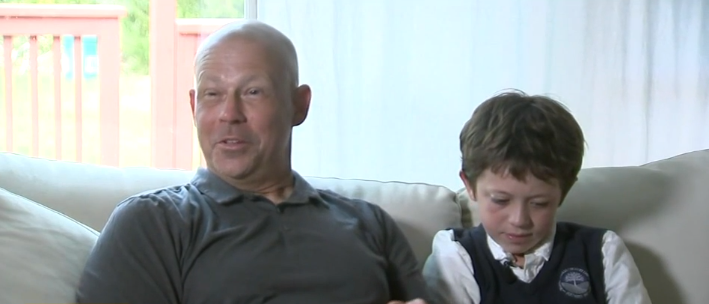
Dr. Nick Mondek was at death’s door until his son, Stephen, stepped in.

“This past April of this year I relapsed with leukemia,” said Mondek, an anesthesiologist who works in the Los Angeles area.

Mondek had a stem cell transplant before. Now he desperately needed another one – yet he could not find a match.

“It came back very aggressive,” Mondek said. “I was immediately hospitalized.”

Mondek was running out of time.

“I’m thinking about my family, and I’m thinking about how I’m not ready to go yet,” he told Eyewitness News.

In his darkest hour, sitting in his doctor’s office, Mondek had a thought.

“As soon as my doctor came in the room I said, ‘Could a 9-year-old who’s 70 pounds give us enough stem cells?’ And he just looked at me and smirked and said, ‘He just might be able to,'” Mondek recalled.

His son was a match.

“He really was a brave young man who wanted to help his dad in any way he could,” said Dr. Nicole Baca with Cedars-Sinai Guerin Children’s.

The procedure was more difficult due to Stephen’s age. He was 9 years old at the time – one of the youngest ever to undergo a stem cell transplant. Yet, he didn’t hesitate.

The transplant was performed at Cedars-Sinai Guerin Children’s in Los Angeles. It was a smashing success.

“Very grateful. He’s my hero,” Mondek said about his son.

“It feels good to do that because all my friends are proud of me,” Stephen said.

Mondek sees his son as a superhero who saves the day. In this case, he saved his dad.

“They got a cape on and they’re flying to someone in need who is in a critical point in their life,” Mondek said. “And to see that unfold in front of you, not just any person, but your 9 year old, is incredible.”

Because of the actions of his son, Mondek will no doubt have many more years to share in cherished memories.

Please note: This content carries a strict local market embargo. If you share the same market as the contributor of this article, you may not use it on any platform.
Amid insurance exodus in California, 5 insurance companies commit to stay in state

By Madisen Keavy

Click here for updates on this story

    California (KMAX, KOVR) — After a year marked by insurance companies pulling out of California, state officials say five major insurers are committing to the state.

The California Department of Insurance confirmed to CBS Sacramento that Mercury Insurance, CSAA, USAA, Pacific Specialty, and California Casualty all announced plans to “stay and grow in the state.” Together, they represent three of California’s top seven largest homeowners’ insurance providers.

In recent years, insurers cited wildfire risks, rising costs, and state regulations as reasons for limiting or stopping coverage in California.

In conversation with Bill Clinton at a livestreamed Clinton Global Initiative event on Wednesday, Gov. Gavin Newsom announced that state reforms, like addressing reinsurance, enticed the companies to come back.

“We had to address the capital needs of these companies and we also had to address the fact that California, and you wouldn’t know this, is among the most affordable insurance markets in the country because the voters initiated a framework on regulation that denied significant rate increases,” Newsom said during the discussion focused on climate issues.

Newsom called insurance one of the most pressing global issues as it relates to climate change.

The state’s reforms are called the Sustainable Insurance Strategy, touted by Newsom during the conversation.

Under the changes, insurers can now use catastrophe modeling—computer programs that analyze wildfire history, climate trends, and other information or data—to more accurately calculate risk and set rates. In exchange, they are required to expand coverage in high-fire-risk areas, where homeowners have struggled to find affordable policies in the past.

All five companies have also requested rate changes of 6.9%, a figure the Department of Insurance spokesperson says matches thousands of increases approved under past commissioners, outlined in a statement shared with CBS Sacramento on Wednesday, confirming the insurer’s decisions.

The Department of Insurance spokesperson, in a statement, framed the reforms as a way to balance insurer sustainability with consumer access, with a goal that more Californians in wildfire-prone areas can secure coverage.

“This is a far cry from what has happened in the past, when insurance companies increased their rates and dropped policies. Under Commissioner Lara’s Sustainable Insurance Strategy, we are seeing initial signs of market improvement despite the devastating L.A. wildfires,” said Michael Soller, a department spokesperson, in a statement.

For now, homeowners may still face higher rates, but state leaders argue the reforms offer accessibility.

Please note: This content carries a strict local market embargo. If you share the same market as the contributor of this article, you may not use it on any platform.

Donated clothes become care packages for people in need at the Giving Factory. Take a look inside


KYW

By Chandler Lutz

Click here for updates on this story

    PHILADELPHIA, Pennsylvania (KYW) — Philadelphia is consistently ranked among the poorest large cities in America, and is home to thousands of families struggling to meet even the most basic needs. But tucked away in East Falls, a nonprofit called Cradles to Crayons is rewriting that narrative —one warm coat, one backpack, one outfit at a time.

“We’ve got families in the city and in pockets all over the region who don’t have a pair of shoes that fit,” Michal Smith, executive director of Cradles to Crayons Philadelphia, said. “You don’t want a 14-year-old boy wearing his aunt’s coat.”

That’s where Cradles to Crayons steps in. Serving children from birth to age 18, the organization provides essentials like winter coats, boots, school supplies, diapers, hygiene items and more — everything a child needs to feel safe, confident and ready to learn.

“We make sure they have age-appropriate clothes, clothes they feel proud about wearing,” Smith said.

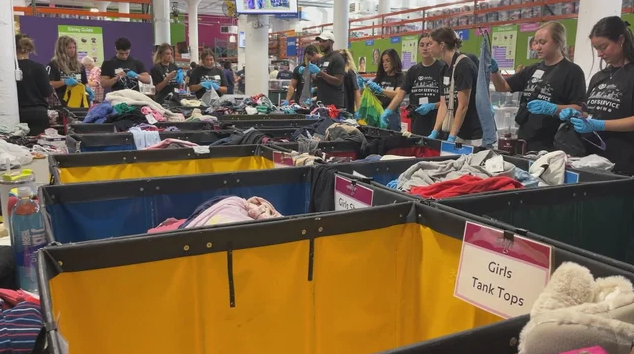
At the heart of the operation is the Giving Factory, a bustling warehouse powered by volunteers. At the Giving Factory, items are donated, sorted, inspected and packaged into personalized outfit bags.

Elaine Kittredge, a volunteer, shows an outfit bag she put together.

“This is for a girl, size 3T,” Kittredge said. “With two pairs of pants, four shirts, a sweatshirt, and a dress.”

Kittredge and fellow volunteer Carolyn Cummings have been coming twice a week for three years.

“I’m a shopaholic,” Kittredge said with a laugh. “Putting together little outfits just makes my heart melt. I know some little girl is going to look so sweet in that outfit.”

Each bag contains a week’s worth of clothing, carefully curated to mix and match.

“We rely on the entire Greater Philadelphia community to help us do this work,” Smith said. “We are powered by volunteers.”

Once packed, the items are distributed through Cradles to Crayons’ network of over 170 service partners, including the School District of Philadelphia, Project Home and Mom Mobile.

Amika Miller, social service manager at The Family Practice & Counseling Network, picks up orders monthly for families facing clothing insecurity.

“The families are really, really just grateful and happy,” Miller said.

Miller says she sees the emotional difference in a child who is able to receive a new piece of clothing.

And the turnaround is fast.

“Within three to five days, that clothing will be sorted here in our Giving Factory and going out to a kid in need,” Smith said.

Cradles to Crayons is one of the few places in the region where kids can volunteer alongside their families. Children as young as five can help sort and pack donations at the Giving Factory.

Cradles to Crayons hosting winter clothing drive

That extra jacket in your closet? It could become a lifeline for a child in need.

This Saturday, Cradles to Crayons is hosting its biggest event of the year: The Big Give 2025. With 27 collection sites across the region, they’re gathering winter essentials like coats, boots and gloves for families who need them most.

Some locations have been collecting since Sept. 1, and others will only collect on Sept. 27.

Last year, they distributed 25,000 winter coats. This year, they’re aiming even higher. For more information, including where you can send your donations, visit CradlestoCrayons.org.

Please note: This content carries a strict local market embargo. If you share the same market as the contributor of this article, you may not use it on any platform.

Donated clothes become care packages for people in need at the Giving Factory. Take a look inside

By Chandler Lutz

Click here for updates on this story

    PHILADELPHIA, Pennsylvania (KYW) — Philadelphia is consistently ranked among the poorest large cities in America, and is home to thousands of families struggling to meet even the most basic needs. But tucked away in East Falls, a nonprofit called Cradles to Crayons is rewriting that narrative —one warm coat, one backpack, one outfit at a time.

“We’ve got families in the city and in pockets all over the region who don’t have a pair of shoes that fit,” Michal Smith, executive director of Cradles to Crayons Philadelphia, said. “You don’t want a 14-year-old boy wearing his aunt’s coat.”

That’s where Cradles to Crayons steps in. Serving children from birth to age 18, the organization provides essentials like winter coats, boots, school supplies, diapers, hygiene items and more — everything a child needs to feel safe, confident and ready to learn.

“We make sure they have age-appropriate clothes, clothes they feel proud about wearing,” Smith said.

At the heart of the operation is the Giving Factory, a bustling warehouse powered by volunteers. At the Giving Factory, items are donated, sorted, inspected and packaged into personalized outfit bags.

Elaine Kittredge, a volunteer, shows an outfit bag she put together.

“This is for a girl, size 3T,” Kittredge said. “With two pairs of pants, four shirts, a sweatshirt, and a dress.”

Kittredge and fellow volunteer Carolyn Cummings have been coming twice a week for three years.

“I’m a shopaholic,” Kittredge said with a laugh. “Putting together little outfits just makes my heart melt. I know some little girl is going to look so sweet in that outfit.”

Each bag contains a week’s worth of clothing, carefully curated to mix and match.

“We rely on the entire Greater Philadelphia community to help us do this work,” Smith said. “We are powered by volunteers.”

Once packed, the items are distributed through Cradles to Crayons’ network of over 170 service partners, including the School District of Philadelphia, Project Home and Mom Mobile.

Amika Miller, social service manager at The Family Practice & Counseling Network, picks up orders monthly for families facing clothing insecurity.

“The families are really, really just grateful and happy,” Miller said.

Miller says she sees the emotional difference in a child who is able to receive a new piece of clothing.

And the turnaround is fast.

“Within three to five days, that clothing will be sorted here in our Giving Factory and going out to a kid in need,” Smith said.

Cradles to Crayons is one of the few places in the region where kids can volunteer alongside their families. Children as young as five can help sort and pack donations at the Giving Factory.

Cradles to Crayons hosting winter clothing drive

That extra jacket in your closet? It could become a lifeline for a child in need.

This Saturday, Cradles to Crayons is hosting its biggest event of the year: The Big Give 2025. With 27 collection sites across the region, they’re gathering winter essentials like coats, boots and gloves for families who need them most.

Some locations have been collecting since Sept. 1, and others will only collect on Sept. 27.

Last year, they distributed 25,000 winter coats. This year, they’re aiming even higher. For more information, including where you can send your donations, visit CradlestoCrayons.org.

Please note: This content carries a strict local market embargo. If you share the same market as the contributor of this article, you may not use it on any platform.

2 sought after attempting to dump car in canal before torching it, MDSO says

By Mauricio Maldonado

Click here for updates on this story

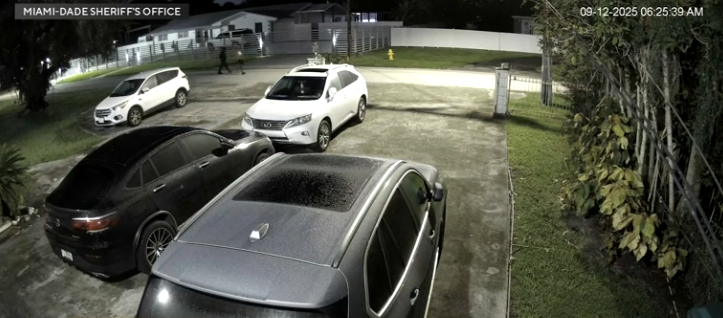
    MIAMI, Florida (WFOR) — The Miami-Dade Sheriff’s Office is asking for the public’s help to identify two men who allegedly set a vehicle on fire after they could not push it into a Miami canal earlier this month, authorities said.

Detectives said it happened on Sept. 12, shortly after 6:30 a.m., in the 1000 block of S. Biscayne River Dr.

Surveillance video shows the men, aged around 18-25 years old, getting gasoline from a nearby Sunoco station before the fire and then fleeing after setting the vehicle on fire, authorities said.

Fire determined to be arson

According to investigators, deputies and Miami-Dade Fire Rescue responded to the scene, where firefighters extinguished the flames and determined the blaze had been intentionally set.

Preliminary findings showed the two men attempted to push the vehicle into the canal before setting it ablaze and fleeing. No injuries were reported.

“They attempted to push the vehicle into the canal and were unsuccessful in doing so; they then afterwards intentionally set it on fire before fleeing,” said Angel Rodriguez, MDSO public information officer.

“We don’t know what these individuals are up to. The fact that they went through great lengths to try and conceal a vehicle that they were seen driving a short time before and, at the same token try and set it on fire brings us a great alarm of concern because someone could’ve gotten hurt.”

The sheriff’s office asked anyone with information about the suspects’ identities or whereabouts to contact investigators at 305-994-1000 or reach out to Miami-Dade Crime Stoppers.

Please note: This content carries a strict local market embargo. If you share the same market as the contributor of this article, you may not use it on any platform.

UGA researchers use turf science to protect athletes, preserve fields

By Joy Benedict

Click here for updates on this story

    ATHENS, Georgia (WUPA) — On the football field, teamwork drives the game, but behind the scenes, another team is working to keep players safe.

At the University of Georgia’s Turfgrass Research and Education Center, scientists are studying how grass affects athlete performance and injuries.

Dr. Gerald Henry, a turfgrass management specialist, and his team replicate the wear and tear of football games using specialized cleat machines to test how different types of grass hold up under pressure.

“So we can replicate the wear and tear traffic of a football game very quickly and then see how that affects the grasses that were growing,” Henry said.

Researchers place athletes on the turf to monitor how their bodies interact with the grass, using small sensors that track movement and impact.

“These little devices talk to one another, and we can take the data from those devices and actually tell whether their body is interacting with the grass in a more beneficial way or a detrimental way,” he explained.

Testing different grass types ensures that playing surfaces remain safe and functional.

“You don’t want open areas because that can create some problems with footing,” Henry said.

At UGA’s Tifton campus, researchers have developed hybrid grasses like Tifway and Tifgreen, now used on football fields, golf courses, and lawns worldwide. The turf is also the choice of five NFL teams this season.

Meanwhile, on the Griffin campus, scientists are testing turf technology, including underground sensors and drones, to monitor soil moisture and optimize watering.

Since the 1950s, UGA researchers have pioneered the global success of these turfgrasses, and today, a multidisciplinary team supports an industry that contributes more than $1 billion annually to Georgia’s economy.

For athletes and groundskeepers alike, the science of turf is a win-win, protecting players while keeping Georgia’s fields in top condition.

Please note: This content carries a strict local market embargo. If you share the same market as the contributor of this article, you may not use it on any platform.

2 people, dog rescued after boat sinks in river

By JT Moodee Lockman

Click here for updates on this story

    BALTIMORE, Maryland (WJZ) — Two people and a dog were rescued after their boat sank in a Baltimore County river, according to police.

Officers responded to the distress call in Gunpowder River after the boat began taking on water.

According to police, the 30-foot boat hit a submerged object.

When officers arrived, two people were already in the water with lifejackets on. They were pulled to safety along with a dog named Niko.

No injuries were reported, police said.

Rescues in the Baltimore area

Baltimore County police and fire crews have responded to several rescue calls in recent months.

In early September, six people were rescued after their boat began taking on water in Baltimore’s Fort Armistead near the site of the Francis Scott Key Bridge collapse.

All six people were safely returned to the shore with the help of fire crews.

In mid-August, fire crews recovered the body of a swimmer after a two-day rescue effort.

Michael Randle, 36, drowned at the Beaver Dam Swimming Club after he disappeared under the water on August 17.

According to Thiru Vignarajah, the attorney representing the family, Randle was the fourth person to drown at the club since 2000. Following the incident, Randle’s family called on county health officials to review the club’s permit and implement safer procedures.

Earlier in the month, county fire crews rescued a 32-year-old horse that had fallen into a hole.

According to fire officials, the horse, John, escaped from his owner’s property before falling into an 8- to 10-foot hole in Reisterstown.

A local town company provided a crane, which was used to lift the sedated horse from the hole, fire crews said.

Please note: This content carries a strict local market embargo. If you share the same market as the contributor of this article, you may not use it on any platform.