Otero County will close detention facility in Alamogordo

By Hamilton Kahn

Click here for updates on this story

    OTERO COUNTY, N.M. (KOAT) — After numerous reports of poor conditions and imprisonment of immigrants who may not be in the U.S. illegally, the New Mexico legislature passed, and Gov. Michelle Lujan Grisham signed a bill that is likely to reduce, if not eliminate, the detention of people by U.S. Immigration and Customs Enforcement.

The Immigrant Safety Act bans local and state authorities from contacting ICE to detain people in New Mexico for civil immigration violations, and a quick response has come from the Otero County Detention Facility in Alamogordo. It announced that it will close when its contract is no longer in effect.

State Sen. James Townsend (R-Eddy & Otero) said the facility’s shutdown will deliver a heavy blow to the local economy.

“It’s a huge deal,” Townsend said. “It hurts Otero County, there’s no other way to spin it. There’s 1,000 going to be lost. There are three counties that are going to be affected, and as you well know, 1,000 jobs in New Mexico is a big deal.”

The other two facilities holding people detained by ICE in New Mexico are the Torrance County Detention Facility and the Cibola County Detention Center.

Please note: This story was provided to CNN Wire by an affiliate and does not contain original CNN reporting. This content carries a strict local market embargo. If you share the same market as the contributor of this article, you may not use it on any platform.


‘I never thought I would fall in love again’: Claxton woman shares story of finding love after loss

By Kirsten Maselka

Click here for updates on this story

    CLAXTON, Ga. (WJCL) — For many people, Valentine’s Day is a celebration of romance. For those who have lost a spouse, it can be a difficult day to navigate.

JoAnn Strickland, of Claxton, Ga., knows that feeling.

“We were together 27 years, then he got sick,” Strickland said.

Her husband died of cancer in 2016. In the years that followed, Strickland said she leaned on family and friends and had no interest in another relationship.

“My friends gave me a hard time, said, ‘You’ve got to get out and date somebody,’” she said. “I never thought I would fall in love again… I never thought I would even date.”

Hunter Bickers, a therapist at Waters Edge Counseling, said those emotions are common. He said there is no set timeline for when someone should start dating after losing a partner.

“That’s the big question, and it’s a struggle a lot of people experience,” Bickers said. “But if the answer is, ‘I am open and I’d like to explore and expand again while still commemorating and cherishing what I had,’ then maybe it is the right time.”

For Strickland, that readiness came slowly. Then she met Steve Stiegman.

“We clicked,” Stiegman said. “We don’t go anywhere where we don’t have a good time.”

Strickland said starting over brought complicated emotions, including learning not to measure a new relationship against the one she lost.

“You can’t compare it to your spouse that you lost, so I had to work through that,” she said.

Bickers said many widows and widowers worry that loving again means betrayal.

“We don’t have to prove our loyalty by staying alone forever,” Bickers said. “Moving forward does not necessarily mean completely moving on. That person is still in your life — it just looks a little bit differently.”

Strickland said her late husband remains part of her life — while making room for something new.

“I still visit the cemetery. I bring flowers and talk to him,” she said. “Steve can be part of that.”

Last Christmas, Stiegman proposed.

“He had on the shirt that said, ‘Will you marry me?’” Strickland laughed.

This Valentine’s weekend, the couple plans to spend the day at their favorite place and enjoy quality time.

“We’re going to hit the beach,” Stiegman said.

Strickland said finding love again changed her perspective.

“I really didn’t think I needed anybody until I met Steve,” she said. “It makes you want to love stronger if you find somebody that you can be with.”

Mental health professionals say no one has to navigate grief alone, and support from friends, family or a counselor can be an important part of healing.

Please note: This story was provided to CNN Wire by an affiliate and does not contain original CNN reporting. This content carries a strict local market embargo. If you share the same market as the contributor of this article, you may not use it on any platform.
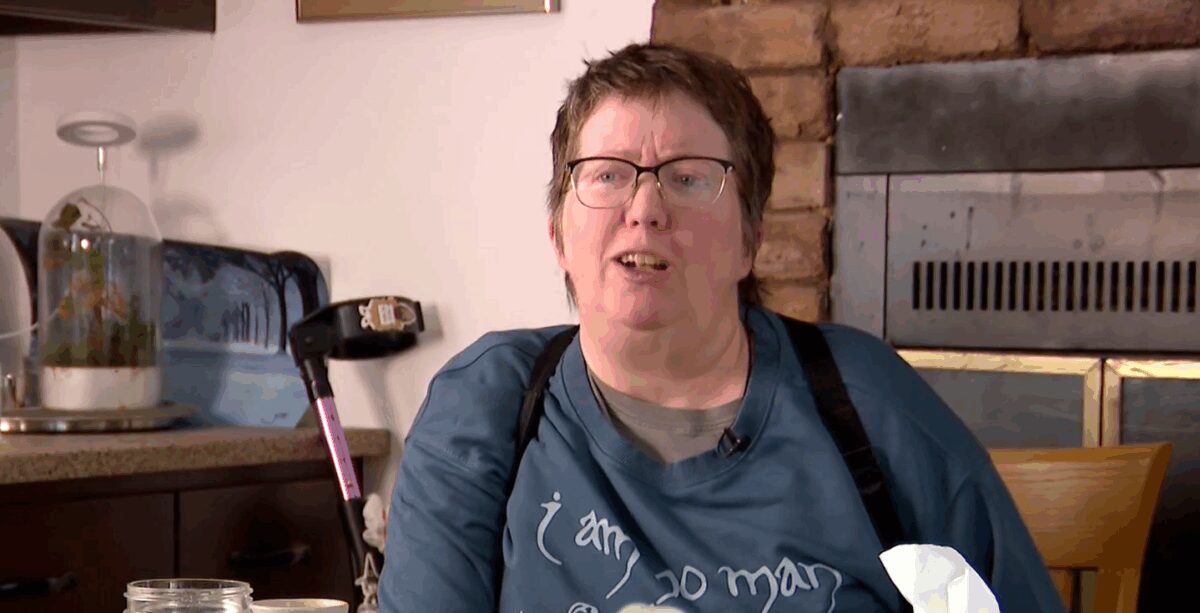
University of Michigan student accused of using AI suing school; lawsuit alleges disability discrimination

By Nick Lentz

Click here for updates on this story

    DETROIT (WWJ) — A federal lawsuit alleges University of Michigan regents and faculty engaged in disability discrimination against a student accused by an instructor of using artificial intelligence to write papers.

The court document was filed with the U.S. District Court for the Eastern District of Michigan on Monday. It identifies the student as an undergraduate who has documented disabilities, including generalized anxiety disorder and obsessive-compulsive disorder.

“These conditions substantially limit one or more major life activities, including concentration, thinking, communicating, and interacting with others in high-stress settings,” the lawsuit said.

According to the court document, the university had notice “no later than” Feb. 7, 2025, of the student’s disabilities and need for accommodations through its Services for Students with Disabilities process and medical documentation.

During the last fall semester, Theo Nash, an instructor for the class Great Books 191, accused the student three different times of using AI to write course papers, according to the court document.

“The accusations were based heavily on subjective judgments about Plaintiff’s writing style and on self-confirming ‘AI comparison’ outputs generated using Plaintiff’s own outlines and content,” the lawsuit said.

According to the court document, the student denied using AI for the papers and provided written proof of the same, along with disability-related documents that said traits associated with GAD and OCD, including “formal tone, meticulous structure, stylistic consistency, and heightened distress during oral confrontation, can be misinterpreted as artificial or dishonest behavior and are not proof of AI misuse.”

The lawsuit said the university and its Office of Student Academic Affairs moved forward with discipline without providing the student with disability support, despite being notified. Measures included “disciplinary probation” and requiring them to write a reflective essay. The school also issued penalties that resulted in a “no record” grade on the student’s transcript, according to the court document.

The student on Dec. 24 submitted a formal appeal for the school’s ruling on two of the instructor’s accusations, per the lawsuit. The same day, they filed a joint civil rights complaint with the U.S. Department of Education Office for Civil Rights and the university’s Equity, Civil Rights and Title IX Office.

The university told the student her appeal would be paused until the federal education agency completed its review, the lawsuit said.

Per the court document, the federal office issued a written dismissal of the student’s complaint on Jan. 2, saying the student had approved testing accommodations.

According to the lawsuit, the NR grade and sanctions are blocking the student from graduating and threatening their future education plans, according to the court document.

The lawsuit said the regents and faculty named violated the Americans with Disabilities Act by failing to “reasonably accommodate” the student’s disability-related limitations “in the academic integrity process and related academic decisions.”

According to the court document, the defendants also violated the Rehabilitation Act by discriminating against them “solely by reason of disability” by “treating disability-related writing traits as evidence of misconduct.”

The lawsuit is asking a judge to preserve the student’s academic record by stopping any negative marks on their transcript, preventing that information from being shared, and blocking any further academic penalties while the accusations are being challenged. It also asks the school to provide the student with a “prompt, fair, and disability-informed process” and is seeking financial compensation for an amount that has yet to be determined.

A spokesperson at the University of Michigan said the university has no comment in response to the lawsuit.

Please note: This story was provided to CNN Wire by an affiliate and does not contain original CNN reporting. This content carries a strict local market embargo. If you share the same market as the contributor of this article, you may not use it on any platform.
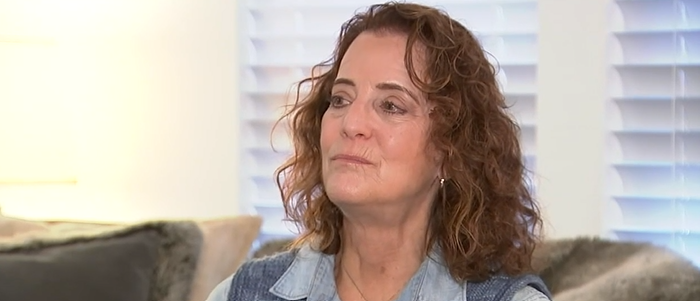
A life-altering stroke couldn’t keep a Minneapolis triathlete from her passion

By Susan-Elizabeth Littlefield

Click here for updates on this story

    MINNESOTA (WCCO) — North Minneapolis resident Kate Varns is a bonafide Ironman, meaning she’s finished the toughest of toughest triathlons. It features a 2.4-mile swim, followed by a 112-mile bike ride, then a full 26.2-mile marathon.

But after surviving a stroke several years ago, that accomplishment paled in comparison to what laid ahead.

“My parents started us young, which I’m so grateful for,” said Kate Varns. “When my brother and I were little, they really fostered a love of getting outside whenever we could. Just kind of climb around on trails and stuff like that. Then in high school, it was more formalized, where my brother and I got involved in cross country and track, and that was where it really took off.”

Maine is where Kate Varns grew up, Minnesota is the place she’s grown to appreciate, and husband Glenn Varns is the Minnesotan she’s grown to love after meeting in college.

“Her superpower is infectious enthusiasm. You’ve always had a pretty amazing, positive attitude,” said Glenn Varns. “And it’s not everything, but it counts for a lot.”

And that try-anything attitude got her to try something new as an adult.

“Glenn knew that I wanted to get involved in triathlon, being a runner by background. I had no swim background. Like, the first two years were heavy into swimming because, again, I just really needed to start from the ground up. And so we would swim in the pool, we would transfer to a stationary bike and then we would run on the indoor track. So it was a nice, kind of gentle way of kind of getting into it,” she said. “It was just exciting. I had gotten just really excited by just watching triathlon videos on YouTube and things like that, and watching the [Ironman World Championship] in Hawaii was a whole other thing.”

In 2018, she achieved her goal.

“I really believe the best thing about triathlon for adults is it gives summer back for adults, because, you know, you’re swimming in lakes, you’re taking nice bike rides, you’re running in pretty areas with friends, like parks and things like that, so it’s like a kid again,” she said.

The Varns were fully immersed in an endurance athlete community. But one night Kate Varns went to bed, and woke up as a different person.

“She couldn’t move her left side. Her face was drooping on the left side. It was pretty obvious to me what was going on,” said Glenn Varns. “As soon as I realized that she couldn’t stand up on her own, that’s when I knew we had to activate things quickly.”

A doctor himself with Allina Health, he sprung into action despite his shock.

“Kate was a, is an incredibly healthy person, and so we did have, and still kind of do, have this floating, like, uncertainty, of like why? Why did this all happen to her?” he said.

“I remember waking up at some point and being made aware that my left side was paralyzed, that I’d had a stroke, and I remember at some point, I had no idea when, waking up and just panicking, thinking, ‘But my walks, I love my daily morning walks. How am I going to do it?'” she said.

After months in hospitals, she ended up at Courage Kenny Rehabilitation Center, relearning what she had once mastered.

“That was actually a relief, because by that time I thought I’m going crazy. I have to move. I want to move. I need to do something,” she said. “And I told the therapist that, that I said, ‘Just so you know, for your peace of mind, I am used to working out more than once a day, so I want to get working and doing something.’ So I welcomed the therapy.”

And one day she welcomed an unexpected idea: to sign up for a triathlon six months later. It’s all thanks to her training buddy, Kim.

“I was just saying, ‘Oh, I don’t know how it’s going to happen. I really want to get back to triathlon.’ She said, ‘Have you ever thought about competing as a para-athlete?’ And my first thought was like, ‘Well, what does that involve?’ So we talked about it and learned more about it, and I watched some videos,” she said.

And with the help of her swimming buddy/husband, and a tandem bike, Kate Varns did the impossible once again — finishing a YMCA triathlon.

“I am so extremely proud of it, but I just kind of choke up thinking about it, but having had a stroke and been hospitalized for weeks and months, and then coming back on the race course, that was indescribable,” she said. “It was harder in many ways than Ironman.”

“Her superpower is infectious enthusiasm, and to just see that shine through all the time, and the way that you’ve gone through processing that fear and like, ‘Yeah, I can still do that,'” said Glenn Varns.

And that is exactly what she’s doing: training, and resting and prepping for what’s next. Because Kate Varns isn’t afraid of a challenge — she’s become a friend to it.

“There were days when I just had to tell myself, ‘Just keep moving forward.’ And that became kind of my mental mantra,” she said.

Please note: This story was provided to CNN Wire by an affiliate and does not contain original CNN reporting. This content carries a strict local market embargo. If you share the same market as the contributor of this article, you may not use it on any platform.

Palisades Fire victim scammed out of $38K meant for home repairs after death of husband

By Tim Pulliam

Click here for updates on this story

    PACIFIC PALISADES, LOS ANGELES (KABC) — The Pacific Palisades community is rallying behind a woman who, in one year, had much of her home damaged in the fire and lost her husband to cancer – only to be victimized again.

Just as Ellen Rudolph was starting to rebuild her home, she says scammers tricked her out of $38,000 meant for repairs.

“Every time I think about it, I’m re-living it,” said Rudolph.

She says the crooks sent her an email pretending to be PayPal, claiming there was a suspicious charge on her account that needed to be addressed. She gave them access to her bank account, including the money she was using to repair her home.

“I just didn’t see that it was a scam. … I was extremely vulnerable, given my other two huge life events,” she said.

While recovering from the Palisades Fire, her husband of 13 years, Steve, was diagnosed with Stage 4 lung cancer in April. In October, he passed away at 81.

“It hits me usually when I’m alone. Often when I’m driving in the car or I’m getting up in the morning,” said Rudolph. “He was an extraordinary man. I loved him.”

She says the situation is scary, but important for her to go back to her home.

“Steve would want me to… It was our home,” she said. “Going back to the house, I’m filled with mixed emotions. Steve will not be there.”

Rudolph filed a police report and hopes sharing her story prevents others from being scammed.

“F them. You know. They took advantage when I was, and am still, at my most vulnerable in my entire life,” Rudolph said.

Rudolph already raised more than $23,000 through a GoFundMe, hoping to reach her goal of $28,000 to cover some of her losses.

Please note: This story was provided to CNN Wire by an affiliate and does not contain original CNN reporting. This content carries a strict local market embargo. If you share the same market as the contributor of this article, you may not use it on any platform.

Velo Vets creates cycling community for disabled veterans in Sierra Vista

By Alexis Ramanjulu

Click here for updates on this story

    SIERRA VISTA, Ariz. (KGUN) — A Sierra Vista nonprofit is using cycling to create community for disabled veterans, proving that physical limitations don’t have to end an active lifestyle.

Velo Vets, a nonprofit in Sierra Vista, creates community for veterans while getting them outdoors through cycling. For some members who are disabled, they didn’t think they’d ever be able to get on a bike again.

“It gets the endorphins running, it gets your blood pumping, and people just enjoy doing it,” Ken Kingsley said.

Kingsley co-founded the organization in 2017. The group now has over 100 members who meet twice a week for 15-mile rides, making sure to stop for coffee and conversation.

For many disabled veterans, social opportunities can be limited.

“You know, they don’t have as much of an opportunity or even an incentive to get out in the world and to associate and socialize, and so we give them that opportunity to,” Kingsley said.

“I think the exercise is one of the best things. But then, like he said, when we get together for coffee, we have a great time together,” Scott Andres said.

Andres serves as a board member for Velo Vets. The social aspect proves just as important as the physical benefits for the veteran community.

“Veteran community is, of course, a fraternity, and we love associating with our veteran brothers and sisters, and that’s a very, very important part of development’s mission,” Kingsley said.

The group is pedaling with more purpose this year, months after co-founder Stu Carter died from a heart attack while on a ride.

“On November 5 of 2025, it’s a day that’s going to live in infamy for Velo Vets, totally unexpected, but you know, first for his age, I’ve never known anybody who was more fit than Stu Carter, so it was such a shock,” Kingsley said.

The nonprofit has memorial rides planned for this year in honor of Carter.

This story was reported on-air by a journalist and has been converted to this platform with the assistance of AI. ­­­KGUN verifies all reporting on all platforms for fairness and accuracy.

Please note: This story was provided to CNN Wire by an affiliate and does not contain original CNN reporting. This content carries a strict local market embargo. If you share the same market as the contributor of this article, you may not use it on any platform.
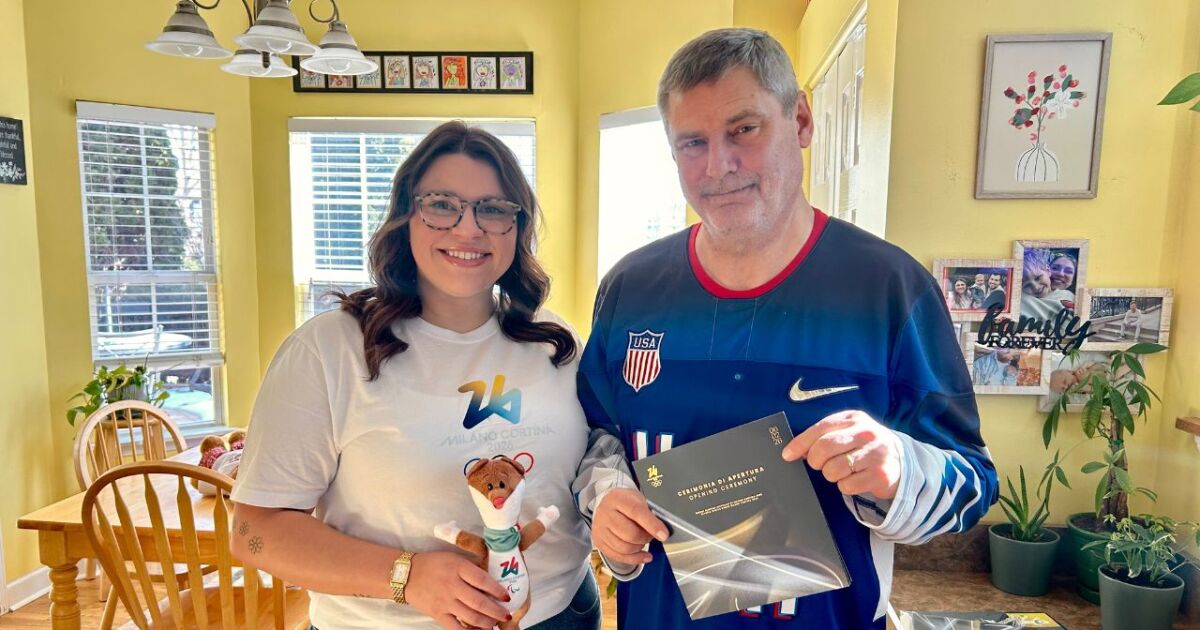
‘They are overwhelmed:’ Denver Health expands school-based centers as student mental health needs rise

By Sophia Villalba

Click here for updates on this story

    DENVER (KMGH) — Mental health professionals within Denver Public Schools say they’re seeing more students in crisis and at younger ages than ever before.

Because of this, Denver Health is expanding its school-based health centers within the district to meet the growing need.

“Our school social workers and school psychologists are mental health providers in our schools. They are overwhelmed,” said Meredith Fatseas, DPS director of mental health & student well-being.

From anxiety and depression to behavioral outbursts and school avoidance, mental health needs among DPS students are rising.

“More recently, we have really seen an increase in the need across all of our student population, but also the severity and acuity, particularly for our younger kids,” said Fatseas.

DPS says the increase is not just the number of students seeking help, but in how serious their needs have become.

We universally screen all of our students for behavioral and social-emotional needs, and we’ve seen an increase not only in need, but also in severity or acuity of need,” said Fatseas.

In 19 schools across the district, Denver Health operates school-based health centers that provide both physical and behavioral healthcare to students.

“Currently, we’re serving students who are the most acute and have the most chronic mental health issues,” said Danielle Vice, Denver Health director of school-based integrated behavioral health services. “We’re really looking at shifting our model a little bit so that we’re going to have a tiered level of care.”

That new tiered model will expand services, meeting students before they experience a crisis, while still serving those who need it most.

“Our expansion will look like providing more care in our clinics to students with mild behavioral health issues, all the way up through students who may need more of that crisis care,” said Vice.

Denver Health says last year its Therapeutic Response and Urgent Stabilization Team saw more than 500 visits, with referrals for kids as young as 7, a dramatic increase.

“The reason is multi-factorial. It’s really hard to say exactly what the cause would be. We know social media plays a part in that. We know there are academic pressures as well,” said Vice.

DPS says offering care inside of schools removes barriers, and the numbers show.

“Almost 90% of students receiving treatment see an improvement in attendance, but we also see safety needs decrease and other behavioral health support changes that are positive for our young people,” said Fatseas.

Any DPS student can access the school-based health centers for free, even if it’s not at the school they currently attend.

Denver Public Schools and Denver Health say they are currently in the planning phase of adding another school-based health center, with the hopes of opening it for the 2027-2028 school year.

Please note: This story was provided to CNN Wire by an affiliate and does not contain original CNN reporting. This content carries a strict local market embargo. If you share the same market as the contributor of this article, you may not use it on any platform.
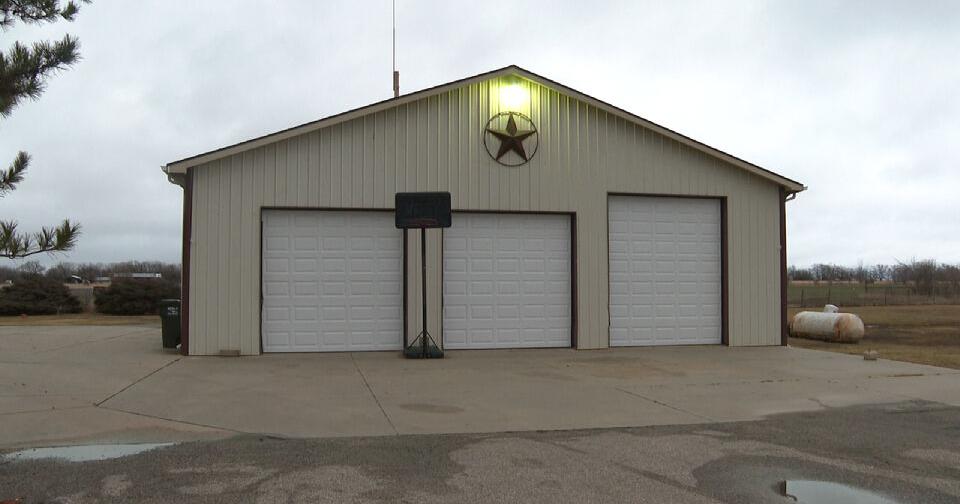
Marquette florist shares crucial role in creating original UP200 sled dog race

By Andrew Hansz

Click here for updates on this story

    MARQUETTE, Mich. (WZMQ) — In 1989, mushers Jeffery Mann and Tom Lindstrom, Mining Journal Advertising Manager Willie Peterson and Marquette Chamber of Commerce member LouAnn Balding came together to discuss a new event for the Upper Peninsula. This soon grew into the UP200 sled dog race.

Balding, who now works as a florist at her family shop Forsberg Flowers, shared her story with WZMQ 19 on how even after all these years, she is still proud to showcase her part in its history.

“I had never seen a sled dog race, but I was willing to sell it, because I knew the community was ready,” she explained. “We would meet down at my mom’s home in Rapid River and brainstorm. We raised money and gathered volunteers, then we went out in the woods and walked across the lakes to design the route.”

Also at the helm for many of its staple years was Marquette artist, Carl Mayer, who created banners for each of the musher’s sleds. Unfortunately, Mayer passed away in December, but his watercolor paintings live on to carry a perspective of the UP200’s early years.

In light of the race weekend, Forsberg Flowers is proudly displaying one of his pieces front and center.

“We loved Carl, we worked well together,” said Balding. “This was his idea of the community. That’s what makes this race great. This is history, it’s legacy here.”

Pulling each race together is the combination of everyone involved, across both locals already here and the far-and-wide mushing community. Balding also brought up the phrase “the dog yard conversation never ends,” meaning each year these teams can pick up right where they left with one another, continuing the heavy love for the sport.

Please note: This story was provided to CNN Wire by an affiliate and does not contain original CNN reporting. This content carries a strict local market embargo. If you share the same market as the contributor of this article, you may not use it on any platform.

He’s been to 8 Winter Olympics — and this Kenosha man is passing the dream to his daughter

By Glenda Valdes

Click here for updates on this story

    KENOSHA (WTMJ) — Mark Chestnut’s Olympic journey began in 1992 in France. What started as one trip to the Winter Games turned into something much bigger — a passion that would span three decades and eight Winter Olympics.

But for Mark, it’s never just been about the events.

“It’s not necessarily a matter of being able to go to the sporting events — it’s meeting the different cultures,” Chestnut said. “My favorite memories are just from meeting people in general.”

At every Games, Mark trades Olympic pins with fans from around the world. His growing collection tells the story of friendships formed across continents and moments that go far beyond medals.

This year in Milan, he shared that experience with his daughter, Madison — continuing a tradition that began when she was just 11 years old.

“Olympic Mark Chesnutt is his own beast,” Madison said. “He gets into these other countries and becomes this totally different, unrecognizable person. It’s really cool to share that with our whole family.”

Over the years, Mark has collected stories most fans only dream about — including riding the subway next to hockey legend Sidney Crosby during the Games.

But his most meaningful Olympic moment? Meeting Diane de Coubertin — the great-great-grand-niece of Pierre de Coubertin, founder of the modern Olympic Games.

“That was my Olympic moment,” Chestnut said.

In Milan, they also experienced their own unforgettable memory — watching a Norwegian skater break an Olympic record and glide past them with a gold medal and his country’s flag draped across his back.

For Mark and Madison, the Olympics are about something bigger.

“Everyone coming from different countries and we’re all there for the same reason,” Chestnut said. “It’s friendly competition at the end of the day. We’re going to have fun together.”

For this Kenosha family, that spirit has become a tradition, one that now spans generations.

Please note: This story was provided to CNN Wire by an affiliate and does not contain original CNN reporting. This content carries a strict local market embargo. If you share the same market as the contributor of this article, you may not use it on any platform.

Local roofing company now banned from Kansas, fined $500K for ‘deceptive acts’

By Sydney Ferguson

Click here for updates on this story

    WICHITA, Kan. (KAKE) — A local roofing contractor is now banned from doing business in the state of Kansas until he pays back over half a million dollars after being found guilty of 29 violations of the Kansas Consumer Protection Act.

The first time KAKE reported on the business practices of Tyler Sims and Flint Hills Roofing Company was April of last year, when local High School Teacher Rachel Shellhammer reached out to say she worried she’d been scammed.

Shellhammer’s home was left uncomplete 9-months after hiring Sims to replace her roofing and siding.

Saturday, Tammy Blunt shared a similar story to Shellhammer’s about Sims and his company.

“Those first couple weeks, he was helping,” said Blunt. “But it just became a nightmare from there.”

A storage building on Blunt’s property still hasn’t been fixed in the two years since it was hit by a tornado. Blunt hired Sims to replace three sides of the 45 by 60 storage building, repair the roof, and replace the windows.

Despite promising to get it done, Blunt says Sims would frequently disappear. The little bit of work he did do was not up to code and the shingles used on the roof don’t match what insurance approved — they’re so heavy they’re now causing her storage unit to collapse.

“I called consumer protection, and obviously, I was not the first one that had contacted them, and after that, it just started rolling forward,” said Blunt.

Blunt is one of three people named in a judgment secured by the Sedgwick County District Attorney’s Office against Sims on February 3 for “unconscionable and deceptive acts.”

He was found guilty of 28 violations of the Kansas Consumer Protection Act, which Daryn Keeter of Keeter Roofing and Remodeling was happy to hear.

“I was just elated that they finally got the guy. I was worried that, you know, he was going to be a slap on the wrist, because a lot of damage had been done here,” said Keeter.

Keeter and his company stepped forward to fix Shellhammer’s home for free after our previous reporting. He says he sees cases like this all the time, though not as severe, and it can all be blamed on a lack of regulation in the construction industry.

“Our local code enforcement department is only inspecting for ventilation. That’s it. They’re not inspecting to see if the jobs are done right,” said Keeter. “Who is the homeowner going to get to come over to make sure this is done right?”

Sims must now pay $470,000 in fines and $36,558.40 in restitution. Of that, $25,000 in restitution will go to Blunt.

“It’s been a challenge. Can’t get a hold of him. We don’t know where he is,” said Blunt. “If he doesn’t have any money, I don’t know where– I don’t know where that’s going to land.”

Until he pays the money back, Sims is banned from doing business in the state of Kansas. Blunt calls it a step in the right direction, but it still leaves her to fix her own storage unit when she’s already battling health issues.

“I just need to focus on myself getting healthy, and this building getting done by May 18,” said Blunt. “You only have two years to get the building finished, and then the insurance claim is closed and there’s no more money.”

She says a specific agency dedicated to helping the consumer might’ve helped her avoid all of this. Keeter says it’s something homeowners could definitely benefit from, but until one is formed, he encourages homeowners to follow a few tips.

His first is to be patient, especially when many contractors try to reach out within hours of weather events.

“You look up and you see them circling, and you think they’re all eagles, but they’re mostly buzzards,” said Keeter.

He says most structures can afford to wait after a storm, while homeowners do their best to vet who they plan to hire. Keeter says to check Google reviews, make sure the company is registered with the state of Kansas, and don’t be scared to ask for a bad reference.

“Everybody’s going to put their best foot forward. Ask them, ‘give us a job that went really wrong,'” said Keeter. “If you talk to my consumers where we’ve made big mistakes, they will tell you, yes, they messed up really bad, but they came and fixed it and made it right.”

Still, Blunt says the lack of regulation Keeter mentioned leads her to worry Sims will just take his scam to another state.

“He needs to be in prison, and that’s where I stand,” said Blunt. “If he doesn’t go to prison, all he’s going to do is do this again.”

We reached out to Tyler Sims for comment, but did not get a response.

Please note: This story was provided to CNN Wire by an affiliate and does not contain original CNN reporting. This content carries a strict local market embargo. If you share the same market as the contributor of this article, you may not use it on any platform.