A second generation of champions is mentored by Tucson’s chess king

By Jason Barr

Click here for updates on this story

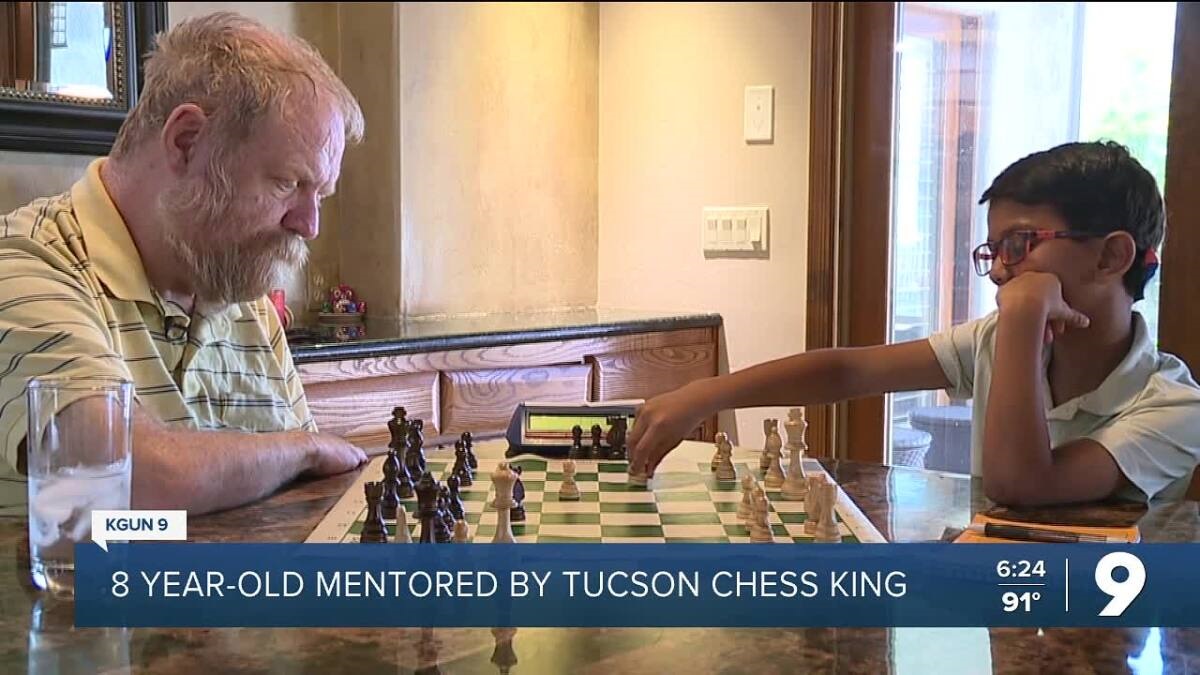
    TUCSON, Arizona (KGUN) — On a Sunday afternoon in Tucson, Arizona, Ken Larson, a chess coach with over four decades of experience, sits across from eight-year-old Nik Jain, offering a gentle nudge: “Maybe you should protect that pawn.”

Nik, a second grader at Ventana Vista Elementary, responds with focus, explaining his strategy: “In the opening, I’m trying to get pieces in the center and develop.” It’s a scene that captures the essence of chess—a game of strategy, intuition, and mentorship—and no one embodies this better than Larson, Tucson’s undisputed “Chess King.”Larsen has been a fixture in the local chess community since his days as a player at Amphi Middle School. Coaching since 1983, he’s guided countless young players to success, including Nik’s father, Sameer Jain, a former Arizona state champion.

Now, Larsen is passing his wisdom to the next generation, with Nik as one of his star pupils. “When you win a game or figure out a position, it’s just satisfying,” Larson says, a sentiment that resonates with his young protégé, Nik, who already takes fourth-grade math despite being in second grade, shows a natural aptitude for chess.

“Some kids have a natural feel for math—some kids don’t,” Larsen notes, drawing parallels to the strategic thinking required on the board. Under Larsen’s guidance, Nik has helped Ventana Vista Elementary secure second place in the last two Arizona state chess championships, earning trophies nearly as tall as he is. “The gold one is an inch shorter than me,” Nik says matter of factly.

What makes Larsen’s coaching special is his ability to break down complex concepts for young minds. “When I explain concepts that might be complicated for an eight-year-old, he seems to understand them pretty well,” Larsen says of Nik.

This talent for chess runs in the famil. And, Nik’s father, Sameer Jain, who once trained under Larson, knew exactly who to call when he wanted the best for his son. “Ken is a good individual. He’s got a kind heart, he cares. He’s very smart. He plays chess at an extremely high level,” Sameer says.

In an era where artificial intelligence is transforming chess with powerful engines and analysis tools, Larsen brings something AI can’t: human connection and intuitive understanding. “Because you have to think about what move you want to play and what are the best moves and what are bad moves,” Nik explains, echoing the strategic mindset Larson instills. This blend of logic and creativity has helped Nik excel, much like his father did years ago.

For Sameer, watching his son thrive under his former coach is a source of pride. “Nik is a great kid, and it’s really cool to see him excel and doing well,” he says. “It’s cool to see his love of the game. I hope that he continues to grow with it.”

As Nik continues to progress, earning accolades and mastering the board, Larson remains the steady hand guiding Tucson’s chess legacy. From one generation to the next, the Chess King’s influence endures, one move at a time.

Please note: This content carries a strict local market embargo. If you share the same market as the contributor of this article, you may not use it on any platform.
High school seniors rally to save their personalized painted parking spots

By Daniel Wilkerson

Click here for updates on this story

    LOGANVILLE, Georgia (WUPA) — Seniors at a Gwinnett County high school organized to protect their parking spot art after the school district said their paintings would be removed.

Students at Grayson High School were surprised when they were told their personalized parking spots had to go.

What happened next had people in the town, about an hour northeast of Atlanta, talking.

Senior Brook Burns was excited to be part of bringing a national trend to her school.

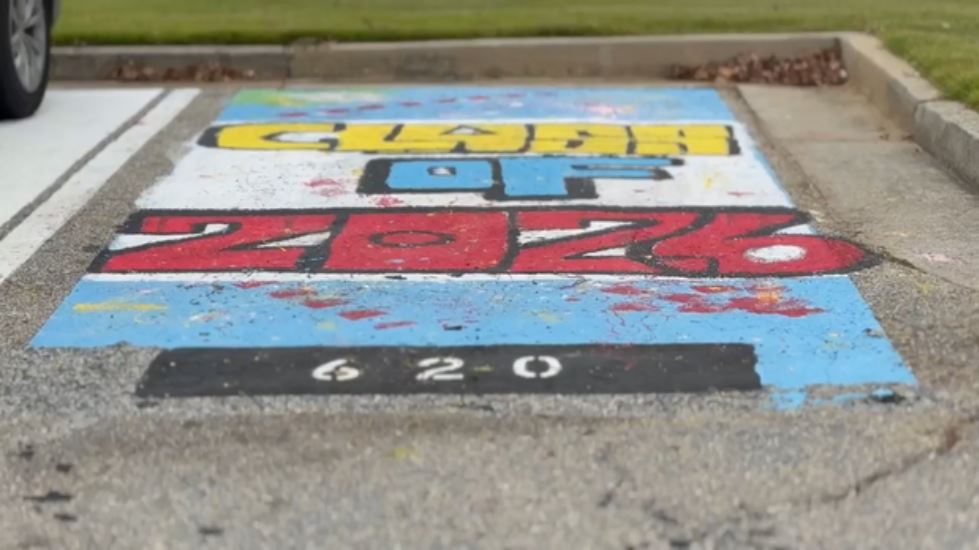
“Here at Grayson High School, we have something called senior stamp,” Burns said. “It gave seniors the ability to paint their parking spots.”

She said principal Dr. Rukina Stewart approved the project. Fifty-eight seniors signed up to take part, each paying $20 and buying their own art supplies.

“We had music out here. Some people even had tents out because it was hot,” Burns said.

But at the start of homecoming week, Burns said she and other seniors were told they couldn’t have their parking spots anymore.

She said the news was devastating.

“I just thought of my friend Milan Cannon, who actually founded it, and thought about how much hard work and effort she put into getting it approved,” she said.

The seniors began organizing alongside Cannon to save what she created.

“When you have so many people backing you up—I’m talking about parents, teachers from other schools, and your own peers backing you up—you’re comforted,” Cannon said.

The group looked through Gwinnett County’s laws. Burns started an online petition that quickly grew to hundreds of signatures.

To their surprise, the district reversed its decision. For this year only, seniors are keeping their painted spots.

“I am proud of the organized and respectful way you expressed your concerns,” principal Stewart wrote in a letter to the students.

“We knew the right way is always following the rules, and us as students, we stay in our place and do what we can,” Burns said.

Justin Burns, Brooke’s father, says her actions to save the art made him and his wife proud.

“We raised her to always be respectful, be kind, and always speak positive, and just do the right thing. Between that, church, and all of these leadership clubs she’s a part of, leads and things like that, man, she’s just got God’s hand on her,” he said.

CBS News Atlanta learned from the district that the school did not follow the proper channels to get the project approved.

The district says it reversed the decision because it did not want the students to be penalized for poor communication.

Please note: This content carries a strict local market embargo. If you share the same market as the contributor of this article, you may not use it on any platform.
Tiny homes for elderly homeless women proposed for parking lots of three churches

By Jerry Olenyn

Click here for updates on this story

    CHICO, California (KHSL) — An innovative approach to addressing homelessness in Chico was the focus of discussion at Tuesday night’s City Council meeting.

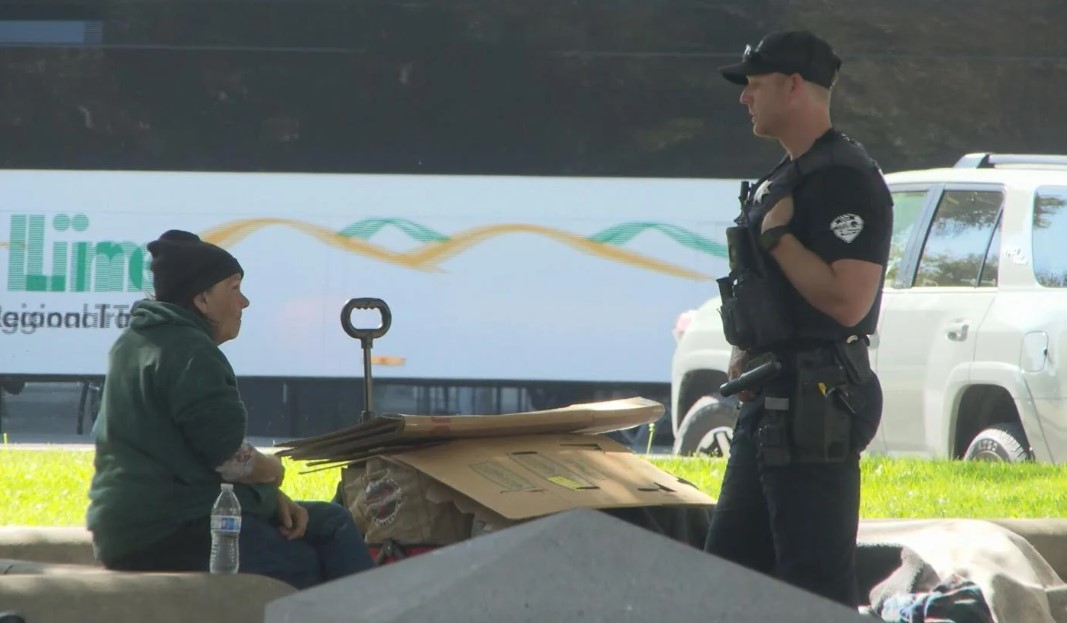
The North State Shelter Team is proposing a pilot program that would place tiny homes in church parking lots to house elderly women experiencing homelessness.

Action News Now has learned that the Community Church of God on East Avenue is one of three Chico churches considering allowing up to four tiny homes on its property. The homes would be designated specifically for senior women who are currently living on the streets.

“Depending on who you listen to, there are 40 to 80 senior women on the street every single night in Chico,” said Richard Hoyt, the pastor at the Community Church of God. “We’re very concerned about that population, and that’s who we want to help.”

The North State Shelter Team, a nonprofit that advocates for the homeless, believes the proposal could gain broad community support because of the vulnerable demographic it aims to serve.

“These ladies aren’t going out and hurting anyone,” said Lori Mason of the North State Shelter Team. “Their likelihood of having a drug or alcohol problem is less. Their ability to go out and raise hell or crawl through someone’s window and steal something is probably zero.”

While three of the seven councilmembers voted against the idea, Councilmember Mike O’Brien said he sees potential in the program. He suggested beginning with two tiny homes per church instead of four to help ease neighborhood concerns.

“I think neighbors will likely embrace something like that if it’s done well, and done small, and done very exclusively for older women,” O’Brien said. “I think that’s what we want to look at.”

The next step for the North State Shelter Team is to submit an official application to the city. Although churches are private property and do not require council approval for such projects, the group hopes to receive the council’s support before moving forward.

Please note: This content carries a strict local market embargo. If you share the same market as the contributor of this article, you may not use it on any platform.

Neighbors describe chaotic scene as escaped New Orleans inmate Derrick Groves captured in Atlanta

By Christopher Harris

Click here for updates on this story

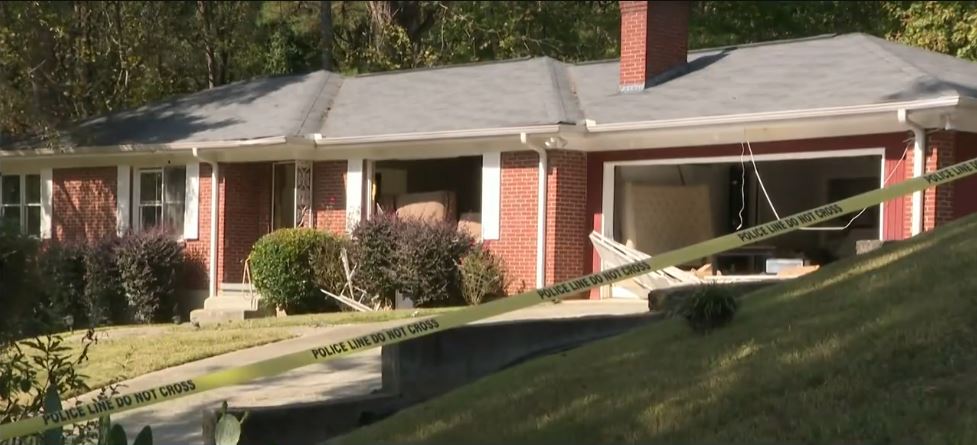
    ATLANTA (WUPA) — Neighbors in a southwest Atlanta community described a chaotic scene as U.S. Marshals and the Atlanta Police Department’s SWAT team surrounded a home Wednesday where 28-year-old Derrick Groves was hiding. Groves, who had been on the run since a May jailbreak in Louisiana, was found hiding in a crawl space beneath the house after a brief standoff.

“I heard pop, pop, pop, pop,” said Deborah Lackey, who lives nearby. “Then I came out and I saw the police cars, and the SWAT truck driving up on the grounds. Next thing you know, they were knocking the door and the garage in. I’m still trying to figure out how he got here from New Orleans. Someone had to bring him.”

Law enforcement officials say Groves’ capture followed a Crimestoppers tip and video evidence that led investigators to the Atlanta home. Inside, officers found drugs and weapons, though it’s not yet clear if anyone else will face charges.

The homeowner, Richard McQueen, told CBS News Atlanta he had no idea who was living in the house.

“I don’t know the people I rented to,” McQueen said. “It was so secretive. I asked my neighbor, ‘Who are these people?’ and everyone said, ‘Oh, they’re good people.’ Now I come home and my property is damaged. I’m trying to figure out what happened just like everyone else.”

Police say Groves was the last of 10 fugitives who escaped from the Orleans Parish Justice Center on May 16. He had been convicted of murder and was considered one of the most dangerous of the group. Groves was taken into custody after the brief standoff. He is now being held at the Fulton County Jail before law enforcement take him to Louisiana in the next 15 days.

Louisiana State Police Superintendent Col. Robert Hodges said investigators “never lost sight during the investigation and our responsibility to bring a violent criminal back to prison.”

Louisiana Attorney General Liz Murrill called Groves’ capture “a very good day,” adding, “It’s unsettling to have somebody out like this and not know where he is.”

Back in the neighborhood, residents are just relieved the ordeal is over, but they’re still shaken.

Please note: This content carries a strict local market embargo. If you share the same market as the contributor of this article, you may not use it on any platform.
Here’s how the first concert organ in the U.S. ended up in a Boston suburb

By Paula Ebben

Click here for updates on this story

    METHUEN, Massachusetts (WBZ) — When you drive past Methuen Memorial Music Hall in Methuen, Massachusetts, you might think it’s an old city building. But it was built by a very wealthy local man just to house one spectacular instrument.

The hall is the home to “The Great Organ,” the first concert organ in the United States.

Organist Fred MacArthur said its greatness lies in its history, age, and sound. Even the organ’s intricate carved case is one of the most recognized in the world.

“If you were to show this to any organist, anywhere, they would say ‘Methuen,'” MacArthur said.

How such a prized organ ended up in this town 30 miles north of Boston is the story of changing musical tastes, rapidly changing times and one man’s passion to save an important piece of American musical history.

The organ was built by E.F. Walcker and Company in Ludwigsburg, Germany during the Civil War for the Boston Music Hall, which is now the Orpheum Theater. The case is carved out of wood from the Black Forest, which could not be reproduced today.

The hall’s executive director, Ashley Haseltine, said when well-to-do Bostonians took “the Grand Tour” of Europe in the mid-1800s, they heard impressive concert organs and wanted to bring the sound back to Boston.

MacArthur pointed out The Great Organ arrived in a time when daily life was free of the modern sounds of cars, machines, or any recorded music.

“I think attending concerts back then was much more emotional,” said MacArthur, “because they didn’t very often hear live instruments.”

By pulling out the various stops on the organ console created in Germany, concertgoers heard reeds, flutes, or violins often for the very first time. Hence the expression, “pulling out all the stops,” which meant to create an overwhelming sound with an organ.

“People would travel – and still do – multiple days to hear this organ played,” said Haseltine.

The Great Organ was state of the art in 1863, with more than 6,000 pipes and 85 stops, which, when pulled, force air up through a huge but intricate bellows with electropneumatic action and slider windchests that create its distinct sounds.

After 21 years, however, times had changed, and the massive organ was crowding out the newly formed Boston Symphony Orchestra in the 1880s.

“Over time,” Haseltine said, “as the orchestra was ready to expand, the organ got booted out, traded up and put into storage for several years.”

Methuen millionaire and interior designer Edward Frances Searles, an organist himself, jumped at the chance to buy The Great Organ as a showpiece for his hometown. Searles built the music hall just to house it, and he did it with flair.

“He really took care when he was designing the interior of the hall to match the grandeur of the organ, including specific architects and engineers that designed an acoustic bounce throughout the space, so we don’t need any microphones for our concerts in here,” said Haseltine.

The concert hall was dedicated in 1909 and became a non-profit cultural center in 1946.

Searles also owned an organ company, which has since burned down. It once operated in what is now the hall’s parking lot. The organ inside the National Cathedral in Washington, D.C. was made there on the property and is a copy of the Great Organ.

The hall has hosted a summer series that began right after World War II. The fall variety series culminates with an always sold-out Christmas concert, and it can be rented for weddings and memorial services. And as Searles intended, all Methuen fourth-graders get a musical history lesson in the building every spring.

“Mr. Searles’ mission was a lot of community, bringing art to the local Merrimack Valley and supporting children and really connecting all of those pieces together, so that’s been the forefront driving the board ever since,” said Haseltine.

Please note: This content carries a strict local market embargo. If you share the same market as the contributor of this article, you may not use it on any platform.
Squeal-worthy surprise: Rattlesnake in restroom

By Marissa Orr

Click here for updates on this story

    TUCSON, Arizona (KVOA) — A surprising encounter at Davis-Monthan Air Force Base has caught the attention of many.

A rattlesnake was discovered in the female restroom of the 355th Maintenance Group, 355 Munitions Squadron.

A female worker reportedly squealed upon finding the snake.

The 355th Civil Engineer Squadron Entomology office quickly responded and removed the snake from the restroom.

Please note: This content carries a strict local market embargo. If you share the same market as the contributor of this article, you may not use it on any platform.
First in the US: New surgery tool at Vanderbilt helps surgeons isolate, remove cancer

By Nikki Hauser

Click here for updates on this story

    NASHVILLE (WTVF) — Last month, Vanderbilt University Medical Center identified a life-saving way to improve medical procedures in real time.

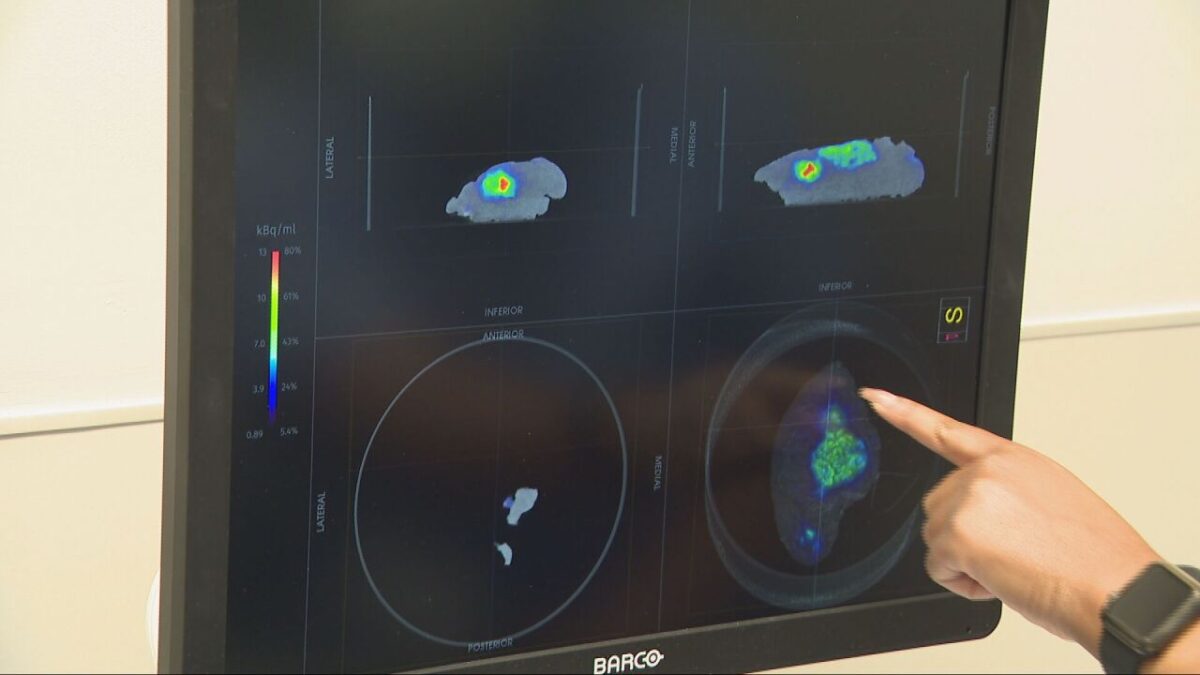
In a brand-new clinical trial, the Head and Neck surgery team at VUMC is using an intraoperative PET-CT scanner inside the operating room.

Inside an oral cancer surgery, Dr. Michael Topf explained that the use of the scanner — which shows the cancer in its entirety — is making history. His team is the first to introduce it into the OR in the United States.

“This technology…it will potentially allow us to know we removed all of the cancer in real time during the surgical operation in a matter of 8-10 minutes,” he explained.

Before this trial — which is still very much in its early stages — scans would be sent to pathology after surgery, a process that could take weeks to return data.

The novel approach adds another element of surprise, too: Radioactivity. In surgery, the patient gets a small dose of a radioactive agent, which allows the tumor, once removed, to be visible on the scan.

Marcus Balanky, the radiation safety officer, is tasked with monitoring radioactive levels in the room, making sure the entire team inside the OR is safe. In fact, each team member wears a special ring for radioactive monitoring.

“Since it’s a novel approach, it’s a new approach, we’re just getting data on the levels,” he explained.

With radioactivity managed, the scanner becomes a promising new asset, allowing for a thorough assessment of a cancer and its spread and saving time for surgeons and patients alike.

“These cancers can be really, really challenging, even for experienced surgeons. So you know, as many as 20-30% of cases, for advanced head/neck cancer cases, we do not get all the cancer,” said Dr. Topf. “So a device like this, and a protocol like this, really has the potential to improve patient outcomes.”

Their fourth surgery is planned in just a couple of weeks. Overall, Vanderbilt plans to do about 50 cases within the trial.

Please note: This content carries a strict local market embargo. If you share the same market as the contributor of this article, you may not use it on any platform.

‘Give me a second chance:’ School bus driver asked to resign after posting video of kids online

By Erin Holly

Click here for updates on this story

    CHESAPEAKE, Virginia (WTKR) — A Chesapeake Public Schools (CPS) bus driver was recently asked to resign after she posted a video with students to her personal social media.

The video depicts students doing a variety of handshakes with the driver. In the original video that was posted, the student’s faces were not covered. The original video has been deleted, and other versions of it with the children’s faces covered with emojis are circulating on social media.

In an emotional interview with WTKR News 3 Chesapeake reporter Erin Holly, Jessica Flowers said she loves her job and didn’t realize she had violated the school system’s social media policy.

“I’m here to make a difference,” she said. Flowers said she always greets students on her bus with a smile, a special handshake, and a smooth ride to school.

But after the video was posted to Flowers’ Facebook page, she was pulled into the office with school administrators and was told she was terminated.

She immediately took out her phone and offered to delete the video, but she said an administrator told her they have a “zero tolerance policy for posting kids on Facebook.”

“I took it down,” Flower said. “I said, ‘Please give me a second chance.’ That’s how what I said, I’m a single parent, which they probably don’t even matter. I work, I love my job, I love what I do right? Give me a second chance.”

Then she was offered the option to resign or be fired, Flowers said. She opted to resign.

CPS said its strict policy requires parental permission before publishing anything to social media, in addition to social media training, which they say she did not complete.

All CPS employees are expected to follow Board policies and regulations regarding student privacy, professional conduct, social media, and appropriate communication with students. Those policies include strict limits on photographing or filming students for personal social media. These policies also restrict one-to-one communication with students via personal devices. Our policies are publicly available on the School Board’s website.

In this case, the employee did not obtain parental permission before filming and posting a video of students to her personal social media account, relying instead on verbal consent from the students. She was assigned training on the appropriate use of social media and professional communication with students; however, she chose not to complete the required training.

Chesapeake Public Schools remains committed to maintaining clear and appropriate professional boundaries to safeguard students, support staff, and preserve the trust and integrity of the educational environment.

Chesapeake Public Schools

Please note: This content carries a strict local market embargo. If you share the same market as the contributor of this article, you may not use it on any platform.

Paramedic creates autism-friendly emergency kits for all city ambulances

By Romelo Styles

Click here for updates on this story

    VIRGINIA BEACH (WTKR) — A Virginia Beach paramedic and mother has developed specialized emergency kits to help first responders better serve residents with autism and sensory challenges during medical emergencies.

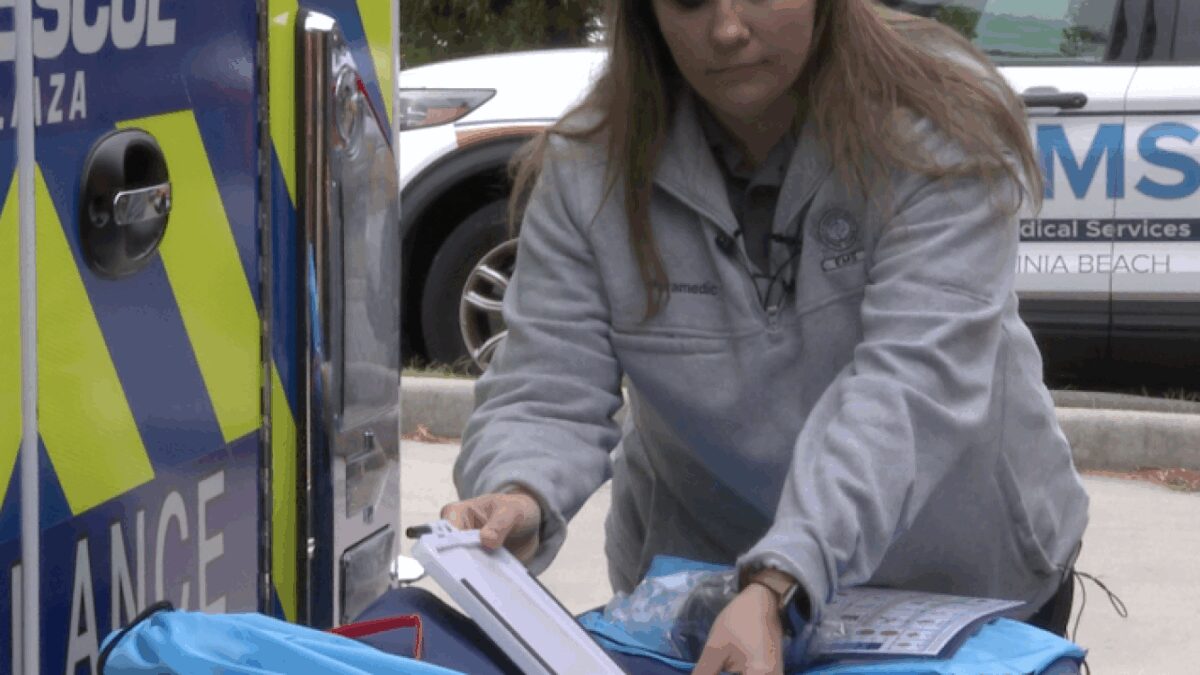
Bailey Hartley, who works for Virginia Beach EMS and has a 4-year-old autistic son, created the COLT Kit after recognizing a communication gap between first responders and patients with special needs. The kit is named after her son Colt.

“When I became a special needs mom I kind of noticed there was a communication gap between our first responders and treating patients,” Hartley said.

Every ambulance serving Virginia Beach now carries one of these specially designed kits, which include noise-canceling headphones, sensory toys, sunglasses and communication charts. The tools are intended to comfort and calm patients during stressful emergency situations.

“I just noticed that gap, but I wanted to bridge that for the community and to help our first responders and support them with the resources that they need,” Hartley said.

The kits address the unique challenges faced by individuals with autism or sensory processing issues during emergencies. The combination of flashing lights, sirens and unfamiliar people entering their space can create overwhelming situations.

“Someone who may have a sensory issue on a day-to-day basis, they can be overstimulated, you add lights and sirens, and you add strangers coming into their home. You can augment that overstimulation for them,” Hartley said.

Since launching two months ago, the COLT Kits have been deployed four to five times to assist Virginia Beach families. The EMS team is tracking which items are most frequently used to potentially expand the program.

“Been out for two months, we recently deployed it. It’s been about four or five times. We are tracking to see what items are being most used, and we’re excited to see it grow. I think it will be a really good impact for those who need it, though,” Hartley said.

For Hartley, the project represents a personal mission to help her community while supporting fellow first responders.

“For me, it’s humbling and it’s exciting. I didn’t know anything about autism to be honest before I became a mom, let alone how to be a good care provider to a patient with autism,” Hartley said.

The COLT Kit initiative demonstrates how personal experience can drive meaningful change in emergency medical services, ensuring all Virginia Beach residents receive appropriate care during medical emergencies.

Please note: This content carries a strict local market embargo. If you share the same market as the contributor of this article, you may not use it on any platform.

CU Boulder’s newest Ralphie buffalo has deep Colorado roots

By Spencer Wilson

Click here for updates on this story

    Colorado (KCNC) — She’s fast, fierce and born right here in the Rocky Mountains. CU Boulder’s newest live mascot, Ralphie VII, nicknamed “Brandy” has officially made her debut, and her story starts miles away from Folsom Field at a quiet ranch near Coalmont, Colorado.

At Eagle’s Wing Ranch, Jim and Julie Beauprez have spent nearly two decades raising North American plains bison. When CU reached out to ask if the ranch would consider donating a calf to become the university’s next Ralphie, they didn’t hesitate. Jim laughed, remembering the no-brainer.

“We said, ‘Well, hell, Taylor, we’ve been waiting here about 17 years for you to call. Where do we sign?” Jim explained.

The calf, once known simply as no. 613, quickly stood out from the herd. The Beauprezs said she always seemed to follow them, showing off her personality and speed.

“She would just hover around us like, ‘I know you got a call,'” Jim said with a grin. “We don’t breed slow bison.”

“She is gorgeous,” Julie said. “She is beautiful, but she likes to have fun, and she’s kind. And, you know, she’s a good sport, clearly.”

Ralphie VII is the first Colorado-born Ralphie since Ralphie II back in 1987, and, when the Beauprezs saw their Ralphie thunder across Folsom Field for the first time, it was an emotional moment.

“I got goosebumps, and then I went up in tears,” Jim said. “To see her make that inaugural run and stick the landing like that — I don’t have the words.”

The Beauprezs could not be more proud to add to the lasting legacy of the live mascot.

For those wondering how CU’s most famous runner is treated, Jim put it plainly, “That animal is treated better than a lot of human beings I know. She’s loved. She’s revered. She’s practically royalty.”

You can see more of Ralphie VII’s first run and fan reactions from Folsom Field in our earlier CBS Colorado coverage.

For Jim, who attended CU in the 1990s and remembers watching earlier Ralphie runs from the stands, it felt like everything came full circle.

“To leave a mark like that on a university that’s meant so much to us, it means the world,” Jim said.

Please note: This content carries a strict local market embargo. If you share the same market as the contributor of this article, you may not use it on any platform.