Little House on the Prairie Museum keeps Laura Ingalls Wilder’s Kansas legacy alive


By Nelly Lopez

Click here for updates on this story

    INDEPENDENCE, Kansas (KOAM) — A working farm in Montgomery County holds one of Southeast Kansas’ most storied connections to American literary history — the childhood home that inspired Laura Ingalls Wilder’s beloved book series.

The Ingalls family settled near Independence from 1869 to 1871, living in a small log cabin on land that would later become the Little House on the Prairie Museum. Wilder’s account of that time, published in her 1935 book “Little House on the Prairie,” introduced generations of readers to Kansas history through the eyes of a young girl growing up on the frontier.

Jean Kurtis Schodorf, president and owner of the museum, said her family purchased the farm in 1923 — decades before they realized its historical significance.

“We did not know until years later that the Ingalls family, Charles Ingalls’ family, lived here on this property,” Schodorf said. “When the TV show came along, people were so interested because the Ingalls had actually lived in Kansas, in Montgomery County, near Independence, and it was our farm. We were thrilled.”

For years, the property operated as a working farm and oil field. Schodorf’s father raised cattle and drilled oil wells on the land, and the family had little reason to think visitors would come calling.

“There were lots of cars driving up and down, and they were disappointed because there wasn’t anything here,” Schodorf said.

That changed when her brother built a replica of the original log cabin. The museum opened in 1977 and has drawn visitors ever since.

Among the lesser-known pieces of history tied to the site: Carrie Ingalls, the third daughter of Charles and Caroline Ingalls, was born in that log cabin. The family physician who delivered her was Dr. Tan, described by Schodorf as the first doctor in the area and one of the region’s earliest African American physicians.

“Charles and Caroline came — they had Laura, and they had Mary. Mary was five and Laura was three. And they came to Kansas in a covered wagon,” Schodorf said. “What we did not know is that baby Carrie, the third daughter, was actually born in the log cabin.”

Schodorf said the museum’s mission goes beyond celebrating a famous author. It aims to connect visitors — especially children — to Kansas history and to encourage reading.

“Our mission is to teach about Kansas history and to encourage children to learn, to read,” Schodorf said. “For 90 years, this book has been very popular. And when you read it, it’s about Kansas history. Plus it’s about a family who loved each other.”

The museum also uses the site as a window into frontier life — from the plants and wildlife Wilder described in her writing to the daily realities of cooking, clothing, and survival on the Kansas prairie. Schodorf noted that some of the wildlife Wilder wrote about, including wolves that once roamed near the cabin, no longer exist in the region.

Each year on Aug. 2, the museum marks the occasion with “Carrie’s Days,” a celebration of Carrie Ingalls’ birthday.

Now, a new television series — one the producers say draws directly from Wilder’s books — is bringing a fresh wave of attention to the museum and its history.

“The amazing thing is the interest keeps going and people are still interested,” Schodorf said. “Now we have a new series coming out that looks very much like the book. The producers have said they have used the book and they’re trying to make it just like the book.”

The museum is located near Independence, Kansas, in Montgomery County.

Please note: This story was provided to CNN Wire by an affiliate and does not contain original CNN reporting. This content carries a strict local market embargo. If you share the same market as the contributor of this article, you may not use it on any platform.

Soccer fan aims to watch all 104 World Cup matches live from a couch in Sacramento

By Therese Namwezi

Click here for updates on this story

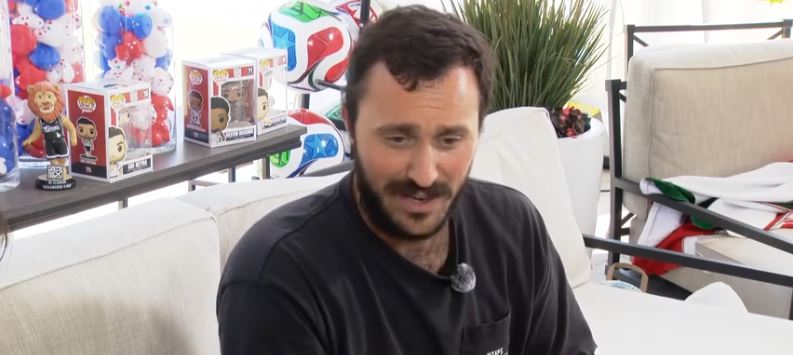
    SACRAMENTO, California (KCRA) — A Sacramento man is on a mission to watch all 104 FIFA World Cup 2026 matches while livestreaming from a couch downtown. It’s being dubbed the ultimate summer activity.

Sacramento native and former UC Davis soccer player Conti Kolokotronis is set on watching the matches all the way through July 19.

“I’ve played this game my whole life, and watched this tournament my whole life,” Kolokotronis said. “There’s an energy here, and people have been really showing up and supporting. People love soccer because you play with your friends, you watch with your friends, it brings us together.”

Kolotronis camps out at DOCO with a couch and tv, streaming everyday.

Kolokotronis’ social media videos have gone viral, bringing in thousands of views, with his most popular post having more than 100,000 viewers. The video became one of the most viewed posts for the “Chief World Cup Watcher” competition.

“I learned about this through online promotion and ended up having one of the best performing submission videos, so here we are doing it in one of the best indoor arenas on the planet,” Kolokotronis said.

And the local support has been soaring as people share and repost his videos across different social media platforms.

The official requirements for the competition can be found on Indeed or the Fox Sports website.

Kolokotronis plans to keep watching all the World Cup matches everyday through the final and he’s streaming every moment of it on Twitch.

Please note: This story was provided to CNN Wire by an affiliate and does not contain original CNN reporting. This content carries a strict local market embargo. If you share the same market as the contributor of this article, you may not use it on any platform.
As people with Down Syndrome grow older, their chances of obtaining Alzheimer’s increase, new research says

By Lauren Pastrana

Click here for updates on this story

    MIAMI, Florida (WFOR) — Advances in health care have helped people with Down syndrome live longer, healthier lives. But that increased longevity also brings a new challenge: a significantly higher risk of developing Alzheimer’s disease.

For Gina El Hassan, the issue is personal. Her brother, Rudolph Vincent Perez, has always loved music and dancing. The 56-year-old shares a close bond with El Hassan, who was 13 when he was born.

“When he was born, I was 13, so he became my baby doll,” El Hassan said. “So for me it was great.”

Decades ago, people with Down syndrome typically lived into their 30s, often before the age when Alzheimer’s disease commonly develops. Today, longer life expectancy means more individuals are reaching ages associated with dementia.

El Hassan said she first noticed warning signs years ago.

“Every 10 or 15 years, he has psychological testing done, and when we went, the psychologist told us he was already seeing signs,” she said.

Now, she says her brother sometimes forgets where things belong and has withdrawn from activities he once enjoyed. The changes remind her of their mother, who also developed Alzheimer’s disease.

“He stopped wanting to go in the car. He got scared of cars,” El Hassan said. “He also got withdrawn, stopped watching TV. Little things like that that my mother suffered.”

According to the Alzheimer’s Association, people with Down syndrome face a substantially higher risk of Alzheimer’s disease as they age. Some studies estimate a lifetime risk as high as 90%, with most cases appearing in a person’s 50s.

By comparison, the lifetime risk for Alzheimer’s in the general population is estimated at about 20% for women and 10% for men.

Keith Gibson with the Alzheimer’s Association said brain changes linked to dementia can begin much earlier in people with Down syndrome.

“They want to be proactive because usually an individual who has Down syndrome, their brain will start changing and they’re developing symptoms at age 40,” Gibson said.

He said research focused specifically on people with intellectual and developmental disabilities is essential.

“When we say ‘a world without Alzheimer’s and all other dementias,’ we need to look at all communities,” Gibson said. “The Down syndrome community is one that we need to be more intentional about because their needs are different.”

For caregivers like El Hassan, the uncertainty can be overwhelming.

“I’m 70, and I worry,” she said. “Of course, I worry if I get it, but I worry more about him. How to take care of him and deal with it again. I don’t want him to go through something else.”

Down syndrome affects how the brain and body develop, but people with Down syndrome can live healthy and fulfilling lives with supportive care.

Resources for families are available through the National Task Group on Intellectual Disabilities and Dementia Practices.

Please note: This story was provided to CNN Wire by an affiliate and does not contain original CNN reporting. This content carries a strict local market embargo. If you share the same market as the contributor of this article, you may not use it on any platform.
Tulsa Fire rescue man from storm water ditch at apartment complex

By Shannon Becker

Click here for updates on this story

    TULSA, Oklahoma (KOAM) — Around 11:30 a.m. Wednesday morning June 24, 2026, Tulsa Fire crews were alerted to the Villas at Midtown apartments after reports of a man trapped in a storm water ditch. The man was clinging to a pillar as fast-moving storm water rushed around him.

“Engine 14 arrived first and quickly determined that an immediate rescue was needed. Firefighters deployed a ladder into the ditch, descended to the victim, secured him in a harness, and safely removed from danger,” Tulsa Fire state. “Thanks to the rapid response, training, and teamwork of our crews, the man was rescued without injury.”

SAFETY REMINDER — NEVER ENTER FAST MOVING WATERS “Safety Reminder: Never enter fast-moving storm water. Even shallow water can be powerful enough to sweep a person off their feet and lead to serious injury or drowning.

Outstanding work by Engine 14, Boat 29, District Chief 643, Engine 18, Engine 4, Rescue 4, Ladder 4, Ladder 29, Engine 29, and Boat 4 on a successful rescue.”

Please note: This story was provided to CNN Wire by an affiliate and does not contain original CNN reporting. This content carries a strict local market embargo. If you share the same market as the contributor of this article, you may not use it on any platform.

Fox found in bathtub after walking through cat door of Pittsburgh home

By Madeline Bartos

Click here for updates on this story

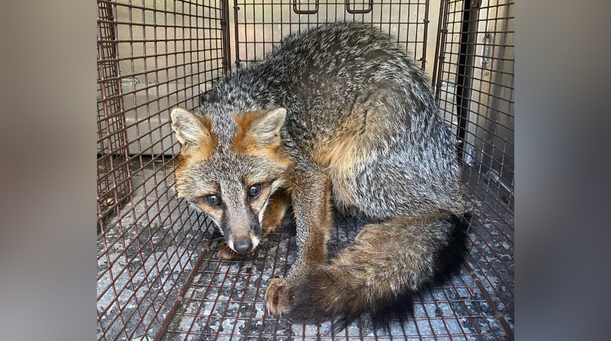
    PITTSBURGH, Pennsylvania (KDKA) — Finding a fox in your bathtub may sound like the start of a children’s book, but it’s exactly what happened to some Pittsburghers on Wednesday.

Pittsburgh Public Safety said Animal Care and Control Officers were called to Beechland Street on Wednesday afternoon for reports of a gray fox inside a residence.

Officers arrived and found the fox inside a bathtub in a bathroom and safely got it out. It was determined to be healthy and was released into the woods, Pittsburgh Public Safety said.

The homeowners believe the fox got in by using their cat door.

“There’s no foxing around, this unexpected visitor made itself right at home!” Pittsburgh Public Safety wrote in a Facebook post.

Public safety said foxes are opportunistic scavengers and will enter yards and homes looking for easy meals. To keep critters out, it’s recommended you remove food sources and cover any hiding spots.

The Pennsylvania Game Commission says the commonwealth is home to both red and gray foxes. The two generally prefer different types of habitat, but both species are adaptable and can be found throughout the state, sometimes in areas not considered prime habitat, like a bathtub, the Game Commission says.

Experts say red foxes seem less bothered by people than grays, so they’ll often live in heavily populated areas. However, if an area can provide food and shelter, the Game Commission says foxes will consider making a home there. Because foxes are nocturnal, people don’t see them too often.

Please note: This story was provided to CNN Wire by an affiliate and does not contain original CNN reporting. This content carries a strict local market embargo. If you share the same market as the contributor of this article, you may not use it on any platform.
‘Her whole life is a miracle’: Kidnapping victim, police reunite

By TJ Eckert

Click here for updates on this story

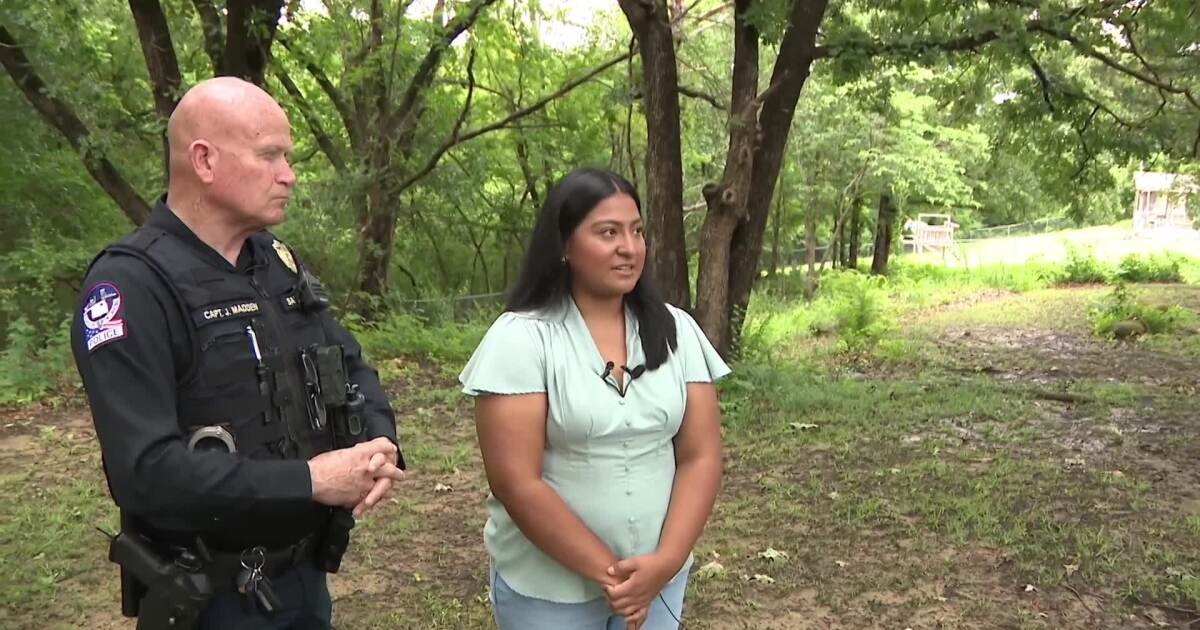
    SAPULPA, Oklahoma (KJRH) — For the first time since her kidnapping, Monserrat Aguirre and Capt. Jim Madden of the Sapulpa Police Department returned to the spot he found and saved her.

“I can remember seeing some of the houses, and being too scared to approach any of them,” Aguirre said.

In May 2014, Michael David Slatton kidnapped her from a Tulsa playground. He took Aguirre, 8 years old at the time, to woods in Sapulpa.

“I didn’t think I was going to find her alive,” Capt. Madden said.

Madden did find her alive, tied up in a sleeping bag, hours after the call went out. Now, 12 years later, the two returned to the same spot.

“I just feel very emotional thinking about God’s miracles,” Aguirre said. “Just knowing how, like there was a chance of me not being found.”

“Her whole life is a miracle,” Madden added. “She’s a person that stands out for all victims of violence and things of that nature.”

Aguirre, now 20, gained a sense of peace going back all these years later.

“It feels like this chapter has been opened for such a long time, and it’s been filled with such mystery and hurt and confusion,” Aguirre said. “And so, it kind of brings everything to a close.”

Now, she’s using what happened as a child to help shape her into the woman she is now.

“There are a lot of negative memories attached to this place, but I’d rather not use it as a weakness, but use it as a strength,” Aguirre said.

Slatton is serving a 120 year sentence.

Please note: This story was provided to CNN Wire by an affiliate and does not contain original CNN reporting. This content carries a strict local market embargo. If you share the same market as the contributor of this article, you may not use it on any platform.

Indiana looks to artificial intelligence to root out Medicaid fraud

By Tim Spears

Click here for updates on this story

    INDIANAPOLIS (WISH) — Indiana is testing whether artificial intelligence can identify and prevent Medicaid fraud.

The Indiana Family and Social Services Administration (FSSA) has entered a 90-day pilot program with the U.S. Centers for Medicare & Medicaid Services (CMS) and Texas-based tech company Oracle, testing whether AI can stop “waste, fraud, and abuse”.

“We want to make sure every dollar is being spent correctly,” FSSA Deputy Chief of Staff Marcus Barlow told Indiana’s I-Team in an interview. “It makes (Medicaid programs) more sustainable for the long term.”

The pilot program will use FSSA data to identify suspicious billing patterns, prevent improper payments, and even provide AI-generated case packages ready for investigation.

The AI is expected to be able to do this work in real time, flagging claims before they’re paid and allowing regulators to immediately intervene.

Barlow said the AI-enforcement tools will scrutinize Medicaid providers as well as the more than 1 in 4 Hoosiers who rely on some form of Medicaid.

“They should be happy that Indiana is being serious about fighting waste, fraud, and abuse,” Barlow said.

Indiana’s I-Team requested the data use agreement Oracle signed as part of the pilot program.

It says the state will remove personal information and protected health information from the data it shares with Oracle. The agreement requires Oracle to destroy any restricted information it obtains. There’s restrictions on how information is stored, and Oracle isn’t allowed to to share FSSA data with outside parties.

Oracle began analyzing FSSA data on Wednesday morning, Barlow said.

Medicaid spending has been a focus of the Braun Administration.

Indiana’s Medicaid appropriations have jumped 134% over the last ten years, according to the FSSA, from roughly $2.1 billion in 2017 to nearly $5 billion for fiscal year ‘27.

Since Gov. Mike Braun, a Republican, took office, Indiana has added work requirements to the Healthy Indiana Plan (HIP), created new limits for a popular autism therapy known as Applied Behavior Analysis, and ordered some providers to stop advertising Medicaid programs.

The FSSA recently announced a period of “expanded oversight”, with a series of audits. It’s currently adding 400 new employees to help manage increased eligibility checks for HIP starting next year.

Barlow said the AI pilot program isn’t meant to replace any FSSA workers or regulators. It won’t be able to initiate regulatory action even while flagging potential abuse.

Along with addressing real-time issues of abuse in Indiana, the program is meant to evaluate possible challenges and whether similar models can be expanded to other states. After the 90-day pilot program, CMS will review a “proof of concept report” to guide future strategies and investments.

“We’re excited to see what results it produces,” Barlow said.

Please note: This story was provided to CNN Wire by an affiliate and does not contain original CNN reporting. This content carries a strict local market embargo. If you share the same market as the contributor of this article, you may not use it on any platform.

4 people accused of cheating on Miami-Dade Driver’s License written exam using hidden cameras and microphones

By Ivan Taylor

Click here for updates on this story

    MIAMI, Florida (WFOR) — Miami-Dade County officials are investigating a scheme where at least four people allegedly used hidden electronic devices to cheat on written driver’s license exams, the county tax collector said.

Miami-Dade County Tax Collector Dariel Fernández said the suspects were caught at multiple testing locations using concealed cameras, microphones, and other recording equipment to transmit test questions to accomplices outside the facilities.

The alleged scheme came to light after an employee at a testing center noticed a test-taker appearing to speak during the exam.

“When they started the test, one of our officers in the office looked at them and said, ‘What are you doing? Who are you talking to?” Fernández told CBS News Miami.

A subsequent review of surveillance footage allegedly showed the individual communicating with someone off-site. In another instance, investigators identified a gray button on a test-taker’s shirt as a concealed camera.

“The other person is looking through the camera, through the screen at our location,” Fernández said. “They see the questions and the other person tries to tell them the answers.”

Fernández declined to specify which testing locations were affected, citing an ongoing investigation. He also did not disclose whether the individuals were taking standard or commercial driver’s license exams.

While Fernández confirmed that the suspects were not arrested, he stated that the incidents had been documented in their records to prevent future fraud attempts.

“These people are going to have something in their record so when they come again to our office, we know that these people already tried to commit fraud,” Fernández said.

The news prompted frustration from customers at local testing centers.

“I think it’s disgraceful,” said 85-year-old Mel Kessler.

Fernández emphasized the gravity of the situation, noting that obtaining a license is a privilege that requires knowledge of traffic laws. He also rejected the suggestion that the incidents were driven by language barriers, even though the exam is currently offered only in English.

The investigation remains active. Officials have not released the identities of the suspects or indicated whether criminal charges will be filed.

Please note: This story was provided to CNN Wire by an affiliate and does not contain original CNN reporting. This content carries a strict local market embargo. If you share the same market as the contributor of this article, you may not use it on any platform.

Man charged with stalking and harassing Indiana Fever’s Sophie Cunningham

By Jacqueline White and Justin Razavi

Click here for updates on this story

    INDIANAPOLIS (WISH) — A 49-year-old Indianapolis man is facing criminal charges after being accused of sending threatening and explicit messages to Indiana Fever guard Sophie Cunningham through social media, Marion County Prosecutor Ryan Mears said Wednesday.

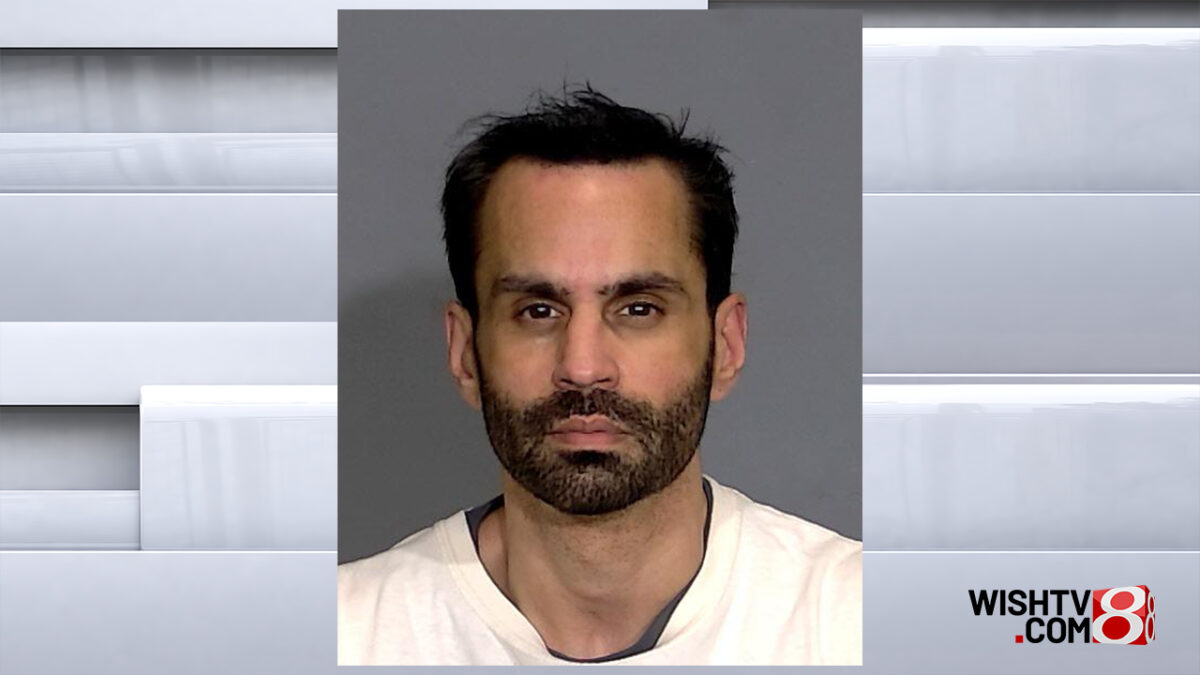
Mears announced that Kevin Singh has been charged with stalking, intimidation, and harassment for “allegedly sending multiple threatening and explicit messages” to Cunningham.

Police arrested Singh on Tuesday, and the prosecutor’s office filed charges against him on Wednesday. He’s due in court Thursday morning for an initial hearing.

“What you see in this case is, and hopefully what it sends a message to people in the community (about), is that there (are) real consequences to what you say online,” Mears said.

According to the probable cause affidavit, Singh’s online behavior began escalating in February. Prosecutors say his conduct grew increasingly threatening even after he was contacted by team security.

The court documents said Singh sent several aggressive messages to Cunningham via Instagram and X, some sexually explicit.

One said, “I’m going to marry you. I can’t wait.” Another said, “I wanna grow with you.”

The Fever’s head of security, John Ball, ultimately sent Singh a Cease-and-Desist Letter. Singh responded to Ball with several aggressive messages, one saying, “your life is about to be ****ed with.”

Cunningham told police she has never met Singh, and that since she became aware of his comments, she has been staying home more and even having nightmares.

“Everyone has a right to feel safe at their workplace, and this compromised her ability to feel safe in the workplace,” Mears said.

The case carries added weight given Singh’s prior criminal history, according to Mears. Singh is on probation in Hendricks County following guilty pleas to two counts of invasion of privacy. In that case, the Hendricks County Prosecutor’s Office dismissed five felonies, including a stalking charge.

This marks the second time a person has faced criminal stalking charges connected to a member of the Indiana Fever. In July, Michael Lewis pleaded guilty to stalking and harassing Caitlin Clark and was sentenced to nearly 2-1/2 years in prison.

Mears credited law enforcement for their response. “We commend Marion County Sheriff Kerry Forestal and the Marion County Sheriff’s Office for their swift and decisive work on this investigation that led to this arrest.”

Please note: This story was provided to CNN Wire by an affiliate and does not contain original CNN reporting. This content carries a strict local market embargo. If you share the same market as the contributor of this article, you may not use it on any platform.

Woman suffers severe burns and heat stroke after falling asleep at community pool

By Kamilah Williams

Click here for updates on this story

    QUEEN CREEK, Arizona (KNXV) — Editor’s note: Some of the details in this story may be sensitive for some; viewer discretion is advised.

Betty-Lou Summer, an 82-year-old woman, is fighting for her life in a burn unit ICU after falling asleep at her community pool and suffering severe heat stroke and burns covering approximately 30% of her body, all within a single hour.

Summer’s daughter, Michelle Gabbert, said her mother drove herself to the pool near her home, as she had recently retired and planned to spend her days relaxing poolside.

“She went to sunbathe, lie down, fell asleep, kind of dozed off, and then became unresponsive,” Gabbert said.

Pool bystanders noticed Summer was not waking up and called paramedics, who covered her in wet towels and moved her into the shade. Summer was rushed to Banner Ironwood Medical Center on June 11.

Gabbert, a physician, said her mother’s condition was critical upon arrival.

“They intubated her. They had to put her on pressers. She had burns all over her body, blisters,” Gabbert said. “She went into hypovolemic shock, and her kidneys were shutting down, which happens with heat stroke.”

The burns were not only from sun exposure. Metal chairs at the pool had been baking in the heat, and anywhere Summer’s skin made contact with the metal was severely damaged.

“Her pinky tip, which was touching the metal chair, was completely, the whole tip of it was gone. Anywhere that touched the metal on the chair completely just fried,” Gabbert said.

Gabbert said she was out of the country when she learned something was wrong. Her sister, who lives with Summer, tracked her through the Life360 app and saw her location moving toward Banner Ironwood at 60 miles per hour.

When Gabbert’s sister went to the pool and found Summer’s car still there, the family realized she had been taken by ambulance.

Summer was transferred to a burn center on June 13. Doctors placed her on dialysis and performed her first debridement surgery to remove dead and burned skin. She also developed shock, liver and acute renal failure.

“We weren’t sure she was gonna make it through the night,” Gabbert said.

Summer has since been taken off the ventilator and dialysis, and her liver and kidney lab results have returned to normal. However, she remains in the burn unit ICU and faces a long recovery. She has three wound vacs and undergoes debridement surgery every four to five days. She will also need multiple skin grafts, though Gabbert said the tissue is not yet healthy enough for that procedure.

“The only thing now is really the burns and the significant damage from the sun just being out for one hour,” Gabbert said.

Gabbert said her mother’s age is a significant factor in her recovery. Older adults have thinner skin, less subcutaneous fat, slower healing, and difficulty regulating body temperature, all of which contributed to the severity of Summer’s injuries.

“Especially with little kids, they have a smaller body surface area, and then with the elderly, older people, their skin is very thin,” Gabbert said. “They have trouble regulating their temperatures. Their temperature sensors in their body don’t work the same.”

Gabbert urged families with elderly parents or young children to take extra precautions in the Arizona sun, including wearing big floppy hats, protective clothing, and sunscreen, and staying hydrated. She noted that Summer did have water with her at the pool, but the situation escalated too quickly.

“The sun is wicked here in Arizona, as we know, and we’ve seen a lot of heat-related deaths,” Gabbert said.

Summer, who got her real estate license at 75 and recently sold her snowbird home management business, is described by her daughter as a community fixture who volunteers at food banks, helps the homeless, and is active in her church. Gabbert said Summer already knows the names of every nurse and doctor caring for her.

A GoFundMe has been established to help cover the cost of wound care and transportation to the burn clinic; expenses Gabbert said Medicare will only partially cover. The response from the community has been overwhelming.

“The community has been so supportive and loving,” Gabbert said. “She has a long journey ahead of her. We don’t even know if she’s gonna walk out of the hospital. I mean, we have faith. She’s a woman of faith.”

Gabbert said she believes her mother will recover.

“I foresee she will walk out of here and I can see her coming to help all the other people that have had burn injuries with her journey,” Gabbert said. “She’s a fighter. She’s a true warrior.”

Please note: This story was provided to CNN Wire by an affiliate and does not contain original CNN reporting. This content carries a strict local market embargo. If you share the same market as the contributor of this article, you may not use it on any platform.