Dramatic video shows manhole fires incinerating car after causing building evacuation

By Elijah Westbrook

Click here for updates on this story

    NEW YORK (WCBS) — Two manhole fires that erupted in Brooklyn sent two people to the hospital and caused a building to be evacuated Wednesday morning.

The dramatic scene started just before 3:30 a.m. on Humboldt Street in Williamsburg. Video shows firefighters battling the flames shooting up out of the ground, incinerating nearby cars.

The FDNY received a call reporting elevated carbon monoxide levels inside an apartment building caused by the fires. Officials quickly elevated it to two alarm fire with more than 140 first responders heading to the scene.

“It’s the worst of situations as far as the intersection of gas lines and electric utilities, and so there’s a main right underneath it. It’s not fed from one direction; it’s fed from multiple directions,” he said.

FDNY Battalion Chief Barry Legurnic said about 49 apartments were evacuated, so about 200 people.

Two people were taken to the hospital to be evaluated for injuries unrelated to the fire. Three MTA buses are helping the evacuated residents stay warm, and the Red Cross is also at the scene assisting. A warming center was also set up nearby, officials said.

The fire is out, but residents are still unable to go back inside. National Grid and Con Edison crews are working to identify the cause.

Please note: This story was provided to CNN Wire by an affiliate and does not contain original CNN reporting. This content carries a strict local market embargo. If you share the same market as the contributor of this article, you may not use it on any platform.

Woman reflects on meeting Jesse Jackson as a child, hopes his legacy will continue to bring hope

By Tania Francois

Click here for updates on this story

    MIAMI (WFOR) — A South Florida woman is remembering civil rights leader Jesse Jackson after meeting him as a child, a moment she says has left a lasting impact on her life.

Tiffany Crockett says it was 1984 when her aunt brought her to see Jackson. Crockett was about 7 or 8 years old at the time. Jackson, who made history as the first Black man to run for president, was giving away food and opening a campaign office in her neighborhood near Miami Jackson Senior High School.

“My aunt wanted to meet him,” Crockett said of the meeting.

Crockett remembers Jackson noticing her in the crowd and motioning for her to come closer. She says he handed her a bag of food, then asked if he could pick her up. Crockett admits she was unsure at first.

“He looked directly at me and beckoned me to come forward,” she said. “And I came forward, and he presented me with a bag of food, and I was a little skeptical. I’m like, this man wants to pick me up.”

Two photos from that day capture the moment. Crockett says she recently stumbled upon them after searching her name online, and seeing the images brought back the meaning of that meeting.

She says Jackson’s message of service stayed with her and helped shape how she lives her life today.

“It carried me through my life to where I adapted that feed the people, take care of the people, they’re hungry, you feed them,” Crockett said. “That’s how I am now moving forward.” Crockett runs a catering business but also says if someone needs food, she makes sure they don’t go hungry.

Crockett says that, like Dr. Martin Luther King Jr. and other civil rights leaders who have passed on, she hopes Jesse Jackson’s legacy will continue to bring hope and keep the community moving alive.

Please note: This story was provided to CNN Wire by an affiliate and does not contain original CNN reporting. This content carries a strict local market embargo. If you share the same market as the contributor of this article, you may not use it on any platform.
University of Miami shuttle bus driver arrested on DUI charges while on the job, student say he smelled of alcohol

By Abby Dodge

Click here for updates on this story

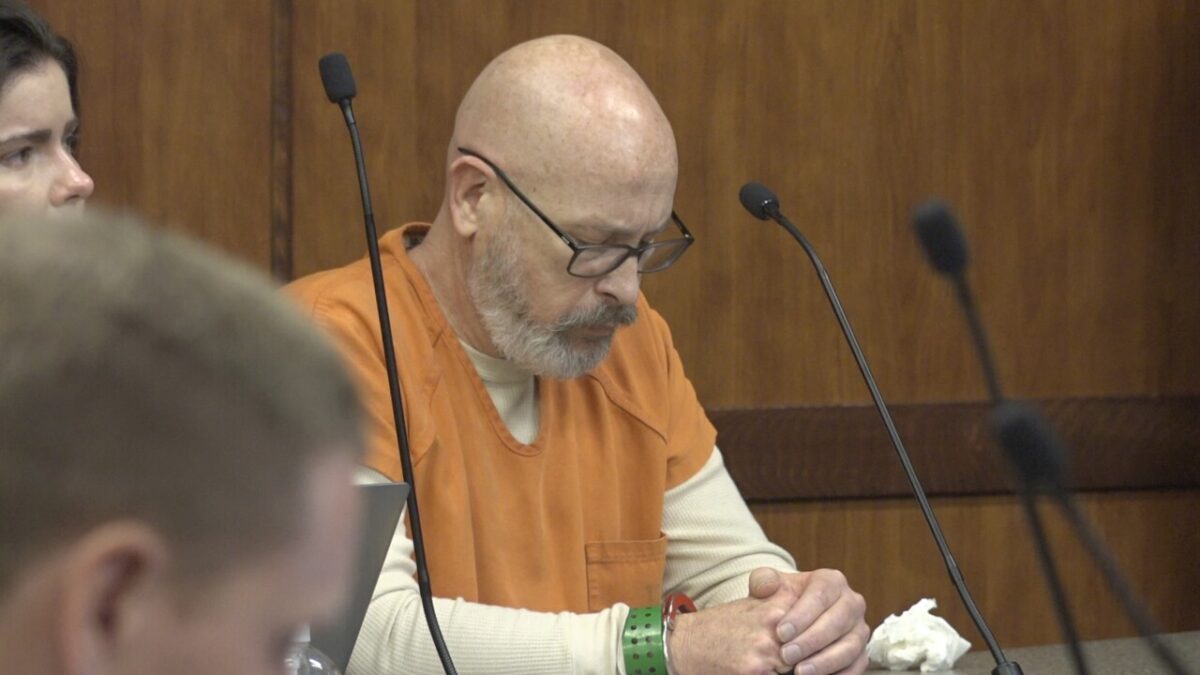
    MIAMI (WFOR) — A University of Miami shuttle bus driver was arrested on DUI charges while on the job, with more than a dozen students on board.

The arrest happened Monday afternoon, just off campus along U.S. 1, after students say the driver began swerving and struck a palm tree.

Video shared by a student shows the moments after passengers asked the driver to pull over and called the police. In the video, students can be heard questioning the driver about whether he had been drinking.

“Did you have anything to drink?” one student asked. “You just smell like a lot of alcohol.”

The conversation lasted several minutes while others on the shuttle contacted authorities.

Maya Dejean, a freshman studying marine biology, said the driver appeared disoriented and unaware of what was happening.

“He didn’t really realize he was crashing into things,” Dejean said. “He wasn’t really remembering things, didn’t have a recollection of what he was doing.”

Dejean said she takes the same shuttle route to and from classes in Virginia Key each week and became increasingly concerned as the ride continued. She said she and other students noticed slurred speech and smelled alcohol on the driver’s breath.

“We could hear his slurred speech,” she said. “You could smell the alcohol coming off of his breath, and it was just very bad.”

The driver, identified as 45‑year‑old Timothy Kowalewski, is facing charges of driving under the influence, damage to property, and refusal to test, according to police.

Dejean said the incident has left her hesitant to return to the shuttle for classes next week.

“Traumatized is a big word, but I would say that I am a little traumatized just from not having that trust with someone else driving me at this point,” she said.

In a statement, the University of Miami said, “The incident involving a University of Miami campus shuttle is under further investigation by the Coral Gables Police Department. The safety of our students, faculty and staff members, and the greater University community remains our top priority.”

Students who were on the shuttle say they do not believe the university has done enough to address the issue.

“I am very grateful for opportunities like this to be able to speak out about it,” Dejean said. “As the student body that was on the bus, we are trying to bring as much awareness to the problem as we can.”

Police said Kowalewski refused a field sobriety test and a breath test at the police station following his arrest.

Please note: This story was provided to CNN Wire by an affiliate and does not contain original CNN reporting. This content carries a strict local market embargo. If you share the same market as the contributor of this article, you may not use it on any platform.
Black-owned toy store to be featured in Obama Presidential Center

By Leondra Head

Click here for updates on this story

    ATLANTA (WUPA) — In Atlanta, one black-owned toy store is turning representation into a mission. The Brown Toy Box creates toys designed to celebrate diversity and help children see themselves in what they play with.

The store’s educational toy kits will be featured in the new Obama Presidential Center. The center is scheduled to open in June 2026 in Chicago.

Terri Bradley, the store’s owner, says educational kits that depict Black and Brown children in roles such as coders, app developers, and marine biologists are headed to Chicago to be featured at the new Obama Presidential Center.

“One evening, I was taking a nap, and I woke up, and I had a purchase order. It said Obama Presidential Center. I was like ‘What!’ I was just over the moon excited,” Bradley said.

Each kit includes a book, a hands-on project, and a toy that brings learning to life. A spokesperson for the Obama Foundation says they ordered 96 of the kits to go inside the center’s gift shop.

“They ordered STEM kits. That’s what we’re known for is our Brown Toy Box STEAM kits that include Science, Technology, Engineering and Math,” Bradley said.

Set on 19 acres in Chicago, the Obama Presidential Center will be more than a museum, it will be a space filled with art, gardens, gathering spots and a gift shop that highlights black-owned brands, including those from Bradley’s store.

“We’re excited that people around the world will be walking through there and will be able to see our kits,” Bradley said.

Bradley says representation is the heart and soul of the store.

“It was really important for me when I started Brown Toy Box, is for Black and Brown children to see themselves represented in play,” Terri Bradley, the owner of Brown Toy Box said.

The store is filled with educational toys that represent diversity.

“We want to be able to plant seeds. We want kids to see something that looks like them and say ‘I can go be a marine biologist or a chemist,” Bradley said.

For Joy Harris, shopping here for her young daughter is more than just buying toys, it’s nurturing her daughter’s identity and pride.

“For her (my daughter) to walk around and see toys and things that reflect her was just exciting to me. She gains a continued love of her skin, culture and appreciation for being able to learn in an environment that supports her and looks like her. She can find her identity,” Harris said.

The Obama Presidential Center is still under construction and scheduled to open in June.

Please note: This story was provided to CNN Wire by an affiliate and does not contain original CNN reporting. This content carries a strict local market embargo. If you share the same market as the contributor of this article, you may not use it on any platform.
Researchers aim to bring truth to light for racially motivated civil rights cold cases

By Madeline Montgomery

Click here for updates on this story

    ELLENWOOD, Georgia (WUPA) — A DeKalb County woman now knows the truth of what happened to her grandmother due to records being released by the Civil Rights Cold Case Review Board.

Now, a new bipartisan bill authored by Georgia Sen. Jon Ossoff has passed the Senate and is waiting to pass the U.S. House, which would extend the review board and allow it to keep doing its work.

The goal of the board is to bring justice and closure to families who lost loved ones in racially-motivated killings that have gone unsolved.

“My grandmother lived in Autaugaville, Alabama,” Ellenwood resident Mary DeBardelaben said. “She was a very strong woman. Strong-willed. You know, and she took care of all of her children. She was a sharecropper.”

DeBardelaben never met her paternal grandmother, Hattie.

“My father never said a word about his mother’s death. I think because it was so traumatizing,” DeBardelaben said. “He witnessed her death. So, he was afraid of the police. So, I think one month after her death, he changed his name and moved to Birmingham … My mother is the one who told us she was killed by the police, federal officers, and a deputy.”

Mystery surrounded her death until the family received a letter from the National Archives.

“It said that they wanted to release my grandmother’s files to the National Archive so that in the future people would have access to those files and they would know what happened to my grandmother,” DeBardelaben recalled.

The details were overwhelming for the Georgia woman.

“I sat there at the table and cried until I couldn’t read anymore,” she said.

According to the Civil Rights Cold Case Review Board, four law enforcement officers approached Hattie DeBardelaben while she was washing clothes in her yard in 1945. The review board says the officers were looking for illegal whiskey. After she allowed them to search her home, the review reports that an officer hit her nephew, James Collier. She defended him, and that’s when the records show they began to beat her.

“They killed her by the way they hit her in her own yard. And she was there just trying to wash her clothes. And they knocked her down, even into the boiling pot, you know, of water. So she died a horrible death,” Mary DeBardelaben said.

The details were in the review board’s case summary.

“What we are doing is simply trying to, you know, excavate the records and get them released, review them, review them with the FBI, review them with the Department of Justice, review them with the National Archive,” said Emory University Professor Hank Klibanoff, a co-chair for the Civil Rights Cold Case Review Board.

Congress created the review board in 2018 to help solve thousands of racially motivated crimes and other civil rights violations.

“There’s got to be a reason that this became a bi-partisan bill,” said Klibanoff. “It’s time we look this straight into the eyes and say, ‘This is the record.'”

The National Memorial for Justice and Peace in Montgomery, Alabama, honors the legacy of the thousands of Black people lynched in the United States between 1877 and 1950. The Equal Justice Initiative believes that between the Civil War and the civil rights movement, over 4,400 Black Americans were killed in lynchings.

Monuments stand with many of these victims named, separated by state and county. There is a memorial for people killed in Autauga County, Alabama, but Hattie DeBardelaben’s name isn’t on there. Her granddaughter wants to change that.

“I want the world to know what happened to my grandmother. I want the world to know what happened during the Jim Crow era, you know, was very devastating. And they have no idea how it affected different families,” DeBardelaben said.

The review board has released 40 cases so far, which equals thousands of pages of records. Members of the board hope to release more, giving other families the answers they need.

“If you put the FBI records of whatever nature with the records we get from the NAACP, and local news clips,” said Klibanoff. “There’s just no way we’re ever going to come together as a people unless the truth is out there.”

It’s a difficult truth for many families.

“It’s a terrible story, and I thank the Cold Case Review Board for bringing those last documents to me because they made everything clearer,” DeBardelaben said.

Please note: This story was provided to CNN Wire by an affiliate and does not contain original CNN reporting. This content carries a strict local market embargo. If you share the same market as the contributor of this article, you may not use it on any platform.
Foxboro threatens to cancel FIFA World Cup matches at Gillette Stadium if it doesn’t get security money

By Juli McDonald

Click here for updates on this story

    FOXBOROUGH, Massachusetts (WBZ) — Foxboro, Massachusetts is doubling down on its threat to cancel the FIFA World Cup matches at Gillette Stadium if it does not receive the security money needed to host the event.

Seven games are set to be played at the stadium, called Boston Stadium for the tournament, including a quarter-final match. They are scheduled to start on June 13 and end in July. The town can’t afford to front the $7.8 million needed for security and wait to be reimbursed later.

“It’s the equivalent of seven Super Bowls here and 39 days of coverage. Which is not small and not to be lost. We have to secure that facility for 39 days straight,” said Bill Yukna, a member of the town’s select board.

The board met Tuesday night to try and get an answer about the funding for security. The Boston Globe reported that the town was supposed to get an answer about the funding on January 30.

During the meeting, the town said that major safety equipment still needs to be ordered, and that their fiscal calendar ends in the middle of the games. The board explained that it will withhold the essential entertainment license until they are reimbursed several million dollars.

“The money has to be here. Everyone thinks we have a football stadium in this town. But with that being said we’re a small town. We have 18,000 people,” said select board member Stephanie McGowan.

“It comes down to sounding like Foxboro is being the bad guys here, but we really aren’t. All we’re trying to do is protect our citizens,” Yukna said.

Leadership for the games said that grant funding will cover the costs.

“The White House task force is working on a daily basis to work with DHS and FEMA on that. I don’t think I can say anything more about that. We’re being told it’s expected any day now,” said Boston 2026 Host Committee Chair Mike Loynd.

Homeland Security is currently shut down due to government funding that lapsed on Saturday. It’s unclear if that will have an impact on when the town can expect its own funding.

FIFA officials deferred any questions about funding to the Boston Host Committee. When WBZ-TV asked the officials about the funding Tuesday evening, they said they were late to dinner.

The town wasn’t happy that the meeting ended without a solid answer.

“I’m shocked you’re not sitting here in front of us right now saying ‘We’ve got the money for you,'” said select board member Mark Elfman.

March 17 is the deadline for the entertainment license.

The Foxboro Police Department, Massachusetts State Police and Boston Police were awarded a collective $11 million in grant funding to protect against “malicious drone activity” during the games and American 250 events.

Please note: This story was provided to CNN Wire by an affiliate and does not contain original CNN reporting. This content carries a strict local market embargo. If you share the same market as the contributor of this article, you may not use it on any platform.

Gov. Moore signs bills into law ending law enforcement partnerships with ICE

By Adam Thompson, Dennis Valera, JT Moodee Lockman

Click here for updates on this story

    MARYLAND (WJZ) — Maryland Gov. Wes Moore signed two emergency bills into law on Tuesday, ending 287(g) agreements, which allow law enforcement agencies to partner with Immigration and Customs Enforcement (ICE).

The new law prevents state agencies and employees from entering into 287(g) agreements and orders that all existing agreements end by July 2026.

“In Maryland, we will not allow untrained, unqualified and unaccountable agents to deputize our brave local law enforcement officers because Maryland is a community of immigrants. It is not our weakness,” Gov. Moore said Tuesday.

It comes amid an ongoing federal crackdown on immigration enforcement led by the Trump administration.

In Maryland, nine counties participate in 287(g) agreements, including Allegany, Carroll, Cecil, Frederick, Garrett, Harford, Washington, Wicomico and St. Mary’s counties.

There are different types of 287(g) agreements, including some that grant police officials permission to ask about immigration status during an arrest, and others that allow officers to carry out immigration enforcement duties.

There are two kinds of these agreements utilized in Maryland. One allows corrections officers at local jails to flag a noncitizen who is arrested to ICE and detain them for 48 hours. The other allows officers to serve and execute warrants on those who are jailed.

“This legislation does not authorize the release of criminals,” Moore said. “It does not prevent Maryland from working with the federal government to hold violent offenders accountable.”

“We do not take violent offenders lightly. We are going to make sure our communities are safe from people who are doing violent harm to them,” the governor continued. “We will continue to coordinate on shared public safety priorities, including the lawful removal of non-citizen offenders who pose a risk to public safety.”

CASA, an immigration advocacy group, rallied with lawmakers ahead of the bill signing Tuesday morning to voice their support for the new law and address its significance.

Maryland’s General Assembly passed two versions of the bill to end 287(g) partnerships — House Bill 444 and Senate Bill 245.

The bills were sent to the opposite chamber for another round of approvals before they were sent to the governor’s desk.

Maryland currently allows two different types of 287(g) agreements. One allows correctional officers to flag noncitizens to ICE and detain them for 48 hours, and another allows officers to serve warrants on jailed noncitizens.

Gov. Moore previously showed support for the bill and said he would sign the bill into law if it reached his desk.

“We are going to do everything in our power to keep people safe, but that does not mean deputizing the people who are keeping people safe to go perform functions by a rogue ICE agency,” the governor said in a statement. “And so we are eager. We are working with the members of the General Assembly. I’m looking forward to a bill that will make it to my desk, and I’m looking forward to signing the bill that makes it to my desk.”

On Tuesday, the Maryland Freedom Caucus, a group of Republican state delegates, accused state Democrats of restricting “cooperation between local jails and federal immigration authorities” by signing the bills into law.

“Sheriffs across Maryland have warned that ending cooperation with ICE will not make communities safer, it will lock down law enforcement and shift encounters from controlled jail transfers to street-level confrontations,” the group said in a statement.

Harford County Sheriff Jeff Gahler has had a 287(g) agreement with his agency since 2016. He argued Tuesday the ban will result in some violent offenders being let go unintentionally.”

“There’ll be those [criminals] who won’t get a hit that would have allowed us to identify [them under this agreement], that will not be happening now,” Gahler said. “Those individuals who pose a threat to public safety or national security will be walking out of our jails and back into your community.”

Earlier this month, Gahler was joined by Patty Morin, the mother of a woman who was murdered by an undocumented immigrant from El Salvador in 2022, to urge state lawmakers to reject the 287(g) ban.

In 2023, Rachel Morin was found murdered along the Ma & Pa Trail in Bel Air. In August 2025, Victor Martinez Hernandez was sentenced to life in prison without parole for the murder.

Patty Morin said 287(g) agreements have been “a safeguard for our community, for our citizens, for our families.”

She then asked Marylanders to tell Gov. Moore “not to sign that order, to veto it, and to allow us to work in this program.”

Sheriff Gahler has also said the agreements help to keep Marylanders safe and that getting rid of them would only increase ICE presence in the state.

“Doing away with 287(g) has been sold by some legislators as the solution to get ICE out of Maryland,” Gahler said. “The opposite will happen. You will still see ICE, probably in greater numbers, doing the job they are lawfully required to do.”

The Maryland Sheriffs’ Association is meeting Wednesday to discuss next steps on the new law, according to Gahler, which includes exploring possible legal action.

Please note: This story was provided to CNN Wire by an affiliate and does not contain original CNN reporting. This content carries a strict local market embargo. If you share the same market as the contributor of this article, you may not use it on any platform.

Owner of pet crematorium pleads guilty after giving sand instead of pets’ ashes

By JT Moodee Lockman, Caroline Foreback

Click here for updates on this story

    BALTIMORE (WJZ) — The owner of a Baltimore County pet crematorium pleaded guilty Tuesday to several charges after giving some pet owners sand or “building materials” instead of their pets’ ashes.

Rodney Ward and his wife, Yalanda, were both charged in connection with the scam at Loving Care Pet Funeral and Cremation Services in Catonsville.

On Tuesday, Rodney Ward pleaded guilty to theft and malicious destruction of property.

Ward could face up to 25 years in prison. He will remain in jail while awaiting sentencing on March 31, when victims will be able to read impact statements.

Yalanda Ward’s trial was postponed until May 6, 2026, according to court records.

According to court documents, the Wards’ unlicensed business collected nearly $13,000 from victims. There were at least 51 victims, according to the Baltimore County State’s Attorney’s Office.

“Every single one of them has remains or a box that they thought were their pets’ remains,” said Adam Lippe with the Baltimore County State’s Attorney’s Office. “It turned out to be non-animal. It turned out to be what I indicated in court, which was sand, gravel, baking soda, fertilizer.”

In April, investigators found the remains of 38 different animals in the back of a hearse in West Baltimore.

Several victims, including Juanita Logan, told WJZ last year that they used the business to have their pets cremated, and received a box within 24 hours that contained ashes, a cremation ID, and a picture of their pet. The material was later determined not to be ashes.

“They were not ashes. It looked like sand, concrete with wires inside of it,” Joy Schoonover told WJZ.

Following the discovery of the scam, Charm City Pet Crematory offered free services to the victims. The company worked with the Baltimore Animal Rescue and Care Shelter (BARCS) and animal control to identify and cremate the recovered pets.

Forensic anthropologist Dr. Rhys Williams tested the material Ward gave victims, claiming it was their pets’ ashes. Williams said the samples did not contain animal remains.

“We did not find animal remains,” Williams said. “There were one or two with human elements mixed in.”

Williams said the human elements included teeth and dental implants. He added that most of the material was “building materials,” including concrete powder.

Adam Lippe, with the Baltimore County State’s Attorney’s Office, called the scheme especially cruel.

“There’s a certain wickedness to what the defendant did, meanness to take advantage of people at their lowest moment when a loved one has died,” Lippe said.

Dozens of devastated pet owners filled the Baltimore County courtroom as the Ward pleaded guilty.

The victims said they are still left with questions that may never be answered.

Sharon Thomas, and her daughter, Kia Hutchinson, said they thought they could trust Ward with the remains of their 17-year-old service dog, Blackie Dior.

“He quoted scripture, he did all of this to make me feel comfortable,” Thomas said. “I would never think that he would be so demonic,” Thomas said.

Thomas said the experience has permanently changed her.

“I’m never going to be the same,” Thomas said. “I could never believe that someone could do this, it’s a family member.”

One of the victims, Beverly Rassen, said her grief over her dog Rusty is now mixed with guilt.

“I feel guilty because I gave Rodney my baby,” Rassen said. “I trusted him to bring back my baby but he threw him on the side of the road just like he was trash and he wasn’t. He was a family member.”

Officials say many remains of pets are still unaccounted for.

“We are a part of those who will never know where he is,” Hutchinson said.

Nikki Pickens, another victim, said she still wants answers.

“Why did you leave them on the side of the road, why did you pack them in that hearse, and for the rest of us, where are our pets?” Pickens said.

Some victims are also expected to testify before the Maryland House of Delegates on Thursday in support of a bill that would establish consumer protection requirements for pet cremation and burial services.

Please note: This story was provided to CNN Wire by an affiliate and does not contain original CNN reporting. This content carries a strict local market embargo. If you share the same market as the contributor of this article, you may not use it on any platform.

Man meets Dutch firefighter who cares for his WWII father’s grave: ‘Cannot thank you enough’

By Greg McQuade

Click here for updates on this story

    POWHATAN COUNTY, Virginia (WTVR) — An 82-year-old Powhatan man has found healing through an unexpected connection with a Dutch volunteer who tends to his father’s grave thousands of miles away.

James Midkiff never knew his father, Staff Sergeant Frank Midkiff, who was killed during World War II when James was just an infant.

Now, through the Forever Promise Project, he has connected with Marco Bastin, a Dutch firefighter who has been caring for his father’s grave at Netherlands American Cemetery in Holland.

“Marco, I cannot say thank you enough,” Midkiff said during a Zoom call with Bastin. “The fact that you people carry this through. To take your time it means a lot.”

Frank Midkiff joined the 8th Air Force during WWII and spent only three days with his wife Kitty and infant son before being shipped overseas.

In his final letter to his parents, Frank wrote: “Dad things are really bad here. I don’t think I’m going to get home. If I don’t take care of my little man.”

On December 20, 1943, Frank’s B-17 was shot down and crashed in Germany during a mission.

Eight crew members were killed, including the 21-year-old staff sergeant.

“He was the love of mother’s life,” James said. “When she lost him, she never got over it.”

Frank is buried at Netherlands American Cemetery, where each of the more than 10,000 graves has been adopted by Dutch citizens as a perpetual thank you for liberating their country from Nazi occupation.

Bastin, 38, lives in Margraten just steps from the cemetery and adopted Frank’s grave years ago, following a family tradition started by his grandparents at the end of WWII.

“It is a beautiful spot,” Bastin said. “We are proud of it. We hope they are proud of it as our we.”

The Forever Promise Project, launched by bestselling author Robert Edsel, connects families of fallen service members with their Dutch adopters.

“No country has demonstrated a fidelity to the United States and gratitude to the United States at the level that the Dutch have,” Edsel said.

During their virtual meeting, both men expressed the profound impact of their connection.

“You are like a family. It won’t be forgotten,” James told Bastin.

Bastin responded: “We do it with a lot of love. Thank you very much.”

The Dutch volunteer brings flowers to Frank’s grave every Memorial Day and hopes his two daughters will continue the tradition when he no longer can.

“It is a surprise for me now to know that Frank has a son. That is really nice,” Bastin said. “I do it with a lot of love and respect for your father.”

For James, who keeps artifacts from his father’s crashed plane in his sunroom, the connection provides comfort he never expected to find.

“He is not here, but he is here. I look and he is here,” James said.

While nothing can bring his father back, connecting with Marco has helped heal a wound that has lasted 83 years.

“He was pretty special,” James said. “I can’t say enough about him. He gave me a life. I lost a lot, but I have been blessed.”

This story was initially reported by a journalist and has been converted to this platform with the assistance of AI. WTVR verifies all reporting on all platforms for fairness and accuracy.

Please note: This story was provided to CNN Wire by an affiliate and does not contain original CNN reporting. This content carries a strict local market embargo. If you share the same market as the contributor of this article, you may not use it on any platform.

100 quilts honor Black History and Underground Railroad stories

By Gabrielle Harmon

Click here for updates on this story

    CHESAPEAKE, Virginia (WTKR) — A powerful new exhibit at the Chesapeake Central Library tells the stories of Black History through the art of quilting, offering visitors a unique perspective on resilience, freedom and cultural preservation.

The African American Sewcial Threaders Guild presents “A Hundred Quilts for 100 Years of Black Resilience: The Underground Railroad and Beyond,” featuring handcrafted quilts that shed light on the experiences of those who worked, protected, and helped in the Underground Railroad plus the generations that followed.

“I tried to portray where she is loosening her shackles and she’s putting on her crown to be the queen that she always was,” one quilter explained about her piece.

The Underground Railroad quilts serve as both art and historical narrative, according to Dedra Wright, a member of the Sewcial Threaders Guild.

“The Underground Railroad Quilts actually are blocks that are assembled together, but individually they tell a story,” Wright said.

The exhibit goes beyond the journey to freedom, exploring how families have preserved history and culture through traditions, transformations and triumphs over the years.

Lamonica Carpenter, another Sewcial Threader, emphasized the importance of sharing these often-hidden stories.

“We as a culture have always kept our stuff in the closet, but we need to tell those stories. People need to know,” Carpenter said.

The quilts honor both those who successfully escaped slavery through the Underground Railroad and those who did not survive the journey. Wright noted that the African American experience encompasses much more than the path from slavery to freedom.

“When we’re talking about the African American experience we’re not just talking about slavery. It’s not just going to freedom. It’s also breaking some of these generational curses,” Wright said.

The Guild hopes their work will inspire future generations to learn from the past.

“We’re not promised tomorrow but we can share what we’ve learned about yesterday. So that when tomorrow comes for someone else they will know and they will have learned,” Carpenter said.

“I really hope that people can hear our heart as they look at what we’ve been able to pull together,” Wright said.

The exhibit is currently on display at the Chesapeake Central Library, offering community members the opportunity to experience these powerful stories of resilience and cultural heritage firsthand.

Please note: This story was provided to CNN Wire by an affiliate and does not contain original CNN reporting. This content carries a strict local market embargo. If you share the same market as the contributor of this article, you may not use it on any platform.