Cyborg cockroaches teach neuroscience at Marquette University

By Mallory Anderson

Click here for updates on this story

    MILWAUKEE (WISN) — Cyborg cockroaches equipped with Bluetooth backpacks are being used at Marquette University to teach neuroscience to students.

In the upper-level biology course, students and staff utilize a product called the Roboroach created by Backyard Brains, a Midwest company that specializes in educational science tools and lessons.

“The Roboroach is an activity that we can do in neuroscience to try to understand how the nervous system actually creates behavior,” said Chelsea Cook, an assistant professor in biological sciences at Marquette University.

The Roboroach taps into the basics of how neurons communicate with each other inside the body through microscopic electrical currents. Bluetooth backpacks are put on real, live cockroaches. From there, the backpacks stimulate the antenna nerves on the roaches, and through a phone app, students can briefly control the left and right movement of the bugs.

“I was definitely surprised,” said Oliver Lee, a sophomore student in the class. “You know, I don’t have much experience with cockroaches. I was kind of excited, though. Seems like a fun time.”

The technology used in the Roboroach is the same as that in electronic devices like prosthetic limbs and cochlear implants to improve hearing.

“A lot of these students are planning on going into health professions,” Cook said. “So, many of these students will be our doctors, dentists, physician’s assistants, nurses that will apply some of the principles that we use today in their jobs and in their treatments of us later.”

Despite initial hesitation from some students, such as Monica Stinson-Hernandez, who said, “So, I hate roaches. I hate bugs,” the experience was still seen as invaluable.

Stinson-Hernandez added, “I feel like getting the hands-on experience and doing the little tiny details with the wires and forceps really help me in the future, either in research or if I decide to go to grad school.”

The experiment does not harm the cockroaches, as they behave normally once the backpack is removed, and the electrical currents are not painful.

Please note: This story was provided to CNN Wire by an affiliate and does not contain original CNN reporting. This content carries a strict local market embargo. If you share the same market as the contributor of this article, you may not use it on any platform.
Thousands gave. Now thousands will be helped through Giving Machine donations

By Kimberly Esquivias

Click here for updates on this story

    IDAHO FALLS, Idaho (eastidahonews.com) — After a record-breaking holiday season, the organizers of the Light the World Giving Machines are turning thousands of donations into real help for eastern Idaho.

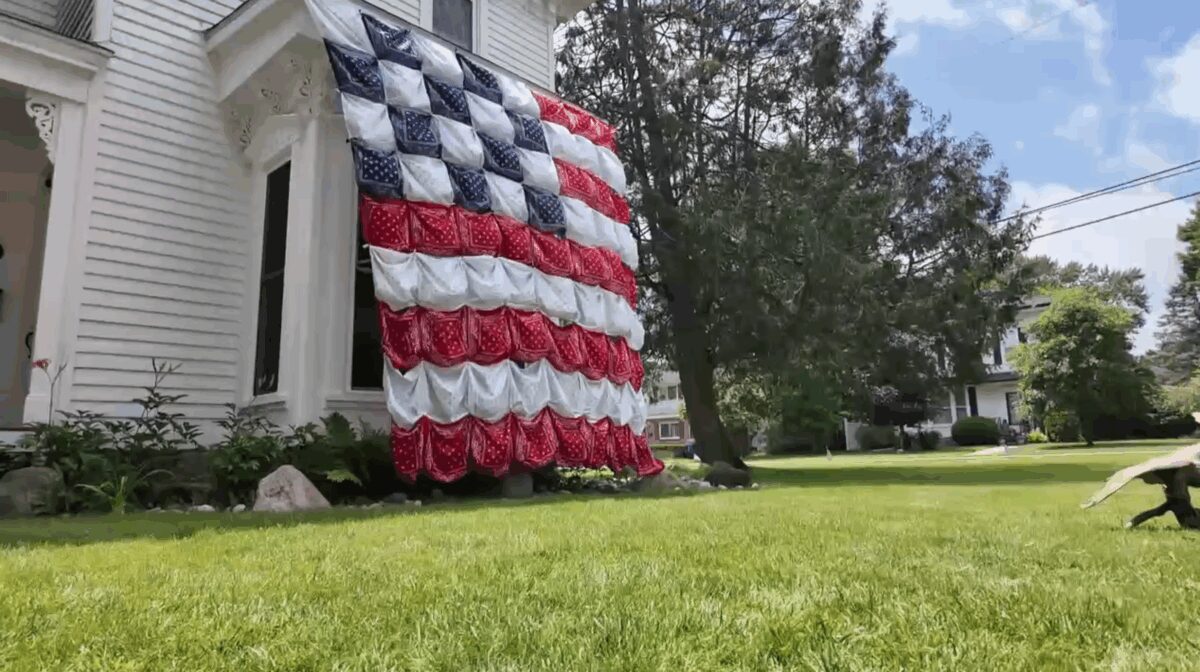
Organizers announced Monday that more than 95,000 people visited the red machines in Pocatello, Rexburg, and Idaho Falls during their 48-day run from Nov. 15 to Jan. 1. During that time, donors bought 78,000 individual items, ranging from local meals, clothing, hygiene supplies, school materials, and global livestock for those in need.

“It was an added boost of love for the community,” said Sherri Matson, Pocatello lead for the Giving Machine program.

Sponsored by The Church of Jesus Christ of Latter-day Saints, the Giving Machines are a vending machine in reverse. Those who make a purchase are donating to different charities in eastern Idaho or around the world. Among the local charities this year were the Domestic Violence and Sexual Assault Center, Eastern Idaho Community Action Partnership, Idaho Falls Rescue Mission, The Village, Idaho Falls Community Food Basket, Friends in Service Here, among others.

This week, the Light the World committee will host three separate ceremonies to present checks to 16 local nonprofits that partnered with the initiative.

The first check presentation was held Monday at noon at the Hemming Village Atrium in Rexburg. A second one will be held on Tuesday in the Idaho Room of Idaho Central Credit Union in Pocatello. The presentation will begin at 11 a.m.

Then on Thursday, the Brickyard Event Center in Ammon will host the third event.

In 2025, nearly 1 million people visited Giving Machine kiosks in 126 cities across 21 countries on six continents, according to a news release. About 4.7 million items were bought during that time.

The specific totals for this season will be revealed during the ceremonies. Local leaders and representatives from the nonprofits are expected to attend to discuss how the funds will be used in the community.

In the coming months, each item will be delivered to individuals in need — whether they live across the street or around the world.

Please note: This story was provided to CNN Wire by an affiliate and does not contain original CNN reporting. This content carries a strict local market embargo. If you share the same market as the contributor of this article, you may not use it on any platform.
Cincinnati trailblazer reflects on breaking barriers: ‘I love my story’

By Danielle Dindak

Click here for updates on this story

    CINCINNATI (WLWT) — Angela Davis, a resident at Brookdale Senior Living Facility, is sharing her inspiring journey of resilience and faith during Women’s History Month.

Cincinnati was built on trailblazers. Davis didn’t just reach her dreams; she broke barriers doing it, paving the way for so many people.

Her determination is unmatched, her compassion evident, and her strength speaks just as loudly as her faith.

“I love my story and I love sharing it with everyone,” Davis said.

Born in 1937, Davis grew up in Washington, D.C., during a time of segregation.

“We were the only ones there in the school and in the churches. Back then, Blacks had to sit in the back of the church,” Davis said. “And I always told my mom, I want to sit up front.”

Feeling a calling from above, on Sundays when her mom wasn’t looking, Davis ran up front and sat up front.

Running by faith, Davis was unaware at the time that she was well on her journey of many firsts.

“I was the first Black to go to the first integrated school when I was in seventh grade,” Davis said.

Not letting adversity slow her pace, she kept her head up. While she was in high school, a law passed making all schools integrated.

Guided by her faith, Davis moved to Cincinnati and became the first Black nun of the Sisters of Charity.

“The mother general really welcomed me. And every time she saw me, she hugged me and told me she was so happy I was there,” Davis said.

Her life would have another act and another milestone.

“I was the first Black to teach at Hyde Park,” Davis said.

An elementary teacher who taught her students life-long lessons, Davis is a woman of wisdom, love, and resilience. She received the Martin Luther King Jr. Award.

But the proudest moments in her life can’t all be found in a book. Instead, you can find them on her wall.

“I love my family. They’re wonderful people, and I love all of them,” Davis said.

Please note: This story was provided to CNN Wire by an affiliate and does not contain original CNN reporting. This content carries a strict local market embargo. If you share the same market as the contributor of this article, you may not use it on any platform.
Why is there a golden toilet on the National Mall?

By Kyle Cooper

Click here for updates on this story

    WASHINGTON, D.C. (WTOP) — The latest statue meant to get under President Donald Trump’s skin has popped up on D.C.’s National Mall. Sitting on the edge of the steps leading up to the Lincoln Memorial is the Secret Handshake’s newest sculpture of a throne with a golden toilet as a seat.

On Monday afternoon, many tourists, locals and people out for exercise stopped to take a look at the golden throne, including Frank McGee of D.C.

“This is pretty good. In fact, it looks like it came from his own apartment,” McGee said.

McGee said he thinks there’s room for this kind of political commentary.

“He treats himself like a king and ignores the Constitution, and so do his people, his lackeys, his court. So I think it’s very appropriate,” he added.

A plaque on the statue reads, “A Throne Fit for a King,” along with an inscription.

“In a time of unprecedented division, escalating conflict, and economic turmoil, President Trump focused on what truly mattered: remodeling the Lincoln Bathroom in the White House. This, his crowning achievement, is a bold reminder that the president isn’t just a businessman, he’s taking care of business. It stands as a tribute to an unwavering visionary who looked down, saw a problem, and painted it gold,” it reads.

Penny from D.C stopped and took a picture sitting on the “throne” herself.

“Actually, I wouldn’t be surprised if he has one like this in the White House, or if he’s ordered them for the East Ballroom,” she joked.

The statue was placed by the group the Secret Handshake, which is also behind a sculpture featuring Trump and financier and sex offender Jeffrey Epstein.

Please note: This story was provided to CNN Wire by an affiliate and does not contain original CNN reporting. This content carries a strict local market embargo. If you share the same market as the contributor of this article, you may not use it on any platform.

Utah man sentenced to 7 months jail in death of his daughter

By Tim Vandenack

Click here for updates on this story

    OGDEN, Utah (KSL) — An Ogden man charged in the death of his 4-month old daughter has been sentenced to about seven months jail.

Nicholas James Horsley, 28, pleaded guilty on Feb. 4 to reduced charges of aggravated child abuse, a second-degree felony, and endangerment of a child, a third-degree felony, in connection with the Dec. 27, 2024, incident that led to the death of his daughter. Judge Craig Hall sentenced him on March 18 to 210 days of jail, with credit for 148 days already served, and placed him on probation for four years.

Horsley also received suspended prison sentences of one to 15 years on the aggravated child abuse charge and zero to five years on the child endangerment charge. Sentencing documents say Horsley is to serve his remaining jail time “on electronic monitoring” but don’t specify where he’s to serve it.

Horsley was originally charged with child abuse homicide, a first-degree felony, but pleaded guilty to reduced charges as part of a plea deal. The plea deal doesn’t specify exactly what happened to Horsley’s daughter, but says medical scans show the girl “had sustained a catastrophic brain bleed, which was caused by nonaccidental abusive head trauma.” The girl’s mom had reported that the girl was “responsive and normal” before Horsley took her to another room.

The child endangerment charge stemmed from the presence of marijuana in Horsley’s home when authorities were called to the scene. “While investigators were on scene, the couple’s 18-month-old toddler was observed reaching for a pile of marijuana on the coffee table and had to be encouraged to leave the marijuana alone,” court documents state.

Horsley was ordered to get therapy “with a particular focus on boundary setting, victim empathy and parenting skills.” The two sides reached accord that the “sentencing matrix” in the case calls for 105 days of incarceration, according to the plea deal.

“Nick presents with an intellectual disability alongside symptoms of anxiety and depression. These conditions, supported by diagnostic history, appear to have influenced his functioning and may help explain aspects of the behavior underlying the current allegations,” reads a mitigation report in the case prepared by his lawyer. It said he has used marijuana “to regulate emotions” but no longer uses the drug “and understands the importance of sobriety moving forward.”

Horsley’s partner and the mother of the girl who died defended the man in a statement to the court as part of sentencing.

“I am not saying that the way things played out should have happened or that we should have let things get as bad as they did, but I am saying that we tried. Nick loves all the kids with all his heart and would do anything for them even today and I know he is not the monster people are trying to make him believe he is,” she wrote.

Weber County Attorney Christopher Allred said some “evidentiary issues” with medical examiners factored in reducing the charge Horsley faced from child abuse homicide to aggravated child abuse. According to a spokeswoman from Utah State Courts, “the child was also seriously ill at the time of death, which the attorneys acknowledge could have contributed to the death.”

The sentence, Allred said, was consistent with recommendations from state probation and parole officials. Hall asked prosecutors if they would seek additional jail time, “and the prosecution responded that they were not,” said the court spokeswoman.

Please note: This story was provided to CNN Wire by an affiliate and does not contain original CNN reporting. This content carries a strict local market embargo. If you share the same market as the contributor of this article, you may not use it on any platform.
Bodycam footage reveals missing stop sign in crash involving UC nursing student

By Brian Hamrick

Click here for updates on this story

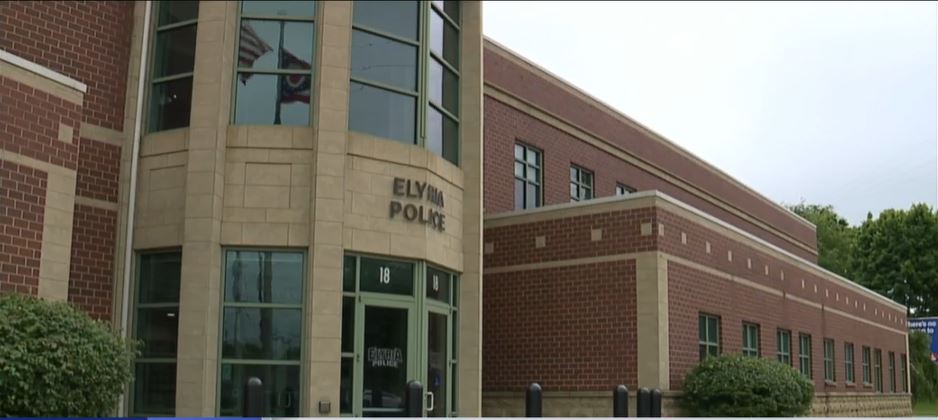
    CINCINNATI (WLWT) — Police body camera footage has revealed a missing stop sign at the intersection where a University of Cincinnati nursing student was killed, potentially changing the case against the driver involved.

The body cam footage shows the suspect, Jermaine Isham, struggling with police after the violent crash at Depot and West 8th Street in Lower Price Hill. Isham had to be shocked with a taser multiple times. He was charged with OVI and other charges, but not in causing the death.

Carolyn Peterson, the grandmother of Carlie Berry, the 20-year-old UC nursing student who was killed in the crash, said, “We’re not going away. This is not going away.” She described Berry as “just a beautiful girl inside and out.”

The body cam footage reveals a significant detail: there is no stop sign at the intersection. Peterson said police initially did not charge Isham in Berry’s death because they claimed Berry rolled a stop sign. However, the footage shows that the stop sign did not exist at the time of the crash.

Peterson said, “We want to maybe have a sit down with the prosecutor and talk about charges. Now that it has been confirmed that there was no stop sign.”

The family says the initial accident report from police highlighted the stop sign as if it was there at the time of the crash, but the latest report shows it was not.

The city has not responded to requests for information on why the stop sign was taken down, how long it has been down, and why it wasn’t replaced. A stop sign has since been put in after the crash.

It is unclear if the missing stop sign would make Isham more culpable in the case, but it could make the city more liable.

Please note: This story was provided to CNN Wire by an affiliate and does not contain original CNN reporting. This content carries a strict local market embargo. If you share the same market as the contributor of this article, you may not use it on any platform.
Bill to bolster cancer benefits for Nebraska firefighters fails on floor as clock ticks down on session

By John Grinvalds

Click here for updates on this story

    Nebraska (KETV) — Nebraska lawmakers opened the week facing mounting pressure to move legislation as the session enters its final stretch.

“A lot to do, not a lot of time,” Speaker of the Legislature Sen. John Arch said Monday, as senators leaped from one extended debate to another.

Arch warned his colleagues that there would be many late nights this week.

“I’ll do my part to facilitate us addressing as many of the remaining bills as we can and to facilitate a smooth landing for this session,” Arch said. “But please keep in mind, it’s not only up to me as to how the remaining two weeks of our session plays out.”

Sen. Dave Wordekemper’s priority bill, which would make Nebraska firefighters diagnosed with cancer automatically eligible for workers’ compensation benefits, swallowed up all debate time in the morning.

“Firefighters are getting cancer rates in their 30s and dying in their 40s,” Wordekemper said. “And right now, that diagnosis is taking firefighters from their families just as surely as any fire ever could.”

Wordekemper said right now, firefighters must prove their cancer is linked to their work, often requiring legal representation and expert medical testimony. Wordekemper said that process creates unnecessary barriers for those seeking benefits.

During debate, supporters of LB400 discussed the importance of the bill in light of the wildfires raging across the state. Opponents said that was disingenuous.

“We’re going to talk today about the fires to get sympathy for the paid firefighters on this end of the state who are really looking for this benefit,” Sen. Mike Jacobson said. “And then we’re going to take the volunteers out in the end. And I can tell you they’re tired of being used in that way for being taken for granted, being used as a pawn to move this forward.”

Opponents also raised concerns about the scope and cost of the proposal, saying it would impose serious unfunded mandates on local governments.

“It’s whether or not this is a responsible mandate for this body to make for those property taxpayer dollars to be used for,” said Sen. Tanya Storer. “That’s the question.”

The measure fell one vote short of overcoming a filibuster.

In the afternoon, lawmakers took up another priority bill with bipartisan backing from Sen. Wendy DeBoer. Her proposal would eliminate a sunset date for a low-income childcare subsidy program.

“If you don’t have a safe place for your child to go, you can’t work,” DeBoer said.

DeBoer’s bill came up during budget debate, but now it’s standing alone.

Debate will continue into Monday evening.

Please note: This story was provided to CNN Wire by an affiliate and does not contain original CNN reporting. This content carries a strict local market embargo. If you share the same market as the contributor of this article, you may not use it on any platform.
Human remains found in Utah mountains bring up mixed emotions for families of missing people

By Shelby Lofton

Click here for updates on this story

    SPRINGVILLE, Utah (KSL) — The discovery of human remains in the mountains above Springville over the weekend is stirring a mix of hope and anxiety for families of missing people across Utah.

The Utah County Sheriff’s Office confirmed that human bones were found in a remote, rugged area above Springville after a horseback rider came across them Saturday. Investigators believe the remains had been there for some time.

Sheriff’s officials said they would return to the scene on Monday to complete evidence collection. The remains will be sent to the Utah Office of the Medical Examiner. Officials said they do not have updates on the investigation at this time.

The location where the remains were found has no cell service and is difficult to access, investigators said. Authorities have not released additional details about the exact location.

Utah maintains a cold case database through the Department of Public Safety that includes hundreds of unsolved homicides, missing persons cases and unidentified human remains. Local law enforcement agencies are responsible for adding and updating information in the database as investigations continue.

The database includes images and descriptions of unidentified remains, such as sketches, photographs of clothing and footwear, estimated age ranges, and the dates on which the remains were found. A public tip hotline is also available for anyone with information related to cases.

As of Monday, there were no recently logged unidentified remains from Utah County in the state database.

Brock Best, executive director of Utah Homicide Survivors, an organization that provides legal and therapy resources for families of homicide victims, said discoveries like this often bring complicated emotions.

“For some families, getting that call can help them take the next steps and provide some closure,” Best said. “For others, it can be deeply retraumatizing.”

Best said families coping with missing loved ones often live in a state of uncertainty, making moments like this particularly difficult.

“They have to go through all of those emotions again, not only, ‘Gosh, we were so sad when our loved ones were missing,'” he said. “Now to find out that they have been out in the elements alone and have been taken from us in an unnatural way, it’s got to be incredibly difficult.”

Utah Homicide Survivors has not received any calls connected to the remains found in Utah County, Best said, but the organization is closely monitoring developments.

Authorities said updates will be released if new information becomes available. While the remains have not been identified, the discovery has reignited conversations about missing person and cold cases across the state.

Please note: This story was provided to CNN Wire by an affiliate and does not contain original CNN reporting. This content carries a strict local market embargo. If you share the same market as the contributor of this article, you may not use it on any platform.

Massive sphere art exhibit in Salt Lake City draws attention to Great Salt Lake

By Andrew Adams

Click here for updates on this story

    SALT LAKE CITY, Utah (KSL) — A three-story-tall, spherical public art installation took shape recently at Memory Grove Park. It was set up with the goal of building curiosity and improving education about the environmental issues surrounding the Great Salt Lake.

“A symphony of disappearing sounds for the Great Salt Lake” launched Thursday near the south end of the park, located at 300 N. Canyon Road.

Salt Lake City Arts Council executive director Felicia Baca said the artwork of Icelandic-Danish artist Olafur Eliasson features a dynamic light display during nightly 30-minute shows. It also plays a musical composition from UK-based producer Koreless, which combines over 150 field recordings of creatures that depend on the Great Salt Lake for their health.

“It’s our city’s namesake,” Baca said of the Great Salt Lake during an interview with KSL on Monday. “It’s about our ability to live healthily in our city. So many things depend on the Great Salt Lake. It’s one of the biggest bird flyways in the Northern Hemisphere. Our ski season is dependent on it. Our ability to breathe clean air is dependent on the Great Salt Lake.”

Baca said the exhibit was part of the broader public art project, “Wake the Great Salt Lake,” which is supported by the arts council, the Salt Lake City Mayor’s Office and the Bloomberg Philanthropies Public Art Challenge.

“The Salt Lake City Arts Council is a recipient of the Bloomberg Philanthropies Public Art Challenge, so we got a $1 million grant to do temporary public art on a local challenge, and so the Great Salt Lake, of course, was that challenge for us,” Baca said.

The exhibit’s public reception

The exhibit was already generating its share of curiosity at the park.

Cody Peterson said he had “no idea” what it was when he first saw it last week.

“(I was) super curious because you don’t see something in the park like that every day,” Peterson said.

Ryan Eldredge quipped that the exhibit reminded him of something else entirely.

“I was like, ‘Well, (it) looks like we have a mini Vegas up here,'” Eldredge said.

A QR code at the site of the exhibit allows visitors to learn more.

Catherine McVey said she appreciated the message behind the art installation.

“The Great Salt Lake needs a lot of publicity because it’s disappearing,” she said. “So many things depend on the Great Salt Lake.”

Eldredge said he liked the art exhibit as a conversation starter.

“I think conversation has to be brought up, and it’s in a nonconfrontational setting way to do it, which I like,” he said.

The nightly 9 p.m. shows were scheduled to continue through April 4.

Baca said attendance was free and open to the public, but she recommended registering ahead of time.

She said the goal was to inspire interest and action on the issues that affect the Great Salt Lake.

“We hope that it just brings that education and awareness about the decline of the Great Salt Lake,” Baca said. “We know that sometimes science or data doesn’t really reach people in the way that art can to help kind of change hearts and minds.”

Please note: This story was provided to CNN Wire by an affiliate and does not contain original CNN reporting. This content carries a strict local market embargo. If you share the same market as the contributor of this article, you may not use it on any platform.

MomEconomy app aims to help moms barter goods and services instead of cash

By Rachel Fabbi

Click here for updates on this story

    SALT LAKE CITY, Utah (KSL) — Raising a child can cost more than $300,000 by the time they turn 18. A Utah nonprofit is hoping a new app can help lighten that financial load — while also combating parent isolation.

Momivate, a nonprofit focused on supporting mothers, is developing a new app called MomEconomy, designed to let moms barter goods and services with one another instead of spending cash.

“It’s a way for moms to trade what they already have — their skills, time, or extra items — without dipping into their savings,” said Amanda Ballash, with Momivate.

The concept builds on Momivate’s existing mission of helping moms “find their village.”

Through the app, parents will be able to exchange things like child care, meal prep, tutoring, or other everyday services, no money required.

For Alisha Hemmert, that sense of community came at a critical time. After the birth of her second child, she struggled with postpartum depression. Shortly after, her husband was diagnosed with brain cancer.

“I felt really alone and like I didn’t know who to turn to for help,” Hemmert said. “I really wish I had that village everybody talks about.”

Four years later, Hemmert says her husband is doing well, all things considered, and she has found support through Momivate. The organization is best known for its “revolving closet” program, which allows moms to trade outgrown children’s clothing for free.

“Moms can bring clothes their children have outgrown and trade them for clothes other mothers have brought,” said Regan Barnes, the founder of Momivate. “Children grow really fast, and this helps take some of the pressure off.”

The MomEconomy app takes that idea further, expanding the exchange beyond clothes to services and resources.

A group of four Brigham Young University students is helping bring the app to life, coding it as part of their capstone project.

“Out of all the projects available, MomEconomy stood out to me,” said BYU student Jacquelyn Guernsey. “It just sounded the most fulfilling to work on.”

The students have spent hundreds of hours developing the app, which is expected to enter beta testing within the next few weeks. Momivate hopes to roll it out statewide later this year — with plans to expand beyond Utah.

Because, organizers say, moms give so much of themselves every day.

“Somebody needs to be there to serve them,” Barnes said. “And that’s what Momivate is.”

Please note: This story was provided to CNN Wire by an affiliate and does not contain original CNN reporting. This content carries a strict local market embargo. If you share the same market as the contributor of this article, you may not use it on any platform.