Spanish interpreter ensures no one gets left behind during Aspen Acres Fire

By Meghan Glova

Click here for updates on this story

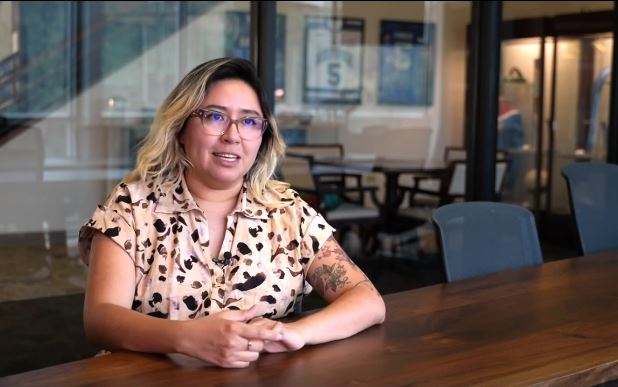
    BEULAH, Colorado (KOAA) — Elizabeth Velasco, a former wildland firefighter turned Spanish interpreter, is working to make sure Spanish-speaking residents have access to life-saving information during the Aspen Acres Fire.

Velasco is working under her own agency, Global Language Services, in partnership with the Alaska and Northern Rockies Incident Management Team as a public information officer providing language access during the fire.

“The state of Colorado is very diverse. I think that for the Alaska Team, it was important that they set up a strong foundation to make sure that everyone has access to information,” Velasco said.

Daily updates on containment, acreage, and evacuations have been provided since the fire began. Velasco and other interpreters are working to make sure those updates reach the entire community.

“I think that it’s very important to have an inclusive emergency response whenever there’s a natural disaster,” Velasco said.

Velasco previously worked with the Alaska Incident Management Team as a public information officer during a fire in her home of Glenwood Springs in 2020. The team hired her again to help with language access during the Aspen Acres Fire.

As an immigrant herself, Velasco understands the stakes of language accessibility during emergencies.

“I’m an immigrant myself. My mom doesn’t speak English, and I think when there’s an emergency, there’s life and death information,” Velasco said.

“Language access really helps us to make sure that no one gets left behind,” Velasco said.

In addition to Spanish interpretation, updates have also been shared in ASL on the Aspen Acres Facebook page. Spanish-language video translations and written updates can be found on the Facebook page “Aspen Acres Fire 2026 en Espanol.”

This story was reported on-air by a journalist and has been converted to this platform with the assistance of AI. KOAA verifies all reporting on all platforms for fairness and accuracy.

Please note: This story was provided to CNN Wire by an affiliate and does not contain original CNN reporting. This content carries a strict local market embargo. If you share the same market as the contributor of this article, you may not use it on any platform.

9-year-old boy calmly alerts grandmother to bank robbery

By Jordan Bontke

Click here for updates on this story

    MESA, Arizona (KNXV) — A 9-year-old boy and his grandmother were at a Mesa Bank of America to open his first checking account when a woman attempted to rob the bank at knifepoint. The two hid under a desk as the incident unfolded.

Mesa police arrested a woman who tried to rob the Bank of America near Broadway and Greenfield roads on July 13 around 12:30 p.m. She was booked on felony armed robbery, aggravated assault, and disorderly conduct charges. No one was injured, according to police.

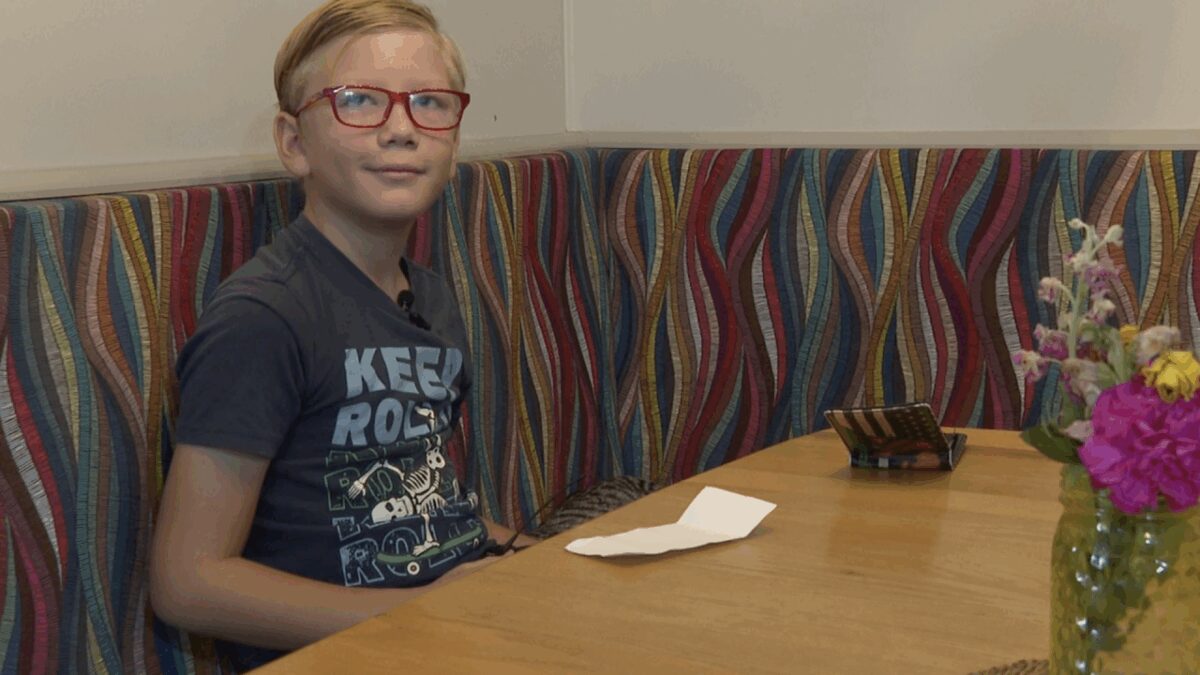
Hunter, a soon-to-be fourth-grader, had spent the week helping out at his grandparents’ house and earned just under $200. His grandmother, Colette, decided they should use the money to open his first checking account.

When Hunter spotted someone entering the bank wearing a mask, he calmly tapped Colette on the shoulder to alert her.

“He just walked up and tapped me on the shoulder. The calmness in his demeanor, it was surreal. I just turned my head and saw the teller with something pointed at her head,” Colette said.

The two took cover under a desk and said they did not hear the suspect say anything during the robbery.

“I did not hear anything; I just heard my Nana’s breathing really hard,” Hunter said.

Hunter had been looking forward to depositing his earnings — $160 of his own money plus $27 in change from Colette — into a new account.

“If I lose it, $160 down the drain!” Hunter said.

According to FBI crime data from 2023, Arizona sees roughly one bank robbery per week — about 56 per year. The FBI determined that most bank robberies do not result in violence and instead involve notes or oral demands.

After giving a police statement on Monday, Hunter and Colette returned to the Bank of America the following day to open the checking account.

“You can’t let your fear guide you; you have to meet it head-on,” Hunter said.

When asked what his first debit card purchase would be, Hunter said he wants to buy his grandmother a new keyboard and eventually a computer for himself. And when asked what he would say to the person who tried to rob the bank, Hunter did not hesitate.

“Get a job,” Hunter said.

This story was reported on-air by a journalist and has been converted to this platform with the assistance of AI. KNXV verifies all reporting on all platforms for fairness and accuracy.

Please note: This story was provided to CNN Wire by an affiliate and does not contain original CNN reporting. This content carries a strict local market embargo. If you share the same market as the contributor of this article, you may not use it on any platform.
The ‘Crack House’: Meet the mom who opened her home and changed dozens of lives

By Faraz Javed , Brandon Speagle

Click here for updates on this story

    HAMTRAMCK, Michigan (WXYZ) — Most families grow one child at a time. Jacqueline Cracchiola’s grew one life at a time.

The 66-year-old former Hamtramck police detective spent 25 years in law enforcement — 19 of them as a detective — and built a family that reflects the kind of America she believed in: One where background doesn’t determine belonging.

“My one theory when I was becoming a police officer was if I could make a difference in one child’s life through my career, I did my job,” Cracchiola said. “I made sure I did a little bit more.”

That “little bit more” meant adopting four children, fostering six, and helping several others along the way. Over the years, kids from every background — Polish, Italian, Yemeni American, African American, mixed — grew up under one roof just outside of Hamtramck.

They call it the Crack House.

“The last name, Cracchiola. Family nickname is Crack. So everyone calls it the crack house,” said Joseph Cracchiola, 32, Jacqueline’s biological son.

Jacqueline grew up one of seven children and wanted her biological son Joe to have what she had — a house full of siblings.

“I was an only child until maybe 12 years old. I was bored playing with toys by myself,” Joe said. “I remember the first day I met both of them. Playing with them and realizing, like, these are my siblings now.”

When asked about her family’s diversity, Jacqueline didn’t hesitate.

“There’s no color in my family whatsoever. They’re all children that needed somebody to love them,” she said.

“When they look at each other, they don’t see any difference. That’s their brother, that’s their sister.”

William Cracchiola, now 26, was 3 years old when Jacqueline pulled him out of foster care — along with his biological sister Lillian, now 25.

“If I didn’t get adopted, I wouldn’t be here,” William said.

He means that literally.

“I wouldn’t be alive. When they adopted me, I was skin and bone, and you could see my rib cage. I was having seizures and fever,” he said.

Lillian said the two were lucky to escape a system that can be difficult to leave.

“We are more of the fortunate ones to get out of that system because I feel like once you’re in it, it’s hard to escape that, especially if you’re in the hands of the wrong family,” Lillian said.

“Just being able to experience such a great family and siblings and then also to stay close with my biological brother has helped tremendously,” she said.

Sammy Atkins, 30, came into the family at 15. His journey took him from foster homes and juvenile detention to becoming the kind of father he never had growing up.

“You start to shut off after a while. I think a lot of us kids came from broken homes and where we really didn’t have a light or a path forward,” Atkins said. “And I think our mother really kind of brought us in and showed us like, hey, if you pay attention in school, pick a sport and just stay grounded and be a part of this family, you really can have a second chance.”

When asked about that second chance, Atkins said it wasn’t something he expected.

“Yeah, definitely. It took a while. You know, I got brought in when I was 15 years old, so my childhood was pretty much up,” he said.

Today, the family Atkins describes is sprawling.

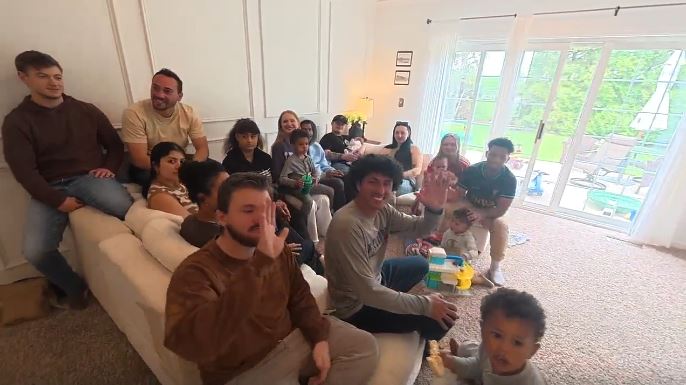
“I’m Sammy Atkins. This is Darian Brooks. Okay. We got Grayson. We got his wife Megan. We got Billy Cracchiola. We got Paige Cracchiola and their two daughters. We got Xavier. We got Carter and Lily. We got Jada. We got Laura, Joe. Samurai Kenai, Gino, my wife Lissandra, we got Damon. Man, okay, yeah. So we’re pretty much all siblings. And then there’s all of our spouses and significant others,” Atkins said.

To keep the house running, Jacqueline did whatever it took — chopping wood, making decorative pigs out of old heating and cooling tanks, all while working in law enforcement.

“Whether I have my last $2 and my child needs something, that child’s gonna get that before I ever worry about getting something for myself,” she said.

When asked what she sacrificed, Jacqueline pushed back on the premise.

“Really, I can’t say I sacrificed a lot. I think by what they gave me, all those sacrifices go away. You know, I might not have the perfect clothes, I might not drive the nicest car around, but that’s okay. I don’t need those things. I need them,” she said.

She now has six grandchildren.

Joe said stepping into a big-brother role for the whole family has shaped who he is.

“I’m the one taking them to practices and going to parent-teacher conferences. And so for me, being the oldest for this whole family is such an honor. Like, I’m just, I feel like I’m special because of all of them,” he said.

When asked if she’s the definition of Wonder Woman, Jacqueline laughed it off — but didn’t entirely disagree.

“I was Wonder Woman once for Halloween. Some people might say that. I don’t know why I do the things I do, but I just know that they were important, and these kids needed somebody,” she said.

Lillian said the family’s story is one she wants others to hold onto.

“I told myself I would not cry. I suck. But yeah, just never give up. Always believe in yourself, even when life throws you curveballs. Everyone’s going through something hard,” she said.

As America marks 250 years of independence, the Crack House in Hamtramck stands as its own kind of landmark — one built not on history, but on the choice to show up for someone who needed it.

“There’s never a dull moment at the Crack House,” Joe said.

This story was reported on-air by a journalist and has been converted to this platform with the assistance of AI. WXYZ verifies all reporting on all platforms for fairness and accuracy.

Please note: This story was provided to CNN Wire by an affiliate and does not contain original CNN reporting. This content carries a strict local market embargo. If you share the same market as the contributor of this article, you may not use it on any platform.
‘Not much we don’t do’ | In rural Ohio, a ministry started its own landscaping business to combat homelessness

By Keith BieryGolick

Click here for updates on this story

    CLARKSVILLE, Ohio (WCPO) — Jason Hollingsworth is sweating.

We’re sitting on the ramp of his landscaping truck when he points out the grass covering my arms. He laughs when I tell him I’ve only been here for 10 minutes and smiles when I ask if he likes his job anyway.

“Yeah,” Hollingsworth said. “It beats living in the woods.”

Hollingsworth and his cousin are almost done mowing the grass at the post office in Clarksville. They’ve both spent years living on the streets before. And now, they’re both celebrating several years of sobriety.

“I credit a lot of that to this truck,” said Levi Hollingsworth.

He uses a leaf blower to spray grass off me.

Homelessness is often hidden in small towns across Ohio, but it still exists. And some outreach workers say we aren’t doing enough to help.

“We don’t have the resources here to help them,” said Sara Peters, an outreach specialist with Community Health Alliance. “Anybody that needs any kind of substance use or mental health residential (treatment) has to go out of the county.”

That’s when they end up at Sugartree Ministries. In Wilmington, it’s one of the only places for people experiencing homelessness or substance use disorder.

When I visit, one woman is sleeping on the ground by the backdoor. There are donuts and a water jug.

Dinner will be served in a few hours.

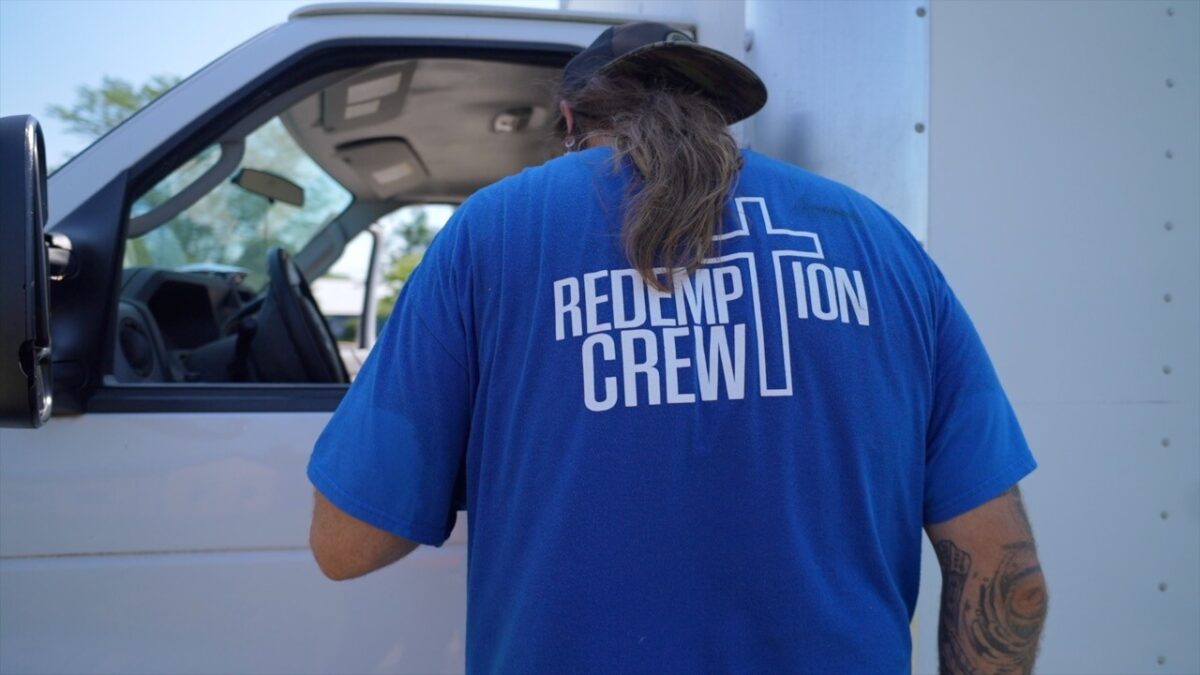
Lee Sandlin is the executive director. He helps oversee the landscaping business, and a group of women who clean buildings around the area. Across the street, the ministry runs a men’s shelter. And they’re working on helping people in domestic violence situations.

When I meet Sandlin, he stops our interview to take multiple phone calls about a refrigerator the ministry bought for someone. He says his job is 24/7.

“There’s not much we don’t do,” Sandlin said. “There are people who say they’ve never seen a miracle, and the truth is I get to see miracles every single day in this building.”

He’s talking about people like Jason Hollingsworth, who runs the landscaping crew and now helps give second chances to others in recovery. At the post office, Jason puts his lawn mower away and closes the truck door.

They have 12 more jobs to go.

Jason takes a deep breath. Not because he’s tired, but because he’s thinking about where he came from again.

“There were so many times I wanted to give up,” Jason said. “I’m grateful I don’t live that life anymore.”

Please note: This story was provided to CNN Wire by an affiliate and does not contain original CNN reporting. This content carries a strict local market embargo. If you share the same market as the contributor of this article, you may not use it on any platform.
From welding muffler shop scraps to working internationally, artist’s journey is one of resilience

By KMTV Staff

Click here for updates on this story

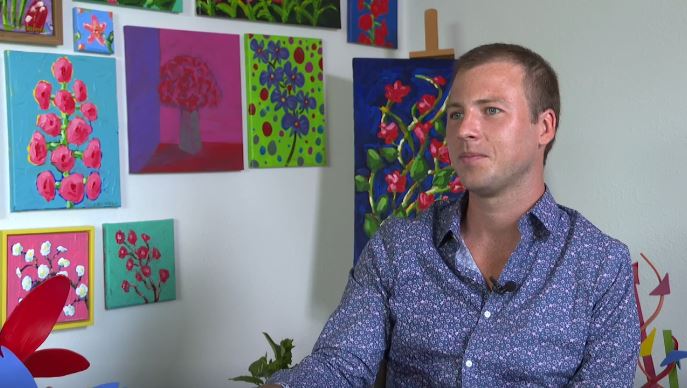
    SHELBY COUNTY, Iowa (KMTV) — Frank Hiffernan grew up watching his grandfather, Dennis, paint and sculpt.

“A lot of what he did taught me how form and color and movement all play a role into capturing an emotion into a fixed form,” Hiffernan explained.

However, his path to living ‘the dream’ was anything but straight.

Hiffernan left Nebraska for Florida and then, South Carolina, as he pursued a career in medicine. However, a few years in to medical school, he had an epiphany. Unfulfilled, he quit — and ended up living in a storage room in a commercial building.

Hiffernan says he down to his last $100. Unable to find a job, he turned to the dream he had carried since childhood. (Also helpful: The muffler shop with which he shared an alley gave him access to the metal scraps in their dumpster.)

“I would just sell little botanicals and creatures and it’s evolved over time. But I’ve been really happy that it’s worked out,” Hiffernan smiled.

In the last three years, he has produced and sold hundreds of pieces. His work is now held in private collections across the region, displayed at schools, and currently featured at Oeno Gallery in Canada. His next local installation is planned for this summer in Blair — of flowers native to Nebraska.

When he paints flowers, like hollyhocks (inspired by those he grows behind his home), Hiffernan works quickly. He believes the pace makes a piece feel more alive.

His gratitude for the life he’s living runs deeper than art alone. At 14, Hiffernan was diagnosed with bone cancer — discovered after he broke his arm playing basketball. The diagnosis only came, though, after a second opinion. Saving his life would require extensive chemotherapy and multiple surgeries.

Today, Hiffernan has with a metal implant in the upper part of his left arm. He retained all feeling and use of that hand. When he’s sculpting, for example, he relies on his left side to steady — and his right to do more of the work. He also says he’s developed a knack for pulley systems to help move heavy pieces. Overall, he says, his doctors at Nebraska Medicine, Don Coulter (chemotherapy) and Sean McGarry (surgery) have been delighted with his progress — including how he’s maintained dexterity, range of motion and strength.

“I still have hard days now, but at this point in my life, I’ve been through so much, I just kind of laugh through the hard times even, because I know that — in the past, a lot of my hardest times, on the other side, if you don’t give up, is where all of the glory lies.”

Hiffernan is currently working on several projects, including a series of paintings for a solo exhibition in December in Omaha at Clover 24.

This story was reported on-air by a journalist and has been converted to this platform with the assistance of AI. KMTV verifies all reporting on all platforms for fairness and accuracy.

Please note: This story was provided to CNN Wire by an affiliate and does not contain original CNN reporting. This content carries a strict local market embargo. If you share the same market as the contributor of this article, you may not use it on any platform.
Pastor continues outreach despite ending park meals

By Clifton Haskin

Click here for updates on this story

    TULSA, Oklahoma (KJRH) — A week after a Tulsa pastor said he could no longer hold weekly picnics for people experiencing homelessness at Veterans Park without a permit, he returned to the park July 19 with a different mission.

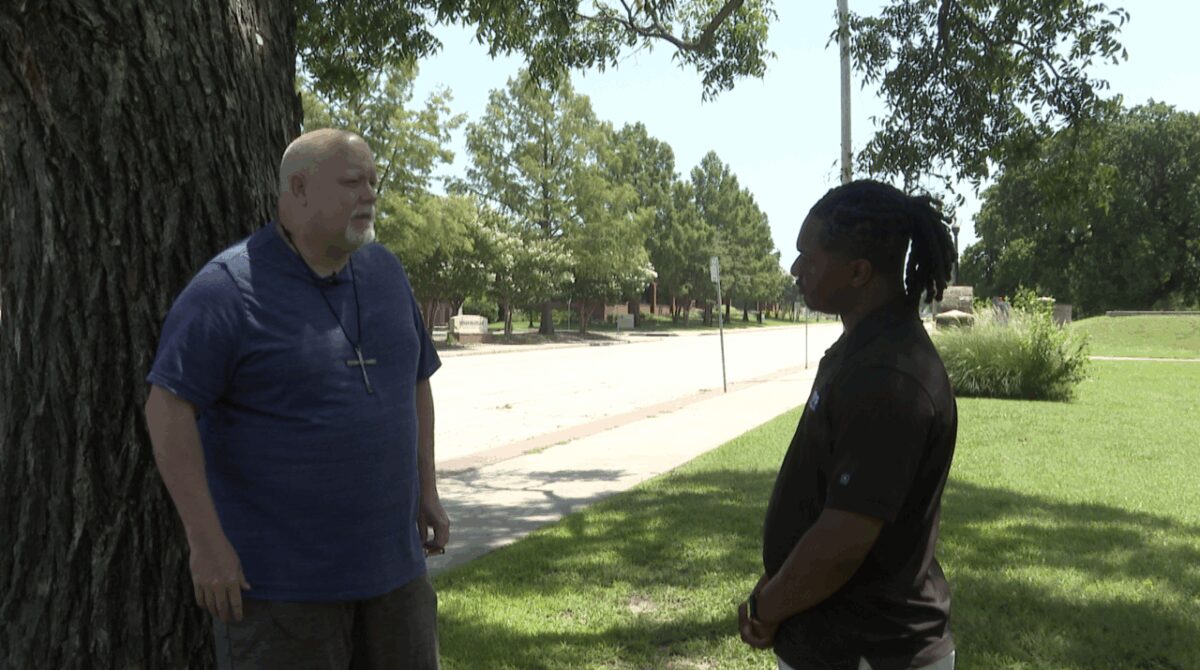
Pastor Greg Bilbruck returned to Veterans Park, not to serve meals, but to spend time with the people he’s come to know over the years. He greeted familiar faces, prayed with people and offered encouragement.

“People are human beings and they deserve to be treated right,” Bilbruck said.

On July 15, 2 News Oklahoma reported Bilbruck had been told he could no longer hold weekly picnics in the park without obtaining a permit. The City of Tulsa later told 2 News that organized events in city parks require permits to help manage safety, scheduling and park use.

As a result, Bilbruck said he is no longer serving meals at Veterans Park. Instead, he is focused on maintaining the relationships he’s built with people experiencing homelessness.

“There’s nowhere else where my people here get community of people that accept them and love them like I do,” Bilbruck said.

Although the meals have stopped at the park, Bilbruck said his commitment to the community has not.

“And I will not stop because I love them,” Bilbruck said.

Please note: This story was provided to CNN Wire by an affiliate and does not contain original CNN reporting. This content carries a strict local market embargo. If you share the same market as the contributor of this article, you may not use it on any platform.
Man wrote a song hoping kids choose life over violence

By Nicholas Brooks

Click here for updates on this story

    VICKSBURG, Mississippi (WAPT) — Vicksburg truck driver uses music to encourage youth to put down guns

Youth violence continues to impact communities across Mississippi, and in Vicksburg, recent crimes involving teenagers have many asking what can be done to reach young people before it’s too late.

One Vicksburg native believes the answer starts with a message young people can relate to.

Tim Rawlings isn’t a recording artist or celebrity. He’s a truck driver who says he was inspired to create a song after watching gun violence affect his hometown.

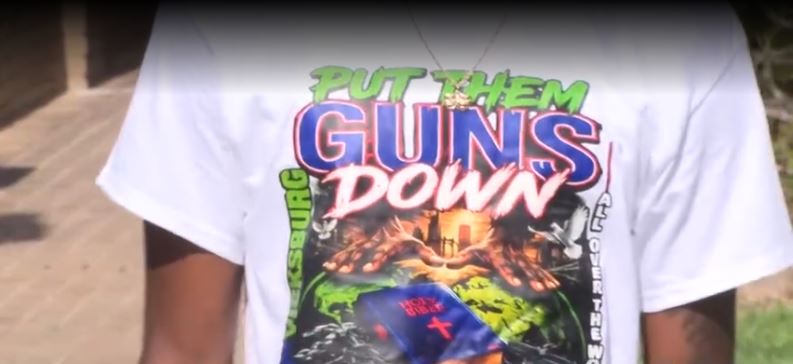
Rawlings and his fiancée wrote “Put the Guns Down,” pairing it with an artificial intelligence-generated music video that tells the story of young lives impacted by violence. He says the goal isn’t to produce a hit song but to encourage young people to make better choices.

“I see a lot of gun violence going on in this area,” Rawlings said. “Me and my fiancée decided to put a song together called ‘Put the Guns Down.’”

Rawlings hopes the song encourages young people to walk away from violence before it changes their lives.

Some young people say the message is one they need to hear.

“Yeah, I feel like they should put the guns down because it’s bad out here,” said Robert Williams, a member of Rawlings’ family.

We also asked teenagers whether they believe music influences young people.

“Yes, because they promote it and the kids are going to try to follow it,” said Rataviia Butler, Rawlings’ stepdaughter, when asked whether rap music can influence young people to get involved in crime.

Seventeen-year-old Arnasia Butler agreed.

“I do think the bad music does promote the youth to do bad things,” she said.

Rawlings believes if music has the power to influence young people negatively, it can also be used to inspire positive change.

“These kids these days are listening to the negative, and they’ll actually go out and do it,” Rawlings said. “We’re trying to give them something positive to listen to, so it can kind of change the thought process and start turning to God.”

Rawlings said he hopes the song sparks conversations throughout Vicksburg and reminds young people their future is worth more than picking up a gun.

Please note: This story was provided to CNN Wire by an affiliate and does not contain original CNN reporting. This content carries a strict local market embargo. If you share the same market as the contributor of this article, you may not use it on any platform.
Viral Boston-Scotland traffic cone arrives at World Cup watch party

By Ted Wayman

Click here for updates on this story

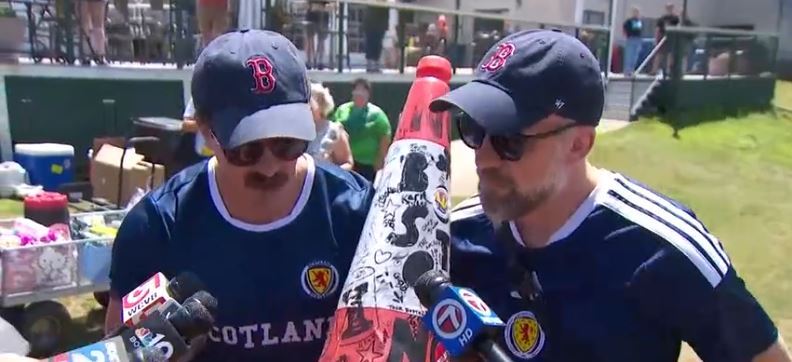
    BOSTON (WCVB) — The famous Boston-Scotland viral orange traffic cone arrived by motorcycle Sunday afternoon at a World Cup final watch party in Boston.

Attendees signed the cone in an attempt to be a part of Boston history.

The traffic cone marked the latest chapter in the city’s unlikely love affair with Scotland’s Tartan Army, whose habit of placing traffic cones atop statues during the team’s World Cup run last month turned the humble orange cone into one of the tournament’s defining symbols.

The cone has been celebrated across Massachusetts during the World Cup tournament and brought with it a message.

“This is the first cone in history not to direct traffic but redirecting people to feel better that’s the most powerful thing,” Danny Campbell said.

Campbell and Andrew Dobbie are the Scots behind the cone and its travels.

“It’s really a symbol of joy and peace and happiness at a time when all of our streets are filled with negative energy,” Dobbie said.

The good vibes of the cone have translated to T-shirt sales and events to raise money for mental health awareness.

“There is still a massive stigma around mental health; the more we talk about it the more it will be out in the open,” said therapist Amelia McKenzie.

It’s still unclear where the cone will end up as City Hall and the state house will decide its final perch.

Please note: This story was provided to CNN Wire by an affiliate and does not contain original CNN reporting. This content carries a strict local market embargo. If you share the same market as the contributor of this article, you may not use it on any platform.
How one camp is helping kids with chronic conditions build confidence and have a care-free summer

By Erin Burnett

Click here for updates on this story

    STOKESDALE, North Carolina (WXII) — Camp Carefree in Stokesdale, North Carolina, is providing children and families navigating chronic illnesses and disabilities with a free summer camp experience filled with fun activities and a sense of possibility.

“They have siblings who have a chronic condition or parents who have a chronic condition,” said Mary Kate Young, program director at Camp Carefree, “We have our children with, you know, down syndrome or different neurological conditions that come.”

Each week, a new group of children ages 6 to 16 attends the camp, free of charge.

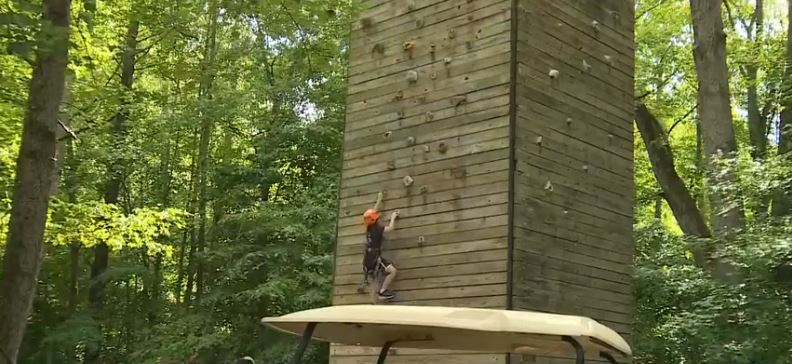
They try activities like rock climbing, horseback riding, and even play with animals on the farm, including alpacas.

“I’m scared,” said Hudson, a young camper, as he prepared to get on a horse. Moments later, he was laughing as he faced his fear and enjoyed the ride.

“They see no limitations, and when you’re able to see children who don’t have any limitations themselves, it takes away your excuses,” Young said.

For some, the camp experience has a lasting impact.

“I was a siblings week camper here for about seven years. My sister was born with autism, epilepsy, and spina bifida,” said Ben Lyons.

Lyons is now a head counselor at Camp Carefree.

“Every year that I’m here, I’m like, you know, maybe I kind of want to be a teacher. Maybe I kind of want to work with kids, and so I feel like I’m discovering more about not only who I am now, but what I want to do in my future,” Lyons said.

“I hope we’re leaving these kids with the fact that, you know, we believe that there are no limitations for them in any spectrum or any circumstance, and when we have people that believe in you, there’s nothing that you can’t do,” Young said.

Camp Carefree operates entirely on local donations and fundraisers, allowing families to attend at no cost. It has been serving children and their families since 1986.

Many families travel from out of state to participate.

Please note: This story was provided to CNN Wire by an affiliate and does not contain original CNN reporting. This content carries a strict local market embargo. If you share the same market as the contributor of this article, you may not use it on any platform.
Mother remembered as hero after she died saving her son

By Justin Schecker

Click here for updates on this story

    VOLUSIA COUNTY, Florida (WESH) — A devastated Volusia County family is praising the final selfless and heroic act by 43-year-old Nicole Grayson.

“My mom was literally my hero,” Grayson’s oldest daughter Montraevia Adams said.

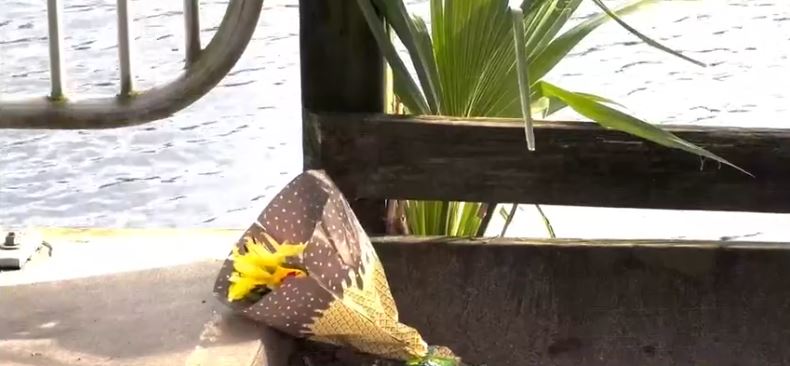
Some of Grayson’s many loved ones embraced during a visit to Ed Stone Park in Deland Sunday evening.

“I just want her to be remembered as a positive person,” Adams said, “because she always had a smile on her face no matter what.”

Grayson passed away in the hospital Saturday night, hours after the Volusia Sheriff’s Office said she jumped into the St. Johns River to rescue her 4-year-old son.

The boy fell into the water trying to retrieve something he dropped over a wooden fence, VSO said.

“She was always there for you,” Grayson’s 17-year-old son Dafino Devega said. “She would have did that for any of her kids, and we would have done the same for her.”

Less than 24 hours later, Laronda Morris said she was still in shock about the tragic death of the mother of three of her grandchildren.

“She was really special to me,” Morris said, “and I’m gonna miss her. And the hardest part is looking at my grandkids and knowing that their mother is not here.”

Grayson cared for others as a hospice nurse. But the role she embraced the most was being a mom to her six children.

“These kids were her world,” Morris said. “They were her life.”

Nine-year-old Koron was with his mother and younger brother Saturday afternoon at the river.

“I love my mom,” he said. “She did all of that for my little brother. She pushed me aside because she didn’t want us to get hurt. She saved my little brother, but she didn’t worry about herself. She worried about my little brother.”

Morris shared a message for the boater who pulled her four-year-old grandson to safety.

“I want to thank them because if it was not for them being there, it may have been a different outcome,” she said. “We could have lost both of them.”

Morris told WESH 2 she’s leaning on her faith as she tries to process this unimaginable loss.

“I know that God has a seat in the kingdom waiting for her until we meet again,” Morris said, “and you know life is just short, and we have to start loving each other because we never know the time, the second, or the hour.”

Grayson’s oldest daughter has set up an online fundraiser. Donations will go toward her mother’s funeral and to help the family navigate this unexpected loss.

Please note: This story was provided to CNN Wire by an affiliate and does not contain original CNN reporting. This content carries a strict local market embargo. If you share the same market as the contributor of this article, you may not use it on any platform.