How one barbershop is helping the daughter left behind after deadly flood

By Jeremy Tombs

Click here for updates on this story

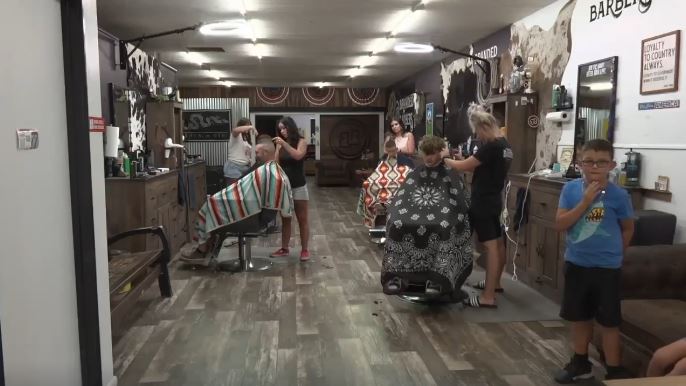
    NEPHI, Utah (KSTU) — In the days after a family of 5 was killed in southern Utah flash floods, a local Nephi business is rallying the family’s surviving daughter in her time of need.

Sitting down in a barber’s chair often symbolizes more than just a haircut.

“I always tell people that clients become family. You get to know them and their families,” said barber Shawn Allred.

Over the past four years at Branded Barbers, Allred has grown a big family.

“I’ve seen them go from graduating high school to getting married to having their own kids,” she shared.

Provo Fire Captain Spencer Long, who was among those who died in the Wayne County floods, was part of that family.

“He was super down to earth, really respectful, kind,” Allred said. “We knew his wife as well; she owned the Summit Spa right behind our other location in Spanish Fork. We did giveaways together.”

When their barbershop learned of the deaths over the weekend, they were devastated.

“I just can’t even begin to imagine that kind of heartbreak,” said Allred.

Those at Branded Barbers knew they couldn’t take that heartbreak away, but they had to help their surviving daughter, Lydia, somehow. So they set up a fundraiser at their Nephi location, donating 100% of the shop’s profits on Monday to Lydia.

On Monday, the line grew in a hurry. Some who stopped into the store didn’t even get a haircut, while others said they didn’t need one, but wanted one anyway.

Matthew Kaldor saw the shop’s social media post, and even without knowing the Long family personally, he responded to help.

“I’m coming in cause I know everything that I’m giving today is going to take care of that little girl at her time of need,” Kaldor said.

“I feel like coming out to support here is the least I can do,” added Nephi resident Jackson Price.

The barbershop initially set a goal to raise $2,000 and easily hit that mark. As of 7 p.m., they were up to $4,500.

It’s a testament to the strength of the community that the barber shop and Juab County have built.

“Even if it’s the next town over, we’re all still part of Juab County, and this is how we all are,” said Kaldor. “We take care of our own, and we make sure everyone can be lifted up.”

Please note: This story was provided to CNN Wire by an affiliate and does not contain original CNN reporting. This content carries a strict local market embargo. If you share the same market as the contributor of this article, you may not use it on any platform.

Businesses facing uncertainty after Cottonwood Fire, flash floods impact tourism

By Madi Baggett

Click here for updates on this story

    PIUTE COUNTY, Utah (KSTU) — Businesses across Piute, Beaver and Sevier counties are struggling after wildfires and flash flooding hurt tourism during one of the busiest times of the year.

Restaurant, motel and outdoor recreation owners say the back-to-back disasters have kept visitors away and caused major financial problems for small businesses that depend on summer travelers.

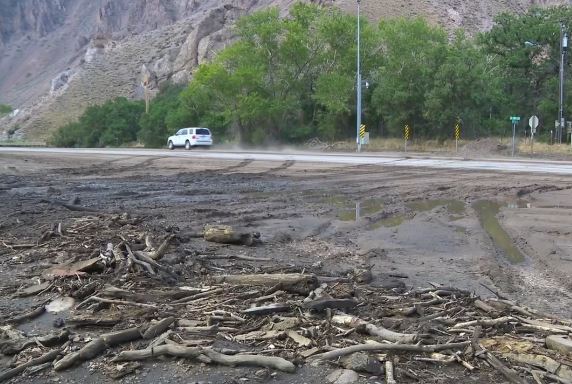
Burn scars left by the Cottonwood Fire increased the risk of flash flooding after heavy rain moved through central Utah. Floodwaters carried mud and debris across roads, campgrounds and recreation areas that are popular with tourists.

Dan Groves, owner of Hoovers River Resort in Marysvale, said wildfire smoke caused many visitors to cancel their trips to southern Utah.

“People still were just changing their plans entirely to just not come to Utah,” Groves said. “It sounded like the whole state was on fire.”

Groves said the losses have been especially difficult because tourism businesses in the area have already faced several hard years.

“It was the third summer in a row that we had pretty much the entire summer cancelled and less through traffic for the restaurant,” Groves said. “We were seeing some writing on the wall that was pretty grim.”

Businesses faced another challenge after officials issued a boil-water advisory in parts of Piute County when flood runoff affected local water systems.

At Big Rock Candy Mountain Restaurant, employee Carley Veltri said the fires, flooding and water problems have made it difficult for businesses to recover.

“People convoyed out of here,” Veltri said. “When the fires were happening, now we have flooding. That’s something else.”

Veltri said summer tourism is extremely important for rural Utah communities.

“It’s killing us all,” she said. “Utah is a seasonal state. All the revenue basically comes from the summertime and now since there is no business there is no revenue.”

Groves said many business owners feel overwhelmed by the repeated disasters.

“It’s not because we are bad business owners,” he said. “It’s because we’ve had these natural disasters over and over again.”

Even with the challenges, business owners say they are continuing to stay open and hope visitors return before the summer season is lost completely.

A GoFundMe has been created to help local business owners: Fundraiser by Ahtianna DeJesus : Cottonwood Fire: Support Hoovers and Local Recovery!

Please note: This story was provided to CNN Wire by an affiliate and does not contain original CNN reporting. This content carries a strict local market embargo. If you share the same market as the contributor of this article, you may not use it on any platform.
Free service unlocks cars when children are trapped inside

By Sydney St. Claire

Click here for updates on this story

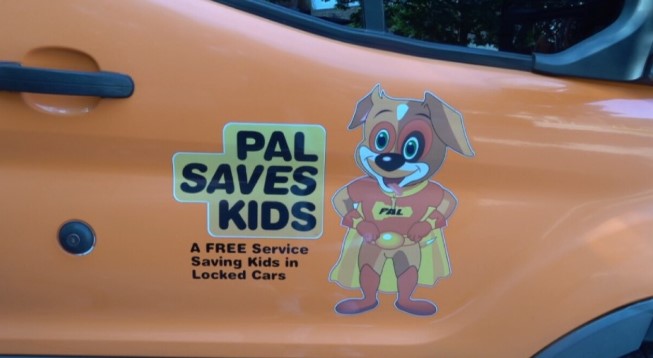
    LEXINGTON, Kentucky (WLEX) — Pop-A-Lock has helped free more than 4,600 children from locked cars over the past 31 years — about 150 per year — and the service is completely free.

Doug Barnes said the company can unlock a car in about 30 seconds, but stressed that calling 911 should always be the first step when a child is locked inside.

“And we may beat the police there and stuff, so but call 911 1st and because time is really important for every 10 minutes in a hot car, the temperature goes up 20 degrees, so it’s really important to act fast,” Barnes said.

Barnes said no one locks a child in a car intentionally, but it doesn’t take long for a child to suffer heat stroke.

“It, it could just be a matter of 10 to 15 minutes of them having a heat stroke and stuff. So that’s the reason time is so important. And the main thing is just, you know, is just do those things so that really doesn’t happen and just be aware of it.”

To help prevent it from happening, Barnes recommends placing something you need — like a purse or briefcase — in the backseat as a reminder to check before getting out of the car. Barnes also reminds parents and caregivers to stop, look, and lock before exiting the vehicle.

Please note: This story was provided to CNN Wire by an affiliate and does not contain original CNN reporting. This content carries a strict local market embargo. If you share the same market as the contributor of this article, you may not use it on any platform.
FBI Kansas City: 19 arrested, 9 children found during World Cup anti-trafficking operation

By Chloe Godding

Click here for updates on this story

    KANSAS CITY, Missouri (KMBC) — Help is available. If you or someone you know is involved in human trafficking, call the National Human Trafficking Hotline at 888-373-7888.

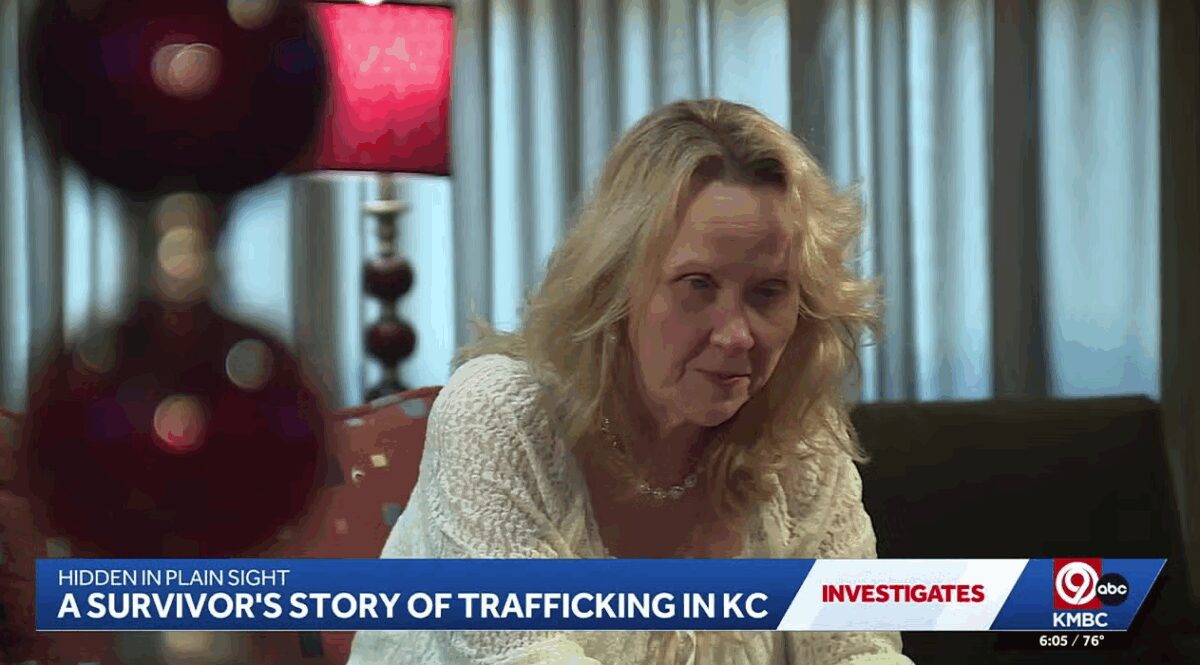
Nearly 20 people were arrested and multiple others rescued, including children, in anti-trafficking operations during the World Cup in Kansas City.

The FBI Kansas City division announced final results from its efforts to combat child exploitation and human trafficking during the tournament.

Human trafficking is the exploitation of a person for services or sex through force or coercion. The FBI said any exploitation of a minor is considered trafficking.

In total, 19 people were arrested on state and federal charges. Nine children were found and nine victims were offered resources.

“While it is an unfortunate fact that numbers like this confirm this threat is still one that exists in our community, I am proud of the work of all the partners involved to help us on this surge,” said Chris Ormerod, FBI Kansas City Special Agent in Charge, in a news release. “Today’s announcement underscores the collective effort law enforcement has and will continue to place on ensuring vulnerable victims are recovered and their abusers face justice.”

More than 15 law enforcement agencies, including the FBI and the Kansas City Police Department, collaborated throughout the 17 operations.

The FBI’s Child Exploitation and Human Trafficking Task Force was a major part of the success of the operation. The task force is made up of FBI agents and officers with KCPD, the Overland Park Police Department, Independence Police Department, Olathe Police Department and the Missouri State Technical Assistance Team.

A number of other agencies and groups were involved in assisting as well.

“I am proud of the work being done alongside our federal, state and local partners. KCPD is thankful for operations like these where vulnerable victims are rescued and predatory offenders are arrested,” KCPD Chief Stacey Graves said. “Collectively, we will continue the work in making Kansas City and our region safer.”

Anyone who needs help or has information about human trafficking can call the National Human Trafficking Hotline at 888-373-7888, text the hotline at 233733 or chat online at humantraffickinghotline.org/chat.

Please note: This story was provided to CNN Wire by an affiliate and does not contain original CNN reporting. This content carries a strict local market embargo. If you share the same market as the contributor of this article, you may not use it on any platform.
Kansas fifth-grade student dies after crash on way to soccer tournament in Nashville

By Nick Sloan

Click here for updates on this story

    PRAIRIE VILLAGE, Kansas (KMBC) — A Kansas fifth grader has died from injuries after car crash earlier this week while traveling with her family to a soccer tournament.

St. Ann Catholic Church and School in Prairie Village informed families Sunday that Annie Koester died Saturday night from injuries sustained in the July 15 crash.

“It is with profound sadness that we share the passing of Annie Koester, a beloved 5th-grade student at St. Ann School, who succumbed to her injuries last night following a car accident earlier this week,” leaders wrote in the letter.

Legends Soccer Club in Kansas City, Kansas, where Koester played, stated that the family was traveling from the Kansas City area to Nashville for a soccer tournament when the crash occurred.

“The Koesters have been a valued part of our club for many years and have consistently supported those around them, both on and off the field. Now, we have the opportunity to support them during this difficult time,” the club said in a social media post.

A GoFundMe page has been established to support the Koester family.

Please note: This story was provided to CNN Wire by an affiliate and does not contain original CNN reporting. This content carries a strict local market embargo. If you share the same market as the contributor of this article, you may not use it on any platform.
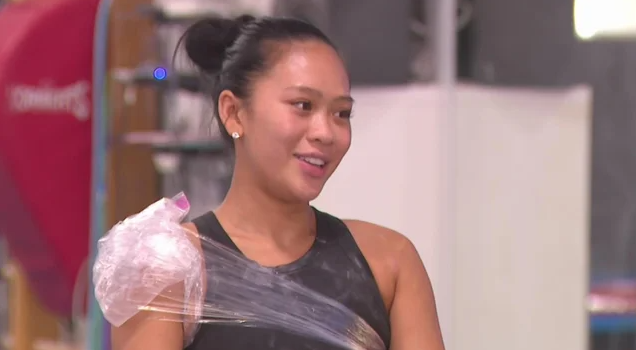
Suni Lee back in action at Minnesota gym where it all started

By Susan-Elizabeth Littlefield

Click here for updates on this story

    LITTLE CANADA, Minnesota (WCCO) — Two-time Olympian and gold medal winner Suni Lee recently announced her return to gymnastics with an eye on the L.A. Summer Olympics in 2028, and Monday was her first day back training at the Twin Cities gym where it all began.

Lee said after the Paris games, she was a little confused about a return to the sport, but after much contemplation she’s sure she’s ready.

Hidden in an inconspicuous industrial park in Little Canada, Minnesota, Midwest Gymnastics now has attention from around the world.

Jess Graba was Lee’s first coach, beginning when the Olympian was 6 years old..

“The thing that stood out most is she liked to flip and have fun and she loved to do the sport,” Graba said. “Talent isn’t usually the differentiator in who can be good at the sport. Usually it’s the love of the sport.”

And from Tokyo to Paris, Lee proved that time and time again. But she says there’s more for her to prove.

“I kind of got my glow back,” Lee said. “I am confident as who I am as a person. I am excited to take that into training because I think I am a lot more confident.”

Lee could train anywhere, but there’s no place like Little Canada, a suburb of her hometown of St. Paul.

“I just can’t see myself anywhere else. They understand me and my work as an athlete, but also just as a human,” Lee said. “And I think that’s another thing that’s important because it’s one thing to be an athlete and coach, but to see me as a person outside of that is really cool.”

“Here she’s not Suni Lee. She’s Suni,” Graba said. “So my kids they can’t wait to have her back so they can play video games or something, just go hang out with her, help her unpack.”

Lee says the metro is truly home.

“All my family is here, too, and I love getting to come back and see all of the little kids and all of them running up to me,” she said. “It’s really good energy and makes me excited for what’s to come.”

She’s also home just in time for one of her oldest loves: the Minnesota State Fair.

“I go to the fair at least five times,” she said. “I had to come in before so I could lock in for like a month and then go to the state fair and do whatever I want there.”

And Lee has certainly proven she can do whatever she wants.

“I don’t think they understand how tough she is,” Graba said. “To do what she did with the kidney disease and to gut out Paris, she was at like 65-70% of what she could do. Just under that stress and scrutiny and pressure and just handled it all with grace. If you haven’t been through that and don’t know what it takes, you don’t realize how rare that is. It’s just, she’s just special.”

Please note: This story was provided to CNN Wire by an affiliate and does not contain original CNN reporting. This content carries a strict local market embargo. If you share the same market as the contributor of this article, you may not use it on any platform.

Minnesota DNR logs 202 fish kill reports as heat wave pushes lake temps to 88 degrees

By Derek James

Click here for updates on this story

    CENTERVILLE, Minnesota (WCCO) — The effects of Minnesota’s prolonged heat wave are becoming impossible to miss with several reports of fish kills.

Along the shoreline of Peltier Lake in Centerville, hundreds of dead fish — mostly northern pike, along with a few bluegill and largemouth bass — are washing up after 10 days of 90-plus-degree temperatures. In northern Wisconsin’s Lake Namakagon, dead muskies are surfacing.

Crews with the Minnesota Department of Natural Resources are measuring lake conditions after numerous fish kills.

“Temperature is 31 degrees Celsius,” said a DNR biologist.

That works out to about 88 degrees Fahrenheit, a water temperature considered a chronic stress level for fish.

“Today, we’re at 202 reports covering 99 water bodies across the state. A huge pulse of these has really been just in the last week,” said Dr. Isaiah Tolo, fish health supervisor for the Minnesota DNR.

Warm water holds less oxygen, making it harder for fish to survive.

“I think we’re looking at a bunch of shiners. I can’t tell if they’re here eating or if they’re here because they’re stressed,” Tolo said.

Larger fish like northern pike and muskies are especially vulnerable.

“This water is pea-soup green. There’s algae and other bacteria in this water that are using up oxygen. And as the water gets warmer, the amount of oxygen that can actually be present in that water is going to be lower,” Tolo said.

Fishing guide Chris Griffin of West Tonka Guide Service says that’s why he’s putting musky trips on hold.

“This year is by far the warmest I’ve seen on [Lake] Minnetonka. I had 91.1 degrees last Thursday, averages in that 85-ish range,” Griffin said.

He’s waiting for cooler water to before letting clients chase them again.

“I won’t book them for muskies until the fall,” Griffin said.

And he’s hoping other anglers will show the same restraint until conditions improve.

The DNR is also urging people to avoid wading in areas where large numbers of fish have died. It says decomposing fish can harbor bacteria that can post health risks.

Please note: This story was provided to CNN Wire by an affiliate and does not contain original CNN reporting. This content carries a strict local market embargo. If you share the same market as the contributor of this article, you may not use it on any platform.

Wave pool gets 2,000‑pound ice dump at Hawaiian Falls to beat Texas heat

By Bo Evans

Click here for updates on this story

    ROANOKE, Texas (KTVT) — Hundreds of visitors at Hawaiian Falls in Roanoke found a new way to cool off Monday: an ice dump straight into the wave pool.

“It’s hot, it’s July in Texas,” said Ron McKenzie, marketing director at Hawaiian Falls Roanoke.

“It’s super hot. It’s like 1,000 degrees, more than that,” said nine-year-olds Ellie Lemoine and Raelynn March.

“If it’s going to be hot, we want to be in the water, so the pool, the water park,” said Kelli Sanders, who was at the park with her children.

With crowds packing the wave pool, the Hawaiian Falls team decided to take the chill factor up a notch.

“We’re going to dump 2,000 lbs of ice into our wave pool today to cool it off even more,” McKenzie said.

Employees hauled wheelbarrows of ice to the pool and, after a countdown, dumped it directly into the water.

The reaction was anything but chilly – guests cheered as the ice hit the surface.

But even at a water park, safety remains a priority in extreme heat. The CDC recommends finding shade, drinking plenty of fluids — especially water – and taking breaks in air conditioning when temperatures climb this high.

Even if your kids are splashing and having fun, remember: it’s still dangerously hot outside.

Please note: This story was provided to CNN Wire by an affiliate and does not contain original CNN reporting. This content carries a strict local market embargo. If you share the same market as the contributor of this article, you may not use it on any platform.

Denver nonprofit offers discounted, free trees to cool underserved neighborhoods

By Shannon Ogden

Click here for updates on this story

    DENVER (KMGH) — A Denver nonprofit is working to close a stark shade gap across the city by planting trees in underserved neighborhoods — and applications to get one open at the end of this week.

The Park People plants between 1,200 and 2,000 trees per year in Denver neighborhoods identified as lacking adequate tree cover. Trees can cool an area by 15 to 20 degrees, and the disparity in Denver is significant. Some neighborhoods enjoy 20 to 30 percent tree canopy coverage, while others have just 4 to 8 percent.

The organization has identified 28 Denver neighborhoods in need of more tree cover, including the Valverde neighborhood where The Park People offices are located.

Lindsay Cutler, deputy director of The Park People, said the heat difference between Denver’s tree-rich and tree-sparse neighborhoods is measurable. The Valverde neighborhood is a perfect example.

“It’s got about 9% in some areas. Four percent in others. And it’s about 15 degrees hotter than some of our more treed neighborhoods in Denver.”

Trees will cost between $15 and $50, depending on the applicant’s neighborhood. Residents who cannot pay can receive a tree for free. Buyers can plant the tree themselves or request a volunteer to plant it for them.

Cutler said the current conditions should not discourage residents from participating.

“In this heat and this drought I think there is this perception that we should hold off on tree planting this year. And that’s just not true. We have to continue to plant trees to provide a forest and canopy and shade for Denver’s residents.”

Applications open at the end of this week at TheParkPeople.org.

This story was reported on-air by a journalist and has been converted to this platform with the assistance of AI. KMGH verifies all reporting on all platforms for fairness and accuracy.

Please note: This story was provided to CNN Wire by an affiliate and does not contain original CNN reporting. This content carries a strict local market embargo. If you share the same market as the contributor of this article, you may not use it on any platform.
Two North Texas girls kidnapped 8 years apart, one DNA mystery. Survivor speaks out in exclusive interview.

By Andrea Lucia

Click here for updates on this story

    PLANO, Texas (KTVT) — At the age of 8, Ashley Keith thought nothing of strolling half a block with her friend to their Plano neighborhood pool.

On August 15, 1991, that all changed.

“How people parented their children, what children we were allowed to do after that. It changed because it was so shocking. Because it was never expected,” Keith said.

Keith sat down with CBS News Texas for her first-ever interview about her kidnapping, a decades-long mystery that has left her and investigators convinced she wasn’t the only victim.

Ashley Keith’s disappearance “We were just going to go down to the pool. I had a new swimsuit that I loved. And I remember a man approaching us,” Keith said.

Though Keith cannot remember exactly what he said, a police report based on an account her friend gave at the time said the man asked the girls if they had seen his white dog.

“And then, the next thing I remembered is he grabbed me, and I kicked and I screamed just like I was told to do, and he put me in his car and drove away,” Keith said.

She was held for five hours, sexually assaulted and then dropped off after dark in Garland, 20 miles away.

“What happened while he had me in the vehicle was awful, but I remember feeling so scared when he let me go,” Keith said. “I had no idea where I was or what was going to happen next.”

In that moment, Keith said she thought of advice she had received on Halloween: “Go to the house with the light on. Right? That’ll tell you if someone’s home. And so, I walked to the closest house that I felt like had a bright light, and I knocked on the door,” she said.

Too small to be visible to the man peering through his peephole, she had to knock several times before he finally opened the door to find her standing there, still in her swimsuit.

“I said, ‘My name is Ashley. I’ve been kidnapped. I need to call my mom.'”

Struggle followed the kidnapping The months that followed were hard.

“I started losing weight. I wasn’t eating very good. I couldn’t sleep. My body was just shutting down because I was just terrified,” Keith said.

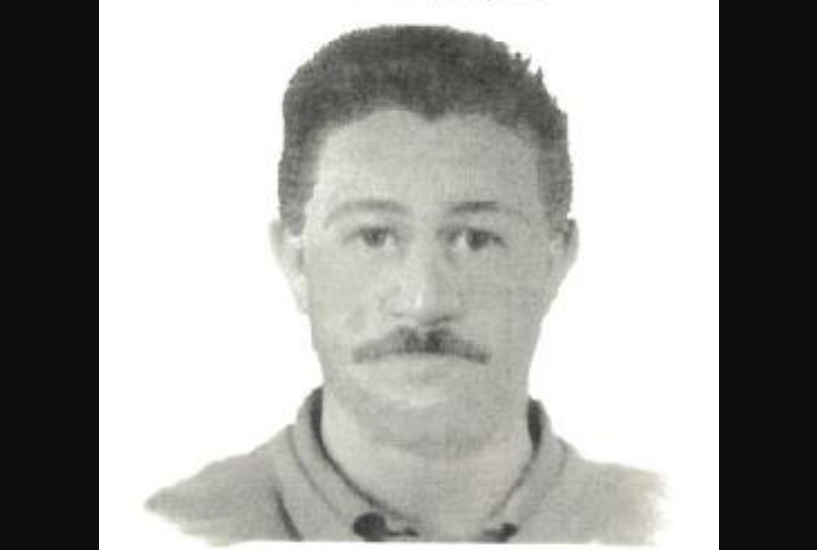
With help from Keith’s friend who witnessed her abduction, Plano police created a sketch of the man they were looking for.

They had also recovered male DNA from her swimsuit.

What they didn’t have was their suspect. For Keith, that was terrifying.

“He, at one point, had told me that if I told anybody that he would come and hurt my family, that he would hurt my brother or my mom and dad. And so I remember being afraid, like if he was going to show up again,” she said.

A second girl attacked in Dallas Eight years later, Keith’s attacker showed up again, this time in southeast Dallas.

On March 25, 1999, a man in a red Chevy pickup pulled over near where a 9-year-old girl and her friend were walking home from school, Dallas Police Det. Elizabeth DeAngelis said.

According to reports at the time, he asked the girls if they had seen a bunch of kittens in a nearby field. When the girls stepped forward to look, the man grabbed the 9-year-old and sped off.

“Both the 1991 and 1999 cases were very similar,” DeAngelis told the I-Team. “The similarities are striking.”

That girl, too, was sexually assaulted, held for hours and released.

According to law enforcement, the girl was dropped off along Interstate 45 in rural Navarro County, 60 miles outside Dallas, after she said her abductor heard an Amber Alert for her on the radio while they were driving.

Police once again had a sketch and DNA.

Re-opening the cold case It would take years to make the connection, but in 2004, CODIS, the FBI’s national DNA database, revealed that the DNA in both cases belonged to the same man.

“What’s called a case-to-case hit,” explained Plano Police Det. Aaron Benzick. “So, we now know we have a profile. We know the profile of the offender, and we know it’s connected to multiple offenses, but we don’t know who they are. They don’t exist in any government databases yet.”

In 2023, Benzick, who investigates cold cases, called Keith when he started to look into her assault.

“That’s a hard phone call to make,” he said.

He wasn’t the first detective to reach out.

“Multiple times throughout my life there has been a detective or someone that would call and say, ‘We’re reopening a cold case,'” Keith said.

She was always open to assisting, and at one point she even allowed a Texas Ranger to hypnotize her in an effort to tap into any additional memories or details she might have about her attacker.

Keith admits she never expected the man responsible would be caught. But this time, things felt different.

“Detective Benzick called me and said, ‘Hi, I’ve been taking a look at your case, and I want to tell you a little about what we do,'” she recalled. “‘I think we can really get this guy, but first let me explain all this to you.'”

Benzick had an idea, and the support of both the Dallas Police Department and the Texas Rangers.

Working together, they were about to break the case wide open.

Please note: This story was provided to CNN Wire by an affiliate and does not contain original CNN reporting. This content carries a strict local market embargo. If you share the same market as the contributor of this article, you may not use it on any platform.