Chaos erupts in courtroom during knife threat suspect’s arraignment

By Anahita Jafary

Click here for updates on this story

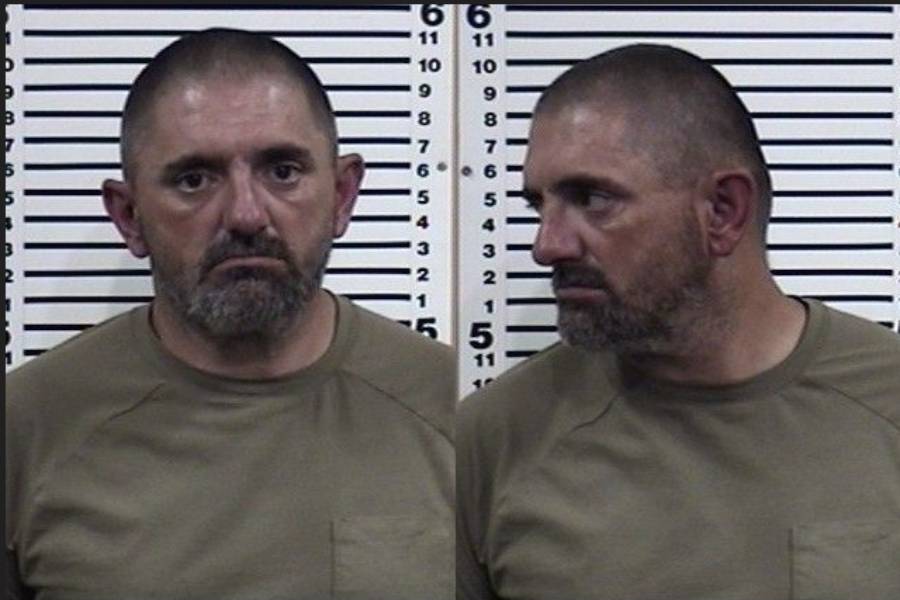
    SACRAMENTO, California (KCRA) — Brian Mattson, a 56-year-old man arrested twice over the weekend after being seen on video making stabbing motions with a knife in front of homes in Arden Park, caused chaos during his court appearance Monday as he shouted and cursed in the courtroom.

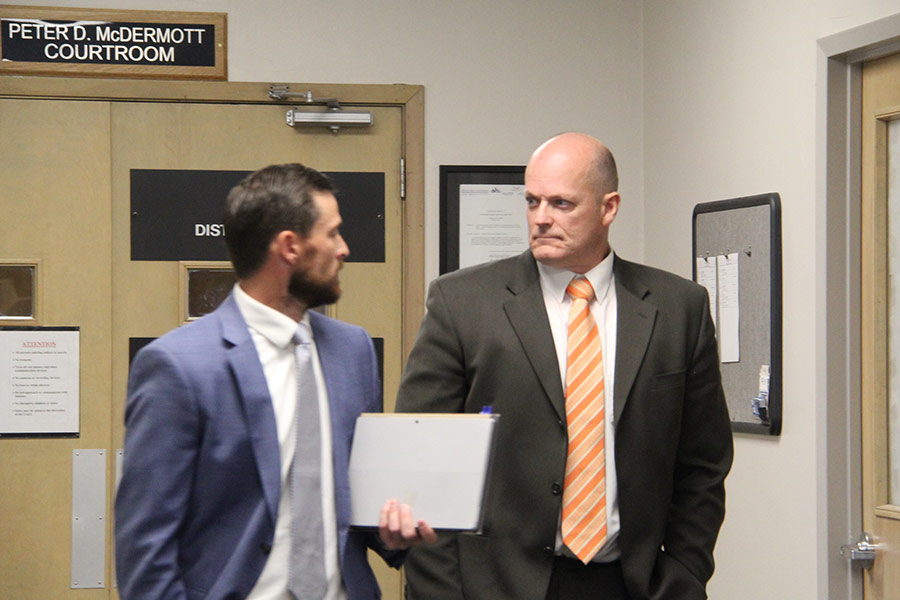
There was a major delay in court today. KCRA waited nearly two hours until Brian Mattson was brought out. From there chaos erupted as Mattson began shouting and cursing. Mattson asked what the violation was for and to have “some paperwork.”

Mattson was first seen Thursday night on Ring camera footage on La Sierra Drive in Arden Park, repeatedly making stabbing motions with a knife in front of homes. Deputies said no one was hurt, but neighbors expressed concern for their safety.

“I hope that it’s a reflection of what someone could do in public. We saw what it could be done and obviously that’s a threat to us, into into the general public and, you know, whoever you may be and so, it’s unfortunate,” said Michael Deauville, a neighbor in Arden Park.

Deputies arrested Mattson Saturday morning but said they could only book him on a criminal trespassing charge. The Sacramento County Sheriff’s Office requested probation officials place a probation violation hold on Mattson, who is on felony probation, but the request was initially denied. Mattson was released within hours.

“I really wanted to just be down here to one, learn a little bit how the system works. So instead of just, you know, being upset on our couches when when he got released so fast, be educated in a little more and I think it starts with, you know, being here,” Deauville said.

Hours later, deputies responded to another trespassing call involving Mattson near Fair Oaks Boulevard and San Lucas Way, less than half a mile from the location of the first arrest. This time, a probation violation hold was approved, and Mattson was taken back into custody.

In court Monday, the judge revoked Mattson’s probation. Neighbors are now considering ways to protect themselves moving forward.

“There’s groups that, you know, neighborhood watch being one of them is an example. Maybe we do something like that. Maybe it’s just, you know, bringing the community together and, you know, finding other ways without a formal doctrine of what that is as well,” Deauville said.

Mattson’s next court date is scheduled for Tuesday, May 12.

Please note: This story was provided to CNN Wire by an affiliate and does not contain original CNN reporting. This content carries a strict local market embargo. If you share the same market as the contributor of this article, you may not use it on any platform.

‘I won’t know unless I try’: Family farm experiments with agrivoltaics for crop production

By JuYeon Kim

Click here for updates on this story

    KEARNEY, Missouri (KSHB) — The owner of Prairie Birthday Farm in Kearney, Missouri, is experimenting with agrivoltaics. She is using the help of solar panels to test growing some of her crops that have struggled with extreme heat in recent years.

“I’m losing plants that I used to grow just fine. Can’t grow them anymore — it’s too hot for them now,” Linda Hezel said. “I couldn’t keep them watered enough.”

The solar panels provide shade for what is growing underneath, guard the soil from heavy, intermittent rain, and also protect her from working long hours under the sun. But spaced ten inches apart, it does let beneficial rain in while still keeping necessary moisture.

The 9.7-kilowatt solar arrays are Hezel and her husband’s latest research project. They wrote a grant application in 2019 to help build it, which was then constructed by Good Energy Solutions in Lawrence, Kansas.

“We were willing to invest in it for our own energy production as well as a demonstration project to share with other people,” Hezel said. “This is totally experimental. I’m still playing with what’s possible — examining, observing.”

The couple bought and started Prairie Birthday Farm in 1993 with the mission to restore the land and its native species. Nurse by trade, Hezel saw that the land was hurting after years of row cropping and soil erosion.

“I believe it’s the most fundamental nursing practice, because none of us can be well without nutrient-dense, contaminated food. That’s how we survive,” Hezel said.

Year-round, they produce sustainably grown fruits, vegetables, herbs and more, which they share with the community and sell to local chefs.

“This is really about land stewardship and ecosystem repair,” Hezel said. “Step by step, we’ve restored what can possibly be.”

To learn about possible limitations of agrivoltaics, KSHB 41 talked to Rusty Lee, an Ag engineer with MU Extension.

“We’ve got county-by-county specific zoning ordinances, perhaps to work with. Each developer has a different company’s mission and set of rules that they have to abide by for safety, etc. So it can be quite varied, the constraints that an agriculture producer may find,” Lee said.

He says the initial expense and lack of space for heavy machinery to do its work can also be barriers. Despite room to grow, Lee believes it can be an effective tool for small-scale farmers like Hezel and Moore.

“I may decide it was the wrong decision. But I won’t know unless I try,” Hezel said.

Please note: This story was provided to CNN Wire by an affiliate and does not contain original CNN reporting. This content carries a strict local market embargo. If you share the same market as the contributor of this article, you may not use it on any platform.
Convicted child predator disappears after judge allows release before sentencing

By Kurtis Ming

Click here for updates on this story

    SOUTH LAKE TAHOE, California (KCRA) — Carl Cacconie, convicted of six counts of lewd and lascivious acts on a child in El Dorado County, disappeared after being allowed to remain free on bail before sentencing—sparking outrage and fear among the victim’s family. The El Dorado County District Attorney says he is a fugitive.

“He’s a monster, and he took away my innocence,” said the victim, whom we are not identifying.

She is now an adult and says she was eleven when the abuse occurred. She recalls fearing no one would believe her.

“He was an adult. People would believe an adult before me,” she said.

GUILTY VERDICTS Cacconie was found guilty on July 17, 2025, following a trial at the El Dorado County courthouse in South Lake Tahoe. The victim described the moment she learned of the verdict.

“It was a sense of relief. All of the tears—it was all worth it in the end. Even though it was one of the hardest things I’ve had to go through, it felt like a huge weight lifted off my shoulders,” she said.

JUDGE ALLOWS CACCONIE TO LEAVE COURT Despite the conviction, Cacconie was not immediately taken into custody. El Dorado County Judge Michael McLaughlin allowed him to leave the courthouse and return for sentencing on August 25, 2025, where he faced up to 18 years in prison. Cacconie never showed up.

“Where is he? He just disappeared,” the victim said.

Cacconie now has a bench warrant out for his arrest.

NO SHOW AT SENTENCING The victim and her mother, Alana Ramirez, expressed fear and anger over the situation.

“It angers me because we were so close to him going to jail,” Ramirez said.

Ramirez shared her concerns about Cacconie being free.

“He might come after my daughter,” Ramirez said.

“I think about it every day, even when I go to sleep at night. It’s something I fear every day. It’s not a good feeling,” she added.

Ramirez blamed the judge for allowing Cacconie to remain free.

“I don’t understand why you would let him go after he was found guilty. I don’t have an answer, and I wish he—or someone—would give us one. Nobody has explained how this was possible,” Ramirez said.

El Dorado County District Attorney Vern Pierson said his office pushed Judge McLaughlin to take Cacconie into custody immediately after the guilty verdicts, but said the judge allowed him to walk out of the courthouse.

“This is someone a jury unanimously convicted of multiple acts against a child. Under those circumstances, there’s simply no question he should have been remanded into custody,” Pierson said.

Cacconie had posted a $1 million bond, which he could forfeit by failing to appear at sentencing. Pierson agreed when asked whether that amount may have effectively become the “price of freedom.”

QUESTIONING THE JUDGE’S DECISION Judge McLaughlin declined to comment. The court cited the California Code of Judicial Ethics, which prohibits judges from discussing pending cases.

So, KCRA 3 Investigates also reached out to retired Superior Court judges to assess whether the decision could be justified.

Retired Sacramento County Judge Maryanne Gilliard was critical of the decision.

“It was clear this man was a danger to society. He should have been immediately remanded,” Gilliard said.

We consulted a second retired judge who said, “Letting someone out who has been convicted of such serious felonies, even with $1 million bail—is exercising very poor judgment.”

FAILED ANKLE MONITOR An El Dorado County Probation Department report obtained by KCRA 3 Investigates, said Cacconie was also wearing a GPS ankle monitor at the time of his disappearance. According to a Probation Department report submitted to the court, “On August 17, 2025, the device lost its connection and location.” It was last tracked to an address in San Francisco’s Sunset District.

The report also states that no one from the Probation Department contacted Cacconie for two days. On August 19, 2025, the report notes, “the defendant reported he was charging the anklet.” The Probation Department said it was unable to reach him again and never recovered the ankle monitor. Their last contact with him was six days before he failed to show up to his own sentencing in South Lake Tahoe.

IS CACCONIE ALIVE? Cacconie’s family reported the 51-year-old missing to San Francisco police on August 25, 2025, the day of sentencing, claiming he left a suicide note. Pierson said he is confident Cacconie is alive and warned that anyone helping him evade authorities could face charges.

Cacconie’s defense attorney Chris Walsh told KCRA 3 he believes Cacconie is dead. He suggests his client’s history of never missing a court appearance may have played a role in the judge allowing him to leave court on the day of the verdicts.

“I feel like the justice system let us down, and it hurts,” Ramirez said.

The family of the victim says that without the discovery of Cacconie’s body, they believe he is alive. They hope sharing their story will lead to someone reporting his whereabouts. They are also calling for changes to the law requiring judges to immediately detain individuals convicted of child sex crimes.

“You know, once they’re found guilty, they should be put away,” the victim said.

Please note: This story was provided to CNN Wire by an affiliate and does not contain original CNN reporting. This content carries a strict local market embargo. If you share the same market as the contributor of this article, you may not use it on any platform.

A senior’s AAPI Heritage story: Bullied growing up, now graduating with honors and an associate’s

By Stephanie Molina

Click here for updates on this story

    ROBSTOWN, Texas (KRIS) — A Robstown senior who was once told she would not be able to graduate with her associate’s degree is now finishing in the top 5% of her class during Asian American and Pacific Islander Heritage Month.

Eunsil Eom is a senior at Robstown Early College High School. She is half Korean and Filipino. Eom immigrated with her family from Korea at 7 years old, and her father’s job at the Kingsville Naval Air Station brought her to Robstown during her junior year. She says she has jumped from high school to high school.

“When I was at my previous high schools, they had told me that I wouldn’t be able to graduate with my associates because I had taken my TSI at the end of sophomore year,” Eom said. “I would barely be starting my college classes in my junior year, and that’s a little late for most people.”

For Eom, school has always been her priority. She stayed on top of her studies even before she learned English.

“Once I learned English, I started excelling in my academics because academics are a really big part of me,” Eom said. “I uphold myself to a really big standard,” Eom said.”

Adjusting to a new culture was not easy at first. Eom says she was bullied for the food she brought to school.

“When I would bring like food, like pack lunches for myself, like my mom would pack lunches for me, and I would bring to school, and it wouldn’t be like the normal American lunch,” Eom said. “I would get bullied for that. They would say like oh that stinks or that’s weird. Why are you eating that? What is that? So I was always embarrassed by being Asian.”

Robstown, however, has been a different experience. Eom said the community’s welcoming nature made it easier to fit in.

“Since Robstown is like a very close-knit community and they’re all like all welcoming, I think the fact that I was Asian, it fascinated the people, so if anything, it was easier for me to get along with them because they were so welcoming,” Eom said.

Her dedication stayed strong through those challenges. Eom is now graduating in the top 5% of her senior class and pushes back against stereotypes about Asian students.

“I’m not smart because I’m Asian,” Eom said. “I’m smart because I dedicate myself to my studies and my academics and what I’m passionate about.”

After graduating high school, Eom plans to join the Navy, taking inspiration from her father, and will put her associate’s degree to use.

“Since you’re getting your associate’s degree, that means you have college hours, that means you can put that into the Navy and get ranked up, so instead of going as an E1, I’ll be going as an E3,” Eom said.

Eom says having a month dedicated to Asian American and Pacific Islander heritage makes her proud to be who she is.

Please note: This story was provided to CNN Wire by an affiliate and does not contain original CNN reporting. This content carries a strict local market embargo. If you share the same market as the contributor of this article, you may not use it on any platform.

Parents release book about couple killed in Haiti

By Naomi Keitt

Click here for updates on this story

    TULSA, Oklahoma (KJRH) — Two years after a Haitian gang killed a missionary couple from Oklahoma, their parents are detailing their lives and sacrifice.

Not a day goes by that David and Alicia Lloyd don’t think about their son, Davy, and his wife, Natalie.

Married in 2022, the young couple began serving in Haiti’s mission field shortly after.

“I always told Davy, do not come back to Haiti unless you really feel like that’s what you’re supposed to do,” said Alicia Lloyd. “Don’t come back because you feel sorry for us and you want to give us a break. Don’t come back because you feel sorry for the people. Come back because you know that that’s what God wants you to do with your life.”

Growing closer to the people there, it was a calling for Davy and Natalie. They lived lives of service and then made the ultimate sacrifice.

2 News Oklahoma reported in May of 2024 when the couple was ambushed by a gang and then shot and killed. Davy and Natalie died along with their longtime friend Judes.

The Lloyds grappled with their deaths.

“Never thought that death could enter the picture because we’re like, ‘oh, God will take care of us,’” said David Lloyd. “He’s called us, and you know he has many times over the years. So that’s kind of have to been a reset for us to readjust our thinking that that is part of counting the cost, that when you do surrender your life to the will of God, that there could be death involved or sickness or pain, and so now we realize that’s all part of it.”

The years brought many realizations and revealed details of their last days they didn’t know before. They learned Davy spent his final moments spreading his faith to the gang members who took his life.

David said his son never wavered.

“He loved Jesus,” said David Lloyd. “He was excited about heaven, and he realized how awful hell would be, and he just continued to preach that to his dying breath.”

“I realize life is very short, but eternity is a long time, so I’m settled that with my son’s death, knowing that we get to spend eternity together, so yes, we’re going to miss out with maybe you know 30, 40 years here, but eternity is a long time, so it’ll be all right.”

The book, Strong to the End, is set to be an example, a challenge, and an encouragement for the world.

“He inspired so many people just to have a close relationship with the Lord that we want this book to continue on that legacy of inspiring people to have a closer walk with the Lord,” said David Lloyd.

The proceeds from the book will help build the Davy and Natalie’s Academic Center at the Ozark Bible Institute, where the couple went to college.

Please note: This story was provided to CNN Wire by an affiliate and does not contain original CNN reporting. This content carries a strict local market embargo. If you share the same market as the contributor of this article, you may not use it on any platform.

Meta suggests total shutdown in New Mexico

By Peyton Spellacy

Click here for updates on this story

    SANTA FE, New Mexico (KOAT) — The trial between the State of New Mexico and Meta moved into its second phase this week as the court begins to determine what operational changes the tech giant must implement. Following a March decision where a jury ordered Meta to pay a $375 million financial penalty, the current bench trial leaves the final decision on future regulations to the judge.

Meta, the parent company of Facebook, Instagram, and WhatsApp, has suggested it may stop operating within New Mexico if the judge approves a seven-page list of demands submitted by the state. The company characterized the state’s demands as over the top, arguing the restrictions would require them to develop a completely new version of their platforms that would be exclusive to New Mexico users. Court filings indicate Meta has mentioned this potential exit 38 times.

“If granted in full, would genuinely make it untenable to continue offering menace products in this state,” said Alex Parkinson, a Meta attorney. “I am telling you that as an officer of the court who understands my client’s position, this is not a PR stunt. It is not a threat. It is the reality of the seven-page relief plan.”

New Mexico Attorney General Raul Torrez addressed the claim, stating that any decision to leave the state rests with the company. “They can make a different choice,” Torrez said. “The choice, instead of leaving the state of New Mexico, is to listen to the state of New Mexico, to listen to our citizens, to listen to the jury and respect what they have said about the law.”

Academic experts from the University of New Mexico and New Mexico State University expressed skepticism regarding the likelihood of a complete shutdown.

Dr. Jagdish Khubchandani, an NMSU professor of public health, said, “There’s nothing to freak about or can be concerned about for, especially, businesses and others who use monetization apps.”

Gabe Gomez, Managing Director of Marketing and Communications at UNM, noted that the cost of compliance and engineering changes makes a total exit less realistic. He questioned the strategy of reducing the company’s reach.

“You’re shrinking your audience, right?” Gomez said, “I don’t think it’s necessarily an idle threat.”

Experts noted that Meta has utilized similar tactics globally when facing government pressure in the European Union and Brazil. “That’s always been their practice,” Khubchandani said. “They threaten shutdowns and such, which they have done worldwide, fighting with governments.” He noted that while Meta often takes an initial stand against compliance, they have eventually compromised in other regions. “Was it easy for the EU, Australia, and UK to get these things done? No, Meta always took a stand that we are not complying. And then eventually they compromised,” Khubchandani said.

Torrez pointed to international examples where social media regulations are already in effect.

“Australia has banned social media for anyone under the age of 16. What does that mean? It means they’re already working on age verification. They’re just not doing it in America,” Torrez said.

Khubchandani questioned why these global changes are not being applied locally, saying, “They are making changes in different parts of the world, almost more than two dozen countries. So my question is, why cannot they make these changes here in the United States?”

Meta maintains that the New Mexico requirements are uniquely burdensome. “The state is asking you to develop, from scratch, a completely new regulatory regime that far exceeds anything in Europe, in Australia, anywhere. And frankly, and we don’t say this lightly,” Parkinson said.

If Meta were to cease operations in New Mexico, experts suggest the impact would be felt through technical friction rather than a total loss of access. “If anything actually changed, it wouldn’t feel like a blackout, but more like friction, right?” Gomez said. “So you’d still get in, there’s VPN, there’s mobile networks, there’s platform workarounds.”

However, Gomez warned that such a move would lead to login disruptions, degraded features, and inconsistent advertising. “Then, eventually, the local information would thin out. With that, a lot of trust, erosion, and all kinds of other things,” he said.

The potential disruption could have significant consequences for the local economy. “Think about how many businesses are using these services and how much trouble they would have to face, even with a short outage,” Khubchandani said.

Gomez noted the vulnerability of local businesses that rely heavily on the platforms for growth.

“They’ve built their growth on rented land, if you will, and now the landlord’s making noise, right?” Gomez said.

Please note: This story was provided to CNN Wire by an affiliate and does not contain original CNN reporting. This content carries a strict local market embargo. If you share the same market as the contributor of this article, you may not use it on any platform.

Chemical leak sends 10 to hospital: Resident shares what he saw

By Chloe Franklin

Click here for updates on this story

    DUSON, Louisiana (KATC) — A chemical leak at a Duson facility sent 10 people to the hospital Tuesday morning after a valve malfunction released hazardous materials near Lexington Drive.

State police said in a statement the initial investigation revealed a valve malfunction involving boron trifluoride that resulted in a chemical leak at the facility. The leak occurred at FIBA Technologies, and those working nearby were evacuated.

Ten people were taken to the hospital, including six employees of FIBA Technologies, three first responders, and one employee of a nearby business. The injuries are believed to be non-life threatening, according to state police.

White clouds were seen billowing in the area around 7 a.m. Julian Darby, a nearby resident, witnessed the smoke while picking up breakfast near the scene.

“I was coming through to pick up some breakfast for me and my kids on the way to school, and first we heard all the sirens, and I was trying to figure out where they were all going, where they were headed to,” Darby said.

“That’s when I noticed that everything behind Love’s was completely whited out and I assumed there was some kind of fire or something going on,” he said.

Darby watched as first responders from multiple surrounding areas arrived at the scene.

“There were fire trucks from, I mean, all the, that way towards Lafayette. There were fire trucks all the way from Scott coming out, so they, they called in the whole cavalry,” he said.

The leak was contained nearly an hour after the hazardous materials were released.

State police said the investigation is ongoing.

This story was reported on-air by a journalist and has been converted to this platform with the assistance of AI. KATC verifies all reporting on all platforms for fairness and accuracy.

Please note: This story was provided to CNN Wire by an affiliate and does not contain original CNN reporting. This content carries a strict local market embargo. If you share the same market as the contributor of this article, you may not use it on any platform.

Woman accused of $2.2 million Medicaid fraud

By Emily Pofahl

Click here for updates on this story

    MILWAUKEE (WISN) — Debbie Long, a 44-year-old Milwaukee woman, is accused of defrauding Wisconsin Medicaid of nearly $2.2 million, according to court documents filed Tuesday.

Investigators with the Wisconsin Department of Justice’s Medicaid Fraud Control and Elder Abuse Unit said Long submitted fraudulent claims to the state Department of Health Services, claiming reimbursement for in-home medical care she never provided.

“Widespread fraud against Wisconsin Medicaid,” is how Wisconsin Department of Justice investigators described the case in court documents.

Between March 2017 and August 2022, Long allegedly stole almost $2.2 million from Wisconsin Medicaid. Investigators also accuse her of taking out a fraudulent $219,000 low-interest pandemic-era loan from the Paycheck Protection Program (PPP) under the guise of her in-home care business, Pinnacle Home Health Care LLC.

Court documents state Long used the stolen money to buy Kitt’s Custard at 70th and Capitol in 2020 and “helped launder the money that was used” to purchase a Mercedes-Benz and Milwaukee’s Octopus Car Wash.

Long no longer owns Kitt’s Custard, which is now open under different ownership. She and her husband also no longer live at their Greenfield or Milwaukee addresses listed in court documents.

Long is charged in Milwaukee County Court with three counts of fraud and two counts of money laundering. Online jail logs show she is not in custody in Milwaukee County as of Tuesday night.

Efforts to reach Long were unsuccessful Tuesday. She is due in court in July.

The state attorney general’s office is prosecuting the case.

Please note: This story was provided to CNN Wire by an affiliate and does not contain original CNN reporting. This content carries a strict local market embargo. If you share the same market as the contributor of this article, you may not use it on any platform.

Social media posts help police track down murder suspect

By Brett Rains

Click here for updates on this story

    FORT SMITH, Arkansas (KHBS, KHOG) — Fort Smith police say social media activity played a key role in locating a man accused of murder who was on the run after a deadly shooting.

According to investigators, Derrick Guinn posted about the case on Facebook as officers searched for him. Police say they used a video posted to an account with a different name—along with phone tracking—to narrow down where he was hiding.

Fort Smith police say the video is now evidence in an ongoing murder investigation. The video was posted Saturday evening with the caption “Still running.”

Police say the video shows Guinn walking through the woods about 30 minutes after the shooting he is accused of committing.

According to the probable cause arrest affidavit, the shooting happened May 2, 2026, at a home on Holly Street, where Guinn was with his girlfriend at her mother’s house when the couple began fighting. Witnesses told investigators Guinn started hitting his girlfriend and her mother.

According to the affidavit, 35-year-old Jimmy Neal tried to intervene and was shot. The bullet also struck a 12-year-old boy who was behind Neal. Investigators say the boy is expected to be OK, but Neal died from his injury.

Guinn ran from the home, but police told 40/29 News they used the Facebook video and his cell phone to track him to woods near the Arkansas-Oklahoma state line. After more than 12 hours in the woods, police say Guinn turned himself in on Sunday.

Guinn remains in jail on a $500,000 cash-only bond. He is facing first-degree murder and attempted murder charges and is scheduled for an initial court appearance Wednesday morning.

Please note: This story was provided to CNN Wire by an affiliate and does not contain original CNN reporting. This content carries a strict local market embargo. If you share the same market as the contributor of this article, you may not use it on any platform.

Woman describes public guardianship experience

By Matt Flener

Click here for updates on this story

    BELTON, Missouri (KMBC) — A Missouri woman is sharing her experience in the state’s public guardianship system, calling for changes and more awareness about court-ordered guardianships.

“It’s wrong, and kind of crooked,” Rachel Thompson said. “The system.”

Thompson emailed KMBC 9 Investigates after seeing KMBC’s “Paper Prisons” investigation, uncovering the difficulties of wards of the state and their families under Missouri’s system of public guardianship.

Thompson was one of more than 11,000 people in Missouri under public guardianship.

Thompson eventually shared her experience with the U.S. Department of Justice. Her story was included in a 2024 DOJ report under the Biden administration, which found that Missourians with mental health disabilities are “unnecessarily institutionalized” in nursing facilities and under guardianships.

The report also said that Missouri violated the Americans with Disabilities Act by failing to place people in the least restrictive environment.

Thompson, referred to as “Ciara” in the report, said while living in one nursing home, she was not allowed to travel to activities in another building.

“I was really depressed,” she said. “I was crying. I was having panic attacks.”

Thompson said she spent 10 years under guardianship before she was able to get out. A judge had appointed a public guardian to oversee her care while she was dealing with PTSD following a domestic violence situation.

“I tried to stand up for myself that I didn’t need a guardian, but I lost,” Thompson said.

Thompson’s court-appointed guardian was the Perry County, Missouri, public administrator, who has since retired. KMBC reached out to the current public administrator, who declined to comment on Thompson’s time as a ward of the state, referring KMBC back to court documents.

Thompson said her guardian had control over her life for a decade, making decisions that affected her relationships with her family.

“And 10 years gone from my life. For my mom, my kids, my dad who passed away recently. I would have had three more years with him,” Thompson said, wiping away tears.

Thompson’s mother, Theresa Maze, initially thought public guardianship would help her daughter, who lived in another part of the state.

“And so, I thought, okay, well they’re just going to help her. They’re right there, she can stay right there with her kids,” she said.

Looking back, she said she regrets allowing it to happen.

“I don’t like to think about it that much,” she said. “It rips out your heart.”

Thompson is calling for oversight of Missouri’s public guardians, who are elected to their positions. She said it is difficult to hold them accountable unless people share their stories and experiences.

“What needs to change?” KMBC asked Thompson.

“Well, you guys are doing great at some sort of start,” Thompson said.

Since KMBC’s investigation began, 34 people have reached out for help with their public guardianship cases.

If you know of someone going through struggles with Missouri’s public guardianship system, or if you have a case to highlight that exposes solutions for Missouri’s public guardianship system that could teach lessons to others, please email investigates@kmbc.com.

Please note: This story was provided to CNN Wire by an affiliate and does not contain original CNN reporting. This content carries a strict local market embargo. If you share the same market as the contributor of this article, you may not use it on any platform.