Man and his dog rescued after camper thrown by tornado in Kentucky

By Norman Seawright

Click here for updates on this story

    OWEN COUNTY, Kentucky (WLKY) — A tornado tore through the hills of Owen County, Kentucky, on Tuesday, damaging homes, businesses, and trees in its path.

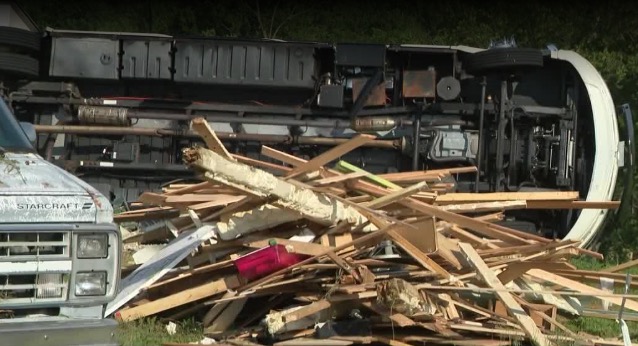
Family and friends were cleaning up the remains of the barndominium and camper that was inside Tuesday evening. Inside the camper was a man and his dog when a tornado came through.

Chad Hon, the man’s son, said his father is OK but really shaken.

“He said he looked out the front window of the camper, when he heard the noise, you know, and it sucked the the doors off the barn,” Hon said. “And then he just he could feel the motor home rolling over. And once it stopped, you know, he was kind of trapped in there.”

Hon said his father held on for his life, while also holding onto his German shepherd, Gunner.

“He had his study that his arms wrapped around, around him the whole time, trying to make sure that he didn’t let him go,” Hon said.

First responders broke through the camper’s windshield to rescue the pair. Hon’s father escaped with only a cut on his finger.

“Super blessed. Dad’s got great neighbors, and, they got an Amish community right down the road. They’ve been awesome. They were up here helping,” Hon said.

Owen County Emergency director Tim Cammack says only minor injuries have been reported so far.

A little over a mile away, Randy Towles is surveying damage from his business after the storm left debris and roofing scattered hundreds of feet away.

“Spared a house back there and took the roofs off these two barns, did a lot of damage to my trucks, came up this way and did some damage to my house but not a lot. We’re fortunate nobody got hurt,” Towles said.

With damage in these areas and Agee Road a few miles away, Hon says he’s grateful his father’s OK and that his mother was away when the storm happened.

“It’s a little bittersweet. They ain’t been here that long and they love this place. They’re retired. You know what I mean. And so they loved it. But yeah. So it can be rebuilt though. It’s all good,” Hon said.

Please note: This story was provided to CNN Wire by an affiliate and does not contain original CNN reporting. This content carries a strict local market embargo. If you share the same market as the contributor of this article, you may not use it on any platform.
Alabama teen with bone cancer heading to Texas for life-saving surgery

By Lisa Crane

Click here for updates on this story

    BIRMINGHAM, Alabama (WVTM) — A 17-year-old St. Clair County girl is heading to Texas for what she hopes will be life-saving surgery.

We told you last month about Julianna Barrientos. She has osteosarcoma, an aggressive form of bone cancer. Her doctors at Children’s of Alabama recommended she go to MD Anderson Cancer Center in Texas for surgery. Initially, though, Medicaid refused to cover the procedure. After we brought you the story, Medicaid revisited the request and reversed its decision.

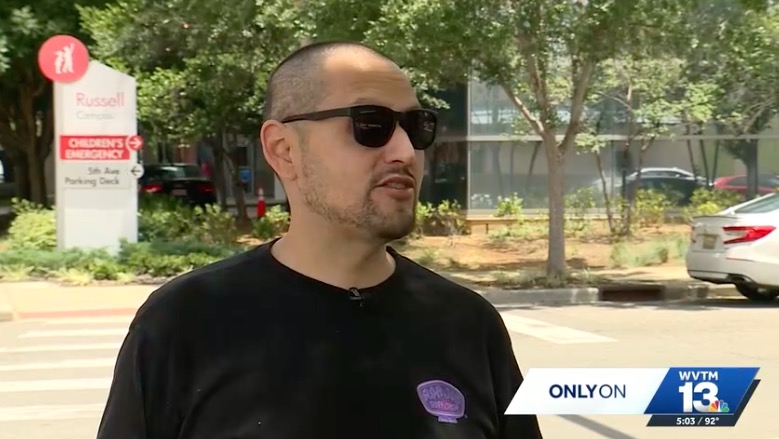
Now, Julianna is relieved, grateful and hopeful. She and her father, Adam Barrientos, are flying to Texas on a medical transport plane Wednesday.

She is not your typical teenager. The high school senior is not worried about boys, grades or friends. She is focused on survival.

She will undergo two surgeries in Houston that she hopes will save her life.

“She’s in good spirits. She’s a little nervous because of the flight. She’s a little nervous because of the facility,” Adam Barrientos said. “She loves the facility that she’s at and the nurses that she’s had and the physicians that she’s had. But right now, she’s going into the unknown.”

When we last spoke with her, Medicaid had denied coverage for the out-of-state surgery. But Julianna put her faith in God and believed it would work out.

A week later, the family learned Medicaid had reversed its decision.

“When she woke up, we were all just, like, happy crying,” her father said. “She just turned to us and said, ‘What are you crying for?’ We said, ‘It got reversed.’ She’s like, ‘That was God,’ and went back to sleep. She said, ‘I told you, just trust. Just trust.'”

Doctors at MD Anderson will work to remove the cancerous bone, which means Julianna will lose her leg.

You might think that news would be devastating for an avid soccer player, but Julianna said she sees the bigger picture.

“I’d rather live more than have my leg to be able to do these activities because maybe soccer wasn’t my thing or my calling, what God called me to do,” Julianna said.

Her father said everyone from local and national political leaders to athletes and celebrities has reached out to show support and offer encouragement. He believes it has helped her stay positive.

“She loves reading inspirational cards from people that have been in her situation or have gone through situations like this or even just sympathizing with her,” he said. “She loves reading people’s thoughts and people’s encouragement.”

Her father said they covet your prayers and words of encouragement.

You can send those messages to WVTM 13 at 1732 Valley View Drive, Birmingham, AL 35209. We’ll make sure they get to Julianna in Houston, and we’ll keep you updated on her medical journey.

Her first surgery is scheduled for Aug. 4, with a second scheduled for Aug. 6.

Please note: This story was provided to CNN Wire by an affiliate and does not contain original CNN reporting. This content carries a strict local market embargo. If you share the same market as the contributor of this article, you may not use it on any platform.
Patrolman Goes Beyond the Badge to Help Save Future Father-in-Law’s Life

By Jamison Hixenbaugh

Click here for updates on this story

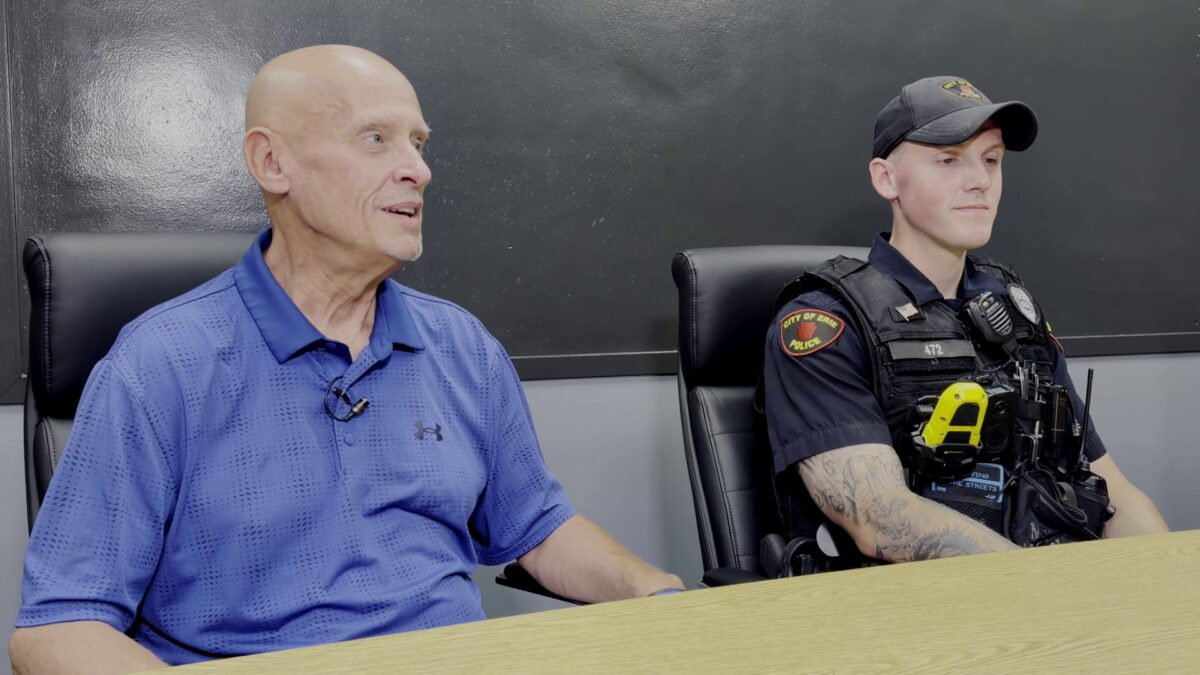
    ERIE, Pennsylvania (WSEE) — For the past eight years, Erie Police Department Patrolman Daniel Post has been dedicated to serving the community.

Since being sworn in as an officer in 2018, and spending the last six years as a member of the Police Athletic League helping mentor local youth, Dan will tell you….his compassion for others goes far beyond his badge.

“If you’re able to do something to help somebody, I say take it,” said Post. “Things are put on this earth for a reason.”

Last year, while camping with his fiancée’s family, his soon to be father-in-law Allen Rose became ill.

“When I got back, I didn’t feel right,” said Rose. “I went to the doctor and he said you need to go to the emergency room immediately.”

That’s when they received the devastating news.

“I went down, started testing,” said Rose. “That’s when I was diagnosed with cirrhosis of the liver.”

After being diagnosed with end-stage liver disease, Allen was placed on a national liver transplant waiting list.

“It was a live donor waiting list,” said Rose. “I had several people that volunteered to be tested.”

One of the people who tested was his future son-in-law Post, who ended up being a 100 percent match.

“I told my fiancée Jessica, I know what it is like to lose a parent,” said Post. “I lost my mother four years ago and if I’m able to give that to somebody else to allow them to have a parent, I’m going to do that.”

“I wish I could say the first feeling was relief, but the very first feeling I was nervous, because then it wasn’t just my dad,” said Jessica Rose. “It was my dad and fiancé that were going to go through this huge surgery.”

Unlike other organs, the liver can regenerate.

Without hesitation, Patrolman Post decided to donate a portion of his liver to his future father-in-law.

“There was never a moment that I didn’t want to go through with it,” said Post. “It just needed to be done.”

“I tried to talk him out of it,” said Allen. “I did, because I was more worried about him than me, to be honest with you.”

Both Dan and Allen underwent seven hours of transplant surgery at UPMC Montefiore in Pittsburgh.

After two months of recovery, both men have returned to their normal lives.

“It’s quite a dedication to have somebody do that for you,” said Allen. “I wouldn’t be here without him.”

“Knowing my dad wouldn’t be here without him, that’s the biggest thing,” said Jessica. “I think it speaks volumes to who he is and who I get to marry.”

By sharing the same organ, both men now share an eternal bond.

“Definitely a special bond,” said Post. “We were always close before. It’s an amazing feeling knowing that I can help him continue to do the things he wants to do and that’s live and be around friends and family.”

Please note: This story was provided to CNN Wire by an affiliate and does not contain original CNN reporting. This content carries a strict local market embargo. If you share the same market as the contributor of this article, you may not use it on any platform.
How Insomnia Cookies went from a dorm room in Philadelphia to an international success

By Nikki DeMentri

Click here for updates on this story

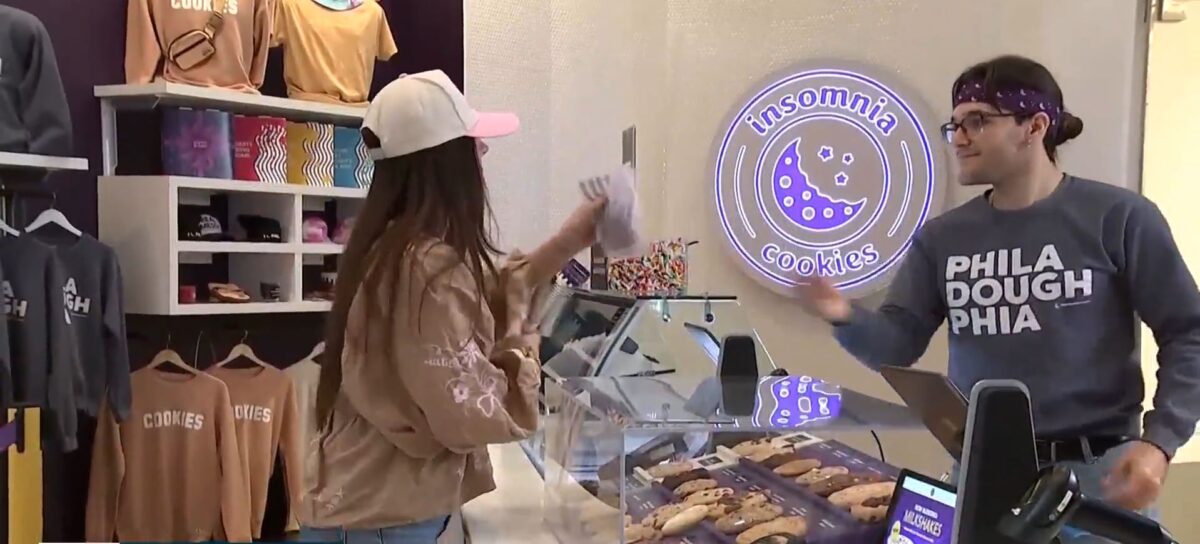
    PHILADELPHIA (KYW) — More than 20 years ago, Insomnia Cookies was founded in Philadelphia as a cookie brand geared toward college students. Now, it’s gone international.

Seth Berkowitz, founder and CEO of Insomnia Cookies, said they now sell over 20 million cookies a quarter across more than 350 locations worldwide.

“We’re in major cities, suburbs,” Berkowitz said. “We’re in transportation areas. We’re in stadiums. The brand has meant a lot more than college, even though college is so core.”

The recipe for Insomnia Cookies’ success starts in Philadelphia. Berkowitz started the company his junior year at the University of Pennsylvania in 2003.

“I lived in a college house with eight of my incredibly good friends,” Berkowitz said. “We would order pizza and sandwiches — anything. All throughout all hours of the night, but I had this tremendous sweet tooth.”

Insomnia still calls Philly home more than two decades later. The company is headquartered in Center City — with its flagship bakery.

“I definitely didn’t envision this,” Berkowitz said. “This is more than I ever could’ve imagined or dreamed of.”

Insomnia boasts not only an international footprint, but an expansive menu. Of course there are cookies: classic, including vegan and gluten-free options, plus deluxe options. And then there are brownies, “Wiches,” cookie cakes and ice cream.

“We are Philly born and bred,” Berkowitz said. “We spend a tremendous amount of our time thinking about Philly and how the brand resonates in Philly, and I think the community embraces us.”

East Passyunk is home to the company’s “Cookie Lab,” which was its first experiential store. That opened in 2021 and offers customers a speakeasy experience featuring milkshakes and cookies.

Please note: This story was provided to CNN Wire by an affiliate and does not contain original CNN reporting. This content carries a strict local market embargo. If you share the same market as the contributor of this article, you may not use it on any platform.
‘Means the universe’: Thousands pack Oklahoma tattoo fundraiser to help 3-year-old’s cancer fight

By Kilee Thomas

Click here for updates on this story

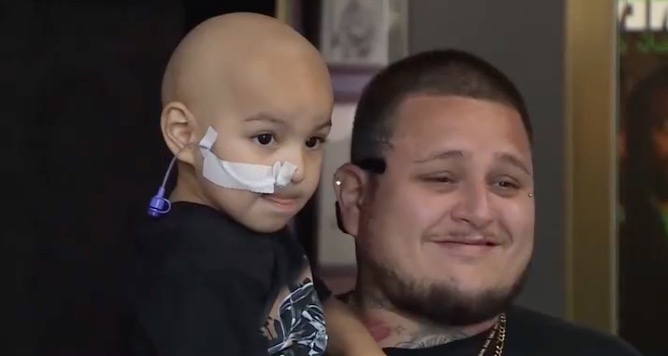
    OKLAHOMA CITY (KOCO) — A 3-year-old battling cancer received a powerful reminder that she isn’t fighting alone.

Thousands of Oklahomans came together at a tattoo fundraiser to raise $32,000 for 3-year-old Sophia Hernandez, who was recently diagnosed with stage four high-risk neuroblastoma. The event, hosted by Krybaby’s Tattoo Studios this past Sunday, drew an overwhelming response.

“We had over 5,000 people that signed up in line,” said Sarah Lewis, owner of Krybaby’s Tattoo Studios.

The funds raised include $22,000 from the fundraiser, a $10,000 donation from the family’s mortgage company, Front Porch Homes, and additional contributions through a GoFundMe campaign.

For Sophia’s father, Rodrigo Hernandez, the support means six months of uninterrupted time at home with his daughter.

“What money can buy is a little relief,” he said. “Having people dedicate a full day to raising money for me and my family, that meant more than the world to me. If I could say it, it means the universe to me.”

Sophia, who recently had to shave her head due to her treatments, made an appearance at the event to meet the supporters.

“We made our rounds, kind of went around every shop, stopped by, and made sure she made an appearance so they could see what we were doing it for,” Rodrigo said.

Rodrigo shared how the funds will allow him to focus on what matters most.

“I’m hoping to just focus on them. Focus on having more fun, getting her treatments dealt with—not worrying about so much other responsibilities of life and try to just enjoy the time. You never know when it’s going to be the last moments, so I’m trying to focus on the good things,” he said.

The overwhelming support has inspired Sarah Lewis to continue helping the family.

“If we got to do this all over again until Sophia rings that bell, then we’ll do it again,” she said.

Please note: This story was provided to CNN Wire by an affiliate and does not contain original CNN reporting. This content carries a strict local market embargo. If you share the same market as the contributor of this article, you may not use it on any platform.
Cages, filth, feces: 92 cats and dogs rescued from Florida home, 5 owners identified

By Rachael Perry

Click here for updates on this story

    STUART, Florida (WPBF) — The Martin County Sheriff’s Office rescued 92 animals, including 80 cats and 12 dogs, from a home in the Foxwood community of Stuart, in what Sheriff John Budensiek described as the worst case of animal hoarding he has seen in the county.

Body camera footage from the Martin County Sheriff’s Office shows the conditions inside the home in the Foxwood community, which Sheriff John Budensiek described as “horrific.”

“These are squalor conditions; this is a nice house, nice neighborhood, but the conditions are horrific,” Budensiek said. “We’re talking about in some places a foot of animal feces in that house. There is no air conditioning in that house. So when we cracked the door on it earlier today, the stench was unreal, the air was stifling hot.”

The sheriff’s office said animal control had been trying to access the home for about a week, but the homeowner, Gail Giustino, 77, refused to cooperate. Court records show Giustino was issued over 40 citations in 2015 for improper care or treatment of animals, though the case was dismissed. Investigators now believe Giustino, a U.S. Postal Service mail carrier since 1997, collected many of the cats while working her route in the Port Salerno and Coral Gardens areas.

Early Tuesday morning, all 92 animals were transported to the Humane Society of the Treasure Coast, where they are now receiving medical attention and evaluations.

“A lot are underweight. Some are missing fur. They do that when they are under a lot of stress,” said Sarah Fisher, of the Humane Society of the Treasure Coast.

Fisher added that while some of the animals appear to be feral, others are friendly and could potentially be adopted. “Half [are] very friendly. Those who can’t go to a normal home [will need] a lot of land area [to] live their happiest lives,” she said.

Residents in the area are now wondering if their missing pets could be among the rescued animals. Megan Remick, a Martin County resident, said her cat Savannah went missing three years ago.

“I saw one of the rescuers, animal control officers, bring out a cage with a tiny white cat in it,” Remick said. “I know there’s other white cats in the world, but man, something just hit me, and just the thought that she could have been sitting in that filth, not being able to breathe in a cage for three years is just absolutely horrifying.”

Another resident, Shannon, said her cat Tux disappeared two weeks ago.

“I didn’t really even know about the news story until about two random people called me and said, ‘You live next to Sunshine Mobile, right? The mail lady got arrested,'” Shannon said.

She added, “I looked on the news and saw a video of one of the tuxedo cats inside the cage that they were taking out of the house. And I’m very hopeful that it’s my cat. And I’m really hoping to be reunited with my cat.”

The sheriff’s office has so far identified the owners of five of the animals and is asking anyone who believes one of the 80 cats could belong to them to file a missing pet report and schedule a time to be reunited with their pet.

A missing pet report can be filed at 772-463-3211.

Please note: This story was provided to CNN Wire by an affiliate and does not contain original CNN reporting. This content carries a strict local market embargo. If you share the same market as the contributor of this article, you may not use it on any platform.
Multiple Mount Dora monkey sightings prompt advisory

By Hayley Crombleholme

Click here for updates on this story

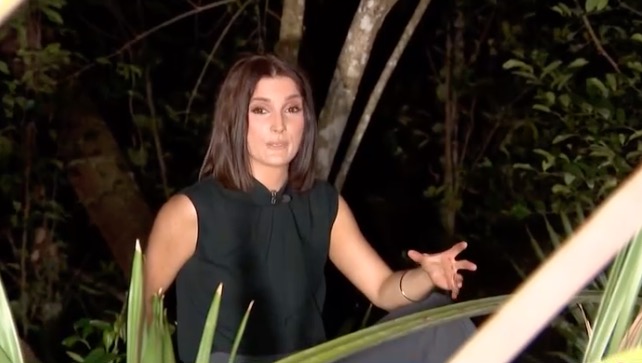
    MOUNT DORA, Florida (WESH) — Mount Dora residents are being cautioned to stay away from monkeys after multiple sightings in the area, with officials emphasizing the importance of keeping a safe distance.

A woman shared a video she said she took on July 15 at the Forest Preserve, a wooded area behind the Mount Dora Public Library. Animal Control said they received two reports of monkey sightings in that area on Sunday. They believe it’s just one monkey that has been spotted multiple times.

Last month, a monkey was also spotted in Gilbert Park.

On Tuesday, WESH 2 News spoke with Priscilla Spears, who said she saw a monkey just last week while driving near a shopping plaza in Mount Dora.

“You don’t think you’re going to see a monkey just driving down the road, you know?” Spears said.

She said at first, she thought she saw a dog on the road before realizing it was a monkey.

“I was like, ‘Who would have their dog out on a busy road?’ And as I got closer, I was like, ‘Oh my gosh, that’s a monkey,'” Spears said.

The city of Mount Dora issued a monkey-sighting advisory on Tuesday, reminding residents that these are feral animals “that should be admired from a distance.”

“There were a couple posts on Facebook about how to feed these monkeys and stuff like that,” Animal Control Officer Gerry Hodge said. “And what they need to do if they’re confronted with one, they need to just back away, let the monkey go on about its way. They don’t need to try to feed, touch, try to pet it or anything like that.”

Hodge also warned that the monkeys could carry diseases, “mainly the herpes complex,” and advised residents to give the animals their space.

Hodge said the city isn’t trying to trap the monkey. It’s just waiting for it to move along.

Please note: This story was provided to CNN Wire by an affiliate and does not contain original CNN reporting. This content carries a strict local market embargo. If you share the same market as the contributor of this article, you may not use it on any platform.
Invasive pasture mealybug spreads across Florida, damaging grasslands and crops

By Edward Franco

Click here for updates on this story

    FORT MYERS, Florida (WBBH) — The invasive pasture mealybug, a tiny pest from Asia and Australia, is spreading across Florida, damaging agricultural land, pastures, and residential lawns.

Dr. Isaac L. Esquivel, an assistant professor of entomology at the University of Florida, said, “Mealybugs — they are very tiny, and you will really have to get up close to see those things.”

The Florida Department of Agriculture and Consumer Services (FDACS) reports that the pest is affecting pastures, hayfields, turfgrass, and sugarcane across 16 counties, including all in our Gulf Coast area, posing a threat to livestock food sources.

“Cows eat grass. So we’re going to have a little limitation potentially on that side if it does become a severe problem,” Esquivel said.

Experts from the University of Florida explained that the non-native bug was first detected in the U.S. in the fall of 2025 and likely entered through imported goods.

“We have a lot of ports in the states; it could have come in on potentially something imported,” Esquivel said.

Dr. Esquivel said the mealybug, which has a wax-like substance on its back, causes grass to yellow before turning brown, red, or purple, eventually dying within 7 to 28 days.

“There are potential insecticides that we can use on whether it’s pasture, sugarcane, that do have some efficacy for it,” Esquivel said.

Experts urge residents to report suspected infestations, especially if grass or fields show brown spots or other signs of damage.

How to report a suspected infestation

If you think you’ve found pasture mealybugs, the Florida Department of Agriculture and Consumer Services (FDACS) urges property owners, ranchers and growers to report it as soon as possible. Suspected infestations in pasture grass, turf or sugarcane can be reported by submitting a sample to the FDACS Division of Plant Industry (DPI) Entomology Section for identification or by contacting the DPI Helpline at 1-888-397-1517 or DPIHelpline@FDACS.gov.

You can also find identification resources and reporting information on the FDACS Pasture Mealybug webpage. UF/IFAS also encourages producers to report suspected infestations through its Pasture Mealybug reporting form to help researchers track the pest’s spread.

Please note: This story was provided to CNN Wire by an affiliate and does not contain original CNN reporting. This content carries a strict local market embargo. If you share the same market as the contributor of this article, you may not use it on any platform.

Deputy recounts harrowing Venezuela K9 rescue mission

By Elaina Athans

Click here for updates on this story

    NASHVILLE, North Carolina (WTVD) — A Nash County deputy who spent a week in Venezuela assisting in earthquake rescue operations says the mission left him physically and emotionally drained after working long hours in dangerous conditions.

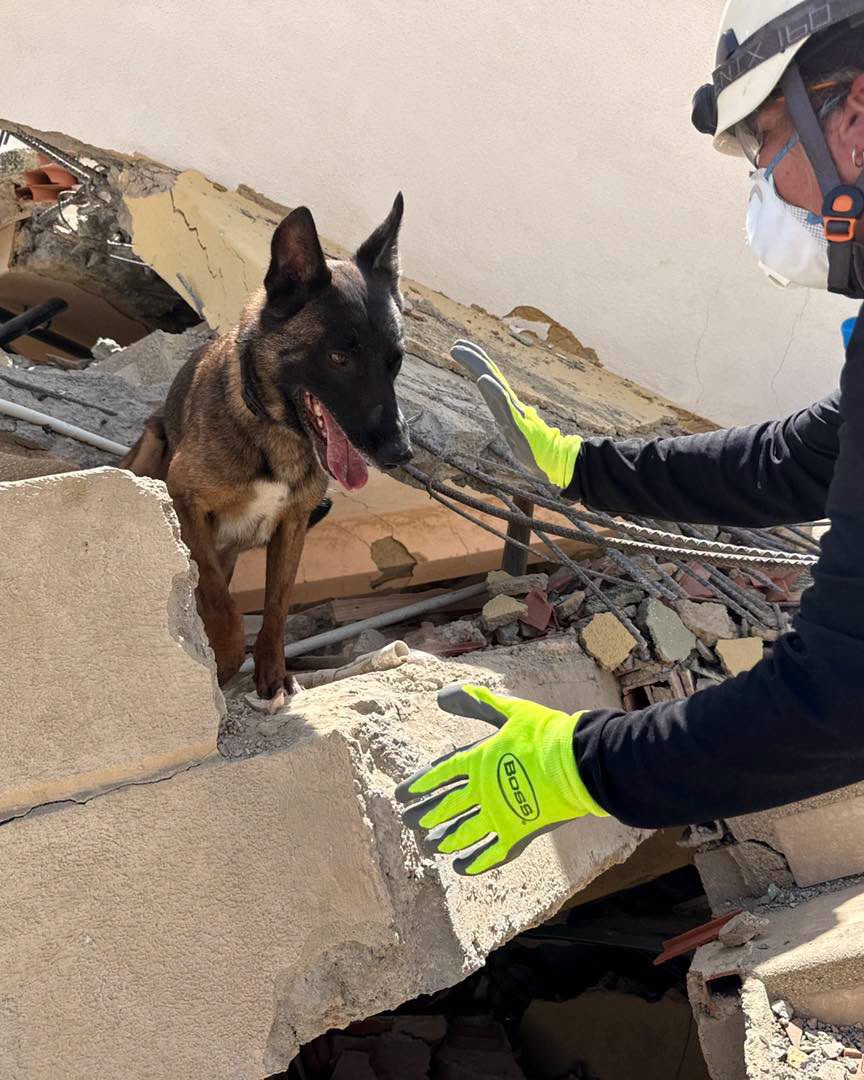
Deputy Jack Thorpe was deployed through the U.S. State Department following a 4.8-magnitude earthquake that caused widespread destruction. He said he had “pretty much almost no downtime,” adding, “There’s a little bit of sleep here and there, but not much.”

Thorpe shared photos from the mission, showing collapsed high-rise buildings, rubble piles and rescue crews searching for survivors. In one image, he is seen wearing a red helmet and walking across a beam several feet above the ground. He was paired with a K9 named Joey, who squeezed through slabs of concrete to search for trapped people.

A video from the scene shows crews digging after Joey detected a human. Thorpe said a man was pulled out alive one day later.

“It’s always tedious,” Thorpe said. “So, you, when you’re on these buildings and when you’re working these rubble piles, you’re climbing in a place where it’s unstable. It may be shored up properly. It may not. But we have a job to do.”

Thorpe said he helped rescue three people during the deployment. His canine partner also detected more than three dozen people killed in the earthquake.

“Even though the dent we made was very small compared to the entire incident or to the entire disaster,” Thorpe said, “we still went and made a difference. And we were able to bring three people back. And we were able to give closure to at least 38 families.”

Thorpe described extensive devastation and extremely difficult working conditions for both himself and Joey.

“There’s nothing I’ve seen like this, though. I’ve never seen anything like this one,” he said.

He recalled arriving at one site where a man was frantically digging through rubble in search of his wife and two daughters. K9s trained to detect humans did not find anything. Another set of dogs, trained to detect human remains, later confirmed the family had died.

“He knows that his family is gone and deceased, but we confirmed it for him,” Thorpe said. “And so I think that was really hard on him. He actually hugged me. That was pretty tough.”

After returning home, Thorpe spent time decompressing before resuming work with his cadaver dog, Fiji. The dog receives up to 100 requests a year to detect human remains.

In 2024, Fiji located a fisherman’s remains 16 feet underwater at Harris Lake. She has also worked Hurricane Helene in western North Carolina and floods in Texas.

Thorpe runs the North Carolina Troopers Association K9 Unit, a volunteer nonprofit that assists during natural disasters.

Please note: This story was provided to CNN Wire by an affiliate and does not contain original CNN reporting. This content carries a strict local market embargo. If you share the same market as the contributor of this article, you may not use it on any platform.

Nevada hospice industry under scrutiny as families navigate quality care gaps

By Abel Garcia

Click here for updates on this story

    LAS VEGAS (KTNV) — Nevada is under increased hospice oversight as state and federal officials investigate concerns about fraud and patient care standards.

The Silver State previously put a pause on new hospice licenses while regulators investigate. And with more than 300 licensed hospice providers in Clark County, advocates say patients have a lot of options when deciding the best fit for their loved one.

As I’ve continued to look into hospice care and concerns in Southern Nevada, one issue kept coming up: How do you navigate those decisions? To get a better idea, I spoke to a local family about their experience with hospice care:

Mikiya Davis found herself navigating hospice care for the first time when her mother, Deborah Johnson, suffered a stroke, and Davis moved her from California to Las Vegas to care for her herself.

Davis says she eventually realized how much the quality of care, staffing, and support can vary depending on the provider.

“I didn’t know my rights. It was my first time on hospice, and If you don’t know, you just don’t know,” she said.

Without naming the hospices involved, Davis tells me she saw major differences between the provider she started with and the one she transferred to after just a few weeks.

“They didn’t have many nurses. They didn’t have many CNAs,” Davis said. “My mom would miss baths; she would miss a lot of things. Her medication was late or things like that. It was my first time ever taking care of someone on hospice, so I didn’t have anything to compare it to until I was with a new company, and I could tell the difference.”

Davis says one of the biggest lessons was learning what services families should ask about from the beginning — including the right medical equipment and supplies for a person’s hospice situation and the in-home support they can provide.

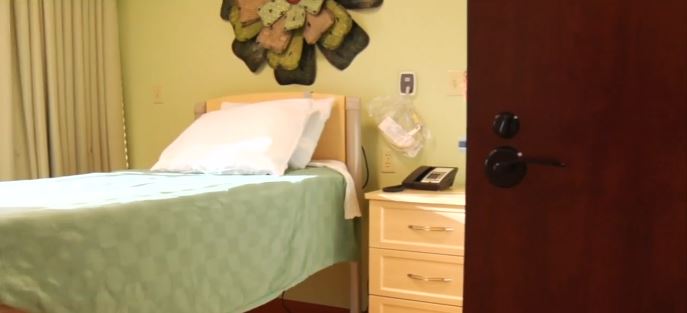
“The bedding — I didn’t have a bed. My mom was sleeping on the couch when I first got her,” Davis said. “They were able to give me a hospital bed, a chair for the shower. My mother was bigger than me, so I would have to lift her, feed her, change her, and it was hard on me.”

Davis says her experience raised questions about oversight and accountability.

“I would sign off for hours that were not complete,” she said. “I would do that, and I’m ashamed to say that because they weren’t, but I knew that they didn’t have the resources.”

While the company that Davis was first working with acknowledged that every hospice can make mistakes, they denied these allegations and said they do not ask patients or families to sign time sheets.

As part of our reporting, I reviewed Nevada’s ongoing hospice oversight concerns, including the state’s pause on new hospice licenses to identify potential fraud and ensure quality of care.

Because of that, hospice administrators, clinicians and healthcare advocates have been meeting monthly, pushing for stronger oversight and more transparency. They say stories like Davis’s show why families should research providers carefully and ask questions before making end-of-life decisions for loved ones.

“I didn’t know my mom had a right to have a medical bed and her insurance pay for it,” Davis said. “You just have to ask, but how do you know to ask questions that you don’t know?”

I reached out to the Nevada Health Authority for this report, and officials told me that anyone who suspects Medicaid fraud should report it to the Office of the Medicaid Inspector General.

Please note: This story was provided to CNN Wire by an affiliate and does not contain original CNN reporting. This content carries a strict local market embargo. If you share the same market as the contributor of this article, you may not use it on any platform.