Woman forced to live as double amputee after wrong leg was removed

By Matthew Dietz

Click here for updates on this story

    MEIGS COUNTY, Ohio (WLWT) — An Ohio woman has filed a lawsuit against a hospital after she went in to have her leg amputated and the wrong leg was removed.

Sharon Jacks, 74, went to Selby General Hospital in Marietta, Ohio, for an amputation of her right leg, and when she woke up, her left leg had been removed instead.

Jacks had the elective, below-the-knee procedure because of a chronic ulcer in her right leg, her attorney said.

Now, she is living life as a double amputee, battling significant challenges.

“You can imagine somebody that’s a double amputee now, there’s prosthetics, there’s transportation modifications, there’s housing modifications,” attorney Brad Layne said.

Jacks’ attorney said she is an Army veteran and praised her determination and toughness.

The hospital system issued a response to the lawsuit, saying the “adverse surgical event” took place last September. The hospital said a review of the incident confirmed that it was avoidable and that expected operating room procedures weren’t followed. The statement added that the people who were involved are no longer in their positions.

“Our clinical and leadership teams have implemented corrective measures across our organization to prevent a situation like this from recurring. This included mandatory retraining of all surgical employees to reinforce our patient safety policies and procedures, as well as developing additional requirements where needed,” the statement said in part.

Please note: This story was provided to CNN Wire by an affiliate and does not contain original CNN reporting. This content carries a strict local market embargo. If you share the same market as the contributor of this article, you may not use it on any platform.

Mother of journalist killed by ISIS shares concerns about U.S. troops leaving Iraq

By Maria Wilson, Nicole Poitras

Click here for updates on this story

    MANCHESTER, New Hampshire (WMUR) — As the last U.S. troops left Iraq Wednesday, the mother of a journalist and New Hampshire native killed by ISIS shared her concerns about the move with News 9.

The withdrawal ends a 12-year mission in the region and marks the second pull-out since the United States overthrew and captured Saddam Hussein in 2003.

Diane Foley’s son, James, was the first American killed by ISIS. She tells News 9 that she worries with the last troops leaving Iraq, it will only become more dangerous for those reporting or doing humanitarian work in the country.

James Foley was kidnapped in Syria in 2012 and killed by ISIS in 2014.

“I am just concerned that [the withdrawal] will allow insurgencies and various radical groups who want to take advantage of the looser, less security, to take over and to target innocent people working for the good of the people of Iraq,” Diane Foley said.

On Wednesday, President Trump praised the move, which follows a 2024 agreement reached by the Biden administration.

“This day is a victory for the United States,” Trump said. “It’s a victory for Iraq and a decisive victory over ISIS which has been completely decimated.”

In the wake of her son’s death, Foley created a foundation to advocate for American hostages.

Foley said Wednesday’s development in the Middle East will not change her organization’s work or their mission.

Please note: This story was provided to CNN Wire by an affiliate and does not contain original CNN reporting. This content carries a strict local market embargo. If you share the same market as the contributor of this article, you may not use it on any platform.

The 6th Branch turns vacant lots into urban farms to feed communities

By Jenyne Donaldson

Click here for updates on this story

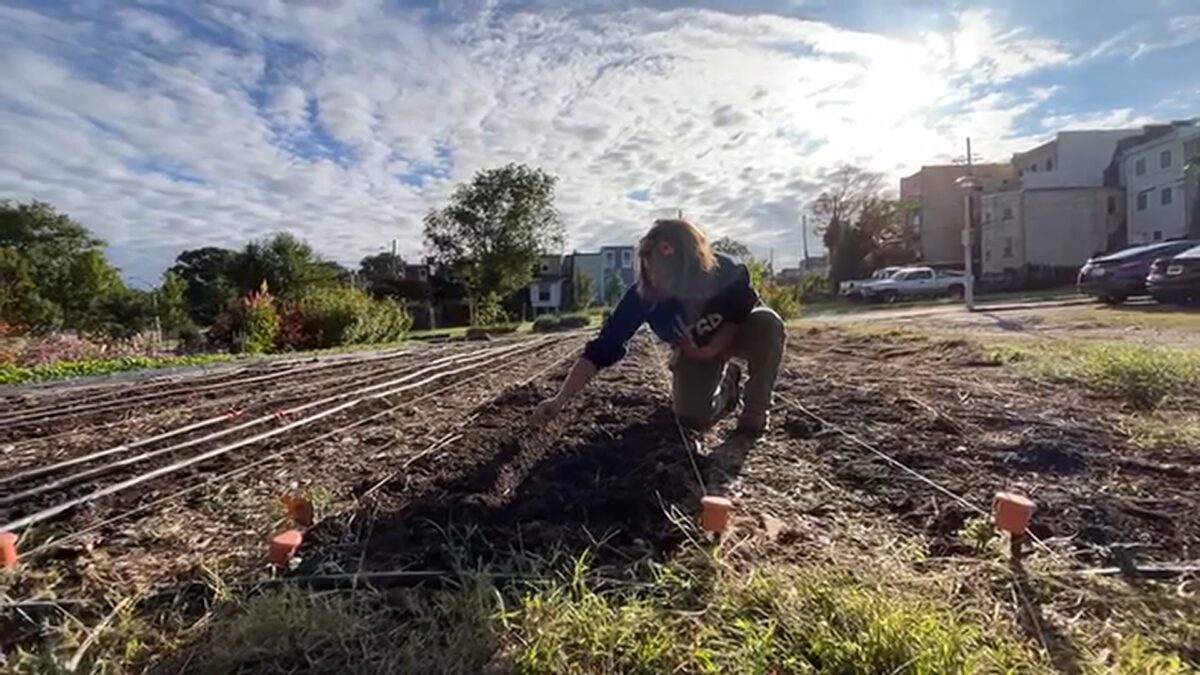
    BALTIMORE (WBAL) — A Baltimore nonprofit founded by military veterans is revitalizing vacant lots into green spaces and urban farms, transforming communities and addressing food access challenges.

The 6th Branch, established in 2010, has converted more than 23 acres of vacant lots into thriving green spaces and urban farms. Terrell Williams, a Marine Corps veteran and board member, emphasized the importance of creating hope in neglected areas.

“I think it’s really hard to give people hope when there’s trash all around you,” Williams told WBAL-TV 11 News.

The nonprofit works closely with communities to ensure its projects align with their needs. Curtis Ritz, executive director of The 6th Branch, explained their collaborative approach.

“We don’t go into a space unless we’re invited and asked to. And then, we’re sitting and listening for probably the first year or so to understand what the community wants and then we help make that vision a reality with the community,” Ritz told WBAL-TV 11 News.

In Johnston Square, where blocks of homes were once demolished, the area has been transformed into a vibrant space. Residents can now access fresh produce grown on-site.

“Every Thursday you can get a bag of collards and squash and green peppers and red peppers and hot peppers, which are my favorite, and they’re straight right from the ground,” Williams told WBAL-TV 11 News.

Grace Champion, community farming director, oversees three urban farms that distribute thousands of pounds of free produce annually.

“In addition to the kales and collards, we do Swiss chard. We also do a lot of root vegetables — tomatoes, eggplant — really kind of listening to the climate and doing what will want to perform here,” Champion told WBAL-TV 11 News.

Champion said the farms focus on harvesting produce weekly to share with the approximately 100 families they serve each week in this food desert.

“I think it’s really powerful to interact and be close to green spaces and be more connected to food. If you noticed, they’re not seeing a lot of fresh produce in these areas,” Champion told WBAL-TV 11 News.

The nonprofit also sells compost and honey and offers programs in food access, canopy development, and workforce development.

Williams highlighted the impact of their work on the community.

“If you go over to the Henrietta Lacks Educational Park, it’s an incredible space, and it gives me joy because every time I drive by — and I drive by daily — there are families in that park, and I’d never seen families in the park before,” Williams told WBAL-TV 11 News.

The 6th Branch continues to bring hope to Baltimore neighborhoods, one seed at a time.

Please note: This story was provided to CNN Wire by an affiliate and does not contain original CNN reporting. This content carries a strict local market embargo. If you share the same market as the contributor of this article, you may not use it on any platform.

Man poured gasoline in every room before house fire that killed 15 dogs, deputies say

By Pattrik Perez

Click here for updates on this story

    SEMINOLE COUNTY, Florida (WESH) — Two more dogs died overnight from injuries they suffered in a Geneva house fire that investigators say was intentionally set, bringing the total number of dogs killed to 15, according to Seminole County officials.

Terrance Banks, 40, is accused of setting his home on Snow Hill Road on fire Monday morning with multiple dogs inside, according to an arrest report from the Seminole County Sheriff’s Office.

Deputies say Banks admitted to starting the fire by “pouring gasoline on the floor in every room of the house. He then used a lighter to light a piece of paper (on) fire, which he then used to ignite the gasoline,” the arrest report states.

Investigators discovered six dead dogs in the hours after the fire Monday. On Tuesday, they found another seven deceased dogs inside the home. Banks told deputies there were 19 dogs inside the house.

“We were optimistic yesterday, if you will, that there wouldn’t be any more deceased animals. And unfortunately, his number was pretty accurate,” said Alan Harris, Seminole County’s emergency manager.

Seminole County Animal Services initially took in four dogs that survived the flames, but two of them died from their injuries overnight. The two surviving dogs are continuing to receive care at the shelter in Sanford, where video shows burns on their faces and bodies.

“We’ve dealt with injuries, and this is certainly a very, very bad (case) because of the amount of animals that we’re talking about, so it’s going to take some time of healing for our staff and for the two dogs in our custody,” Harris said.

Harris says one dog remains at large. Crews are actively trying to find and rescue the dog so it can receive care.

So far, Banks faces 11 counts of aggravated animal cruelty and one count of second-degree arson. He appeared in court Tuesday afternoon, where a judge ordered him to undergo a mental health evaluation at the jail and barred him from possessing animals.

He remains in the Seminole County jail, held without bond on the arson charge and with bond set at $5,000 for each animal cruelty count.

Banks’ attorney, Richard Hornsby, claims he was suffering a “serious mental health episode” and may have been hallucinating.

“For reasons I don’t understand, even though law enforcement was made explicitly aware of this information during their investigation, they inexplicably omitted any mention of it in the arrest report and if not brought to the court’s attention would have resulted in jail personnel and the court not taking appropriate mental health intervention. “As we work towards a resolution to the case, we will take steps to stabilize and get Mr. Banks the mental health treatment he needs.” The sheriff’s office says Facebook Live videos Banks recorded after the fire, but before his arrest, are part of its investigation. In one video, Banks says, among other things, “There need to be investigations within the church system. Definitely the Baptist church system using witchcraft and all that stuff.”

Banks’ arraignment is scheduled for Nov. 10.

Please note: This story was provided to CNN Wire by an affiliate and does not contain original CNN reporting. This content carries a strict local market embargo. If you share the same market as the contributor of this article, you may not use it on any platform.

Man accused of neglecting, starving dog, sheriff’s office says

By Brandon Hogan

Click here for updates on this story

    VOLUSIA COUNTY, Florida (WESH) — An Oak Hill man arrested Tuesday is accused of neglecting and starving his dog, according to the Volusia Sheriff’s Office.

Johnathan Meyers, 31, faces charges of aggravated animal cruelty, resisting officers without violence, and possession of drug paraphernalia, the sheriff’s office said on social media.

The dog, Tanner, was weak, sick, covered in sores and in desperate need of help when first reached by Volusia County animal control, the post states. Meyers relinquished ownership of Tanner, who thus underwent emergency medical treatment at a shelter, the sheriff’s office said.

“Sheriff’s detectives joined in the investigation, reviewing veterinary records and conducting interviews, establishing that Meyers subjected Tanner to a prolonged pattern of neglect,” the post states.

Tanner has gained more than 15 pounds since arriving at the shelter, the sheriff’s office said, adding he had either recovered or improved from multiple infections. Tanner weighed less than 34 pounds when he was admitted to the shelter, the post states.

“Tanner still has a long road to recovery, but he will not travel it alone. Animal Services will continue providing the support he needs as he regains his health and strength, and the opportunity for a much brighter future,” the sheriff’s office said. “Tanner is expected to make a full recovery and, when the time is right, will be available for adoption and the chance to find a loving home.”

Meyers was booked around 12:30 p.m. Tuesday on $3,500 bond, which he posted within several hours to be released, records show.

Please note: This story was provided to CNN Wire by an affiliate and does not contain original CNN reporting. This content carries a strict local market embargo. If you share the same market as the contributor of this article, you may not use it on any platform.
Paying more for a tee time? New California law takes aim at golf reservation brokers

By Denzen Cortez

Click here for updates on this story

    CALIFORNIA (KCRA) — A new California law will crack down on third-party brokers that reserve tee times at publicly owned golf courses and then resell them to golfers at higher prices.

Gov. Gavin Newsom signed Assembly Bill 1954, known as the Protecting Access to Reservations Act, on Sunday. The legislation was authored by Assemblymember Chris Ward, D-San Diego, and sponsored by the California Alliance for Golf.

Under the new law, a person or third-party golf reservation platform will need a written agreement with a course operator before listing, advertising, promoting, selling or transferring reservations at publicly owned golf courses.

The law takes effect Jan. 1.

The California Alliance for Golf says there are more than 220 municipally owned golf courses across California. Those courses are owned by cities, counties, charter cities and the state and often provide access to golf for residents, seniors, juniors, school athletes and community organizations.

The group says unauthorized brokers can use technology to quickly reserve sought-after tee times and then offer those reservations to golfers at higher prices.

“Municipal golf courses are integral to ensuring access to golf across the state for seniors, youth, and residents who might otherwise not have access to the game,” Craig Kessler, executive director of the California Alliance for Golf, said in a statement announcing the bill’s signing. “AB 1954 enables cities and counties to combat booking practices that make access to public golf courses extremely difficult and costly for residents.”

A federal case filed last year provides one example of how tee-time brokering has operated.

Federal prosecutors charged identical twin brothers Se Youn “Steve” Kim and Hee Youn “Ted” Kim in September 2025 with tax-related offenses after authorities said they failed to report more than $1.1 million in income.

According to the federal indictment, the brothers operated a tee-time brokering business between 2021 and 2023, reserving thousands of tee times for resale at golf courses nationwide, including at least 17 public courses in Southern California.

Federal authorities said the brothers targeted sought-after early morning tee times, sometimes securing them within seconds of their release to the public. They then resold reservations for an additional fee, according to the indictment.

Authorities said the brothers marketed and communicated with customers through social media platforms, including KakaoTalk, an instant messaging app. Customers were often directed to pay reservation fees through personal Venmo and Zelle accounts, according to federal prosecutors.

The brothers earned nearly $700,000 from the tee-time brokering business between 2021 and 2023, prosecutors allege.

The charges against the brothers involve alleged tax violations and are separate from AB 1954. An indictment contains allegations, and defendants are presumed innocent unless proven guilty.

Ward’s office said the new California law is intended to give publicly owned courses a way to address unauthorized brokering directly.

“Public golf courses belong to the public, and residents shouldn’t have to compete with brokers buying up tee times just to turn around and sell them at inflated prices,” Ward said in a statement.

The law does not prohibit all third-party booking services. Platforms that have written agreements with course operators can continue offering reservations. Kessler told KCRA 3 that established services such as GolfNow operate through agreements with participating courses and are not the type of unauthorized brokering targeted by the legislation.

Please note: This story was provided to CNN Wire by an affiliate and does not contain original CNN reporting. This content carries a strict local market embargo. If you share the same market as the contributor of this article, you may not use it on any platform.

Newsom signs bill requiring human trafficking training at California colleges

By Andres Valle

Click here for updates on this story

    SACRAMENTO, California (KCRA) — Gov. Gavin Newsom signed legislation Tuesday requiring California colleges and universities that receive state financial assistance to strengthen their policies, employee training, and reporting procedures involving human trafficking.

Assembly Bill 1845 is intended to give college employees tools to recognize possible trafficking, report suspected cases, and support students who may have been exploited.

The measure was among the bills signed by Newsom ahead of the deadline to act on legislation passed during the legislative session.

“Campus should be a place of safety,” Sacramento State student Andrew Story said. “You want to go there, explore what you’re good at, and it shouldn’t be a place where you feel unsafe.”

Story said students should be able to be themselves without worrying about what could happen to them or their friends.

The legislation was authored by Democratic Assemblymember Maggy Krell of Sacramento, a former prosecutor. She said exploitation and human trafficking can occur on college campuses and that students and employees need resources to recognize and address it.

“It’s really important that colleges understand what’s at stake,” Krell said. “Faculty and staff and students themselves have tools and resources.”

Under the new law, affected postsecondary institutions will be required to provide annual employee training addressing sex and labor trafficking, warning signs and procedures for responding to and reporting suspected cases.

“This is a step in the right direction,” Krell said. “This ensures, at least, that faculty and staff will know how to respond, but also gives the power to the students to know what to look for and to hopefully prevent these kinds of things from happening.”

The law will also require campuses to clarify which law enforcement agency is responsible for investigating human trafficking, sexual assault and other serious crimes. Campuses must document reported trafficking cases and forward reports to the appropriate law enforcement agency as soon as reasonably possible, according to the legislation.

Krell said consistent reporting is necessary to support survivors and hold perpetrators accountable.

“When they’re sexually abused or sex trafficked or sexually assaulted, it’s not always believed, it isn’t always taken seriously,” Krell said of women and girls. “They’re rarely given the support that they need to move forward and rebuild their lives.”

Story called sex trafficking “one of the worst crimes” and said victims lose their bodily autonomy.

The law takes effect Jan. 1, 2027. Colleges must implement the required training, policies and reporting procedures by July 1, 2027.

Please note: This story was provided to CNN Wire by an affiliate and does not contain original CNN reporting. This content carries a strict local market embargo. If you share the same market as the contributor of this article, you may not use it on any platform.
3 suspects wanted in connection with kidnapping and murder of Tracy father are identified

By Daniel Macht, Monique Davis

Click here for updates on this story

    SAN JOAQUIN COUNTY, California (KCRA) — The San Joaquin County Sheriff’s Office announced on Wednesday that three men have been identified as suspects and indicted in connection with the kidnapping and murder of a Tracy man.

On Feb. 17, Avtar Singh was kidnapped from a Sikh temple in Tracy around 2:30 p.m. His disappearance wasn’t discovered until 9 p.m., according to the sheriff’s office.

Surveillance footage showed he had been kidnapped by three people who traveled in a white crossover-style SUV. The suspect vehicle was identified by Flock license plate reader technology and eventually tracked to Vallejo and seized on Feb. 19, the sheriff’s office said.

Singh’s body was found on Feb. 20, three days after the kidnapping, more than 100 miles away near Lake Berryessa.

Singh had lived on the temple grounds at the Tracy Gurdwara with his wife and children, including a set of triplets who were born shortly before the kidnapping.

Investigators said they believed Singh was a victim of mistaken identity. The actual target was believed to be a person in Canada at the time.

Investigators then traveled to Canada from Feb. 25-27 and determined that person and his family had been receiving threats related to a stolen trailer of cargo, the sheriff’s office said.

The sheriff’s office says the intended target stole a trailer, and it was enough for the suspects to want to chase him down and kill him.

Officials say Flock cameras were able to track the license plate, leading investigators to a white crossover-style vehicle in Vallejo.

On Feb. 19, detectives served search warrants and took the vehicle into custody.

From late February through June, detectives reviewed data and surveillance video from where Singh was kidnapped and in Vallejo.

During Wednesday’s news conference, officials identified the suspects in Singh’s killing as three men from Vallejo who have ties to Mexico and remain at large.

They are Alberto Alencastro, 25; Alfonso Segura, 20; and Barnabe Segura, 22.

The three men were indicted on charges that include murder with special circumstances and kidnapping.

They should be considered armed and dangerous.

Anyone with information is urged to contact authorities.

San Joaquin County Sheriff Patrick Withrow remembers Singh as a pillar in his community.

“He was such a good person,” Withrow said. “He cooked for everybody at the temple, and he took care of anything that was broken.”

Withrow says he’s struggling with feeling sorry for the intended target, but their job is to protect him and his family.

“I just hope it’s used as an example to others who may be in this line of work of stealing cargo and being involved in that,” Withrow said. “Look what this brings. Don’t be selfish because you want a nice house and a nice car. Don’t think about yourself. Think about what this brings to the community because people are very serious when you steal their cargo no matter what it is, and it’s clear they will come looking for you and other people will pay for what you’ve done.”

Withrow goes on to make this promise to Singh’s wife and children.

“We gave her our word then, and we give her our word now that we will not let this go by without finding these individuals.”

The San Joaquin County District Attorney, Ron Freitas, said the three suspects face a life sentence without the possibility of parole.

KCRA 3 asked the district attorney if the man in Canada will face any charges of his own.

He said they will deal with that at a later date, and their main concern is finding the three suspects who killed Avtar.

The Sheriff’s Office says the Sikh community is offering a $50,000 reward to anyone who has information that could lead to the arrest of these suspects.

Please note: This story was provided to CNN Wire by an affiliate and does not contain original CNN reporting. This content carries a strict local market embargo. If you share the same market as the contributor of this article, you may not use it on any platform.
Almonds take top spot in San Joaquin County crop report as farmers face rising costs

By Charlie Lapastora

Click here for updates on this story

    SAN JOAQUIN COUNTY, California (KOVR) — Farming remains one of the cornerstones of California’s economy, particularly in the Central Valley and San Joaquin County.

The San Joaquin County Office of the Agricultural Commissioner released its 92nd annual crop report, which shows almonds have climbed to the top of the county’s agricultural industry by value. But for the farmers growing them, the milestone comes with mixed emotions.

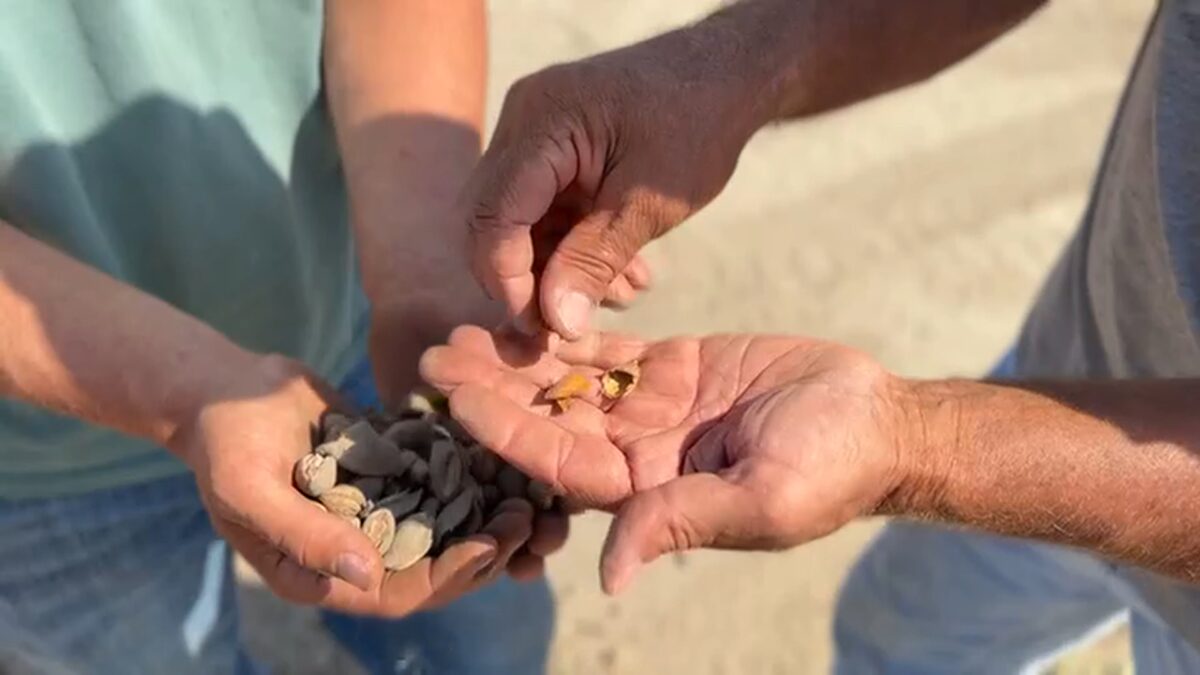
The report shows the value of the county’s almond crop reached $584 million in 2025. That’s up from more than $492 million in 2024, an increase of more than $90 million.

CBS News Sacramento got an inside look at almond harvest season with a Ripon father-and-son farming team, who say the numbers are encouraging but also reflect broader challenges facing farmers across the region.

Mike Weststeyn and his family farm about 700 acres of almond orchards in the Ripon area.

For Mike, farming almonds is more than a business. It’s a way of life he’s known since childhood.

He said California is one of the best places in the world to grow food and is particularly well suited for almonds, producing about 80% of the world’s supply.

His son, Erik Weststeyn, recently graduated from Cal Poly with a degree in agricultural systems management. Instead of leaving the Central Valley, he decided to return home to Ripon to work alongside his father.

“Just being able to work with your son is quite an honor,” Mike said. “Sometimes he runs me a little hard. I’m getting older. But I’m glad to do it to help him out, help him get started.”

For Erik, coming home means continuing a family tradition.

“Just the family legacy, I guess, and it’s what I love to do,” Erik said. “Even when I’m away at college, sometimes all I want to do is get back and go to work, come back on the weekends and help my dad.”

That legacy was especially apparent during this year’s harvest, when the two worked together to finish harvesting one of their 250-acre orchards in Oakdale.

Mike said his own path into farming began with his father, although he didn’t get much time to farm alongside him.

“I’ve been farming since I farmed with my dad,” Mike said. “That’s how I started. I went to Fresno State and came back to the ranch. My dad passed away when I was pretty young. I really didn’t get the chance to farm with my dad, per se. But I had a bunch of other good farmers in the area that took me under their wing.”

Now, Mike is doing the same for his son.

Although Erik never had the opportunity to know his grandfather, he said he continues to hear stories about him and occasionally gets reminders that some things run in the family.

One recent encounter happened at a doughnut shop in Ripon. Erik had stopped to pick up doughnuts for the crew working the almond harvest. His truck has the Weststeyn name displayed on the side.

“One of the guys sitting there — I said, ‘Hello’ and this and that. He goes, ‘You sound just like your grandpa,'” Erik said. “So I was like, ‘I don’t know, I might have some of his voice in me.’ “

For the Weststeyns, that connection between generations is part of what makes farming meaningful.

San Joaquin County Agricultural Commissioner Kamal Bagri said agriculture remains one of the county’s largest industries, with a total value of more than $7 billion.

She said almond prices and demand have recovered after the industry faced challenges during the COVID-19 pandemic, including difficulties exporting almonds.

“Almonds, it’s a real investment,” Bagri said. “It’s a 25-year crop. So if you put those trees in year after year after year, you have to stick with that because there are a lot of input costs that go into raising the trees.”

Bagri said the global demand for almonds has helped California growers, including those in San Joaquin County.

“It does make me feel good that my almonds are being sold and consumed by not just Californians or the United States, but across the world,” she said. “So I’m really proud of our growers — to continue to grow good crops here.”

While almonds moved into the No. 1 spot, other commodities struggled.

Grapes fell two spots to No. 5, with a crop value of about $272 million.

Mike said the decline reflects the difficulty grape growers are facing as production costs remain high and the wine industry deals with declining demand.

“There’s a lot of grape acreage going out of production,” Mike said. “They can grow grapes all over the world and other places. The problem is … you can’t get enough money for your grapes for what it costs to grow them here in California.”

Bagri said more than 8,000 acres of grapes came out of production in 2025. She said growers are losing contracts with wineries and, in some cases, are leaving grapes unharvested because they cannot sell them.

Some growers are considering replacing grapevines with other crops or waiting another year in hopes of better market conditions.

“Let’s hope for the best because the grape industry is really hurting currently because of the downward trend in sales of wine,” Bagri said.

Milk ranked second in San Joaquin County by crop value, while walnuts ranked third.

Bagri said she was surprised to see grapes fall so far after traditionally ranking among the county’s top commodities.

“All agriculture industry is very important to me as an ag commissioner,” Bagri said. “I’m here to support all my growers.”

For the Weststeyns, seeing almonds take the top spot is certainly good news — but Mike said it’s difficult to celebrate when other farmers are struggling.

“We had a little price increase last year, but I think it’s more of a bittersweet thing that we’re in the lead now,” Mike said. “The other commodities are just losing ground a little bit.”

Erik said he doesn’t view the rankings as a competition.

“It’s just kind of how the chips fall right now, and it could change in the future, too,” he said. “It could swap some other way.”

The bigger concern for both father and son is the rising cost of farming.

“The value of the crop has gone up, but our expenses have gone up too,” Mike said, pointing to the high cost of diesel and other inputs.

Despite the uncertainty, the Weststeyns are already thinking about the future.

Some of the almond trees at their Oakdale orchard had reached the end of their productive life cycle after roughly two decades and were removed.

The plan is to plant new trees — ones that could eventually become part of the next generation of the family farm.

For Erik, that long-term perspective is part of what makes the work special.

“Seeing that crop come all the way from the beginning of the year to getting it in the trailers like we’re doing today, that’s something a lot of people never get to experience,” Erik said. “I’m grateful I get to do it with my dad. I get to spend time with him, just produce some food for the nation. It’s something very special that I get to be part of.”

Please note: This story was provided to CNN Wire by an affiliate and does not contain original CNN reporting. This content carries a strict local market embargo. If you share the same market as the contributor of this article, you may not use it on any platform.

Pub owner arrested for alleged baseball bat assault over parking spot dispute

By J.R. Stone

Click here for updates on this story

    SAN FRANCISCO (KGO) — A San Francisco bar owner was arrested on suspicion of robbery and assault after an incident last Friday involving a wooden baseball bat in the city’s Haight-Ashbury District, according to witnesses and law enforcement.

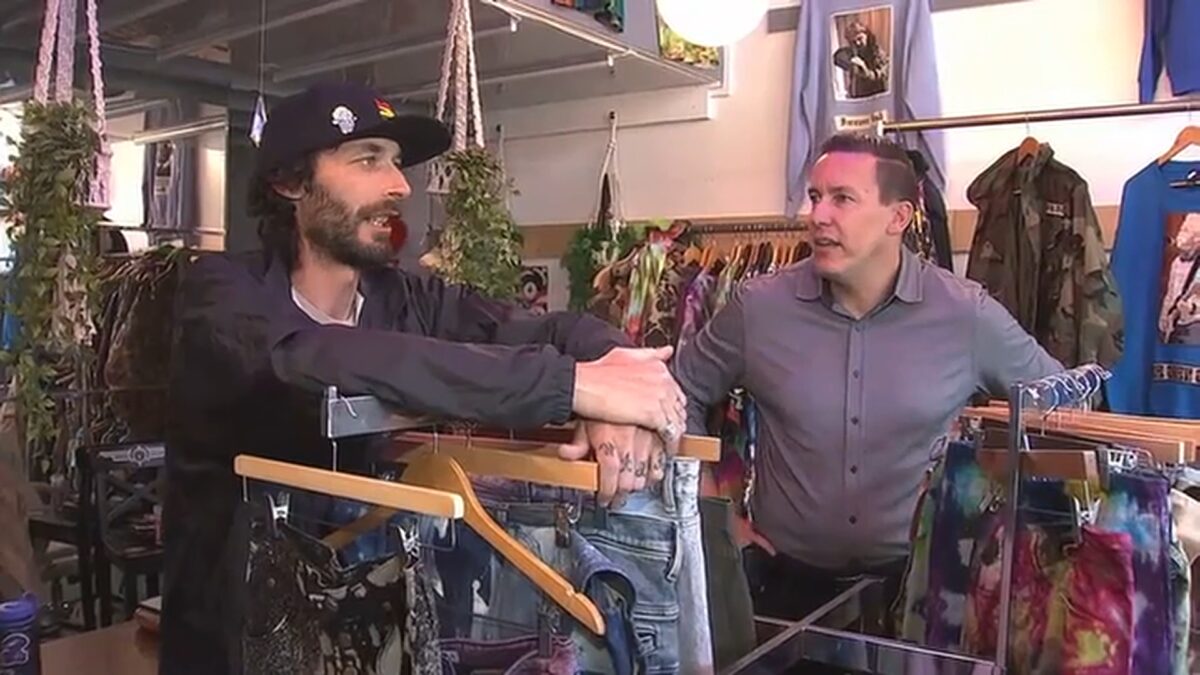
The incident stems from a dispute Friday over a public parking spot on Haight Street, according to Drew Wood, who goes by “Purple,” and his friend, Wolf. The two said they were involved in a confrontation with the man who owns Mad Dog in the Fog, Kezar Pub and Murio’s Trophy Room, after two vehicles collided.

“Back up more,” Wolf shouted after the collision, according to cellphone video.

Wood said the encounter escalated later that night. About nine hours after the parking dispute, surveillance video showed the bar owner entering a store called Further around 9:30 p.m. carrying a baseball bat.

“And he came and smacked the desk with the bat, like overhead ‘pow,’ right on the desk. And then Tony Soprano-style was like, “‘Don’t you ever disrespect me ever again,”‘ said Drew Wood.

Wood said employees and others inside the store were confused by the man’s actions.

“We were mostly confused, like what are you doing right now and so when that wasn’t working for him, he tried to take one of the jackets. As he was backing up to leave he was like, “I’m taking this too!” said Purple.

At one point, Wolf said he and others chased after the man in an attempt to recover merchandise.

“Felt like dealing with a child who is having a hissy fit and then when he ran out into the street when we chased after him to get our merchandise back- he just took it and threw it in the air and ran off,” said Wolf.

Wood also alleged he was struck during the encounter.

“After he popped me in the knee, he like threw the jacket back in our direction- I was like what is going on with this guy right now bro,” said Purple.

Employees at the businesses the man owns declined to comment.

The San Francisco District Attorney’s Office is reviewing the case and is expected to decide whether to file charges and whether any charges would be misdemeanors or felonies.

Please note: This story was provided to CNN Wire by an affiliate and does not contain original CNN reporting. This content carries a strict local market embargo. If you share the same market as the contributor of this article, you may not use it on any platform.