Better Business Bureau: How to protect yourself from solar sale scams


Jalen Fong

YUMA, Ariz. (KYMA) – You get a knock at the door. They’re selling solar and have a great plan to turn all of the sunshine into savings for you.

That could happen, But if they talk of federal credits for owners or free panels or wiping out electricity bills, beware!

Also, many solar companies have gone out of business, leaving customers with systems they sometimes cannot use.

BBB ScamTracker shows a man paid $52,000 for a solar system and battery.  He says the system goes off line without warning. The company closed and he’s stuck trying to repair it himself.

Most federal incentives to buy solar are gone. 

One buyer was promised his energy production would wipe out electric bills. That didn’t happen and he now also pays a $128 monthly lease payment saying, “My budget cannot sustain this.”

Experts say in most cases, solar will not wipe out electricity costs. 

Still, surveys show most solar owners are happy they made the choice. 

If you’re thinking about solar, protect yourself. Search complaints online and check bbb.org for accredited solar businesses. Get three written estimates never signing under pressure. Talk to someone with solar about costs and benefits.

Arizona still offers an up to $1,000 tax credit for new rooftop solar owners.

In California, some electricity providers offer rebates for solar installs, but these things change so check for any federal, state or local incentives before you sign.

In Arizona, the nonprofit SolarUnitedNeighbors.org offers free solar advice and will examine contracts before you sign. 

Before trusting any business, check out reviews, complaints and for trusted Accredited Businesses at BBB.org and visit BBB’s Scam Tracker.

Check out BBB scam warnings at joeknowsbetter.com.

More solar protections from the Better Business Bureau:

If you want solar panels, be very careful when evaluating installation offers. Con artists use misleading sales tactics and lies to trick homeowners out of money and personal information.

If you’ve received an offer for “free solar panels,” it could be a scam. Always look for businesses you can trust, like Accredited Businesses using the BBB Seal.

How the scam works

Someone contacts you through email, phone, social media, or even in person pretending to be a solar company salesperson.

The “representative” has a special offer: They can install solar panels on your home for a very low cost, or even free. This amazing deal is only available for a limited time, so you must act now!

From here, the scam can take several turns. In some versions, the scammer is after your personal information.

They ask you to fill out forms with your banking details “to see if you qualify.” Other times, the “solar representative” claims you need to pay upfront costs, which they promise will be reimbursed by a (non-existent) government program.

In other instances, the scammer may begin the installation of the solar panels on your home but then never return to finish the job.

Or, they may install the panels but do a poor job, resulting in panels that don’t work. If you reach out to the scammer to finish the job or fix the panels, they will become unreachable and disappear with your money.

BBB Scam Tracker has seen numerous reports of this kind of scam. One homeowner was approached by a door-to-door salesperson “claiming he could get me a new roof plus solar equipment, with a government rebate for 26% off cost, essentially paying for the new roof.”

After doing their research, the homeowner found that while a government rebate program existed, the salesperson misrepresented it to make a sale.

In another case, a homeowner shared, “[Company name redacted] is a solar company promising one free year and other incentives upon signing but they never followed through on anything in their contract. After the instillation of solar, they stopped answering their phones and went silent on customers. We financed a 70k solar project for our house and are still waiting on them to finish instillation a year later. They promised to provide a lifetime upkeep and maintenance on the panels but are not doing so. They took the money and ran.”

How to avoid solar panel scams

Do your research. Genuine incentive programs and reputable solar energy contractors do exist. Before you accept an unsolicited offer, do some research on solar companies in your area. Investigate each company’s reputation and business practices before signing a service contract. Ask for references from previous customers and talk with them about their experience. If you’re suspecting a scam, check BBB Scam Tracker to see if others are reporting the same experience.

Don’t give in to high-pressure sales tactics. Con artists want to provoke an emotional reaction that would cause you to give in to their requests without thinking it through. Take your time; know that a legitimate company won’t pressure you to act. If someone uses aggressive sales tactics on you, especially if the offer was initially unsolicited, it’s best to cut off communication immediately.

Get competing bids. Contact several solar installers if you plan on going solar and get bids from each company. If someone is pulling a con, they will be much easier to spot this way. Learn more about what to ensure is included in your home improvement contract.

Ask plenty of questions and consider the answers. Ask questions about any aspect of a contract or proposal you don’t understand. If the company gets upset about your questions, refuses to answer them, or is vague with their answers, consider it a red flag.

For more information

Sign up for our weekly Scam Alert emails. Find solar panel installers near you and solar energy contractors near you.

Read BBB’s guide to going solar.

Report solar installation scams to BBB Scam Tracker. Your report can help expose common scam tactics and reduce scammers’ effectiveness.

Need help with your home improvement project? Visit our Home Improvement HQ or our Roofing HQ

Click here to follow the original article.


T-Mobile hosting Friday Night 5G Lights Tailgates through out the Desert Southwest

Morgan Feller

CALEXICO, Calif. (KYMA) – T-Mobile announced they are bringing a Friday Night 5G Lights Tailgate event to Calexico this weekend.

In Yuma, Yuma High, Gila Ridge and Harvest prep took part in the action Tuesday afternoon, hoping to win money for their school.

According to T-Mobile, this is to give small-town high schools across the country “more opportunities than ever to celebrate their communities and compete for prizes that can make a meaningful difference.”

The schools who participate can win more than $8.4 million in prizes, including a $1 million football field transformation, T-Mobile said.

Those who attend will meet local football players, cheerleaders and band members, play games, participate in giveaways, and more.

The event is taking place Saturday, August 15, from 11 a.m. to 2 p.m., at the T-Mobile store, located at 2536 Rockwood Avenue, Suites 104 and 105.

To learn more about the competition and event, click here. To apply for your school to participate in the competition, click here.

Click here to follow the original article.

San Luis Police address residents concerns over Flock Cameras

Adrik Vargas

SAN LUIS, Ariz. (KYMA) – Residents in San Luis, Arizona are raising questions about the city’s use of Flock Cameras and how the information collected by the technology is used.

The San Luis Police Department (SLPD) has been using Flock Cameras since 2021, and they said the cameras have helped officers locate stolen vehicles and support investigations.

The city currently has at least ten Flock cameras operating at strategic locations around San Luis, according to SLPD.

The cameras use automated license plate readers to collect information about vehicles passing by.

Lt. Emmanuel Botello with SLPD said the information is stored in a protected database used by the department.

Police said the cameras have been particularly helpful in locating stolen vehicles before they cross into Mexico, as well as investigating crimes where a suspect leaves the scene.

Some residents said they support having the cameras in the city because they believe they provide an added layer of security.

Police added the cameras are intended to support public safety and investigations.

Click here to follow the original article.
Lithium Valley Program approved

Jessamyn Dodd

IMPERIAL COUNTY, Calif. (KYMA) – Lithium Valley is back in the spotlight Tuesday after the Imperial County Board of Supervisors voted on a program for workforce development and tax incentives.

The board passed the motion on the LiNC Program 3 to 2, with Supervisors Martha Cardenas Singh and Jesus Escobar voting no.

The initiative is tied to the county’s efforts to prepare local workers for jobs expected to come with lithium development.

“We’re really looking to improve our competitiveness, not only by developing an individual lithium extraction project, but by building a vertically integrated supply chain,” said Bari Bean, Assistant County Executive.

During public comments, some people requested the item to be tabled so that the proposal can be examined a little more.

“If the police table it and move it to another further further so people can bring in more hard facts as well. As the lady said, where do you get these numbers? We’d like to analyze that as well,” said Eric Reyes with the Brawley City Council.

Sheriff Fred Miramontes said the tax revenue from Lithium Valley will help fund public safety and provide more staffing and body cameras for law enforcement.

“This program creates an opportunity to strengthen public safety, no matter how small or big, it’s a step in the right direction,” Sheriff Miramontes explained.

Supporters and those opposed said the goal is to make sure Imperial Valley residents, not outside corporations, benefit from these opportunities.

Click here to follow the original article.
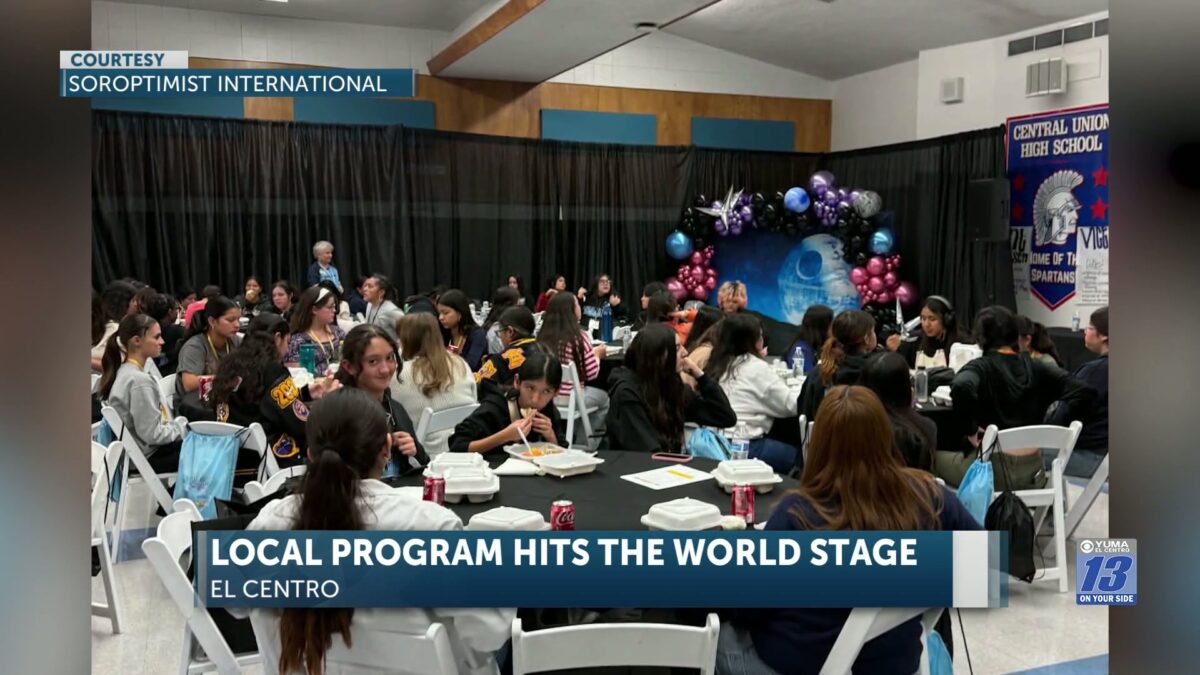
El Centro’s Star Wars-themed program hits the international stage

Lynette Niebla

EL CENTRO, Calif. (KYMA) – A program born in the low desert of the Imperial Valley is capturing international attention.

STEAM WARS & BEYOND, a unique career guidance project created by Soroptimist International of El Centro, has officially transitioned from a local conference into a globally recognized development program.

The program’s rapid ascent recently took local volunteer leaders from the Imperial Valley to the United Nations Headquarters in New York City, which directly led to an exclusive invitation to present on the world stage in Incheon, Republic of Korea.

For years, community projects in smaller, rural regions have struggled to compete with the resources of major metropolitan hubs.

“A lot of planning, but at the same time it was a wonderful feeling because our project is being seen,” said Ivonne Sotomayor Santos, Programs Chair and co-founder of the initiative. “We’re always living under the shadow of the bigger cities like LA and San Diego, but our project…we felt it was a wonderful thing. There was so much that we can expand on and it’s a good idea.”

The presentation took place during the 49th Soroptimist International of the Americas (SIA) Biennial Convention in South Korea. Local organizers shared their success with delegates representing 21 different countries and territories.

For Sotomayor Santos, visiting Incheon opened doors she never expected.

“To meet with the rest of the countries in our Federation…and to be there in South Korea, a place I never thought I would have the chance to visit, it was amazing” Sotomayor Santos said. “We got to cement partnerships.”

She added that the journey completely shifted the perspective of the local organization.

“It just brought this world of possibility to us because not only are we helping our girls, but we’re helping the women in the club grow, and that’s the beauty of it too,” Sotomayor Santos explained. “You can’t do these programs…without having the core element: You have to dream.”

Hosted locally at Central Union High School, the program targets girls ages 10 to 18. It leverages a creative “Star Wars” theme to make career exploration immersive and engaging.

Participants interact with volunteers dressed as iconic characters before entering workshops spanning science, technology, agriculture, business, finance, and public service.

“The women in those movies are strong and empowered,” explained Maria Carrillo-Martinez, President of Soroptimist International of El Centro. “That is the message we want to get across to our girls: you are also powerful and strong, and you can find your space in these careers.”

Carrillo-Martinez emphasized that the initiative goes far beyond standard classroom teaching. “We’re not just getting a room, throwing a science teacher in, getting kids together, and talking about career paths,” she said. “We are bringing real role models to the girls and saying, ‘Here is a female engineer. This can be you in a few years.'”

The initiative addresses a universal hurdle faced by young women entering competitive industries.

“Females are always struggling to get into those fields or feel like they belong,” Carrillo-Martinez added. “It’s not just girls in Imperial County. It’s girls everywhere saying, ‘I don’t know if I can do that…I’m just a girl.’ But it is possible. We are trying to bring the world to them.”

The program’s unique structure has earned a permanent spot in the Soroptimist International Foundation’s global project portfolio. It stands as the very first locally developed project from an American SIA club to achieve this formal foundation partnership.

This designation places El Centro’s initiative alongside specialized humanitarian sites in Haiti, Nepal, and Sierra Leone.

The international spotlight is also bringing unexpected attention back to the region’s economy.

“We are bringing so much visibility to the Imperial Valley,” Carrillo-Martinez noted. “People from all over the world are asking, ‘Where is El Centro?’ They see it’s in the low desert of California, close to the border, and they think, ‘Maybe I want to invest there.’ There are a lot of possibilities.”

To date, Soroptimist International of El Centro has secured more than $100,000 in multi-year grants, sponsorships, and funding commitments to sustain and grow the program over the next three years. 

True to the organization’s strict “pay your own way” tradition, all travel, lodging, and convention registration costs for the delegation to South Korea were personally funded by the volunteers themselves.

Every dollar secured through grants and donations is funneled directly back into training, workshops, and resources for local youth.

Planning is already underway for the next major STEAM WARS & BEYOND conference, scheduled for January 30, 2027.

To learn more about this project or to get involved, you can visit the Soroptimist International Foundation website here.

Click here to follow the original article.
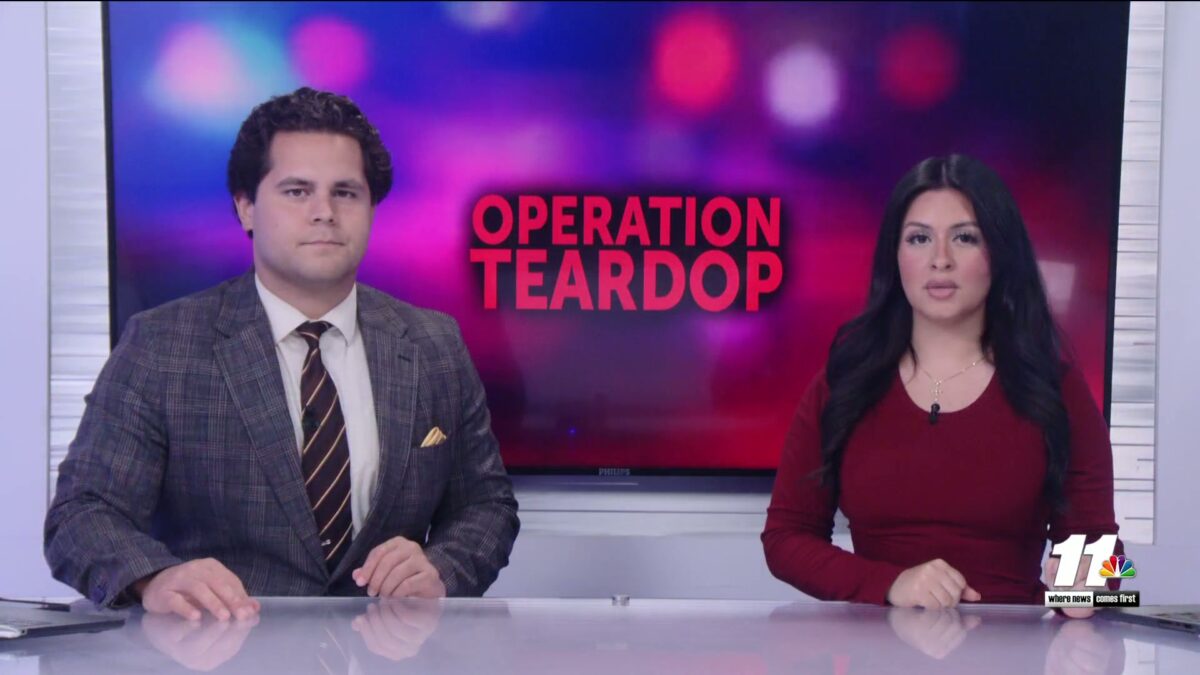
Four of five suspects arrested in Operation Teardrop identified

Lauren Duffel

YUMA, Ariz. (KYMA) – The four out of the five suspects arrested in a child sex trafficking sting operation in Yuma have been identified.

The suspects are 24-year-old Jacob David Vasquez, 60-year-old Jesse Cruz Flores, 39-year-old Ignacio Emmanuel Inzunza Jr and 27-year-old Eduardo Jesus Martinez.

They were all arrested and charged with luring a minor for sexual exploitation and sex trafficking, and they’re still in custody.

The Yuma Police Department (YPD) said the operation was a success, and said they plan to conduct more stings in the future.

“[Chief Thomas Garrity] wants to do more of these details because there are more of them out there,” said Sgt. Lori Franklin with YPD. “There were a lot of people in those text groups, so they’re out there. This was the first one we did, and it went pretty well, so hopefully the next one will be even better.”

One of the five men arrested does not have any charges filed against him at this time.

Click here to follow the original article.

Imperial County Office of Education to open new testing hub

Lynette Niebla

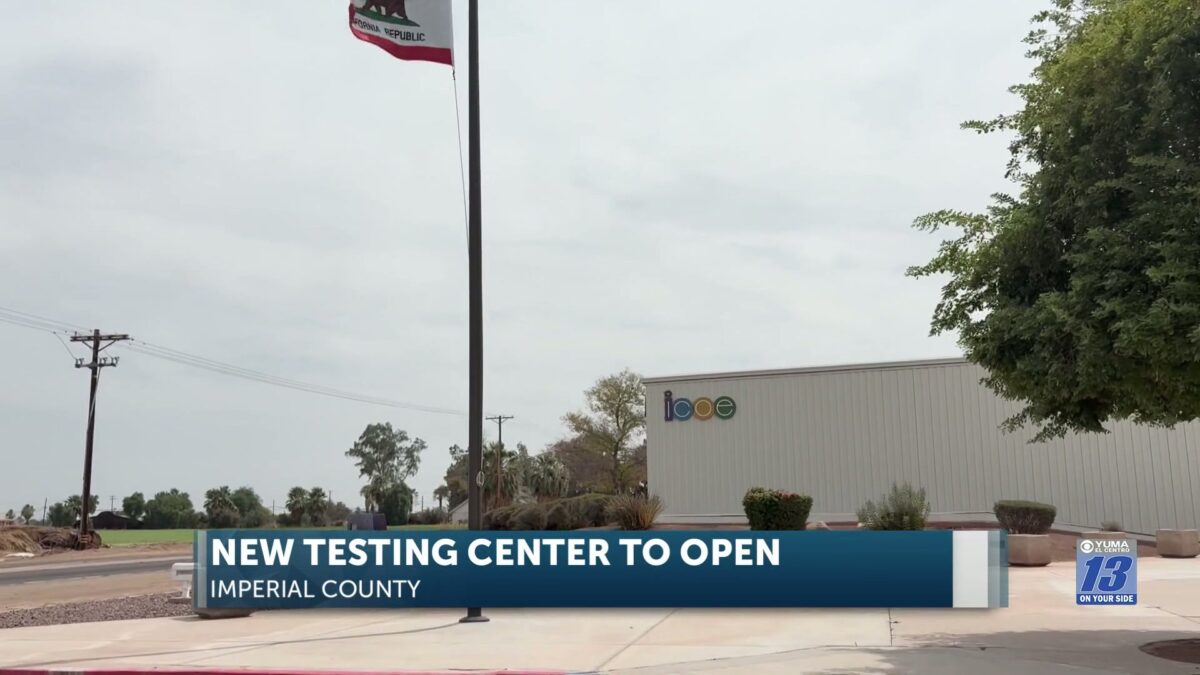
IMPERIAL COUNTY, Calif. (KYMA) – The Imperial County Office of Education (ICOE) is opening a new testing hub to keep college entrance exams local.

Administrators completed an application with the College Board to bring the SAT back to the valley.

Multiple local campuses have hosted the exam in the past, but the brand new site marks a first for the Office of Education. 

The new center will house 85 students per exam date, eliminating the hundred-mile commutes and travel costs families previously faced.

“A lot of students were often times traveling at least 140 miles round-trip just to take the exam,” said Kimberly Macias, K-12 Pathway Coordinator for ICOE. “So if we are to serve one student or 100 students through having an SAT test center here in the county for students, that is what we’re here to do to serve students.”

The test registration window is now open on the College Board site, offering seven dates across the school year starting August 22.

To register, click here.

Click here to follow the original article.

Yuma Veterans honored on National Purple Heart Day

Manoah Tuiasosopo

YUMA, Ariz. (KYMA) – Three Yuma Veterans were recognized Friday as part of a local celebration honoring recipients of the Purple Heart.

Johnny Cline, William Clay and Jim Zach, residents at the Arizona State Veterans Home in Yuma, were honored during a small, lighthearted event marking National Purple Heart Day.

The Purple Heart is awarded to service members who are wounded or killed while serving in combat.

National Purple Heart Day is a time to recognize the sacrifices made by service members who were injured in defense of the country, as well as those who made the ultimate sacrifice.

The Purple Heart dates back to 1782, when General George Washington established the Badge of Military Merit. It is considered the nation’s oldest military decoration.

The local celebration gave residents and staff an opportunity to recognize Cline, Clay and Zach for their service and sacrifice.

The Arizona State Veterans Home continues to provide care and support for veterans in the Yuma community.

Click here to follow the original article.

Moody Garden show how desert plants can thrive in Yuma

Manoah Tuiasosopo

YUMA, Ariz. (KYMA) – In the middle of the desert, one local garden is showing that resilience can grow even when water and irrigation resources are limited.

The University of Arizona’s Moody Garden continues to bloom despite recent water and irrigation challenges, serving as both a community garden and a living classroom for desert-adapted plants.

The garden showcases a variety of plants selected for their ability to withstand the region’s harsh desert conditions while requiring less water than traditional landscaping.

For researchers and visitors, the garden provides a hands-on look at how plants can be selected and maintained to better adapt to Yuma’s climate.

The Moody Garden also serves as an educational resource, giving students and community members an opportunity to learn more about desert landscaping, water conservation and sustainable growing practices.

As water continues to be an important issue across the region, gardens like Moody Garden demonstrate how thoughtful plant selection and research can help create landscapes that are both resilient and productive.

The University of Arizona continues to use the garden as a resource for education and research focused on growing in the desert.

Click here to follow the original article.

University of Arizona researchers test summer crop to improve desert farming

Manoah Tuiasosopo

YUMA, Ariz. (KYMA) – Researchers at the University of Arizona are testing a heat-loving summer crop that could help improve soil health and water efficiency for future desert farming.

The crop, called Sesbania, is also known as summer hemp. Researchers at the University of Arizona Yuma Agricultural Center are studying whether the plant can improve growing conditions for crops commonly grown in the region.

Unlike traditional crops, the Sesbania being grown in the research plots will not be harvested for sale.

Instead, researchers will cut the plants down and till them back into the soil.

The goal is to add organic matter, carbon and nitrogen to the soil as the plant material decomposes.

“The intent of the planting is to improve the soil health, adding organic matter, carbon, and nitrogen,” a researcher said.

Researchers say Sesbania has an additional advantage because it can naturally add nitrogen back into the soil.

The study is comparing Sesbania with more traditional summer crops, including Sudan grass, to determine how each affects soil health and water use.

Once the summer portion of the study is complete, researchers plan to plant iceberg lettuce in the test fields.

That will allow the team to measure whether improving the soil during the summer can benefit the following winter crop.

Researchers hope the results will provide farmers with more information about ways to maintain healthier soil and potentially use water more efficiently in the desert.

The research is part of ongoing efforts at the UArizona Yuma Agricultural Center to find practical ways to improve agricultural production in the region.

Copyright 2026 KYMA. All rights reserved.

Click here to follow the original article.