Trevor Noah to perform new material at Hayden Homes Amphitheater in 2026

KTVZ

BEND, Ore. (KTVZ) — Trevor Noah has announced a special performance in Bend, Ore., scheduled for July 22, 2026, at Hayden Homes Amphitheater. Tickets go on sale Jan. 30, 2026, at 10 a.m. PT through ticketmaster.com.

This performance follows Noah’s successful run as the host of “The Daily Show” on Comedy Central for seven years and his six consecutive years as the host of the Grammy Awards. Noah, an influential figure in comedy, is known for his engaging content and has garnered a global audience.

Noah currently hosts a weekly podcast titled “What Now? With Noah,” where he engages in candid discussions with celebrities and athletes about contemporary topics. His podcast reflects his personal style, allowing listeners deeper insights beyond traditional interviews.

As the author of the #1 New York Times bestseller “Born a Crime,” Noah has sold more than 3 million copies across formats. The book narrates his experiences growing up in South Africa and the Audible edition remains one of the highest-rated performances on the platform.

Noah’s most recent book, “Into the Uncut Grass,” released in October 2024, is also a bestseller, offering a modern fable on themes of forgiveness and acceptance.

His production company, Day Zero Productions, is dedicated to producing diverse and impactful content. The company has initiated several entertainment projects, including film adaptations and documentary series, focusing on authentic storytelling. In addition to his extensive achievements in comedy and writing, Noah launched the Noah Foundation in 2018 to enhance education access for underserved youth in South Africa, showcasing his commitment to social equity.

Following the announcement of his performance, fans can look forward to a unique show featuring all-new material, culminating in a highlight of Noah’s tour. Details regarding his upcoming engagements will be shared as they become available.

Click here to follow the original article.

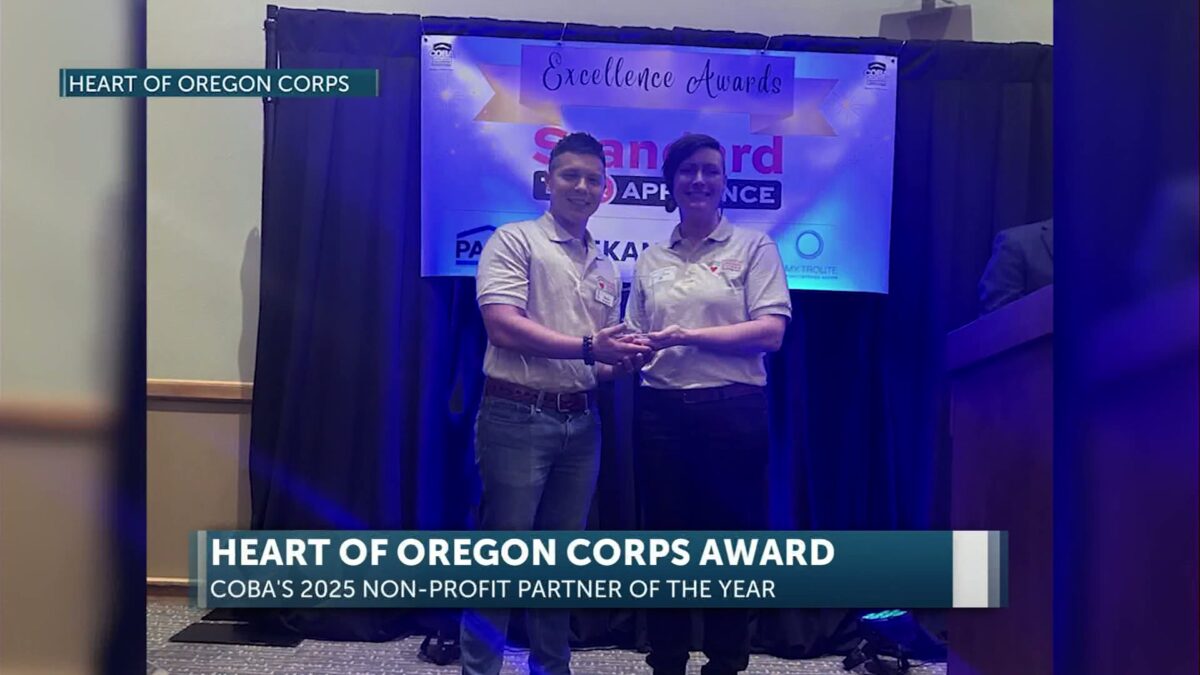
Heart of Oregon Corps named 2025 Non-Profit Partner of the Year by Central Oregon Builders Association

KTVZ

(Update: Video Added)

REDMOND, Ore. (KTVZ) — Heart of Oregon Corps has announced it was named 2025 Non-Profit Partner of the Year at the Central Oregon Builders Association’s annual Excellence Awards ceremony held Thursday, Jan. 15. 

The award was generously sponsored by Miller Lumber.  

Here’s the rest of HOC’s announcement, in full:

The recognition comes on the heels of a successful year of community fundraising for Heart of Oregon Corps, which has now raised $6.16 million, or 84% of the total funding needed for Central Oregon’s first youth workforce development campus. The organization has $1.14 million left to raise by grand opening on Sept. 30, 2026.  

The $7.3 million, 3.4-acre campus in Redmond will serve as a regional hub for hands-on youth job training in construction, conservation, childcare, and other high-demand trades—helping address workforce shortages driven by the “silver tsunami” of retiring baby boomers while strengthening the long-term economic vitality of Central Oregon communities. 

“Central Oregon Builders Association sees Heart of Oregon Corps as a vital, long-term solution to the challenges we face—from workforce shortages to housing affordability,” said Ron Wanless, the chair of COBA’s Workforce Advisory Board. 

“By investing in young people who want to learn the trades, we are investing in the future builders, craftspeople, and professionals who will sustain Central Oregon. We’re proud to partner with Heart of Oregon Corps and invite the business community to step up alongside us in the months ahead.” 

Now, Heart of Oregon and COBA will collaborate to offer a jam-packed slate of highly visible events and opportunities for campus campaign corporate donors to be recognized for their generous gifts, including at the following: 

April 1 “Make Your Mark” Campus Breakfast featuring local celebrity pancake flippers and the chance for businesses to visit the campus construction site and confirm their support for youth workforce development   

May 1-3 COBA Home and Garden Show Cornhole for Community including a family-fun play on cornhole boards featuring business sponsor logos at a high-visibility tent at the entrance to the Expo Center at the Fairgrounds and inclusion in printed event guide  

June COBA Annual Golf Tournament featuring high-visibility recognition of corporate donors  

Sept. 19 Endless Summer Nights annual family fun community event featuring cornhole boards with corporate logos and high-visibility community marketing of event 

Sept. 30 Campus Grand Opening with extensive media coverage, banners for major donors, and recognition of all corporate contributors 

Forever Donor Wall at the new campus 

COBA 2027 Directory inclusion in full page Thank You ad 

Corporate partners are encouraged to make their commitments online by March 1, 2026 to maximize impact and recognition. Early gifts will help keep construction debt at bay and will signal a strong, visible commitment to Central Oregon’s workforce, youth and economic future. 

“We are so grateful to all our existing campus donors, and to all the new partners who will join us on this journey in 2026,” said Laura Handy, Executive Director of Heart of Oregon Corps. “We cannot thank COBA enough for stepping forward as a partner to help us cross the finish line and open the doors on time and on budget in September 2026!”  

Heart of Oregon is proud to recognize major campus donors, including Aperion Management Group, Bend Foundation, Clark Family Foundation, Collins Foundation, Crevier Family Foundation, Deschutes County ARPA, First Interstate Bank Foundation, Ford Family Foundation, Hayden Homes, Marie Lamfrom Foundation, Maybelle Clark Macdonald Fund, Mike’s Fence Center, MJ Murdock Charitable Trust, PGE Foundation, R&H Construction, Roundhouse Foundation, Rosendin Foundation, State of Oregon, The Joseph & Elizabeth Hoffart Charitable Foundation, The Max & Marie Anna Richter Family Fund of OCF, and The Tykeson Family Foundation. 

Businesses can learn more and make a corporate contribution at www.hoccampus.org/donor-benefits

Click here to follow the original article.

Rep. Janelle Bynum pitches patchwork ‘K-30’ plan to tackle generational affordability issues

Oregon Capital Chronicle

By Alex Baumhardt, Oregon Capital Chronicle

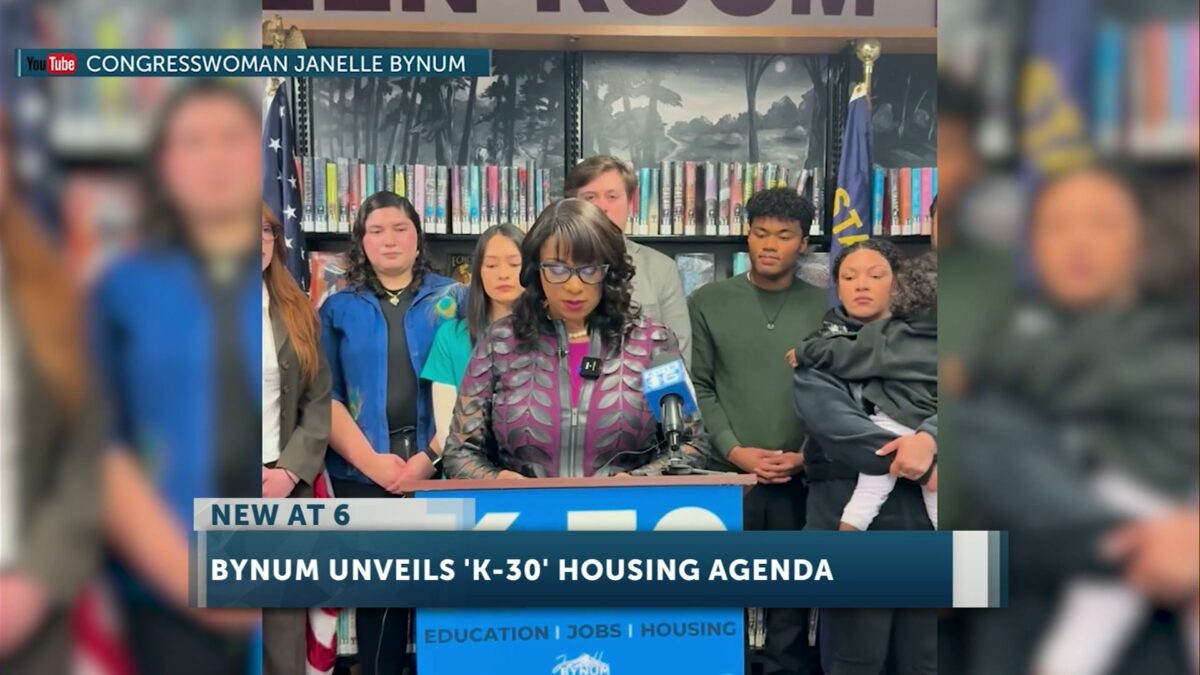
WEST LINN, Ore.— At a library in suburban West Linn, nursing students, millennial parents and recent high school graduates told their congresswoman they are struggling to reach a slate of traditional educational, professional and personal milestones due to a multi-generational affordability crisis in higher education, housing, health and child care.

“That is not the failure of workers. It’s the failure of our economy to reward work with stability,” said Shelly Santa Cruz of Aloha, a mother of two who works for the nonprofit Neighborhood Health Center.

“The cost of raising children has skyrocketed. Child care alone can rival the cost of second rent payments. Groceries, health care, basic necessities cost more and more every year, while wages struggle to keep up. For many parents, having a child isn’t a joyful milestone anymore. It’s literally a financial gamble.”

U.S. Rep. Janelle Bynum, a Democrat representing the group of teens and young adults who live in Oregon’s 5th Congressional District, told her constituents she understood their experiences well. She convened them Monday to launch her new “K-30” agenda meant to “address young Oregonians’ most pressing issues: education, jobs and housing.”

Bynum said she hears about these issues directly from her four kids, who are teens and in their early 20s.

“Millions of young Americans have done exactly what has been asked of them, but our country isn’t returning the favor, and you don’t have to take my word for it. You can look at the fact that fewer children ever out-earn their parents, or that the average age of a first-time home buyer is at an all time high,” she said.

Her K-30 agenda includes six housing bills, five education bills, and five jobs-focused bills. At least seven of the 16 bills in the package have bipartisan support, and some have already passed out of the House or advanced from House committees.

Many rely on agencies and programs, such as the U.S. Department of Education and the federal Jobs Corps program, that President Donald Trump and his administration are actively trying to dismantle and eliminate.

Much of the proposed legislation would ultimately make it cheaper and easier for developers and manufacturers to produce housing material and build homes, mostly through grants and federal tax incentives. Others offer piecemeal student debt relief and child care assistance for people in specific industries, or who are willing to go into high-demand fields needed in rural areas, to incentivize workforce growth.

Jobs

When it comes to Bynum’s jobs-related proposals, the most ambitious is the creation of a Rural Service and Workforce Corps, similar to the AmeriCorps program, that would provide student loan relief, relocation and retention incentives and stipends in exchange for a three-year commitment from workers in high demand fields in rural communities. Those include people working in health care and skilled trades, as well as people building energy infrastructure and working with utilities and public works agencies.

Another would provide federal tax incentives to the mass timber industry for investing in more manufacturing plants that produce the glued, multilayered wood building material, growing the workforce and for developers using the engineered wood products in their buildings.

The CHIPS Child Care Act would subsidize child care costs for people training to build semiconductor facilities. Bynum helped to pass a similar bill in the Oregon Legislature in 2024, and hopes to expand it nationally.

Housing 

The housing portion of Bynum’s package consists mostly of legislation meant to make it cheaper and easier for developers to build houses, and to boost the number of people in the workforce needed to build them. Many of the housing proposals are endorsed by large industry groups, such as the National Association of REALTORS, The Appraisal Institute and the International Mass Timber Conference.

One proposal would establish a $1.5 billion grant program for developers to cover half the cost of state and local taxes and fees they pay in order to build housing developments, as long as their state and local governments also agree to match the federal grant.

Another bipartisan proposal would fund the U.S. Department of Housing and Urban Development, or HUD, to produce pre-approved, standardized building plans and designs that could be used nationwide to speed up permitting and home-building.

Two proposals aim to grow the construction workforce and the number of home appraisers.

Bynum’s Homebuilder Corps Act would invest $200 million in residential construction training programs within Job Corps, a 65-year-old program offering education and apprenticeship opportunities to low-income 16- to 24-year-olds. The bipartisan Appraisal Industry Improvement Act would address a nationwide shortage of licensed home appraisers, according to Bynum, by sending money to states’ to expand access to building appraiser certification and licensing education and to lower annual registration fees for licensed appraisers.

The First-Time Home Buyers Match Act would establish a pilot program at HUD matching the home savings of 20,000 low- and middle-income individuals hoping to purchase their first house.

Education

Bynum threw a hodge-podge of education proposals into the package that would fund school bus cameras, allow students to use college savings accounts to pay for their applications to universities and trade schools and expand and reinforce existing federal programs and investments, including federal support for students with disabilities and for at-school mental health care.

The biggest of the education proposals is the IDEA Full Funding Act which would, for the first time, require Congress fully fund the Individuals with Disabilities Education Act program for 10 years at Congressionally directed levels. The proposal has bipartisan support and has been endorsed by 50 education and labor groups.

To tackle rural teacher shortages, Bynum is also proposing a program to offer signing and retention bonuses to teachers who agree to work in rural districts.

Click here to follow the original article.

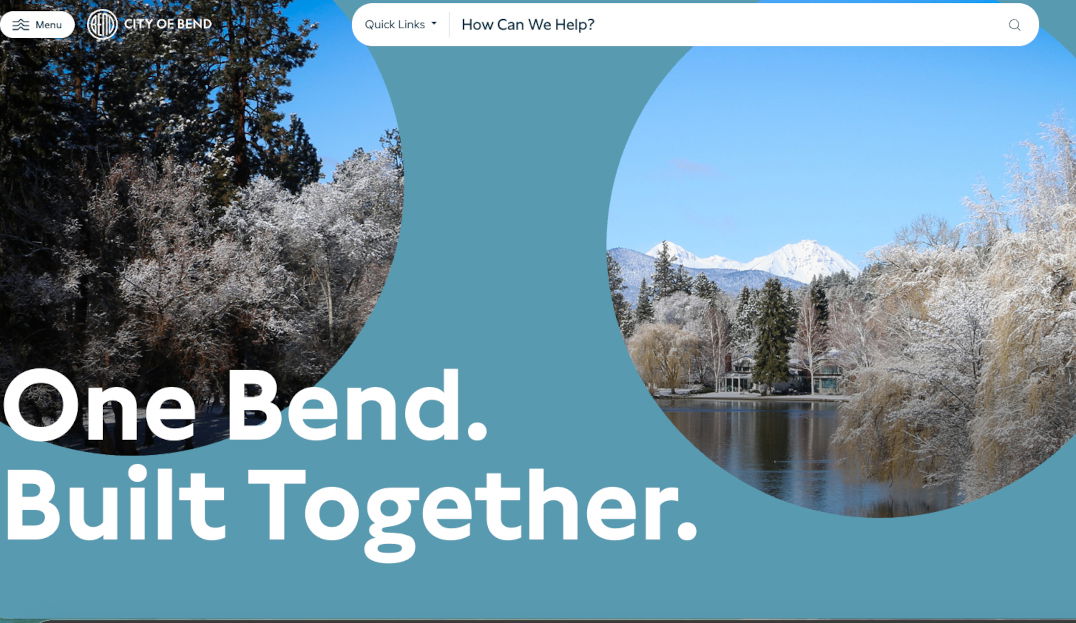
City of Bend updates website, aiming to make it more user-friendly, easier for users to find info

KTVZ

BEND, Ore. (KTVZ) — The City of Bend has announced the launch of its updated website.

“This newly designed website is a City Council priority to create a resource for our community that puts people first and makes accessing City resources easier,” the city said in a news release, which continues below:

The new website utilizes a human-centered design which aims to create intuitive navigation, accessible content and purposefully direct the user’s attention to the most impactful and used webpages. The website redesign includes a more robust search bar, photography, and bold type.  These updates follow accessibility standards to ensure users are able to access information.

“We’re excited to launch a new City of Bend website built with our community in mind,” said Communications and Engagement Officer René Mitchell. “This update will make it easier for everyone to find information, access resources and stay connected with the City. It’s really about creating a better experience for our entire community.”

The City of Bend website is the main source of information for our community. In 2024, there were more than 1.5 million views on the website. The new website’s goal is to create a more transactional website with streamlined services for payments, service requests, forms and more.

View the new website at bendoregon.gov.

Click here to follow the original article.

Rising need: Central Oregonians turned to NeighborImpact for help over 1 million times in a year

KTVZ

REDMOND, Ore. (KTVZ) — Central Oregonians in need of help turned to NeighborImpact for assistance more than 1 million times in a year. That’s more than double the number seen just five years ago, according to new data from the agency that analyzes their annual impact.  

The organization said Monday it recorded 1,011,391 individual services provided to Central Oregonians assisted during the 2024-25 program year—more than double the 460,802 services provided five years ago.

Individual services are counted each time a person receives a service from NeighborImpact, and individuals who access more than one program are counted for each service received, the organization said in a news release that continues in full below. 

The total reflects the volume of assistance delivered across NeighborImpact’s programs over the course of the year, indicating the scale of support required as households across the region are met with increasing financial pressures.  

“Families in Central Oregon continue to face a variety of obstacles in navigating rising prices and affording the ever-higher cost of living,” said NeighborImpact Executive Director Scott Cooper. “Increased numbers served represent more demand and a continued expansion in NeighborImpact services. In particular, the number reflects significantly increased demand for food.” 

In addition to food access, services during the program year included housing stability support, utility assistance, high-quality preschool, early learning workforce development, child care slot creation, and financial services. 

Behind the total are thousands of individual moments where assistance helped households stay afloat. During the program year: 

959 households retained housing by avoiding foreclosure or eviction 

263 households obtained safe and affordable housing 

3,626 households maintained or restored utility connection during periods of high energy and water costs 

2,619 child care providers received training, grants and business supports  

711 households received high-quality pre-kindergarten education and health services in Head Start or Early Head Start programs 

95 homes were weatherized, leading to lowered energy costs and improved health outcomes 

18 households made essential home repairs or purchased their first home using a low-interest loan 

232 disabled individuals had their bills paid and finances managed by NeighborImpact’s representative payee 

1,944 individuals learned how to manage their finances and build assets 

80,000 individuals accessed food assistance monthly. More than 6.3 million pounds of food were provided through NeighborImpact’s direct distributions  and distribution sites operated by its 57 partner agencies.  

Increased services also means increased economic benefit to the region. Most funding distributed by NeighborImpact comes through federal and state grants, which are redirected from Salem and Washington, D.C., to the Central Oregon region. 

During the 2024–25 program year, NeighborImpact distributed $21.9 million in direct assistance. An additional $30.2 million was leveraged through programs and partnerships. These resources flowed dollars directly back into communities, supporting local businesses, landlords, utilities and other job- and income-generating activities.   

“These are real dollars moving through the local economy and reaching households when it matters,” Cooper said. “The entire region is better off when its people are adequately fed and housed, and when there is help with utility and child care bills. This number shows what it takes, at scale, to keep households from falling through the cracks.” 

NeighborImpact’s annual service report provides a comprehensive snapshot of how service demand, resource distribution, and household needs intersect over the course of the year. Together, the figures illustrate not just the volume of work performed, but the role NeighborImpact plays in supporting people and strengthening communities during periods of economic strain. 

The report also showed an increase in volunteering—an important source of labor that helps sustain the organization’s work.  NeighborImpact used 1,225 volunteers who contributed 15,102 hours of time in 24-25. The total number of volunteers utilized was up 78 percent over 5 years ago.  

“The economy is complex for everyone. Working families can’t keep up with the cost of living, even with two incomes,” Cooper said. “Food prices were up 16 percent at the end of 2025 over where they landed in 2024. Electricity costs 55 percent more than it did in 2020. Child care costs have risen by a third since 2023.

“NeighborImpact’s services have never been more critical, and our numbers reflect our community’s dependence on us. It’s a privilege to be able to help, and we’re grateful to the community for its support through local, state and federal officials who advocate for us, donors who supplement our funding and volunteers who are the hands that make the work happen.“  

About NeighborImpact: NeighborImpact is a private non-profit governed by a board of directors drawn from across the community. Since 1985, NeighborImpact has led the region in developing solutions and bringing resources to Crook, Deschutes and Jefferson counties and the Confederated Tribes of Warm Springs. We help meet the basic needs of Central Oregonians, build economic security and create a community where everyone thrives. NeighborImpact receives federal, state and local grants, foundation grants and donations from individuals and businesses in our community. To learn more about NeighborImpact, please visit www.neighborimpact.org.  

Click here to follow the original article.

Central Oregon jobless rates hold steady as 2025 ends; region added 1,560 jobs over the past year

KTVZ

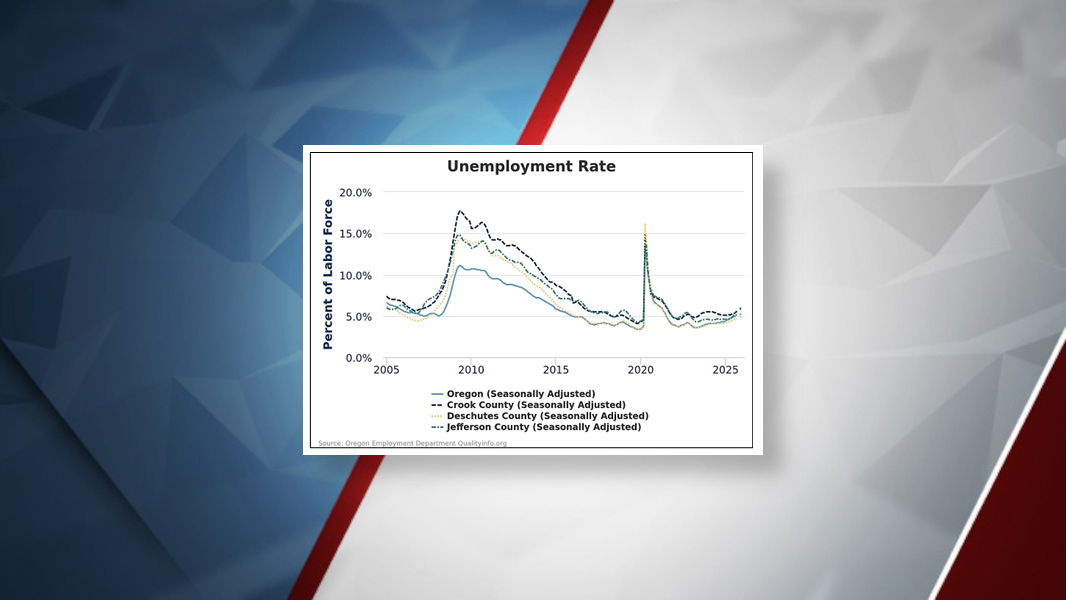
SALEM, Ore. (KTVZ) — Central Oregon’s seasonally adjusted unemployment rates saw very little movement from November to December, holding steady inDeschutes and Crook counties and falling slightly in Jefferson County, the state Employment Department reported Tuesday.  

Here’s the agency’s complete regional report:

Bend MSA (Crook, Deschutes and Jefferson counties): The Bend MSA’s seasonally adjusted unemployment rate remained unchanged over the month, at 5.0%. Last year in December, the unemployment rate was 4.3%, or 0.7 percentage point lower.  

The Bend MSA lost 180 jobs in December, a -0.2% decrease ,with the largest losses concentrated in leisure and hospitality (-190 jobs). Accommodation and food services lost 130 jobs, and professional and business services dropped 170. Smaller losses also occurred in other services (-30 jobs), government (-30 jobs), and private education and health services (-20 jobs). Losses in the public sector occurred in local government (-70 jobs) and state government (-10 jobs). 

Public-sector gains were registered in federal government (+50 jobs). Private-sector gains were concentrated in trade, transportation, and utilities (+180 jobs) with retail trade gaining the most jobs (+130 jobs). Smaller private-sector gains occurred in the information industry (+40 jobs); manufacturing (+20 jobs); financial activities (+10 jobs); and mining, logging, and construction (+10 jobs).  

Total nonfarm employment increased by 1.4% (+1,560 jobs) from December 2024 to December 2025. 

Over the year, private job gains were seen in leisure and hospitality (+500 jobs); private education and health services (+440 jobs); mining, logging, and construction (+360 jobs); and other services (+250 jobs). Within leisure and hospitality, accommodation and food services gained 690 jobs. 

Private-sector losses were as widespread as gains but not as large, occurring in information (-350 jobs); professional and business services (-150 jobs); manufacturing (-100 jobs); financial activities (-80 jobs); and trade, transportation, and utilities (-40 jobs). Within manufacturing, durable goods lost 150 jobs, slightly offset by a gain of 50 jobs elsewhere in the industry for a net loss of 100 jobs. Similarly, within the trade, transportation, and utilities sector, retail trade gained 290 jobs, but these gains were outweighed by larger losses, resulting in a net decline. 

The public sector gained 730 jobs over the year, with all gains occurring at the local government level (+820 jobs), while public-sector losses were minimal and seen in state government (-60 jobs) and federal government (-30 jobs). 

Crook County: The seasonally adjusted unemployment rate was 5.9% in December 2025, up 0.8 percentage point from the previous year and unchanged from November to December. Outside of the pandemic recession, the last time the unemployment rate was 5.9% was in 2016.  

Crook County lost 60 jobs (-0.8%) over the month. Losses were concentrated within mining, logging, and construction (-30 jobs); leisure and hospitality (-20 jobs); private education and health services (-10 jobs); and trade, transportation, and utilities (-10 jobs). Within the mining, logging, and construction industry, all losses occurred in construction, while in trade, transportation, and utilities, all losses occurred in wholesale trade. Public-sector employment stayed steady with federal government gains (+20 jobs) offset by local government losses (-20 jobs). Private-sector gains were minimal and occurred in the manufacturing industry (+10 jobs). All other major industries saw little to no change over the month.  

Over the past year, the county lost 330 jobs (-4.3%). Losses were concentrated within the information industry (-270 jobs) and mostly occurred due to a change in the way the data was reported. Otherwise, losses occurred in government (-50 jobs); professional and business services (-40 jobs); trade, transportation, and utilities (-30 jobs); private education and health services (-30 jobs); and financial activities (-10 jobs). 

Over the year job gains were not as widespread and were concentrated in leisure and hospitality (+50 jobs); other services (+30 jobs); and mining, logging, and construction (+20 jobs).  

Deschutes County: The seasonally adjusted unemployment rate was 4.9% in December 2025, and like Crook County, unchanged over the month. In December 2024, it was 4.1%. Outside of the pandemic recession, the last time it was 4.9% was in 2016 and it remains 1.6 percentage points above its record low of 3.3% before the onset of the pandemic. 

Deschutes County lost 50 jobs (-0.1%) from November to December, with the largest losses occurring in professional and business services (-160 jobs) and leisure and hospitality (-140 jobs). Smaller but notable losses also occurred in the public sector (-30 jobs) and other services (-20 jobs). Within the public sector, losses were concentrated at the local and state level (-50 and -10 jobs, respectively), but federal government gained 30 jobs offsetting some of the losses. 

Private-sector job gains were concentrated within trade, transportation, and utilities (+210 jobs) with the majority of gains taking place in retail trade (+150 jobs). Other losses occurred in mining, logging, and construction (+40 jobs); information (+40 jobs); and financial activities (+10 jobs).  

Total nonfarm employment increased by 2.1% (+2,050 jobs) from December 2024 to December 2025. Over the year, private job gains were seen in private education and health services (+520 jobs); leisure and hospitality (+390 jobs); mining, logging, and construction (+300 jobs); and other services (+110 jobs). Smaller gains were also seen in manufacturing (+30 jobs). Over the year, private-sector losses were concentrated in information (-80 jobs); financial activities (-60 jobs); and trade, transportation, and utilities (-20 jobs). 

The public sector gained 860 jobs over the year, with all gains occurring at the local government level (+930 jobs). Federal government employment decreased by 40 jobs over the year while state government employment was down 30 jobs. 

Jefferson County: The seasonally adjusted unemployment rate was 5.8% in December 2025, down from 5.9% in November and up 1.2 percentage points from December 2024. Like the other two counties, the last time the unemployment rate was this high, outside of the pandemic recession, was 2016. Shortly before the first impacts from COVID-19 were felt the rate was 4.3%. 

Total nonfarm employment decreased by 70 jobs (-1.1%) over the month of December. Although per‑industry losses were modest, they were widespread affecting leisure and hospitality (-20 jobs); professional and business services (-20 jobs); other services (-10 jobs); private education and health services (-10 jobs); trade, transportation, and utilities (-10 jobs); and government (-10 jobs). Within the public sector all losses occurred at the state level. Similarly, within trade, transportation, and utilities all losses took place in retail trade. Gains were minimal and concentrated in manufacturing (+10 jobs). Very little movement was seen otherwise with little to no change in all other industries.  

Jefferson County’s total nonfarm employment decreased by 180 jobs over the past year (-2.7%). Gains were concentrated within one private-sector industry, other services (+30 jobs). Losses were spread across more industries, with the largest losses occurring in manufacturing (-70 jobs); professional and business services (-50 jobs); government (-30 jobs); trade, transportation, and utilities (-20 jobs); and private education and health services (-20 jobs). Smaller but notable losses occurred in leisure and hospitality (-10 jobs); and mining, logging, and construction, specifically mining and logging (-10 jobs). All other industries saw little or no change year-over-year.  

Next Press Releases 

The Oregon Employment Department has yet to receive an updated release schedule from the Bureau of Labor Statistics (BLS). The January 2026 data would typically be released in March. We are awaiting notification from the BLS regarding publication dates for the rest of the year and will update our schedule of future releases as dates become available. 

Click here to follow the original article.

‘Not just a roof, but a foundation’: Bend nonprofit announces new sober living home for women in recovery

KTVZ

BEND, Ore. (KTVZ) – New Each Morning, a Bend-based 501(c)(3) nonprofit dedicated to supporting women in recovery, announced Monday the upcoming grand opening of The Juniper House Sober Living.

The community is invited to an open house on Sunday, Feb. 15, from 1:00 to 4:00 PM at 62466 Eagle Road in Bend, the organization said in a news release that continues below:

The Juniper House addresses a critical gap in Central Oregon’s recovery continuum: safe, stable housing for women transitioning from treatment programs to independent living.

Research shows that lack of secure housing is one of the primary factors contributing to relapse and Oregon’s high recidivism rates.

“Many women leave treatment with nowhere safe to go,” says Cathie Coe Sipe, the founder and executive director of New Each Morning. “Without stable housing, recovery becomes nearly impossible. The Juniper House provides not just a roof, but a foundation — a place where women can rebuild their lives with dignity, support, and hope.”

The 2.3-acre property features a 3,364 square foot home that will house multiple women, including an on-site house manager. The property also includes space for gardening, raising chickens, and developing life skills that support long-term recovery and self-sufficiency.

Since 2020, New Each Morning has equipped women graduates of recovery programs with certified peer support, job preparation, transportation assistance, and life-skills development. The Juniper House represents the realization of the organization’s founding vision: to provide safe, alcohol and drug-free transitional housing where women can establish a firm foundation to thrive.

The February 15 open house will feature guided tours at 1:30, 2:00, 2:30, and 3:00 PM, with light refreshments served. Community members, potential partners, donors, and anyone interested in supporting women in recovery are encouraged to attend.

For more information about the open house or to learn how to support The Juniper House, contact Cathie Coe Sipe at neweachmorning@gmail.com or visit the New Each Morning donation page at https://www.paypal.com/donate/?hosted_button_id=SCRAREBQ3ARHJ.

About New Each MorningNew Each Morning is a Bend-based 501(c)(3) nonprofit that equips women graduates of recovery programs with certified peer support, job preparation, transportation, housing assistance, and life skills. Operating under the philosophy that “the opposite of addiction is connection,” New Each Morning provides this life-giving connection to help women build sustainable, thriving lives in recovery.

Click here to follow the original article.

‘Legends Reloaded’ festival brings classic rock tribute acts to Central Oregon

Tracee Tuesday

MADRAS, Ore. (KTVZ) — A new music festival is set to bring the sound of classic rock to Central Oregon this summer. “Legends Reloaded” will debut June 19 and 20 at the Jefferson County Event Complex in Madras, promising two full days of live performances inspired by some of rock’s biggest names.

Produced by Harefest LLC, the company behind several Northwest tribute festivals, Legends Reloaded celebrates iconic artists with a lineup of top tribute bands.

The roster includes: Taken by the Sky honoring Fleetwood Mac, Eagle Eyes performing the Eagles, Petty Fever as Tom Petty, Barracuda as Heart, Whiskey River as Lynyrd Skynyrd, Bad Moon Riders as Creedence Clearwater Revival, El Loco as ZZ Top, Rock Steady as Bad Company, Hall and Bros performing Hall & Oates and the Doobie Brothers, and Revival Brothers paying tribute to the Allman Brothers Band.

Event organizers describe the experience as a “high desert rock ’n’ roll fantasy,” set against the backdrop of Central Oregon’s dramatic landscape. The family-friendly festival will also offer optional overnight RV and tent camping for guests 21 and older.

Tickets go on sale Friday, January 30, at 10 a.m. through aftontickets.com. Early bird discounts are available using the promo code “LEGENDS.”

Click here to follow the original article.
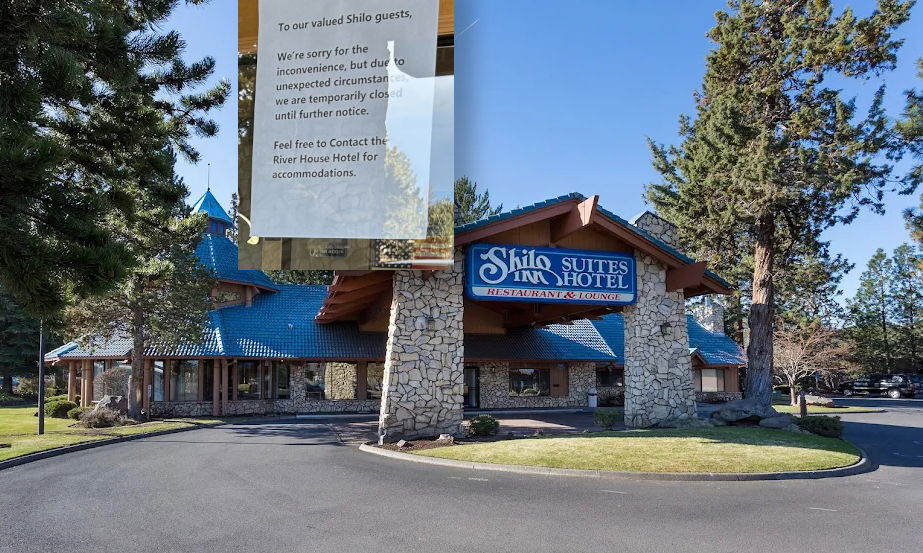
Shilo Inn Bend is one 3 Oregon locations which abruptly closed due to bankruptcy

Barney Lerten

BEND, Ore. (KTVZ) — Bend’s Shilo Inn is now one of three Oregon hotels owned by the chain to close amid bankruptcy, the latest sign of deepening financial woes for the long-running regional brand.

Currently, three Shilo Inns locations in Oregon are confirmed to be bankrupt: Bend, Warrenton and Newport. Federal court documents indicate that a Chapter Seven bankruptcy hearing for the Bend and Warrenton locations is set for next week. Under Chapter Seven, the company is unable to resolve its financial difficulties, which could lead to the liquidation of assets to repay creditors.

The bankruptcy documents, which you can find below, indicate that these Shilo Inns have been in and out of bankruptcy since at least 2019.

Shilo Inn Bend LLC bankruptcy Chapter 7Download

Shilo Inn Bend LLC bankruptcy 2021Download

An employee of the 151-room hotel told KTVZ he was notified of Monday’s closure in a text from his manager. He also said paychecks have been bouncing for the past three months.

A sign on the locked front door of the hotel on O.B. Riley Road apologized for the inconvenience, but said that “due to unexpected circumstances, we are temporarily closed until further notice.”

It advised would-be guests to contact the neighboring Riverhouse Lodge for accommodations.

A visit to the hotel website’s booking page on Monday afternoon did not allow visitors to make reservations.

Crystal Knowles, the hotel’s assistant general manager, told KTVZ News the hotel is not permanently closed but is undergoing bankruptcy proceedings.

Shilo Inns, founded in 1974 by Mark Hemstreet, reports having 12 hotels around the West. It bought Bend’s former Touch of Class Motor Inn in 1992.

It’s not the first financial difficulties faced by the hotel. It was scheduled for auction in the fall of 2019 after defaulting on about $9 million in debt. But an attorney for the firm told The Bulletin at the time that they could pay off the debt any time before the sale.

Deschutes County property tax records on Monday indicated Shilo Inn Bend LLC is still owned by the hotel chain’s parent firm, Shilo Inns Hotels of Vancouver, Wash. The 7.52-acre commercial property has a real market value of $15.5 million.

Shilo Inns has closed or sold several hotels in recent years due to financial problems or other issues.

Click here to follow the original article.
Central Oregon’s Think Wild urges you to ‘BAT-ten down the hatches’ this winter, to prevent wildlife conflicts

KTVZ

BEND, Ore. (KTVZ) – Winter is the most effective time to prevent wildlife conflicts before they start, Central Oregon’s Think Wild reminded property owners on Monday.

“With many species less active, homeowners have a limited opportunity to address entry points, complete humane exclusions, and install habitat features that reduce conflicts before spring nesting and activity increases,” the organization said in a news release that continues below:

Think Wild encourages property owners to schedule humane wildlife services during the winter months to avoid emergency situations later in the year. Addressing problem areas now helps prevent animals from establishing nests or dens in structures and ensures that safe alternative habitat is available when wildlife activity ramps up. 

Think Wild offers humane, non-lethal wildlife services grounded in an understanding of natural history and seasonal behavior.

Services that can be scheduled and completed this winter include onsite consultations, site assessments, humane exclusions, flicker damage solutions, raptor perches, nest box installation, and beaver conflict mitigation tools such as water flow devices and protective fencing.

Site visits and installations start at $80, with full quotes provided following consultation. 

“All of our work is non-lethal and grounded in an understanding of wildlife and different species’ natural history,” said Jake Sandler, wildlife services coordinator at Think Wild. “By working with seasonal behavior and species needs, we can make recommendations and prevent conflicts in a way that is safer, more effective, and better for humans and wildlife in the long run.” 

Bat work requires special timing. Bat exclusions cannot legally be performed between June 1 and August 30, when young bats are unable to fly. Scheduling bat assessments and exclusions outside of this window is critical for bat conservation and compliance with wildlife protection laws. Winter planning helps ensure this work is completed before restrictions are in place. 

Humane exclusion techniques focus on making properties less attractive or accessible to wildlife while providing alternative options elsewhere. Removing outdoor food sources such as pet food and bird seed, securing trash, sealing holes and crawl spaces, reducing shelter like wood piles and debris, and using lighting or other deterrents can dramatically reduce wildlife conflicts. These methods are effective, long-lasting, and environmentally responsible. 

Think Wild does not trap or relocate wildlife. Relocation is harmful to animals, illegal for most native species, and does not solve the underlying causes of conflict. Extermination is not a permanent solution either. Humane exclusion offers safer, lawful, and more effective alternatives for both people and wildlife. 

Think Wild can assist with conflicts involving bats, flickers, squirrels, raccoons, skunks, rabbits, small mammals and rodents, deer, rattlesnakes, geese, and beavers. Nest boxes and habitat features can also be installed to provide safe alternative shelter and encourage natural pest control by native predators.

Think Wild offers and installs boxes for flickers, bats, songbirds, and small raptors, as well as raptor perches and osprey nest platforms.  

Property owners are encouraged to act now, while wildlife activity is low. To learn more or schedule a consultation, community members can fill out Think Wild’s Wildlife Services contact form, and staff will follow up to schedule a consultation or installation. 

Taking preventative action this winter helps protect homes, reduce stress on wildlife, and create safer coexistence year-round. 

### 

About Think Wild 

Think Wild is a 501(c)3 non-profit organization located in Bend, Oregon. Our mission is to inspire the High Desert community to care for and protect native wildlife through education, conservation, rescue, and rehabilitation. We provide veterinary treatment and care at the wildlife hospital, staffed by expert wildlife rehabilitation staff, animal husbandry volunteers, and our staff veterinarian. We also provide wildlife habitat installations, native plantings, and wildlife education programming for youth and the community, and can help with conflicts with wildlife. Wildlife injuries can be reported to our Wildlife Hotline at 541-241-8680, which is monitored seven days a week from 8 AM to 4 PM. Visit us online at thinkwildco.org, or on Instagram or Facebook @thinkwildco.  

Click here to follow the original article.