Semi and SUV collide; truck loses load of hay, closing Highway 26 west of Government Camp for hours

KGW

(Update: New photo; highway reopened)

By Alex Jensen, KGW

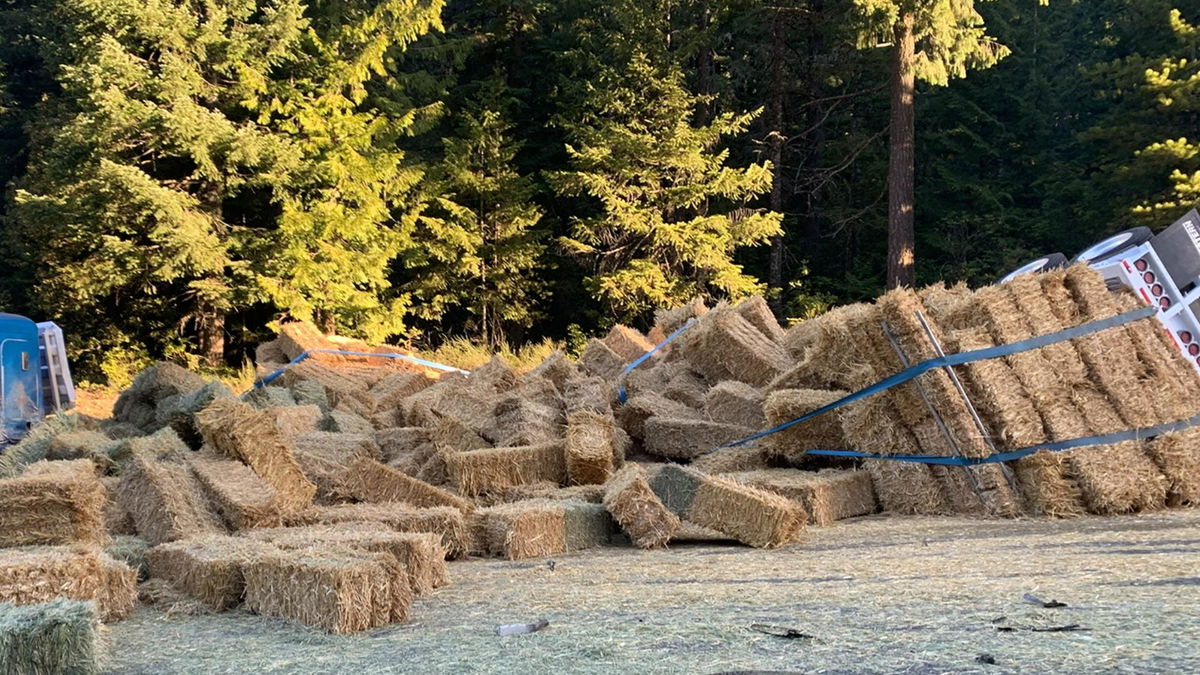
PORTLAND, Ore. (KGW)— One person was taken to a hospital by Life Flight helicopter after a semi-truck hauling hay and an SUV collided on U.S. 26 early Friday morning, closing all of the lanes for several hours five miles west of Government Camp.

Around 6:28 a.m., Oregon State Police responded to the crash with reported serious injuries. The crash is currently under investigation, OSP said. No other injuries were reported. 

The crash occurred near milepost 48, seven miles east of Welches, the Oregon Department of Transportation said.

By mid-morning, one eastbound lane reopened, but all westbound lanes and the eastbound left lane remained closed to let westbound traffic through. The highway fully reopened Friday afternoon, ODOT said.

There were no local detours in the area where the crash occurred.

The semi hauling hay spilled its load in the crash. ODOT told KGW “that’s a major factor in the time it takes to reopen the highway.”

The highway is closed between mileposts 45 and 48. ODOT said special equipment was on the way to clean up the spilled hay, remove the truck and possibly deal with any fuel or fluid leaks. 

Timberline Lodge Ski Resort reported on their conditions page that ski operations Friday morning are impacted due to the crash and resulting road closure. Mt. Hood Meadows said drivers should expect long delays on U.S. 26. If heading up to the mountain to go skiing, drivers should go through Hood River until traffic resumes. 

Track traffic updates on our ODOT TripCheck page.

Three-legged cat gets hip replacement with new technology

Lynsey Harris

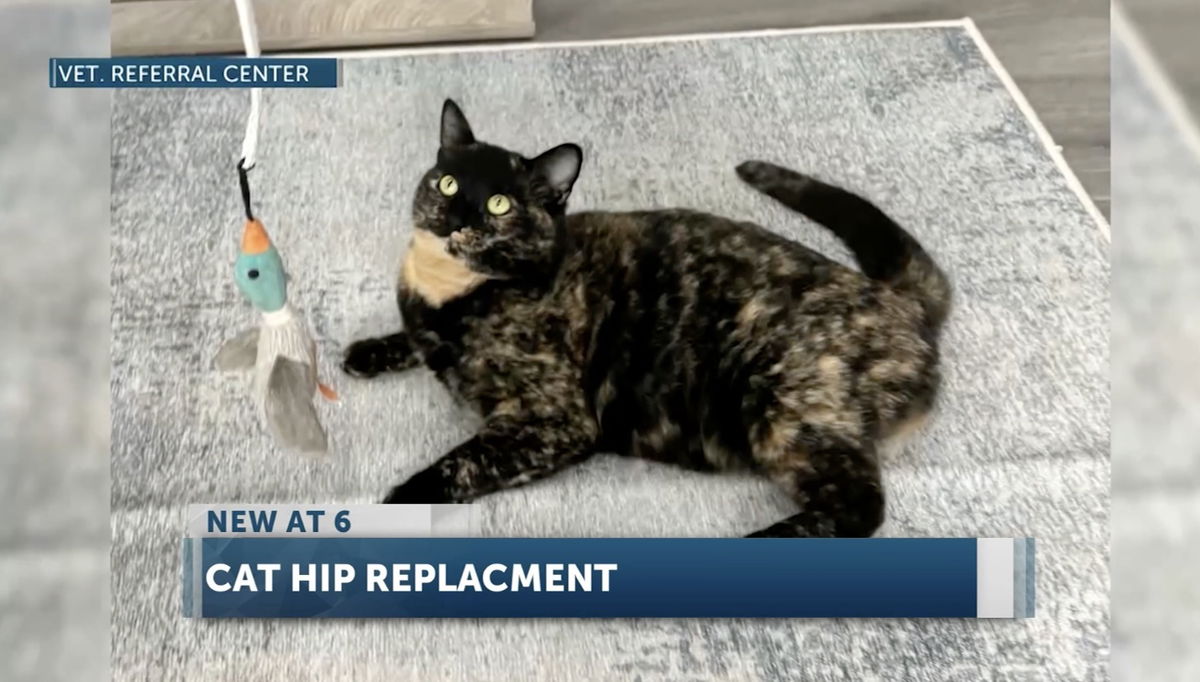
BEND, Ore. (KTVZ) — A three-legged cat named Moira is making headlines after receiving a rare full hip replacement surgery at the Veterinary Referral Center of Central Oregon in Bend.

Moira came to the Humane Society of Central Oregon as a kitten with severe back and leg injuries, ultimately losing one leg.

Struggling to move, Moira’s new owner and Dr. Dujowich decided a hip replacement was necessary. To perform the state-of-the-art procedure, the doctor used 3D-printed replicas of Moira’s bones based on her scans.

Big Brothers Big Sisters hosts annual Bowl for Kids’ Sake fundraiser

Lynsey Harris

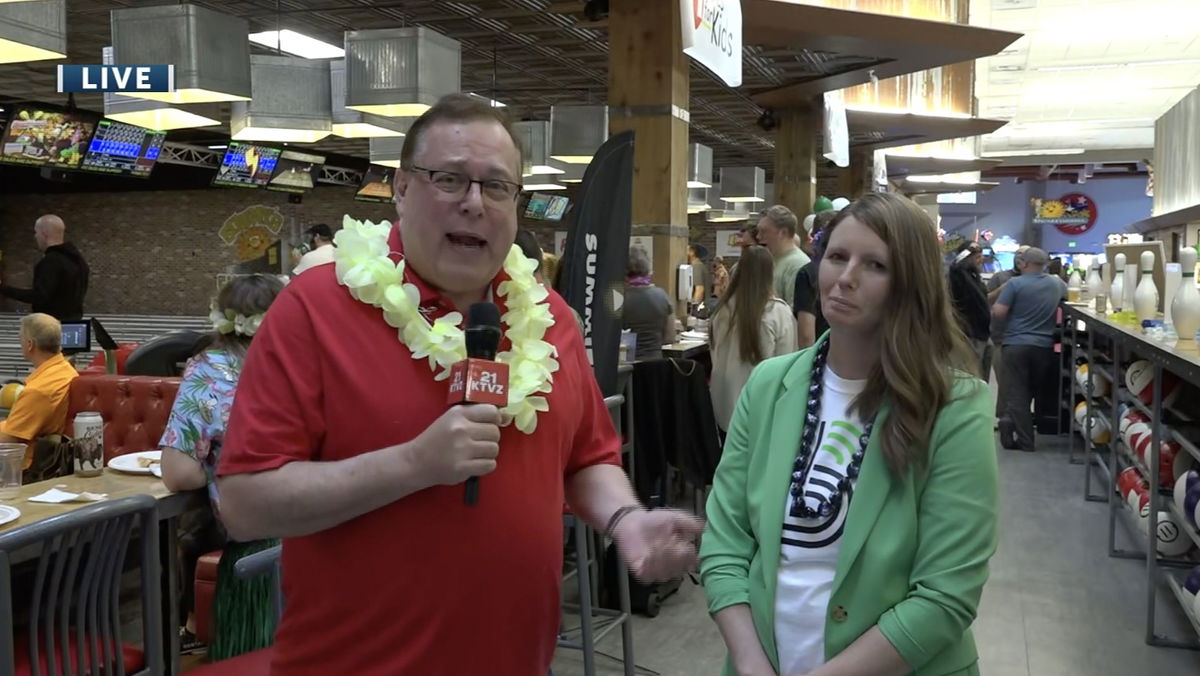
BEND, Ore. (KTVZ) — Lee Anderson was live Thursday from Sun Mountain Fun Center as Big Brothers Big Sisters of Central Oregon held its annual Bowl for Kids’ Sake fundraiser to support mentoring programs for at-risk youth.

It costs about $2,800 a year to support one match, and 92 kids are currently on the waitlist. Those who couldn’t attend can still help by donating online or becoming a mentor. Volunteers commit just a few hours a month. The fundraiser is nearing its goal, with final results expected tonight.

Big Brothers Big Sisters of Central Oregon is a 21 Cares for Kids partner.

Potholes are present: How do they form?

John Carroll

BEND, Ore. (KTVZ) — Each spring, there seems to be a number of new, and not so new, potholes appearing on area roads. Why do they arrive in the spring and how do they get there? Chief Meteorologist John Carroll has the details on how the potholes form.

St. Charles Bend closes patio for a special mama

KTVZ News Team

BEND, Ore. (KTVZ) — St. Charles Bend is taking its motto, “Care for All,” to the next level, and that includes more than just people.

A viewer sent in these photos of the hospitals helping a nesting Canadian goose. In the photo, you can see the mama goose nesting near the chapel sanctuary.

To make sure the mom and her soon-to-hatch babies have the space they need, St. Charles put up a sign and closed off the patio area.

City of Bend plans to nearly double Transportation Fee on homes in second phase, set to begin this summer

Barney Lerten

BEND, Ore. (KTVZ) — On Wednesday night, the Bend City Council gave input to city staff and finalized proposed rates for Phase 2 of its year-old Transportation Fee, which on homes would nearly double, from $5.60 to $10.50 a month.

The Phase 2 draft fee schedule is available at bendoregon.gov/transportation-fee (and below).

The City Council decided to implement the Transportation Fee through a phased approach. Phase 1, which began on July 1, 2024, is on track to generate $5 million for fiscal year 2024-2025.

In Phase 2, set to start July, 1, 2025, the City aims to generate an annual revenue of $10 million based on operation and maintenance needs of the transportation system. Council will consider adopting Phase 2 rates following a public hearing at the Council meeting on May 7.

Written comments can be sent to transportationfee@bendoregon.gov and will be provided to City Council prior to the May 7 public hearing. Comments will be taken at the public hearing, in person or online.

Phase 2 of the fee has two key objectives. The first is to generate additional revenue needed to maintain City’s transportation system, enhance service frequency and quality, and improve the safety and condition of City roads, bike lanes, and sidewalks. The second is to account for both building size and business type in how non-residential utility accounts are assessed the fee.

In Phase 1, non-residential fees have primarily been based on building size. The methods for calculating costs based on business type impact were discussed in public meetings by City Council and the Bend Economic Development Advisory Board (BEDAB).

An information session will be held in Council Chambers on April 24 at 5 p.m. to provide an overview of changes to non-residential fees as part of Phase 2 of the Transportation Fee. This session is specifically geared toward the business community and will offer an opportunity to hear from City Staff and the Bend Economic Development Advisory Board.

Transportation Fee revenue is used for operations and maintenance of the City transportation system, including pavement restoration, street preservation, signs, striping, sidewalk and other concrete work, bicycle and multi-modal system enhancements, street sweeping and cleaning, winter operations such as snow removal and implementation of programs identified in the 2020 Transportation System Plan.

Funds are restricted to activities performed by the Transportation and Mobility Department and cannot be used for other City purposes.

The City has historically relied on the State Gas Tax and a small portion of local property taxes to pay for street operations and maintenance. That funding is no longer keeping up with Bend’s transportation maintenance needs. The Transportation System Plan, our guidebook for Bend’s transportation future into 2040, forecasted this funding shortfall and recommended the Transportation Fee as a funding tool to properly care for our transportation system for years to come. Council will continue to monitor transportation funding needs and other sources of revenue.

Learn more about the transportation fee at bendoregon.gov/transportation-fee.

Proposed TF Phase 2 Rate Schedule Apr2025Download

A Place at the Table: Shepherd’s House is fundraising after federal cuts

KTVZ News Team

BEND, Ore. (KTVZ) — Shepherd’s House Ministries says it has lost a large portion of its funding, but plans to make it up with an online campaign.

The federal movement has cut 17% of their funding for food.

To fill the gap, the shelter is launching a section on their website called “A Place at the Table.” It’s their goal to make up that percent of their funding between now and June.

Every meal the shelter gives out costs them $3, and they provide over 400 meals a day.

Oregon’s first private insurance coverage for psilocybin services now available in Bend

Jillian Fortner

BEND, Ore. (KTVZ) — Bendable Therapy in Bend has partnered with Enthea to offer the first private insurance coverage for psilocybin services in the state.

According to the National Institute on Drug Abuse, psilocybin is part of a group of drugs called psychedelics which have potential to change a person’s sense of reality. Scientists began studying psilocybin decades ago to examine their potential to treat mental illness, including substance use disorders. 

“About 20% of our clients are veterans with complex PTSD,” said Bendable Therapy Executive Director Amanda Gow. “We’re seeing so much healing happen in these spaces. So for Bendable Therapy, we’re just so excited to be able to partner with Anthea to increase accessibility.”

As one of the first licensed psilocybin service centers in Oregon to accept Enthea insurance, Bendable Therapy is now able to provide services to clients whose employers and unions offer Enthea as a medical tourism benefit.

Gow says Central Oregon is the only place east of the Cascades that still has psilocybin services. She adds that the treatments come with a high price tag. A typical individual session is $3,800.

Enthea’s Head of Growth & Partnerships, Jessica Tracy said, “These therapies have been a profound catalyst in my own healing journey, and I am deeply grateful to support efforts that ensure safe, affordable and legal access to this life-changing medicine for others.”

The company said the collaboration marks a historic turning point in the effort to bring psychedelic care into the mainstream health care system.

Forest Service fire crews conduct 20-acre prescribed burn SE of Sisters

Barney Lerten

(Update: Prescribed burn conducted)

SISTERS, Ore. (KTVZ) — After a favorable test burn, Sisters Ranger District firefighters on Friday were conducting up to 20 acres of prescribed burning 3 1/2 miles southeast of Sisters, just east of Forest Service Road 16.

Smoke may be visible from Sisters, Highway 20 and 126 and the surrounding area. Residents in Cloverdale, Plainview and along Harrington Loop Road were encouraged to keep doors and windows closed to minimize smoke impacts. Smoke impacts are most likely overnight and in the early morning hours.

Portions of Forest Service Roads 210 and 215 and Peterson Ridge Trail West were closed Friday during prescribed burning operations, as sections of the roads and trail are located within the burn unit. Signage was placed on the roads and trail to clearly mark which sections were closed. Smoke impacts are possible across FSR 100 during prescribed burning operations and Highway 20 overnight and in the early morning hours.

Firefighters implement understory prescribed burning to reduce wildfire risk to communities. Prescribed burning reintroduces and maintains fire within our fire-dependent ecosystem by removing concentrations of vegetation and restoring forest health while increasing public and firefighter safety.

Fire management officials work with Oregon Department of Forestry smoke specialists to plan prescribed burns. Prescribed burns are conducted when weather is most likely to move smoke up and away from our communities. While prescribed fire managers take significant preventive measures, it’s likely that communities may experience some smoke during or immediately after a prescribed burn.

What does this mean for you? 

During prescribed burns, smoke may settle in low-lying areas overnight and in the early morning hours.  

All residents are encouraged to close doors and windows at night to avoid smoke impacts. 

If available, use a portable air cleaner. Air cleaners work best running with doors and windows closed. You can also create a DIY air cleaner

If you have a central air system, use it to filter air. Use high-efficiency filters if possible. 

When driving in smoky areas, drivers should slow down, turn on headlights and turn air to recirculating. 

If you have heart or lung disease, asthma, or other chronic conditions, pay attention to how you feel and if symptoms of heart or lung disease worsen, consider contacting your health care professional. 

Go to centraloregonfire.org to learn more about smoke safety and prescribed burning in Central Oregon and visit When Smoke is in the Air for more smoke preparedness resources. 

For more information on prescribed burning in Central Oregon, visit centraloregonfire.org/ and for information specific to the Deschutes National Forest visit www.fs.usda.gov/deschutes. Follow us on X/Twitter @CentralORFire. Text “COFIRE” to 888-777 to receive wildfire and prescribed fire text alerts. 

Problem Solvers: SE Bend neighborhood pushing back against PacifiCorp’s proposed transmission line route

Matthew Draxton

‘Anywhere is better than this,’ homeowner says; utility says route not finalized

BEND, Ore. (KTVZ) — A southeast Bend neighborhood is pushing back against PacifiCorp’s proposed plan to build a transmission line from Prineville to Chiloquin that would potentially in part parallel their neighborhood. 

Several neighbors we spoke to are staunchly against the proposed power line, for multiple reasons.

Sundance neighborhood resident Jim Moran said, “Overall, it’s a crisis.”

A resident who wished to remain anonymous said, “It’s an infringement on us.”

Another resident, Brian Levering, said, “We think about it every day. We think about it when we wake up.”

A newer resident to the neighborhood, Kristen Boone, said, “All these people have moved out here to live in peace in this wonderful landscape. Putting power lines out here can’t be the answer.”

Longtime resident Gary Dalski said, “Anywhere is better than this.”

PacifiCorp is considering four possible routes for a new 180 mile transmission line between Powell Butte near Redmond to southern Klamath County.

Senior Communications Specialist Simon Gutierrez said, “Customer load demands in Oregon are steadily increasing, and they’re eventually going to surpass the capacity of our current transmission system in that area.”

“Adding an additional line at this voltage allows us to provide safe, reliable power with greater redundancy well into the future,” he added,

According to Gutierrez, the transmission line “will upgrade the existing transmission backbone and will allow the company to integrate new renewable energy sources in central and southern Oregon.”

Route B would run through southeast Bend parallel to the Sundance neighborhood, where residents like Janell Boone say it would disturb the essence of the area.

“These 180-foot-tall towers would be within 750 yards of our property line. This is where we access the BLM and the Deschutes National Forest on horseback, on our mountain bikes. We hike here daily, all of our neighborhood. We came here for this very reason.”

“Those towers are 16 to 18 stories high. That is taller than any structure in Central Oregon. These are massive. They’re absolutely going to loom over the landscape and loom over homeowners.”

Additional concerns include environmental impacts and access to public lands.

A resident of Bend since 1980, Cleme Rinehart, pointed to the neighborhood being on “a mule deer migration path that would be hugely disrupted. We’re on a bird migration pattern. We have lots of animals, from antler deer to foxes, you name it. All these would be terribly disrupted.”

In regards to public lands, Rinehart said, “I think we need to leave them (as) untouched as possible (for) future generations, for our kids and our grandkids.” Janelle Boone added, “Encroaching upon more of Central Oregon’s public lands needs to be avoided.”

Kristin Boone, the daughter of Janell Boone and a new homeowner in the neighborhood, added, “It’s BLM land, and a private company coming in and destroying that just doesn’t sit right with me at all.”

Aside from visual impacts, environmental concerns and accessibility, homeowners and residents of the rural Bend community are primarily concerned about increased fire risk with the installation of a transmission line and how that could impact already-increasing insurance rates.

A homeowner who wished to remain anonymous said, “We are already in a very high fire zone and pay high insurance premiums already. And this would increase the risk for fire.”

Rinehart added to this concern, saying, “If this goes down, it would be lucky if you’d be able to get insurance at all.”

Janell Boone expressed fear saying, “We’re nervous every, every summer. We’re all on watch. We’re cleaning up our properties. We’re doing everything we can to avoid fire risk.”

KTVZ spoke with two property owners who were part of the Sundance neighborhood during the 1996 Skeleton Fire.

Gary Dalski, a longtime Sundance resident who moved to rural southeast Bend in the ’80s, said his experiences with the Skeleton Fire that destroyed 19 homes in 1996 has him opposed to the proposed transmission line.

“Just being one of the original residents out here, it’s disappointing.”

Jerry Brown, another longtime resident, reflected on recovering from that fire: “I lost my house once in the Skeleton Fire. It took a long, long time to rebuild and establish again. Everything that was in our home was lost.”

Brown pondered over what it could mean for him if another fire were to happen in the area: “At this age, I’d have to go. I don’t think I could rebuild and start over. I’m too old for that.”

PacifiCorp argues wildfire risk is taken very seriously.

Gutierrez said, “It’s one of our top priorities to preserve the safety of the communities that we serve. And we do everything in our power through operational practices, situational awareness, constantly monitoring weather. We have a team of in-house meteorologists. So we are on the cutting edge of wildfire mitigation and prevention, and doing everything that we can to protect the communities that we serve.”

Homeowners and residents are also concerned their property values would go down due to visual impairments, fire risk and high insurance rates.

Jim Moran, a real estate broker and Sundance property owner for the last 20 years, estimates property values will “drop 30 to 40 percent because of this.” He argues it’s a property rights issue and explained the impact a drop in property value would have on the 200 residents.

New to the neighborhood, homeowner Kristin Boone added, “Home value is so important. We’re all trying to make it in this world and in this economy. So absolutely, it’s a concern for all of us.”

Moran continued, “A lot of these folks have had these properties for years, as most people have. They buy property for an investment, and to have this kind of impact is huge…it’s part of their retirement going forward…they want to pass this on to their families. It’s just not fair.”

Cleme Rinehart added to this, saying, “Home is the greatest investment that most families make in their lifetime. If you lose value in your home or if you lose your home, you pretty much lost the nest egg of your life. So it’s pretty significant for us.”

PacifiCorp emphasizes that no plans have been finalized.

Gutierrez highlighted this, saying, “We can look at each of those routes and adjust them in various directions, to try to mitigate any concerns that the customers have or part of the residents in the area might have.”

He added, “We’re out here in these communities. Our project planners are out there listening to concerns that folks have. We will be doing everything we can to minimize the impact on communities and ensure that this line goes in in the safest manner possible.”

Gutierrez said a more refined, finalized decision won’t come until late summer. Until then, their goal is to continue receiving feedback from the community.

He says, “Right now, we’re in the early planning stages of this project. We’re gathering information.”

PacifiCorp has hosted five public meetings in Bend, Prineville, Chiloquin and Klamath Falls, in addition to a virtual open house. They will be hosting two more open public forums as an opportunity for community members to give feedback and express their concerns.

The first will be held in Redmond next Wednesday, April 23 and the second on Wednesday, April 24th.