Wildfire season begins in Central Oregon: what you need to know to prepare

Claire Elmer

(Update: Adding video, full story, interviews, and resources)

BEND, Ore. (KTVZ) — Tuesday’s Euston fire in Redmond triggered evacuation alerts and cut power to approximately 10,000 homes and businesses.

Though quickly contained, it was a reminder to be emergency-ready

The first critical step – ensuring you are notified as soon as you are at risk. 

Lt. Nathan Garibay, emergency services manager for Deschutes County Sheriff’s Office told KTVZ, “We encourage people to sign up for Deschutes Alerts which allows you to put in a number of different contact options – your address of your home and your work.” 

Deschutes Alerts will directly inform you of an emergency that may affect you – via call, text, or email. You can sign up for the alert system here

Even if you currently receive the alerts, regularly check your profile to confirm your information is accurate. It will increase the ability of making sure officials can reach you during an emergency. 

There are three levels for evacuation alerts – 

Level One – be ready

Level Two – be set

Level Three – go now!

Levels can change at any moment, and preparation will help you act quickly. 

We spoke with an estate attorney, Patricia Nelson, owner and attorney at Two Spruce Law PC, about critical documents you need to grab.

Nelson told KTVZ, “If you have originals, protect them: Birth certificates, death certificates, marriage certificates, social security cards, wills, trusts, advanced directives, and insurance policy information.”

Another important reminder – take things invaluable to you, leave the rest. Anything insured can be replaced. Taking inventory of your possessions beforehand is key. 

“Take a quick video of each drawer, the contents of each drawer. Flip through so that you have evidence of what you had. If you have something particularly valuable a boat, an RV and piece of art…if you can, retain the receipts for the purchase,” recommended Nelson.

Other things to help you prepare – a family emergency plan that includes health and contact information, a go-bag – at your home, car, or even workplace, and a list of things to do before leaving your home. 

You can fill out an emergency plan online here and have it emailed as a PDF to your loved ones to ensure all information is current and accurate. 

Ask the following questions to make sure you are adequately prepared:

Are you set up to receive emergency alerts? 

Check your information to make sure it’s up to date. Text COFIRE to 888-777 for fire-specific information.

What is your shelter plan? 

If you need shelter assistance, you can call the American Red Cross 1-800-733-2767 (800-Red-Cross) or find local resources by dialing 211 or texting your zip code to 898-211 (help will reply between 9am-5pm).

What is your evacuation route? 

Check your routes on TripCheck or call 511 for road closure info.

What is my family communication plan? 

Confirm contact information is up-to-date, where you’ll meet, and how you’ll stay connected in the event of an emergency. 

Do you need to update your emergency kit?

Regularly check your go-bag or emergency kit to ensure adequate supplies and expiration dates (where applicable). 

When preparing to evacuate, remember the six P’s: 

People and pets (food, water, hygiene, sanitation, clothing and comfort items).

Prescriptions (medications, eyeglasses and medical devices).

Phones, personal computers, hard drives or disks, and chargers.

“Plastic” (ATM debit and credit cards) and cash.

Papers and important documents (photo identification, birth certificates, social security cards, passports, visas, insurance policy, mortgage deed or rental agreement, medical records, banking or financial records).

Pictures and other irreplaceable memorabilia.

You can find information on how to prepare your property before leaving here, if you have time – getting out quickly and safely should always be your number one priority. 

For a recommended checklist for your emergency kits, click here

For more information and specifics if you have any high-risk or special needs concerns, you can visit ready.gov.

Click here to follow the original article.

Deschutes Sheriff van der Kamp says he’ll resign in late August, while deputies union joins the call for him to leave now

Barney Lerten

(Update: Sheriff’s employees union calls for van der Kamp to resign immediately)

BEND, Ore. (KTVZ) — Deschutes County Sheriff Kent van der Kamp, facing a potential loss of his police certification from a state agency next month, told KTVZ News on Wednesday he will be retiring in late August and will no longer work in law enforcement. But the union representing sheriff’s deputies joined those calling for him to step down right away, and not wait until summer’s end.

“I’m exhausted,” van der Kamp, 53, told us. “I’m going to go do something a little bit slower. I’ve been doing this (law enforcement) for 24 years now. I’m at the point where we’re looking for other things to do at this point.” 

In the furor that arose after District Attorney Steve Gunnels put van der Kamp on the Brady list of law enforcement who could not be called to testify at trials due to issues of dishonesty, van der Kamp said he’d decide whether to retire within 90 days. 

A state Department of Public Safety Standards and Training panel voted unanimously last month to recommend the DPSST Board revoke his law enforcement certification for life. An investigation delved into issues ranging from failure to include his Southern California law enforcement experience when applying for a Deschutes County position to falsely claiming on the witness stand having degrees from two colleges he never attended. 

Van der Kamp told KTVZ News his remaining months on the job will involve completing some internal projects and ensuring a smooth leadership transition to whomever is appointed by county commissioners to succeed him. The sheriff’s position is expected to be on the ballot for a full term next year. 

Oregon Public Broadcasting reported Tuesday that van der Kamp said he’d retire August 31; on Wednesday, van der Kamp told KTVZ News: “It’ll probably be slightly before that, due to the way the pay periods fall, but we’re shooting for the end of August.” 

The sheriff also told OPB that he will still live in the U.S. while exploring opportunities overseas. He told us the makeup of that future life for him and his wife is “still in the works. It’ll probably be in the works for a little while. I have the ability to maintain a rental portfolio, run a business, purchase a business – a lot of options.” 

“I’m looking forward to a break, catch my breath and reconnect with my family,” van der Kamp said. 

The sheriff said he didn’t agree to an immediate resignation, as several elected officials and others urged, due to his commitment to those who voted him into office. He repeated an earlier statement that he’s heard “far more messages (from the public, saying, ‘Fight this to the death’” than those urging he leave now, as well as “a lot of internal support.” 

But coincidentally, the Deschutes County Sheriff Employees Association issued a statement Wednesday, saying the union is calling for him to resign immediately – and to reimburse the association for funds provided for his legal defense during last year’s election. The statement is at the end of this article.

“People are upset, I’m upset that things did not go as planned,” he said. “But I went up against a big machine. We balanced a great budget, cutting it 6%, hired amazing people, promoted better people – changed the culture of the office, settled a lot of complaints.” 

“I think people are much more content with the work that we’ve done here. We’ve left a good mark.” 

But critics who want him to leave right away would have little time before late August to mount a recall campaign, for example.

And as van der Kamp put it: “The only people who could fire me are the people who hired me.”

Asked if the proper term was resignation or retirement, van der Kamp said he’d submitted his Public Employee Retirement System paperwork “to collect my monthly retirement check.” 

After a contentious fall election, defeating sheriff’s Captain William Bailey – whom previous Sheriff Shane Nelson endorsed – van der Kamp said he’s not about to suggest, recommend or endorse anyone to be chosen as his successor. 

“Didn’t we learn that lesson?” he told us. “I think we’ve learned that lesson. I have no interest in saying who what when. The county is still trying to figure out what to do.” 

Van der Kamp also won’t say if he believes the next sheriff should be a current employee of the department or not. “I’m just not going to get in the mix of endorsing or not,” but he added, “we have amazing talent in this office.” 

And the sheriff doesn’t expect the strife facing the agency to end with his departure: “I don’t think it’s over. Whoever comes in behind me is going to be subjected” to scrutiny and criticism, van der Kamp said. 

Asked if he’d stay in Bend or Central Oregon, van der Kamp said he doesn’t know, as his aging parents and adult children live elsewhere. “We don’t have any long-term connections” to the area,” he said. 

Here is the Deschutes County Sheriff Employees Association’s statement provided Wednesday to KTVZ News:

“To: Local media

From: Deschutes County Sheriff Employees Association

Re: DCSEA notice to Sheriff Van der Kamp

Date: June 4, 2025

In November 2024, voters elected Sheriff Van der Kamp to be the Sheriff of Deschutes County, in part to bring much-needed change to DCSO.  In April 2025, DA Gunnels placed Sheriff Van der Kamp on the Brady List for dishonesty.  As time progressed, more allegations regarding Sheriff Van der Kamp being dishonest have surfaced.  The members of the Deschutes County Sheriff Employee Association will not tolerate dishonesty from anyone in our organization.

Over the past several weeks, members of DCSEA have voted on several issues related to Sheriff Van der Kamp.  Based on the results of the voting for those issues, DCSEA has requested Sheriff Van der Kamp to resign effective immediately.  Additionally, DCSEA has requested Sheriff Van der Kamp reimburse DCSEA funds provided to him for legal defense during the 2024 election.  A notice of these requests were provided to Sheriff Van der Kamp on June 4, 2025.

The members of DCSEA remain committed to providing superior public safety and keeping the public’s trust.

Respectfully,

DCSEA President Sergeant Daniel (Danny) Graham”

Click here to follow the original article.

Crater Lake National Park seeks new superintendent just days before summer season

Kade Linville

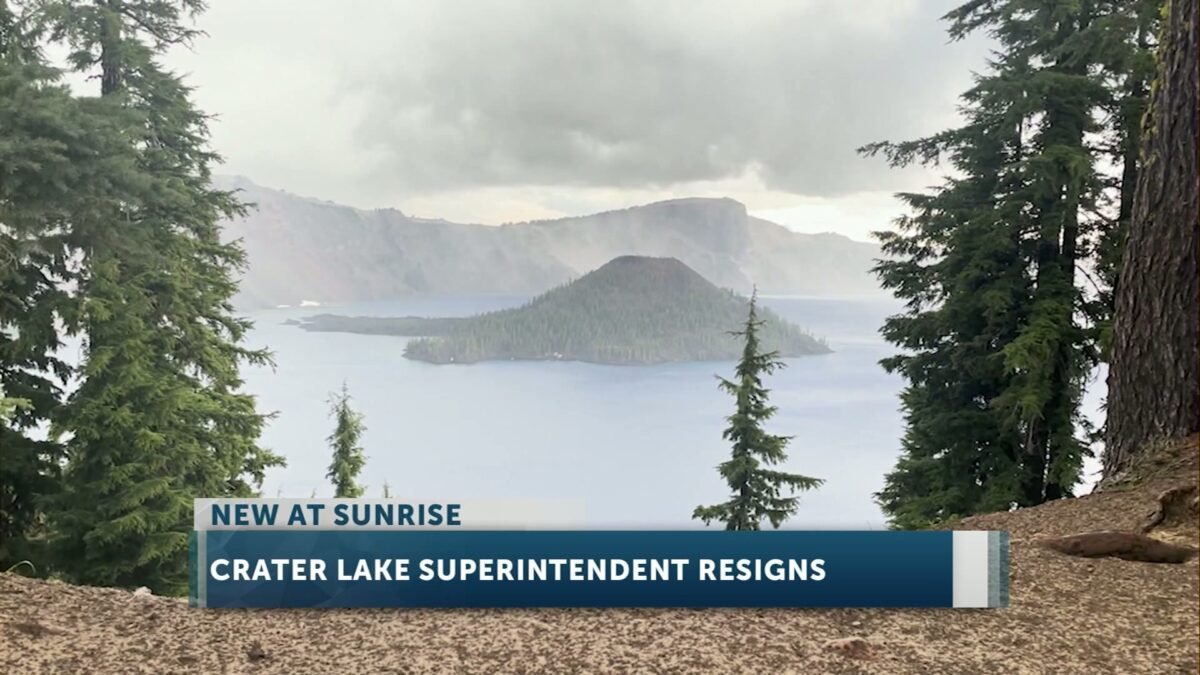
CRATER LAKE NATIONAL PARK, Ore. (KTVZ) – Crater Lake National Park is seeking a new superintendent after Kevin Heatley, the park’s previous superintendent, announced he would be leaving the position in late May.

Heatley was hired in January of 2025. His resignation comes only five months after being selected for the position. Heatley cited budget cuts and and staff shortages, which were negatively affecting the park’s ability to operate as influencing his decision to step back from the role.

As Oregon’s only national park, Crater Lake receives thousands of visitors every summer. The announcement comes just days before Crater Lake National Park prepares to open the north entrance to the park, officially signaling the beginning of the park’s 2025 summer season.

Click here to follow the original article.

Weather impacts on the Redmond-area wildfire

John Carroll

BEND, Ore. (KTVZ) — On Tuesday afternoon, the area between Redmond and Terrebonne was the center of attention for wildfire suppression as a quickly developing wildfire came to life.

The fire quickly grew from one acre at around 4:45 to an estimated 20 acres by 5:30. The fuel was mainly grass and some small trees and with the brisk north winds the fire pushed south.

The progression of the fire appeared to be halted as fire crews quickly established a southern perimeter. Two helicopters along with fixed wing aerial attacks kept the fire from pushing into more populated regions just to the south.

Close to 7 pm the activity of the blaze seemed to slow significantly and drop buckets from helicopters turned their attention to hotspots inside the perimeter. The choppers used an large body of water just to the northwest of the fire to grab the water while the jets dropped fire retardant.

At the advent of this fire, winds helped fan the flames and allowed the line of flames to march to the south as the winds came in from the north. The wind relaxed as the night moved along and although the fire is not progressing at this time, there are still some hot spots inside the perimeter that will be tended to through the night and into Wednesday.

Excellent work by the firefighters, both local and regional!

Click here to follow the original article.

Mosquito control in Central Oregon can make a very big difference

Tyson Beauchemin

SUNRIVER, Ore. (KTVZ) — Depending on where you are in Central Oregon, mosquitoes can be everywhere or nearly non-existent. That’s due in part to the efforts of vector control groups like the Four Rivers Vector Control District.

It’s not pest control. Its entire focus is on killing mosquitoes and getting them early before they start biting.

Four Rivers Vector Control has been out since April, treating the areas.

“With where the areas where mosquitoes actually spawn with a naturally occurring bacteria to kill them, the difference between the places treated and those not treated is dramatic, huge, very huge,” Myles Bowlin, from Four Rivers Vector Control told KTVZ News.

“I think personally, without mosquito control, in the Sunriver area especially, there would almost be nobody outside recreating,” he said. “We have areas just over a fence where one side you’ll be perfectly fine. If you go two miles in one direction, you cannot get out of your car.”

For the Four Rivers Vector Control District, mosquitoes are not just a nuisance, but a public health issue. As part of this effort, it’s using a helicopter between June 15th and July 15th. It’ll fly over the Little Deschutes River area of Sunriver during daylight hours.

Click here to follow the original article.

Prescribed burn season in Central Oregon could be over soon

Isabella Warren

SISTERS, Ore. (KTVZ)– Smoke could be seen across Central Oregon as fire crews ramp up prescribed burning. Tuesday, 91 acres were burned southwest of Sisters as the season comes to a close and wildfire season approaches.

“Should a wildfire start in these areas where we have conducted prescribed burning, firefighters have a greater chance of success at stopping that fire and keeping it small,” said Deschutes National Forest Public Affairs Specialist Jaime Olle.

Every year, the U.S. Forest Service conducts thousands of acres of prescribed burns across the region, to help prevent catastrophic wildfires. 

Last year, fire investigators found that BLM prescribed burns prevented the Darlene 3 Fire in La Pine from destroying more land. It’s a glimmer of hope after one of the state’s worst wildfire seasons brought more than 1,900 fires and burned over 1.9 million acres in the state.  

BLM spoke with KTVZ News last fall, “If you go and look at where these fuel treatments work, you’ll see a low mortality rate of the trees, whereas in the places where the fuels had not been pretreated, you’ll see a high mortality rate,” said Amanda Roberts, BLM’s Prineville District manager.

Senator Ron Wyden reintroduced legislation in May of last year to continue to support prescribed burns.

The National Prescribed Burn Act would allocate $300 million to expand the intentional fires to the winter and spring months and increase the number of acres burned a year.

Currently, 3.6 million acres are burned in the state annually. 

Olle said, “Typically, these projects are strategically located across the landscape, in places where we can do the best to not only restore the forest health, but also reduce the risk of catastrophic wildfire to our communities.”

The season typically lasts from mid-April to mid-June. You can find more information about the latest prescribed burns at http://Centraloregonfire.org.

Click here to follow the original article.

Nearly 1,400 seniors set to graduate from seven Bend-La Pine high schools in coming days

Barney Lerten

BEND, Ore. (KTVZ) — Bend-La Pine Schools will present diplomas to 1,387 seniors during seven high school graduation ceremonies this Thursday through next Tuesday. 

The Class of 2025 includes 491 Honors Diploma recipients, 129 Seal of Biliteracy recipients, and 25 students who are receiving their International Baccalaureate diploma.

Many others have challenged themselves with rigorous coursework, including college-level Advanced Placement and dual credit classes, as well as a host of Career Technical Education courses offered in all the district’s high schools. 

“This is such a special time in our community, as we gather to celebrate the accomplishments of our seniors and send them off with our heartfelt best wishes for continued success in their education, careers, service and life,” said Katie Legace, Executive Director of High Schools. “We are incredibly proud of our graduates and what they have achieved through their hard work in our schools.” 

Caldera High School will lead off the celebrations on Thursday, June 5, with its ceremony at 7 p.m. On Friday, June 6, La Pine High School’s graduation will be at 7 p.m. 

Three schools will hold ceremonies on Saturday, June 7: Bend Senior High School at 10 a.m.; Summit High School at 2 p.m.; and Mountain View High School at 6 p.m. 

Bend Tech Academy will celebrate its seniors Monday, June 9, at 7 p.m. Realms High School will follow with its ceremony on Tuesday, June 10, at 7 p.m. 

More details available at bend.k12.or.us/district/news-events/graduation-information

Click here to follow the original article.

Burgerville is set to open its new Bend location on June 23rd

Barney Lerten

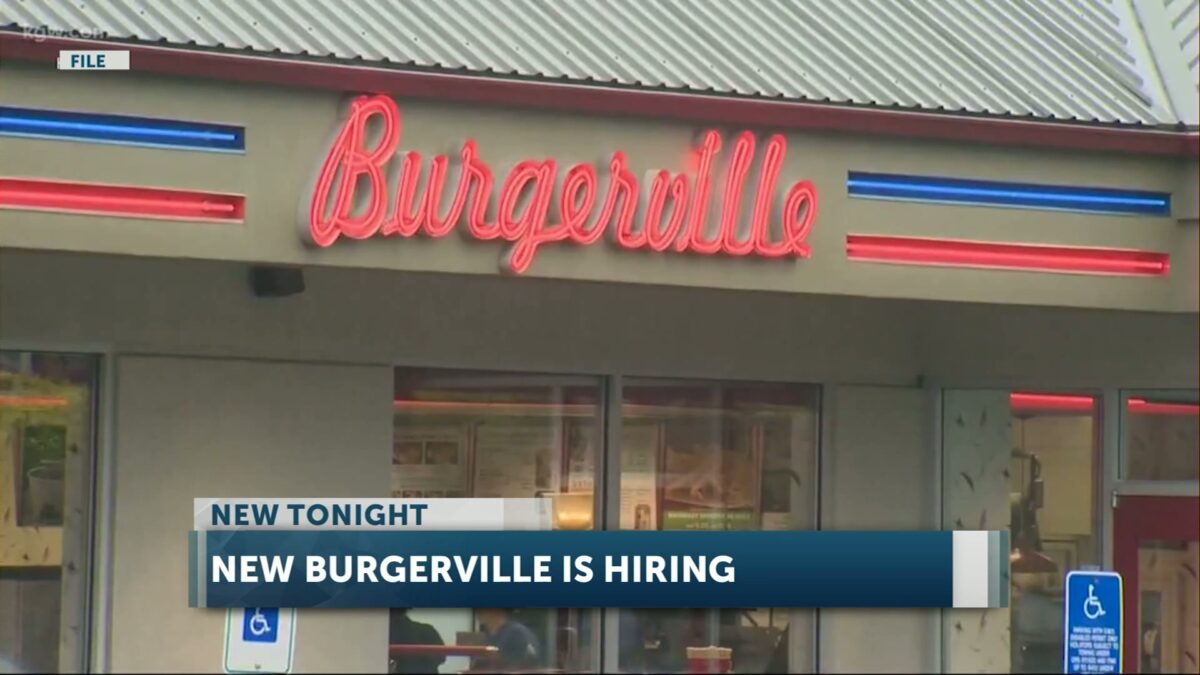
BEND, Ore. (KTVZ) — We’ve known it was in the works for quite a while, but it all became official Tuesday: Burgerville, which calls itself “the Pacific Northwest’s premium fast-food chain,” announced the opening date for its newest restaurant and first in Central Oregon, near the Bend Elks Stadium in southeast Bend.

Burgerville said it “is known for its commitment to serving locally sourced food, a dietary-friendly menu and seasonal favorites like the beloved Walla Walla Sweet Onion Rings and Marionberries. The menu features pasture-raised beef from Country Natural Beef, Wilcox Farms cage-free eggs and offers gluten-free buns and dairy-free shakes.”

Here’s the grand opening details:  

What: A grand opening celebration of Burgerville’s newest Bend location, for the community – open to all customers.  Where: 612 Southeast 3rd St., Bend, OR 97702  When: Monday, June 23rd at 7 a.m. opening, 10 a.m. ribbon cutting  

Details: Join us for a fun-filled morning, including a ribbon-cutting ceremony and:  

Special Guest Appearances: Burgerville CEO Ed Casey and Ranchers from Central Oregon-founded Country Natural Beef, a longtime partner brand.

Breakfast: Order Burgerville Breakfast menu items (ends at 11 a.m.) and Stumptown Coffee offerings, including the new Cold Brew with Cold Cream Cloud Foam. The first 100 orders will receive free Original Cheeseburgers for a year*. 

Exclusive Community Burger: For the first 30 days only, Burgerville Bend is serving a Bend exclusive item: The 10 Barrel Beer Cheese Slider. Featuring Bend’s own 10 Barrel Beer Cheese, pasture raised beef patty from Country Natural Beef, served on a pretzel bun.  Burgerville will donate 20% of all slider proceeds to The Giving Plate, a Bend nonprofit food relief organization.  

Come celebrate Burgerville’s expansion into the Bend community and experience the delicious, locally sourced menu that customers across the Pacific Northwest love.  

*The first 100 customers who make a purchase at the new Bend Burgerville will receive a gift card upon checkout with the value of 52 Original Cheeseburgers. 

Click here to follow the original article.

‘Know before you go’: Oregon Marine Board, Bend watercraft dealer offer paddleboard safety advice, warning as summer arrives

Jillian Fortner

Jillian Fortner has a report on KTVZ News at Five

BEND, Ore. (KTVZ) — Paddleboarding is one of the many fun ways Central Oregonians enjoy the local rivers, but experts say there are important safety precautions to take before heading out on the water.

“A lot of people assume they’ll be fine because they can swim, or think nothing will happen,” Sue Fox with Tumalo Creek Kayak & Canoe said Friday. “Most of the time, that’s true. But as an old friend used to say, ‘The river only has to win once.’”

Fox says it’s important to understand the waterway and come with the proper gear. Always wear a properly fitted life jacket.

“The reason we don’t want them loose is because if you were to fall in the water, you could easily fall out of it. The PFG could come up over your face,” Fox added.

Chris Gerdes, the park manager at Prineville Reservoir, says a recent incident nearly turned deadly because the person wasn’t wearing the proper safety gear.

“We already had a near-drowning this year,” Gerdes said. “Again, this person did not have their life jacket on.”

The Oregon State Marine Board recommends using a quick-release leash in fast-moving water.

“There’s an emerging trend when we look at the causes for fatalities in recent years, where a person, otherwise well-outfitted, died because their leash to the SUP became entangled in brush or other debris on area rivers,” said Brian Paulsen, Boating Safety Program Manager for the Marine Board.

Stand-up paddleboarding incidents and fatalities were infrequent prior to 2019. Between 2020 and 2024, there were three SUP injuries beyond first aid and 10 fatalities where either a life jacket wasn’t worn, or the person became entangled in an obstruction on moving water – without a quick-release leash.

Sue Fox said, “With ocean surfing, an ankle leash is great. But on the river, that has different hazards.”

Entanglements do happen with life jacket straps as well, officials noted. However, the chance of survival from drowning is greatly improved. It’s important for paddlers to make sure the straps on their life jackets are tucked back into the jacket itself, and the slack is not allowed to dangle.

The Oregon State Marine Board also requires whistles on paddlecraft, a rule state park officials are reminding visitors to follow.

Gerdes said, “It actually is something that you could get ticketed for. So I really want to avoid having that happen.”

More safety tips can be found on the Oregon State Marine Board’s paddling page.

For questions about gear, the staff at Tumalo Creek Kayak and Canoe are ready to help.

Click here to follow the original article.

Gas prices in Bend and around Oregon slide lower, despite rising crude oil prices

Barney Lerten

PORTLAND, Ore. (KTVZ) – Gas prices are edging lower as June begins, even as crude oil prices are climbing, AAA Oregon/Idaho reported Tuesday.

The Ukrainian attacks on Russia are putting upward pressure on oil prices, but prices remain below $65 per barrel. This is helping to keep pump prices calm even as demand for gasoline climbs. For the week, the national average for regular falls four cents to $3.14 a gallon.

The Oregon average slips three cents to $3.99 a gallon, while Bend’s price also falls about three cents, to about $3.96 a gallon.

Oregon gas prices AAA 6-3

Here’s the rest of AAA’s weekly gas prices report for the area:

“Crude oil prices have jumped to start this week, driven by the escalation in the war between Russia and Ukraine. These types of events often put upward pressure on crude prices due to uncertainty about global oil supplies,” says Marie Dodds, public affairs director for AAA Oregon/Idaho.

“Another factor influencing oil prices is that OPEC+ announced over the weekend that it will boost production by 411,000 barrels per day in July. This is the third month in a row that the cartel is increasing output. Normally, this would put downward pressure on crude prices, but investors were expecting it.”

The Oregon average began 2025 at $3.45 a gallon and is currently at $3.99. The highest price of the year so far is $4.02 on May 28. The lowest price of the year so far is just under $3.45 a gallon on January 2.  

The national average began 2025 at $3.06 a gallon and is currently at $3.14. The highest price of the year so far is $3.27 on April 4. The lowest price of the year so far is $3.06 on January 5.

This week, 13 Oregon counties have averages at or above $4, down from 14 a week ago.

Clackamas $4.05

Clatsop $4.12

Columbia $4.19

Curry $4.06

Grant $4.04

Harney $4.18

Jackson $4.11

Josephine $4.11

Lake $4.11

Multnomah $4.13

Tillamook $4.16

Wallowa $4.04

Washington $4.11

Gas prices typically rise starting in mid-to-late winter and early spring as refineries undergo maintenance ahead of the switch to summer-blend fuel, which is less likely to evaporate in warmer temperatures. The switch occurs first in California, which is why pump prices on the West Coast often rise before other parts of the country.

The East Coast is the last major market to switch to summer-blend fuel. Most areas have a May 1 compliance date for refiners and terminals, while most gas stations have a June 1 deadline to switch to selling summer-blend until June 1.

Switch-over dates are earlier in California, with some areas in the state requiring summer-blend fuel by April 1. Some refineries will begin maintenance and the switchover in February.

Gas prices usually drop in the fall, due to the switch from summer-blend to winter-blend fuel, which costs less to produce. The switch starts in September. Many areas, including Oregon, can sell winter-blend fuel starting September 15. However, Northern and Southern California require summer-blend fuel through October 31.

Prices usually decline to their lowest levels of the year in late fall and early winter before increasing again in the late winter and early spring.

Meanwhile, crude oil production in the U.S. remains near record highs. The U.S. Energy Information Administration (EIA) reports that crude production in this country rose slightly from 13.39 to 13.40 million barrels per day for the week ending May 23. The record high is 13.63 million barrels per day for the week of December 6. Production has been at 13.5 million barrels per day many times since October. The U.S. has been the top producer of crude oil in the world since 2018 and has been increasing its oil production since about 2009.

The U.S. price of crude oil (West Texas Intermediate) had been mostly in the upper $60s to mid-$70s since last September, but crude prices dropped in early April as markets reacted to President Trumps tariffs and the impact on U.S. and global markets. Additional downward pressure on crude prices came after the decision by OPEC+ to increase production.

The lowest closing price since September was $57.13 on May 5, which was the lowest closing price since February 2021. The recent high price for crude was $80.04 per barrel on January 15, which was the highest price since last August.

Crude oil was trading around $63 on Tuesday, compared to $61 a week ago and $74 a year ago. In 2024, West Texas Intermediate ranged between $66 and $87 per barrel. In 2023, WTI ranged between $63 and $95 per barrel. WTI reached recent highs of $123.70 on March 8, 2022, shortly after the Russian invasion of Ukraine, and $122.11 per barrel on June 8, 2022. The all-time high for WTI crude oil is $147.27 in July 2008.

Crude prices are impacted by economic news as well as geopolitical events around the world including the current economic uncertainty, unrest in the Middle East, and the war between Russia and Ukraine. Russia is a top global oil producer, behind the U.S. and Saudi Arabia.

Crude prices have been volatile after the attack on Israel by Hamas in October 2023. While Israel and the Palestinian territory are not oil producers, concerns remain that the conflict could spread in the Middle East, which could potentially impact crude production in other oil-producing nations in the region.

In addition, production cuts by OPEC+ in previous years tightened global crude oil supplies, which continued to impact prices. But now the cartel boosted production by 411,000 barrels in May and June, and announced the same increase for July.

Crude oil is the main ingredient in gasoline and diesel, so pump prices are impacted by crude prices on the global markets. On average, about 49% of what we pay for in a gallon of gasoline is for the price of crude oil, 16% is refining, 19% distribution and marketing, and 16% are taxes, according to the U.S. Energy Information Administration.

Demand for gasoline in the U.S. jumped from 8.64 million b/d to 9.45 for the week ending May 23, according to the U.S. Energy Information Administration (EIA). This compares to 9.15 million b/d a year ago. Meanwhile, total domestic gasoline supply decreased from 225.5 million barrels to 223.1. Gasoline production increased last week, averaging 9.8 million barrels per day, compared to 9.6 million barrels daily the previous week.

Pump prices will likely be fairly stable or even tick lower in the short term, if crude oil prices remain in the low $60s.

Quick stats

Oregon is one of 35 states with lower prices now than a week ago. Indiana (-13 cents) has the largest week-over-week decline in the nation. Utah (+6 cents) has the biggest week-over-week increase. The average in South Carolina is flat.

California ($4.76) has the most expensive gas in the nation for the 16th week in a row. Hawaii ($4.48) is second, and Washington ($4.39) is third. These are the three states in the country with averages at or above $4 a gallon. This week 22 states and the District of Columbia have averages in the $3-range. There are 25 states with an average in the $2 range this week.

The cheapest gas in the nation is in Mississippi ($2.65) and Texas ($2.71). No state has had an average below $2 a gallon since January 7, 2021, when Mississippi and Texas were below that threshold. At the time, the COVID-19 pandemic drove significant declines in crude oil and gasoline demand in the U.S. and around the world.

The difference between the most expensive and least expensive states is $2.12 this week, compared to $2.20 a week ago.

Oregon is one of 21 states with higher prices now than a month ago. The national average is three cents less and the Oregon average is nine cents more than a month ago. Ohio (-20 cents) has the largest month-over-month drop in the nation. Washington (+13 cents) has the largest month-over-month increase.

All 50 states and the District of Columbia have lower prices now than a year ago. The national average is 40 cents less and the Oregon average is 26 cents less than a year ago. Maryland (-57 cents) has the largest yearly drop. Washington (-11 cents) has the smallest.

West Coast

The West Coast region continues to have the most expensive pump prices in the nation with all seven states in the top 10. It’s typical for the West Coast to have six or seven states in the top 10 as this region tends to consistently have fairly tight supplies, consuming about as much gasoline as is produced. In addition, this region is located relatively far from parts of the country where oil drilling, production and refining occurs, so transportation costs are higher. And environmental programs in this region add to the cost of production, storage and distribution.

Rank
Region
Price on 6/3/2025

1
California
$4.76

2
Hawaii
$4.48

3
Washington
$4.39

4
Oregon
$3.99

5
Nevada
$3.86

6
Alaska
$3.65

7
Illinois
$3.36

8
Idaho
$3.33

9
Arizona
$3.31

10
Utah
$3.31

As mentioned above, California has the most expensive gas in the country for the 16th week in a row. Hawaii, Washington, Oregon, Nevada, and Alaska round out the top six. Arizona is 9th. Oregon is fourth most expensive for the second week in a row.

Six of the seven states in the West Coast region have week-over-week decreases: California (-9 cents), Nevada (-6 cents), Arizona (-4 cents), Oregon (-3 cents), Washington (-2 cents), Alaska (-2/10ths of a cent). Hawaii (+1 cent) is the only state in the region with a week-over-week increase.

The refinery utilization rate on the West Coast fell from 82.6% to 79.5% for the week ending May 23. This rate has ranged between about 72% to 92% in the last year. The latest national refinery utilization rate ticked down from 90.7% to 90.2%.

The refinery utilization rate measures how much crude oil refineries are processing as a percentage of their maximum capacity. A low or declining rate can put upward pressure on pump prices, while a high or rising rate can put downward pressure on pump prices.

According to EIA’s latest weekly report, total gas stocks in the region rose slightly from 27.1 million bbl. to 27.2 million bbl. An increase in gasoline stocks can put downward pressure on pump prices, while a decrease in gasoline stocks can put upward pressure on pump prices.

Oil market dynamics

Crude oil prices jumped on Monday after Ukraine launched drone attacks on Russia. Russia is a major oil producer, and crude prices often rise when a major producer is involved in geopolitical events.

Meanwhile, the EIA reports that crude oil inventories decreased by 2.8 million barrels from the previous week. At 440.4 million barrels, U.S. crude oil inventories are about 6% below the five-year average for this time of year. 

At the close of Friday’s formal trading session, WTI slipped 15 cents to settle at $60.79. At the close of Monday’s formal trading session, WTI jumped $1.73 to settle at $62.52. Today crude is trading around $63 compared to $61 a week ago. Crude prices are about $11 less than a year ago. ($74.22 on June 3, 2024)

Drivers can find current gas prices along their route with the free AAA Mobile app for iPhone, iPad and Android. The app can also be used to map a route, find discounts, book a hotel and access AAA roadside assistance. Learn more at AAA.com/mobile.

Click here to follow the original article.