The CSU Pueblo football wins their season opener


Rob Namnoum
The CSU Pueblo won their first game of the season. As they beat Central Missouri 44-25.
Click here to follow the original article.The CSU Pueblo won their first game of the season. As they beat Central Missouri 44-25.
Click here to follow the original article.EL PASO COUNTY, Colo. (KRDO) – A Colorado Springs Chinese restaurant is facing another round of health violations after failing a surprise inspection, while a local bakery is celebrating a perfect score.
Dragon King cited for more than a dozen violations
You may remember Dragon King, located at Powers Boulevard and Galley Road, from a Restaurant Roundup segment last year. At the time, the restaurant had failed four consecutive health inspections.
Now, health inspectors are keeping a close eye on the restaurant.
Dragon King passed an inspection in May, but during another surprise visit last week, inspectors documented more than a dozen violations.
Among the concerns noted in the inspection report:
Several handwashing violations An employee reportedly touched cooked pork with bare hands Raw chicken juices spilling onto containers holding raw shrimp and beef Raw chicken and shrimp found at unsafe temperaturesKRDO13 stopped by the restaurant following the inspection and briefly spoke with an employee.
“We are doing what we can,” she assured. “Thank you for coming in, we really appreciate it. We are really busy so there’s no one who can talk right now.”
Dragon King passed its re-inspection later that same day. However, the inspector noted another concern during the re-inspection, reporting that raw beef pieces had “fallen into the raw shrimp.”
Local businesses earn high scoresScooter’s Coffee made the list of businesses earning high inspection scores, along with the Little Caesars Pizza location in Falcon.
Icing on the Cake earns a perfect inspection scoreIcing on the Cake is celebrating a perfect health inspection!

The North Union Boulevard bakery is known for its creative and decadent cakes, and owner Rebecca Moore credits her dedicated team for the bakery’s success.
Moore says supporting employees and giving them an outlet to voice their frustrations is an important part of maintaining a strong team.
“If you love the people that are working with you, they’re going to stay, and they’re going to feel that, and they’re going to give that back,” she explained.
Keep an eye out for the KRDO13 Restaurant Roundup awards at your favorite restaurant to know the kitchen inside is clean!
Click here for a look at all the most recent health inspection scores.
Stay up to date with the latest local news, sports, and investigations by downloading the KRDO13 app. Click here to download it from the Apple App Store. Android users can download it from Google Play here.
Click here to follow the original article.COLORADO SPRINGS, Colo. (KRDO) – The Colorado Springs Astronomical Society (CSAstro) will host a ‘Lunar Eclipse Star Party’ Thursday night at Cheyenne Mountain State Park, where participants can watch the Lunar eclipse through high-powered telescopes.
“You get those oohs and ahs and wows from the people that they might not have ever seen the moon close up through a big telescope like what we have,” said CSAstro Director of Outreach Dave Warner.
The star party starts at 8:30 p.m. and ends around midnight. According to CSAstro, the partial eclipse starts in Colorado Springs at 8:33 p.m. It will reach its maximum at 10:12 p.m. and will end at 11:51 p.m.
CSAstro is partnering with Colorado Parks and Wildlife (CPW) to host the event at Cheyenne Mountain. The site will have low light pollution and allow for a strong viewing experience.
Participants will need a valid state parks pass, but the event itself is free. People can buy a day pass at the kiosk at the front of the park, which is $10-$15, depending on residency. CSAstro takes donations, but hosts all its events for free.
Stay up to date with the latest local news, sports, and investigations by downloading the KRDO13 app. Click here to download it from the Apple App Store. Android users can download it from Google Play here.
Click here to follow the original article.The Vista Ridge girls flag football team defeated Coronado on Wednesday night 40-0.
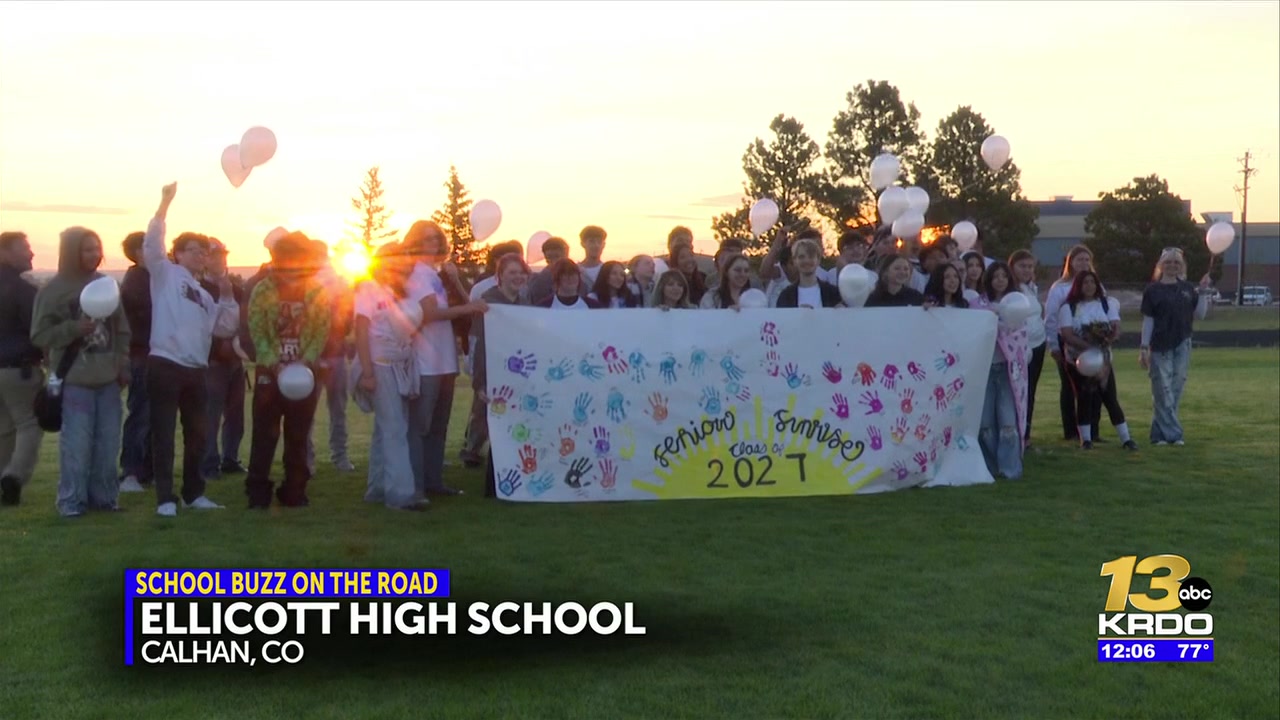
Click here to follow the original article.CALHAN, Colo. (KRDO) – Every school year, Ellicott seniors wake up before dawn and send their goals into the universe.
It’s called ‘Senior Sunrise.’ Each student writes their goals and aspirations on biodegradable balloons, and in unison, releases them to the clouds.
“My message on the balloon was that I hope to do good things in my future and to better myself because there’s nothing more that I want to do than to better myself, Senior Eduardo Dominguez said.
District parents and grandparents award the students’ early alarms with a made-from-scratch breakfast of champions of homemade tortillas, (very) spicy salsa and breakfast burritos.
“I’ve been here my entire life, and I’ve grown up knowing these people, and I have my grandma teaching at the school, my auntie teaching at the school, and I think it’s just a really good environment overall,” Dominguez said.
“What we have that I think a lot of schools don’t is that ability to connect with the kids, and it’s not just the numbers that come into the classroom and what we’re teaching them the content, but it’s really getting to know who they are and what their goals are in life and supporting them in those skills that aren’t just academic,” Ellicott Principal Mike Miller said.
Ellicott is our final ‘School Buzz: On the Road’ of the 2026 school year. You can find each district KRDO visited under the School Buzz tab on KRDO.com.
Stay up to date with the latest local news, sports, and investigations by downloading the KRDO13 app. Click here to download it from the Apple App Store. Android users can download it from Google Play here.
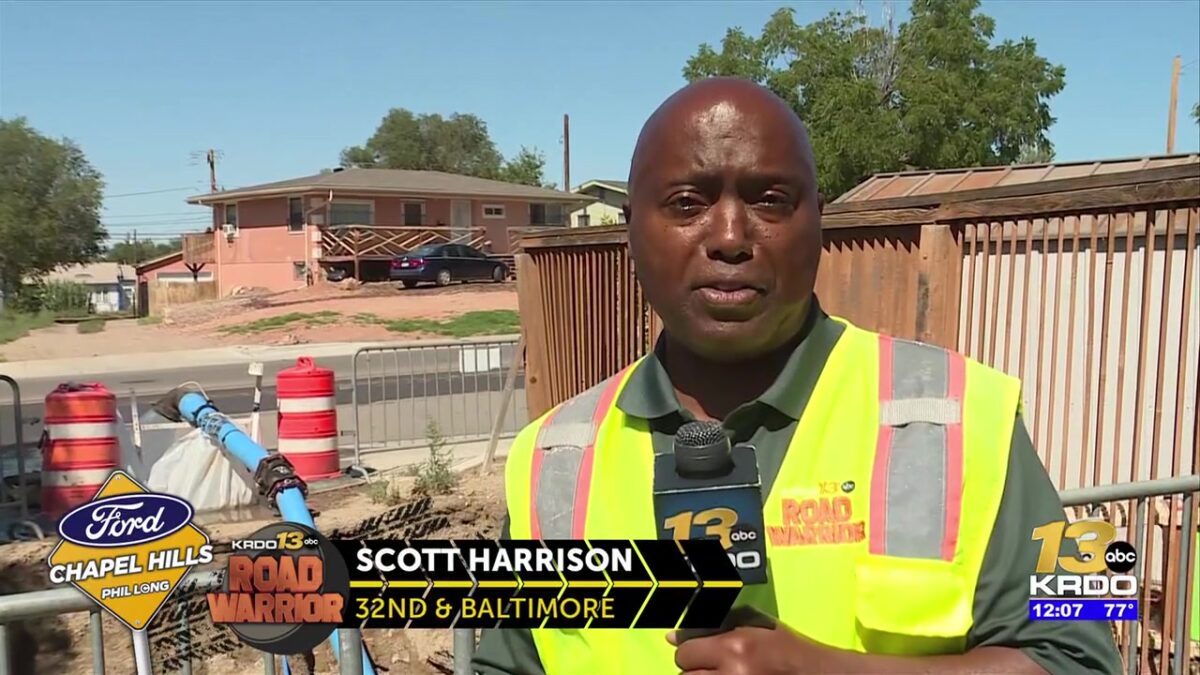
Click here to follow the original article.PUEBLO, Colo. (KRDO) — Pueblo Water Works is in the process of placing liners inside 24-inch and 21-inch water mains, but some neighbors are unhappy about how much water is being released as part of the process.

The release point for the water discharge is Baltimore Avenue, just south of 32nd Street; the water flows downhill for seven blocks and partially floods intersections before entering a drainage channel near 28th Street and Freedom Avenue.

Neighbors who contacted KRDO 13’s The Road Warrior about the matter said the discharge began several weeks ago, and they’re unhappy about it.
“Oh, man! It’s been maybe, at least, a week and a half?” said Shelby Gurule. “Two weeks almost. All this water is just non-stop, non-stop all the time.”

There’s concern about possible street damage, and questions about whether the water is going to waste at a time when much of the state continues to experience drought conditions.

Pueblo Water Works posted a response on its website, saying that draining the mains will relieve pressure and make it easier and safer for crews to line them.
Spokesman Joe Cervi said that draining the mains also allows the utility to continue providing water service to its customers.

“We appreciate the public’s concern about this, and we’re glad to talk to them about it, glad to educate them about it,” he said. “It’s just one of those things that has to happen for this project to get done, and we’re doing it as quickly as we can. But, just know that the water is not going to waste.”
The utility also insists that the water is not being wasted and will eventually flow — through stormwater and wastewater systems — into the Arkansas River that supplies the city with its water.

“Other communities and the farms downstream will be able to use it,” he explained. “There are no issues with water quality.”
Although one customer told The Road Warrior that his bill has increased significantly since the project began, Cervi insisted that customers won’t have to pay for the project.
“He’s welcome to call our customer service team,” he responded. “But this project has zero effect on anyone’s bill.”

Cost and timeline aren’t available for the overall project, which includes several water main improvements in the area.
Neighbors received welcome news on Wednesday, as the utility said that the water drainage on Baltimore should end in a week or two, and similar discharges likely won’t be needed in future project phases.

The current phase covers two miles from the Watts storage tank to Dillon Drive, crossing under Interstate 25.
Stay up to date with the latest local news, sports, and investigations by downloading the KRDO13 app. Click here to download it from the Apple App Store. Android users can download it from Google Play here.
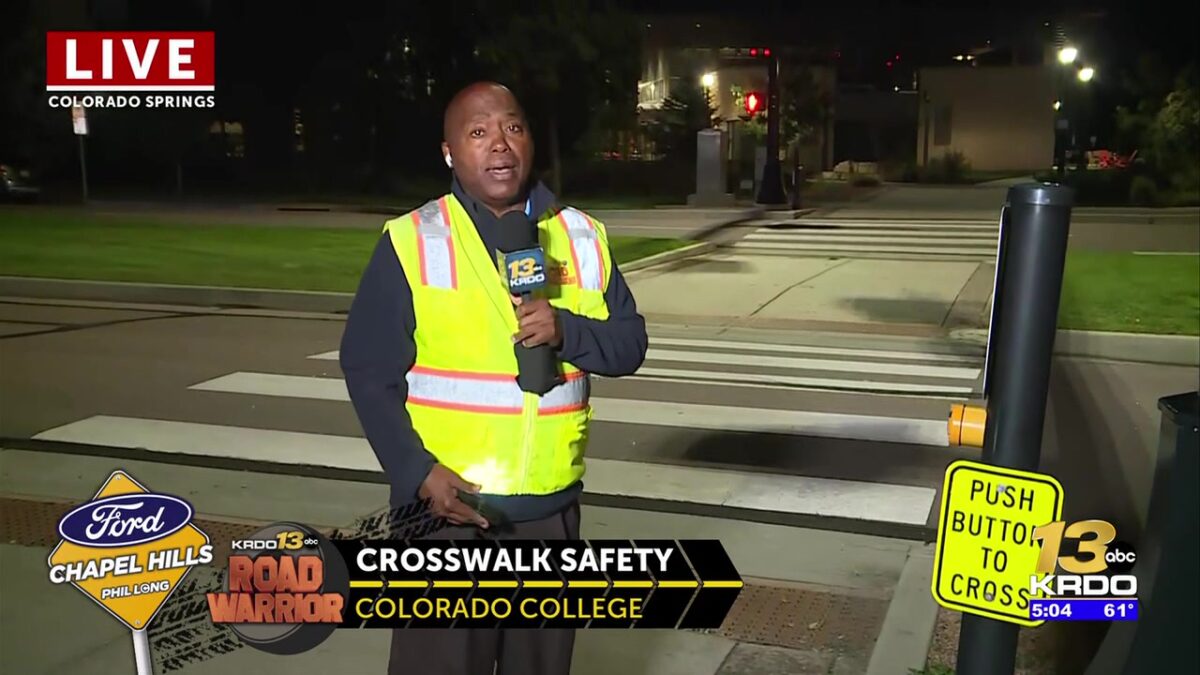
Click here to follow the original article.COLORADO SPRINGS, Colo. (KRDO) — As the new school year began on Monday at Colorado College, campus police are repeating their annual effort to emphasize crosswalk safety for students.

Cathy Buckley, the director of the Campus Safety Police, said that officers traditionally spend the first two weeks of the school year reminding students to use crosswalks and avoid the risks posed by jaywalking.
The challenge is that two busy streets — Nevada Avenue and Cascade Avenue — cut through the campus from north to south, and border the college from east to west.

As classes resumed on Monday, KRDO 13’s The Road Warrior saw many students jaywalking — even cutting between vehicles that were backed up to wait for students properly using crosswalks.

Jaywalking is likely common because it allows students to reach their destinations more quickly, but they may also be preoccupied with going to lunch, the campus routine, or eager to hang out with classmates.
Buckley said that she hopes the safety message eventually sinks in for all students.

“We’ve had some students hit by vehicles while crossing the street over the years,” she recalled. “But few have been serious, and none have been fatal. Sometimes it happened in crosswalks at night when drivers couldn’t see students or other pedestrians. The crosswalk is still the safest place to be. Pedestrians and drivers should make eye contact to ensure that they see each other.”

Buckley added that students face possible disciplinary action from the dean of students, if jaywalking becomes a particular problem or distraction.
Click here to follow the original article.HOLLYWOOD, Calif. (KRDO) – California’s Attorney General canceled Monday’s negotiations with Paramount after he said the company leaked private meetings and acted “in bad faith.”
California and 11 other states, including Colorado, filed an antitrust lawsuit over its $110 billion merger with Warner Bros. The 12-state coalition alleges the merger is anti-competitive and will restrict jobs in Hollywood.
California Attorney General Rob Bonta met privately with Paramount on Friday. Bonta said the company leaked the contents of the meeting and misrepresented what was said.
A Paramount spokesperson said it was not the source of the leak and hopes talks can continue.
Paramount has agreed to freeze the merger until June 1, 2027, or until the two sides can agree on a settlement.
Click here to follow the original article.COLORADO SPRINGS, Colo. (KRDO) – The students at the Fountain Valley Boarding School returned to class Monday after a weekend-long “orientation” that felt more like a College welcome week.
“There was a lot of chat, a lot of game playing. There was a mobile dance party,” Associate Dean Andy Moeschberger said. “We ended the day with a big old dodgeball tournament, and then they were back in their common rooms in the dorm and the excitement of being back on campus.”
The Fountain Valley School is an admission-based college preparatory school on 11,000 acres and offers a wide range of programs. Monday, students shared their experiences at the horse stables, blacksmithing shed, prairie trails and their massive rock climbing wall.
To tell people, ‘Oh, I ride horses at my school,’ it’s really cool. It’s Awesome,” Molly said, a Senior at Fountain Valley and a horseback riding national champion.
Stay up to date with the latest local news, sports, and investigations by downloading the KRDO13 app. Click here to download it from the Apple App Store. Android users can download it from Google Play here.
Click here to follow the original article.COLORADO SPRINGS, Colo. (KRDO) — A new student adjusting to life on a college campus has plenty of responsibilities, such as registering for classes, buying books, and checking on financial aid.

But the first day of the new semester may be the most hectic, as those new students try to find their classes — and with many speaking English as a second language.
Those thoughts ran through the mind of Moises Hinojosa, the director of accessibility services at Pikes Peak State College (PPSC) and its four campuses, with a total enrollment of 12,000.

It led him to attend a technology conference last fall, hoping to find ideas to improve students’ ability to navigate indoors.
Hinojosa said he watched a presentation about an indoor GPS app that helps people find gates at major airports and exhibit halls at museums.

He wondered if that same technology could be applied to indoor spaces on college campuses.
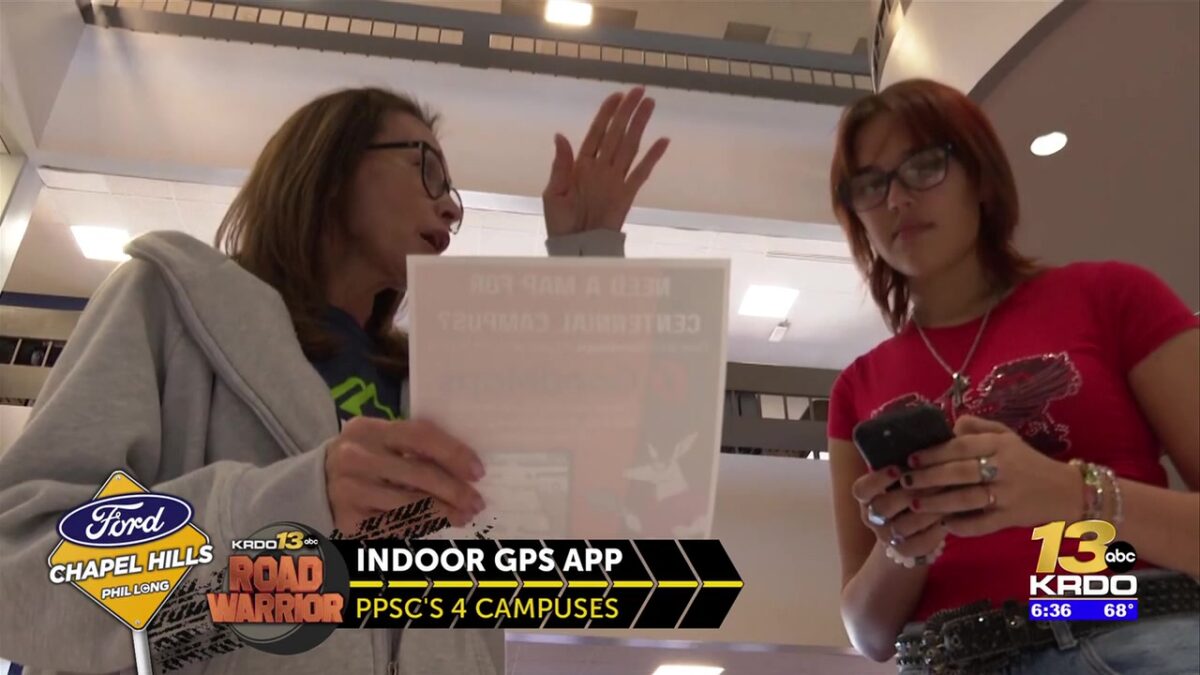
The result is GoodMaps, an indoor GPS app available for the start of the fall semester at PPSC last week.

Hinojosa said that the app releases usage data weekly, so we won’t know until sometime this week how many students are using it.
According to a PPSC release: The free GoodMaps app uses camera-based technology to identify a person’s location and provide precise directions through complex indoor spaces. Users can receive audio and visual guidance, select step-free routes, and navigate the platform in more than 25 languages.

It’s unknown how many campuses use GoodMaps, but one user is Michigan State University, with more than 51,000 students.
Click here to follow the original article.