’24 fire’ grows to nearly 2,000 acres, El Paso County Sheriff issues new pre-evacuation notice

Michael Logerwell

EL PASO COUNTY, Colo. (KRDO) – The El Paso County Sheriff’s Office is issuing a pre-evacuation notice for Hwy 115/Sandy Creek Ranch HTS.

The notice comes as Fremont County officials announce the fire has grown in size to 1,923 acres, still at 0% containment.

Starting on Saturday afternoon, the winds have picked up, causing huge clouds of smoke to waft over Colorado Springs.

Stay up to date on coverage of the 24 Fire:

Smoke in Pikes Peak region caused by 24 fire off Highway 115

Evacuations ordered for ’24 Fire’ in Fremont County 

Evacuation site set up at Pathfinder Park for ’24 Fire’

Mandatory evacuation issued for Costilla County fire

Evacuations lifted in Custer County, Buttermilk fire contained

Click here to follow the original article.

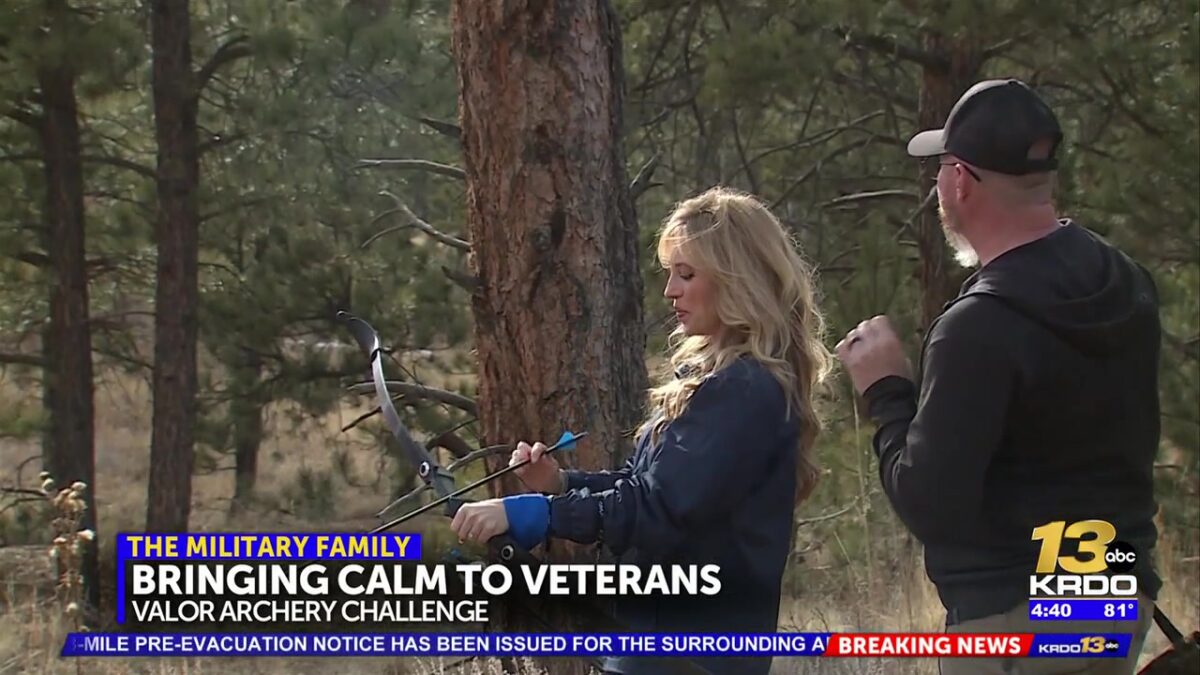
THE MILITARY FAMILY: Army veteran finds healing through archery, offers therapy to others

Heather Skold

TELLER COUNTY, Colo. (KRDO) — One Army veteran hopes to bring relief to others in the way he found his own: archery. 

Sam Westfall was an M1 Abrams Tank mechanic in the Army from 1994-2001.  Sadly, his Army career came to an end after a horrific accident involving the large machine.

“It crushed my thigh flat, all the muscles, dislocated a hip, and the knee.  The Army said, ‘If you can’t run, we have no further use for ya,'” said Westfall. 

In the aftermath, Westfall admits he turned to alcohol and firearms as he struggled with PTSD, anxiety, and depression.

“It’s not the best combination.”

That’s when a friend urged him to try archery.  

“It takes you out of your mind, out of what you’re thinking, whatever cycle that is of depression or PTSD, it eliminates it altogether.  When you go to the gun range, you’ve got ear muffs on, earplugs in.  You can’t really have a conversation.  You’re just putting bullets in a target downrange.”

Now, going on 15 years using archery as his therapy, Westfall is inviting other active duty, veterans, and civilians alike to the Valor Archery Challenge, a one-and-a-half-mile hike that puts participants through a 30-target course.  The targets themselves are even strategically picked: a T. Rex, a honey badger, a flamingo, a mini elk, and a Sasquatch. 

“For some veterans, shooting that silhouette creates different issues.” 

The course even includes various physical challenges, like kettlebell swings and shooting while kneeling — should participants choose. 

“The biggest piece is they walk away with a little camaraderie, a little bit of connection, and a whole lotta fun.” 

The next event with Valor Archery Challenge is April 25. Early bird pricing is $35 for adults, $15 for teens. Rentals are available.

Click here to follow the original article.

Parents frustrated after nearly eight hour wait in ER while their infant struggled to breathe

Mackenzie Stafford

COLORADO SPRINGS, Colo. (KRDO) – A family is sharing their story of frustration with KRDO13 in hopes of making a change in the triage process or response for struggling children at the Children’s Hospital. The Fickas family detailed their account of a recent experience while waiting to be admitted to the emergency room.

Camille is 16 months old. Her mother, Sarah Fickas, says Camille, or Millie, was just recently diagnosed with sleep apnea after a sleep study. According to the American Academy of Sleep Medicine, is a condition where breathing either diminishes or stops during sleep.

“So she had her oxygen prescribed for over a year and then got off in February, like mid-February, when her results came back,” said Sarah Fickas.

First ER visit

On March 6, Fickas took Camille to the ER after she said she had been vomiting.

“I just want to make sure she’s not dehydrated or anything. So we brought her in on Friday, and we waited for however long. She wasn’t bad at all that day. I was just wanting to check on her. So I wasn’t worried about waiting. When we went to a room, they were giving her a bag of fluids, and she fell asleep. And on their monitor, she was sitting around, like, 87 to 89. And they want kids, like, above 89, to be off oxygen. So they sent her home with a sleep oxygen order. So we came back home with oxygen again,” explained Fickas.

A sudden drop in oxygen levels

This is why she says that on March 7, they put Camille’s pulse oximeter, better known as a pulse ox, on her to monitor her blood oxygen saturation.

“About five minutes into her having the monitor on, the monitor red alerted, which is when it dips below 80 because they should still be on oxygen like 80 to 89, but it doesn’t red alert, you’re just supposed to like be monitoring periodically at that point. But when it goes into red alerts, that’s like a medical emergency. So she red-alerted awake at 78, which has never happened because she’s only ever needed oxygen at night,” said Fickas.

She says she turned off the alarm, but it went off again within minutes as Camille’s oxygen levels dropped to 75. They say they called the Children’s Hospital triage and were directed to call 911.

An ambulance arrived, and paramedics turned Camille’s oxygen up to a whole liter, four times what she was prescribed, said Fickas. However, due to cost concerns, Fickas said they declined an ambulance and drove Camille to the ER.

Second ER visit

“We got to children’s at 11:00. Exactly. And when I checked her in, I told them what happened, they triaged her while she was on oxygen, back to a quarter liter. We turned her down to her baseline so they could triage her. They gave her a hospital pulse ox. And we went to sit down in the waiting area, and it was packed. All the chairs were filled up. Most kids were, like, throwing up or having a cough. Similar to what it sounded like when she was coughing. She [Camille] was one of the littlest ones there,” recounted Fickas.

When they sat down, Fickas says Camille’s oxygen levels plummeted, and her chest started retracting while breathing.

“She was immediately in the low 80s, and she was horribly retracting, like, working so hard, harder than I’ve ever seen her work to breathe,” said Fickas.

Fickas ran back up to the front to tell hospital staff. She says they came out and bumped Camille’s oxygen up to half a liter, but Camille was still retracting.

“So I went and got them again, and somebody came and turned her up to a whole liter and then told me that that’s the highest they were willing to turn her up to in the waiting room,” Fickas said.

Fickas said even at the full liter of oxygen, Camille’s chest was still retracting as she worked to breathe. Fickas tells KRDO13 she understands people need to be seen in order of urgency based on their condition. Despite this, Fickas said she felt that her daughter’s condition was life-threatening.

“I had like five or six parents that were there that same night reach out to me saying they were watching her and they like, couldn’t believe that they weren’t seeing her [Camille] helping her,” said Fickas.

Repeated pleas for help

Fickas said she repeatedly went to the front and pleaded to hospital staff, saying that her daughter is struggling, asking if she could be seen. Camille’s mother said they kept saying it’s based on who has the worst symptoms and that they don’t get to choose up front.

Fickas said she started to feel guilt for not taking her daughter to the ambulance. She says when she asked hospital staff, they said even if you brought her in the ambulance, you’d still have the same wait.

Finally seen after nearly eight hours

Fickas tells KRDO13 that after seven hours and fifty minutes, her daughter was taken back to be seen. She says the doctors were apologetic, telling her that Camille should never have waited this long in her condition.

“At that point, the doctor came in, and I’m not kidding. He looked at her for one second. He turned her from one liter to three liters and admitted her immediately, and ordered a chest X-ray, where we found out her right lung was partially collapsed and there was a lot of junk in both of her lungs. About 30 minutes after the X-ray, we were back in the room, and they started her on high flow oxygen therapy at ten liters in the waiting room,” said Fickas.

Camille’s mom says she was shocked that the medical professionals had to bump up Camille’s oxygen to ten liters to maintain her breathing. She said Camille was working so hard, but once she reached 10 liters, she started to look more comfortable.

“Well, about an hour into that, she started working hard again, and they turned her up to a 12,” recounted Fickas.

Fickas says after two hours, they weaned Camille back down to 10 liters.

From waiting room to possible ICU

“They told us if she couldn’t maintain a 10 for two hours, we had to admit her to the PICU, the pediatric ICU, instead of the normal hospital room that they had assigned to her when she got admitted,” recounted Fickas, “I want to know how we went from my daughter being told she’s fine over and over again in the waiting room to a possible ICU admissions within hours.”

She says that made it even more frustrating to hear from the doctors how serious her daughter’s condition was.

“I genuinely believe they’re responsible for her lung collapsing because of how long they made her sit there, retracting, working. Honestly, it just makes me so upset. I feel like they caused so much more damage than help,” said Fickas.

Hospital response

We brought all of their concerns to the Children’s Hospital multiple times and received this response:

Children’s Hospital Colorado is still in the middle of respiratory season and experiencing longer wait times than normal. Our triage process is to care for every patient and their family based on their individual and unique needs and get the sickest kids in as quickly as possible. Children’s Hospital Colorado recognizes the importance of having specialized pediatric guidance available to parents and families, and we strive to see all patients in a timely manner. While wait times can vary during respiratory season, our teams always work diligently to evaluate the urgency of every patient in need. The Children’s Hospital Colorado Patient Relations team is available to address families’ needs and experiences while in our care.

– Children’s Hospital Colorado

Although not for pediatrics specifically, UCHealth confirmed to KRDO13 that it is also experiencing longer wait times due to the respiratory season. CommonSpirit is working on a response. This article will be updated with what we hear back.

UCHealth is committed to providing the best care to every patient we serve.

Currently, our hospitals in southern Colorado are seeing an increase in emergency department visits due to seasonal respiratory infections. Wait times vary depending on the severity of injury or illness of each patient along with how many patients are waiting to be seen.

In addition to emergency departments, UCHealth has several in-person urgent care locations throughout the Pikes Peak region, along with virtual urgent care available in Pueblo and across the state. Patients can schedule same-day urgent care and virtual urgent care appointments through the UCHealth app.

More information about virtual urgent care can be found here: Anyone in Colorado can access Virtual Urgent Care – UCHealth Today

– A UCHealth spokesperson

A call for change

Despite this, Fickas’ frustrations continue.

“How do you have a one-year-old girl sitting in the waiting room for eight hours and then admit her immediately with respiratory failure?” Camille’s mom wondered.

Fickas says she understands the wait when your child does not need to be taken back immediately.

“We’ve been there, and we’ve waited a long time, and, like, I’ve known that it’s okay to wait a long time because I’m like, okay, my kid, there’s obviously worse kids in here than my kids right now. But then, like times, like this, I’m like, okay, she needs to be seen, like, right now,” said Fickas.

She says by sharing this, she hopes there can be changes in triage to get patients in sooner. Fickas tells KRDO13 she feels as though had a doctor looked at her daughter, they would have immediately brought her daughter back.

After a few days in the hospital, Camille was sent home. She is still recovering from her partially collapsed lung and using oxygen at night, said Fickas.

The Fickas family has filed a grievance with the Children’s Hospital through patient advocates. While they haven’t decided anything yet, the Fickas family is also exploring their legal options.

Click here to follow the original article.

Evacuations ordered for ’24 Fire’ in Fremont County

Sam Page

UPDATE – SATURDAY, MARCH 21, 6:38 p.m.: The Fremont County Sheriff Office says the fire has grown to 1,923 acres, still at 0% containment. The fire has not jumped CO Hwy 115.

The El Paso County Sheriff’s Office this afternoon has issued a a pre-evacuation notice for Hwy 115/Sandy Creek Ranch HTS.

FCSO says, “Unless something drastically changes there will not be another update till tomorrow morning.”

UPDATE – SATURDAY, MARCH 21, 4:23 p.m.: Per Fort Carson officals, “High winds and hot, dry temperatures have increased the fire’s activity, with the fire now standing at approximately 1,126 acres and 0% containment. There are currently 125 firefighters from local, state and federal partners on the ground supporting response efforts.

We will provide updates as more information becomes available.”

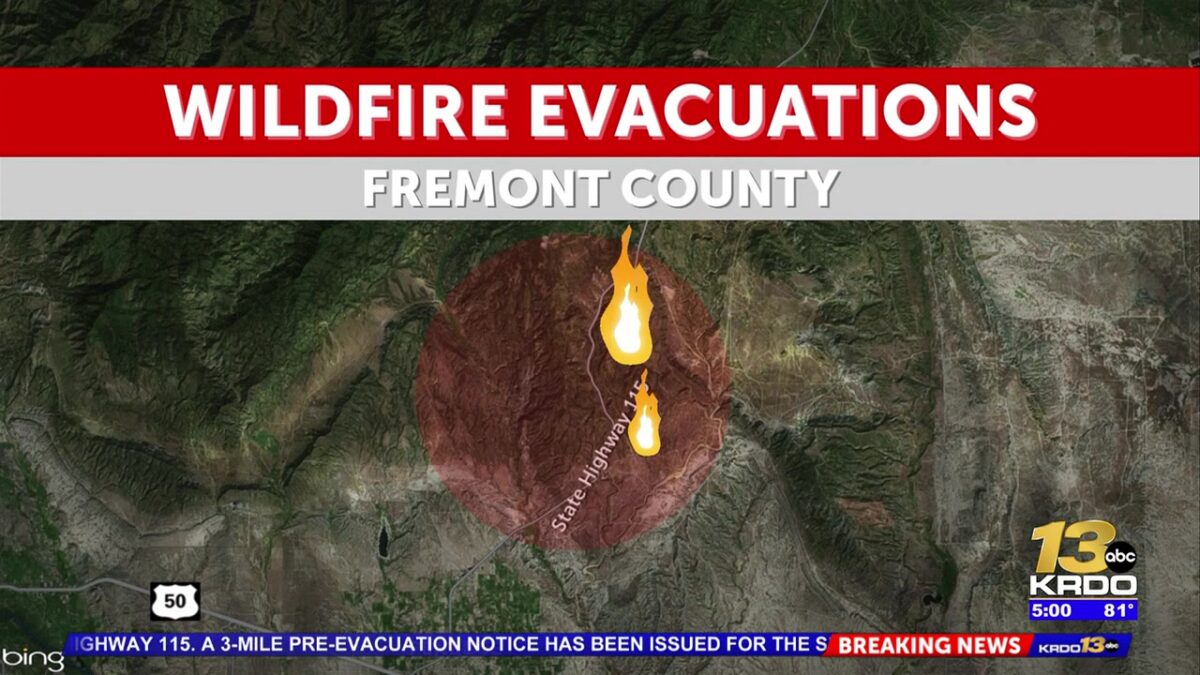
Original reporting:FREMONT COUNTY, Colo. (KRDO) — Evacuations have been ordered for the “24 Fire” burning east of HWY 115 on Ft Carson land, which is now approximately 1,067 acres with zero percent containment, according to officials.

According to officials, a 2-mile evacuation order has been issued for areas around County Road F45 and State Highway 115. A 3-mile pre-evacuation notice has also been issued for the surrounding area. Residents, pets, and livestock can evacuate to Pathfinder Park, says officials.

May be an image of mapEvacuation Map provided by the Fremont County Sheriff’s Office

The Fremont County Sheriff’s Office is going door to door and asks that if you evacuate before deputies make it to your residence, leave a note on the door with your name and that you evacuated.

For more information on evacuations, call 719-276-7421.

Fort Carson held a press conference on March 20, during which it confirmed that six agencies are working on the fire. Fort Carson says there are 120 first responders working and two C-130s.

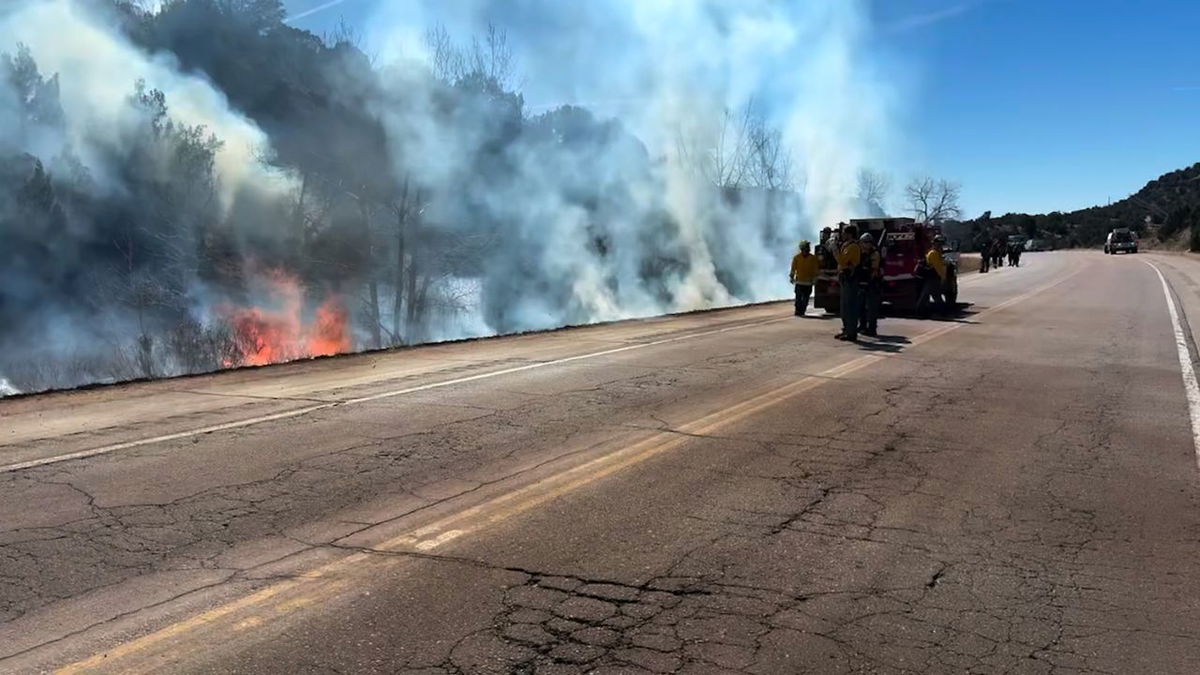
Ft. Carson says crews worked overnight to contain the fire along the southwest side, preventing the fire from spreading across the highway into Fremont County. Air support and ground crews resumed additional efforts this morning. Highway 115 is closed with no estimate on reopening between mile markers 22 and 28.

Increasing wind and rising temperatures are expected today, officials say, and smoke will continue to be visible.

The fire broke out on Wednesday, March 18, around 10 a.m. and is believed to be human-caused. Crews initially achieved 50% containment and estimated the size to be 67 acres on Thursday morning.

By Thursday afternoon, smoke plumes were seen from across Colorado Springs, Pueblo, and even Teller County, prompting alerts from several fire departments, and the fire jumped to over 600 acres within a matter of hours.

So far, no injuries or structural damage have been reported.

Several other fires have burned this week, including a 60-acre grass fire in Calhan and a fire in Custer County that prompted evacuations; both have since been contained, and evacuations have been lifted.

This year, Colorado is experiencing its warmest start to a water year in 130 years, combined with one of the driest periods on record, according to officials. Colorado Springs Utilities is even urging residents to conserve water.

KRDO13 will have live updates in our shows and online throughout the day. This is a developing story and may be updated.

Click here to follow the original article.

The School Buzz: Impressive D-3 Science Olympiad team headed to State

Josh Helmuth

EL PASO COUNTY, Colo. (KRDO) — A group of D-3 students is heading to State — not for sports, but for science.

Widefield High School’s Science Olympiad team is heading to the state tournament after a strong showing at regionals. The Gladiators finished 10th out of 22 teams, placing in the top five in four different events, led by a fourth-place finish in helicopter and another in entomology.

Suzanne Carmody is the head coach. “I’m incredibly proud of the hard work of all of the students who put in the hard work this semester and represented Widefield well at the regional tournament,” she said.

“It takes a team effort to qualify for state, and we’re excited for the opportunity to take our regional experience and build on that for next month’s state tournament.”

The state tournament is set for April 4th at UCCS, where students will compete in events ranging from biology and chemistry to physics and engineering.

Is there someone or something remarkable at your school? Email us! SchoolBuzz@KRDO.com

Click here to follow the original article.

Roadblock in place on Highway 115 near Fort Carson for wildfire in Fremont County

Scott Harrison

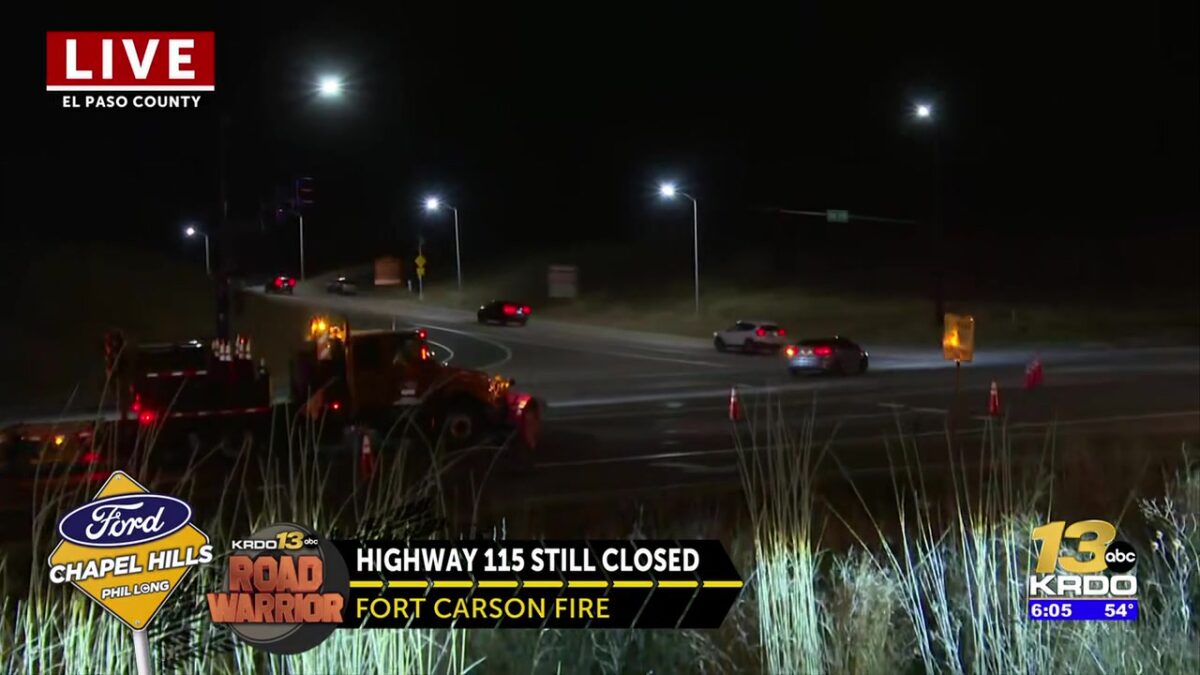
EL PASO COUNTY, Colorado (KRDO) — The Colorado Department of Transportation (CDOT) and the Colorado State Patrol (CSP) are currently manning a roadblock as part of the safety closure of Highway 115 due to a large wildfire in Fremont County.

The north end of the roadblock is where the highway intersects Rock Creek Canyon Road to the west and Wilderness Road to the east, leading into Fort Carson; the south side of the closure is in Penrose.

This is at the top of the hill above The Mountain post, near the installation’s water tower — a visible and familiar spot for many drivers.

Traffic uses Highway 115 as a shortcut to US 50 and to reach the communities of Penrose, Florence, and Cañon City.

A state trooper is checking drivers entering the area and allowing only local or emergency traffic to pass the roadblock.

As of 5 a.m. on Friday, there was no indication of when authorities would lift the roadblock.

A CDOT supervisor said that the roadblock began at around 5 p.m. on Thursday.

Richard Emond bristled at the possibility that the highway could be closed all weekend.

“I was headed to Cañon City to do some banking and other things,” he explained. “I come up on a sign that says you can’t go farther, but there’s no explanation. And you have to go another 50 miles or better, around the way. And with gas prices, what is the matter with people?”

The highway closure extends 18 miles from near the Fort Carson water tower to just north of Penrose.

Click here to follow the original article.

The Air Force women’s basketball team playing in the WNIT against Northern Colorado

Rob Namnoum

The Air Force women’s basketball team hosted Northern Colorado in the WNIT on Thursday night. The Lady Falcons would fall 79-72. Keelie O’Hollaren lead the way with 15 points.

Click here to follow the original article.

KRDO13 Investigates: The home insurance fine print loophole that could cost you thousands

Josh Helmuth

Some Colorado homeowners say a single line in their insurance policy cost them thousands

COLORADO SPRINGS, Colo. (KRDO) – Home insurance rates in Colorado have surged more than 50 percent in just a few years. But some homeowners say it’s not just the price of coverage that’s changing — it’s what that coverage actually pays.

KRDO13 Investigates found a little-known clause buried deep inside some homeowners’ insurance policies that can drastically limit how much a company will pay after a disaster.

For some condo owners, that clause has meant the difference between tens of thousands of dollars in coverage or just a few thousand dollars paid.

One Colorado Springs homeowner says she learned that lesson the hard way.

“It’s Unethical.”

That’s how Marisa O’Malley describes what happened after a hailstorm hit her neighborhood in Colorado Springs’ Gold Hill Mesa community last summer.

O’Malley said she believed she had done everything right when it came to her Progressive insurance policy.

“I was pretty much reading from a script,” she said, describing the questions she asked when buying coverage.

But after the storm damaged roofs across the community, the homeowners’ association issued a $17,000+ special assessment to cover repairs.

That’s when O’Malley says she discovered something buried deep in her policy.

“And then being sold a policy with a clause that was buried, I think on page 40 something,” she said.

When she filed her claim, the response stunned her.

“They responded and said, ‘We can give you a thousand dollars,’ to that effect, and I was like, ‘That can’t be right,’ this is for seventeen thousand dollars.”

The experience left her frustrated and confused.

“I mean, just kind of a sick feeling in my stomach,” she said.

O’Malley believed her policy covered $50,000 in loss assessment protection — coverage designed to help condo owners pay HOA assessments after major damage.

But the payout offer was only $1,000.

“It’s just a way for them to be off the hook when these things come up,” she said.

Later, she added a broader question about the industry.

“I guess my question is, why can’t people just take care of people? … Let’s just do better.”

A loophole hidden in the fine print

The issue centers around a type of coverage many condo and townhome owners purchase called loss assessment coverage.

Here’s how it works.

Most condo communities carry a master insurance policy through their homeowners association. That policy typically includes a large deductible — sometimes tens of thousands of dollars. If a catastrophic event occurs, like hail or fire, the HOA can divide that deductible among homeowners. Those charges are called loss assessments.

To prepare for that possibility, many condo owners buy additional insurance specifically meant to cover those assessments. But some policies now contain a “special limit” clause that caps how much insurers will pay if the assessment comes from the HOA’s deductible.

In some cases, that cap is just $2,000 — even if the homeowner purchased much higher coverage.

KRDO13 Investigates found several homeowners in Gold Hill Mesa who ran into the same limitation after last summer’s hailstorm.

KRDO13’s Josh Helmuth discovered the issue because it happened to him as well; a special limit clause was added to his policy without his knowledge, a policy also with Progressive.

Colorado is a high-risk state for insurers, especially because of hail and wildfire.Source: Insurify

A lawyer says he’s seen it before

When KRDO13 Investigates showed the policy language to Colorado Springs real estate attorney Robert Schifferdecker, he immediately recognized it.

“You act like you’ve seen this before,” said KRDO13’s Helmuth.

“Yes,” he said.

Schifferdecker has spent seven years practicing real estate law and says he reviews insurance policies regularly.

“Unfortunately, I think a lot of insurance companies view it as a way to cut costs,” he said. “They don’t want to pay out these special assessments.”

He says the clause essentially gives insurers predictability when catastrophic damage occurs.

“Because, quite frankly, they know how much they’re going to be on the hook for if a special assessment happens,” said Schifferdecker.

That means even homeowners who buy large amounts of protection may still hit the same cap.

“So I could have signed up for $100,000 in coverage… and still only received $2,000?” asked Helmuth.

“That is very correct,” he replied. “Yes. You are reading this correctly.”

Schifferdecker says he’s seeing broader changes in policies across the insurance industry.

“They’re auto-renewing policies, but instead of raising your premiums, they’re lowering what they’re actually going to cover,” he said.

In other words, shrinkflation – the policy renews automatically, but the protection inside it may quietly change.

Why insurance is changing in Colorado

Colorado has become one of the riskiest states in the country for insurers.

According to the National Oceanic and Atmospheric Administration, the state experienced 76 weather and climate disasters causing more than $1 billion in damage between 1980 and 2024.

That includes:

42 severe storm events

12 wildfires

16 droughts

flooding, freezes and winter storms

Source: NOAA

The pace of disasters has also accelerated.

From 1980 to 2024, Colorado averaged 1.7 billion-dollar disasters per year. In the last five years, that number jumped to 4.4 per year.

Events like the 2021 Marshall Fire, which destroyed more than 1,000 homes in Boulder County, have reshaped the state’s insurance market.

According to the Colorado Division of Insurance:

Home insurance premiums increased 51 percent from 2019 to 2022

76% of insurers reduced the number of homes they were willing to cover

That consolidation means fewer companies writing policies in Colorado.

And when catastrophic losses happen elsewhere — like hurricanes in Florida or wildfires in California — the financial impact can spread nationwide.

“Most insurance companies operate at a national level,” Schifferdecker explained. “So if there’s a billion-dollar payout in California or Florida, they use the entire country to cover that loss.”

Nationally, insurers paid $79 billion in catastrophe losses in 2023, according to the Insurance Information Institute.

Colorado also ranks:

2nd in the nation for hail claims (more than 380,000 from 2017–2019)

4th highest in home insurance costs

Source: 2024 Colorado Home Insurance Survey

A challenging market for HOAs

The insurance pressures are particularly intense for homeowner associations.

A consultant report commissioned for Colorado found that HOA premiums have more than doubled in some areas.

The report, by actuarial firm Lewis & Ellis, says the increases are driven by:

wildfire risk

hailstorms

rising reconstruction costs

inflation

and tighter underwriting by insurers

The result has been “significant upheaval” in the HOA insurance market, according to the report.

In some cases, insurers have exited the market entirely or dramatically reduced the number of communities they insure.

Can the loopholes be removed?

KRDO13 Investigates took the issue to Congressman Jeff Crank, who represents Colorado’s 5th District.

“That’s the whole point of a loss assessment rider, right?” Crank said. “If they’re going to sell that, they need to live up to that.”

Crank said the issue may ultimately require state lawmakers to examine.

“Insurance companies are regulated at the state level,” he said. “If this isn’t fair, it needs to be addressed.”

But he also warned that the state faces a balancing act.

“If you over-regulate it, companies may choose not to write policies in that state,” Crank said.

Still, he believes insurance companies have a responsibility to make coverage clearer.

“It’s sad you almost need a lawyer to read your policy before you sign up to get insurance,” he said. “It shouldn’t be that way.”

“It sounds like the situation you’re referring to was a bit deceptive,” he said.

State regulators looking at the issue

Colorado regulators are aware of the concerns.

Since 2019, the Division of Insurance has received more than 200 complaints related to loss assessment disputes.

A state insurance official, speaking anonymously, confirmed the agency is trying to close this special limit loophole so homeowners can get the coverage they expect.

“We are trying to prohibit these endorsements,” said the official over the phone with KRDO13’s Helmuth.

If successful, future policies may no longer include these special limits.

Progressive responds

KRDO13 Investigates reached out to Progressive Insurance for comment, asking several questions, including “how does Progressive justify the policy wording that limits coverage to $2,000 per unit for assessments that result from an HOA master policy deductible, given that catastrophic events affecting HOA properties commonly trigger the association’s deductible?”

In a brief statement, the company simply said:

“We’re committed to serving the Colorado property market and continue to write new homeowners business across the state. For property related policy and coverage questions, we encourage customers to reach out to their local independent agent or contact us directly for assistance.”

How to protect yourself

Experts say there are several steps homeowners can take to avoid surprises in their insurance policies.

Know your HOA’s coverage

Ask your homeowners’ association what the deductible is on the master insurance policy.

Your personal coverage should be high enough to cover a potential assessment.

Check for special limits

Ask your insurance company whether your policy includes special limits on loss assessment claims.

If it does, you may be able to purchase additional coverage to remove the cap.

Review your policy every year

Insurance policies can change at renewal — sometimes without requiring a new signature.

Experts recommend reviewing coverage annually and asking specifically about:

wind and hail coverage

flood coverage

loss assessment coverage

replacement cost for your home

Understand what your HOA will rebuild

Some HOA policies rebuild only the structure itself. That means homeowners may need their own insurance for:

flooring

appliances

cabinets

renovations

personal belongings

Make sure coverage matches home value

If your property value or renovations have increased, your policy limits may need to be updated.

The bottom line

Insurance experts say the biggest mistake homeowners make is assuming their coverage hasn’t changed. But as the insurance market evolves, policies are becoming more complex. That’s why O’Malley says she hopes her story helps other homeowners avoid the same surprise.

“I guess my question is, why can’t people just take care of people?” she said. “Let’s just do better.”

Resources for homeowners

Rocky Mountain Insurance Information Association guide to homeowners insurance

Colorado Division of Insurance consumer resources

NerdWallet insurance coverage guide

Click here to follow the original article.

First Colorado Springs interactive aquarium opens Friday

Bradley Davis

COLORADO SPRINGS, Colo. (KRDO) – The Jungle Reef touch aquarium inside the Chapel Hills Mall opens to the public for its soft launch on Friday. It’s the first interactive aquarium to ever open in Colorado Springs, according to Jungle Reef’s Facebook.

The aquarium said customers will be able to touch and feed stingrays, explore different reptiles, see exotic fish and sharks and walk into a bird room.

The aquarium is selling early bird tickets for Friday through Sunday. If people buy their tickets ahead of time on Thursday, the aquarium said they can use the code EARLYBIRD20 to get 20% off, while supplies last.

Jungle Reef said a large portion of its fish and animals have been rehomed from tough situations. Earlier this year, the aquarium sent out a message to the community offering to rehome residents’ freshwater fish that had outgrown their tanks.

Grand opening tickets cost $22 for adults and $17 for children before the 20% discount code.

Click here to follow the original article.
UPDATE: Discovery of unmarked, underground utility lines should not delay 8th Street project in Colorado Springs

Scott Harrison

COLORADO SPRINGS, Colo. (KRDO) — Two recent construction projects showed how the discovery of underground, unmarked utility lines delayed progress for several months.

However, Colorado Springs Utilities (CSU) said that a similar discovery on the ongoing 8th Street improvements project should not delay work there.

In a release issued last week, city officials revealed that after crews recently finished drilling to locate utility lines under the street, they “discovered many previously unmarked underground utilities between Motor City Drive and the Fountain Creek bridge.”

With a water main replacement as part of the project, crews must ensure they can account for every utility line — who it belongs to, whether it is active or inactive, and what to do with it.

On Wednesday, CSU spokesperson Cassie Melvin explained that some of the unmarked lines were installed before modern record-keeping, which is not unusual.

“The newly-identified lines are now being recorded and incorporated into updated design plans,” she said. “Some revisions are being made. However, the overall project is not changing.”

The utility line situation could be why the water main replacement, originally scheduled to begin this winter, hasn’t begun yet; the start date is now planned for sometime this spring.

A similar utility line issue delayed construction of the new Voyager Parkway bridge as part of the extension of Powers Boulevard north to Interstate 25, and slowed progress on relocating utility lines for the new Coral Bluffs substation on Austin Bluffs Parkway.

Overnight on Wednesday, as scheduled, crews closed the west side of the Fountain Creek bridge on 8th Street — kicking off a monthlong phase to complete repair work and rebuild the sidewalk.

The traffic pattern has changed in the area, and all lanes will be in their final configuration at the end of that phase.

On Wednesday, a milling crew arrived to begin scraping old asphalt from the bridge, allowing repairs to continue.

Officials expect the $12 million project — covering two-thirds of a mile between Cimarron Street and Motor City Drive — to end this fall, after that stretch is repaved.

Click here to follow the original article.