Free After Hours event at Albrecht-Kemper Museum blends creativity, community and collectible art

Rebecca Evans

ST. JOSEPH, Mo. (News-Press NOW)– The Albrecht-Kemper Museum of Art welcomed guests Tuesday evening for a lively night of creativity, community, and collectibles during its Free Museum After Hours.

From 4 p.m. to 7 p.m., visitors of all ages explored the museum’s galleries while designing custom trading cards, exchanging them with others, and enjoying a laid-back environment. Visitors were able to meet with local artists and discuss techniques and artwork together.

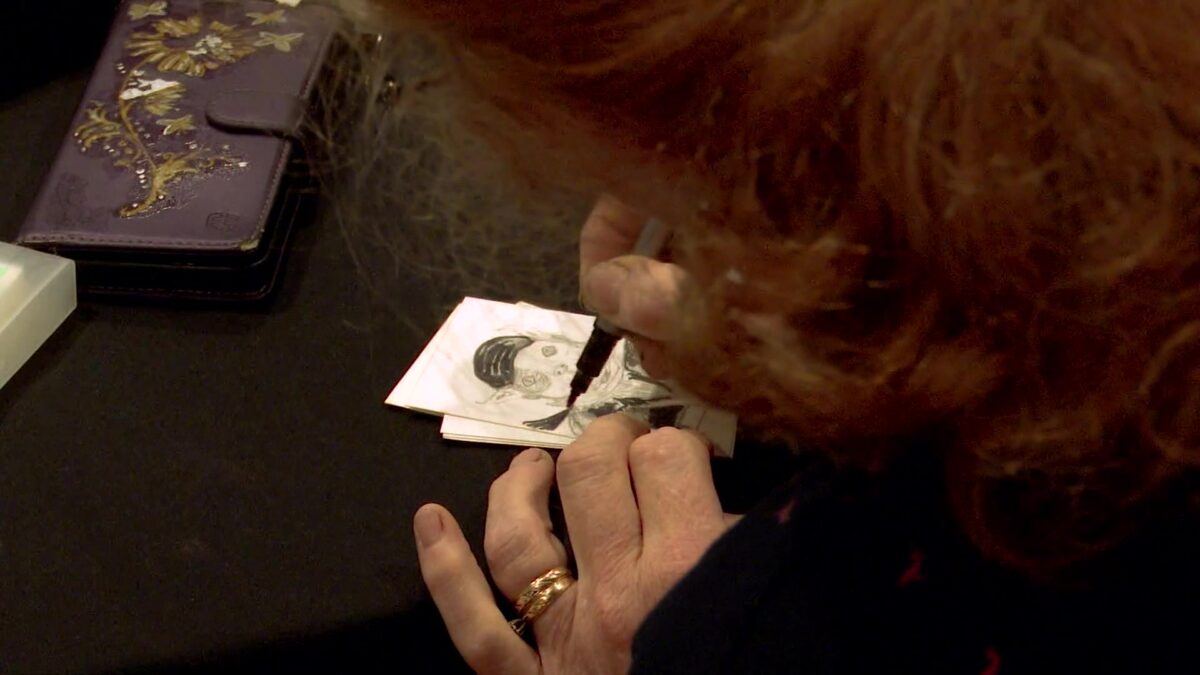
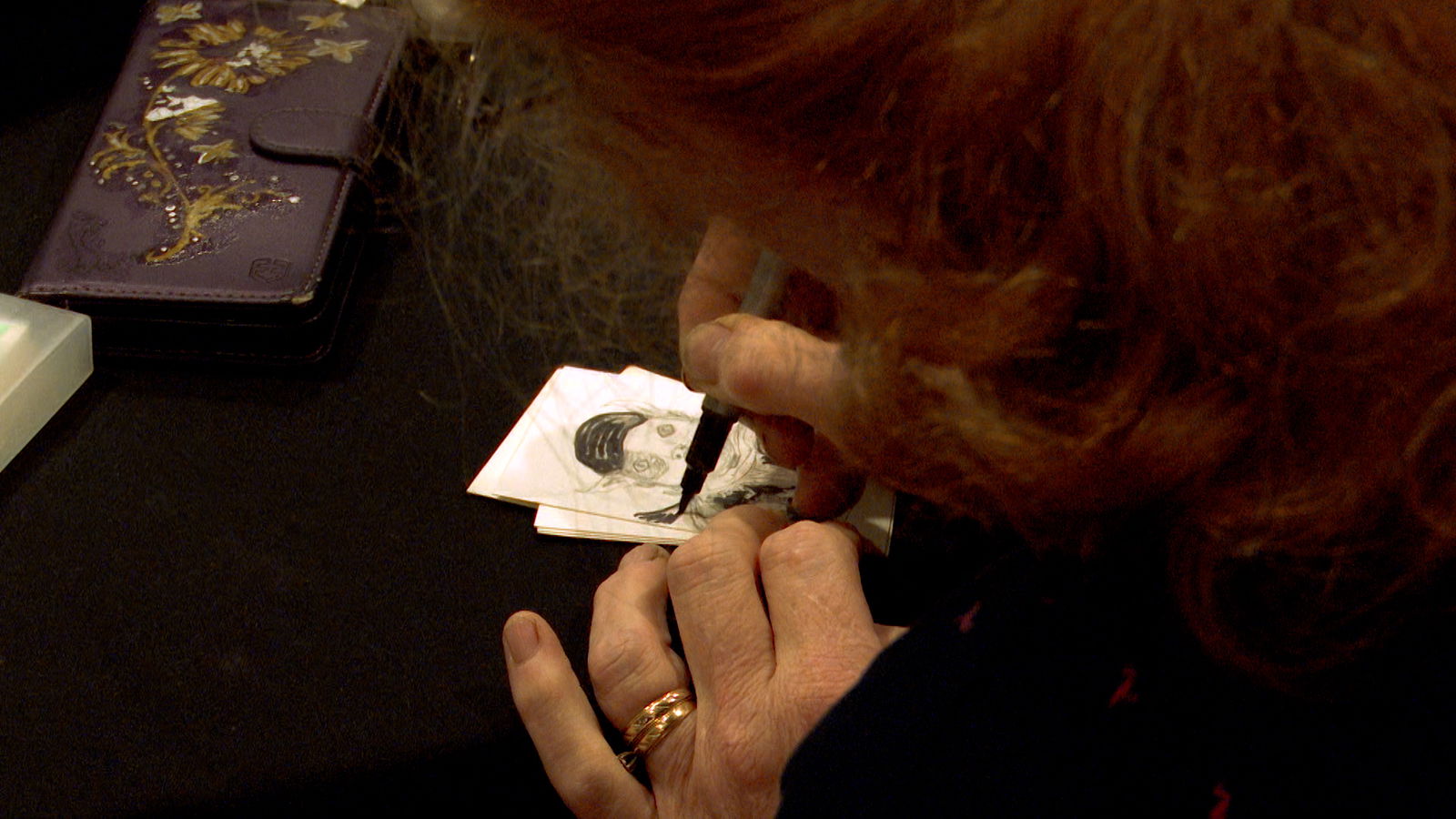
A woman works on a stack of her trading cards to hand out to others.

The event is part of the museum’s ongoing After Hours series, held every fourth Tuesday of the month, offering the public free admission and interactive art activities. No reservations are required, and each month features a new creative theme.

Madison McKinley, marketing and communications manager at the museum, said,  “It’s a fun thing to do with local artists and creatives in the community. Make these tiny cards and you swap and trade with each other and create these awesome collections of miniature local art.â€Â Â 

A full collection of artist trading cards.

All supplies were provided by the museum, making it easy for both beginners and seasoned artists to participate. 

McKinley said, “We wanted to have a way for people that couldn’t make it during our regular hours. A lot of people work or they have kids, things going on… We wanted to give an opportunity to the community to come out and see the museum.â€

People observe the gallery’s colorful art.

Rachelle Gardner-Roe, one of the museum’s current exhibiting artists, was on hand during the event, taking time to connect with guests, share insights about her work, and encourage young artists to express themselves creatively.

She said,  “I love that the museum provides this opportunity to have free admission and have fun activities. I love the fact that it’s kid-friendly. I love to see children engage with my art. Earlier, there was a parent reading some of my poetry to her child, and I just absolutely loved that.â€

A graphic highlighting the museum’s After Hours events, every 4th Tuesday of the month. Free to the public from 4-7pm.

The Albrecht-Kemper Museum of Art is located at 2818 Frederick Avenue in Saint Joseph, Missouri. The next After Hours event theme will be the 1920s style architecture of Saint Joseph. For more information on future After Hours events, visit albrecht-kemper.org or call (816) 233-7003.

Click here to follow the original article.

UMKC provides updates on new schools to be built in St. Joseph

Patrick Holleron

ST. JOSEPH, Mo. (News-Press NOW) — Among the topics discussed at the University of Missouri’s Board of Curators meeting, different aspects regarding the new UMKC School of Dentistry and School of Medicine buildings were shared.

Curators unanimously approved the UMKC School of Dentistry project to move forward.

The university building was previously announced with a target date set for FY 2026.

While this is still the plan, the University is awaiting additional funds for capital renovations from the state and federal government, as well as philanthropic entities.

“A lot of people in the community have embraced our students,” UMKC chancellor and president Mauli Agrawal said. “Some of us (are) doing the same here. I’m hearing people (receiving) take it home thanksgiving dinners. The community itself has wrapped its arms around this program. That’s made everything (easier) from financing to the students feeling at home here.”

As for the School of Medicine, a ribbon cutting for the new building will be held on Wednesday, Aug. 20, at the building’s site on Faraon Street, across from Mosaic Life Care’s Campus.

One overall message that was echoed by all the board members in anticipation of the new school buildings’ arrival is that they can serve as a template for all the schools around Northwest Missouri.

“We’re not only a university for people who live in Columbia, Missouri, or the University of Missouri,” University of Missouri Board of Curators Chair Todd Graves said. “And we’re bringing many programs and opportunities for people across the state. No one’s benefited more than Northwest Missouri, but certainly other areas have benefited a great deal as well.” 

The School of Dentistry’s expansion into St. Joseph is set to positively impact the dentist and dental hygiene practitioner shortages in rural Missouri communities.

Currently, the UMKC School of Dentistry is Missouri’s only public dental school and provides 63% of the state’s dentists, according to a UMKC press release.

The School of Medicine is looking to continue to grow, with plans to expand its program by enrolling 20 students per year into the four-year program.

Click here to follow the original article.

Westlake Ace Hardware donates dozens of fans to Salvation Army

Kendra Simpson

ST. JOSEPH, Mo. (News-Press NOW) — Across the United States, some people are struggling to beat the record-breaking heat waves, but in St. Joseph, Westlake Ace Hardware has donated dozens of box fans to the Salvation Army to ensure residents stay cool this summer.

“We are so blessed, we thank the community,” Social Services Director for the Salvation Army, Emily Bravo, said. “This is going to give a lot of our community members the opportunity to stay safe and cool this summer.”

While St. Joseph is still in the early summer months, average temperatures are settling in the upper-80s, leaving those without access to air conditioning to face dangerous heat.

Westlake Ace Hardware has worked with the Salvation Army since 2012 to provide box fans to low-income families, seniors and others in need.

“Ace Hardware, in general, has raised over $1 million annually for this drive,” General Manager of Westlake Ace Hardware, Mark Sidwell, said. “It kind of goes along with our core values of, you know, helping the community and doing what we can when we can to help anything in need, and right now it’s the heat.”

Westlake Ace, its employees and customers worked together to raise $1,020 in a recent register round-up campaign, raising enough money to purchase 62 box fans, which were donated to the Salvation Army and will be distributed to individuals and families in need throughout the area.

“We appreciate each one of them,” Bravo said. “Even if it was a few cents rounded up, every penny matters.”

Sidwell said the community has been just as enthusiastic about giving back as Westlake Ace and the Salvation Army are.

“We get a lot of good comments from the customers coming in and, you know, with the heat and everything, it makes them feel good to be able to help the community out where needed,” he said.

While the box fan drive is over for the season, community members can still help the Salvation Army provide for those in need by calling the non-profit at 816-232-5824 or visiting their St. Joseph location at 602 Messanie St.

Due to the extreme heat, the organization is currently asking for donations of sunscreen and bottled water.

Click here to follow the original article.

Northwest Missouri lawmakers talk legislative wins and local priorities at Chamber breakfast

Kirsten Stokes

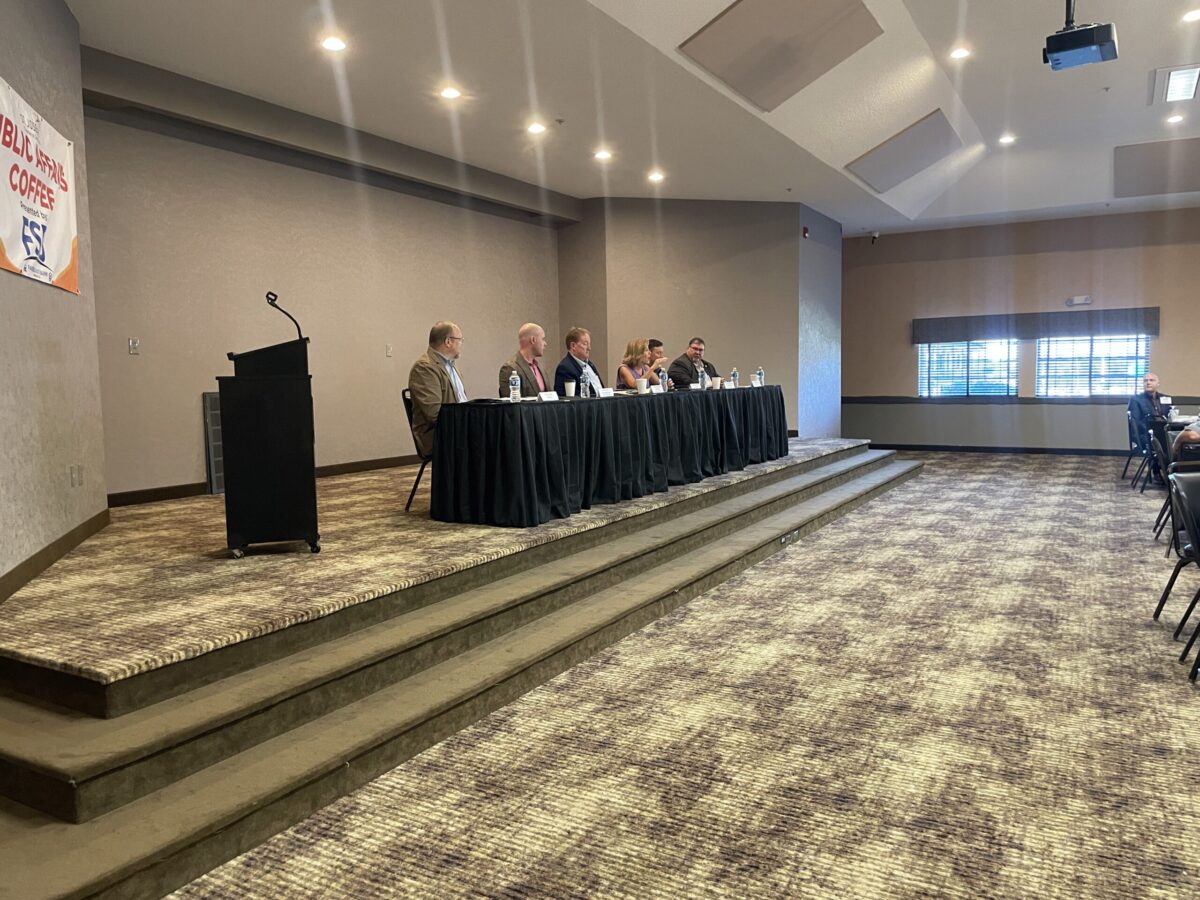
ST. JOSEPH, Mo. (News-Press NOW) — Key lawmakers representing Northwest Missouri gathered early Thursday morning for the Chamber of Commerce’s Public Affairs Coffee to brief local leaders and residents on the 2025 Missouri legislative session.  

Among those in attendance were State Representatives Bill Falkner, R-District 10, Brenda Shields, R-District 11, Dean Van Schoiack, R-District 9 and Sean Pouche, R-District 13, along with State Senator and Senate Majority Floor Leader Tony Luetkemeyer, R-Parkville

One of the session’s major measures, House Bill 199, drew detailed commentary.

Originally, just four pages focused on Chapter 100 bonds, the bill evolved after Rep. Shields encouraged it to be sent to the committee.

After multiple revisions, including additions supported in Kansas City and St. Louis and a nuisance amendment by a Senate colleague, the bill aims to support smaller counties’ economic development efforts. 

Senator Luetkemeyer, who served as Majority Floor Leader, reflected on his role in building cooperation in a notoriously divided chamber.

“It was important to build member relationships within the Senate,” Sen. Luetkemeyer said.  

Rep. Shields also spoke about school safety legislation, including measures requiring emergency operation plans, anti-intruder door locks and the Stop the Bleed Act. Senate Bill 68, she added, focuses on behavioral and homicidal risk assessments in schools to improve prevention. 

“It’s really important for our students to feel safe in the classroom. All of our schools have to develop safety plans for their school to be able to know what’s going to happen in an emergency,” Rep. Shields said.

Rep. Shields added that schools should be equipped with CPR training and behavioral risk assessments to identify students who may be experiencing homicidal thoughts or other serious mental health challenges. While such information should remain confidential, it must be accessible to trusted adults or counselors responsible for the student’s safety and well-being.

Rep. Pouche addressed infrastructure and asked whether former Gov. Parson’s vision of expanding Interstate 70 might still be realized in the future and Rep. Van Schoiack raised the importance of investing in electric power infrastructure, including the long-term possibility of new nuclear plants in Missouri. 

When asked what Missourians should be paying more attention to, each lawmaker gave a unique perspective: 

Sen. Luetkemeyer: Underfunded rural roads 

Rep. Faulkner: Local governments needing more direct funding 

Rep. Shields: The impact of state decisions on local tourism 

Rep. Pouche: Encouraging young people to vote locally and limiting state interference in local governance.

Rep. Van Schoiack: Property tax reform and day-to-day challenges to property rights 

To learn more about Missouri legislators and their initiatives, visit house.mo.gov

Click here to follow the original article.

City Manager addresses network security incident

Rebecca Evans

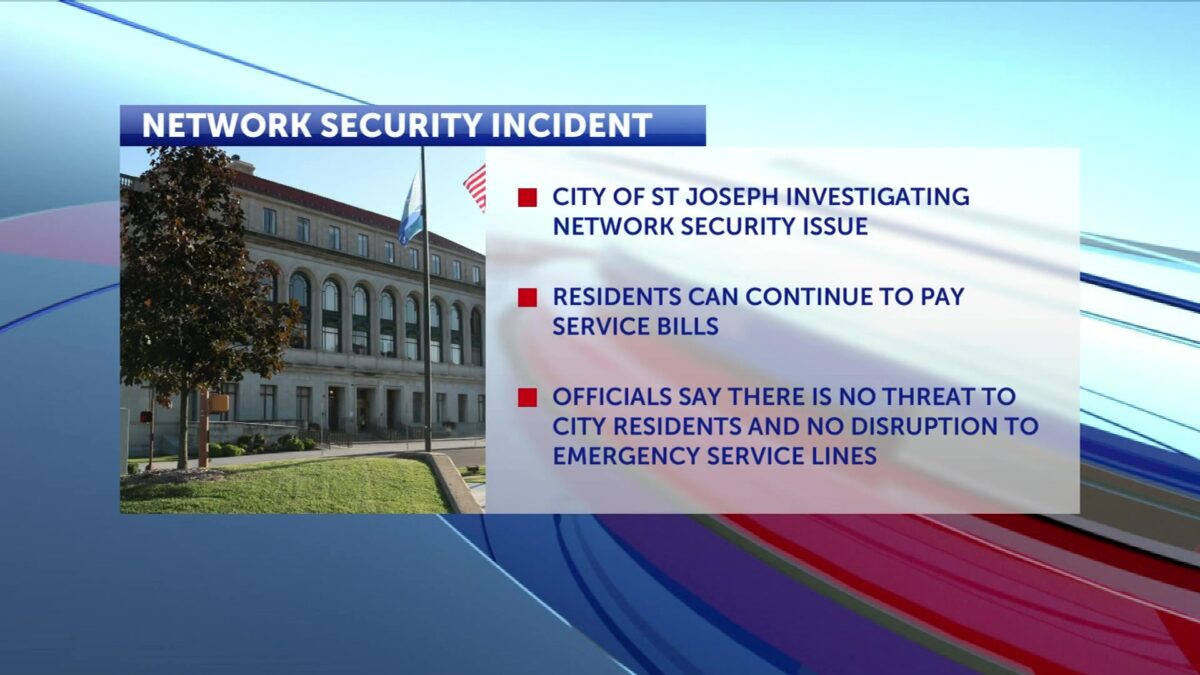
ST. JOSEPH, Mo. (News-Press NOW) — According to St. Joseph City Manager Mike Schumacher, the city is currently investigating a network security issue.

Schumacher said city residents can continue to pay service bills as normal. He also said there has been no interruption to emergency service lines because of this issue.

Schumacher also said there is no threat to city residents.

News-Press NOW will provide updates when they become available.

Click here to follow the original article.

UM Board of Curators amends transfer policy, approves FY26 budget

Cameron Montemayor

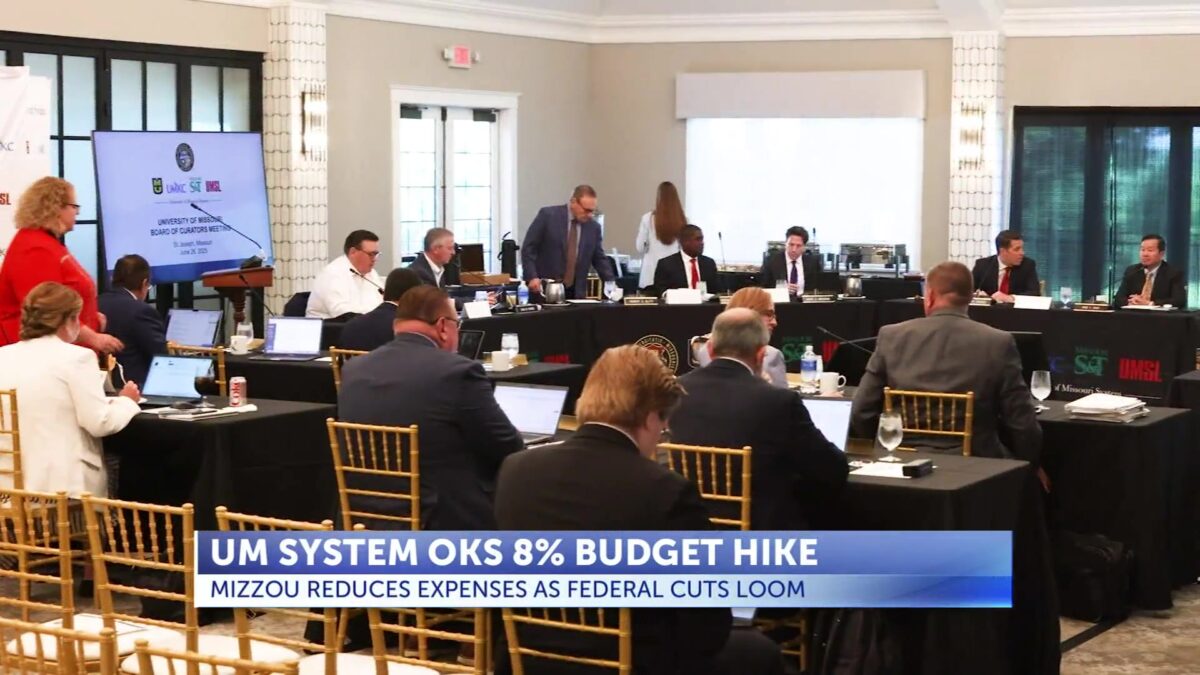
ST. JOSEPH, Mo. (News-Press NOW) — The St. Joseph Country Club played host Thursday to some of the state’s top leaders and policymakers in higher education, with future funding and key projects taking center stage.

The University of Missouri System Board of Curators addressed a wide variety of subjects affecting the state of Missouri and the country as a whole. The board unanimously approved a $5.3 billion budget for 2026, an 8% increase from the $4.9 billion budgeted for FY 2025.

The system consists of four campuses: Columbia (MU), St. Louis (UMSL), Rolla (Missouri S&T) and Kansas City (UMKC), along with an extension program and ten research and technology parks.

With $539 million in appropriations from the state of Missouri for 2026, the budget represents a 3% jump in state core funding for all four universities, including an additional $10 million for rural medical education. 

“This is the sixth straight year of increasing our state appropriation,” University of Missouri President Mun Y. Choi said. “Missouri has made a commitment, beginning about six years ago, to improve the funding for the University of Missouri and other public universities because of the importance of our role as an economic engine.”

This budget increase comes despite a reduction of roughly $7 to $8 million in federal grant revenue for the system and amid critical questions about long-term support from the federal government in anticipation of spending cuts and reduced funding for higher education. 

Choi pointed to schools like the University of Utah, Minnesota and Maryland as all having seen state appropriations cut by 7% to 10% this year.

“There are many states that are not doing well in terms of their support for public higher education,” Choi said. “We don’t like to cut programs because we believe everything that we do is important, but it’s really time for us to prioritize.”

Choi said despite not wanting cuts, this meant asking central administrators, deans and department chairs across the system to prioritize projects based on the impact on student success, research breakthroughs and state engagement, three of their core missions.  

“Just that pursuit, we’ve had a $40 million reduction in expenses…We did that in a very short time frame,” he said.

The consent agenda approved by Curators also moved a key project forward for Northwest Missouri. Board members unanimously approved a $16 million appropriation request for a new UMKC Dentistry program in St. Joseph for fiscal year 2027.

Approval of the 2026 operating budget was far from the only key move made Thursday; board members approved a project request for a $120 million Energy Innovation Center for MU, an energy production research facility that will combine engineering, physics, computer science, chemistry and biochemistry.

“The Energy Innovation Center is targeted primarily at enhancing the research capabilities of our university,” Board Chairman Todd Graves said. “We’d like to create additional jobs and economic opportunity. And certainly, energy will be a challenge for the next many years in this country. So that’s what we’re focused on.”

Choi agreed, saying advancements in energy production will have wide-ranging benefits that go far beyond the university.

“Not only are the energy innovations going to be very important at the university, but useful and practical policies that involve our energy use in this state,” Choi said.

Unanimous approval of the consent agenda also cleared the way for a new transfer policy change throughout the UM System.

The change allows students from any state to transfer from an accredited community college to a university if they meet requirements, which include: 60 transferable credit hours, an Associate of Arts degree and a minimum 2.5 GPA. 

Choi called it a “proactive” move, allowing the UM System to open doors to new markets and help plan for the future, one that could include fewer students enrolling in higher education.

“We decided, ‘let’s make it nationwide’ because of the types of programs that we are offering,” Choi said. “Missouri right now is a place where we have to seek students from beyond our own borders because of the peak of high school graduates you’re going to see in the coming years.”

Click here to follow the original article.

States can cut off Medicaid funding to Planned Parenthood, the Supreme Court rules

Associated Press

By LINDSAY WHITEHURST – Associated Press

WASHINGTON (AP) — A divided Supreme Court allowed states to cut off Medicaid money to Planned Parenthood in a ruling handed down Thursday amid a wider Republican-backed push to defund the country’s biggest abortion provider.

The case centers on funding for other health care services Planned Parenthood provides in South Carolina, but the ruling could have broader implications for Medicaid patients.

The court split 6-3 in the opinion, with the three liberal justices dissenting.

Public health care money generally can’t be used to pay for abortions. Medicaid patients go to Planned Parenthood for things like contraception, cancer screenings and pregnancy testing, in part because it can be tough to find a doctor who takes the publicly funded insurance, the organization has said.

South Carolina’s Republican governor says no taxpayer money should go the organization. The budget bill backed by President Donald Trump in Congress would also cut Medicaid funding to Planned Parenthood. That could force the closure of about 200 centers, most of them in states where abortion is legal, the organization has said.

Gov. Henry McMaster first moved to cut off Medicaid funding to Planned Parenthood in 2018 but was blocked in court after a lawsuit from a patient named Julie Edwards. Edwards wanted to keep going there for birth control because her diabetes makes pregnancy potentially dangerous, so she sued over a provision in Medicaid law that allows patients to choose their own qualified provider.

South Carolina, though, argued that patients shouldn’t be able to file those lawsuits. The state pointed to lower courts that have been swayed by similar arguments and allowed states such as Texas to block Medicaid funding from Planned Parenthood.

Public health groups like the American Cancer Society, by contrast, said in court papers that lawsuits are the only real way that Medicaid patients have been able to enforce their right to choose their own doctor. Losing that right would reduce access to health care for people on the program, which is estimated to include one-quarter of everyone in the country. Rural areas could be especially affected, advocates said in court papers.

In South Carolina, $90,000 in Medicaid funding goes to Planned Parenthood every year, a tiny fraction of the state’s total Medicaid spending. The state banned abortion at about six weeks’ gestation after the high court overturned it as a nationwide right in 2022.

Follow the AP’s coverage of the U.S. Supreme Court at https://apnews.com/hub/us-supreme-court.

Click here to follow the original article.

See St. Joseph: Downtown fun and games

Kendra Simpson

ST. JOSEPH, Mo. (News-Press NOW) — This weekend, it’s going to be all fun and games in St. Joseph. News-Press NOW’s Kendra Simpson found the weekend’s top entertainment in this week’s edition of See St. Joseph.

As June comes to a close, Pride celebrations continue to thrive. So come on down for The Pride is Right.

Just like everyone’s favorite game show, contestants will be chosen at random to compete for some fabulous prizes. One ticket will purchase a light supper and a chance to play, but official St. Joe Pride members will receive two chances to compete. Membership for St. Joe Pride can be purchased at the door or on the St. Joe Pride website. All proceeds of the event will go toward supporting St. Joe Pride festivals in September. Doors open at 6 and the game starts at 7 p.m. Friday at First Christian Church located at 927 Faraon St.

Good music, good games and great drinks can only be found at Music Bingo night at the Den this Friday night.

Instead of numbers, they’re dropping beats and playing the tunes we all love. Match songs to the bingo card for a chance to win prizes. Whether a music nerd or just looking for a good time, everyone is welcome to join in on the free-to-play game. Attendees must be 21 years or older. The game begins at 7 p.m. Friday at the Den, located at 519 Felix St.

The Community Market is back for June to continue the fun and bring forth the entrepreneurial spirit.

These markets are always a huge success for those selling and those purchasing. It’s a win-win situation because while St. Joseph’s local vendors get to show off their products, the shoppers may find a handmade treasure or two. Come support local vendors and grab amazing products. The market will open rain or shine from 9 a.m. to noon Saturday at the Center for Joy, located at 100 S 10th St.

Tune in to News-Press NOW every Thursday for more See St. Joseph.

Click here to follow the original article.

Trump’s airstrikes, constitutionality debated

Kirsten Stokes

ST. JOSEPH, MO (News-Press NOW) — As tensions escalate in the Middle East, President Donald Trump’s authorization of a bombing campaign in Iran has reignited a national and local debate about the limits of presidential war powers.

News that circulated from last week’s bombing of Iran’s nuclear weapons has made St. Joseph residents question the president’s swift decision to send B-2 bombers to three Nuclear sites in Iran, including Fordow, Natanz, and Esfahan.

“I think it’s pretty scary because we don’t know what’s about to happen. I pray that it stays where it needs to and doesn’t come into town,” said Toni Carroll, a St. Joseph resident.

Under Article I, Section 8 of the U.S. Constitution, Congress holds the exclusive power to declare war. However, presidents have historically used their role as Commander-in-Chief to initiate military actions without a formal declaration of war.

Trump’s recent airstrikes on Iranian military targets were justified by the White House as a response to an “imminent threat†and framed under the 2001 and 2002 Authorizations for Use of Military Force. Critics argue that those authorizations, passed in the aftermath of 9/11 and the Iraq War, are outdated and stretched far beyond their original intent.

House Speaker Mike Johnson met with reporters at the White House on Monday, defending the president’s strikes in Iran, stating the War Powers vote in Congress is not ‘appropriate’ at this time while recalling presidents on both sides of party lines making parallel decisions.

A War Powers vote happens when Congress votes on whether to authorize or end a specific military action under the War Powers Resolution of 1973. It may be used to authorize the use of military force, revoke or limit a president’s ongoing military operations, or demand the withdrawal of U.S. forces from a specific conflict.

“For 80 years, presidents of both parties have acted with the same Commander-in-Chief authority under Article II,” Johnson said. “You had President Biden use it three times in Middle East operations. President Obama went on an eight-month campaign of bombing Libya to take down the regime there.”

On Tuesday, the President posted on Truth Social: “THE CEASEFIRE IS NOW IN EFFECT. PLEASE DO NOT VIOLATE IT!†However, just hours later, Israel accused Iran of launching new missiles and vowed to retaliate.

Tehran denied violating the truce, but the ceasefire remains in a precarious position, with Trump lashing out at both countries after his brokered agreement appeared to collapse.

Many Republicans in Congress appeared at ease after Tuesday’s confidential briefings were rescheduled for Thursday, largely due to ongoing ceasefire agreements between Iran and Israel.

“Israel, as soon as we made the deal, they came out and they dropped a load of bombs, the likes of which I’ve never seen before,†Trump said as he departed Washington for a NATO summit in the Netherlands.

Some argue, the president’s inherent powers allow for defensive military action, especially when U.S. personnel are at risk. But, in March, Director of National Intelligence Tulsi Gabbard testified on Capitol Hill that Iran is not building a nuclear weapon and that the country’s supreme leader, Ayatollah Ali Khamenei, had not authorized the nuclear weapons program. Which President Trump subsequently said was “wrong” as it pertained to Gabbard’s intelligence on the situation.

Assistant professor of History at Missouri Western State University, Dominic DeBrincat, said that presidents sidestep the War Powers resolution frequently.

“The War Powers resolution technically only applies to imminent threats to the U.S.,” DeBrincat said. “So with the enrichment of Uranium in Iran, their capabilities of possibly putting weapons together within 8 days was not necessarily an imminent threat, but the way Trump sidestepped the War Powers Resolution was by saying we don’t have an imminent threat, we are helping an ally. And there’s nothing in the Constitution that seems to limit any president from helping an ally. In this case, it’s Israel.”

Trump is not the first president to face criticism over military intervention without congressional approval. In 1986, Ronald Reagan, a Republican, ordered airstrikes in Libya in response to a terrorist bombing. Bill Clinton, a Democrat, launched missile attacks on Sudan and Afghanistan in 1998. More recently, Barack Obama, a Democrat, approved military intervention in Libya in 2011 without congressional backing, citing humanitarian necessity.

Each of these cases reignited conversations about the War Powers Resolution of 1973, a law intended to rein in presidential authority by requiring congressional notification within 48 hours of military action and withdrawal within 60 days unless approved. Compliance, however, has been inconsistent across administrations.

“As history has shown us since 1973, democratic presidents don’t take much of a stance on the validity of the War Powers resolution, but they still sidestep it,” DeBrincat said. “Republicans have been a bit more vocal about challenging elements of it as being too restrictive on their ability to handle the Armed Forces. Since 1973, every president has acted as if this is within their chief purview.”

Spending eight years in the US Navy, Ty Dejoinville said the decision was reckless and agitative.

“As a veteran, I’m (expletive deleted) that this has happened. It should have never happened. They didn’t provoke us; we are the aggressors.

Missouri lawmakers have offered mixed reactions. On June 18, Senator Josh Hawley, a Republican, defended the president’s right to take decisive action in the name of national security. He stated he “didn’t want war” with the Middle East, but sided with the president.

“I think we want to be careful there,” Hawley said. “I mean, it’s one thing to say to our ally Israel that, ‘Hey, we’re going to support your right to self-defense’. We should do that 100%. The president is very strong on that. It’s another to say to Iran ‘Look, we’re not going to bail you out’.”

Governor Kehoe, in an X post on June 21, after U.S. airstrikes, said, “We strongly support the President’s actions against Iranian nuclear facilities.”

As the debate rages in the Capitol, many are demanding answers not just about Iran, but about who gets to decide when the nation goes to war.

“My guess is, in terms of legal measures that are in place…they’re (Congress) not going to limit the president from acting the way he has thus far,” said DeBrincat.

Click here to follow the original article.

Fewer counted but homelessness still a concern in St. Joseph

Jenna Wilson

ST. JOSEPH, Mo. (News-Press NOW) – New data from the Continuum of Care’s annual Point-in-Time Count shows a decline in the local homeless population, but advocates caution that the numbers may not reflect the full scope of the issue.

The Point-in-Time Count, conducted each January by a coalition of dozens of agencies, is used to identify the number of people experiencing homelessness in a community. This year’s numbers show a decrease compared to 2024.

United Way is one of the agencies that participates in the Continuum of Care and works on continuing to decrease those numbers.

“There can be several factors leading into that,” said Jodi Flurry, United Way director of community investment. “One of them is the weather. In January 2025, it was really cold. I don’t think it topped 20 degrees the day we had to go out and do the street count. And sometimes people just don’t want to be found. They may be living in a vehicle or an abandoned building that we don’t even know about. So, while the numbers are down, which is encouraging from 2024, I don’t know if that’s a completely accurate reflection of what homelessness looks like in our community.”

To conduct the annual count, volunteers affiliated with Continuum of Care visit areas where unhoused individuals are likely to be staying to survey them and assess their access to resources. The goal is to gather data on how many people are living unsheltered, in shelters or in transitional housing across Andrew, Buchanan and DeKalb counties.

According to the data:

In 2023, 175 individuals were identified as homeless, with 134 sheltered and 41 unsheltered.

In 2024, the number rose significantly to 268, with 187 sheltered and 81 unsheltered.

In 2025, the count decreased to 218, with 155 sheltered and 63 unsheltered.

“It’s hard to say, just based on the Point-in-Time Count, whether this is a victory for our community,” said Rachael Bittiker, executive director of Community Missions, who serves as a service provider for the Continuum of Care. “The count is done in the middle of January and only on one day. For people who live on the streets, when it’s that cold, you’re hiding somewhere.”

Both organizations say the focus should remain on the bigger picture. The data is being used to guide services and resources for a population that continues to grow nationwide.

“Over the next few months, we will be evaluating this with our partner ICA so we can dig into the data and look at demographics such as veterans versus seniors or those with severe mental illness,” Flurry said. “We’ll look at that information and decide if we need to have more of a focus on certain areas, whether that’s substance abuse or maybe a trend showing more people in their early 20s are experiencing homelessness.”

With continued resources, the Continuum of Care aims to connect unhoused individuals with support systems and ultimately move them into permanent housing. Officials say this also helps reduce long-term costs to the community.

“Homeless people on the street cost the community a lot of money,” Bittiker said. “When analyzing data from HUD and other sources, some say $35,000, some say $50,000; that’s what it costs for one homeless individual to remain on the street. We want people to be productive members of society. We all have issues, barriers and trauma but it’s how we address it that helps people succeed.”

Community Missions’ 24-hour shelter is set to officially open on July 1, and officials hope it will play a key role in collecting more accurate and consistent data.

“I think as a community, we’ll be able to look at those numbers more effectively and have more than just one day in the freezing cold to try to find people,” Bittiker said. “We’ll have months and months of data to work with.”

Click here to follow the original article.