Columbia utility customers can round up bills to help neighbors in need

Euphenie Andre

COLUMBIA, Mo. (KMIZ)

The City of Columbia is giving residents a new way to help neighbors struggling to pay their utility bills.

The city announced Wednesday that customers can now donate through their monthly utility bills by rounding their payment up to the nearest dollar. The average donation is expected to be about 50 cents a month, with contributions capped at $11.88 over a full year.

For example, a customer with a $74.35 utility bill could round their payment up to $75, with the additional 65 cents going toward a fund that provides financial assistance to Columbia residents experiencing financial hardship.

The program comes as the city works to stretch its existing utility assistance funding. Austin Krohn, a spokesperson for Columbia/Boone County Public Health and Human Services, said the proposed Fiscal Year 2027 budget includes $600,000 for utility assistance.

The program ran out of funding quickly during Fiscal Year 2026. According to previous reporting, the city had spent about $580,000 of its $600,000 annual budget just two months into the fiscal year. That prompted Columbia/Boone County Public Health and Human Services to request an additional $200,000 from reserves.

Krohn said the city plans to take a different approach this upcoming fiscal year.

“We are planning to reduce the assistance amount from $900 per household for electric bills to $500 per household. We also plan to put an $80k a month cap in place,” Krohn wrote in an email.

The city hopes the program will help about 1,200 people, although officials do not yet know how much money the new donation program will raise. Eligible recipients will receive a set amount of assistance.

Two groups of residents may qualify for utility assistance: Seniors and people with disabilities, as well as families with children.

Applicants may qualify if they or someone in their household is older than 60 years old or permanently disabled. Families may also qualify if the applicant is the parent or legal guardian of a child and meets the program’s custody and school requirements.

Applicants must also meet residency and income requirements. Their household income must be at or below 200% of the federal poverty level, and they must be permanent Boone County residents or Boone Electric customers who meet the other eligibility requirements.

Once customers enroll in the donation program, their participation is automatic and the contribution will appear on their monthly utility statement. Customers who want to give more can choose a fixed monthly donation of $1, $5 or $10, or make a one-time contribution.

The City said contributions to the utility assistance fund are tax-deductible.

Click here to follow the original article.

Missouri districts could see 2025 data tied to A-F grading plan by end of September

Ellyse Edwards

COLUMBIA, Mo. (KMIZ)

Missouri school districts could get their first look at 2025 performance data connected with the state’s proposed A-F grading framework by the end of this month, a Missouri Department of Elementary and Secondary Education official said Thursday.

Jocelyn Strand, DESE assistant commissioner for the Office of Quality Schools, led the department’s final public feedback session on the proposed system Thursday.

Strand said the department wants to give districts up to a couple of weeks to examine the data and determine how to explain the information to parents. She said the estimated end-of-September timeline is tentative.

DESE is still working through parts of the proposed formula and is considering changes based on the feedback it has received.

“I think a lot of what we’re looking at is how we include the growth to proficiency and the literacy and whether or not that caps,” Strand said. “We’ve heard a lot of concerns about that.”

Strand said the department is also still evaluating how the formula will account for differences among schools, including poverty, student mobility, available resources and student populations. She also said one number cannot include every characteristic of a school or district.

“A number isn’t the complete story of a district, and there are any number of other characteristics that parents and families and other stakeholders look at when they are talking about the performance of their district,” Strand said.

DESE plans to provide documents explaining what is included in the calculations and why each measure is important. Strand said the grade cards would also include links to district websites so families can find additional information about their schools.

Strand said the letter grades would not affect a district’s accreditation. She said the school-grading framework would have the same type of appeals window as Missouri’s annual performance report.

The next step is presenting the framework to the Missouri State Board of Education. Strand said DESE will continue seeking input from education stakeholders and parent organizations as it develops the remaining details.

Gov. Mike Kehoe signed Executive Order 26-01 in January, directing the State Board of Education and DESE to develop an annual A-F grading framework for public schools, charter schools and districts.

26-01Download

The order calls for each school and district to receive an overall A, B, C, D or F rating based on a 100-point scale.

Elementary and middle school grades would include academic achievement, value-added growth and growth toward proficiency in English language arts, literacy, mathematics and science. The order defines growth toward proficiency as whether a student with two consecutive years of Missouri Assessment Program results is on track to reach grade-level proficiency within three years.

High school grades would include academic achievement, value-added growth, Success Ready Graduate measures and the four-year graduation rate.

A school or district that tests fewer than 95% of its students on required state assessments would have its rating lowered by one letter grade. Private schools could choose to participate by opting into state assessments.

The executive order also urges the State Board of Education to increase the thresholds for earning each letter grade by five points the following year if 65% of schools receive an A or B.

Jason Anderson, executive director of the Missouri Association of Elementary School Principals, called that provision a “moving target.”

“If 65% of the schools are getting an A or a B, that means the cut scores are too low,” Anderson said. “And so they’re going to raise those standards. That makes zero sense. It’s a moving target.”

Anderson said the association does not support the proposed system.

“Reducing a school to a single letter grade does not make information more meaningful simply because it is easier to understand,” Anderson said.

The Missouri State Teachers Association also opposes assigning individual letter grades to schools and districts.

“I think that the approach for letter grades is flawed, and we’ve seen other states that have moved away from single letter grades,” said Matt Michaelson, who is the association’s director of government relations. “And they’ve looked toward what the department is currently doing with a full dashboard that gives a better picture of what districts are doing.”

Michaelson said the final feedback session showed that questions remain about the timeline and what the grades would represent.

Several people who attended Thursday’s session also spoke against the proposal and questioned whether a single grade would give parents an accurate understanding of a school.

Click here to follow the original article.

25 years later, the health toll of 9/11 still follows first responders

Erika McGuire

COLUMBIA, Mo. (KMIZ)

The Health Toll of 9/11

25 years after the Sept. 11, 2001 terror attacks in New York, first responders who worked at Ground Zero continue to suffer health consequences linked to exposure of toxic and hazardous materials.

The World Trade Center Health Program reports more than 9,000 first responders have died from illnesses related to the attacks.

The program was established on Jan. 2 2011 after former President Barack Obama signed the James Zadroga 9/11 Health and Compensation Act of 2010, officially establishing the program that has been funded through 2090. The program provides eligible responders and survivors with no-cost medical monitoring and treatment for certified 9/11-related health conditions.

As of June 30, 2026, 144,000 people were enrolled in the program, including 56,299 first responders and 38,984 survivors in New York. Missouri currently has 117 first responders and survivors enrolled.

While 412 first responders died on the day of the attacks, the toll of 9/11 did not end that morning. In the years since, thousands of people have died from illnesses linked to exposure at the World Trade Center site, highlighting the lasting health consequences of the attacks.

Dr. Kate Grossman, a pulmonary and critical care physician at Boone Health was completing her fellowship and pulmonary medicine training at Mount Sinai, at the time of the attacks, in the upper East Side of New York which is the site for the World Trade Center Health Program. During her fellowship she was treating patients who were affected by the toxins even a decade later.

“That dust that was created there was really unique dust, it had of course big material in it that we don’t usually breathe into our lungs,” Grossman said. “Things from a collapse of a building, so concrete, glass, what makes up drywall mixed with smoke and burning fuel,”

First responders were also exposed to asbestos, heavy metals and different compounds that were created when the World Trade Centers collapsed which became carcinogenic or cancer causing to the body.

Exposure to toxic materials can have widespread effects on the body, including damage to the respiratory and digestive systems, respiratory and blood cancers, target-organ cancers, vascular damage, nervous system disorders, and brain toxicity.

“We see a lot of direct effects to the lungs of people who have a direct impact from the lungs. There is something, called World Trade Center cough which is very very prominent afterwards,” Grossman said. “In addition to that, new onset asthma, there’s something called rads or reactive airways dysfunction syndrome which is kind of like an immediate asthma,”

Immediate asthma can be difficult to treat as the chemicals and fine particles in smoke can act as strong irritants, smooth muscles surrounding the airways that can contract quickly and squeeze the passages shut.

“We also saw more lung disease like COPD and pulmonary fibrosis from things that got deeper down into the lungs, finder particles that get down there and then you have the health effects that affect the heart and blood vessels,” Grossman said. “A lol of the stuff that was breathed in and on the body where cancer causing increase in all different types of cancers,”

The World Trade Center Health Program has identified 68 types of cancer linked to 9/11, but doctors are now just seeing the different health effects since there is lag time when a person starts to see effects on the body.

The top 15 most common certified 9/11 cancers include:

Non-melanoma Skin Prostate Melanoma of Skin Lymphoma Thyroid Kidney Lung/Bronchus Leukemia Bladder Colon Breast – Female Myeloma Oropharynx Rectum Neuroendocrine

When the attacks happened, first responders rushed to Ground Zero to save lives. But being the first on the scene meant they were also exposed to some of the highest levels of dust, smoke and other hazardous materials, ultimately coming with a long-term cost.

In the years immediately after 9/11, lung cancer rates among first responders were not initially higher than expected according to Grossman. Grossman said this may have been because many responders were younger and had not yet reached the typical age when lung cancer develops.

But some cancers take decades to appear.

Lung cancer and mesothelioma, a cancer linked to asbestos exposure, can have a latency period of 20 years or more, Grossman said. That means some first responders are experiencing the health consequences of an event that happened 25 years ago.

Missouri Task Force 1 Answers the Call for Help

Missouri was connected to the long-term health consequences as 62 brave men and women of Missouri Task Force 1 were deployed to New York to help with the search and recovery efforts including Larry Ronald Duncan, a heavy rigging specialist.

Duncan died from Esophageal Gastric Junction Cancer. It has not been made clear when he was diagnosed.

The Boone County Fire Protection District said Doss was a part of the World Trade Center Health Program.

Eight members of Missouri Task Force 1 have passed away since 9/11, but Duncan is the only member whose death has been linked to his response at Ground Zero, according to Boone County Fire Assistant Chief Chuck Doss.

“He was a unique individual, he was a lot of fun to be around, quiet guy but again once you got to know him he was very outgoing,” Doss said.

Thousands of first responders from across the country answered the call to Ground Zero, a call that ultimately change the lives of many in from physical health, mental health to dealing with the loss of a team member .

“It was difficult seeing people that you knew become ill and then to learn that it was related to getting him volunteering and stepping up and saying I’ll help, that’s always difficult,” Doss said. It was a lot to take in, it took me a little bit to process all of it and still today it’s still a lot, so that was a big deal,”

When news began to spread that the first tower had collapsed, Doss says he knew there would be a call for help.

“I was home from class that day and I was sitting there and had the alphanumeric pages started getting information about the attacks on my pager, I turned on the T.V. and saw what was going on,” Doss said. “Seeing that first tower collapse, I kind of instinctively knew where things were headed and what was going to happen and just headed down here to get stuff packed and just to be ready when that call came,”

When Doss first arrived to Ground Zero, he says the image is “something you never forget.”

“We walked around the corner and just a magnitude and all we were seeing was just one corner of that giant scene, it was very overwhelming to see it and magnitude and you go okay let’s go to work,” he said.

25 Years Later: The Fight Continues

Doss was one of the 62 members deployed that day. Although he has not experienced any known physical health consequences from exposure to the toxic materials at Ground Zero, he continues to face the mental health effects of what he witnessed and experienced during the 10-day response.

During the response, MTF-1 conducted urban search-and-rescue operations. Teams used search-and-rescue canines, cameras, listening devices and ultrasonic equipment to locate people who may have been trapped beneath the debris.

When MTF-1 arrived at Ground Zero, protection and safety were a priority as responders worked through an environment filled with dust and debris.

“There was a lot of dust, you got to look at some of the pictures and you can the particulate that was in the air through some of the photos that you may not have seen at the time,” Doss said. “We were very fortunate that our hazmat folks told us we need to be sure that when we’re working we’re wearing respirators and we’re being careful so I think our team benefited from that extra layer of protection,”

But, some first responders didn’t have immediate access to an N-95 respirator, which could have limited exposure to toxic materials.

While mask were available, wearing one while doing physical labor and trying to communicate in a loud environment can present its own challenges, Grossman said, impacting how often a first responder was able to wear a mask.

Preventative measures and education, Doss says, is what the task force focuses to catch illnesses early on. He says they make sure those who responded after the attacks know what resources are available like the WTCHP that offers a yearly physical for first responders who are enrolled in the program.

“Every year go get lab work checks, X-rays, make sure that there’s baseline and track those things, so when there are issues, hopefully they’re caught early and that they’re addressed,” Doss said. “I’m still a member of the task force so I get an annual physical through the task force every year and then I see my own personal physician every year, so I get three annual physicals a year,”

Doss hopes with those three annual physicals that if an illness pops up that it will be caught early on.

The Boone County Fire Protection District invited members of MTF-1 who responded to the World Trade Center to participate in events marking the 25th anniversary of the attacks.

Several events will be held including a morning ceremony on the University of Missouri Campus and an evening ceremony at the Missouri State Capitol where BCFPD Fire Chief Dough Westhoff is set to speak.

Click here to follow the original article.

Boone County firefighters save stranded boat on Missouri River

Matthew Sanders

EASLEY, Mo. (KMIZ)

Boone County firefighters have recovered a boat that was drifting down the Missouri River on Thursday morning.

Boone County Fire Protection District said there were two individuals on the boat that was rescued. No injuries were reported.

Boone County Fire Protection District boats launched from Coopers Landing in southern Boone County after a call about a stranded boat that lost power came in Thursday morning.

By about 11:30 a.m., firefighters had found the stranded boat and were taking the boater to the Huntsdale access, according to Boone County Fire Battalion Chief Marc Carr.

Eight volunteer firefighters responded to the call. Southern Boone County Fire provided aid during the response.

Boone County Fire Protection District said that they often respond to non-emergency calls like these. They advise always checking your equipment beforehand, having adequate life vests, and having a reliable form of communication.

“Similar to hiking, if you’re going to go out, tell someone where you’re going and anticipate the time, where you’re going to get there and when you’re going to get back, and have checkpoints. So stuff like that could be prevented,” Said Joey Rimel, Boone County Fire Protection District Lieutenant.

He also said that it is important to remember that with rain, the water level goes up, and that can cause the river flow to speed up.

Click here to follow the original article.

Power outages reported across mid-Missouri

Gabrielle Teiner

COLUMBIA, Mo. (KMIZ)

Power is being restored across mid-Missouri as storms roll through mid-Missouri Thursday morning.

Boone Electric Cooperative’s outage map is reporting 83 customers without power due to two outages. One outage is near N. Barber Road and W, Rock Hollow Road, southeast of Rucker. The second is being reported on E. Broadway near the ELKS Lodge.

According to the City of Columbia outage map, 48 customers are without power due to an electrical incident on S. Old Highway 63 near Hinkson Creek.

At 5:50 a.m., electricity had been restored in south Columbia, according to a social media post from Columbia Water and Light. The post also mentioned that there was a smaller outage in central Columbia and crews were working to address the issue.

In an email to ABC 17 News, Jason West with Columbia Utilities said a transformer pole caught fire, burning the top of the pole and cross arms, causing a circuit to trip. Power has been restored to customers, with the outage lasting just over three hours.

Earlier Thursday morning, more than 1000 customers were without power in Columbia.

There was a reported electrical incident on W. Nifong Blvd. near Willowcreek Lane that caused power outages for 1036 customers. The outage was reported just before 3:40 a.m.

Another outage was reported around 4:50 a.m. and affected 44 customers near W. Stewart Road.

Three Rivers Electric Cooperative posted on Facebook just after 5 a.m. that crews are working to restore power in multiple locations.

According to the Association of Missouri Electric Cooperatives’ statewide outage map, 100 customers are without power in Gasconade County. Around 50 customers are without power in Osage County and 21 customers are without power in Camden County.

Click here to follow the original article.

Missouri Supreme Court finds Hoskins was in contempt by ordering use of new congressional map

Jazsmin Halliburton

JEFFERSON CITY, Mo. (KMIZ)

The Missouri Supreme Court found Secretary of State Denny Hoskins in contempt Thursday, but said he has since reversed his contemptuous behavior and “purged” himself of contempt by ordering the use of a 2022 congressional map for the November election.

Hoskins had said just before the 2 p.m. hearing Thursday that he would not use a new, Republican-friendly congressional map after a U.S. Supreme Court order.

Hoskins issued a statement about an hour before he was due to appear back before the Missouri Supreme Court for a contempt proceeding after he had earlier this week pledged to use the new map following a federal court order.

“Following the United States Supreme Court’s stay, the only governing court order in effect is from the Missouri Supreme Court. In accordance with that order, my Office is directing local election authorities to use the 2022 congressional map,” Hoskins said.

Missouri Chief Justice W. Brent Powell said during the afternoon hearing that Hoskins had “purged himself of contempt” by going along with the U.S. Supreme Court order.

In a statement from Boone County Clerk Brianna Lennon, her office will begin printing ballots under the 2022 congressional map.

“Boone County voters will see the primary election winners for Congressional Districts 3 and 4 on their November 3rd ballots. We will continue to monitor the 8th Circuit Court of Appeals case in the event of an order that affects the content of the ballot,” Lennon said in a statement.

“The whole system kind of wins, that a lot of this is more about ‘are we going to follow the law?'” Hatfield said. ” ‘When the Supreme Court speaks 7 to 0, are the officials in the state going to follow that direction or are they not?’ And I’m glad that the secretary has decided to follow it.”

Governor Mike Kehoe called the court’s reasoning behind their decision “questionable” but stood by Hoskins.

“I look forward to the Eighth Circuit’s consideration of the merits of the Missouri First Map and remain confident in the legal process moving forward. Voters deserve certainty and clarity,” Kehoe said in a statement.

The state high court had earlier heard arguments from Hoskins and Chuck Hatfield, lawyer for People Not Politicians, over whether Hoskins should be held in contempt in the legal fight over a Republican-friendly congressional map from 2025 and whether it will be used in the November election.

In the first round of arguments, People Not Politicians established that after speaking with the attorney general, Hoskins agreed to follow the Missouri Supreme Court ruling to use the 2022 map in November and put the map on the ballot for voters.

Hoskins’ attorney, William Seidleck added that “next steps are being evaluated,” as litigation continues.

During a press conference following the Missouri Supreme Court’s decision, Hoskins was also unable to promise that the 2022 map will be the final map used in November.

“The only court order we have right now is from the Missouri Supreme Court” Hoskins said. “that’s what I issued my statement to the local election authorities that, yes, you should use the 2022 maps, because that is the only authority, authoritative action that we have right now.”    

Attorney General Catherine Hanaway’s office issued a statement saying it has directed local election authorities to use the 2022 map.

“We affirm the Secretary of State of Denny Hoskins’s position and decision to advise local election authorities that the 2022 map is in effect,” Hanaway said in a news release. “We respect and will continue to comply with all court decisions, including orders issued by the Supreme Court of Missouri. We appreciate Secretary Hoskins’s continued commitment to upholding the law and working diligently to fulfill his duties on behalf of Missouri.”

PNP added that while Hoskins is currently following state rules, he still can be held in contempt.

Federal Eastern District of Missouri Judge Stephen Clark granted a temporary restraining order Tuesday to Hoskins in a lawsuit brought by candidates, preventing Hoskins from using any map except for the 2025 “Missouri First” map for the November election. Clark ruled that the primary election is integral to the voting process and that switching maps before the general election would cancel primary votes.

Shortly after the decision, Hoskins allegedly told county clerks and election officials to use the 2025 map despite being ordered by the Missouri Supreme Court to use the 2022 map.

According to Seidleck, the conflicting orders left Hoskins “truly in a rock and a hard place.”

Hatfield as well as some of the Missouri Supreme Court Justices pushed back on this argument, questioning why Hoskins made a decision instead of waiting for the U.S. Supreme Court to make a ruling.

Hoskins claimed that looming election deadlines were to blame for the decision.

“If I would have not said anything, then I would probably be getting sued because I didn’t make that decision by the state deadline, according to state law, at 5 p.m. on Tuesday,” Hoskins said. “I made that decision based on the information that I had and the most recent court ruling that I had at the time, which was from Judge Clark.”

Just before that hearing, the U.S. Supreme Court overruled a lower court’s order requiring the state to use a 2025 congressional map meant to gain an extra Republican seat in the House.

Justice Brett Kavanaugh granted a stay of the order issued earlier this week, according to a Supreme Court docket entry. The stay is granted while the case appealing Clark’s decision goes through the Eighth Circuit Court of Appeals.

According to court documents, oral arguments for the appeal will be held on Sept. 17, at 10 a.m. The parties, including Onder, Hoskins and PNP have until the evening of Sept. 15 to submit briefs for the case.

With Hoskins and Hanaway backing the 2025 map, critics are raising concerns over whether Missouri’s position under state law will be adequately defended in the federal appeals process.

“I have an obligation to uphold the US Constitution, the Missouri Constitution and the law,” Hanaway said. “The law, House Bill 1, was passed by the Missouri House and Senate and signed by the governor.”

“You don’t consent to lay down on Missouri law, you do take an oath to the federal Constitution, I understand that. But you defend the Missouri law, and I think they should,” Hatfield said.

Attorney General Catherine Hanaway, who represents Hoskins, filed a motion with the Eastern District Court to prevent the Missouri Supreme Court from finding Hoskins in contempt. Federal Eastern District of Missouri Judge Stephen Clark said Wednesday that he would not block Hoskins’ contempt hearing.

🚨 Chief Judge Stephen Clark will not block the Missouri Supreme Court’s contempt proceedings against Secretary of State Denny Hoskins over the state’s congressional map dispute. pic.twitter.com/Y0JQFULF7k

— SCOTUS Wire (@scotus_wire) September 10, 2026

The Missouri General Assembly sent a letter to Missouri Supreme Court Chief Justice Brent Powell Wednesday night asking the court not to take further action until “guidance is received from a higher court.” Members of the General Assembly have threatened impeachment proceedings against the justices if Hoskins is held in contempt.

Letter from the Missouri General Assembly to the Honorable W. Brent Powell Chief Justice, Missouri Supreme Court. pic.twitter.com/bfD9bIPOL9

— Senator Joe Nicola (@JoeNicola) September 10, 2026

On Wednesday, the Eighth Circuit Court of Appeals turned down People Not Politicians’ appeal to overrule a federal district judge’s decision ordering Missouri officials to use the 2025 map in the November election.

A spokesperson for People Not Politicians said about an hour later that they had submitted an appeal of that decision to Supreme Court Justice Brett Kavanaugh.

As of Thursday morning, Hoskins and Rep. Bob Onder both filed their response in the United States Supreme Court case. A brief amicus curiae was also filed by the Department of Justice in support of denying the stay requested by People Not Politicians.

The 2025 map, known as the “Missouri First” or “H.B. 1,” broke up the Democrat-friendly Fifth District in Kansas City, spreading its population among three districts that take in large chunks of rural territory. The move transforms the Fifth District into a likely Repu blican seat, changing Missouri’s map from 6-2 in favor of Republicans to 7-1.

The Republican-dominated Missouri General Assembly approved the map in 2025, but legal challenges were immediately filed to revert to the 6-2 map created after the 2020 census.

Click here to follow the original article.
QUESTION OF THE DAY: Have Columbia city leaders been guilty of inaction on downtown crime?

Matthew Sanders

University of Missouri President Mun Choi continued his campaign for the City of Columbia to do more to address issues of crime and homelessness downtown on Wednesday at a Chamber of Commerce breakfast.

Choi urged the business leaders there to contact city officials and to demand results. And in emails obtained by ABC 17 News, Choi accused city leaders last month of “continued inaction” related to incidents on East Walnut Street.

On that particular issue, city leadership responded that there was no legal basis to restrict parking along Walnut Street. The city government has also commissioned studies of violent crime and created new “safety ambassadors” to help address incidents downtown before they escalate.

Do you agree with Choi that the city has been guilty of inaction on downtown crime? Let us know by voting in the poll.

Click here to follow the original article.
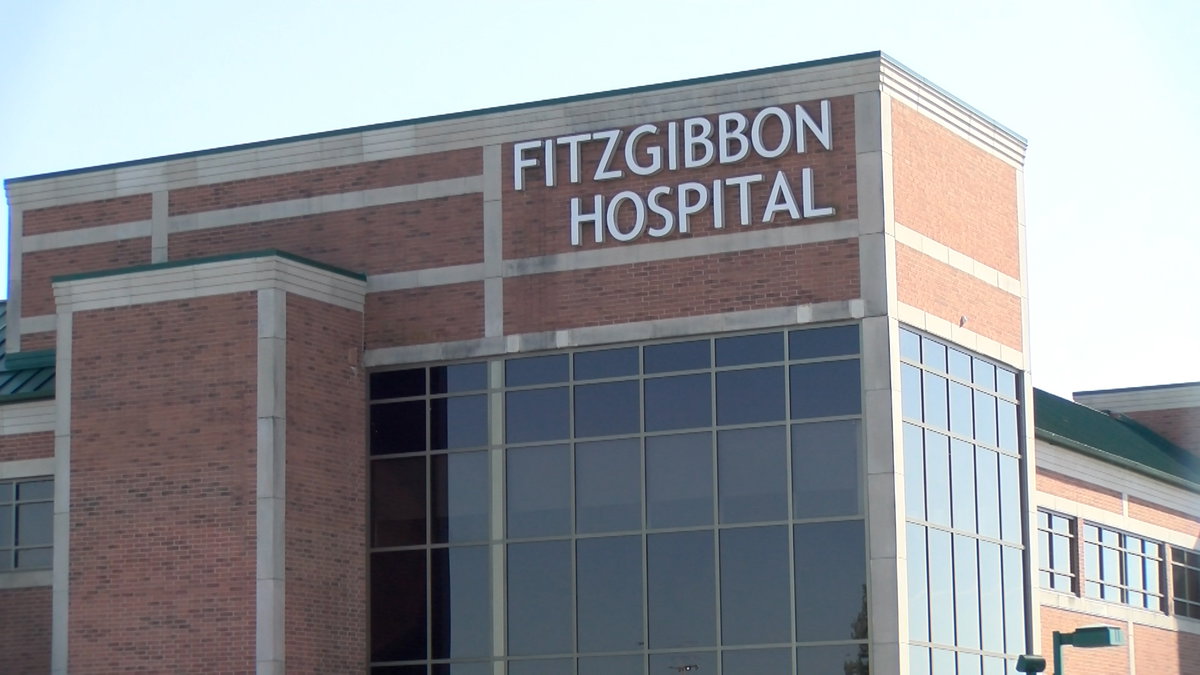
American Medical Administrators takes over Fitzgibbon Hospital operations

Ryan Shiner

COLUMBIA, Mo. (KMIZ)

Fitzgibbon Hospital announced in a press release on Wednesday morning that American Medical Administrators has acquired the hospital “following approval of the transaction by the U.S. Bankruptcy Court.”

“Healthcare is vital to the well-being of every community, and our immediate priority is ensuring continuity of care while we work alongside the Fitzgibbon team to evaluate operations and establish a sustainable path forward,”AMA CEO Nick DeStefane was quoted in the release.“Fitzgibbon Hospital has a long history of serving this region, and we are committed to preserving access to high-quality healthcare while positioning these operations for long-term stability.”

Additionally, a second press release was sent on Wednesday that stated Fitzgibbon Hospital joined 20 other hospitals to form the Show-Me High Value Network.

“The Show-Me High Value Network will strengthen participants’ ability to stay independent and community focused,” Craig Thompson, CEO of Golden Valley Memorial Healthcare and chair of the Show-Me High Value Network, was quoted in the release. “Our participants share a common goal — ensuring health care decisions are made close to home and for the benefit of our patients, providers and community. The network will help our hospitals gain scale operationally by growing their engagement with peer hospitals across Missouri, while preserving the quality and local focus that defines our care.”

Click here to follow the original article.

Tunnel to Towers mobile 9/11 exhibit makes stop in Jefferson City for 25th anniversary

Sam Roe

JEFFERSON CITY, Mo. (KMIZ)

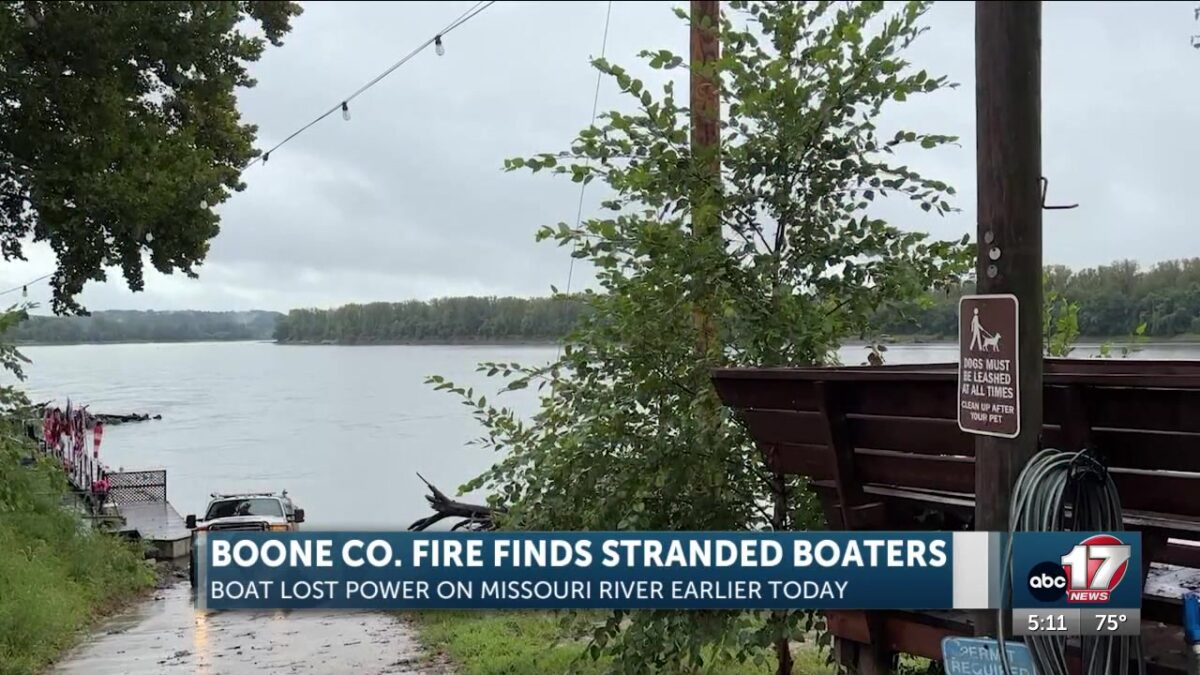
The Tunnel to Towers “Never Forget” mobile exhibit arrived in Jefferson City on Wednesday for the 25th anniversary of 9/11.

The exhibit travels around the country in a tractor-trailer, featuring artifacts from 9/11 and is ran by New York City firefighters who responded to the attack. The exhibit is designed to give visitors an idea of what it felt like to be in New York City on that day.

The Tunnel to Towers Foundation is named in honor of firefighter Stephen Siller, who was killed in the South Tower on 9/11.

Siller was on his way out of town on 9/11, but returned to New York upon hearing the news. By the time he arrived, however, the bridges into town had been closed. The only way into the city was through underground tunnels.

“He put on his bunker coat, his pants, his boots, his helmet, and he ran about 2.5 miles through the tunnel, which is about a 2-mile tunnel to the Trade Center,” said John Bruckner, who is a retired New York firefighter. “And unfortunately, when the South Tower collapsed, Steven was killed, as were all the members of his company.”

Siller’s older brothers established the Tunnel to Towers Foundation, which puts on annual runs through the tunnels of New York City as well as raising funds to provide housing assistance for first responders.

The exhibit will be at the south lawn of the Missouri Capitol until Sunday.

Click here to follow the original article.
Wife of man accused of manslaughter charged with hindering felony prosecution

Ryan Shiner

COLUMBIA, Mo. (KMIZ)

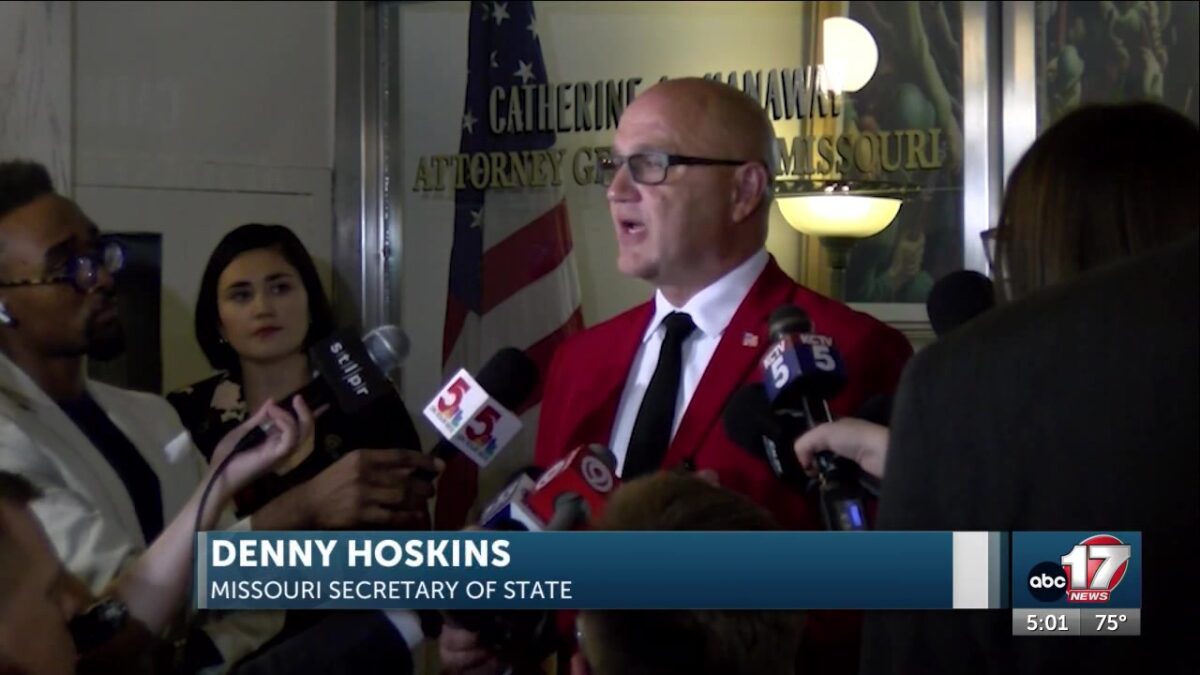
The wife of a man who was charged with manslaughter last month in a fatal crash that occurred on St. Charles Road has been charged.

Sandra Sharp, 55, of Columbia, was formally charged on Tuesday with hindering a felony prosecution, resisting arrest and fourth-degree assault. She was arrested with 53-year-old Shunta Bohanon on Aug. 16, but was able to post a $3,500 bond.

Bohanon is charged with first-degree involuntary manslaughter, armed criminal action, leaving the scene of an accident and tampering with evidence in the Aug. 14 crash death of Mark Hunter, 47, of Columbia, on St. Charles Road.

The probable cause statement says Sharp was seen driving the Jeep used in the crash the next afternoon. When police approached the vehicle, Sharp allegedly “barely cracked” the window, the statement says. She also allegedly refused to get out of the Jeep when she was told to by police, the statement says.

An officer broke one of the windows of the vehicle and Sharp allegedly tried to bite the officer and kick him, the statement says.

Sharp has a court appearance scheduled for 1:30 p.m. Thursday. Bohanon has a hearing set for 9 a.m. the same day.

Click here to follow the original article.