Missouri AG files federal discrimination lawsuit against MSHSAA

Ryan Shiner

COLUMBIA, Mo. (KMIZ)

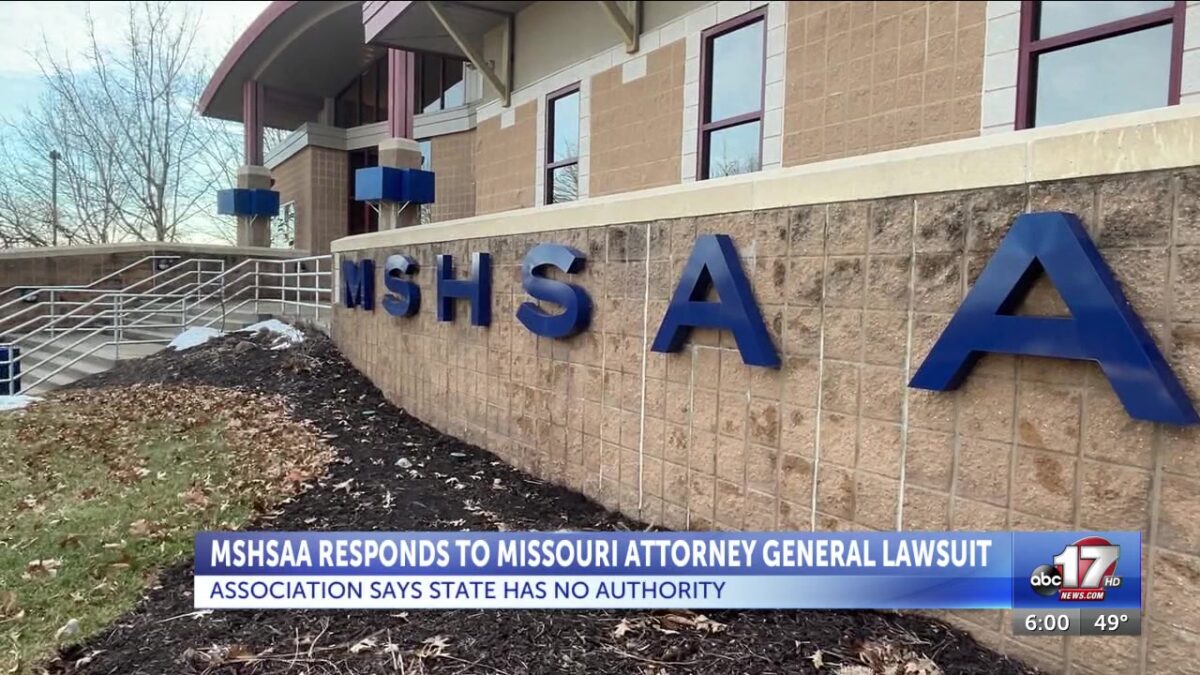
Missouri Attorney General Catherine Hanaway filed a discrimination lawsuit on Wednesday against MSHSAA in the Eastern District Court of Missouri.  

Hanaway accuses the Missouri State High School Activities Association of two counts of unlawful race and sex discrimination, unlawful discriminating with respect to conditions of employment and discriminatory protection of the full and equal benefit of all laws.

The lawsuit stems from an accusation made in November by a whistleblower who claimed they were not eligible for an at-large position on MSHSAA’s board because they are white and male. The accusation led to Hanaway and State Auditor Scott Fitzpatrick to launch an investigation.

Previous reporting on the incident shows an article in MSHSAA’s constitution “does not serve as a blanket disqualification preventing administrators from running for or serving on the Board of Directors. Rather, the eligibility requirements are tied to specific seats, and by design they ensure balanced representation across both geographic regions and demographic groups.”

MSHSAA had stated on Nov. 19 that the provision was put in place more than 20 years ago. MSHSAA, in response to Hanaway’s lawsuit, stated in a news release that it is a private organization and the lawsuit is an attempt to have the state exercise control it should not have.

“The lawsuit filed by the Attorney General seeks to impose state control over the internal governance of a private association,” MSHSAA stated. “Missouri did not create MSHSAA, does not fund it, and does not oversee its operations. Nonetheless, the state now asks a federal court to dictate who may serve on MSHSAA’s volunteer Board of Directors and how its 724 member schools structure their leadership.”

“MSHSAA’s nomination policies and actions are racist and unlawful,” Hanaway was quoted in a Wednesday press release. “No organization, and certainly not a policymaking entity in charge of our children’s activities, will be allowed to defy and ignore federal anti-discrimination laws.”

In the court document Hanaway filed, the state wants a federal judge to bar the association from denying a person based on race or gender for at-large positions.

Click here to follow the original article.

Former Pettis County deputy has child porn case moved to Cooper County

Ryan Shiner

COLUMBIA, Mo. (KMIZ)

A former Pettis County deputy who shot and killed a 25-year-old Sedalia woman in June 2020 had his child pornography case moved from Pettis County to Cooper County on Wednesday.

Jordan Schutte, 40, of Sedalia, is charged with child porn possession and first-degree promoting child porn. He is being held at the Miller County Jail on a $75,000 bond. A case review is scheduled for 9 a.m. Monday, April 13. He was indicted by a grand jury last week.  

The probable cause statement says law enforcement received a CyberTip on Aug. 12, 2025, about child porn being uploaded to a SnapChat account. The account’s phone number matched Schutte’s and the phone number was verified for the account by SnapChat in 2022, the statement says.

The statement says Schutte allegedly posted child porn to his “private” SnapChat story.

Click here to follow the original article.

State’s request to rewrite ballot language on congressional map to be considered at trial 

Alison Patton

JEFFERSON CITY, Mo. (KMIZ)

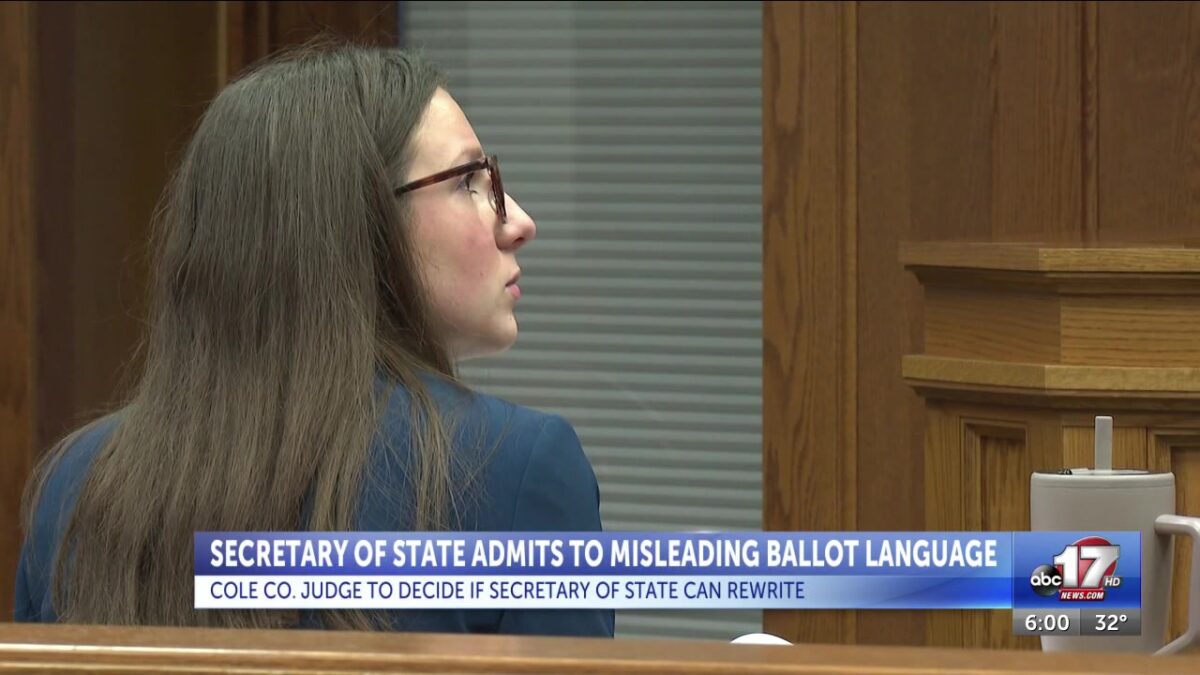
A Cole County judge on Wednesday did not OK the Secretary of State’s request to rewrite the ballot language for a referendum that would put the new congressional map on the November ballot.

Judge Brian Stumpe did not deny the request during the case hearing, either; the request will be considered with the case, which is set to go to trial Monday.

This is the latest hearing in a string of lawsuits challenging the new congressional map that the General Assembly passed in a September 2025 special session. The map is likely to cut out U.S. Rep. Emanuel Cleaver (D-Kansas City) from District 5 and flip his seat to Republicans.

Secretary of State Denny Hoskins’ legal team is arguing the ballot title written is unfair and prejudicial because of the words “gerrymandered” and “protects incumbent politicians,” according to court documents.

People Not Politician filed the lawsuit.

“It’s not every day you see the defense move for the relief on the other side. However, the evolution in the Secretary’s position that I just described does compel us to secure a fair and sufficient summary statement,” Hoskins’ attorney Kathleen Hunker said.

Hoskins wrote the ballot language last year, after the group backing the referendum, People Not Politicians, submitted more than 300,000 signatures to Hoskins for certification.

“Do the people of the state of Missouri approve the act of the General Assembly entitled ‘House Bill No. 1 (2025 Second Extraordinary Session),’ which repeals Missouri’s existing gerrymandered congressional plan that protects incumbent politicians, and replaces it with new congressional boundaries that keep more cities and counties intact, are more compact, and better reflects statewide voting patterns?”

People Not Politicians attorney Chuck Hatfield argued the state needs to change specific sections of the ballot language, but shouldn’t be able to rewrite the whole question.

“I don’t remember the Secretary of State ever before admitting that they had drafted unfair and prejudicial language, like they have here, and I think we’re entitled to learn more,” Hatfield said.

Hatfield wanted to bring in the director of elections, Chrissy Peters, to the Secretary of State’s Office for questioning, which Hoskins’ attorney is challenging. Stumpe sided with the state and denied Hatfield’s deposition.

Hatfield said he wanted to know how Hoskins came up with the description of the map as keeping more cities together, which is more compact and reflects voter patterns.

Hunker argued Peters wouldn’t know anything about that.

“Mrs. Peters does have relevant information, but the elections division does not actually develop the summary statements. She has no personal knowledge in her capacity as the director of elections,” Hunker said.  

Hunker also argued the new 2025 congressional map and the 2022 map should be the only things used in court.

Hatfield said he would have questioned Peters and another state official on Thursday, but because Stumpe already made a ruling, the deposition will be skipped, and the case will go to trial Monday.

Click here to follow the original article.

Juvenile office seeks to move teen accused in 2025 shooting to Boone County Jail

Ryan Shiner

COLUMBIA, Mo. (KMIZ)

A motion was filed on Friday seeking to move a teenager accused in a January 2025 Columbia shooting to the Boone County Jail.

Samiyon Myers, 16, of Columbia, is charged with first-degree assault, delivery of a controlled substance, two counts of armed criminal action, two counts of unlawful use of a weapon, one count of shooting at a car and second-degree drug trafficking.

Myers’ information appears on the Boone County Jail’s roster, though a sheriff’s office spokesman clarified in a Wednesday email that booking information for a juvenile is filed with the Boone County Jail once they are certified as an adult. An additional court order must be placed in order to move the juvenile to the jail from the juvenile office.

Myers is accused of shooting at a vehicle filled with people on Jan. 19, 2025, in the 2100 block of West Worley Street, court documents in previous reporting say. Witnesses claimed the suspects ran to the McDonald’s at 415 North Stadium Blvd. Six juveniles were taken into custody, according to the probable cause statement. Half of the juveniles were released to their parents.

A gun was found in a bag near Myers and video from the Columbia Mall allegedly showed Myers firing the gun at a vehicle, the probable cause statement says. Police saw bullet holes in the vehicle and were able to identify Myers by the color of his underwear, court documents in previous reporting say.

Friday’s motion says accused Myers of several incidents since May 2025, which included assaults, verbal threats and allegedly demanding to be transferred to the jail.

A motion hearing is scheduled for 1:30 p.m. Friday, Feb. 20.

Click here to follow the original article.

Missouri Senate passes new rules that makes it harder to end debate in chamber

Lucas Geisler

COLUMBIA, Mo. (KMIZ)

The Missouri Senate passed new rules on Tuesday that could make it harder to force an end to debate in the chamber.

The chamber voted 23-11 on two new rules, sponsored by Senate President Pro Tem Cindy O’Laughlin (R-Shelbina). One change requires more signatures on a motion to vote on the “previous question.” It now takes 18 senator signatures to move forward with such a move, up from 10. A “previous question” motion still needs 18 votes to pass.

The use of the maneuver in the senate came under criticism last session by Democrats, who had their late-session filibuster ended by it. Republican senate leaders forced votes on an abortion resolution for the 2026 ballot and a rollback of paid sick leave voters approved in 2024. Democratic senators had promised to slow down the session this year because of those moves.

Senate records show 11 GOP senators voted against the rule changes.

The resolution also requires any Senate bill that comes to the chamber with amendments from the House of Representatives sit on its calendar for one day before taken up. Senate Democrats posted yesterday the measure would save taxpayers money from “costly mistakes made by the GOP-led Legislature.”

Click here to follow the original article.

Police still seek key evidence in Columbia man’s 2019 shooting death

Olivia Hayes

COLUMBIA, Mo. (KMIZ)

More than six years have passed since James Hickem was shot to death in a north Columbia neighborhood, and police have yet to obtain any key evidence in his case.

Officers responded to the scene in the 600 block of McBaine Avenue at 8:13 p.m. on Sept. 25, 2019. Police found a man with gunshot wounds and later identified the victim as 23-year-old James Hickem. The Columbia man was taken to the hospital and later pronounced dead.

Lt. Matt Gremore with the Columbia Police Department Criminal Investigations Division was one of the first people to respond that night.

“I was a patrol sergeant working the midnight shift,” Gremore told ABC 17 News in an interview last week at the shooting scene. “When I first got here, there was just me, and I think maybe one or two other cops had shown up.”

Hickem was the fifth homicide of a violent two-week period in September 2019. Columbia hit a 20-year high with 12 deadly shootings, one later declared justified. Six people were killed that September.

“When we have one homicide for the Detective Bureau, you’re talking months of work, and that’s if it’s solved that day that it happened,” Gremore said. “So you can only imagine having so many within a short time period that it’s all hands on deck. Everybody’s just working homicides at that point, and it’s extremely busy, it’s exhausting.”

Gremore said they found Hickem with gunshot wounds in the grass near the corner of McBaine and Lynn Street.

“I was talking to him, but he couldn’t respond back,” Gremore said. He believes Hickem could not respond due to the severity of his wounds.

The night of the shooting

Hickem’s grandfather, Willie Smith, says he remembers that night as if it were yesterday.

“They were all over to my sister-in-law’s, and they went to the liquor store, Loop Liquor,” Smith said. “They went and got some beer and some other spirits, then came back. It couldn’t have been no more than 5 minutes when I heard shots.”

Smith was inside the family home at the time of the shots.

“I didn’t know James had walked outside with his uncle,” Smith said. “It was him that came to the house and said James had just been shot.”

Gremore would not reveal much about the evidence, citing the need to ensure the integrity of the investigation. But he said for the first time publicly that video had been collected from the scene.

According to Gremore, no weapon was ever recovered. However, police found shell casings at the scene.

“With most shootings, you’re going to find shell casings. I can’t get into numbers,” Gremore said.

Smith said he heard four shots that night.

“I remember ‘dah, dah, dah, dah,'” Smith said.

Smith said Hickem had been going back and forth between Las Vegas and Columbia. He had been visiting Columbia for a few weeks at the time of his death. In Vegas, Hickem lived with Smith and his wife, who are Hickem’s maternal grandparents.

However, Hickem still had his mom and other family in Columbia.

“James had a job here [in Las Vegas] working security at one of the casinos,” Smith said. “James had every reason to come back here; he lived here with us. He had moved here with us as a matter of fact.”

Smith and his wife had come to Columbia for a Mizzou Basketball event; they were also going to bring James home to Vegas with them. Smith was inducted into the Missouri Sports Hall of Fame in 2012 for his time with the Tigers.

Targeted shooting?

Gremore and CPD are still unsure of the motive behind Hickem being shot, but he believes there was an intention behind it.

“I don’t think that this was a mistake that somebody just happened to go and kill James,” Gremore said. “Only the killer is going to know what the motivation was or the real story behind why what happened happened.”

Smith described his grandson as a gentle giant, but Smith didn’t feel the same about some of the people Hickem hung around.

“He thought, ‘Because you’re my homie, I’m down with you,'” Smith said. “I just thought he was overzealous to take on other people’s problems.”

Smith said he never witnessed Hickem be violent and didn’t know him to carry a gun or weapon. He said on the day of his death, Hickem did not show any signs that he feared for his life. However, Smith noted an altercation that he and Hickem had seen earlier that day on McBaine Avenue.

Smith said it just seemed like a minor spat involving lots of shouting, though.

Gremore said CPD has fewer than 10 people it considers “persons of interest” in the shooting. He said police have talked to fewer than 10 witnesses to the crime.

“If someone saw or even if they heard someone say that they did that murder, that they knew this information first hand, that someone confessed to them that they did. Obviously, there’s stuff that we would do an our in to verify all this information, but those are credible things that could be said that could go to court,” Gremore said.

Gremore detailed a frustrating reality amongst the killings that happened that month.

“There’s a person of interest that today is just still as true as it was the day that information came out,” Gremore said. “Being able to prove something, to arrest someone, is very different than hearing rumors of what happened, which is very true for all the homicides that happened in 2019.”

Smith believes someone close to James knows what really happened that night.

“His uncle, he was right there. Honestly, I believe he knew who it was to this day,” Smith said.

Smith said he believes Hickem’s uncle has been uncooperative with police because of his criminal history and a culture around not speaking to police for fear of retaliation.

“This is your damn nephew that’s been gunned down,” Smith said. “Open your damn mouth, that’s what I told him when law enforcement came over there to interview him. People don’t want to talk because they fear retaliation? That’s the biggest crock I have heard.”

Gremore said he believes every homicide in Columbia is solvable.

Smith said his family feels forgotten after six years and no answers in Hickem’s death.

“I feel cheated, I certainly feel cheated. If it was a white kid, we’d have a whole different outcome six years later,” Smith said. “I just think some things, some deaths seem to be more important than others, and we resent that. I resent that.”

Gremore said CPD has found no evidence that Hickem’s death was related to any of the other September homicides.

Click here to follow the original article.

Jefferson City leaders to address parking enforcement and fines

Jazsmin Halliburton

JEFFERSON CITY, Mo. (KMIZ)

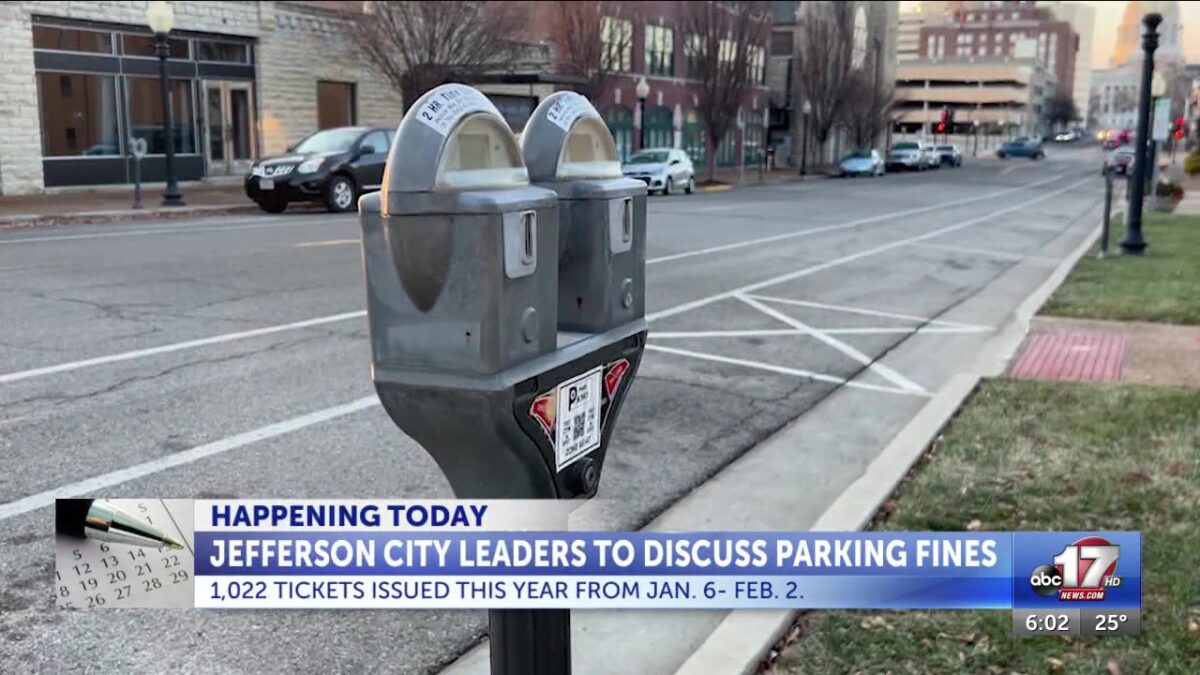
Jefferson City leaders will meet Wednesday evening to discuss parking within the city and increased parking fines.

City leaders are set to meet at 5:15 p.m. Wednesday at City Hall.

In January, the Jefferson City Council approved a parking fine hike with an 8-2 vote. Parking violations were approved to be $25 across the board. A fine for metered parking was previously $6.

According to the work session agenda, the proposed rate structure will be discussed for on-street parking, off-street parking and the parking garage being built on Madison Street.

ABC 17 News records requested parking ticket numbers, which showed a significant jump in expired meter parking tickets this January compared to January 2025.

From Jan. 6 to Feb. 2, 2025, 182 tickets were issued. During that same time period in 2026, 1,022 tickets were issued.

In January 2025, an average of 26 tickets were given per day per officer over seven enforcement days. In January 2026, 25.55 tickets were issued per day per two officers over 20 enforcement days.

According to Jefferson City spokesperson Molly Bryan, several factors can contribute to citation numbers. Such factors include weather, staffing, downtown events, legislative sessions, protests, etc.

Parking enforcement operations in January 2025 were limited to approximately seven full days as severe winter weather and staffing shortages impacted city services, says Bryan.

A major snow and ice event during the first week of the month forced the city to close operations on Jan. 6 and delay openings on Jan. 10. Parking personnel were diverted from their typical duties to assist with emergency weather response across the city.

Staff members typically assigned to parking enforcement were reassigned to clear snow and ice from sidewalks, parking garages, corner lots and crosswalks. These emergency response duties extended to various city-owned facilities throughout the month. Due to these reassignments, parking enforcement was not the primary focus for city staff during much of January 2025.

The department also faced significant staffing constraints throughout the month. Records indicate that only one officer was available for parking enforcement during January 2025, which contributed to the reduced number of full enforcement days.

Click here to follow the original article.
Casa Maria’s owner found not guilty of arson, has hearing later this month in second case

Ryan Shiner

COLUMBIA, Mo. (KMIZ)

A woman who was accused of arson in Dunklin County was found not guilty of the charge.

Crystal Umfress, who owned Casa Maria’s in Columbia, was found not guilty of her second-degree arson charge, her attorney Russell Oliver told ABC 17 News on Tuesday night. She was accused of hiring Kerry Raymond to burn down Lupita’s Mexican Restaurant in 2023 in Dunklin County.

“We’re very pleased with the outcome of the case, [it was] fortunate for Crystal to have her day in court and we feel the jury got it right,” Oliver told ABC 17 News on Tuesday evening.

The case was held in Butler County after it was moved in 2024. Umfress is still facing two counts of filing false documents and three counts of forgery after she was accused of impersonating county officials and restaurant owners. Oliver said a hearing is scheduled for Feb. 17 in Butler County.

Casa Maria’s moved out of its Columbia location in December after a judge ruled in Grindstone Plaza Development in its motion for default against Umfress. A writ of possession order filed on Dec. 17 says the restaurant was ordered to vacate the property after owing $120,750.04 in unpaid rent and $8,926.61 in fees and costs. The restaurant had indicated in social media post at the time that it would continue as a food truck.

Raymond has a case review scheduled in his second-degree arson case out of Stoddard County for 1 p.m. March 5.

Check back for updates.

Click here to follow the original article.

Columbia Fire Department now carries EpiPens as calls climb for youth experiencing anaphylactic shock

Nia Hinson

COLUMBIA, Mo. (KMIZ)

A small tool now being used by the Columbia Fire Department could be the key to saving lives.

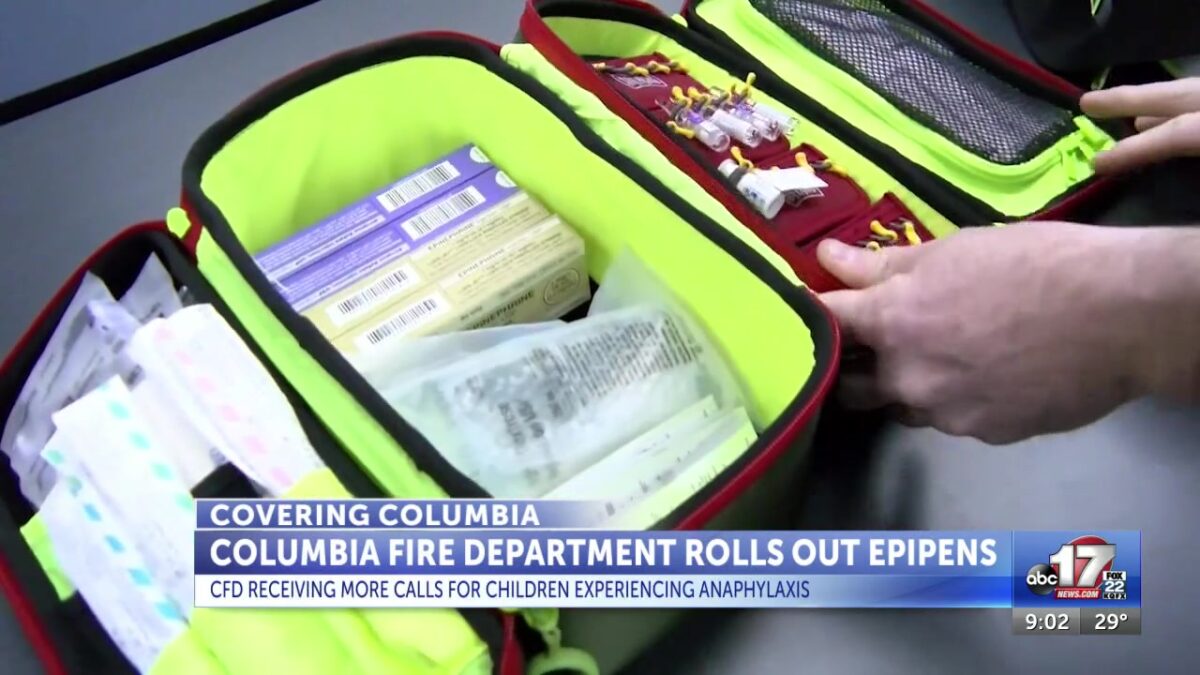
CFD began carrying EpiPens in January, a decision that had been about a year in the making. According to CFD Chief Brian Schaeffer, every fire apparatus is stocked with at least one EpiPen and is located within the emergency medical equipment.

The drug works to treat a severe allergic reaction, as known as anaphylaxis and has the ability to save a someone’s life.

“When we’re making that decision on what type of equipment to carry, what type of supplies to purchase, this is really a no-brainer for us. We haven’t had them before, so we’re moving forward,” Schaeffer said.

According to Schaeffer, CFD went through a period of training and worked with its medical doctor from MU Health Care before rolling them out. Schaeffer said all firefighters have been trained on how to use the EpiPens. They cost between $200-$300 each, depending on the brand, and last for about a year. Thirteen EpiPens were ordered, along with one spare.

When Fire Station 10 opens, one will be purchased for that station, according to EMS Battalion Chief Edward Kehrer. The EpiPens were paid for by money budgeted through the city.

Schaeffer said the fire department has been seeing a larger number of calls for children that are experiencing anaphylactic shock from accidentally eating a peanut they were allergic to, or another allergy of some sort.

Although they haven’t had to use the EpiPens since rolling them out, Schaeffer said it allows them to have the answer in case there is an emergency in any of Columbia’s neighborhoods.

“This is a situation where we’ve needed the tool and we haven’t had it. From our experience, we don’t want to be in a situation where we have to wait or we have to rely on a neighbor or somebody else’s dose to be able to access the life-saving medication,” Schaeffer said. “It certainly has the potential to reverse the consequences of anaphylaxis and save people’s lives. Everybody from a child all the way up to the end of life.”

ABC 17 News reached out to MU Health Care and Boone Health, who are both in support of the changes. MU Health Care spokesman Eric Maze wrote via email that the hospital believes it will allow for rapid administration, a sentiment echoed by Boone Health spokesman Christian Basi.

“It’s yet one more way that the first responders here in Columbia team together to do our best and protect the health of our community. The Boone Health team is very appreciative of the collaboration we have with other first responders in mid-Missouri,” Basi wrote in a Monday statement.

CFD is also utilizing other approaches to provide more advanced life support. It requested $133,500 from the city to start a paramedic pilot program. The funding was approved by the Columbia City Council during its Jan. 5 meeting, according to the city’s agenda.

According to a council memo, the funding was requested to buy two cardiac monitors, all needed advanced life support supplies needed for two fire companies, as well as EpiPens for all frontline apparatus.

The memo points to changing ambulance deployment rates and response of the two advanced life saving providers over the years. It states both providers face constant challenges, such as staffing problems and the increasing cost for service, all of which can lead to patients waiting longer to receive care.

According to Schaeffer, the pilot program will launch sometime in March. It will consist of at least one paramedic at Stations 2 and 5 each day. The program means that the fire department’s response to medical calls will look a lot different, and paramedics will carry medications that people would typically see in an emergency department.

Schaeffer said this will allow them to be able to treat people in their homes, on the street, or anywhere else they’re asked to respond to.

The paramedics will have a “dual role” of firefighter and paramedic, meaning they can potentially transition from fighting a fire, to providing care to someone in need. Schaeffer said 58% of CFD’s incidents are EMS related.

He also said paramedics will only serve a certain neighborhood or battalion, meaning they won’t be sent out of town on transfers. Schaeffer said they’ve budgeted roughly two years into their timeline to gather data for the program and determine if it’s something they want to roll out for the entire city.

Schaeffer also said as Columbia grows, the EMS system that the city has continues to have other responsibilities, such as providing care to surrounding cities, which can create challenges.

Schaeffer said their paramedics will work with paramedics that are on ambulances to ensure there isn’t a gap in care. He said that oftentimes CFD is the first one on scene, and instead of waiting for the paramedic to arrive, they can begin care and then transition it to the transporting paramedic.

“That’s what a good EMS system looks like and that’s where we’re hoping to get to, but we don’t know until we gather the data. So, we’re going to be running this pilot which is two companies and see how it goes,” Schaeffer said. “See if our organization can support it and if the outcomes that we expect are actually what are realized, if having paramedics truly helps people stay healthier, if they’re able to reverse consequences, severe injury or illness.”

According to Schaeffer, the city decided to roll the program out in fire stations two and five after using its AI-powered software, Darkhorse Emergency. He said the software has the capability to look at calls, frequencies, distribution and consequences and then model that into the future. He said they came up with scenarios with an overlay of critical calls that have occurred within the past five years; and out of that recommendation came Station 2 and 5.

“We expect to have the most experience in the quickest time at those two stations. That’ll give us data that we need to make further decisions as we move toward a decision,” Schaeffer said.

The long-term impact of funding for the program will depend on the two-year trial.

ABC 17 News asked the Boone County Fire Protection District if it’s considering carrying EpiPens. Assistant Chief Gale Blomenkamp said they’re in the process of figuring out where they would keep them and when they plan to deploy them.

“We’ve all been trained on the use of the EpiPen. We can use other people’s EpiPens if it’s prescribed to them, we can assist them in using it. But as far as carrying it, we’re still in that process working with our medical director to make that happen,” Blomenkamp said.

The Jefferson City Fire Department also does not currently carry EpiPens.

CFD ALS programDownload

Click here to follow the original article.
Inside the Tannehill Apartments: After years of setbacks, former Moberly school reborn as senior housing

Mitchell Kaminski

MOBERLY, Mo. (KMIZ)

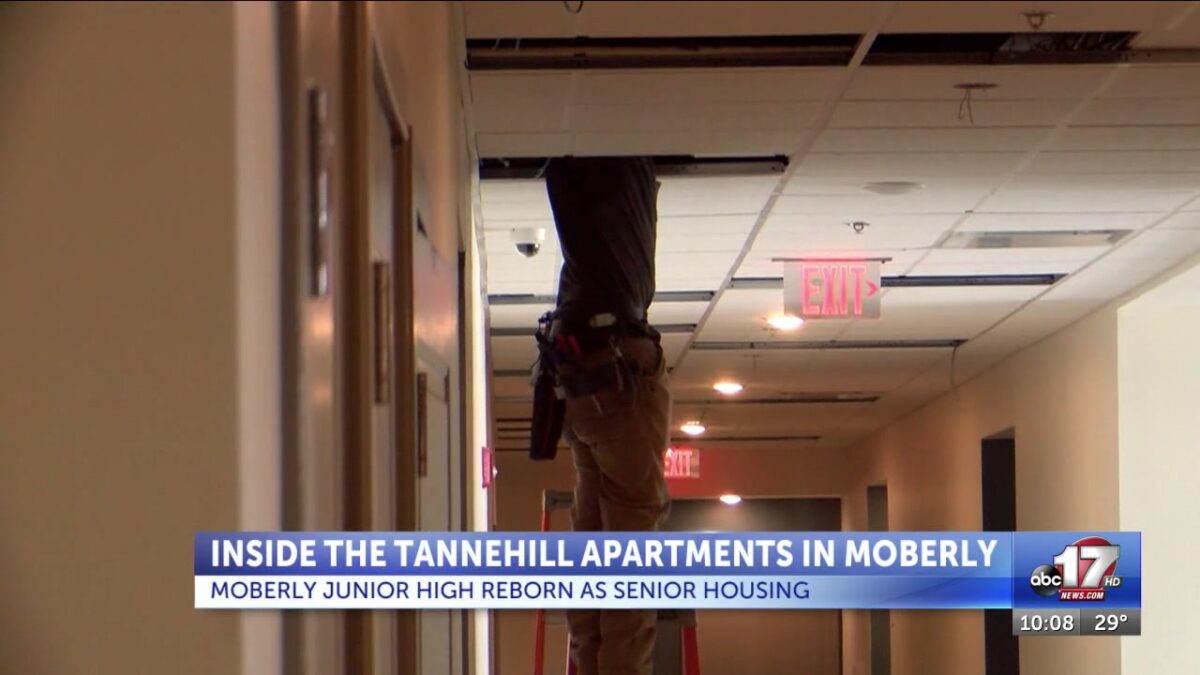
After sitting vacant for years and surviving multiple failed redevelopment attempts, the former Moberly Junior High and High School is nearing a new chapter as Tannehill Apartments, a 40-unit affordable housing complex for residents 55 years old and older.

The $22.1 million project is a partnership between ND Consulting Group and the Northeast Community Action Corporation, combining the renovation of the historic school building with new construction on the site. Sixteen apartments were created inside the original school, while 24 new units were added to the rear of the property. It is expected to open by Feb. 15.

The project is part of a growing trend across the US of adaptive reuse projects that turn former public school buildings into living spaces. In 2024 alone, nearly 2,000 apartments were created from former schools. 

Ken Nuernberger, president of ND Consulting Group, said former schools often translate well into housing because of their layout.

“Schools are ideal because the classrooms run between 800-and-1,000 square feet, which is about the size of an apartment,” Nuernberger said, noting the abundance of windows allows for natural light in both living spaces and bedrooms. 

He added that the old Moberly Junior High School worked particularly well for conversion into 16 units inside the original structure. But preserving the building was far from simple.

Nuernberger said earlier redevelopment proposals stalled largely because of an addition on the back of the school that included a gymnasium on the upper floors. Renovating that portion of the building proved too costly and impractical, leading to repeated rejections from the Missouri Housing Development Commission.

“We decided that the best way to get this building on the front saved is to add an additional 24 units on three stories to the rear,” Nuernberger said. Those units were designed specifically for seniors and allowed the project to move forward financially.

Cost challenges plagued the site for years. Nuernberger said a previous developer attempted to use the lower level of the school, which resulted in expensive and unattractive units. Historic tax credit requirements also limited design flexibility, forcing the development team to repeatedly revise plans.

“In some cases, if you are going to use historic tax credits, some of the standards for the interior of the building would have made it less practical to use it,” Nuremberg said, “So in the end, the combination over time to continue modifying, adapting the plan to what you will see today as a renovated 16 units and a new construction of 24 units was really the challenge.” 

Construction broke ground just more than two years ago, though post-COVID-19 supply chain issues and rising costs slowed progress. Crews are now installing final finishes and preparing units for occupancy.

“It was a community project,” Nuernberger said, crediting support from the city, the historic society and downtown business leaders. “They also liked this project because instead of building a new senior project on the prairie outside of town, this is right in the core of the town.” 

Tom Sanders, Moberly’s Public Works director, said many residents and elected officials have personal ties to the 1930s-era Moberly school, which was attended by Gen. Omar Bradley. 

“A lot of residents, former council members and current council members had attended school here,” Sanders said, “So everybody has a story of what’s important to them.”

Sanders said the city had supported earlier redevelopment efforts for nearly 20 years, but repeated changes to the project model prevented it from gaining traction. ND Consulting became involved about six years ago, bringing a plan that finally aligned preservation goals with financial feasibility.

“The gym on the back was a big factor that it wasn’t going to be financially viable,” Sanders said. He said the city temporarily took ownership of the building and agreed to demolish the gym in 2018 in exchange for parking improvements for the nearby aquatic center.

The city spent $84,000 to remove the gym, a move that reduced redevelopment costs and strengthened the project’s tax credit application.

“It was a mutually beneficial thing,” Sanders said. “A lot of credit doesn’t go to the city for the efforts they make to save old buildings, but they have to be viable projects for it to happen.”

Sanders said the project also addresses a growing housing need in Moberly. A 2018 housing study showed the city needed roughly 400 additional units over a decade. While construction had historically averaged about 20 units per year, development surged recently, with 89 units added last year alone.

Tannehill Apartments includes one- and two-bedroom units ranging from 632-1,000+ square feet. Rents range from about $650 for one-bedroom units to $680 to $725 for two-bedroom units. All one-bedroom apartments have been rented, and most two-bedroom units are already occupied.

Apartments include furnished kitchen appliances, washer and dryer hookups, centralized mailboxes and secure key-card entry. Section 8 vouchers are accepted.

Funding for the project includes a $2.6 million home loan from the Missouri Housing Development Commission, along with federal and state low-income housing tax credits. Those credits generated roughly $10.5 million in equity, with investments from Midwest Housing Equity Group and Monarch Private Capital.

When renovations are complete, the 1930s-era school will reopen as Tannehill Apartments, preserving a landmark while meeting the city’s growing demand for affordable senior housing.

Click here to follow the original article.