Voter turnout in Boone County higher than expected

Keriana Gamboa

COLUMBIA, Mo. (KMIZ)

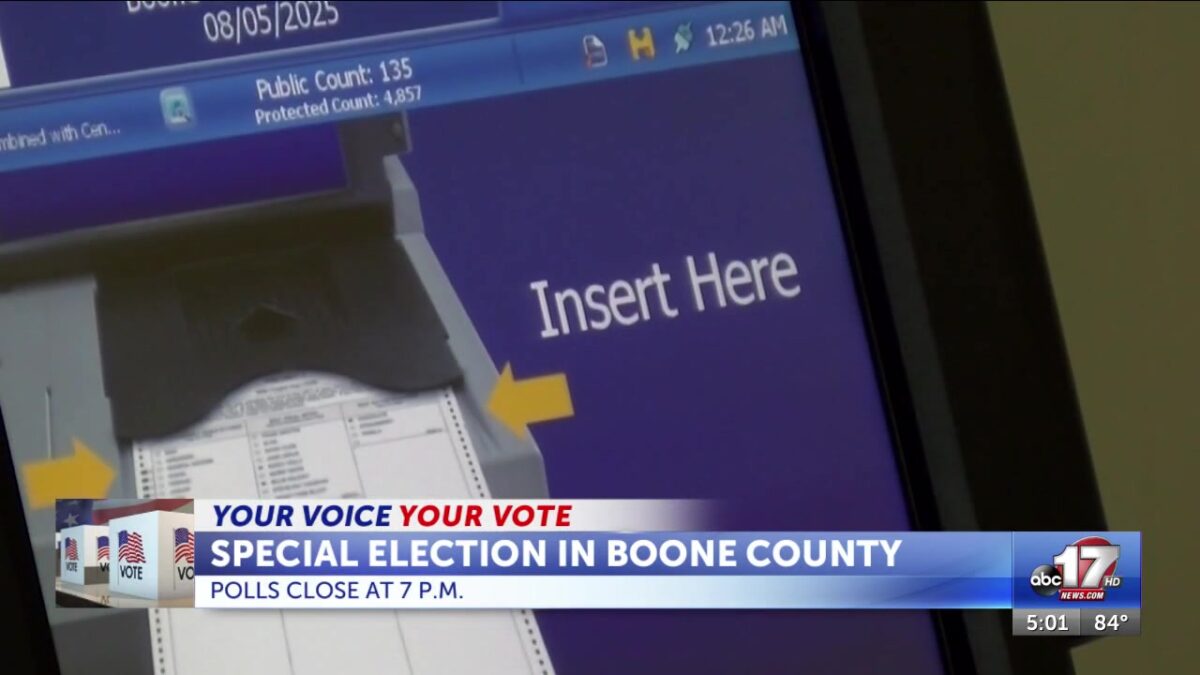
Boone County Clerk Brianna Lennon Told ABC 17 News in a statement that voter turnout for Tuesday’s special election is larger than she expected.

“It’s slightly higher than what we were expecting. My original estimate was between 8 and 9 percent, and we could potentially be closer to 10 percent,” Lennon said hours before polls closed on Tuesday.

Final estimates on Election Night showed a 12.58% voter turnout in the county.

Voters are voting on Proposition 1, which proposes an expansion of the senior property tax freeze in Boone County. In April 2024, voters approved an exemption for senior citizens from certain property tax increases, which they have to apply for every year.

Voters at the polls today shared with ABC 17 their thoughts on today’s special election. Voter Paula Williams said she doesn’t understand why they are voting on this issue again.

“Well, I’m not sure why we have to vote about the taxpayer [question again], No. 1, because I thought that was already a thing. But I want to make sure that that goes through because I’m one of those seniors,” Williams said.

Patricia and George Stien told ABC 17 News they voted yes because it affects them.

“We voted ‘yes’ because we own property. We’re seniors, limited income. So it’s a big issue for us,” Patricia Stien said.

Gale Sallee also told ABC 17 News she voted in favor of the proposition, as well.

“I’m in the right ward. We need to vote somebody else in. And I’m a senior citizen. So no more taxes,” Sallee said.

Anthony Winkler said he voted against the proposition.

“I voted “no” on the property tax simply because I. I think we should lower property taxes for everyone. And if we lower property taxes for one demographic, they’re not going to be interested in voting on my behalf in the future,” Winkler said.

Columbia residents are also voting on the new City Council representative for Ward 2 after former Councilwoman Lisa Meyer resigned earlier this year. The candidates on the ballot to fill the seat are Ken Rice and Vera Elwood.

The Friendship Baptist Church had issues with its poll machine around 11:15 a.m., according to the supervisor there.

“Individuals had to put their ballots in what’s called the provisional ballot box. Those ballots will still be counted. And basically what happens is that we run them back through the machine at the end of the day, Kenneth Freeman said.

Freeman said some voters were disturbed when the machine was out.

“Most voters were pleasant about it. They simply follow our directions. I was standing by the machine to make sure that their votes were still kept confidential, and when they put them in the box and they moved on,” Freeman said.

Freeman said it was not a normal situation, but it was fixed before noon.

Lennon commented on the issue in a statement, saying they always prepare for those eventualities, and the staff was able to address the jam quickly.

“Voters can choose to wait for the problem to be addressed and then feed their ballot into the tabulator, or they can place their ballot in an auxiliary slot on the tabulator and our bipartisan election judge teams will feed those ballots into the tabulator at the end of election night,” Lennon said.

Click here to follow the original article.

QUESTION OF THE DAY: Should Missouri Republicans try to redraw our congressional map?

Matthew Sanders

President Donald Trump is targeting certain states in a bid to get enough of a Republican majority in the U.S. House to make it easier to pass his agenda.

Among the states he is eyeing is Missouri, according to Third District Rep. Bob Onder, whose district covers a good chunk of Mid-Missouri. The Republicans who support the idea say Missouri is a conservative state and should have a more conservative delegation.

However, critics point out that the lines were just redrawn after the last census, as required by law. Doing it again would be unfair play, and might not stand up.

What do you think? Should the legislature give it a shot? Let us know by voting in the poll.

Click here to follow the original article.

Columbia moves closer to launching pilot program to help unhoused residents return home

Mitchell Kaminski

COLUMBIA, Mo. (KMIZ)

The City of Columbia agreed to amend its existing agreement with the transportation service First Last Mile to include the company in a pilot “ride home” program aimed at assisting members of the city’s homeless population.

The city inked a deal with First Last Mile in January 2024, using a portion of the $25.2 million it received through the American Rescue Plan Act, which was intended to mitigate the public health and economic effects of the COVID-19 pandemic. Part of the contract includes First Last Mile helping the homeless community get back and forth to work and other medical appointments. 

The amendment, which was unanimously approved by the city council on Monday, will add First Last Mile as a transportation provider for the “ride home” initiative, but will not alter other terms of the original contract.

“We’re really looking at utilizing the most cost-efficient resource, and typically that’s a Greyhound. So then it’s really transportation from their location in Columbia to the bus station and then getting on the bus from that point on,” Columbia/Boone County Public Health and Human Services Director Rebecca Roesslet said.   Other communities have been able to do this with some success, and Greyhound is the most affordable  way to move individuals across a greater distance.” 

The initiative stems from a suggestion made during a March 17 City Council meeting, when Ward 4 Councilman Nick Foster called for a transportation program to assist unhoused individuals trying to leave Columbia and reconnect with support systems—such as family, faith communities or specialized care—outside the city.

“I’ve seen this done in other communities. And in fact, there are organizations in town, some of our agencies, who work with homeless folks who do this kind of work. They just don’t have a dedicated fund for that,” Foster told ABC 17 News. 

Stakeholder interviews and feedback from Columbia’s Public Health, fire and police departments revealed a growing trend of individuals experiencing homelessness often traveling to Columbia for medical or mental health services, but not being able to return to their home communities. The lack of return options often worsened the very challenges that brought them to Columbia in the first place.

“We are a health care hub for central Missouri. We know anecdotally a lot of individuals come to Columbia County for medical care and various other reasons,”  Roesslet said. “ What we’re finding is that there is a challenge on occasion  for individuals to return to their home community  where they have this support to help them be successful in their lives.” 

The growing number of unhoused individuals from outside Columbia is increasing demand for services and further straining the city’s already overburdened resources.

“Homelessness and the unsheltered in our community are a concern for a lot of people in the community. We saw this from the community survey,  but we already knew this to be true, and it is a concern that we share. So that’s where it and that’s where it initially came from,” Foster said. “I think that one of the great things about this is it’s it can be an effective manner and a compassionate manner in which to help people  become stable again.” 

According to a June council memo, local nonprofits like Room at the Inn and Love Columbia assist about 50 people annually with transportation, typically via donated bus tickets costing $30–$300. However, none have dedicated funding and rely on donations or partner support. Similar limitations exist for other agencies and medical providers.

A model from Lawrence, Kansas, offers a potential blueprint. There, the city funds bus tickets for non-residents who commit to a return plan, helping reduce the strain on local services.

Columbia officials believe a similar effort could benefit both unhoused individuals and the city’s overwhelmed support system, though funding would be necessary to close the current service gap.

The city still has to hammer out several details so no launch date for the pilot has been set. However, Roesslet said it will be implemented, “it will be fast.” 

“Initially, we’ll be working with our providers that serve the individuals who are experiencing homelessness. All the referrals will come through them.  So this isn’t at the beginning stages, ”Roesslet said. “This is not something that would be opened up to the general public. We’re going to be working really closely  with those that are already providing case management services to the vulnerable population,  and then they’ll work with our social service agencies in the city or  social services specialists within the city who work at the health department to arrange that transportation piece.”

ABC 17 reached out to First Last Mile.

Click here to follow the original article.

Fire at Eagle Bluffs Elementary ruled accidental

Ryan Shiner

COLUMBIA, Mo. (KMIZ)

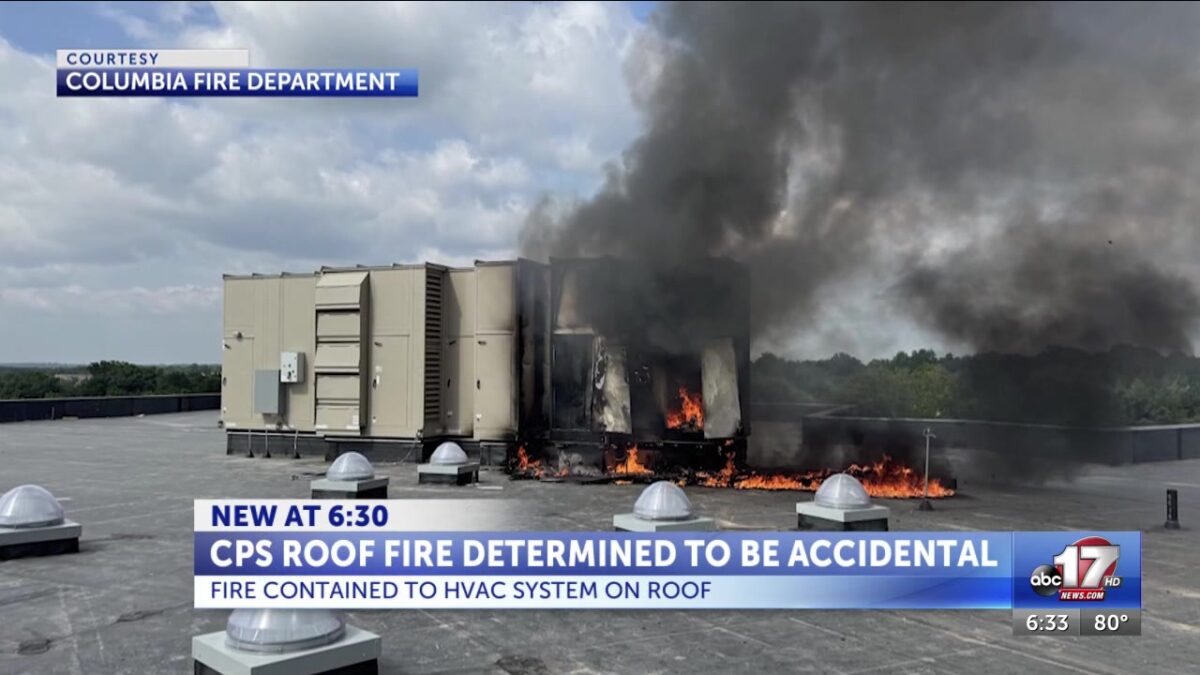
Fire marshals have determined a fire that occurred last week while crews were working on the new Eagle Bluffs Elementary School on Sinclair Road was accidental.

Columbia Fire Department spokeswoman Katherine Rodriguez told ABC 17 News in an email the fire was accidentally caused by construction crews who were using hot torches.

The fire occurred Thursday afternoon in the 5400 block of South Sinclair Road. The new elementary school is still on track to open in 2026, according to a message last week from Columbia Public Schools spokeswoman Michelle Baumstark.

All construction workers were able to get out of the building and no injuries were reported. The fire was seen at the building’s HVAC unit on the roof.

Click here to follow the original article.

Resurfacing to begin this week on portion of West Worley Street in Columbia

Ryan Shiner

COLUMBIA, Mo. (KMIZ)

Contractors will begin resurfacing a portion of West Worley Street at 5 p.m. Wednesday, according to a Monday press release from the City of Columbia.

Roadwork will occur from 5 p.m.-7 a.m. each day and is expected to be finished by 7 a.m. Wednesday, Aug. 13.

Lane closures will occur during work hours, the release says.

Click here to follow the original article.

No charges will be filed against Jefferson City officers who shot at woman

Ryan Shiner

COLUMBIA, Mo. (KMIZ)

No charges will be filed against any of the Jefferson City police officers who were accused of shooting at a woman in March, according to a letter from Cole County Prosecutor Locke Thompson.

Julie Knehans was dead with a gunshot wound after police opened fire while responding to a burglary on March 7 in the 200 block of Gordon Street.

The letter from Thompson says an autopsy conducted by the Boone County Medical Examiner determined Knehans, 53, shot and killed herself. The letter says the self-inflicted shot was the only fatal wound she had.  

“It is evident from close examination of the body camera footage that Ms. Knehans, who was hidden under a blanket, shot herself before officers, believing she had shot at them, opened fire on her,” the letter says.

Previous reporting indicates officers shot an armed suspect during a burglary in progress.

Letter re 3.7.25 OISDownload

Click here to follow the original article.

Jefferson City Council sends housing strategy back to administrative committee

Nia Hinson

JEFFERSON CITY, Mo. (KMIZ)

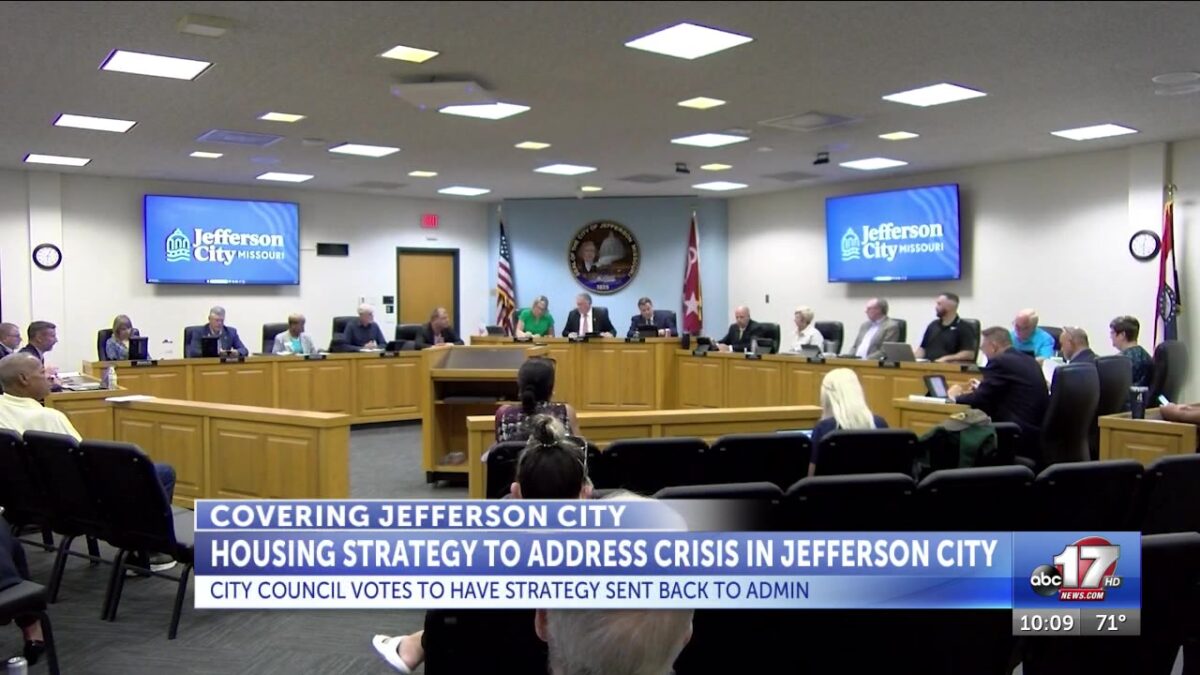
Jefferson City will not move forward with a housing strategy in the city for the time being.

City leaders voted on Monday night to send the strategy– aimed at helping the city with its long-term housing options– back to the administrative committee for review of the contract. The vote was 5-5, with Mayor Ron Fitzwater casting the tie-breaking vote.

The city has plans to send it back to the city council for a vote at a later date.

The city is considering the contract with Housing Innovations Group. The contract would cost the city $90,185. Funding for the contract will come from the community development block grant-disaster recovery account, if approved.

A housing needs assessment conducted in 2022 suggested that the city is in housing crisis, due to a current and projected lack of affordable housing. The need for the strategy was identified during a work session of the Capital City Housing Task Force.

Capital City Housing Taskforce Chair Susan Cook addressed council members Monday night with a presentation aimed at getting council members to sign-off on the idea. Several council members pushed back, saying they felt they needed to know more about the strategy before voting and inquired about what the strategy would actually achieve.

Following the meeting, Cook said she was disappointed with the council’s decision.

“I think a lot of them were concerned about the $90,000 and felt like that was a lot of money to be spending on a strategy,” Cook said. “I don’t think they fully understood that it’s not just building more housing. There’s preserving housing stock, there’s dealing with tenant protections. There’s a whole gauntlet when you’re talking about housing and it seems like this council was focusing more on just building new construction.”

Ward 3 Councilwoman Treaka Young was among those who voted to send the strategy back to the administrative committee. Prior to the vote, Young told ABC News she is an advocate for affordable housing in the city, but had her concerns.

“Housing is necessary around here, we need it. There’s a serious shortage here in the city with the housing and it’s preventing the city from moving forward and expanding,” Young said. “I want to make sure that approving this will not take away from the roads being able to be repaired in a fashion that would help us as well.”

The city said during Monday night’s meeting that the strategy would not take away from funds allocated for roads.

Cook said it it’s too early to know when the city council will vote on the strategy again. She said it will depend on when the item will get put back on the administrative committee’s calendar. It also isn’t clear what the $90,000 would go toward if it ultimately is not approved, though Cook said she hopes it would be put toward another project.

Cook said she’s worried about the funds having a deadline and being crunched for time trying to spedn the money on the strategy before the deadline arrives.

“This could definitely be a process,” Cook said. “It’s taken me two years for the task force to get to this point so if we spend another length of time, it’s not going to leave a lot of time to spend those funds on the actual strategy.”

City leaders also unanimously voted to approve the first phase of a 140-unit gated community on Wildwood Drive. Developers have now been given the green light to start the process of building the first phase of duplexes.

Click here to follow the original article.

2 charged in prostitution sting in Camden County

Ryan Shiner

COLUMBIA, Mo. (KMIZ)

Two people were charged in a prostitution sting in Camden County over the weekend.

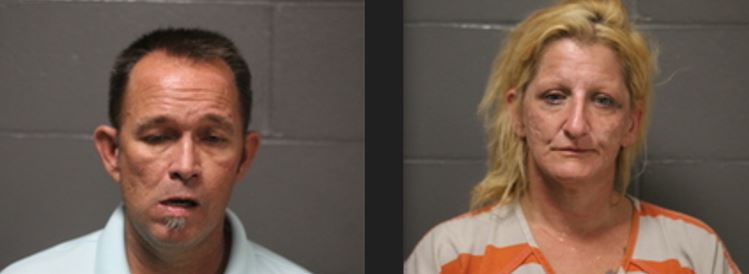
Justin Merz, 49, of Wenztville, was charged with drug possession and third-degree promoting prostitution. He is being held on a $25,000 bond at the Camden County Jail and a court date has not been scheduled.

Christine Clay, 46, of Camdenton, was charged drug possession and misdemeanor prostitution. She is being held at the Camden County Jail on a $3,000 bond

The probable cause statements say on Saturday morning, a police officer assigned to the Lake Area Human Trafficking Task Force went on a website used to promote prostitution and found an advertisement for Clay.

Officers went undercover and Clay agreed to meet and receive $200 for sex, the statement says. Clay knocked on the door of a room – with a redacted location – and was immediately arrested, the statement says.

Merz allegedly drove Clay to the spot and takes 50% of the money she gets from prostitution, the statement says. Merz allegedly denied knowing of the acts committed after he drove Clay, court documents say.

Clay was allegedly found with methamphetamine, while Merz was allegedly found with a pipe that had residue on it, court documents say.

Click here to follow the original article.

Columbia City Council tables vote on proposed water rate hike

Erika McGuire

COLUMBIA, Mo. (KMIZ)

The Columbia City Council tabled a vote on proposed water rate increases for fiscal year 2026.

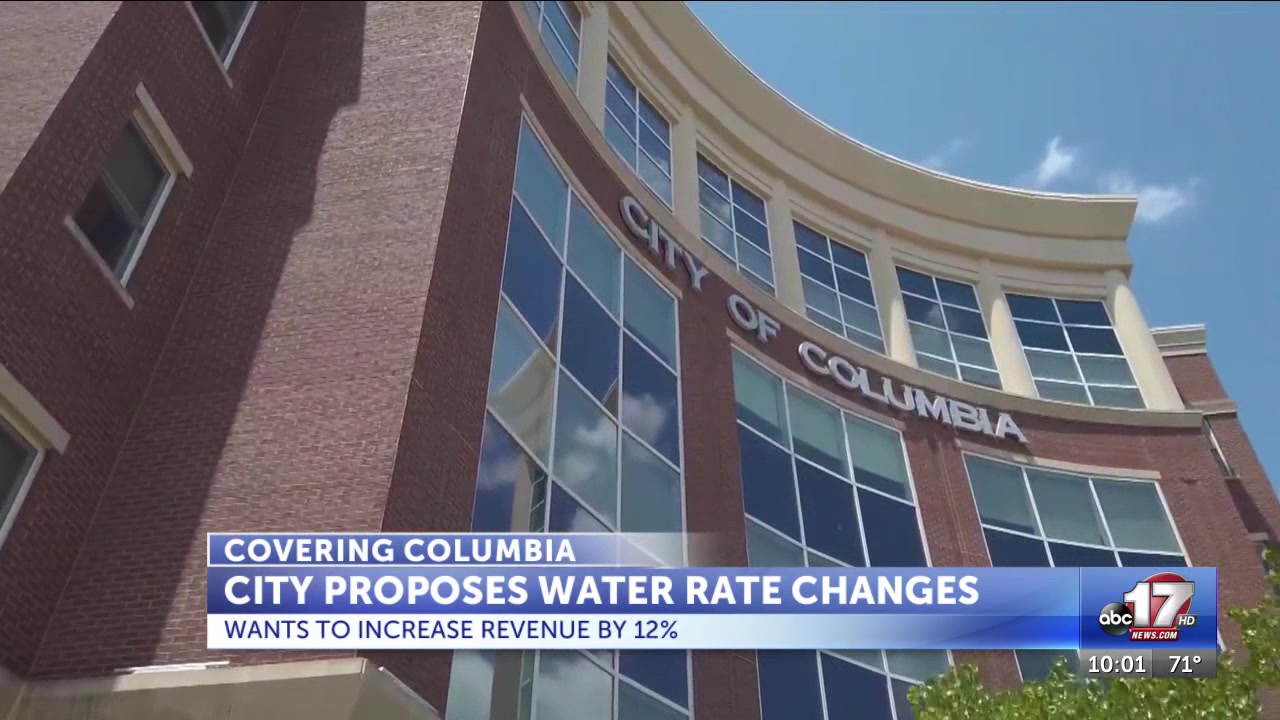
The council discussed the proposal during Monday nights meeting and heard public comments. According to the city, the proposed changes would increase water utility revenue by 12%. However, despite the increase City of Columbia expects water bills to decrease for 65% of residential customers.

The city conducted a cost-survey study to evaluate whether current water rates were keeping up with expenses. Columbia Utilities spokesman Jason West said the increase needed to keep up with rising costs.

“Lines, personnel and paying people to work for the water department,” West said. “All of that keeps increasing and so to help to stay ahead of that and be able to have competitive salaries; to be able to have modern technology and not offset needed infrastructure maintenance, then there needed to be a revenue increase to stay on top of those things,”

Under the proposal, the base fee charge would see a 25-cent increase, from $14.07 to $14.32. The total would include a customer’s monthly rates based on meter size plus a fire flow charge which covers the cost of providing water for fire protection.

The proposed change would combine the two under base charges. In the current rate structure the items are listed separately on a customer’s bill.

Residents whose monthly water usage stays at or below 100% of their winter average consumption will see a decrease in their usage rate under the proposal. WAC is the customer’s average water use during the winter months (January, February and March).

Tier 1 customers will see a drop from $3.22 to $2.30 per 100 cubic feet, which is approximately 748 gallons. Tier 2 would increase from $4.44 to $6.33, while Tier 3 would jump from $6.89 to $10.20.

Currently, the city uses an inclining block structure, which means a customer’s rate per consumption increases when a customer exceeds a certain threshold.

According to the city, the current structure for all non-summer usage from October-May is charged at the Tier 1 rate.

During the summer months, from June through September, the tiers are based on a customer’s WAC.

Summer Tier 1: Usage of 0-70% of customer’s WAC

Summer Tier 2: Usage of 71-170% of customer’s WAC

Summer Tier 3: Usage exceeding 170% of customer’s WAC

Under the city’s new proposal, the tiers would be applied year-round rather instead of only during the summer months. Additionally, tier 1 would be extended to 100% of the customer’s WAC. This means, the proposed percentage increase in tiered charges means customers who have a consistent water usage each month won’t see their bills change with the seasons.

Tier 1: Usage of 0-100% of customer’s WAC

Tier 2: Usage of 100-200% of customer’s WAC

Tier 3: Usage exceeding 200% of customer’s WAC

Julie Ryan with the CoMo Safe Water Coalition said the group has supported small, gradual rate increases to help maintain operations without hurting ratepayers. But the possible changes to water rates make her question how the city is managing its spending and says residents aren’t seeing the benefit.

“Saying they need this additional funding tells us they haven’t spent what they’ve already had effectively, or shown good stewardship of ratepayer money,” she said.

Ryan also questions the 2018 water bonds, saying some projects have started, but others haven’t making the rate increase harder to justify.

“It’s really hard for us to justify needing to raise rates consistently when the utility isn’t actually getting the things done they were suppose to,” Ryan said.

West said, the reason the city is behind on water bond projects is due to changes that have taken place since it was passed.

“A lot of change on the city council and city leadership so some of those projects that were put on the back burner, or put on pause after the 2018 bond election are now being able to be refocused and be put into play,” West said.

If approved, the new water rate structure would go into effect Oct. 1 2025. West said the city will conduct another cost-survey study in about another five years. The current water rates were put in place in 2018, according to West.

Columbia residents could also see changes to electric rates and Ameren plans to raise natural gas prices in September.

Click here to follow the original article.

Columbia Fire Department says budget cut will not hurt service

Marie Moyer

COLUMBIA, Mo. (KMIZ)

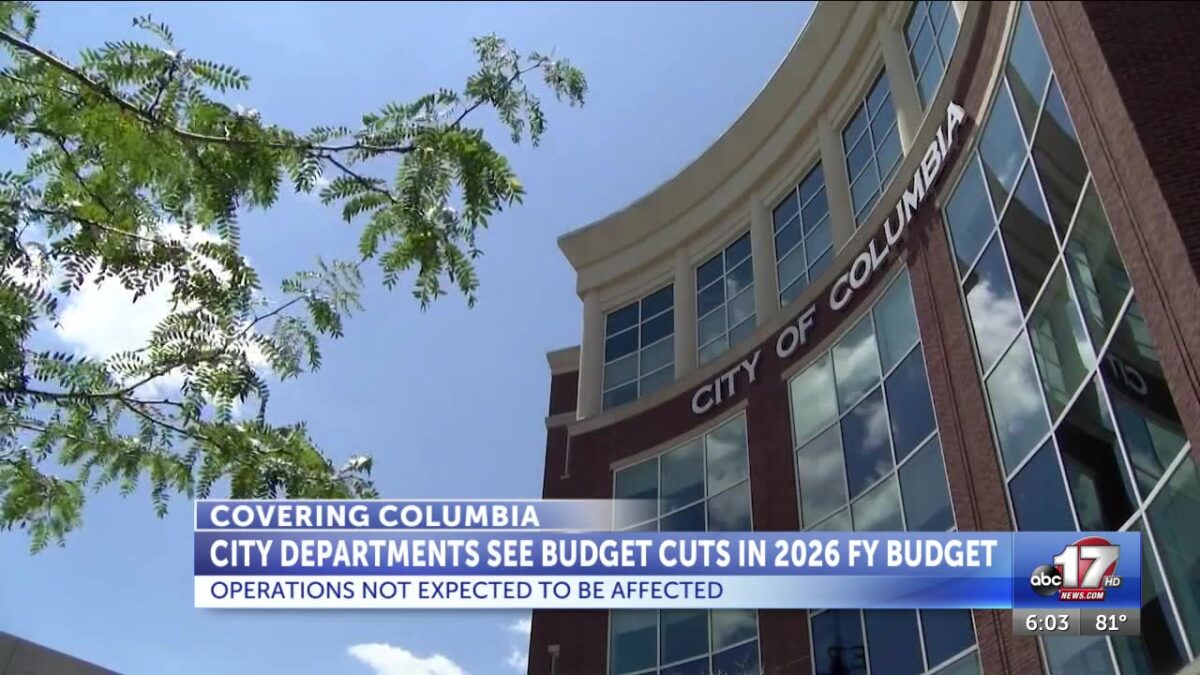
Columbia Fire Department leaders say services won’t be cut despite a 1% drop in the department’s fiscal 2026 budget.

The city is predicting it will bring in around $560 million in revenue for fiscal 2026, for around $600 million in spending, leaving a deficit of $40 million, nearly double the city’s deficit for 2025 of $23 million. The fiscal year begins Oct. 1.

This proposal includes a $140,000, or 0.4%, decrease in police funding, a $300,000, or around 1%, decrease in fire department funding, and a little over $260,000, or a 26.6% decrease, in sustainability funding.

Columbia’s Chief Finance Director Matthew Lue explains that the $40 million deficit is because of the city’s Capital Budget spending.

The Capital Budget is funded by taxes and goes to city projects like infrastructure. This year, the city allocated more than $1.3 million from the budget for flock cameras and new equipment for the police department.

The Capital Budget tends to be saved up over several years, with large portions being spent at once, causing gaps to appear in annual budget reviews. City documents report that Columbia still has over $180 million in the Capital Budget.

“All of the budget has to be put together as one big document, because even though capital is separate, it still has to be accounted for within the total budget for the city,” Lue said. “So it always makes it look like that, it has been like that for years, there was always a discrepancy.”

Lue says the change in department budgets from last year is largely due to one-time purchases made during the 2025 fiscal year.

The Columbia Fire Department, for example, had a higher budget last year for roof repairs, a new water heater, and computer upgrades. With those purchases complete, the station can turn its attention to more internal improvements.

“We just welcomed new firefighters to the department this year, so that money is going towards their training, professional development and their personal protective equipment,” CFD spokesperson Katherine Rodriguez said. “What we’re doing instead is strategically investing in the parts that do matter, like our people, our most precious resource.”

The Columbia Fire Department does not expect any changes in operations due to budget changes.

Columbia’s Office of Sustainability similarly budgeted last year for a one-time housing study.

“While reductions in other areas will require us to pay even closer attention to the costs associated with Office activities, we do not expect a dramatic contraction in the level of service provided to Community Members,” Manager of Columbia’s Office of Sustainability Eric Hempel said in a statement.

Ward 5 councilmember Don Waterman said that a large concern in the 2026 fiscal budget is preparing for a tight budget. Last year, the expected tax revenue for the city fell 3% short, so the council is prepared to plan accordingly.

“We’re making the decision between safety and social services and infrastructure. Trying to juggle those as best we can,” Waterman said.

Waterman adds that the City Council will discuss the budget over the next month with the goal of voting on a budget in September before the 2026 fiscal year begins in October.

Click here to follow the original article.