I-70 westbound traffic shifts to new median lanes in Cooper County pushed back

Jazsmin Halliburton

BOONVILLE, Mo. (KMIZ)

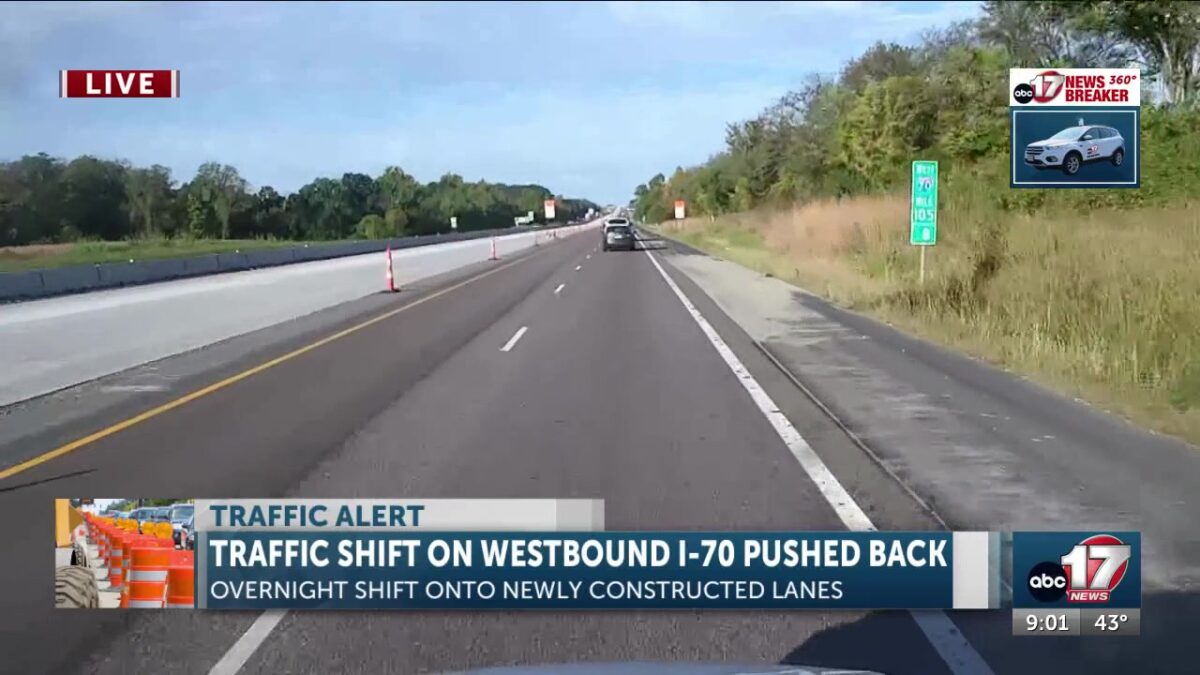
The Missouri Department of Transportation’s traffic shift on I-70 in Cooper County has been pushed back.

In an email to ABC 17 at 8:19 a.m., A MoDOT spokesperson said the department is meeting with the contractor Monday morning to finalize plans, but they believe it has been pushed to the week of Oct. 29.

An update release will confirm the new start date.

According to a previous press release, the shift was scheduled to start this week.

Westbound traffic on I-70 will shift onto the newly constructed lanes in the median between east and westbound traffic starting west of Missouri Route 5 at Boonville to east of Missouri Route 87.

Due to the shift, the ramps at exits 101, 103 and 106 will be temporarily closed to allow crews to adjust for pavement height differences between the new and current lanes.

The height difference of the pavement at each ramp will determine how long the exits will be closed.

All ramps are expected to reopen around one to two days after the traffic shift.

A set date and time have not yet been announced.

Click here to follow the original article.

Missouri groups make final push to sway voters on Amendment 3

Euphenie Andre

JEFFERSON CITY, Mo. (KMIZ)

Millions of dollars are pouring into the fight over abortion rights as Missouri voters prepare to decide the fate of Amendment 3 for a second time in two years.

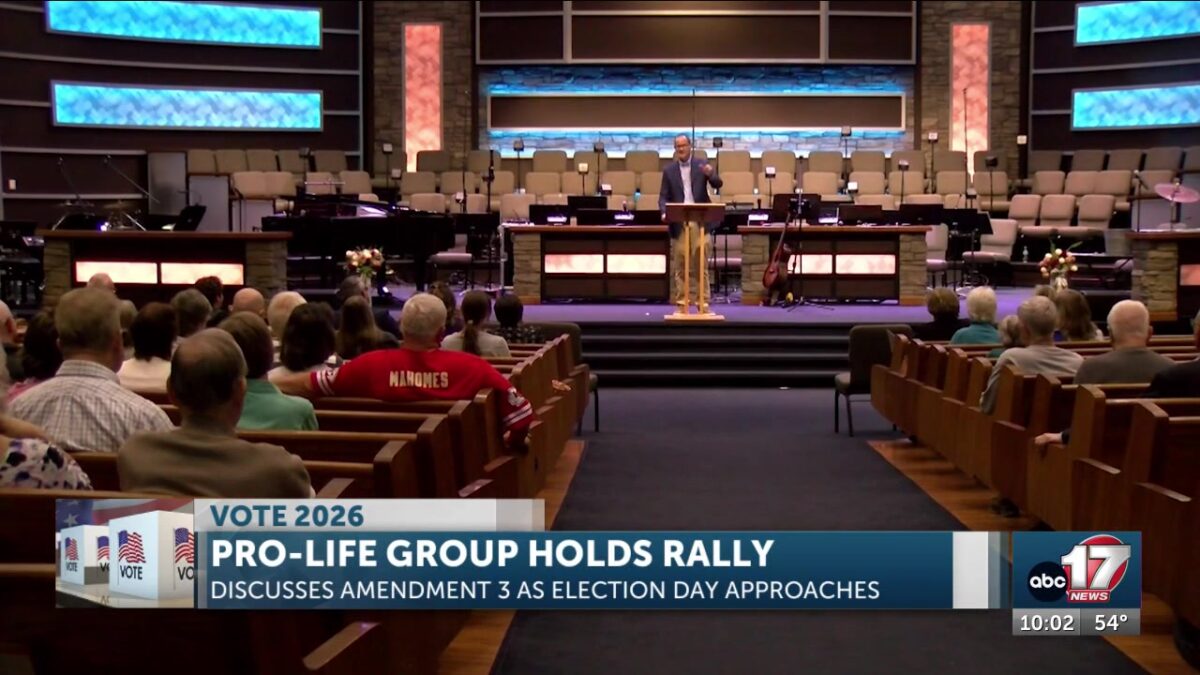
Her Health, Her Future hosted its “Say Yes on 3” rally at Concord Baptist Church in Jefferson City, where speakers shared why they believe voters should repeal the reproductive rights protections approved by voters in 2024.

Five speakers addressed about 50 attendees: Dr. Robert J. Matz, Dr. Wes Fowler, Dr. Doug Richey, Stephanie Jacobson and Tom Estes. State Sen. Rick Brattin was listed as a speaker but did not attend.

Tom Estes, Political Director of Her Health, Her Future, said he believes voters who approved the original amendment were focused on exceptions for difficult situations.

“They were voting for those difficult cases that women were in,” Estes said. “I don’t think they realize that they were actually creating an abortion on demand situation in Missouri,”

A “yes” vote would support changing the Missouri Constitution to repeal the existing protections and establish new restrictions.

A “no” vote would oppose the proposed changes, keeping the current constitutional protections for reproductive freedom in place, like access to abortion up to a certain amount of weeks.

“I’m voting yes for Amendment 3 because I believe it will literally save thousands, if not hundreds of thousands of lives,” said Dr. Wes Fowler, Executive director and Treasurer of the Missouri Baptist Convention.

Stephanie Jacobson, Founder and Director of Bulletproof Alliance, also shared her personal experience. Jacobson said she grew up in the church and had two abortions by the time she was 19.

The rally comes as campaign committees report millions of dollars raised and spent in the fight over Amendment 3.

Thursday was the quarterly filing deadline for political committees to report their fundraising and spending to the Missouri Ethics Commission. The latest reporting period covered July 7 through Sept. 30.

Her Health, Her Future PAC, which is led by Missouri first lady Claudia Kehoe, supports the passage of Amendment 3.

According to campaign finance filings, the PAC raised about $1.7 million during the reporting period and spent about $2.2 million. The organization also reported approximately $797,000 in cash on hand.

“Our opponents raised about 4 or 5 times that amount during their time.” Estes said. “But we’re happy with what we have. I mean, I think that we have more than enough to run a great campaign and there’s still time,”

Meanwhile, the pro-choice group Stop the Ban reported raising about $14.8 million and spending about $8.7 million during the same period, with approximately $9.7 million in cash on hand, according to financial documents.

Tom Bastian, a spokesperson for Stop the Ban, said in an email that the proposed amendment would repeal reproductive freedom protections Missouri voters approved in 2024.

“Anti-abortion politicians continue to try to overturn the will of voters and ban abortion,” Bastin said.

Bastian urged voters to reject the proposal and preserve the reproductive freedom protections approved in 2024.

“Missourians must vote no on Amendment 3 to keep medical decisions with women and their doctors, not politicians,” Bastin said.

Missouri voters will decide Nov. 3 whether to repeal the reproductive freedom protections previously approved or replace them with new abortion restrictions.

Click here to follow the original article.
Osage Beach woman airlifted after Morgan County crash

Haley Swaino

COLUMBIA, Mo. (KMIZ)

An Osage Beach woman was airlifted with serious injuries after a crash in Morgan County Saturday night.

According to a Missouri State Highway Patrol crash report, the 32-year-old was a passenger in a 2011 Chevrolet Camaro driven by a 37-year-old man from Ivy Bend.

The pair was traveling southbound on Cup Tree Road around 8:50 p.m. The report says the car went off the right side of the road and hit a tree south of Clat Road.

The woman was seriously hurt and flown to University Hospital, according to the report. The man was taken by ambulance to Lake Regional Hospital with moderate injuries.

Neither was reported to have been wearing a seatbelt. The car had “extensive” damage.

MSHP does not name victims in its crash reports.

Click here to follow the original article.
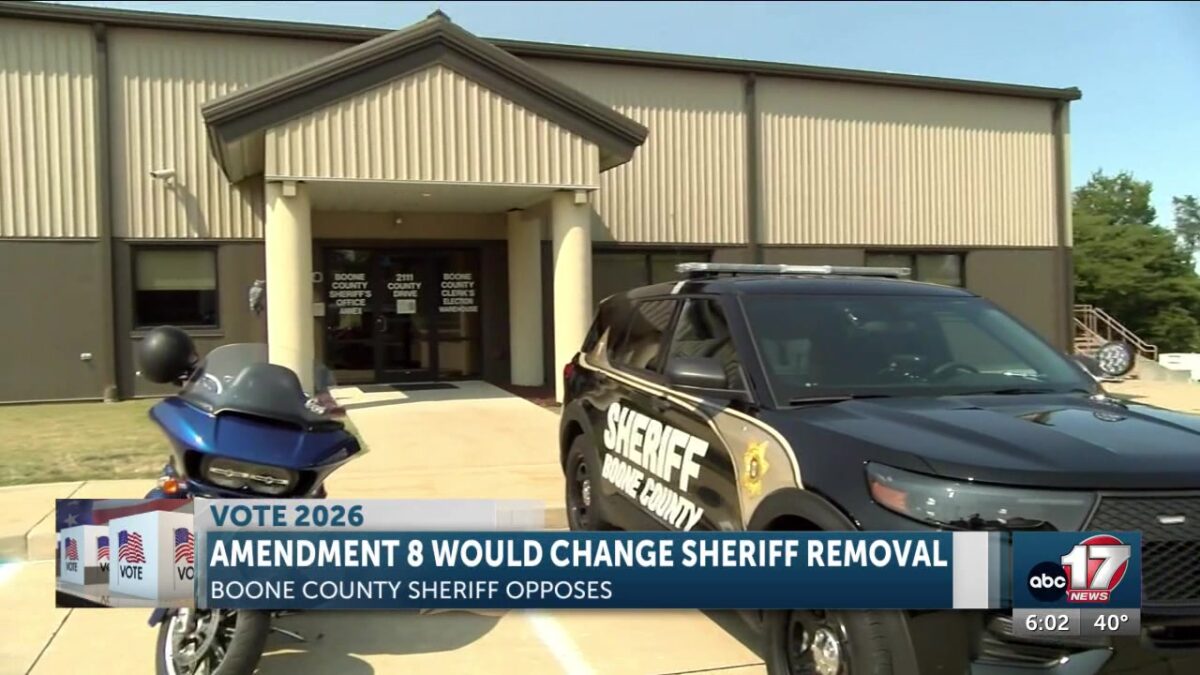
Amendment 8 takes a back seat for Boone County Sheriff amid campaign for new jail

Alison Patton

COLUMBIA, Mo. (KMIZ)

As the November election approaches, Boone County Sheriff Dwayne Carey is focusing on Proposition L, which, if passed, would establish a sales tax to fund a new county jail, but another ballot measure, which has taken a back seat, could change how a sheriff is removed from office.

Amendment 8 would establish the county sheriff in the Missouri Constitution, but the role is already outlined in state law. While Carey has other priorities this election season, he said he’s against Amendment 8.

“I’m not talking a whole lot about it, because I don’t want to confuse this issue (Proposition L),” Carey said. “I think a sheriff can be removed at a local level.”

Under current state law, a prosecuting attorney can file a removal complaint in circuit court, based on citizen input and alleged misconduct. If Amendment 8 passes, only the attorney general would be able to take legal action to remove a county sheriff.

“I think this was derived from some sheriffs that didn’t do legal things and ethical things, and then they were removed by a local judge. I think some sheriffs have an issue with that,” Carey said.

A county judge is elected by the people living in that area, and Carey said he thinks a person elected by the same constituents as the sheriff should have the authority to remove that person from office if they do something illegal or unethical.

A “yes” vote changes the Missouri Constitution and allows only the Attorney General to file a “writ of quo warranto,” which starts the legal process of removal.

A “no” vote keeps the current removal process, which can be started by the county prosecuting attorney, as outlined by state law.

The full ballot language can be found on the Secretary of State’s website.

Click here to follow the original article.
Hundreds gather in Columbia for Walk to End Alzheimer’s

Euphenie Andre

COLUMBIA, Mo. (KMIZ)

Hundreds of people gathered at Stephens Lake Park on Saturday morning for the annual Walk to End Alzheimer’s, raising money for research and support services for people affected by the disease.

Sarah Lovegreen, vice president of programs for the Alzheimer’s Association’s Missouri Chapter, said the organization has set a fundraising goal of $195,000 by the end of the year.

“Funds help support research, but also they help support care and support programs here in the community,” Lovegreen said.

Before Saturday’s walk, the organization had raised more than $75,000 toward its goal. Walk coordinator Anthony Burt said donations collected Saturday would not be processed until Tuesday.

According to the Alzheimer’s Association, about 122,000 Missourians ages 65 and older are living with Alzheimer’s disease. The association also estimates that one in three seniors nationwide dies with Alzheimer’s or another form of dementia.

“In Columbia, it’s pretty similar to the rest of the state of Missouri,” Lovegreen said. “About one in nine individuals will have Alzheimer’s or another dementia. Across the state, we have 122,000 people living with the disease, and over 220,000 people who are providing unpaid care.”

Age is the most common risk factor for Alzheimer’s disease. People 65 and older are more likely to be diagnosed, and the risk increases with age.

Kristan Erdman traveled from Fayette to participate in the walk in honor of her uncle, Mike, who was recently diagnosed with Alzheimer’s.

“I think it’s really important to be here to represent everybody that has family and is caregiving for someone that’s living with the disease,” Erdman said.

Erdman said it has been difficult to watch her uncle navigate the changes brought on by the disease.

“It’s been tough, but I think that he is strong and we are strong as a family,” she said. “We’re going to do everything that we can do to fight for Mike.”

Sisters Marilyn Porter and Michaele Moore were among the approximately 500 people registered for Saturday’s walk. Their mother lived with Alzheimer’s for more than a decade before she died three years ago.

The sisters said watching their mother’s condition decline was difficult, particularly as she eventually lost the ability to recognize them and care for herself.

“To see her go downhill like she did,” Porter said. “She didn’t know us in the end. She couldn’t do anything for herself in the end.”

Porter and Moore said participating in the walk allowed them to honor their mother while raising awareness about the disease.

Although there is currently no cure for Alzheimer’s disease, research continues to advance treatment options. The Food and Drug Administration has approved medications that may slow the disease’s progression, along with drug and non-drug approaches that can help manage symptoms.

Lecanemab, sold under the brand name Leqembi, received FDA approval in 2023 for treating early-stage Alzheimer’s disease. The antibody-based medication targets beta-amyloid plaques in the brain, which are linked to the disease, and has been shown to slow cognitive decline in eligible patients.

Donanemab is another FDA-approved treatment for early Alzheimer’s disease. Administered through an intravenous infusion every four weeks, the anti-amyloid antibody therapy is approved for people experiencing mild cognitive impairment or mild dementia associated with Alzheimer’s disease.

Lovegreen said the organization plans to hold additional events to help reach its $195,000 fundraising goal before the end of the year.

More information about upcoming events and ways to support the Alzheimer’s Association is available through the Walk to End Alzheimer’s website.

Click here to follow the original article.
Large police presence in Columbia, people asked to avoid Hinkson, Melbourne

Alison Patton

COLUMBIA, Mo. (KMIZ)

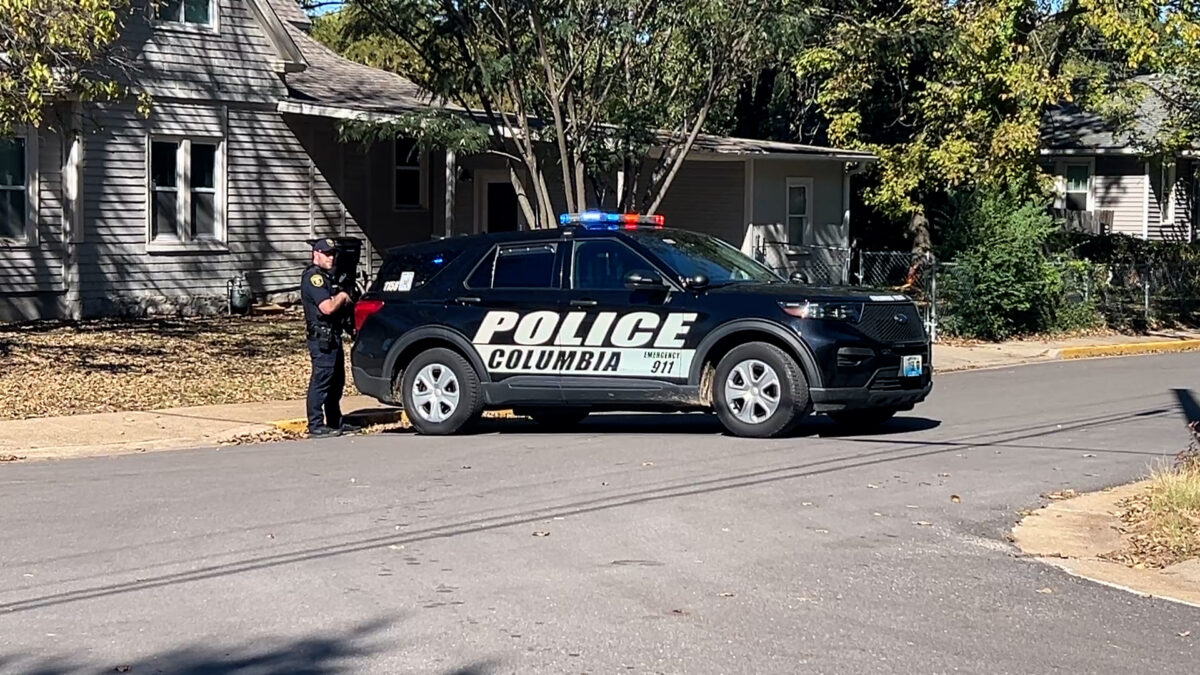
The Columbia Police Department had a portion of Ripley Street near Benton Elementary School blocked off around 11:40 a.m. Saturday.

A text from Boone County Joint Communications asked people to avoid Hinkson Avenue and Melbourne Street; however, police presence appeared focused on Ripley Street.

An ABC 17 News reporter saw at least six CPD vehicles blocking off about two intersections of Ripley Street. There was one armed officer blocking off Richardson Street, with another group of about three officers facing at the other end of the street.

The reporter saw police turn people away from entering the blocked portion of Ripley Street.

The scene appeared to clear around 12:30 p.m., and CPD declined an interview on scene.

ABC 17 News has reached out to CPD for more information.

Check back for updates.

Click here to follow the original article.

Last MU Health Care drive-thru vaccination event Saturday

Alison Patton

COLUMIA, Mo. (KMIZ)

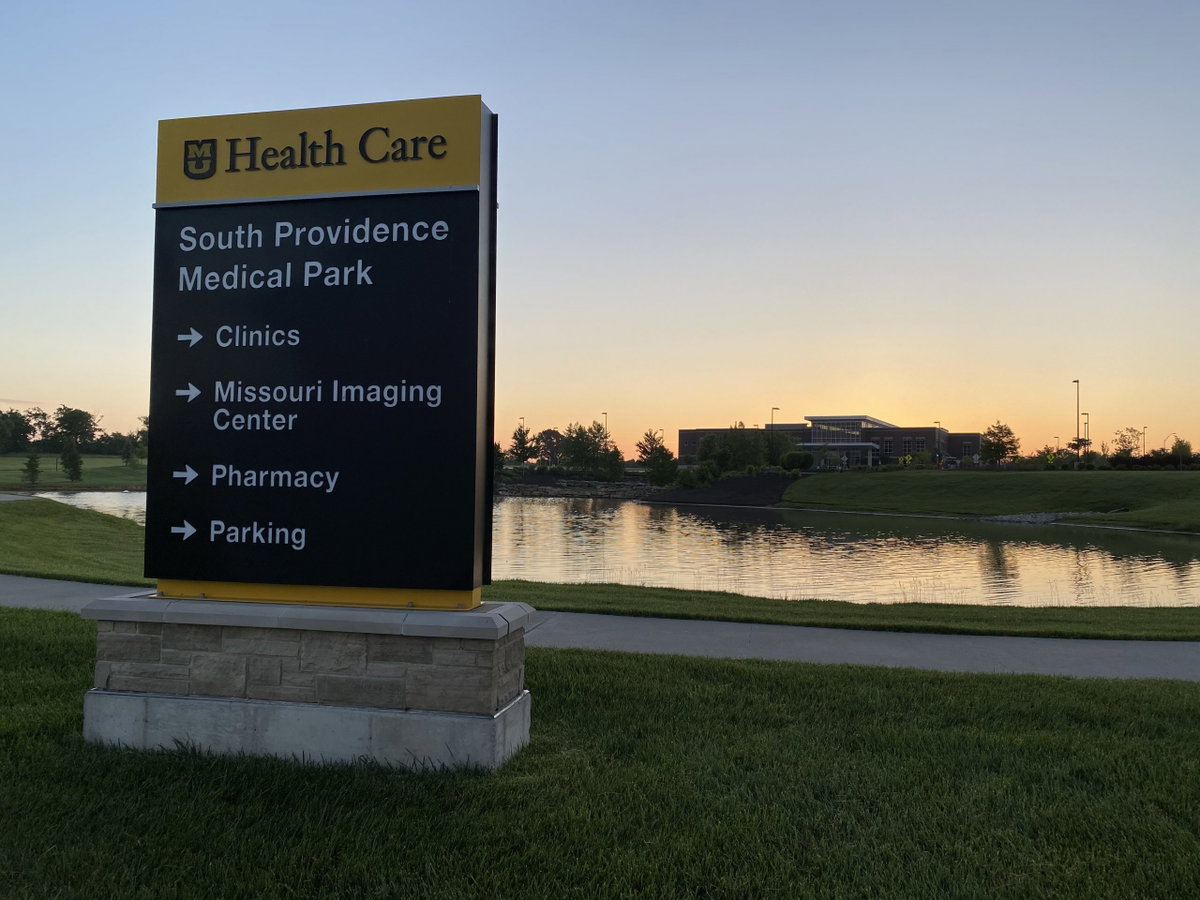
Saturday is the last of 24 drive-thru vaccination events hosted by MU Health Care. The event will be held at the South Providence Medical Building, located at 551 Veterans United Dr., and will run from 9 a.m. to 1 p.m.

While it’s the final in a month-long series, people will have other opportunities to receive COVID and flu vaccinations.

No appointment needed at the Family Medicine Clinic, 303 N. Keene St., from 5 to 7 p.m. on Oct. 20. Vaccines are available for patients six months and older. No appointment needed at the Smiley Lane Family Medicine Clinic, 2325 Smiley Ln., from 5 to 7 p.m. on Oct. 27. Vaccines are available for patients six months and older. Appointment required at the Smiley Lane Mizzou Pharmacy, 2325 Smiley Ln., from 9 a.m. to noon on Oct. 22. Flu vaccines are available for patients seven years old and up; other vaccines can be requested. Appointment required at the South Providence Medical Building, 551 Veterans United Dr., from noon to 3 p.m. on Oct. 28. Flu vaccines are available for patients seven years old and up; other vaccines can be requested. Appointment required at the Missouri Orthopaedic Institute, 1100 Virginia Ave., from 9 a.m. to noon on Oct. 30. Flu vaccines are available for patients seven years old and up; other vaccines can be requested.

A full list of events, available vaccines and age requirements can be found on the MU Health Care website.

The Missouri Department of Health and Senior Services reports 308 cases of the flu as of Oct. 10. There have been no flu-related deaths reported in 2026.

Nationally, the CDC reports that flu activity remains low, but cases have been increasing since late August and early September, with the highest activity on the West Coast.

Check back for updates.

Click here to follow the original article.
Man accused of rape in 2025 booked into Boone County Jail

Ryan Shiner

COLUMBIA, Mo. (KMIZ)

A man accused of raping a woman in 2025 has been booked into the Boone County Jail.

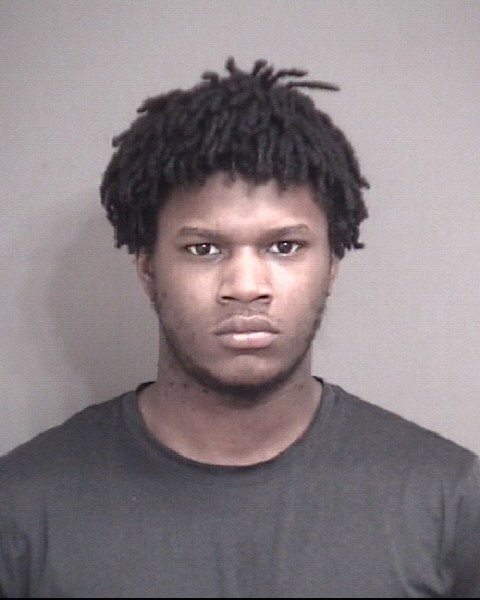
Airbay Jackson Jr., 22, of Columbia, was charged on Sept. 21 in Boone County with first-degree rape. He is being held at the Boone County Jail without bond. He was booked into the jail on Thursday afternoon. An arraignment was held on Friday. A confined docket hearing was scheduled for 1 p.m. Thursday, Oct. 22 and a preliminary hearing is set for 9 a.m. Wednesday, Nov. 4.

The probable cause statement says police were first notified of a possible sexual assault on Sept. 1, 2025, that occurred the night before. The victim allegedly told police she consumed 8 ounces of whiskey that night and did not remember many details until she came to while the assault occurred, the statement says.

Two people allegedly told police that they saw Jackson and the victim engagement in a form of intercourse, with one of them telling them to stop, the statement says.

The pair then left and one those witnesses went back to the room to see Jackson trying to have sex with the victim and the victim fighting him off, court documents allege.  A second witness made Jackson leave.

The victim allegedly partook in a sexual assault exam and tested positive for multiple substances, the statement says.

Jackson pleaded guilty in November 2025 to misdemeanor second-degree harassment and violating a restraining order. He was sentenced to supervised probation.

Click here to follow the original article.
Despite a high volume of applicants, CPD struggles to fill ranks as applicants fail vetting

Mitchell Kaminski

COLUMBIA, Mo. (KMIZ) 

The Columbia Police Department is looking to implement downtown and traffic units, but cannot do so until all patrol beats across the city are fully staffed.

While CPD says it has no shortage of applicants, many are failing to pass the department’s vetting process, which has contributed to the ongoing staffing shortage. 

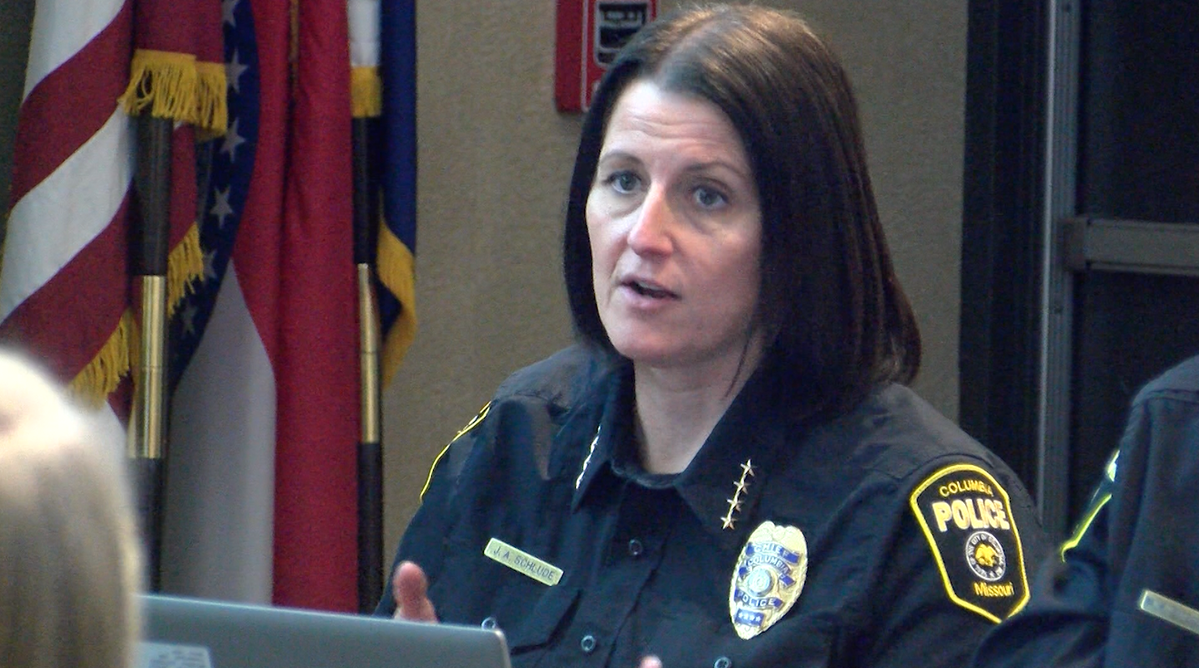
“Just people not being able to make it through the background process. We do a lot of prior employment history, prior residence history. We do tons of interviews. We do a computer voice stress analysis where we try to make sure everything they put on their application was true and correct,” Columbia Police Chief Jill Schulde told ABC 17 News. “We’re just pulling a lot of people out for various things, and that’s what the process was intended to do. I’m not upset about that I would just like to see more people get through.” 

CPD requires applicants to be at least 21 years old by the time they complete Missouri POST certification, have a high school diploma or equivalent, qualify for a Class A peace officer license and maintain a valid Missouri driver’s license and safe driving record. Applicants must also have no serious criminal record entries, maintain a CPR certification and demonstrate a strong work and attendance history.

Candidates must then pass written, drug, psychological, Computer Voice Stress Analyzer and medical examinations. They must also obtain Missouri POST certification within six months of employment.

Seth Fallik, chair of the Department of Criminal Justice and Criminology at the University of Missouri-Kansas City, said police hiring processes typically include physical fitness requirements, interviews and background investigations that can examine a candidate’s family, friends, former employers and housing history. Some departments may also review credit history.

“A criminal record: That’s going to immediately disqualify you. Of late, we’ve seen departments sort of ease their requirements around drug use or abuse or history thereof,” Fallik said. “Particularly as it relates to marijuana, as it becomes more accepted across the country. So these things are going to be immediate red flags for an agency and not necessarily disqualifying.” 

However, despite many departments loosening their restrictions on drug use, Fallik says meeting the minimum requirements does not guarantee a job, particularly when agencies are evaluating large pools of candidates.

“Remember, you’re going up against 100-plus individuals for one position. So I like to tell people that just because you meet the minimum requirements doesn’t mean that’s necessarily who they’re actually hiring for,” Fallik said.

Fallik said thorough screening also helps departments avoid hiring candidates whose conduct or qualifications could expose a city to legal liability.

“That could cost you millions of dollars in a lawsuit later on, if you’re looking at somebody who’s slipped through the cracks in terms of their qualifications,” Fallik said.  “That cost doesn’t necessarily come directly to the individual. It comes to the taxpayers often or the city. So yeah, you want to make sure you’re doing your due diligence,” Fallik said.

He said that due diligence can include checking with other law enforcement agencies when an applicant is transferring from another department or coming from out of state.

Staffing limits downtown policing plans

CPD is divided into eight patrol beats and ideally would have two officers assigned to each. Schlude said the department must prioritize staffing those beats before it can establish dedicated downtown and traffic units.

“Sometimes we wish there were places where we could do more and that’s where the staffing piece comes in. So I know there’s a high level of frustration about the downtown unit and reconstituting it. With other folks the traffic unit is also high on the list. It is for us as well, but we can’t do those things until we have basic staffing in the beats,” Schlude said.

The staffing constraints come as downtown policing has drawn scrutiny following a report showing a 47.8% increase in reported incidents during the yearlong period ending Sept. 15. CPD recorded 769 incidents downtown, up from 520 during the previous year.

The department has said increased police enforcement contributed to the rise in reported incidents. Of the 9,055 calls for service recorded through Sept. 15, 4,967 were initiated by police, while 4,088 came from the public.

CPD increased enforcement downtown after a fatal shooting last year, focusing on lower-level offenses and disturbances in an effort to prevent more serious violence. The department has said the strategy has helped reduce some violent crime indicators, including confirmed shots-fired incidents downtown.

Schlude said the additional enforcement has helped, but maintaining that level of deployment indefinitely is not sustainable. She also noted downtown crime has historically fluctuated with seasonal factors, including the school year and changes in crowd sizes.

“That extra enforcement that we’re engaging in has really been helping move the lever there. It’s not sustainable forever and obviously, as you saw on some of the charts, the crime downtown in general has always been very seasonal and cyclical and has to do with crowds and when schools and session and things of that nature,” Schlude said.

With a dedicated downtown unit, CPD could focus more consistently on downtown concerns without having to rely as heavily on officers assigned to other responsibilities, Schlude said.

“I do think when we get back to having a downtown unit, it’s going to help with the overall, whether it’s actual crime or perception of crime. I think it’s going to help. Hopefully next year will be in a position where we can staff that unit and see results,” Schlude said.

For now, the department is balancing downtown enforcement with its other responsibilities across the city. Schlude said CPD has increased staffing in areas such as its street crimes unit, which investigates nonfatal shootings, but additional staffing would give the department more flexibility to address public safety concerns.

Click here to follow the original article.
Coach Dan Devine’s complicated legacy in Mizzou football’s integration

Mitchell Kaminski

COLUMBIA, Mo. (KMIZ) 

When a restaurant owner refused to serve two Black players on the University of Missouri football team, coach Dan Devine faced a decision.

The Tigers were returning from a game at the University of Kansas when they stopped for dinner in Missouri. Jerry Wallach, a tackle who played for the Tigers from 1959 to 1962, recalled watching some of his teammates leave the restaurant, followed by a woman.

“You don’t have to be Dick Tracy to figure out what was going on,” Wallach told ABC 17 News. “Some woman comes out and says, ‘Those boys aren’t coming in here.’ And she’s irate. Dan Devine bragged it was one of his finest moments and frankly it was.”

As the woman kept demanding to know who was going to cover the bill, Devine reached into his pocket, threw money down to cover the food that had already been ordered, and directed the team back onto the bus.

“He really has reason to be proud of his record on civil rights. But he would talk about that incident, and he said he reached in his pocket, pulled out a $100 bill,” Wallach recalled. “I would always follow him in the after-dinner speeches by saying, ‘I was there, I saw it happen.’ Which was basically true, except it wasn’t a $100 bill; it was a $50 bill. The guy had to up it to $100. It made a better story.”

If you attend a game at Memorial Stadium, you’ll find Dan Devine’s name along the visitors’ sideline. During his 13 seasons in Columbia, Devine transformed Missouri from a dormant program into a national contender, compiling a 93-37-7 record — the third-most wins in program history. He led the Tigers to four bowl victories, including the program’s first in the 1961 Orange Bowl, two conference titles, and its first No. 1 ranking.

In the 1960s, his teams never lost more than three games in a season, making Missouri the only team in the country to accomplish that feat.

But Devine is remembered for more than the Tigers’ dominance on the field. He also oversaw a pivotal period in program history: the integration of Missouri football.

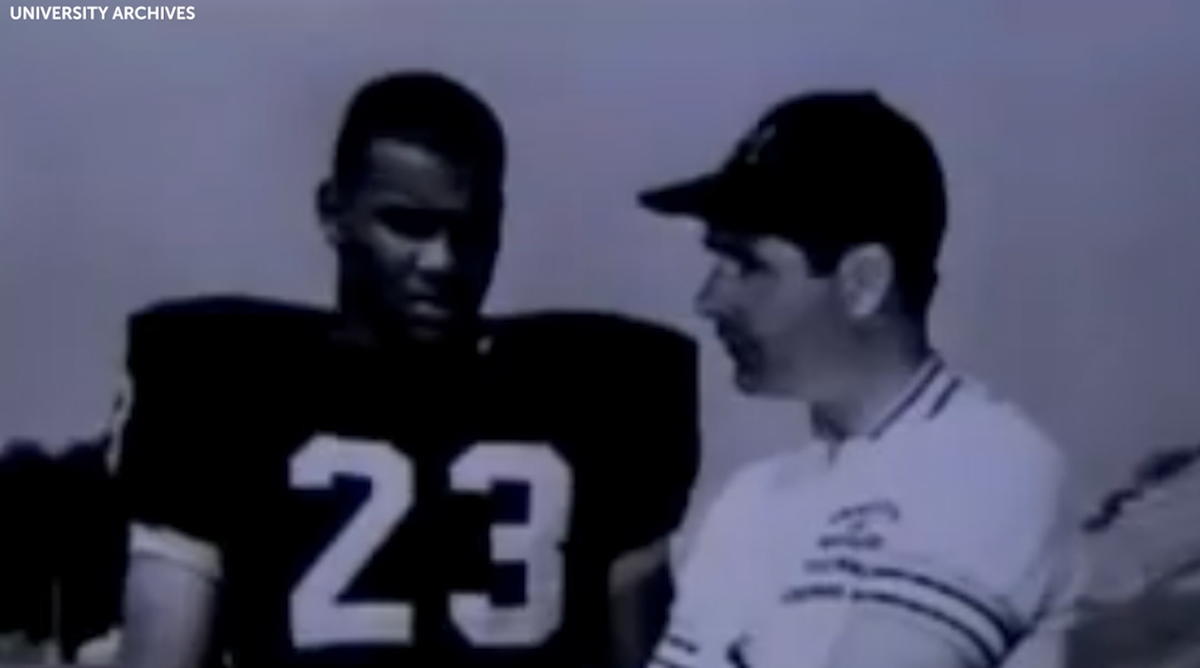
That process was already underway when Devine arrived. Missouri became one of the last Big Eight Conference football programs to integrate when Norris Stevenson joined the team in the winter of 1957. Mel West followed six months later, becoming the program’s second Black player. Both were recruited by Frank Broyles, who left for the University of Arkansas in 1958 before coaching either player.

Devine was coming off a perfect 10-0 season as Arizona State’s head coach when Missouri offered him the job in December 1957. His arrival in Columbia got off to a rocky start. Engine trouble delayed his flight by six hours, and he arrived at his interview in a suit covered in hot chocolate after a flight attendant accidentally spilled a drink on him.

When Devine took over in 1958, Stevenson and West faced discrimination that extended well beyond the football field.

“They were both really embraced by their teammates,” Steenbergen said. “But it was 1960. I think a lot of the players didn’t have a sense of what those guys were going through.”

Stevenson’s daughter, Jennifer, said her father grew up in a predominantly Black neighborhood in St. Louis. Moving to Columbia, a town of roughly 30,000 people at the time, was a culture shock. At Missouri, he had to navigate an unfamiliar environment where he encountered racial barriers in ways he had not experienced before.

“He didn’t really have a lot of opportunity to interact with white individuals and deal with discrimination and things like that. That was all new,” Jennifer Stevenson said. “When he went to Mizzou, it was something he had to learn.”

The University of Missouri had yet to hire any Black educators or administrators, and many downtown businesses allowed Black students inside only if they presented their university IDs.

“When he talked about it, even though the discriminatory things that happened to him were painful, what defined him was the fact that he overcame it,” Jennifer Stevenson said.

Those challenges followed the Tigers on the road.

“Those were rough days,” Wallach said. “It was not easy to go to a hotel and have somebody meet the team plane and take the Black players somewhere else because they couldn’t go to our hotel.”

Devine made an effort to support his players, challenging discrimination when it threatened the unity and well-being of his team.

“Dan definitely did a lot of things that helped Mel and Norris,” Brendon Steenbergen, author of “Respectable Roughnecks,” told ABC 17 News. “When they played at Texas A&M, the hotel restaurant wouldn’t allow the Black players, and so Dan Devine made sure that the whole team was not going to eat someplace that wouldn’t allow two of his players to eat.”

Despite those acts of support, Stevenson’s relationship with Devine was not without tension.

Stevenson became a key contributor as Missouri rose to national prominence. In 1960, he rushed for 169 yards and two touchdowns in a 41-19 victory over Oklahoma, helping the Tigers earn their first win in Norman since 1936 and climb to No. 1 in the national rankings.

Despite that production, Stevenson was not always given a role that reflected his contributions. He finished his Missouri career with 1,184 rushing yards and seven touchdowns over three seasons but was considered the second-string halfback.

Following Stevenson’s death in 2012, Gerald Stevenson recounted a conversation his brother Norris had with a former assistant coach in 2009. According to Gerald, the assistant coach told Norris that influential boosters had prevented Devine from starting two Black running backs together.

Steenbergen also pointed to the Tigers’ 1961 Orange Bowl trip as a source of tension. Despite Missouri’s 21-14 victory in front of President-elect John F. Kennedy, the postgame banquet left a lasting impression on Stevenson, his daughter Jennifer said.

The banquet took place at Miami Beach Convention Hall, but due to the hotel’s segregated policies, Stevenson and West were escorted off the island, while Devine did nothing to intervene.

“He loved his coach. It was painful. There were some painful things that happened,” Jennifer Stevenson said. “It’s like when you have a complicated relationship with anyone. Sometimes it’s just you love them, but then there are those hard points in life.”

Still, Jennifer said, the relationship endured.

“When Dan Devine passed away, his son was given the instruction to go talk to Norris and see if he would be willing to speak at his service,” she said. “So it’s like that pain was there, but that relationship was never broken.”

For Johnny Roland, who arrived at Missouri after Stevenson and West had already begun breaking barriers, Devine was first and foremost a demanding football coach.

Roland, a highly recruited halfback from Corpus Christi, Texas, initially committed to Oklahoma before a visit to Columbia helped change his mind. Devine played a key role in convincing him to choose Missouri.

“Coach Devine worked his magic on me,” Roland said. “He had a pretty good knack of schmoozing the mothers.”

Once Roland arrived, however, Devine did not give him special treatment.

“He’d treat me just like he would treat anybody else. He’d coach you up, he’d ball you out. He didn’t take mercy on me,” Roland said.

Wallach described Devine as “the biggest asshole in town”, but added that his coach was not always that way. When the two would go to postseason banquets after the season, he saw another side of Devine. 

“I’m sitting next to him one night, and this is a guy we treated with reverence. He was like God or something. I’m sitting next to him, and I say, ‘Hey, can I call you Dan?’”

“Sure, of course,” Devine replied.

“I got a question, Dan? When I played for you, you were the biggest asshole in town. But coming to these banquets and talking to you, you’re really a pretty nice guy. How do you square that?”

“It’s not easy every day waking up the biggest asshole in town,” Devine responded. “But if you want to win major college football games, that’s what you got to do.”

But Roland said Devine’s intensity was also what made him such an effective leader.

“He scared the hell out of you,” Roland said. “He just built a culture that we’re all in this together. We’re either going to sink together or swim together.”

Roland became one of Missouri’s biggest stars, playing multiple positions before becoming the program’s first Black team captain in 1965.

“He was, in my opinion, the first real superstar from Mizzou,” Steenbergen said. “Obviously, there were great players at Missouri before that, but in the television era, Johnny Roland was a real star and a great, great football player, and his opinion mattered. He was a player who recognized that his success and his popularity as an athlete could translate into making real change.”

According to Wallach and Steenbergen, that change included ending a long-standing tradition at Mizzou that had bothered many Black students.

“When Missouri would score a touchdown, the fans would wave big Confederate flags, huge Confederate flags, and the band would play ‘Dixie,’” Wallach said. “There was a big Confederate rock right outside the law school with a big plaque dedicated to the heroes of the Confederacy. Boone County was called Little Dixie.”

Before the Tigers’ 1960 Orange Bowl matchup against Georgia, activists with the Congress of Racial Equality urged Missouri’s band not to play “Dixie.” The tradition ended before 1970. Although no single, definitive account establishes exactly when it ended, historical accounts place its demise around 1964, while Roland was attending school.

“The story goes that Johnny Roland told Dan Devine, ‘If you want me to score touchdowns at Missouri, you’re not going to have this music, which is an insult to my people,’ and that Dan Devine did listen, and he talked to the band director and athletic director at the time, and they got that stopped,” Steenbergen said. “Now, this is 60-some years later, and I have heard different accounts of it, but that’s kind of the version that I’ve heard from Johnny and from others.”

Wallach offered a similar account.

“John Roland went into Devine’s office, I’ve heard the story often, and I believe it, and said, ‘Coach, here’s what you can do. You can continue to play me, and I’ll continue to play, or you can have that Confederate rock and play ‘Dixie’ and wave the Confederate flag all you want, and I’m gone,’” Wallach said. “Devine always bragged he was a big civil rights guy, but it was John Roland who backed him down.”

When ABC 17 News asked Roland about the story, he downplayed having any role in ending the tradition.

“Yeah, they played ‘Dixie.’ It didn’t bother me,” Roland said. “I was singing ‘Dixie’ too if we scored a touchdown.”

Devine’s legacy at Missouri cannot be measured by wins and championships alone. He helped build a national contender while supporting Black players who faced discrimination on and off the field, but their experiences also revealed the limits of that support.

More than six decades later, the stories of Stevenson, West and Roland serve as a reminder that integrating a football program meant more than putting players on the field; it meant confronting the barriers that followed them there.

Click here to follow the original article.