Moberly Joint Communications starts taking fire calls for several Randolph County departments

Ryan Shiner

COLUMBIA, Mo. (KMIZ)

Moberly Joint Communications wrote in a Wednesday press release that it has been taking fire calls for several Randolph County agencies since Nov. 3.

It now handles dispatch calls for the Westran Fire Protection District, Eastern Fire Protection District, Northeast Fire Protection District, Higbee Fire Protection District, Southeastern Fire Protection District, Moberly Fire Department, Moberly Police Department and Randolph County Sheriff’s Office.

“The Randolph County Commission is pleased to announce the opening of the Joint Communications Center,” Presiding Commissioner Sid Conklin said in the release. “This partnership with Moberly Police Department, Randolph County Sheriff’s Department, Randolph County Rural Fire Departments and Randolph County Ambulance District will enhance the services provided by our public safety agencies. This endeavor is truly a joint venture to make Randolph County a safer place to live and work.”

The release says the move is the first step of a “two-step process.” Medical calls are currently handled by the Randolph County Ambulance District, but all 911 calls are expected to be handled by Moberly Joint Communications in June 2026, the release says.

Randolph County new has just one non-emergency dispatch phone number: 660-263-0346

Click here to follow the original article.

Man sentenced more than 3 years for getting fraudulent student visa to attend MU, obtaining Social Security card

Ryan Shiner

COLUMBIA, Mo. (KMIZ)

A Nigerian national who admitted earlier this year to fraudulently obtaining a student visa and other documents was sentenced to three-and-a-half years in federal court, according to a Wednesday press release from the Department of Justice.

Mercy Ojedeji pleaded guilty in federal court in April to unlawful use of fraudulent immigration documents and one count of wire fraud. The release says he also serving a nearly eight-year sentence for aiding online scammers and committing pandemic and mortgage fraud after acting as a money mule in another case.

Previous reporting says Ojedeji used fake academic transcripts, recommendations, resume and a report about his English proficiency to get the visa from the University of Missouri and be admitted to its chemistry PhD program for the 2023 fall semester.

He also received a stipend and a tuition waiver worth more than $49,000. Ojedeji used the student visa to get a Social Security card from the Social Security Administration and used the number and other documents to open a bank account.

He never attended class and was kicked out of the graduate program in January 2024, the release says.

Click here to follow the original article.

Scholastic entering lease-back agreement for Jefferson City distribution center

Ryan Shiner

COLUMBIA, Mo. (KMIZ)

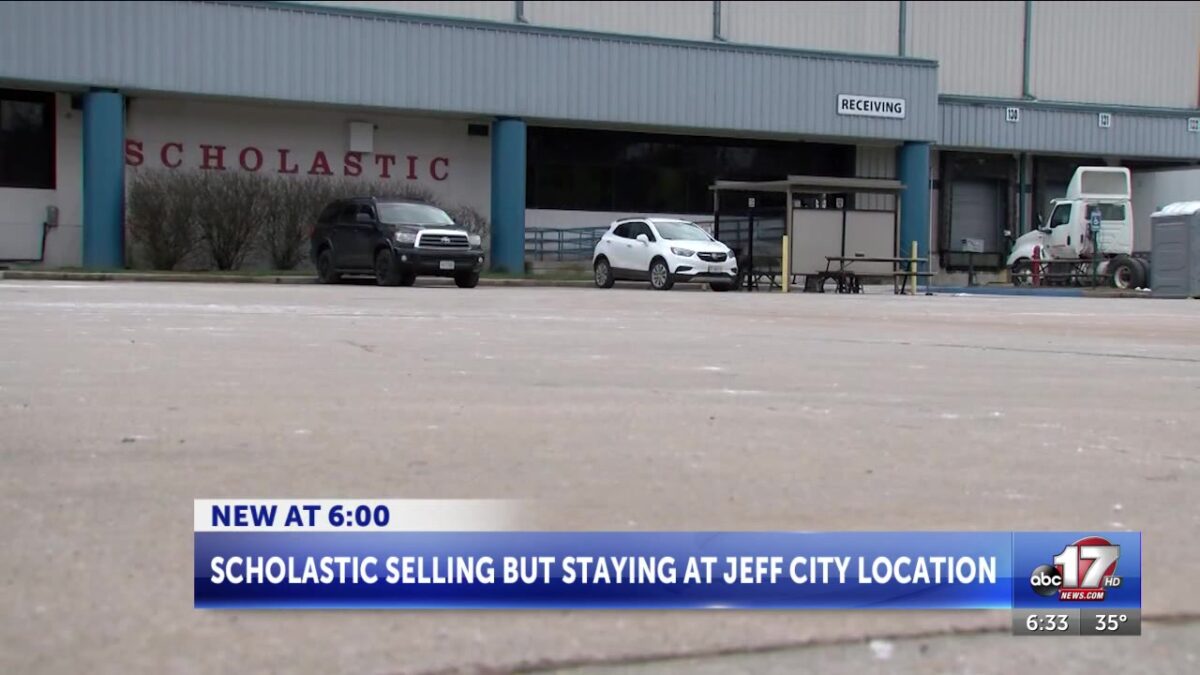
Scholastic is selling its headquarters in New York and its distribution center in Jefferson City through a lease-back deal, according to a press release from the company’s website.

A leaseback occurs when a business sells a location to another party and leases it from the buyer.   

Scholastic is selling the Jefferson City location “to funds managed by affiliates of Fortress Investment Group (“Fortress”) for gross proceeds of $95 million in cash,” the release says. Its New York location is being sold to Empire State Realty Trust for $386 million, the release says.

The Jefferson City distribution will have a 20-year lease with two 10-year extensions available, the release says.

“The Board ultimately determined that these transactions offered a compelling and attractive opportunity to enhance Scholastic’s balance sheet and maximize value for shareholders, while streamlining Scholastic’s footprint with minimal disruption to operations and employees,” the release says.

Click here to follow the original article.

Tropical Liqueurs to close for 2 weeks amid liquor license suspension

Ryan Shiner

COLUMBIA, Mo. (KMIZ)

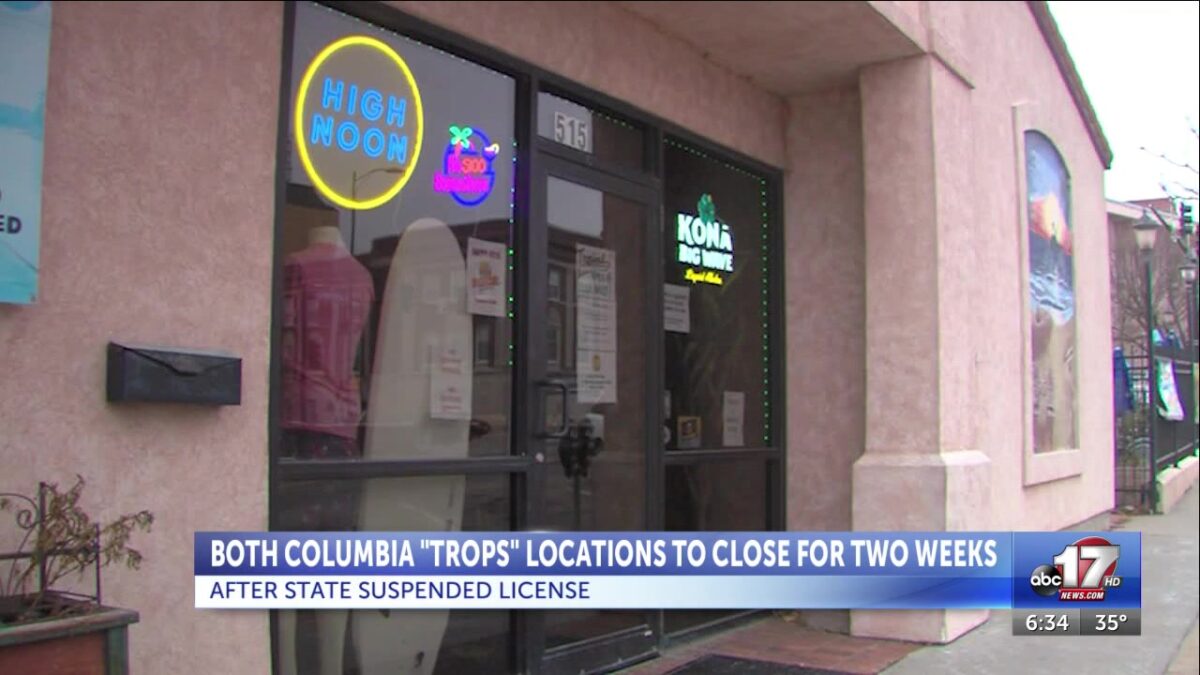
A popular bar in Columbia will close for 15 days after its liquor license was suspended by the state.

Tropical Liqueurs – colloquially known as “Trops” by locals – will shut the doors of both of its locations in town beginning on Thursday, the business announced on its social media page. Trops is located at 515 East Broadway in downtown Columbia and 3805 South Providence Road on the south side of town.

The business wrote that the Division of Alcohol and Tobacco Control determined it was not in compliance with the state’s to-go alcohol law.

“According to their report we are still not in full compliance with the new state to-go alcohol law, even after all the changes we have made… a finding we respectfully (and loudly, in our heads) disagree with,” the social media post says. “We’re also fully aware that these rules aren’t exactly enforced equally across the state, but hey, here we are… So we’ll use this little break to make sure every operational detail is lined up perfectly with the state guidelines, down to the tiniest technicalities so that we can continue to serve our beloved slushees.”

Trops’ downtown location has a sign on its front window stating “Liquor laws say your drink needs a snack buddy! Buy Some popcorn and your drink can hit the road! Thanks for keeping it legal (and tasty)!”

suspensions-jc-102225Download

The business wrote on its social media that both locations are expected to reopen Friday, Dec. 19.

A similar complaint was filed by the Division of Alcohol and Tobacco Control in 2024, but a closure was avoided after an appeal was filed by the business.

Click here to follow the original article.

Old school in Fulton becomes affordable housing

Marie Moyer

FULTON, Mo. (KMIZ)

The Carver School Apartments, once home to Fulton’s George Washington Carver School, opened Wednesday, adding 33 affordable senior apartments to the city’s housing stock.

Victor Pasley, a member of the George Washington Carver Cultural Center and former student at Carver school from 1952-60, was inspired by a similar project in Sedalia that a friend told him about.

“He showed me a school that had been renovated from an elementary school like Carver into senior apartments,” Pasley said. “So I went through the school and saw it, and I said, ‘That’s exactly what we need in Fulton.'”

MACO Development Company began renovations on the building at the end of October 2024, after around four years of funding negotiations, with historic building credits and state and federal housing credits helping cover costs.

The apartments are not furnished, but include a bathroom and a kitchen. Some units have multiple bedrooms, expanded bathrooms and lower kitchen counters for residents with mobility issues or who use a wheelchair.

“It is a definite need, affordable housing,” Fulton Ward 1 Councilman Bill Hinchie said. “That’s one of the things we’re trying so hard as a City Council to develop, is a lot of affordable housing. This is a great check mark to get affordable housing for people 55 and older.”

Carver School was built in 1937 and served as an all-Black school until it was integrated by the Fulton Board of Education in 1970. The school hosted sixth-grade classes until its closure in 1982.

Matt Gowin, a former student, has been following the building’s years-long development process and is happy with the work the board and local community members have put into the project.

“As I walk through the hallways, I remember fond memories, my friends, the purpose of each of these rooms, the hardwood floors that have been maintained, the gymnasium is beautiful, just a lot of great memories,” Gowin said.

LaVerne Williams, who attended Carver School in 1960, has also been following the construction process.

“Starting school here, and to see the building just go down, it really hurt, but is so wonderful to see now that it’s built up, and it’s just exciting,” Williams said.

The building also features a gymnasium, office lounge and workout room. Several apartments also have the original hardwood flooring and chalkboards.

“You walk into some apartments, and they have a chalkboard there where folks can put their grocery list for the day, there’s just a lot of neat features like that,” Pasley said.

During the grand opening, a sign was featured that said rental applications can be picked 8 a.m.-3 p.m. Monday through Thursday at 310 Christopher Lane in Fulton. The office can also be contacted at 573-310-6086.

MACO added rental applications are open and can also be obtained through the George Washington Carver Cultural Center.

“We have this beautiful facility now that … Carver School will be here forever now,” Pasley said. “As the citizens of this town move up and down the street, Westminster Avenue, and they see this school, it brings back incredible memories.”

Click here to follow the original article.

WATCH: Drinkwitz talks about Mizzou football’s National Signing Day class

Matthew Sanders

COLUMBIA, Mo. (KMIZ)

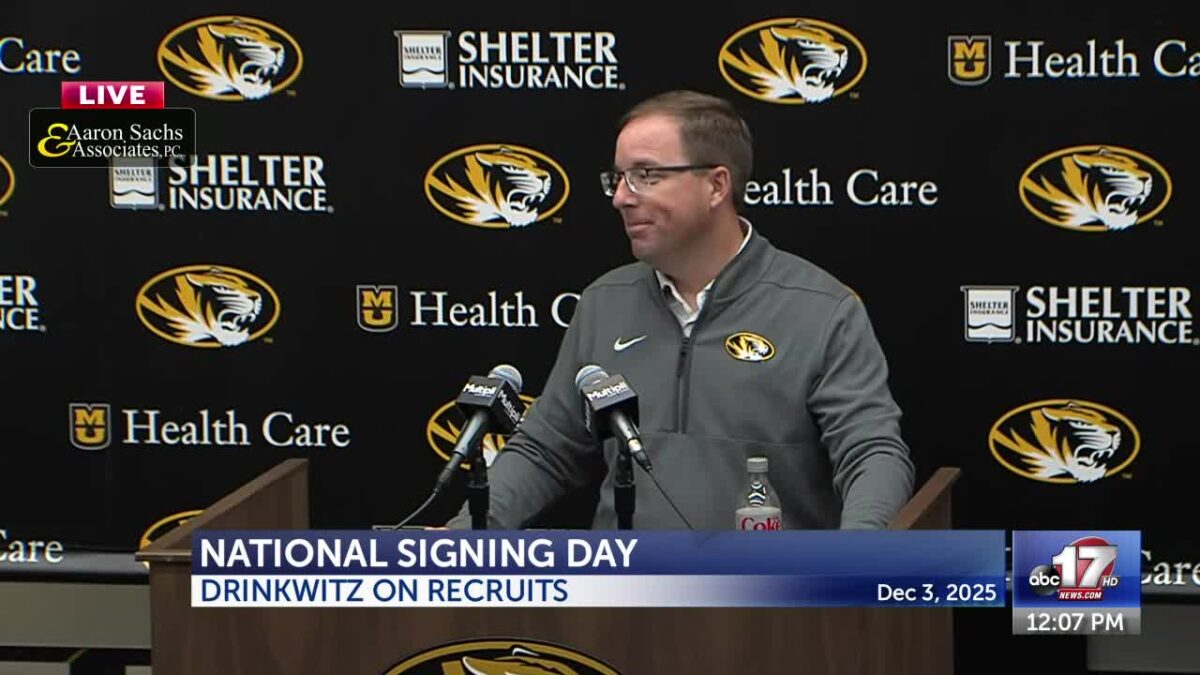
Wednesday is National Signing Day for high school football players to select which school they will attend.

Mizzou football’s Eli Drinkwitz held a news conference at noon to talk about Missouri’s signings. Watch it in the video player.

Click here to follow the original article.

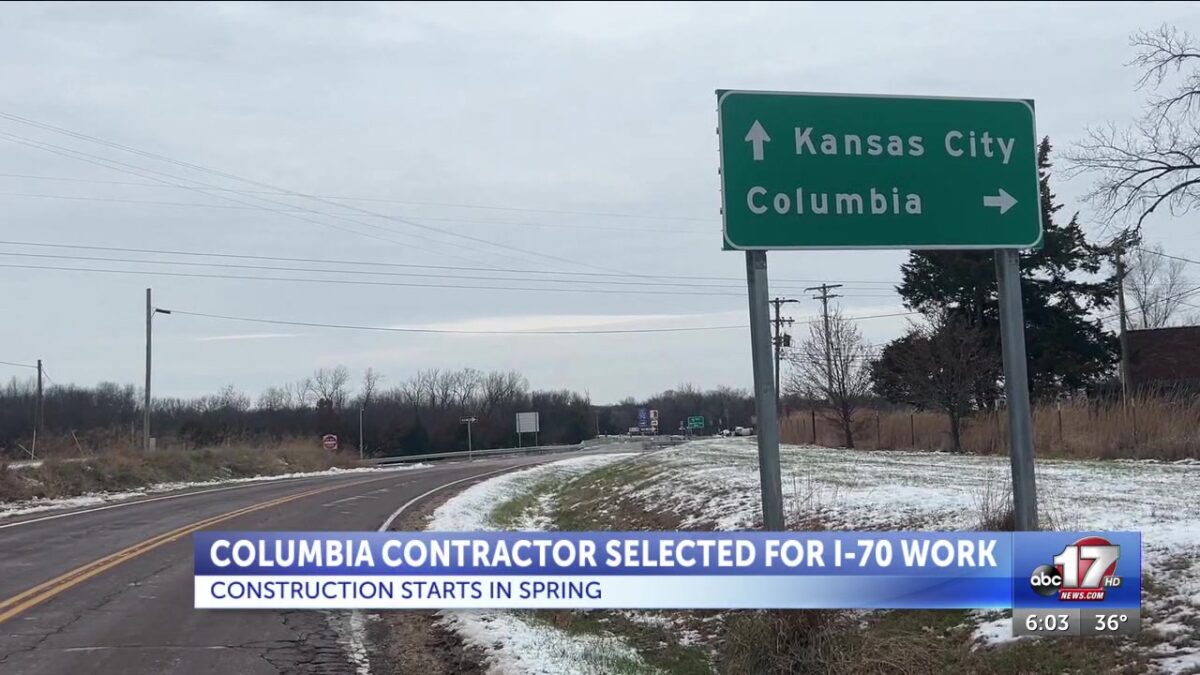
Commission selects Mid-Missouri contractor for I-70 work from Rocheport to Columbia

Alison Patton

COLUMBIA, Mo. (KMIZ)

The Missouri Highways and Transportation Commission has chosen a Columbia-based contractor to head up the team designing and building a section of the widened Interstate 70 between Columbia and Rocheport.

The commission awarded Emery Sapp and Sons and Parsons Transportation Group as contractors for a $441 million project to widen and improve I-70 from the Missouri River bridge at Rocheport to the Highway 63 connector in Columbia.

The ESS Team will begin construction at the earliest in the spring and work to put in an extra lane in both directions, according to MoDOT. The project will also update the Missouri River bridge in Rocheport and the interchange in Columbia.

Emery Sapp and Sons Executive Vice President Josh Doerhoff said the complex infrastructure in Columbia is what makes it a multi-billion dollar project.

“The complexity, the added interchanges, the enhancements to all those interchanges come at a dear cost, but we’re returning that at high value and reliability and safety features at each of those locations,” Doerhoff said.

The Columbia to Rocheport project is nearly three times the cost as projects with similar mileages.

The 13-mile-long project is expected to start in the spring and finish in 2029.

The ESS Team and MoDOT said they will keep two lanes open during peak travel times when construction starts.

The commission selected the ESS Team out of two other potential contractors, Ames Millstone Weber Joint Venture and the Lunda Team.

The Lunda Team replaced the I-70 Missouri River bridge near Rocheport in 2021. The Parsons Transportation Group was a part of the 2021 crew and is now working with Emery Sapp and Sons on the 2026 project.

The Rocheport-to-Columbia work is part of a project to widen I-70 from suburban St. Louis to suburban Kansas City.

Click here to follow the original article.

Sportsbooks see ‘pent-up demand’ in Missouri’s betting debut

Mitchell Kaminski

COLUMBIA, Mo. (KMIZ)

Legal sports betting went live in Missouri on Monday, with more than 2 million people attempting to access sportsbook apps on launch day.

Circa Sports, one of the first two companies in Missouri to receive an online betting license, now operates in six states. The first bet placed on Circa was a $15 wager on the St. Louis Blues to beat the Anaheim Ducks in regulation. While the Ducks took down the Blues 4-1, Derek Stevens, Circa’s owner and chief operating officer, described the moment as a relief.

“We had dinner Sunday night at a great place in suburban Saint Louis, and when the dinner was over, we all got back to the hotel, we all immediately were on the phones with our I.T. department and customer service department,” Stevens said. “Our customer service department had been fielding a lot of phone calls and emails throughout the day, and we just kind of waited for the clock to strike 12. And then, that moment when the first bet came in, we all had like a little sigh of relief. Everything worked out perfectly.”

Ryan Butler, Senior News Analyst at Covers.com, was in St. Louis for the launch and said he observed strong interest from bettors.

“I talked to multiple sportsbook operators who were impressed. They use terms like ‘they saw a lot of pent-up demand; for bettors who have been wanting to for a long time,” Butler said. “I think part of it might show that they were familiar with it. They would go across state lines. I talked to people who do that every Sunday for NFL games, things like that, and now that they have an opportunity to do it from home, I think we’re seeing those numbers already show results.”

According to Butler, geolocation data showed 2.6 million people logged into a sportsbook or attempted to log in on launch day. About 250,000 accounts were active on Dec. 1, with 188,000 accounts created prior to the launch.

Stevens declined to give an exact number of wagers placed, but said Circa was pleased with the activity. 

“We were positively enthused with the number of bets. I was happy with the average size of the bets we took. We took a lot of four-figure bets. So I was real happy with that. Lots of bets over $1,000,” Stevens said. “We had a pretty diversified set of bets. It wasn’t just the Blues game because that was the opening event, effectively. But it kind of covered the gamut from NBA to pro football futures, college basketball,  a good amount of English Premier League soccer. So it was really diverse, I really liked that as well.” 

Circa is one of just two companies in the state to receive an untethered license,  which allows operators to take bets without sharing revenue with a casino or sports team.

Circa, DraftKings, and FanDuel had pitched the Missouri Gaming Commission in August for an untethered license. The commission ultimately chose Circa and DraftKings, citing Circa’s business model as a way to attract different types of high-dollar bettors. 

Missouri was an attractive state for Circa’s low-hold model. Stevens said that they won’t invest in states with a high tax rate because a low-hold model would not be able to make a return. 

“As an example, we really don’t want to get into the state of New York, I know the volume is huge, but we want to be able to overcome those taxes,” Stevens said. “When we saw the regulatory framework that was going to come out in the state of Missouri, we felt that Missouri set themselves up to be really a leader in the sports betting industry for a long time. We thought they did a real good job from a tax perspective as well as the regulatory perspective, so we determined we wanted to get into Missouri.”

Because Circa received an untethered license, it did not have to negotiate a revenue-sharing deal with a sports franchise to operate, unlike other sportsbooks such as FanDuel, which partnered with St. Louis City SC. 

“We just went directly to the state initially, and then we never subsequently had to negotiate a skin deal with one of the sports franchises. Of course, we’re going to work with all the sports teams, but more on a marketing relationship type of thing,” Stevens said.

Butler also highlighted the advantage of Missouri’s low tax rates, which make the state attractive to sportsbooks.

“This absolutely helps the business aspect of it. The sportsbooks are very excited. That’s why you saw eight sportsbooks jump in and invest a lot of money in here,” Bulter said. “Illinois has some of the highest tax rates. Now it’s only $0.25 or $0.50, depending on the book, but it’s just annoying that it’s there. So you see that it would definitely encourage me to maybe go over to Missouri or the Missouri side with it. So that absolutely helps with it.”

While the state’s low tax rate is beneficial for operators, it could impact how much revenue Missouri brings in. 

“Your downside is the state might be missing out on some tax revenue,” Butler said. “Ten percent of gross gaming revenue is one of the lower rates in the country.”

The Missouri Gaming Commission called Monday’s launch “successful and largely uneventful,” crediting staff for implementing a fair, secure, and responsible sports wagering framework on time.

“Monday marked the successful and largely uneventful first day of legal sports wagering in Missouri—an important milestone made possible by the constitutional amendment narrowly approved by voters in the last general election,” the commission said in a statement. “This smooth launch reflects the tremendous effort and professionalism of our rules-writing staff, who worked tirelessly to meet the constitutional deadline of December 1, 2025. Their dedication ensured that Missouri could implement a fair, secure, and responsible sports wagering framework on time and with confidence.”

The commission said financials and overall wagering statistics will not be released until mid- to late January, but monthly reports will be available on the Gaming Commission’s website, similar to how casino financials are published.

Click here to follow the original article.

Columbia seeks to create task force to explore campaign finance regulations

Nia Hinson

COLUMBIA, Mo. (KMIZ)

The City of Columbia is considering to form a task force to look into campaign finance reform.

The council on Monday night unanimously approved creating the task force, though specifics of the task force– including who would be on it and how many people would make it up — still need to be hammered out.

The idea of creating a task force was pioneered by Ward 3 Councilwoman Jacque Sample, who requested the motion. Sample told ABC 17 News on Tuesday she envisions the task force to be made up of a diverse group of people, including people from various political leanings, as well as representation from labor unions. She also would like for the community to be able to weigh-in on the idea.

Sample said she heard several concerns from her constituents about large amounts of money being donated in local elections, which she believes began after the April municipal election.

“I think when individuals see the thousands and thousands of dollars that some people raise for elections first is hard to understand where all of that money comes from sometimes, but it also makes it seem like your ‘average person’ wouldn’t be able to run for office,” Sample said. “There’s a perception that they’re required to raise that amount of money.”

Mayoral candidate Blair Murphy made headlines in the April election with several high-dollar and high-profile donors. He raised $262,709 for the race, more than triple what Mayor Barbara Buffaloe raised. Buffaloe beat Murphy by more than 3,000 votes for mayor. More than $324,000 in total was spent in the election, previous reporting shows.

In the fourth ward race, candidate Ron Graves raised more than $30,000, while Councilman Nick Foster raised more than $8,000. Foster won that race. Sample ran unopposed in her race.

Ward 5 Councilman Don Waterman said while he voted to approve the task force, he doesn’t see donations playing much of a role on elections. He said the city discussed the idea of creating an ordinance regarding this, which he said he would ultimately like to receive clarification on.

“I still don’t think it’s necessary if you look at the results,” Waterman said. “But I do think if it goes forward, I do want to have some specific language as far as you know what defines ‘contributions.’

Sample said she still sees value in getting more feedback.

“Not everybody can understand, or has the ability to understand to support a candidate in that way and so it just feels out of reach,” Sample said. “I think by having some limitations in place it kind of eases that worry about raising enough money to be a ‘viable candidate.'”

While the council approved the creation of the task force, several had questions that they raised. Foster inquired about the makeup of the group, as well as how they will be appointed. Buffaloe also said she recommends the task force look into how the potential rules will be regulated in the city.

After it was suggested that a councilmember could each pick a member of the taskforce, Ward 2 Councilwoman Vera Elwood suggested it would better for the council to collectively vote on members.

City Attorney Nancy Thompson suggested that she and her staff put together a draft report for the council to review. She said she expects to have that finalized for the City Council by its second meeting in January.

Sample said she is hopeful that the task force will be able to work to review what other cities are doing regarding elections, such as St. Louis and Kansas City. Springfield, Missouri, is also in the process of creating an ordinance, according to Sample.

Sample said intends for the task force to work with Columbia’s legal office to see how it could translate here.

According to Kansas City’s ordinance, donations to elect a mayor into office has been capped at $3,000, while people looking to donate to council members will be allowed to shell out a maximum of $2,500. In St. Louis, both mayoral and board of alderman donations are capped at $2,600.

The logistics of how much money Columbia would cap donations at still need to be figured out.

Click here to follow the original article.

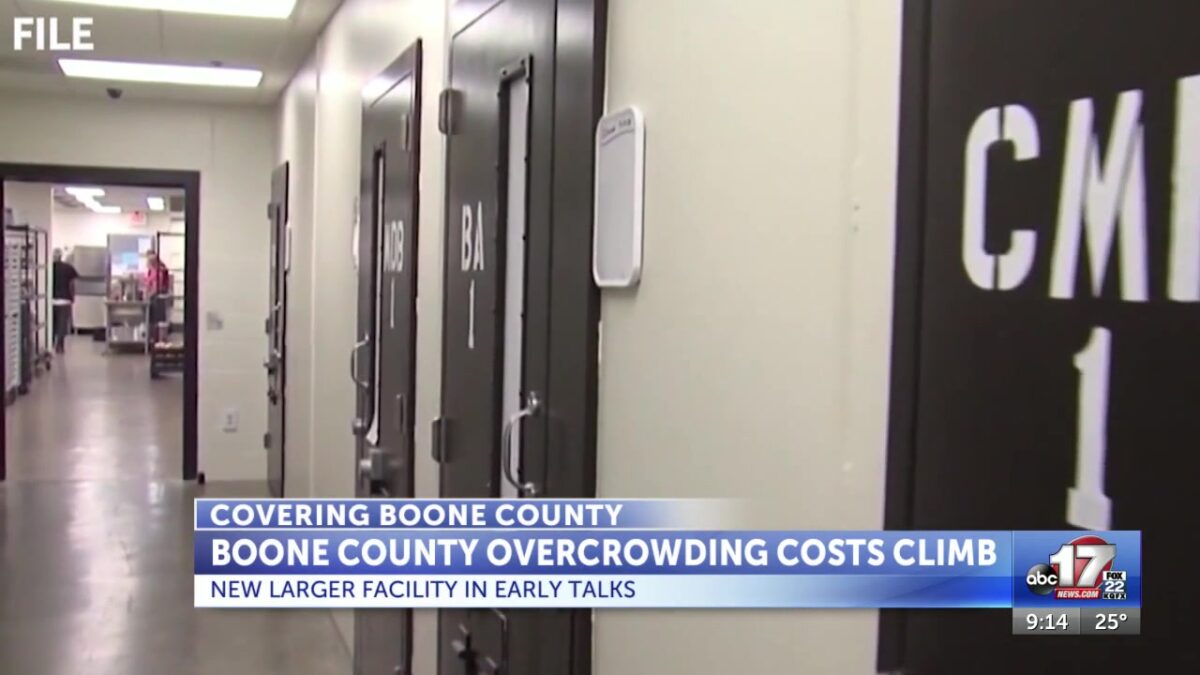
Boone County has spent $1.8 million this year to house inmates outside of county, plans for new facility in early talks

Erika McGuire

COLUMBIA, Mo. (KMIZ)

Overcrowding at the Boone County Jail is costing the county, with officials now housing more inmates in out-of-county facilities than in the jail itself.

According to Cpt. Brian Leer with the Boone County Sheriff’s Office, the county has spent more than $1.8 million so far this year on housing inmates in other counties and is on track to hit $2 million by the end of the year.

Previous reporting says from Jan 10-May 23 of this year, the county had spent $461,235 to house detainees in other counties, meaning the cost has tripled in the second half of the year.

As of Nov. 21, Leer said there were 403 inmates in the Boone County Jail system, with 177 housed in the local jail and 226 housed in other Mid-Missouri counties. On May 22, the county was paying to house 113 detainees in other county jails.

The cost to house a single inmate in another county jail is $50-$60 a day, according to Leer.

The overcrowding can be problematic as it puts added pressure on partner agencies and Boone County staff who help manage the movement of inmates between facilities, Leer said.

“Agencies like Montgomery County, part of our agreement is they come and get them and transport them back and forth for us. It’s been a really good partnership,” Leer said. “It does present problems though because we’ve got to find staff to do these transports and some of our folks will work overtime just to do the transport,”

U.S. Marshals currently have three inmates from Boone County. Two juveniles have been remanded to the county but are being held at the Juvenile Justice Center and six inmates are being housed at a St. Louis hospital for mental-health-related issues.

There has been a steady increase in overcrowding since the COVID-19 pandemic, Leer said, with many factors playing a role, especially mental-health backlogs.

“Court proceedings, a lot of cases get continued, then we see a longer delay a lot of times in cases being adjudicated as well as mental health,” Leer said. ” We’ve got several folks back there waiting on mental health beds that we just can’t send them anywhere because they don’t have a bed for them. Somebody may be in here for six months and they’re deemed incompetent by the court.”

Leer claims the higher intake of detainees can be linked to a number of factors, including Boone County’s population increasing. The Boone County Jail aims to keep 10-15 beds available for intake everyday, limiting the number of inmates it can house at a given time. Keeping certain inmates separated is also a driving factor.

County officials have started discussions about a new, larger facility that meets demand.

While the project is still in the early stages, Leer said he expects the project to cost between $200-$300 million, with hopes of the facility having extra resources compared to the current facility that was built back in 1990.

“We would maybe have like a mental health wing or floor within the facility as well as have a lot more space,” Leer said. “It’s going to take years to even think about and get a plan. Let alone the years of production as far as getting things produced to then be shipped here then to be built,”

A new facility would likely have between 1,000-1,200 beds, roughly four times the capacity of the current jail, which can hold 246 inmates.

“You have to plan for the future so there’s just a lot of logistics to go through and plan, long-term housing, how is the county going to fund it?… If you start that funding process now, at what point would you be able to break ground and actually build a facility? There’s so much in discussion going on right now,” Leer said.

Click here to follow the original article.