Local doctors warn of ‘high-gear’ allergy season fueled by early warmth

Par Kermani

IDAHO FALLS, Idaho (KIFI) — Unseasonably warm weather is pushing allergy season into high gear earlier than normal across the Intermountain West. Family physician Dr. Gordon Harkness, a medical director with Optum in Utah and Idaho, says changing weather patterns are extending the time pollen is in the air and increasing how much people are exposed.

“When it warms up earlier, the plants start doing their thing,” Harkness said. “They start growing, they start pushing out blossoms, they start pushing out pollen earlier, and sometimes the length of time that those pollen counts are high remains for a much longer period of time.”

A recent national ranking listed Boise as the No. 1 “allergy capital” in the country, with several Utah cities — including Salt Lake City and Provo — also landing near the top. Harkness said that while eastern Idaho did not appear on the list, people traveling or moving between Idaho and Utah are still feeling the effects.

He said tree pollen is a major trigger this time of year, especially in March through May. Even people who have never had allergies before can develop them.

“Just because you haven’t had allergies in the past doesn’t mean you can’t develop them in the future,” Harkness said. “Environmental allergies, especially pollens during the spring, summer and fall, can really impact a lot of people’s lives.”

Harkness said pollen doesn’t always stay outside. It collects on clothing, hair, skin and pets, then comes indoors. He recommends checking pollen counts and reducing outdoor activity when levels are high, washing hands frequently, showering after being outside for long periods of time, and brushing your pets outdoors before letting them come back inside. 

For people who wear contact lenses, Harkness said eye irritation can be a sign that pollen is building up.

“If you’re getting irritated, you might need to remove your contacts for a little while and use regular glasses while your eyes reduce in inflammation.”

Other ways to prevent you from suffering a longer allergy season are over-the-counter antihistamines and nasal corticosteroid sprays, which can be effective for many people. 

Longer-acting antihistamines that are taken once a day are often more convenient and can help reduce side effects such as drowsiness.

“It’s not that they don’t work if you’ve already got symptoms, but they work better before the symptoms actually start,” Harkness said.

Anyone with severe or persistent symptoms should talk to a pharmacist or see a primary care provider to confirm allergies are the cause and to discuss which medications may be safest and most effective.

Click here to follow the original article.

Idaho Falls man sentenced in major Wyoming-Idaho cocaine trafficking conspiracy

Seth Ratliff

JACKSON, Wyoming (KIFI) — The U.S. Attorney’s Office for the District of Wyoming is touting the final sentencing in a three-year investigation that dismantled a major cocaine trafficking conspiracy operating across Wyoming and Idaho as the result of successful cooperation between multiple agencies.

Jose Junior Ramos, 32, of Idaho Falls, was sentenced earlier this month by U.S. District Court Judge Alan B. Johnson to 95 months in federal prison, followed by five years of supervised release. Ramos previously pleaded guilty to conspiracy to distribute cocaine and three counts of distribution.

The case was investigated by multiple federal and state agencies, including the DCI, DEA, U.S. Postal Inspection Service, Teton County Sheriff’s Office (Idaho), and the Idaho State Police. In a press conference on Friday, U.S. Attorney Darin Smith characterized the operation as a victory for multi-agency collaboration across the Cowboy and Gem States.

“This was part of a multi-agency collaboration dedicated to dismantling transnational criminal organizations responsible for drug trafficking,” said U.S. Attorney Darin Smith. “Through sustained cooperation, we are reducing the number of drugs coming into Wyoming.”

The Investigation: From Phoenix to the Tetons

The crackdown began in November 2023, when the Wyoming Division of Criminal Investigation (DCI) Southwest Enforcement Team identified a drug trafficking organization operating in and around Jackson, Wyoming.

Agents discovered that Ramos, along with Saul Andrew Garcia of Irwin, Idaho, and three foreign nationals, was responsible for trafficking cocaine from Phoenix, Arizona, into Lincoln and Teton Counties in Wyoming, as well as Bonneville and Teton Counties in Idaho.

The investigation reached a turning point in April 2025 when investigators stopped Ramos while driving back from Phoenix, finding three kilograms of cocaine in the vehicle. After obtaining a search warrant for his home, the following raid uncovered over a dozen firearms and a significant amount of cash.

In total, the conspiracy was held responsible for trafficking nearly 10 kilograms (22 pounds) of cocaine.

The Co-Conspirators

Ramos’s sentencing marks the final nail in the coffin of a major drug case. As for his co-conspirators:

Saul Andrew Garcia, 26, of Irwin, Idaho, was sentenced to 120 months in prison with five years of supervised release for conspiracy to distribute cocaine and three counts of distribution of cocaine. 

Cesar Antancio Torres-Cazares, 36, of La Piedad, Michoacan, Mexico, was sentenced to 24 months in prison with three years of supervised release for possession with intent to distribute cocaine and time served for illegal reentry into the United States. He will be deported following the completion of his prison sentence. 

Marlon Forrest, 29, of Port Maria, Jamaica, was sentenced to 80 months in federal prison with three years of supervised release for aiding and abetting the distribution of cocaine. 

Oneil Anthony Findley, of Savanna-la-Mar, Jamaica, was sentenced to 68 months in prison with three years of supervised release for attempted possession with intent to distribute cocaine, use of a communication facility to facilitate a felony drug offense, and conspiracy to possess with intent to distribute cocaine.

“If you are a bad actor poisoning our kids and weakening our communities, don’t even get on our roads, because we are coming for you and we are going to lock you up,” said Smith.

Click here to follow the original article.
JFAC slashes IDLA budget while largely sparing virtual charters

Ryan Suppe

By: Ryan Suppe and Sean Dolan

Originally posted on IdahoEdNews.org on March 20, 2026

BOISE, Idaho — Budget-setting lawmakers Friday cut more than half of the annual budget for the Idaho Digital Learning Alliance (IDLA) while sparing virtual charter schools from the bulk of cuts recommended by the governor. 

Lawmakers have been debating cuts to virtual education for months after Gov. Brad Little recommended a $10 million reduction to IDLA — the state’s online learning platform that offers virtual courses to public schools — and a $23 million cut to virtual charter schools. 

On Friday, the Joint Finance-Appropriations Committee (JFAC) approved $13.5 million in cuts to IDLA and $3 million in cuts to virtual charter schools. The budget recommendations — which still have to be approved by the full House and Senate — followed a flurry of conflicting motions and a contentious debate that focused on whether JFAC should be making policy decisions. 

The IDLA cut preempted a bill that’s pending in the House Education Committee. The education policy committee has considered a handful of bills this session to reform IDLA’s state funding formula. The latest stalled Thursday, but House Education is scheduled to consider Rep. Douglas Pickett’s bill again Monday. 

JFAC went ahead with the cuts anyway. 

Sen. C. Scott Grow, co-chairman of the budget committee, said Friday that Pickett’s bill is poised to fail in House Education, and JFAC’s co-chairs were asked to take up the IDLA budget Friday as the session winds down. He declined to tell Idaho Education News who made the request. 

“There are lots of names and lots of folks that are asking us to do things,” said Grow, R-Eagle. “I’m not going to name one person.”

Rep. James Petzke, who sponsored a separate bill that would have cut IDLA’s budget by a little more than $9 million, urged JFAC to hold off on the budget Friday. “We don’t have to do this bill today,” said Petzke, R-Meridian. “We can wait on the policy committees to do something.” 

But the budget committee voted 12-8 to approve Rep. Elaine Price’s motion to take $13.5 million bite out of IDLA’s state appropriation for fiscal year 2027. 

Price, R-Coeur d’Alene, initially proposed a $15 million reduction, which narrowly failed. She also sponsored a policy bill earlier this session that would have completely defunded IDLA. Price said Friday that she didn’t feel like the governor’s $10 million recommendation was enough. 

Jeff Simmons, IDLA’s superintendent, said after Friday’s meeting that the platform will have to cut its enrollment in half if the $13.5 million cut stands. “That will touch every school,” he said. “There’s just no way we can prevent that.”

Public schools leaders, particularly from rural districts, in recent weeks asked the House Education Committee not to make deep cuts to IDLA. Districts rely on the platform to supplement their curriculum with online courses that they can’t offer. 

Virtual schools spared from deeper cuts. JFAC also cut $3 million from online public schools, a fraction of the governor’s recommendation. 

Little proposed a $23 million cut to virtual schools after a December report from the Legislature’s research arm scrutinized spending and student performance at the state’s largest online school, Idaho Home Learning Academy. 

The report, from the nonpartisan Office of Performance Evaluations (OPE), highlighted $20 million in “supplemental learning funds” that went to private education vendors, which passed on most of the taxpayer money to parents. Parents spent much of the supplemental funds on computers, lessons and other education-related expenses, but some of it went to private school classes and other questionable purchases like entertainment devices and household items. 

JFAC members considered five motions proposing virtual school cuts Friday. They rejected four of them, which would have taken between $8 million and $18.5 million in classified staff funding from virtual charters and traditional districts with online programs. 

Then the committee approved a motion from Sens. Cindy Carlson, R-Riggins, and Codi Galloway, R-Boise, to cut $3 million in discretionary funding for virtual charter schools. 

Galloway said it would be unfair to protect traditional public schools from budget cuts while giving virtual schools a “haircut.” Meanwhile, a bill that already passed this session added “sideboards and protections” in response to the OPE study, she said. 

House Bill 624, which passed unanimously before Little signed it into law, restricts the use of supplemental learning funds to education-related expenses. It also tightened state oversight of education service providers, the private vendors that contract with virtual schools and collect millions in taxpayer dollars

JFAC approved the $3 million cut on a 12-7 vote. 

Both the IDLA and virtual schools budgets now go to either the full Senate or full House. The budget bills must pass both chambers before they go to the governor’s desk.

Click here to follow the original article.

Rexburg Police Warn of Safety Risks as ‘Senior Assassin’ Game Trends Among High School Seniors

Dylan Carder

REXBURG, Idaho — The Rexburg Police Department is warning the community about potential safety concerns tied to the growing popularity of the “Senior Assassin” game among high school students.

Senior Assassin is a student-organized elimination game typically played by graduating seniors in the weeks leading up to graduation. Participants pay an entry fee that contributes to a prize pool, with the last remaining player declared the winner.

The game involves players being assigned specific targets. Once a player successfully “eliminates” their target—usually by spraying them with a water gun or hitting them with a foam dart from a Nerf-style blaster—they take over that target’s assignment. The cycle continues until only one participant remains.

While the game is meant to be lighthearted, police say it often takes place off school grounds and can lead to dangerous situations.

The use of realistic-looking toy guns can cause confusion and alarm among the public, potentially prompting emergency calls or encounters with law enforcement. In some cases, the game has led to reports of trespassing or suspicious behavior, particularly when players attempt to track targets in neighborhoods or around businesses.

Police also warn that certain tactics used in the game can cross the line.

“Don’t creep around in the shadows of a business late at night,” the Rexburg Police Department advised in a Facebook post. “Don’t be filming girls through windows as you’re creeping in the shadows of a building late at night. And don’t be carrying replica guns while hiding in the shadows of a building late at night.”

Some businesses in Rexburg have already taken steps to prevent issues, posting “No Senior Assassin” signs to deter participants from using private property as part of the game.

Police say while the game may seem harmless, the potential for misunderstandings and unsafe situations makes it important for participants to think carefully about how—and where—they play.

Click here to follow the original article.

Idaho lawmakers consider temporary funding to restore mental health services after program cuts

KIVI Staff

By: Allie Triepke, KIVI

Posted 6:21 PM, Mar 19, 2026

BOISE, Idaho — Idaho lawmakers are considering a temporary funding plan to restore critical mental health services after recent cuts, as behavioral health leaders report growing impacts across the state.

The proposal, approved this week by the Joint Millennium Fund Committee, would provide one-time funding through 2027 for programs including Assertive Community Treatment, or ACT. The plan relies on a combination of state funds and potential opioid settlement dollars and still requires approval from the Joint Finance-Appropriations Committee, the full Legislature, and the governor.

Behavioral health leaders say the cuts, which took effect Dec. 1, have disrupted care for people living with severe mental illness.

Laura Scuri, with Access Behavioral Health, said four deaths have been reported since the program ended.

“It’s just slightly terrifying to wake up every day and wonder if today’s the day that we’ll have another death or another tragedy in the community,” Scuri said.

ACT is an intensive, team-based model of care designed for people with severe mental illness who often struggle to access traditional treatment. Teams typically include medical and behavioral health professionals who provide services in the community, such as medication management, crisis response, and long-term care coordination.

Supporters say the program helps reduce hospitalizations and interactions with the criminal justice system by stabilizing patients outside of institutional settings.

READ MORE | Idaho Sheriff’s Association speaks out against mental health care cuts

Lawmakers backing the funding proposal described it as a short-term solution.

“Lawmakers need to come together to ensure that some of our most vulnerable persons in our community are taken care of,” said Rep. Brooke Green, a member of the Joint Millennium Fund Committee.

Even if approved, the funding would not be permanent.

“It is temporary through 2027,” said Scuri. “We still don’t have permanent funding.”

Allie Triepke / Idaho News 6Lauri Scuri from Acess Behavioral Health discusses what restoring mental health programs might look like if funding is restored.

Providers say restarting the program would require rehiring and training staff, as well as reconnecting with patients who may have disengaged from care.

“Yes, I am very confident that the programs can be reassembled. The longer this goes on, the more difficult that becomes,” Scuri said.

Officials say the absence of ACT services has increased pressure on emergency systems, including hospitals, jails, and crisis centers. Law enforcement leaders report rising call volumes tied to mental health needs since the cuts.

“We’re starting to see the calls start to climb and we were expecting that,” said Meridian Police Chief Tracy Basterrechea.

The Joint Finance-Appropriations Committee is expected to take up the proposal next week. If approved, it would move to the full Legislature for consideration.

Behavioral health leaders say a long-term funding solution will be necessary to sustain services beyond the temporary measure.

PREVIOUS COVERAGE | Providers warn of public safety threat as Idaho slashes Behavioral Health funding

Click here to follow the original article.

Planned power outage to affect much of Rigby tonight

News Team

RIGBY, Idaho (KIFI) — The Jefferson County Sheriff’s Office says a planned power outage is set to impact a significant portion of Rigby starting tonight at 10:00 PM.

According to a JCSO post on Facebook, Rocky Mountain Power crews will be performing essential upgrades to the Rigby substation. Power is expected to be fully restored by 4:00 AM tomorrow.

Click here to follow the original article.

West Idaho man sentenced to 25 Years for possession of AI-generated child porn

Seth Ratliff

CANYON COUNTY, Idaho (KIFI) — A Canyon County man will spend up to the next 25 years in prison following an investigation that uncovered over 100 files of child pornography on his phone, including several illicit photos generated by AI.

James Anthony Halma, 27, was sentenced on March 12 by District Court Judge Gabriel McCarthy. Halma was convicted on one felony count of Possession of AI-Generated CSAM and two felony counts of Sexual Exploitation of a Child.

Judge McCarthy ordered a three-year minimum “fixed” sentence before Halma is eligible for parole. Upon his eventual release, Halma will be required to register as a sex offender under Idaho law.

The Investigation

The case stems from the Idaho Internet Crimes Against Children task force. In October 2014, investigators acted on a “CyberTip” regarding a Kik account flagged for containing child pornography. Using digital forensics, investigators linked the account to Halma and obtained a search warrant for his residence and electronic devices.

The search revealed a massive horde of more than 100 files of child pornography on Halma’s phone. The illicit images depicted the sexual abuse of children ranging in age from 16 to as young as 3 years old. The collection included several illicit AI-generated images.

Attorney General Raúl Labrador praised the collaborative effort between state and local law enforcement in securing the conviction.

“Every arrest and conviction our team gets in these deeply disturbing cases helps make Idaho communities safer,” said Attorney General Labrador. “I’m proud of the continued work by our ICAC investigators, prosecutors, and local law enforcement partners across the state who help in our mission to protect Idaho families and hold these criminals accountable.”

Click here to follow the original article.

Governor Little signs mandatory “moment of silence” bill for Idaho schools

Seth Ratliff

BOISE, Idaho (KIFI) — Governor Brad Little has officially signed House Bill 623 into law, mandating that all Idaho public schools begin the instructional day with a 60-second moment of silence.

The legislation, sponsored by Rep. Bruce Skaug (R-Nampa), specifies that this time is intended for students and staff to “reflect, pray, or meditate.” Supporters argue that the pause provides a necessary moment for individuals to ground themselves before the academic day begins. However, the law prohibits teachers from instructing or influencing students on how to spend those 60 seconds.

While the bill enjoyed robust support in the House, it faced a much tighter climb in the Senate, where it narrowly passed with an 18-15 vote.

Critics of the bill have expressed concern that the quiet time could be used for organized prayer in a school setting, which they say violates the concept of separation of church and state.

Supporters, however, emphasize that the bill’s language is non-specific, giving students total autonomy in how they utilize the quiet minute.

Local schools have already responded that they are prepared to implement House Bill 623 at the start of the new school year in August.

RELATED: Local schools brace themselves for new mandatory moment of silence law

Click here to follow the original article.

Pocatello couple charged with felony child abuse after violent incident at East Idaho Aquarium

Seth Ratliff

IDAHO FALLS, Idaho — A Pocatello couple is facing multiple felony charges after a disturbing incident where they allegedly beat a 7-year-old girl while on a trip to Idaho Falls’ East Idaho Aquarium.

Zachary and Megan Olpin have both been charged with Felony Injury to a Child and Misdemeanor Injury to a Child. Megan Olpin faces an additional charge of Felony Aggravated Battery.

The charges stem from an incident on February 8, 2026. Idaho Falls Police responded to the East Idaho Aquarium after witnesses and staff reported a child being mistreated.

While the father, Zachary, initially brushed off the girl’s injuries as accidental, investigators and court documents say security footage and witness cell phone video tell a far more violent story.

According to the probable cause affidavit, Megan Olpin, the girl’s stepmother, was captured on video hitting the 7-year-old in the face with a shoe and dragging her through the facility. Afterwards, Zachary Olpin was captured carrying his daughter off the property while hitting the back of her head against a wall and an electrical box.

Investigation and Medical Findings

Police later located the child at her grandmother’s home in Pocatello. The grandmother expressed deep concern for the girl’s safety, leading officers to document multiple bruises and marks on the child’s body.

A Medical evaluation at Portneuf Medical Center confirmed that the child did not suffer broken bones or a concussion. However, the physical evidence was consistent with the reported abuse, according to court documents.

Following the medical evaluation, the officers developed a “safety plan,” and the girl was placed in the care of her grandmother.

New Evidence and Confessions

During the investigation, the officers spoke with the girl’s parents at their home. Zachary initially told police his daughter’s head hitting the wall and the electrical box was an accident. But the stepmother reportedly admitted to hitting the 7-year-old with a shoe and also a set of keys in the car.

The case intensified the following day when investigators obtained improved security footage. The affidavit states the new video revealed a “more prolonged and severe assault than initially seen.”

The improved footage allegedly showed Megan striking the girl multiple times with a shoe and her hand, before knocking her to the ground. The video also captured Zachary pushing the girl down by her mouth before using his shoulder to “drive her head” into a metal electrical box three separate times.

During a re-interview on February 12, both parents were confronted with the clearer video. Zachary admitted he was “out of line” and wrote a letter of apology stating, “I hit you” and “I pushed you into things,” states the affidavit.

On February 18, the child was interviewed at the Upper Valley Child Advocacy Center. She told specialists that Megan “bonked” her with a shoe and that Zachary “kept bonking me on stuff because he was mad at me.”

The couple posted bond on March 12 and was released from jail. They are scheduled to appear in court for preliminary hearings on March 24, 2026.

If the couple is convicted of the Felony Injury to a Child charges, they each face a maximum sentence of up to 10 years in prison and a fine of up to $50,000. Additionally, Megan Olpin faces a separate maximum sentence of 15 years in prison and an additional $50,000 fine for the felony aggravated battery charge, bringing her potential total prison time to 25 years.

Click here to follow the original article.

Local man charged with felony eluding, drug possession following 115 MPH chase on I-15

Seth Ratliff

BINGHAM COUNTY, Idaho (KIFI) — A 32-year-old man faces multiple felony charges after allegedly leading Idaho State Police on a dramatic high-speed chase that topped 115 MPH and ended with a vehicle stuck in the mud after hitting several spike strips.

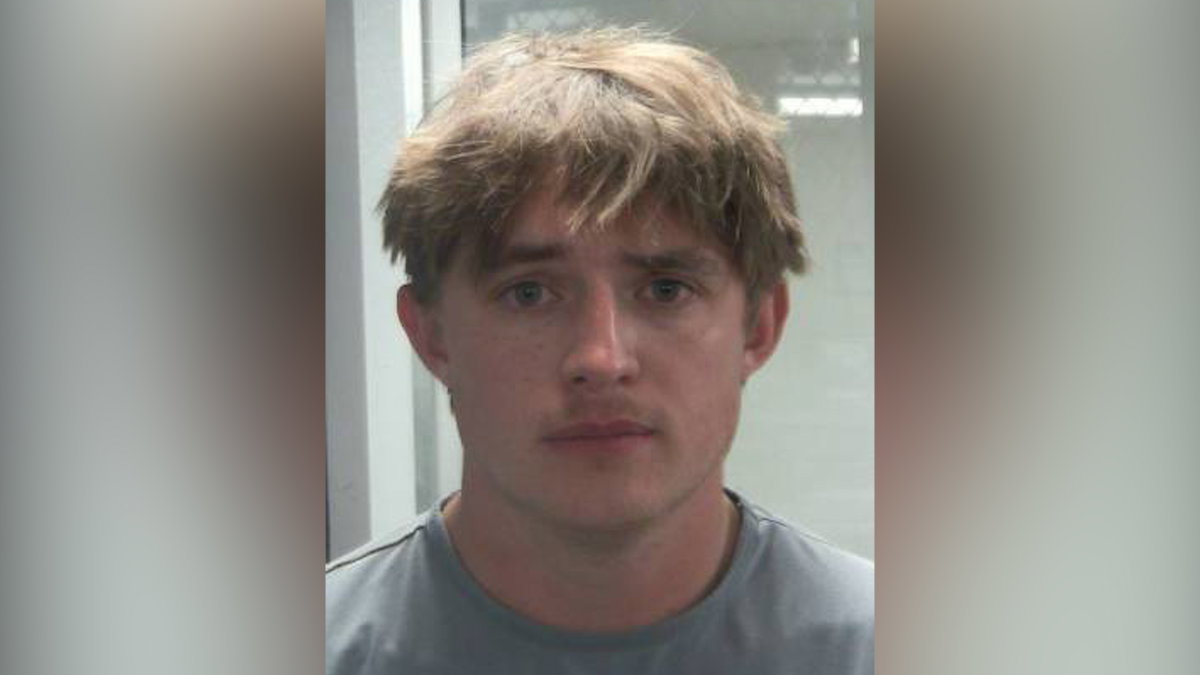
Spencer Reed Boyce was charged with felony eluding and possession of fentanyl and methamphetamine, along with misdemeanor possession of drug paraphernalia, following an incident on the night of March 2.

The Initial Stop

The incident began when Idaho Falls Police tipped off the Idaho State Police that Boyce was suspected of traveling from Utah to Idaho Falls in a black Nissan Juke. Officers were already armed with a signed search warrant for the vehicle.

Around 11:23 p.m., troopers spotted the Nissan traveling northbound on I-15 near milepost 101. During a “high-risk” traffic stop, police took the driver, Teresa Jo Coffey, into custody. However, as officers were securing Coffey, Boyce allegedly leaped from the passenger seat into the driver’s seat and sped away, leading to a high-speed chase.

A 115-MPH Pursuit

According to court documents, the troopers followed Boyce as he dangerously weaved through traffic at speeds reaching 115 MPH. Despite hitting police spike strips at milepost 104, Boyce continued to race away at 100 MPH with only three tires.

A second set of spike strips at milepost 108 finally slowed the vehicle to a crawl, but Boyce continued to drive away with one tire left. Eventually, the toopers attempted a PIT maneuver, hitting the rear side of the Nissan, which spun out, but Boyce continued to drive.

Finally, police attempted to use their patrol vehicles to force the Nissan toward the median. During the struggle, Boyce allegedly struck a patrol car, causing minor damage, before eventually becoming bogged down in the mud.

Boyce was taken into custody without further incident with assistance from the Bingham County Sheriff’s Office.

A follow-up of Boyce’s Nissan uncovered fentanyl residue on aluminum foil, methamphetamine, and various items of drug paraphernalia, including needles and baggies. Investigators also found an open bottle of whiskey in the rear seat.

According to court records, Coffey told investigators that Boyce had urged her to flee the initial stop before she pulled over. She also admitted to consuming whiskey in Utah and possessing marijuana. Boyce reportedly admitted to smoking fentanyl before the traffic stop.

Boyce was cleared at Bingham Memorial Hospital before being booked into the Bingham County Jail. His preliminary hearing has been set for April 2nd, 2026, at 8:30 AM. If convicted, Boyce faces a combined sentence of up to 20 years, five years for the charge of Eluding, and seven years for each drug possession charge.

Click here to follow the original article.