Lunar liftoff: Artemis program boosted by ISU researchers at Craters of the Moon

David Pace

ARCO, Idaho (KIFI) – As millions of eyes watched the take-off of NASA’s first manned space flight around the moon in more than 50 years, an Idaho State University (ISU) scientist and National Park Ranger celebrated in awe at the Craters of the Moon Visitor’s Center.

ISU scientists researching at Craters of the Moon National Monument played a critical role in the development of the Artemis program.

“We are so close to being able to send humans to the surface of the moon for the first time since the early 70s,” said Shannon Kobs Nawotniak, a NASA-funded researcher and ISU Geosciences Department Chair. “This is the first crewed flight for Artemis. The Artemis I was an uncrewed, test run. Now we’ve got Artemis Two. It’s going to have four astronauts that are going to go around the moon.”

The flight will be the first human orbit of the moon since Apollo 17 landed on lunar soil in 1972.

“They’re going to be looking for impact flashes on the far side of the moon, where we don’t really have a view otherwise,” she explained.

NASA is aiming to land a crewed mission on the moon in 2028.

“Artemis II is going to be another sort of test bed for some of the robotics,” Kobs Nawotniak said. “That was a decision that came in February preparing for Artemis IV – sending humans to the South Pole of the moon, where we’ve got areas where we think we even have water deposits in permanently shadowed craters at the South Pole.”

Craters of the Moon National Monument in east Idaho played a vital role in NASA’s research.

“Craters of the Moon is such a unique environment,” said Craters of the Moon National Monument Chief of Interpretation and Education Michael Irving. “It’s about 750,000 acres. That’s about 1,200 square miles of just lava that is out here in the middle of the Idaho desert.”

NASA’s Lunar Test Bed in Idaho

Idaho’s famous national monument played a critical role in NASA training for Apollo 14.

Dr. Kobs Nawotniak and her team have continued NASA research at the location since 2014.

“We’ve now more than a decade of continuous research out here with NASA to be able to use this as a test bed for the moon, Mars and beyond,” Kobs Nawotniak said.

The rock composition at Craters of the Moon closely resembles the geology of the moon.

“Lavas that we have at Craters of the Moon are chemically really similar to the lavas and volcanoes that we have on the moon,” she said. “I don’t think people realize how similar that is, and how cool it is that we have this right here in our backyard that we can study things here to better understand the features we have on the moon.”

She says that Idaho and its unique environment are vital to understand what is happening on the moon.

“We can practice here, so that way we can be more efficient and effective for the work we do on the moon,” Kobs Nawotniak said. “[We’ll] be able to make sure we get the best possible research out of what we’re going to get from Artemis.”

Local News 8 will follow up with additional coverage about her research in days ahead.

ISU Geosciences Professor Shannon Kobs Nawotniak’s research directly contributed to the Artemis II mission.

Click here to follow the original article.

Pocatello Looking at Future of University Area Neighborhoods

Dylan Carder

POCATELLO, Idaho (KIFI)- The city of Pocatello is working on developing a 10-year plan for the residential area within the University area. That includes the Bonneville, Historic University, and Upper University neighborhoods near the campus of Idaho State University.

Jim Anglesey is the long-term planner for the city of Pocatello. He says the city wants the citizens of the Gate City to be a part of this process.

“We want to know what’s in your neighborhood. We want to know what’s going right, what you’d like to improve, and what the city should focus on as we, look towards ten, 20 years into the future. What do you want your neighborhood to be?” 

The University Area Plan is part of the overall 2040 comprehensive plan. It emphasizes communities that are authentic, affordable, and reflective of the city’s history. The goal is to create neighborhoods that are complete and unique, offering a strong sense of identify while remaining accessible to residents of different backgrounds and income levels.

The University Area Plan is intended to establish a shared vision for these three neighborhoods and guide future decisions related to development, affordable housing, transportation options, public amenities, and other priorities growth.

Anglesey says these neighborhoods are unique because of their proximity and connection to Idaho State University.

“Those are strong ties that we want to make sure that we preserve as the city grows. We want to protect that heritage, but also find ways that we can encourage, people to live here as well.” 

An open house was held at the Senior Activity Center on Wednesday, April 1. For those who didn’t make it, there is still a chance to have your say.

There is currently an online survey where people can identify which of the three neighborhoods they live in and then give feedback on what they value most where they live and what improvements, updates, and amenities the would like to see. The survey will run until the end of April.

People can also learn more about the plan and give their opinion at the city offices. Once the data is collected, the city will release a draft of the plan for citizens to view and to give comment.

Click here to follow the original article.

ISU President Wagner Delivers State of the University Address

Hadley Bodell

POCATELLO, Idaho (KIFI) – Idaho State University President Robert Wagner delivered the State of the University address this afternoon at Frazier Hall. Students, faculty and staff from the university attended the speech.

Coming off of a stressful Fall semester, the president didn’t shy away from mentioning the challenges ISU has been through in the last several months.

“We have faced budget reductions, restructuring, job loss and changes that touch nearly every corner of this university,” Wagner said. “For some, this can feel like a shift in professional or institutional identity. Certainly, ISU is evolving, adapting and changing in this dynamic landscape.”

Choosing to hold the State of the University Address in Frazier Hall was purposeful. It’s the oldest building on the campus, standing as a pillar of resilience through the test of time. President Wagner said it’s a reflection of the journey and ability to adapt that ISU has shown since 1901.

“This building has seen our institution face recessions, wars and conflicts, depressions, enrollment shifts, global pandemics, political change and a myriad of uncertainty,” Wagner said. “In the midst of all these changes, however, departments and colleges were created, disbanded, reorganized, and restructed as the institutions in need of the state changed.”

One thing is clear: ISU has endured changes before, and change does not equate crisis. While the administration endured the pain of letting employees go earlier this year and reworking the budget according to statewide cuts, the mission of the university remains a top priority.

Last semester, President Wagner revealed the Bold Path Foward initiative, a plan for keeping the university united through uncertainty with shared goals. Today, he explained a new framework for the future of ISU, “The Contract for Idaho.”

“The contract is not a response to change. It’s a declaration of purpose and impact. It’s our public promise to the people we serve, and will continue to serve for another 125 years,” Wagner said. “I hope that each of you here will see the valuable role you play in at least one of these areas.”

The following are the ten promises included in the Contract for Idaho.

We Will Train Idaho’s Workforce

We Will Keep College Accessible and Affordable

We Will Support Students for Success

We Will Expand Medical Education in Idaho

We Will Strengthen Rural Idaho

We Will Power Idaho’s Energy Future

We Will Partner, Not Compete

We Will Strengthen Idaho’s Economy

We Will Be Accountable and Transparent

We Will Lead with Integrity, Service and Civic-Mindedness

President Wagner asserted that everything begins here, at ISU. The root of the university is its purpose in helping students obtain an education that transforms their lives and benefits many of Idaho’s industries.

The president also shared statistics which reflect the success of Idaho State over the last year. Undergraduate enrollment is at its highest level since 2016.

“This enrollment growth supports Idaho’s workforce needs. In 2025, Idaho State University awarded more than 2,000 degrees in certificates in high demand fields such as health professions, business, education, engineering, computer science and career and technical education,” Wagner said.

ISU’s administration is also proud to announce that undergraduate tuition and fees are 22% lower than peer Idaho institutions. At the same time, in 2025 alone, they awarded $52.8 million in scholarships, discounts and waivers for students.

“Our job is not simply to admit students,” Wagner assured. “Our job is to walk with them across the finish line and learn of their impact within our growing family of Bengal alumni.”

President Wagner said the final pillar of the Contract for Idaho underscores all the others. Integrity at the university means making difficult decisions when necessary, and remaining transparent about those choices. Service means remembering who the university exists to serve, and succeeding with civic-mindedness means to model respectful engagement during moments of disagreement.

“These traits are reflected in everything we do from teaching, research, creative works, to keeping our grounds and facilities clean, serving in our dining halls, advising and supporting our students and employees in many aspects of their busy lives, in times of change,” he said. “Culture matters. We must continue fostering integriy and community inclusivity, teamwork, shared responsibility and learning.”

The address today ensured the audience and community that ISU is focused on reinforcing alignment with their mission and the long-term strategic plan. The Contract for Idaho is not only rhetoric, but a reality the university and its affiliates aim to live by in the years to come.

“You all are making a difference in making this contract a reality for the state of Idaho, and I am so proud to do it with you,” Wagner said.

Click here to follow the original article.

USDA to move Forest Service Headquarters to Salt Lake City

News Team

SALT LAKE, Utah (KIFI) — In a landmark shift for federal land management, the U.S. Department of Agriculture (USDA) announced Tuesday that the Forest Service will move its national headquarters from Washington, D.C., to Salt Lake City, Utah.

The USDA stated the move aims to place agency leadership closer to the forests and communities they oversee, especially in the West, where nearly 90% of Forest Service lands are located.

The move is a centerpiece of the administration’s broader effort to decentralize federal agencies. USDA Secretary Brooke L. Rollins emphasized that the relocation is essential to the agency’s core mission.

“Moving the Forest Service closer to the forests we manage is an essential action that will improve our core mission while saving taxpayer dollars and boosting employee recruitment,” Rollins said.

Utah leaders call it a big win for the state and say it will boost jobs and speed up decisions on issues like fire management and forest health.

“This isn’t symbolic. It means better, faster decisions on the ground,” said Utah Governor Spencer Cox. “Everyone who depends on our public lands, from hikers and campers to ranchers and timber producers, will benefit. Moving away from a regional model to a more state-focused approach strengthens federalism.”

While the move is celebrated in the West, critics warn the relocation could strip the agency of experienced staff unwilling to move and hamper its access to Congressional leadership and the appropriations process, potentially impacting long-term funding.

The USDA expects the relocation to be fully complete by Summer 2027.

Click here to follow the original article.

Idaho’s Medical Marijuana debate: Voters push for medical access as lawmakers dig in

Par Kermani

IDAHO FALLS, Idaho (KIFI) — A renewed push to legalize medical Marijuana in Idaho is gaining traction — but it is also facing pushback from lawmakers at the statehouse. A recent legislative resolution outlines concerns with legalization, while supporters work to get the issue on the ballot.

The Idaho Legislature recently introduced Senate Concurrent Resolution 127. It’s a formal “no” from the Statehouse, claiming that legalization in other states has led to “increased cartel activity, human trafficking, and crime.”

Advocates, however, argue that the legislature is ignoring the will of the people.

“For years, Idahoans have tried to engage the legislature in a serious conversation about medical cannabis access,” says Amanda Watson of the Natural Medicine Alliance. “Those efforts resulted in no action. Our polling shows strong support across the state. The claims in the resolution pertain to illegal practices that are not relevant to the lawful framework proposed in our initiative.”

For many Idahoans dealing with chronic illness or mental health struggles, the debate isn’t political—it’s personal. Layne Bowen, who lives with bipolar disorder, says traditional pharmaceuticals failed him for years.

“I spent years on nine different antidepressants and various anxiety medications, all of which led to severely bad outcomes,” Bowen shared. “I want to know: if this is proven to work for me, what is the answer? If we don’t legalize the one thing that works, what are people like me supposed to do?”

Concerns Over Regulation and Scale

But others see a grim reality beneath the surface. Opponents of the initiative, such as Victor Miller, argue that the proposed framework is far too broad and could lead to de facto recreational use. Miller points to the high possession limits and the variety of conditions that qualify for a card as primary red flags.

“You can get up to a quarter pound of smokable marijuana every month. That’s 240 joints, eight joints a day. And you can also alternatively get 20g of total THC to vape, which is about 25 cartridges at 80% pure THC. Or you can get 2000 tablets chewables pills per month,” said Miller. “Because you get the pills, they’re only allowed to be ten milligrams, and you’re allowed to get 20g. That just sounds crazy to me. And then you can have 12 marijuana farms, eventually 36 dispensaries, and even they will tell you they expect that they will only take in about $3.9 million of net money to the state. That’s .00 7% of the government’s $5.6 billion budget.”

The “Geographic Island”

With every neighboring state except Wyoming now offering some form of legal access, Idaho remains a geographic outlier in the Mountain West.

The fate of the policy may rest with the people. If the Natural Medicine Alliance gathers enough signatures, the decision will move from the halls of the Capitol to the ballot box this November, leaving Idaho voters to decide.

Click here to follow the original article.

New tax breaks for Idaho: How the ‘One Big Beautiful Bill’ has changed the 2025 Tax Season

Kaelyn Blessinger

IDAHO FALLS, Idaho (KIFI) — The deadline for the 2025 tax season is April 15th, and with the One Big Beautiful Bill Act passing last July, many Idahoans could be entitled to new deductions.

“The main change is back in July 2025. The big Beautiful bill included some new deductions and included overtime to the premium portion of overtime being, nontaxable tips,” Charles Brooks, the district manager for the 7th district Tax Aide, explained. “The senior deduction is probably the one with the most impact for the people we prepared returns for. And then there was another one for new car interest. Can’t be pre-owned cars. And that is deductible.”

These new deductions include

No tax on overtime

Senior tax deduction

New vehicle interest deduction

Tipped worker deduction

State and Local tax deduction cap

No tax on overtime means workers can deduct the extra pay they made on overtime. Up to $12,500 for individuals. Meanwhile, the Senior tax deduction gives seniors an additional $6,000 in tax deductions.

“It has nothing to do with whether they have Social Security or not,” Brooks said, “But anybody that had, or over 65, is entitled to that $6,000 additional deduction. So married filing, couples filing jointly. Couples got 12, $12,000 in deduction.”

New vehicle interest deduction means if you plan to take out a loan on a U.S.-made car, you can deduct up to $10,000 of the interest you pay on that loan.

Tipped worker deduction means workers who earn tips can deduct up to $25,000 from their taxable tip income. The State and Local tax deduction cap is $20,000 for individuals, potentially lowering your federal tax bill.

Be sure to file your taxes before the deadline, April 15th.

Click here to follow the original article.

Registration open for Pocatello’s “Run with the Big Dogs”

News Release

POCATELLO, Idaho — Leash up, lace up, and get ready to run—registration is now open for the 29th Annual “Run with the Big Dogs,” happening Saturday, April 18, at 10:30 a.m. This year’s event will take place at Centennial Park, located at South Grant Avenue and Idaho Street.

Hosted by the Friends of the Pocatello Animal Shelter, this tail-wagging community favorite features a 2K walk/run and a 5K run, perfect for runners, walkers, and their four-legged companions.

Registration is $40 per participant. Sign up before April 3 to snag an official Run with the Big Dogs T-shirt. Dogs who join in on the fun will receive a bandana and a “doggy bag” packed with fun freebies (while supplies last). Participants can register online or in person at Pocatello Animal Services, 3100 Avenue of the Chiefs.

“It’s wonderful to see so many members of the community come out to support the shelter,” said Sarah Moore, Pocatello Animal Services Assistant Manager. “This incredible event brings people and their dogs together to make a real difference for animals in need, and it wouldn’t be possible without the support of the Friends of the Pocatello Animal Shelter.”

The event is more than just a run, it’s a celebration. Enjoy vendors, raffles, a silent auction, splash pools for pups, and refreshments for both humans and their furry friends.

Proceeds from the Run with the Big Dogs directly support shelter animal adoptions, helping more pets find their forever homes.

Ready to join the pack? Register at pocatelloshelterfriends.org/run-with-the-big-dogs. For more information on Pocatello Animal Services or to view adoptable pets, visit pocatello.gov/animal or like the department on Facebook at facebook.com/PocatelloAnimalServices.

Click here to follow the original article.

Idaho Power urges safety ahead of Spring yard work for Safe Digging Month

Maile Sipraseuth

IDAHO FALLS, Idaho (KIFI)— As warmer weather arrives and outdoor projects ramp up, Idaho power companies are reminding residents that April is Safe Digging Month and encouraging everyone to take precautions before starting yard work or outdoor activities.

With many people preparing to dig for landscaping, fencing, or home improvement projects, Idaho Power stresses the importance of calling 811 at least two business days before digging. The free service marks underground utility lines, helping homeowners avoid hitting buried power lines or cables, incidents that can lead to serious injuries, costly repairs, and power outages.

“there are lots of things that are vital public services that have infrastructure underground,” David Eskelsen, a spokesman for Rocky Mountain Power, said.

According to a press release, Idaho Power stresses to check for overhead power lines and other nearby electrical equipment, and stay at least 10 feet away from them as power lines are energized and dangerous, be especially cautious when using ladders or other tall equipment.

Families are also encouraged to talk with children about outdoor safety. Keeping kites, drones, and other airborne objects away from power lines can prevent dangerous situations.

Tree trimming is another area of concern. Idaho Power advises against attempting to prune trees near power lines, noting that only trained, line-clearing professionals should handle that work. If a tree appears to be interfering with power lines, residents are encouraged to contact the company directly through their website.

“I think the most common interference and trouble that we experience is with tree trimming and trees in proximity to power lines,” Eskelsen said.

Other seasonal safety tips include checking sprinkler systems to ensure water does not spray onto power lines, as water can conduct electricity and inspecting outdoor extension cords for damage caused by winter weather.

Click here to follow the original article.

Teacher gets the surprise of a lifetime after changing students’ lives through music

Fox13

Originally Published: 01 APR 26 14:46 ET

By Nate Larsen

Click here for updates on this story

    WEST JORDAN, Utah (KSTU) — At Oakcrest Elementary in West Jordan, the sound inside the gym said it all. A roar of cheers and dozens of students on their feet, all excitement for one person: Music teacher Scott Knight.

It’s not every day an elementary school teacher gets that kind of reaction. But for Knight, it’s well earned. For the past five years, he’s been turning after-school musicals into something much bigger — giving students a place to grow, perform, and find confidence both on and off the stage.

Parents say what he’s built goes far beyond a typical school production.

Eric Dryer, the nominator, described being “amazed” at how Knight transforms a group of students into a full-scale performance, often lasting hours and involving dozens of kids. But the real impact, they say, isn’t just what happens on stage — it’s what happens within each student.

Some children discover talents that their families never knew they had. Others find the confidence to step out of their shell for the first time. Students themselves say the experience is something special.

They talk about the excitement of performing, the nerves, and the pride that comes after, when a room full of strangers suddenly knows their name.

For Knight, that transformation is exactly why he started the program. He says he’s seen firsthand how musical theater can change lives by giving students who may struggle in the classroom a chance to shine in a completely different way.

That dedication is what led to a surprise celebration as part of the FOX 13 Dream Team, powered by Mountain America Credit Union.

In front of his students, Knight was honored for his impact. He was presented with a director’s chair, along with additional gifts and experiences to support his program. He also received a $1,500 donation to help continue building opportunities for his students.

The moment was emotional, but for Knight, the focus quickly returned to the kids. He says seeing students grow in confidence and discover who they are is the most rewarding part of the job. And judging by the reaction inside that gym, the feeling is mutual.

Scott Knight’s story is a reminder of what can happen when a teacher goes above and beyond — creating not just performances, but lasting impact.

Please note: This story was provided to CNN Wire by an affiliate and does not contain original CNN reporting. This content carries a strict local market embargo. If you share the same market as the contributor of this article, you may not use it on any platform.

The-CNN-Wire™ & © 2026 Cable News Network, Inc., a Warner Bros. Discovery Company. All rights reserved.

Click here to follow the original article.
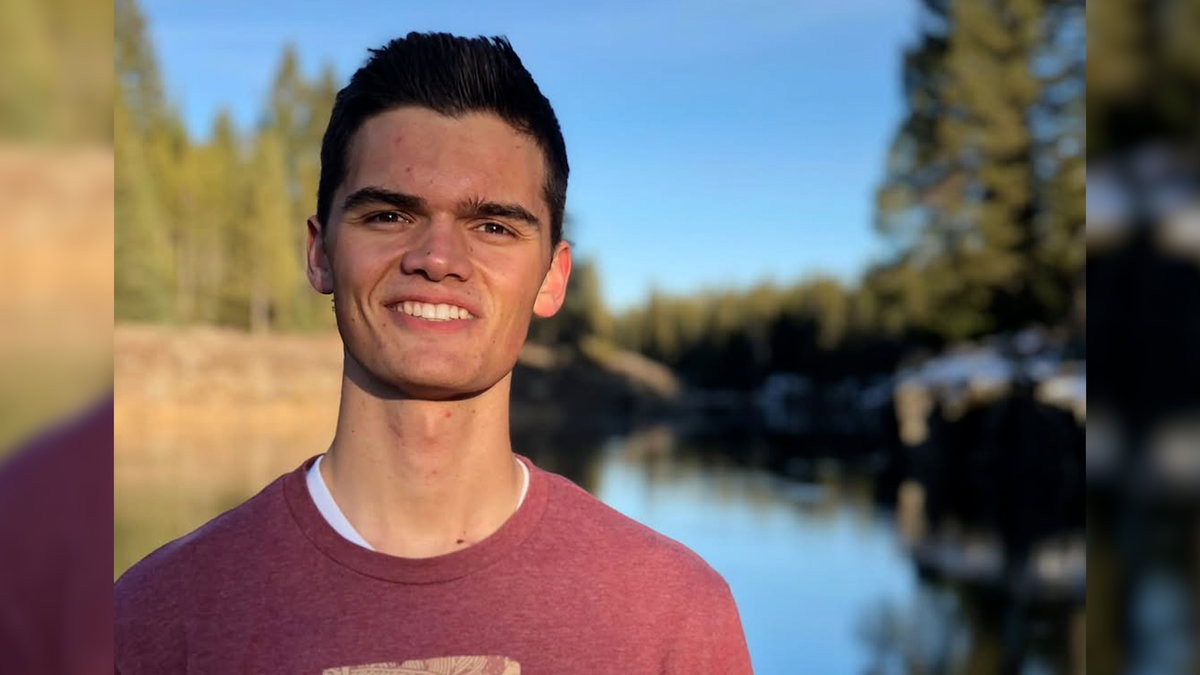

District 31: State budget-writer faces rematch with ‘traditional-values’ former lawmaker

Sean Dolan

Originally posted on IdahoEdNews.org on March 31, 2026

By: Sean Dolan

Editor’s note: This story is part of a series of candidate profiles Idaho Education News will publish ahead of the May 19 primary election. We’re highlighting competitive races impacting education policy. Click here to see our Elections webpage featuring a list of all candidates and much more. Click here to see your voter information. Follow our elections blog for breaking news and insights.

RIGBY, Idaho — Voters in District 31 will settle a debate in May.

Rep. Rod Furniss, R-Rigby, and former legislator Karey Hanks both claim they best represent the interests of citizens in Fremont, Clark, Jefferson and Lemhi counties.

“I’ve watched my opponent’s voting record and his votes do not reflect our values in East Idaho and in District 31,” Hanks told EdNews.

But Furniss, a Joint Finance-Appropriations Committee member seeking a fifth term in House Seat B, said Hanks’ voting record is more aligned with the Idaho Freedom Foundation.

“She pretty well follows their suggestions to the tee,” Furniss told EdNews. “I don’t. I vote for the constituents.”

The two have history.

Rod Furniss and Karey Hanks

Hanks was first elected to the Legislature in 2016, and Furniss won his first term in 2018 when he beat her in the primary.

They were both elected in 2020 in District 31. Hanks represented House Seat A and Furniss represented House Seat B.

They voted similarly on social issue bills — both supporting a bill to ban critical race theory in public schools — but often had different views on budget bills. Hanks said she voted against budgets if she felt there were enhancements beyond what was necessary.

After they served together for one term, Hanks lost primary elections in 2022 and 2024, when she faced Furniss for a second time.

Now, the two will let voters decide who is the true representative of their interests.

Incumbent: Rod Furniss

Occupation: Insurance agent
History of elected service: Four terms in the House. Elected 2018, 2020, 2022 and 2024
Campaign website: rodfurniss.com


School facilities funding has been a big issue in District 31, home to Salmon School District.

Voters in Salmon shot down 12 bonds before approving a $20 million bond in 2024 to replace a crumbling building

Furniss over the past couple of years has worked to make it easier for districts to pass bonds and find funding to build schools.

Idaho has one of the toughest thresholds in the country to pass bonds, a 66.7% supermajority. Furniss said that makes it very difficult for districts to build schools. Six districts ran bonds last year. They all failed.

In 2024, Furniss proposed a House joint resolution to lower that threshold to 55% in election years with statewide races. It didn’t get traction in the Legislature.

Furniss continued working on school facilities funding the next year. He supported a bill that created a $50 million fund for rural school funding. Districts could submit applications based on need. After the bill passed, a state panel approved $9 million for Salmon.

“This bill helped those smaller schools,” Furniss said. “If we have surpluses, we should probably put some more money in that to make sure our small schools are taken care of.”

Furniss has also focused on increasing child care options in Idaho. Last year he co-sponsored HB 243 to deregulate child care and allow facilities to set their staff-to-child ratios. It passed.

He said child care is a crucial part of Idaho growth.

“Some of the larger child care facilities didn’t really like that bill,” Furniss said. “But at the end of the day, it allowed more [parents] to enter into the business and have children in their home, so that we can have more child care.”

Fundraising – 2026 election cycle to date

Rod Furniss

Beginning cash balance: $17,128
Total contributions: $14,476
Total expenditures: $13,277
Ending cash balance: $16,537

Karey Hanks

Beginning cash balance: $15,861
Total contributions: $21,076
Total expenditures: $4,783
Ending cash balance: $20,274

Source: Idaho Sunshine, as of March 31

Furniss last year opposed HB 93, which created the $50 million Parental Choice Tax Credit.

He said there is no accountability in the quality of education that private schools have to provide and he doesn’t like that it is a tax credit.

“I’m opposed to how we set that up. I want to be able to regulate it. I want to be able to see it. I want to be able to account for the money,” he said.

On social issues like the transgender bathroom bill the Legislature passed last week, Furniss said he opposes any male using a female restroom and is opposed to any male playing female sports.

“I really have strong feelings that way, and I feel for the people that have that condition,” Furniss said. “I believe it’s a real condition, but I just also want to protect those young girls, or even any girl or any woman, from having to have that situation.”

When EdNews asked Furniss which bathroom Nikson Mathews should use, a bearded transgender man who testified against the bill, Furniss asked if he has “male parts or woman parts.”

“You tell me what he has and I’ll tell you what bathroom he goes in,” he said.

Furniss said he wants Idaho to remain Idaho.

“I want it to be a place where my children can raise their children with the same values that I had,” he said.

Challenger: Karey Hanks

Occupation: School bus driver
History of elected service: Two terms in the House. Elected 2016 and 2020.
Campaign website: kareyhanks.com


Hanks, the mother of seven children and 19 grandchildren, said she has a vested interest in preserving Idaho’s traditional values, such as parental rights and gun rights.

“I love Idaho the way it is, and we have outside interests that are trying to influence and change us into a Washington-, an Oregon- or a California-type state,” Hanks said. “We’ve got to stand up and nip these things in the bud and say, ‘No, we’re not going to do that.’”

Hanks said she is focused on being responsive to her constituents and helping people. While in office, she said she participated in parades, hosted booths, attended events and responded to emails, texts and phone calls.

She drives a school bus, helps out on the family farm, serves in her church, served in the Boy Scouts and started the Fremont County Patriots to keep residents informed on issues.

On school choice, Hanks said she’s noticed that not all children fit the public school model. She homeschooled five of her kids for at least one year and said parents should be able to make decisions for their kids without government interference.

“I feel that we need to focus on children and not necessarily systems,” she said.

Candidate scorecards

Idaho Freedom Foundation, Freedom Index Lifetime Scores

Furniss: 55.9% Freedom, 16.5% Spending
Hanks: 97.8% Freedom, 96.8% Spending

Idaho Children are Primary, Kids Matter Index

Furniss: 73% (2025)
Hanks: 40% (2021)

Her campaign website says she wants to protect children from the “woke” agenda. In an interview, Hanks said teachers who have pride flags in their classrooms can subliminally promote an agenda that children don’t need to be exposed to.

Schools, she said, should focus on reading, writing and arithmetic.

“I know that there was some DEI-type agenda trickling in in some of our districts, and, you know, we just need to nip that in the bud,” she said. “We need to be teaching the basics to our kids.”

She’s also concerned about porn in libraries and said we must protect kids from sexual material at a young age. As kids get older, parents should be responsible for that. On the transgender bathroom issue, Hanks said she doesn’t want to go into a bathroom with a “biological male.”

“We’re being pushed and nudged into things that we never — five or 10 years ago — we never would have thought something like this would be an issue,” she said.

On the budget process, Hanks said she is glad the Legislature has shifted to the “maintenance” and “enhancements” process, where agency budgets are split into base spending and additional spending requests. She voted against three budget bills for the Idaho State Police, while Furniss voted in favor.

Hanks said she felt there was additional funding in those bills that she didn’t think was necessary, but she supports law enforcement and appreciates what they do.

The two legislators in 2022 also voted differently on a massive omnibus bill during an extraordinary session in September. The bill, among other things, appropriated $410 million in ongoing education funding. Hanks opposed the bill.

When asked if she takes vote suggestions from the Idaho Freedom Foundation, Hanks said she does not. 

“I voted similarly to some of what the Idaho Freedom Foundation did, just because, you know, ‘Freedom Foundation,’” Hanks said. “They’re trying to promote lower budgets, things like that.”

Hanks said she has always tried to protect Idaho values and stand up for its citizens.

“My record shows that I serve the people of our district,” she said.

Click here to follow the original article.