Here’s what is affected by the government shutdown

CNN Newsource

Originally Published: 26 SEP 25 07:00 ET

Updated: 01 OCT 25 07:42 ET

By Tami Luhby, CNN

(CNN) — The federal government has shut down as congressional lawmakers remain at odds over funding the government beyond September 30.

Although Republicans control Capitol Hill and the White House, they need at least seven Democrats in the Senate to join them to pass a spending package under the chamber’s rules. Senate Minority Leader Chuck Schumer, however, is demanding any funding bill contain an extension of the enhanced Affordable Care Act premium subsidies, along with several other items, to get his party’s support. GOP leaders want an extension of funding for seven weeks, with additional money for security for the legislative, executive and judicial branches.

With the impasse unresolved, the government shutdown could be unlike any other in recent memory. While no two shutdowns are exactly the same, President Donald Trump and the White House Office of Management and Budget have already signaled that they are willing to use a totally different playbook — urging agencies to downsize workers in programs whose funding has lapsed and which don’t align with Trump’s priorities.

OMB Director Russell Vought on Tuesday said the government can cut jobs and programs, rather than just furlough workers during a shutdown.

“We have the authority to make permanent change to the bureaucracy here in government,” Vought said on Fox Business.

Trump is no stranger to government shutdowns. The most recent one occurred during his first term, starting in late December 2018 and lasting 35 days, the longest on record.

Here’s what we know about the government shutdown:

What is a government shutdown?

Congress must provide funding for many federal departments and functions every fiscal year, which begins on October 1. If lawmakers fail to pass a spending package for the full year or extend funding for a shorter period, known as a continuing resolution, then many agencies and activities must shutter until Congress appropriates more money.

Since lawmakers have yet to pass through both chambers any of the 12 appropriations bills that make up the federal discretionary spending budget, this government shutdown will be considered a full shutdown.

During prior impasses, Congress approved annual funding for certain agencies, which allowed them to continue operating while other federal departments went dark. That situation is known as a partial shutdown.

Since 1980, there have been 14 government shutdowns, not counting the current impasse, according to the Bipartisan Policy Center.

What is the shutdown deadline?

The shutdown began on October 1, first thing Wednesday morning, since Congress did not act before that.

What programs and payments will stop?

Every government shutdown differs somewhat, but typically functions that are critical to the protection of lives and property are deemed essential and remain open. Agencies file what are known as contingency plans that detail what operations will continue and how many employees will remain on the job, many of them without pay.

However, in an unusual move, OMB this time is not posting agencies’ shutdown contingency plans on its website. Instead, the plans are hosted only on each agency’s site — making it harder to assess how the Trump administration will handle the shutdown and which activities it will deem essential.

The US Food and Drug Administration’s ability to provide public health oversight will be harmed in a shutdown, according to an updated Department of Health and Human Services’ contingency plan. The agency will be limited in the inspections it can conduct, though it will still respond to emergencies.

“In the event of a lapse in appropriations, FDA’s ability to protect and promote public health and safety would be significantly impacted, with many activities delayed or paused,” the plan said.

Meanwhile, the Department of Education said it will furlough most of its staffers in a shutdown, though it will continue to dole out Pell Grants and federal student loans and keep making Title I and IDEA grant funding available. States, schools and others can still access the billions of dollars in awards the department made over the summer.

On the other hand, most Department of Homeland Security personnel will continue working. Most employees in Customs and Border Patrol will be retained, as well as those who work for Immigration and Customs Enforcement, the Transportation Security Administration, the Secret Service, Citizenship and Immigration Services and the Federal Emergency Management Agency.

Previous shutdowns canceled immigration hearings; and delayed some federal lending to homebuyers and small businesses, among other impacts.

In the most recent prior shutdown, students had trouble getting needed tax documents from the Internal Revenue Service to get financial aid for the spring semester, and the US Department of Agriculture warned that it could only guarantee to provide food stamp benefits through February.

Some government functions can continue – at least for a certain period of time – if they are funded through fees or other types of appropriations. For instance, the Internal Revenue Service said it can use some of the funding it received from the Inflation Reduction Act to keep all of its roughly 74,300 staffers on the job — as it said it would do previously when shutdowns loomed. The IRS is currently in the midst of putting into place dozens of tax law changes contained in the Republicans’ One Big Beautiful Bill Act, including some that take effect this year.

It’s likely that immigration, border patrol and defense activities funded through the GOP’s tax and spending package, which Trump signed into law in July, will continue.

“Thankfully, H.R. 1 provided ample resources to ensure that many core Trump Administration priorities will continue uninterrupted,” OMB wrote in its memo to agencies about preparing mass layoff plans, referring to the president’s domestic agenda package.

The Defense Department said in its contingency plan that it considers its highest priorities to be securing the southern border, Middle East operations, the Golden Dome missile defense system, among others.

Agencies and administrations have some amount of choice in which services they deem essential, said Molly Reynolds, interim director of the governance studies program at the Brookings Institution.

In Trump’s first term, Reynolds noted that the administration took some measures to make the shutdown less painful, such as allowing the IRS to process tax refunds — a departure from prior shutdowns.

But that may not be the case this year.

“The OMB memo threatening wide-scale federal layoffs if there is a shutdown suggests that this time around, they might be looking to make the shutdown more painful,” she said.

Will Social Security be affected?

Social Security payments to senior citizens, people with disabilities and other Americans will not be interrupted, according to the Social Security Administration’s updated contingency plan.

“In the event of a lapse in appropriation, SSA will follow the contingency plan for continued activities, and Social Security beneficiaries would continue receiving their Social Security, Social Security Disability Insurance and SSI (Supplemental Security Income) payments,” the agency told CNN.

Also, the unemployed will continue to receive their jobless benefits, as long as state agencies have administrative funding to process them, according to the Department of Labor.

Medicare and Medicaid payments will also continue to be distributed, the Department of Health and Human Services said in its contingency plan.

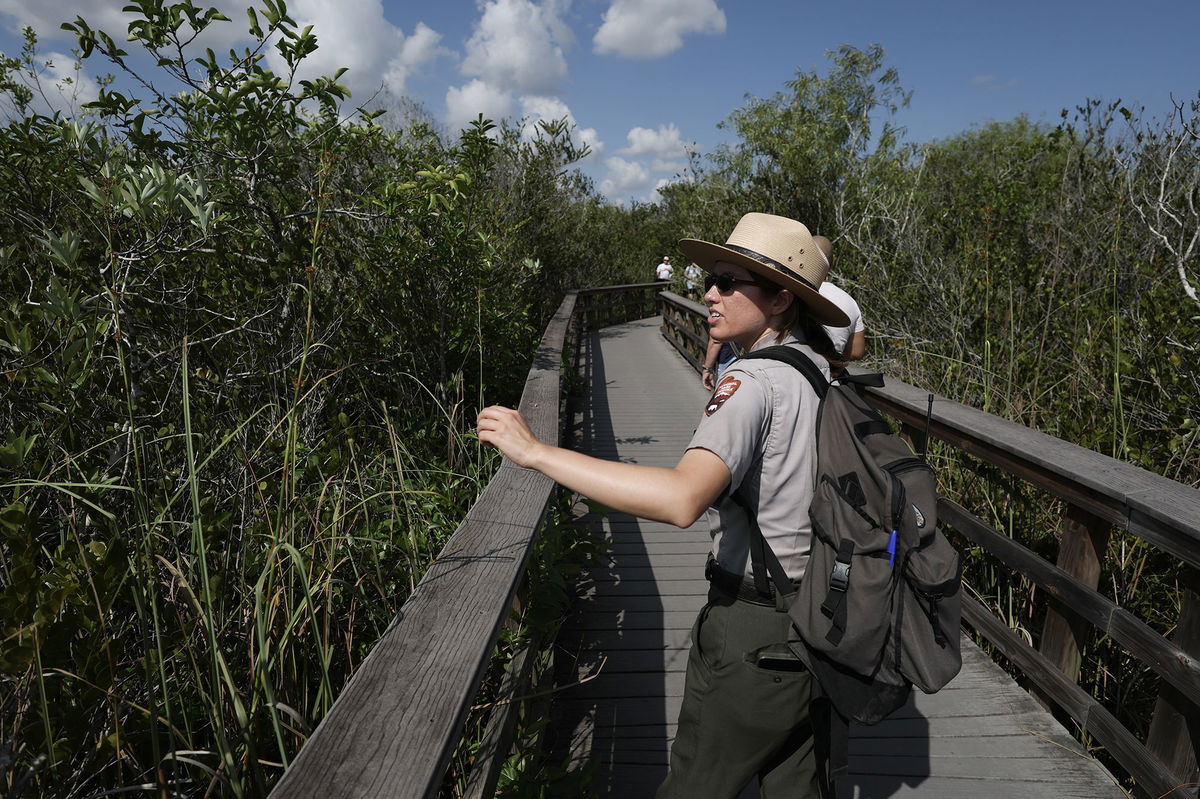
Will national parks stay open?

The impact of shutdowns on the 400-plus national park sites has differed greatly in recent shutdowns.

In 2013, an estimated 8 million recreation visits and $414 million were lost during the 16-day shutdown, according to the National Parks Conservation Association, citing National Park Service data. During the most recent shutdown in 2019, many parks remained open though no visitor services were provided. The Park Service lost $400,000 a day from missed entrance fee revenue, according to the association’s estimates. What’s more, park visitors would have typically spent $20 million on an average January day in nearby communities.

States have also stepped in to keep some national parks open using their own funds. When a shutdown loomed in the fall of 2023, Utah said it would keep the Mighty 5 parks – Arches, Bryce Canyon, Canyonlands, Capitol Reef and Zion – open, while Arizona planned to keep the Grand Canyon operational. Colorado also said it would also keep its four national parks and other federal lands open.

What’s the impact on airline travel?

Air traffic controllers and Transportation Security Administration officers are typically deemed essential and must remain on the job, though they are not paid. But staffing shortages during past shutdowns have snarled flights.

Critical support staff would be furloughed and vital support programs would be suspended in a shutdown, the National Air Traffic Controllers Association said in a statement. That would make it more difficult for air traffic controllers and other aviation safety workers to operate at full capability.

“In a time when aviation safety is under heightened public concern, a government shutdown would significantly add to the distractions our members must manage on the job every day,” Nick Daniels, the union’s president, said.

The decision by 10 air traffic controllers to stay home in January 2019 helped end that shutdown. Their absence temporarily shut down travel at New York’s LaGuardia airport and caused delays at other major hubs, including in New Jersey, Philadelphia and Atlanta, driving Trump to agree to a temporary government funding measure.

How about the impact on federal workers?

Federal workers bear the brunt of government shutdowns. Some are furloughed, while others are considered essential and have to continue working. But many don’t get paid until the impasse ends — though they may not feel an immediate impact since many won’t receive their pay for October until later in the month.

In March, the last time a federal government shutdown loomed before being averted, more than 1.4 million employees were deemed essential, according to Rachel Snyderman, managing director of economic policy at the Bipartisan Policy Center. About 750,000 of them would have continued to be paid since their salaries were funded through other sources.

Another nearly 900,000 workers would have been furloughed without pay. (Snyderman noted that the estimates did not include the layoffs and departures that occurred in the early weeks of the Trump administration.)

The Defense Department informed active duty and reserve military members, as well as civilian employees,in late September that they will not be paid after September 30 until Congress approves funding for the agency, according to a memo viewed by CNN. Active duty members will have to continue to report for work.

Also, judiciary officials warned in late Septemberthat federal courts could be affected by a shutdown within days, much sooner than in previous occurrences, because of tight budgets. While judges and Supreme Court justices would continue to be paid, many other judicial employees would not.

Federal workers are guaranteed to receive their back pay after the impasse is resolved. However, the same is not true for federal contractors who may be furloughed or temporarily laid off by their employers during a shutdown.

Will services for veterans be affected?

Medical care and critical services for veterans will not be interrupted during a government shutdown, the Department of Veterans Affairs said in its contingency plan. This includes suicide prevention programs, homelessness programs, the Veterans Crisis Line and caregiver support.

The agency will also keep processing and paying claims for education benefits, disability compensation and pensions, as well as loan guarantee programs. And its National Cemetery Administration will continue to inter veterans and eligible family members.

However, certain functions will cease until the impasse ends. The GI Bill Hotline will be suspended, as will assistance programs to help service members shift to civilian life. Also, the permanent installation of headstone and cemetery grounds maintenance will not occur until the shutdown is over.

What does a shutdown do to the economy?

Shutdowns can have real consequences for the economy since federal spending is delayed, and many federal workers pull back on their purchases while they aren’t receiving paychecks.

The five-week shutdown in 2018-2019 resulted in a $3 billion loss in economic growth that would not be recovered, according to a Congressional Budget Office estimate. It noted that some private sector businesses would never make up their lost income.

Also, because the IRS reduced its compliance activities during the shutdown, CBO estimated that tax revenues would be roughly $2 billion lower — much of which would not be recouped.

What’s more, it would become difficult to determine the health of the economy — which is currently in flux — during a shutdown. The Bureau of Labor Statistics will not issue any economic reports, including the closely watched monthly jobs report on October 3, during the shutdown, the Department of Labor said in its updated shutdown plan.

The impact stretches beyond the federal government.

The US Travel Association wrote a letter to congressional leaders in late September urging them to avoid a shutdown, which it said would result in flight delays, longer airport security lines and canceled trips.

“A shutdown is a wholly preventable blow to America’s travel economy — costing $1 billion every week — and affecting millions of travelers and businesses while placing unnecessary strain on an already overextended federal travel workforce,” wrote Geoff Freeman, the association’s CEO. “The consequences of inaction and immediate and severe.”

This story and headline have been updated with additional details.

The-CNN-Wire™ & © 2025 Cable News Network, Inc., a Warner Bros. Discovery Company. All rights reserved.


Click here to follow the original article.

ITD’s popular “Name a Snowplow” Contest returns

News Team

BOISE, Idaho (KIFI) — In preparation for winter, the Idaho Transportation Department is excitedly bringing back its popular “Name a Snowplow’ contest, inviting students across the Gem State to put their creativity to the test.

“Our snowplow drivers are thrilled to see students getting involved in this fun, educational opportunity that also highlights the importance of winter driving safety,” said Scott Stokes, Director of ITD.

How to Enter

Who: 6th-12th-grade classrooms across Idaho.

When: Submissions are open starting today, October 1, through the end of the month.

How: Teachers can work with their students to submit creative names directly to the ITD.

The ITD will select two winning names in each of its six regions, for a total of 12 newly-named plows. ITD employees will vote on the final names.

Each winning classroom will receive a special visit from “their” named snowplow and driver for a winter safety presentation. The winning names will be displayed directly on the plows, and local media will be invited to attend the naming events, giving students and their teachers statewide recognition.

The contest is specifically designed to help teachers introduce important winter safety messages to students, many of whom may soon be enrolling in driver’s education classes. ITD hopes that adding distinctive names to the plows will also encourage all motorists to notice and be patient when driving near these vehicles, ensuring a safer winter for everyone on Idaho roads.

For full contest rules, click HERE.

Click here to follow the original article.

Richfield woman dies in head-on crash on US-93 in Jerome County

News Team

JEROME, Idaho (KIFI) — A 46-year-old woman from Richfield was killed Tuesday night in a two-vehicle crash on US Highway 93 in Jerome County.

The fatal head-on collision happened just after 9:30 p.m. near the intersection of US93 and E 200 N.

According to a report released by the Idaho State Police (ISP), a 2015 Ram 2500 pickup was traveling south on US93. The Ram, driven by a 56-year-old male from Jerome and carrying a 51-year-old male passenger, collided head-on with a northbound 2022 Subaru Crosstrek, driven by the 46-year-old woman from Richfield.

The driver of the Crosstrek was not wearing a seatbelt and was pronounced dead at the scene from her injuries. The driver and passenger of the Ram were both reportedly wearing seatbelts. The passenger was transported by ground ambulance to a nearby hospital for treatment.

The cause of the crash remains under investigation by the Idaho State Police.

Click here to follow the original article.

Poaching problems: The challenge of solving poaching cases in the mountain west

Maile Sipraseuth

IDAHO FALLS, Idaho (KIFI) – While Autumn means hunting season is in full swing, the issue of poaching affects wildlife worldwide, even in Idaho and Wyoming. A recent report by the Boone and Crockett Club estimates that only four percent of poaching incidents in the U.S. are detected.

Robert Howe, District Conservation Officer in Idaho Falls, says part of the issue is that the majority of poaching, either intentionally or unintentionally, happens in the woods without eyewitnesses.

“The challenging part about solving poaching cases is, an elk doesn’t have neighbors or family members that we can talk to and look for suspects. And so we’re often left with a lot of questions,” said Howe.

Howe confirms that an unfortunate amount of poaching does occur in southeast Idaho.

Amanda Fry, spokesperson for Wyoming Game and Fish, tells us their efforts to combat poaching depend heavily on tips from the public. She urges citizens to take an active role in protecting the region’s natural resources.

“The best thing you can do is report a violation when you see it. If you see something, say something. We depend very heavily on our tips from concerned citizens,” Fry said.

To help put a stop to poaching, Howe and Fry recommend calling the poaching hotline immediately, collecting identifying features such as the poacher’s vehicle, and marking the location.

Anonymous Hotlines for Reporting Wildlife Crime:

Idaho (Citizens Against Poaching – CAP): 1-800-632-5999

Wyoming (Stop Poaching Hotline): 1-877-WGFD-TIP (1-877-943-3847)

Click here to follow the original article.

Flu season is here, Daycares urge parents to vaccinate children

Ariel Jensen

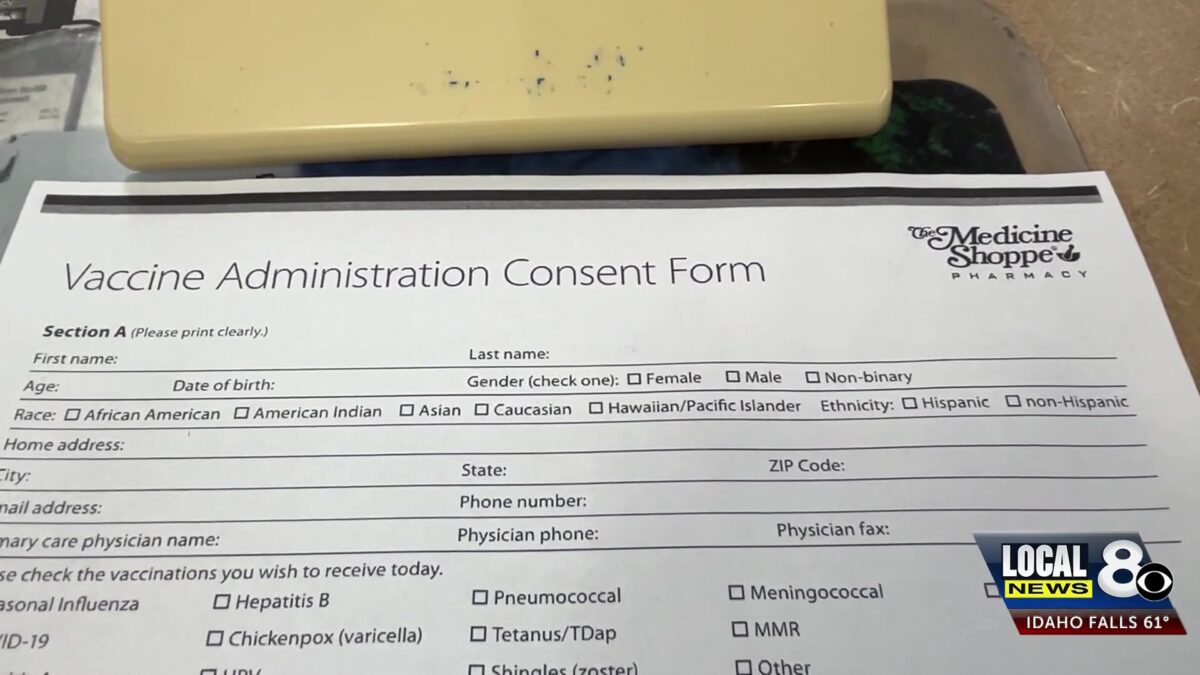
REXBURG (KIFI) — It’s that time of year again. Flu season is ramping up, and with the virus spreading rapidly—often before symptoms even show—local daycares are reminding parents that it’s crucial to take proactive steps to protect your family.

Staff are doubling down on disinfection efforts to keep shared spaces safe for all children. This busy season is a firm reminder to all parents: vaccination is key.

“The vaccine is important, especially for children, because it helps build that immunity to the flu or at least the flu from the previous season so that kids have a little bit better of a chance of fighting off the illness if they are exposed to it and not getting as sick or hopefully not getting sick from the flu,” said Brittnee McMinn RN Nurse & Owner NiNI’s Daycare.

McMinn reminds us that illness prevention starts with good hygiene, especially in public. Everything you touch—from grocery carts to restaurant menus—can be contaminated. Wash your hands frequently to drastically reduce the risk of spreading illness.

Click here to follow the original article.

Bannock County extends Burn Ban through October 15

News Team

POCATELLO, Idaho (KIFI) — Bannock County has extended its burn ban until October 15, 2025, citing persistent hazardous fire conditions. The ban is comprehensive, applying to all areas of the county, including all municipalities and fire districts.

The decision to keep the ban in effect was made following close consultation with local fire officials and is based on two primary factors:

Great Basin Critical Fuel Status: The Great Basin’s critical fuel status remains above average. This indicates that the vegetation and other potential fuels on the ground are arid and highly susceptible to ignition.

Below Average Moisture: The local weather service has confirmed that Bannock County is experiencing below-average moisture for this time of year. This lack of precipitation contributes to the dry conditions and increases the risk of a wildfire starting and spreading rapidly.

“We understand that people are eager to get back to their normal outdoor activities, but the risk is simply too high at this time,” said Pocatello Assistant Chief/Fire Marshal Dean Bullock. “With the dry fuels and the continued lack of substantial moisture, we are uncomfortable making the call to lift the ban with current conditions. The safety of our residents and our community is our top priority.”

The extended ban strictly prohibits all open burning within the Wildland-Urban Interface Areas of Bannock County.

Exemptions to the Burn Ban:

The use of commercial gas fire pits, gas grills, and/or charcoal briquettes are exempted from the ban when used according to the manufacturer’s instructions.

Campfires and recreational fires are also allowed in developed campgrounds and private residences, provided they comply with the following limitations:

Fires must be contained within a pit or ring

Fires should not exceed 3 feet in diameter, 3 feet in flame height

Fires must be 25 feet from structures or ignitable objects and should be screened to eliminate airborne embers.

The Bannock County Commissioners and local fire departments say they are continuously monitoring the weather and fuel conditions and will provide updates as conditions change.

Click here to follow the original article.

From pumpkins to tomatoes: Chubbuck gardener grows record-breaking produce

Sam Ross

CHUBBUCK, Idaho (KIFI) — Local gardener, Cliff Warren, recently set a new state record for largest tomato with a whopping 3.57-pound fruit; the tomato went through a rigorous weighing and judging process before it was declared a record-breaker at the Center Street Giant Pumpkin Festival in Logan, Utah, on September 27.

Warren, a retired engineer turned school bus driver, said he started cultivating giant fruits, vegetables, and flowers after moving to the Chubbuck countryside 25 years ago.

“We had a lot of space and I always wanted to be a gardener,” said Warren. “My sister went to the library and found a book, ‘How to Grow Giant Pumpkins’; I read the book, I got hooked, and I’ve been growing giant pumpkins ever since.”

Warren’s pumpkins have won titles in the past; most recently, his 700-pound gourd came in tenth place at the same festival where his tomato broke state records. At the 2024 Eastern Idaho State Fair, Warren got a first-place ribbon for a nearly 800-pound pumpkin.

Other notable achievements in Warren’s garden include his personal record-breaking pumpkin that weighed in at a little over 1,100 pounds and a 16-foot-tall sunflower that sprang up this summer.

“It just takes a lot of care,” said Warren. “You have to be very mindful of what you’re doing; you have to know what the weather’s going to be like overnight and the next day, so you have to be prepared for anything that can happen in your patch.”

Warren chronicles his giant gardening endeavors on social media; you can follow him on Facebook.

Click here to follow the original article.

Idaho Regulators approve Intermountain Gas rate adjustment: Residential bills down, commercial bills up

News Release

The following is a press release from the Idaho Public Utilities Commission:

IDAHO FALLS, Idaho (KIFI) — The Idaho Public Utilities Commission has approved an application from Intermountain Gas that will decrease the rates for some customers and increase rates for others.

The utility had sought commission approval to decrease rates for residential customers and increase rates for large volume, commercial and transport customers. The typical residential customer’s monthly bill will decrease by $0.06, or 0.03 percent. The other customer groups will see their monthly bills increase between $435.10 and $649.24, depending on their rate schedule.

The utility’s rates include a base-rate component and a natural gas-related cost, Purchased Gas Cost Adjustment (PGA), component. The base-rate component is intended to cover fixed costs to serve customers and those costs rarely change. The PGA is a commission-approved mechanism that adjusts rates up or down to reflect changes in the utility’s costs to buy natural gas from suppliers, including changes in transportation, storage, and other related costs. Intermountain Gas defers the costs into its PGA account and passes them on to customers through an increase or decrease in rates.

The changes in the PGA are due to an increase in estimated gas commodity and transportation costs for the approaching year, offset by lower estimated storage costs and over-collected gas costs from the prior PGA.

Click here to follow the original article.

BLM approves natural gas pipeline relocation near American Falls

News Release

The following is a news release from the Bureau of Land Management:

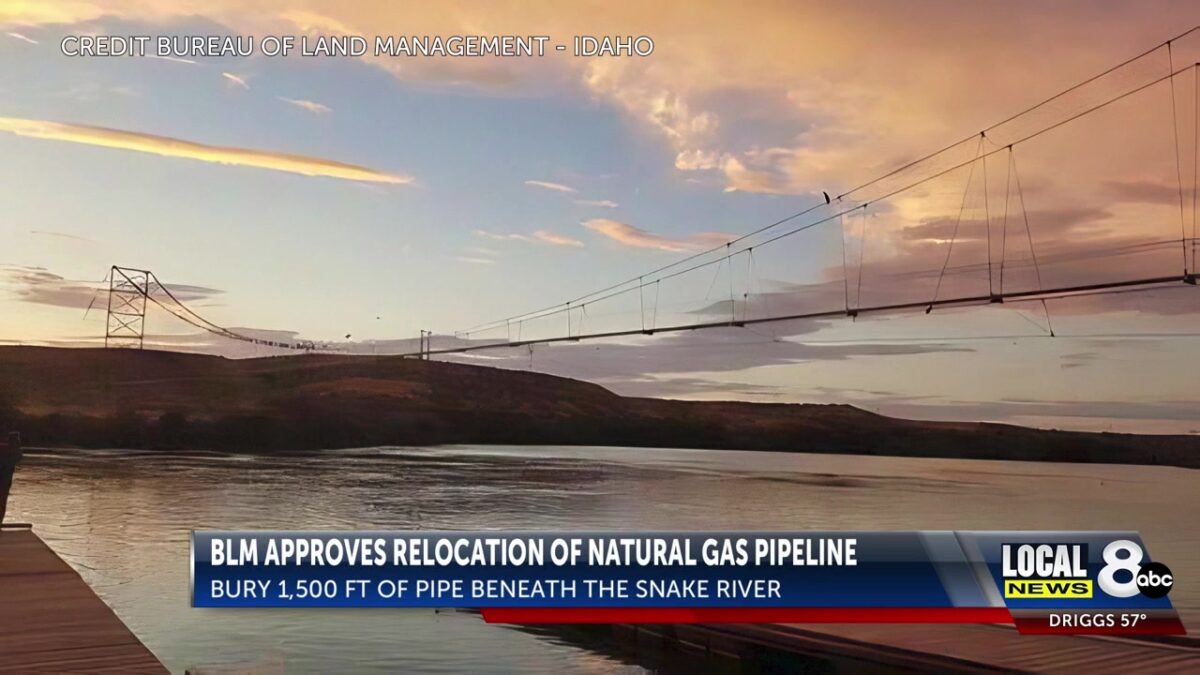
AMERICAN FALLS, Idaho (KIFI) — The Bureau of Land Management has approved a project to relocate and bury a natural gas pipeline near American Falls in southeast Idaho’s Power County. Intermountain Gas may remove approximately 1,500 feet of the existing pipeline bridge spanning the Snake River and install a new section of 6-inch diameter pipe beneath the river to meet increased industrial demand.

Currently, the pipeline crosses BLM, Bureau of Reclamation, and Idaho Department of Lands parcels along the Snake River near the BLM Pipeline Campground. Construction will take place during the winter months to reduce conflicts with recreation use and modify fewer than three surface acres. Temporary closure of BLM recreational facilities will be needed when construction activities begin.

This pipeline amendment will allow Intermountain Gas to remove the aged infrastructure of the existing pipeline bridge and replace it with an underground pipeline, which would continue to serve natural gas customers.

This action supports Executive Order 14154 and Secretarial Order 3418, “Unleashing American Energy,” and Secretarial Order 3417, “Addressing the National Energy Emergency.” It helps remove undue burden on the use of domestic energy resources – with particular attention to natural gas.

The final environmental assessment, finding of no significant impact, and decision record are available on BLM’s National NEPA Register. For more information, please contact the BLM Pocatello Field Office at 208-478-6340.

Click here to follow the original article.

Here’s what is affected by the government shutdown

CNN Newsource

By Tami Luhby, CNN

(CNN) — The federal government has shut down as congressional lawmakers remain at odds over funding the government beyond September 30.

Although Republicans control Capitol Hill and the White House, they need at least seven Democrats in the Senate to join them to pass a spending package under the chamber’s rules. Senate Minority Leader Chuck Schumer, however, is demanding any funding bill contain an extension of the enhanced Affordable Care Act premium subsidies, along with several other items, to get his party’s support. GOP leaders want an extension of funding for seven weeks, with additional money for security for the legislative, executive and judicial branches.

With the impasse unresolved, the government shutdown could be unlike any other in recent memory. While no two shutdowns are exactly the same, President Donald Trump and the White House Office of Management and Budget have already signaled that they are willing to use a totally different playbook — urging agencies to downsize workers in programs whose funding has lapsed and which don’t align with Trump’s priorities.

OMB Director Russell Vought on Tuesday said the government can cut jobs and programs, rather than just furlough workers during a shutdown.

“We have the authority to make permanent change to the bureaucracy here in government,” Vought said on Fox Business.

Trump is no stranger to government shutdowns. The most recent one occurred during his first term, starting in late December 2018 and lasting 35 days, the longest on record.

Here’s what we know about the government shutdown:

What is a government shutdown?

Congress must provide funding for many federal departments and functions every fiscal year, which begins on October 1. If lawmakers fail to pass a spending package for the full year or extend funding for a shorter period, known as a continuing resolution, then many agencies and activities must shutter until Congress appropriates more money.

Since lawmakers have yet to pass through both chambers any of the 12 appropriations bills that make up the federal discretionary spending budget, this government shutdown will be considered a full shutdown.

During prior impasses, Congress approved annual funding for certain agencies, which allowed them to continue operating while other federal departments went dark. That situation is known as a partial shutdown.

What is the shutdown deadline?

The shutdown began on October 1, first thing Wednesday morning, since Congress did not act before that.

What programs and payments will stop?

Every government shutdown differs somewhat, but typically functions that are critical to the protection of lives and property are deemed essential and remain open. Agencies file what are known as contingency plans that detail what operations will continue and how many employees will remain on the job, many of them without pay.

However, in an unusual move, OMB this time is not posting agencies’ shutdown contingency plans on its website. Instead, the plans are hosted only on each agency’s site — making it harder to assess how the Trump administration will handle the shutdown and which activities it will deem essential.

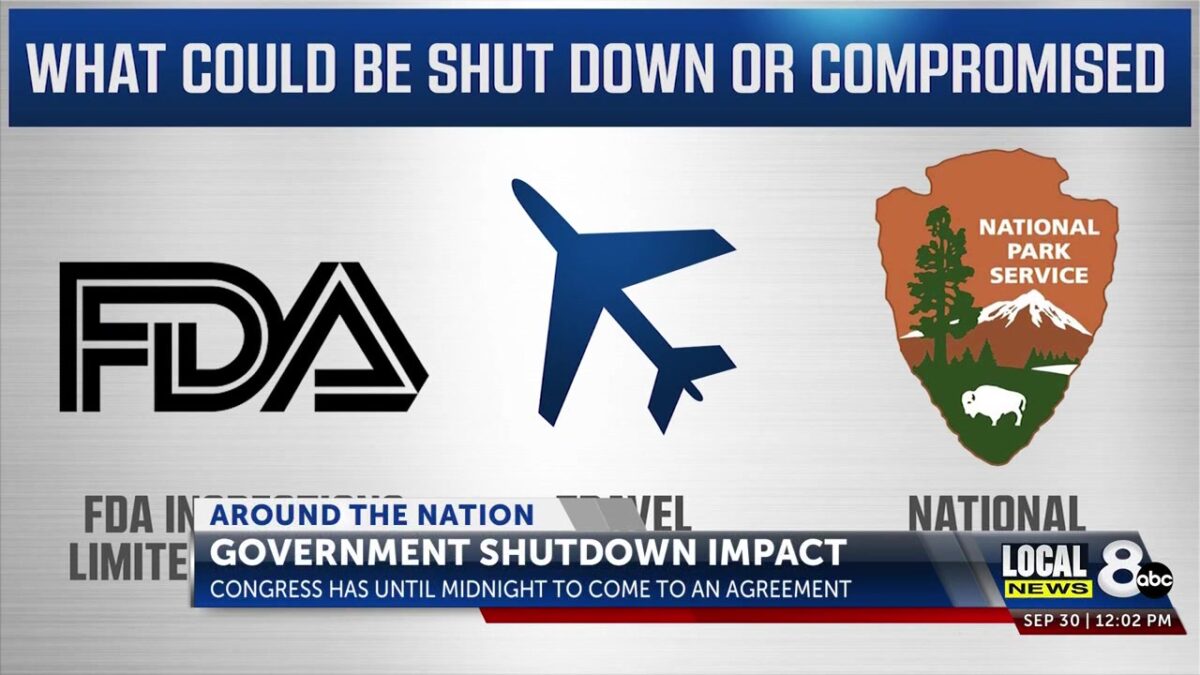
The US Food and Drug Administration’s ability to provide public health oversight will be harmed in a shutdown, according to an updated Department of Health and Human Services’ contingency plan. The agency will be limited in the inspections it can conduct, though it will still respond to emergencies.

“In the event of a lapse in appropriations, FDA’s ability to protect and promote public health and safety would be significantly impacted, with many activities delayed or paused,” the plan said.

Meanwhile, the Department of Education said it will furlough most of its staffers in a shutdown, though it will continue to dole out Pell Grants and federal student loans and keep making Title I and IDEA grant funding available. States, schools and others can still access the billions of dollars in awards the department made over the summer.

On the other hand, most Department of Homeland Security personnel will continue working. Most employees in Customs and Border Patrol will be retained, as well as those who work for Immigration and Customs Enforcement, the Transportation Security Administration, the Secret Service, Citizenship and Immigration Services and the Federal Emergency Management Agency.

But the Washington, DC, court system said it will not issue marriage certificates or perform wedding ceremonies. And the National Flood Insurance Program can’t issue new policies, potentially snagging the closing of home sales.

Previous shutdowns canceled immigration hearings; and delayed some federal lending to homebuyers and small businesses, among other impacts.

In the most recent prior shutdown, students had trouble getting needed tax documents from the Internal Revenue Service to get financial aid for the spring semester, and the US Department of Agriculture warned that it could only guarantee to provide food stamp benefits through February.

Federal funding for WIC, the food assistance program for low-income women, infants and young children, could run out within one to two weeks if Congress doesn’t allocate more money, according to the National WIC Association.

The US Department of Agriculture told state agencies that due to the lapse in funding, they will not receive their quarterly allocation of fiscal year 2026 money for WIC.

Some government functions can continue – at least for a certain period of time – if they are funded through fees or other types of appropriations. For instance, the Internal Revenue Service said it can use some of the funding it received from the Inflation Reduction Act to keep all of its roughly 74,300 staffers on the job — as it said it would do previously when shutdowns loomed. The IRS is currently in the midst of putting into place dozens of tax law changes contained in the Republicans’ One Big Beautiful Bill Act, including some that take effect this year.

It’s likely that immigration, border patrol and defense activities funded through the GOP’s tax and spending package, which Trump signed into law in July, will continue.

“Thankfully, H.R. 1 provided ample resources to ensure that many core Trump Administration priorities will continue uninterrupted,” OMB wrote in its memo to agencies about preparing mass layoff plans, referring to the president’s domestic agenda package.

The Defense Department said in its contingency plan that it considers its highest priorities to be securing the southern border, Middle East operations, the Golden Dome missile defense system, among others.

Agencies and administrations have some amount of choice in which services they deem essential, said Molly Reynolds, interim director of the governance studies program at the Brookings Institution.

In Trump’s first term, Reynolds noted that the administration took some measures to make the shutdown less painful, such as allowing the IRS to process tax refunds — a departure from prior shutdowns.

But that may not be the case this year.

“The OMB memo threatening wide-scale federal layoffs if there is a shutdown suggests that this time around, they might be looking to make the shutdown more painful,” she said.

Will Social Security be affected?

Social Security payments to senior citizens, people with disabilities and other Americans will not be interrupted, according to the Social Security Administration’s updated contingency plan.

“In the event of a lapse in appropriation, SSA will follow the contingency plan for continued activities, and Social Security beneficiaries would continue receiving their Social Security, Social Security Disability Insurance and SSI (Supplemental Security Income) payments,” the agency told CNN.

Also, the unemployed will continue to receive their jobless benefits, as long as state agencies have administrative funding to process them, according to the Department of Labor.

Medicare and Medicaid payments will also continue to be distributed, the Department of Health and Human Services said in its contingency plan.

Will national parks stay open?

The impact of shutdowns on the 400-plus national park sites has differed greatly in recent shutdowns.

“National parks remain as accessible as possible during the federal government shutdown. However, some services may be limited or unavailable,” the National Park Service said in a banner on its website.

Park roads, lookouts, trails and open-air memorials will generally remain accessible to visitors, according to the service’s contingency plan. At the just over 100 parks that charge entrance fees, that money can go toward maintaining basic visitor services, including restrooms, trash collection and campground operations.

In 2013, an estimated 8 million recreation visits and $414 million were lost during the 16-day shutdown, according to the National Parks Conservation Association, citing National Park Service data. During the most recent shutdown in 2019, many parks remained open though no visitor services were provided. The Park Service lost $400,000 a day from missed entrance fee revenue, according to the association’s estimates. What’s more, park visitors would have typically spent $20 million on an average January day in nearby communities.

States have also stepped in to keep some national parks open using their own funds. When a shutdown loomed in the fall of 2023, Utah said it would keep the Mighty 5 parks – Arches, Bryce Canyon, Canyonlands, Capitol Reef and Zion – open, while Arizona planned to keep the Grand Canyon operational. Colorado also said it would also keep its four national parks and other federal lands open.

This time, Arizona said it does not have the funds to keep its national parks open, while New York said it would not keep the Statue of Liberty operating during a shutdown. The Interior Department then told CNN that the administration would keep the statue — as well as Ellis Island — open. But Colorado and Utah said their national parks will remain open.

Meanwhile, the Smithsonian said its museums, research centers and the National Zoo will remain open through at least October 6.

What’s the impact on airline travel?

Air traffic controllers and Transportation Security Administration officers are typically deemed essential and must remain on the job, though they are not paid. But staffing shortages during past shutdowns have snarled flights.

Critical support staff would be furloughed and vital support programs would be suspended in a shutdown, the National Air Traffic Controllers Association said in a statement. That would make it more difficult for air traffic controllers and other aviation safety workers to operate at full capability.

“In a time when aviation safety is under heightened public concern, a government shutdown would significantly add to the distractions our members must manage on the job every day,” Nick Daniels, the union’s president, said.

The decision by 10 air traffic controllers to stay home in January 2019 helped end that shutdown. Their absence temporarily shut down travel at New York’s LaGuardia airport and caused delays at other major hubs, including in New Jersey, Philadelphia and Atlanta, driving Trump to agree to a temporary government funding measure.

Is USPS affected by the government shutdown?

The mail will still be delivered and post offices will remain open during the shutdown.

“Because we are an independent entity that is generally funded through the sale of our products and services, and not by tax dollars, our services will not be impacted by a government shutdown,” the US Postal Service said in a statement.

How about the impact on federal workers?

Federal workers bear the brunt of government shutdowns. Some are furloughed, while others are considered essential and have to continue working. But many don’t get paid until the impasse ends — though they may not feel an immediate impact since many won’t receive their pay for October until later in the month.

Many federal employees won’t notice the pause in pay until the end of next week, when the next paychecks for a large share of staffers are scheduled to be distributed for the pay period ending October 4. Their checks will be a little lighter since they won’t get compensated for the first few days of the month, if the shutdown is still in effect. After that, they won’t receive any pay until Congress approves a new spending package.

In March, the last time a federal government shutdown loomed before being averted, more than 1.4 million employees were deemed essential, according to Rachel Snyderman, managing director of economic policy at the Bipartisan Policy Center. About 750,000 of them would have continued to be paid since their salaries were funded through other sources.

Another nearly 900,000 workers would have been furloughed without pay. (Snyderman noted that the estimates did not include the layoffs and departures that occurred in the early weeks of the Trump administration.)

The Defense Department informed active duty and reserve military members, as well as civilian employees, in late September that they will not be paid after September 30 until Congress approves funding for the agency, according to a memo viewed by CNN. Active duty members will have to continue to report for work.

Also, judiciary officials warned in late September that federal courts could be affected by a shutdown within days, much sooner than in previous occurrences, because of tight budgets. While judges and Supreme Court justices would continue to be paid, many other judicial employees would not.

Federal workers are guaranteed to receive their back pay after the impasse is resolved. However, the same is not true for federal contractors who may be furloughed or temporarily laid off by their employers during a shutdown.

Will services for veterans be affected?

Medical care and critical services for veterans will not be interrupted during a government shutdown, the Department of Veterans Affairs said in its contingency plan. This includes suicide prevention programs, homelessness programs, the Veterans Crisis Line and caregiver support.

The agency will also keep processing and paying claims for education benefits, disability compensation and pensions, as well as loan guarantee programs. And its National Cemetery Administration will continue to inter veterans and eligible family members.

However, certain functions will cease until the impasse ends. The GI Bill Hotline will be suspended, as will assistance programs to help service members shift to civilian life. Also, the permanent installation of headstone and cemetery grounds maintenance will not occur until the shutdown is over.

What does a shutdown do to the economy?

Shutdowns can have real consequences for the economy since federal spending is delayed, and many federal workers pull back on their purchases while they aren’t receiving paychecks.

The five-week shutdown in 2018-2019 resulted in a $3 billion loss in economic growth that would not be recovered, according to a Congressional Budget Office estimate. It noted that some private sector businesses would never make up their lost income.

Also, because the IRS reduced its compliance activities during the shutdown, CBO estimated that tax revenues would be roughly $2 billion lower — much of which would not be recouped.

What’s more, it would become difficult to determine the health of the economy — which is currently in flux — during a shutdown. The Bureau of Labor Statistics will not issue any economic reports, including the closely watched monthly jobs report on October 3, during the shutdown, the Department of Labor said in its updated shutdown plan.

The impact stretches beyond the federal government.

The US Travel Association wrote a letter to congressional leaders in late September urging them to avoid a shutdown, which it said would result in flight delays, longer airport security lines and canceled trips.

“A shutdown is a wholly preventable blow to America’s travel economy — costing $1 billion every week — and affecting millions of travelers and businesses while placing unnecessary strain on an already overextended federal travel workforce,” wrote Geoff Freeman, the association’s CEO. “The consequences of inaction and immediate and severe.”

This story and headline have been updated with additional details.

The-CNN-Wire™ & © 2025 Cable News Network, Inc., a Warner Bros. Discovery Company. All rights reserved.

CNN’s John Fritze, Camila DeChalus and Annie Grayer contributed to this report.

Click here to follow the original article.