InvestigateWest
Editor’s note: “Guarded by Predators” is an investigative series exposing rape and abuse by Idaho’s prison guards and the system that shields them. Find the entire series at investigatewest.org/guarded-by-predators.
Originally Published: January 28, 2026
By
Whitney Bryen
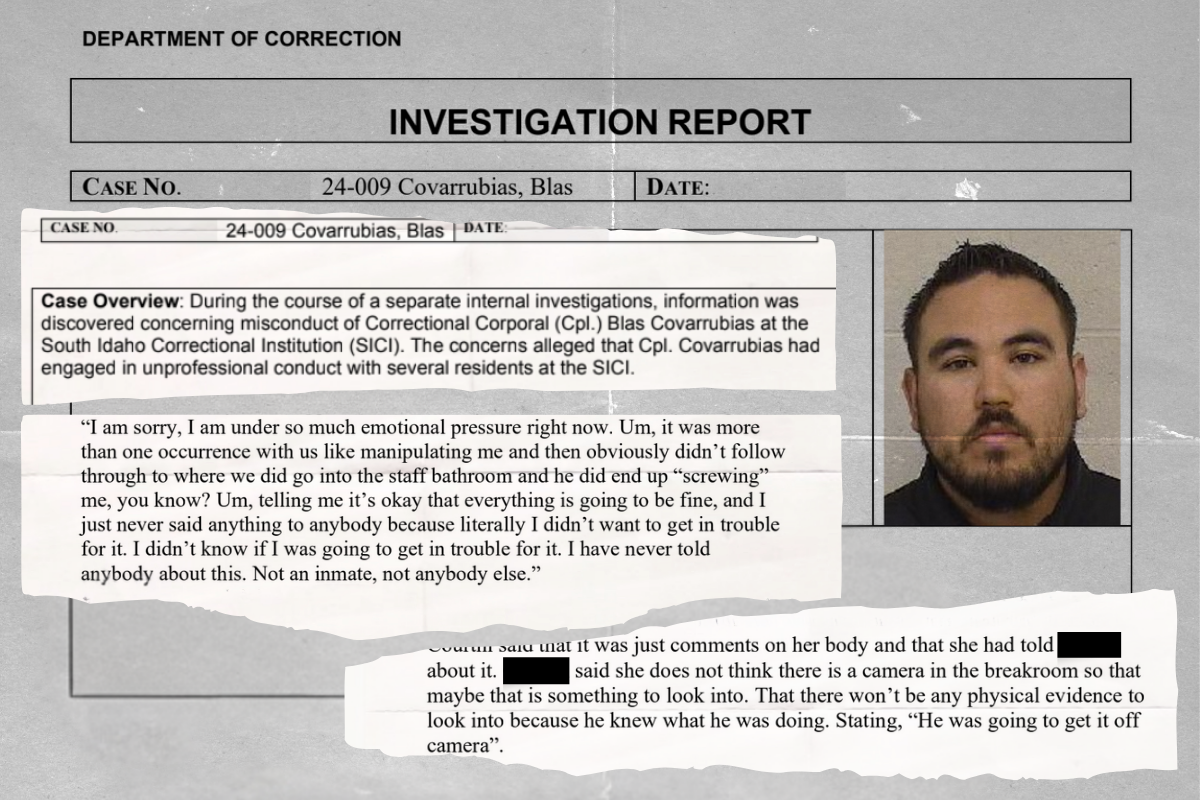
Boise, IDAHO — It was November 2023, in a staff break room at South Idaho Correctional Institution, when prison guard Blas Covarrubias unbuttoned Michele’s pants and sexually assaulted her, she told an investigator. She was one of six inmates that the corporal — known as “Covi” to the women he was entrusted with protecting — was accused of abusing in 2023 and 2024.
Eight months later, Michele was sexually assaulted again. This time by someone else: a correctional officer named Justin Tillema, a witness reported.
The Idaho Department of Correction conducted investigations into both men. State police detectives investigated one of them.
Both men avoided criminal prosecution.
Investigative files and witness interviews reveal how state agencies and county prosecutors resisted punishment for the two guards despite allegations from several incarcerated women. And the records show how those decisions took a toll on Michele, who says she was sexually abused twice while in state custody and left to face the consequences alone.
Under federal and state laws, prisoners cannot consent to sexual acts with corrections staff. Tillema’s officer certification was revoked for “criminal conduct whether charged or not” and “inappropriate sexual conduct while on duty,” as well as failing to cooperate with or lying to investigators, according to the state agency that certifies prison guards. InvestigateWest sent messages to Tillema on social media and at his last known address. Tillema did not respond to requests for an interview.
The federal Prison Rape Elimination Act and Idaho Department of Correction policy require prisons to report all “potentially criminal” acts to law enforcement. Yet police had no record of the allegations against Tillema being reported to them. The Department of Correction declined to answer specific questions about its handling of the allegations, stating via email that it only reports sexual abuse allegations to police “when criminal evidence is uncovered” — a statement that conflicts with its own policy and federal standards.
State police detectives sent the evidence against Covarrubias, including detailed descriptions of assaults from two alleged victims, to Ada County felony prosecutor Whitney Faulkner, who declined to charge him. The prosecutor’s office said it could not explain the decision, citing “ethical obligations” in a written statement to InvestigateWest. “The office is not permitted to comment on cases that have been declined for prosecution,” according to the statement. Covarrubias no longer works for the Department of Correction and the agency refused to say whether he was fired or resigned. InvestigateWest sent requests for an interview to Covarrubias at his last known address, but he did not respond.
The failure to hold the guards criminally accountable follows a decade-long pattern of rampant sexual abuse by Idaho women’s prison staff that often results in shoddy investigations and punishment for victims who speak up. That dynamic was exposed in a series of October reports from InvestigateWest, which counted Covarrubias and Tillema among 37 prison workers accused of sexually abusing incarcerated women. Of those workers, at least 18 resigned after the alleged misconduct or after it was reported, leaving victims without justice, and future employers and the public in the dark about the accusations.
Eight of those employees, including Tillema, were fired. Three were criminally charged with sexual contact with an inmate. And only one was given a prison sentence, which he avoided after completing a nine-month rehabilitation program that serves as an alternative to incarceration.
Covarrubias and Tillema were on leave when InvestigateWest began looking into their cases in January 2025. Investigations by the prison system had stalled until Michele, who is being identified by her middle name, shared her story with a reporter from behind bars. This story is the first to detail Michele’s allegations against the two guards.
“I haven’t talked freely about what has happened to me out of fear of retaliation,” she wrote to InvestigateWest then.
“I need help,” Michele said. “I do not feel safe here.”
Prison workers accused of sexual misconduct
‘He acted like he cared’
Cpl. Covarrubias first took notice of Michele in the summer of 2023, she recalled in an interview with Department of Correction investigators the following year. Michele had been in prison for six years for killing a man while driving drunk.
That summer, Michele helped Covarrubias organize a staff vs. inmates volleyball tournament. After the tournament ended, Michele and Covarrubias were talking in his office, where there were no surveillance cameras, when he said “you have a really nice ass,” Michele later told investigators. Covarrubias continued commenting on her body, and by the fall he started coming onto her and telling her his marriage was in trouble because he was unfaithful to his wife. Michele told investigators she ignored him. She was focused on preparing for an upcoming parole hearing.
But after she was denied parole, Michele’s mental health plummeted. When Michele developed an eating disorder and lost more than 20 pounds, Covarrubias said he was concerned and asked how she was doing, she told an investigator. Michele confided in Covarrubias, describing the guilt she felt for her crime and her anxiety over her prolonged prison sentence. One day around Thanksgiving, Covarrubias pulled Michele into a break room, which had a copy machine and refrigerator that inmates sometimes used, but no cameras. He said he could help relieve her stress. Covarrubias groped Michele and then unbuttoned Michele’s pants, put his hand down them and sexually assaulted her. Afterward, he told Michele, “next time, it’s going to be my cock.”
“He acted like he cared,” Michele said. “After this happened, he didn’t even care or look at me. Like he got what he wanted, then that’s it.”
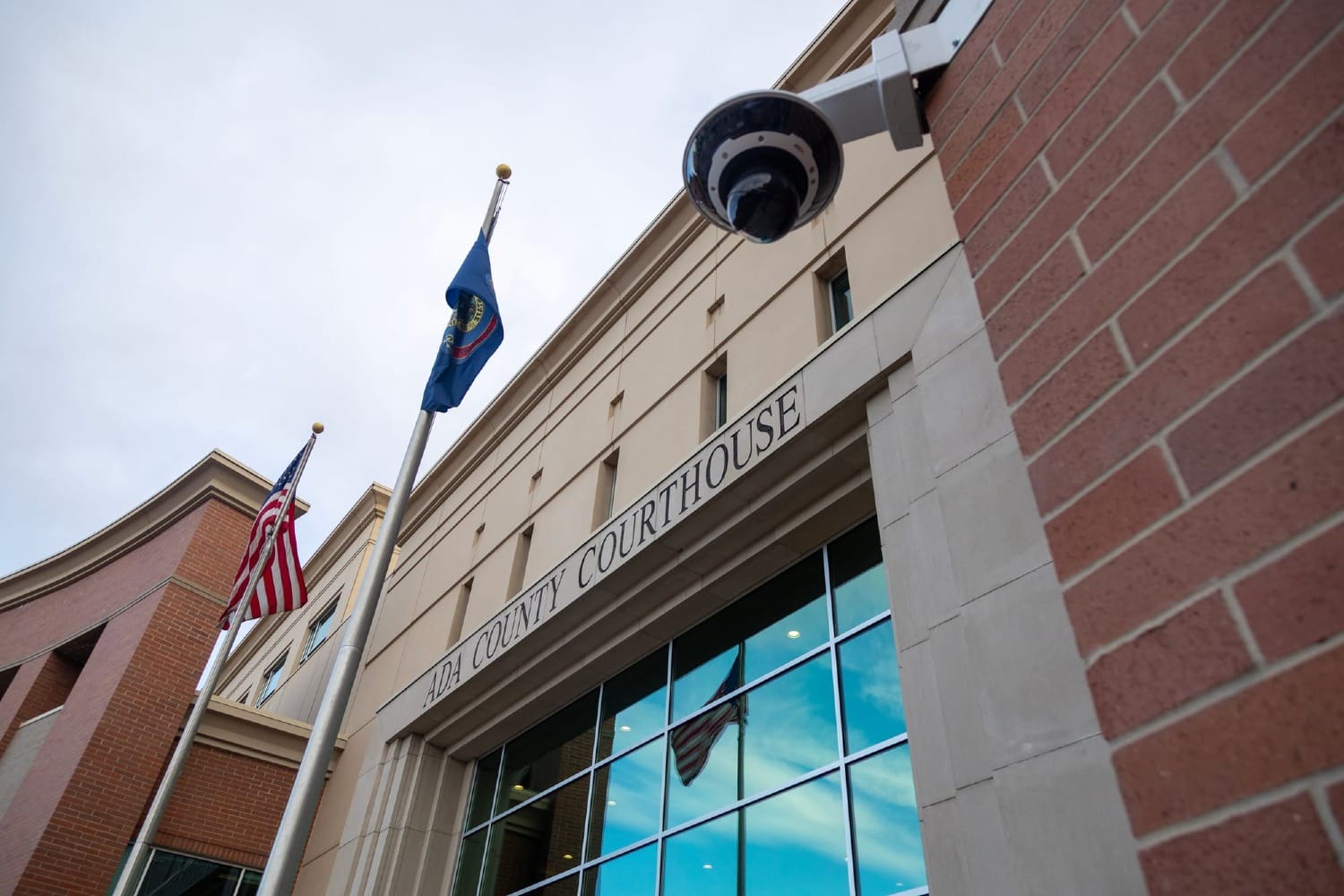 The Ada County prosecutor’s office declined to charge Blas Covarrubias for allegedly sexually assaulting two inmates at South Idaho Correctional Institution. (Kyle Green/InvestigateWest)
Michele told InvestigateWest that she initially did not report Covarrubias for fear of retaliation. But the following year in 2024, allegations against Covarrubias arose during another investigation conducted by the Department of Correction’s Special Investigations Unit, prompting them to question Michele, according to investigative records. When investigators questioned Michele about whether she ever had physical contact with prison staff, she asked if she could speak to investigators at a later date. They agreed.
On June 13, 2024, more than six months after Covarrubias allegedly assaulted Michele, another woman who was locked up with Michele reported to case managers that Covarrubias had assaulted an inmate in the break room but did not name Michele, according to reports filed by those case managers. The woman also told them that Covarrubias had sex with a second inmate who worked for Covarrubias sorting and distributing incoming mail and commissary items. The woman said Covarrubias was assaulting other inmates, too, but they were afraid to speak up. Two weeks later, Michele told the case managers what happened to her, and they filed another report warning prison leadership of the accusations.
The Department of Correction launched an investigation into Covarrubias on June 20, but he wasn’t put on leave until 10 days later. By that point, complaints had been filed accusing Covarrubias of sexually assaulting four women.
And there was another officer who was also accused of committing sexual misconduct, the case managers learned. He supervised inmate workers who performed landscaping jobs, the other inmate told them. His name was Tillema.
‘I was raped by their staff’
Also in June 2024, Tillema began grooming Michele, she told an investigator months later.
Tillema was Michele’s boss at a worksite where she and other inmates trimmed trees, mowed and performed other landscaping duties. Michele’s mental health was improving, and this job gave her purpose, she said. Tillema took an interest in Michele, assigning her “special projects” like clearing tree limbs with a chainsaw. He told her she had the body of a model. He listened and empathized when she told him about the guilt she carried for the man she killed while driving drunk. Tillema gifted her candy, energy drinks and sunglasses, and other inmates began complaining about her special treatment, Michele told the investigator.
But Michele didn’t tell the investigator everything. Still fearing retaliation from prison staff and other inmates, Michele did not share what she later alleged in an interview with InvestigateWest: that Tillema started making excuses to touch her, like saying he was protecting her “from getting hurt by the chain saw.” That one day, he put his hands down her pants and that soon after, she was performing oral sex on him. She said that the abuse spanned from July to September 2024.
Even without her own account, Michele felt investigators had enough evidence to hold Tillema accountable.
“They knew we were alone in the office and that sexual abuse likely occurred,” Michele wrote to an InvestigateWest reporter. “They didn’t send me to medical to get checked out. They didn’t have a clinician come and talk to me. NOTHING.”
More than a week later, when a prison investigator asked if Tillema had ever touched her, Michele denied it.
“I was raped by their staff,” Michele wrote to InvestigateWest. “Why would I feel safe talking to the same people that abused me???”
There were no cameras in the secluded area of Gowen Field Air Force Base where it all happened. But there was other evidence that Tillema sexually abused Michele, including one witness who reported it months earlier and another who filed a complaint after seeing Tillema receive oral sex from Michele at the base.
Sexual abuse reports provided by the Department of Correction show that after Tillema was reported for sexual misconduct in June 2024, he was accused of another incident on July 11. The Department of Correction withheld the details of those complaints. Tillema remained on duty. A third report of sexual abuse was lodged against Tillema on Sept. 4, 2024, accusing him of a “personal relationship” with an inmate. He was removed from his position, and an investigation was launched.
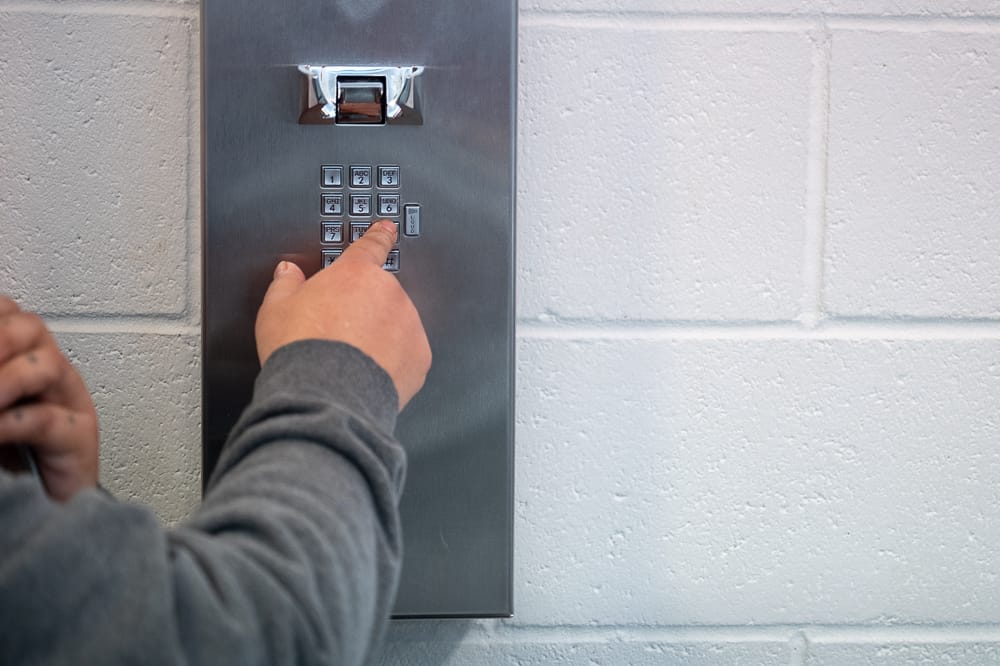 Michele told an ex-boyfriend that South Idaho Correctional Institution correctional officer Justin Tillema sexually assaulted her over the phone, like the one pictured here. Prison phone calls are monitored by staff. (Whitney Bryen/InvestigateWest)
When the Department of Correction closed the investigation on Dec. 5 of that year, they marked the allegations against Tillema “unsubstantiated.” The investigation had not produced enough evidence to determine whether or not the abuse occurred.
On Christmas night in a series of tearful phone calls, Michele told an ex-boyfriend who was out on parole about the abuse and said she was scared. The following day, her ex-boyfriend filed a complaint accusing Covarrubias and Tillema of sexual abuse with the Department of Correction’s Prison Rape Elimination Act coordinator, who is responsible for ensuring Idaho prisons comply with federal standards designed to protect inmates from sexual harassment and abuse. Department of Correction investigators had access to those phone calls but the files provided to InvestigateWest do not say whether they were reviewed.
In January 2025, the South Idaho Correctional Institution’s warden at the time, Noel Barlow-Hust, and two deputy wardens conducted an internal review of one of the incidents. No changes were needed to better prevent, detect or respond to sexual abuse, they determined, according to a report submitted to the Prison Rape Elimination Act coordinator.
Michele’s Feb. 1 e-mail disclosing her abuse to an InvestigateWest journalist was initially blocked by the prison. All inmate messages and calls are monitored and controlled by staff. After Michele asked staff why it wasn’t sent, the message was released Feb. 6. That same day, the Department of Correction notified Michele that the allegations against Tillema were unsubstantiated, but Tillema was fired anyway, records show.
‘Consistent behavior’
Department of Correction investigator McKenna Sato, who joined the Special Investigations Unit in 2024, interviewed four of Covarrubias’s alleged victims, including Michele. Sato stressed to them that sexual contact between staff and incarcerated women is inherently coercive, and that the women were not to blame for abuse that may have occurred.
“The reason that there isn’t consent is because the person that the (inmate) is consenting with has the ability to affect the (inmate’s) day-to-day life,” Sato explained to Michele. “So while in the moment you feel like you’ve consented … there is that underlying fear, whether you’re conscious of it or not. ‘If I say no, what are the consequences? Will I get fed tomorrow? Will I lose my job? Will I get moved? Will I have a target on my back?’”
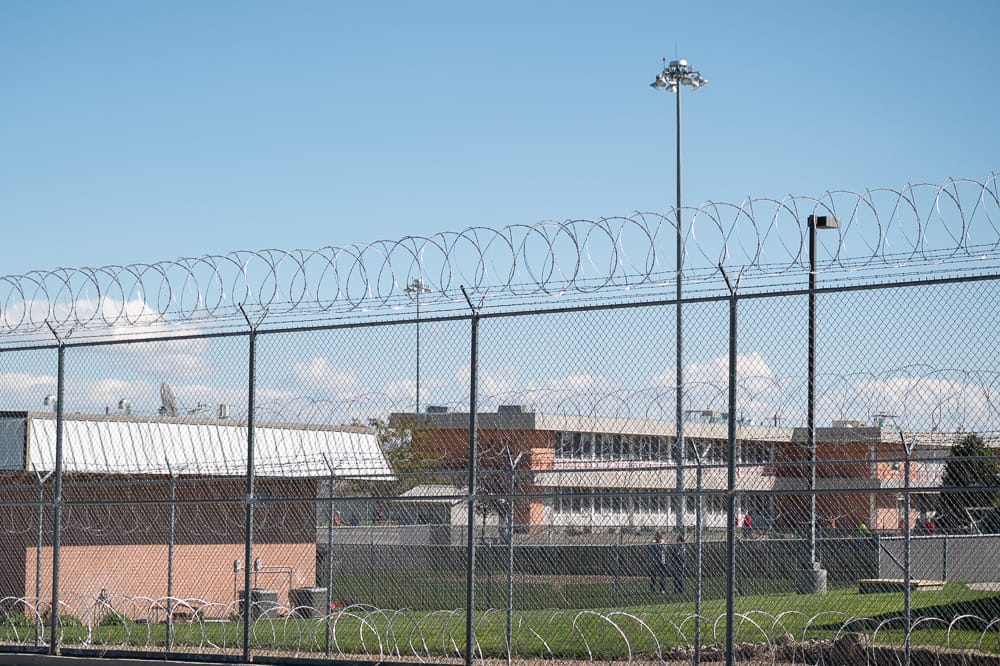 Recent reports by InvestigateWest exposed years of sexual abuse by women’s prison guards across Idaho and the prison system’s failure to stop it. (Whitney Bryen/InvestigateWest)
Of the four women Sato interviewed, two denied having sexual contact with Covarrubias. Another inmate described a pattern of abuse that unfolded over several months. She told Sato that Covarrubias had already been investigated before, but he had been cleared by prison investigators because she denied that it happened, following Covarrubias’s direction to “deny, deny, deny.”
The abuse escalated after the previous investigation was closed, the woman told Sato. Covarrubias instructed her to meet him in a small closet with an ice machine to make out. They later met in a tool shed where Covarrubias put his hand down her pants and touched her genitals. In a staff bathroom, Covarrubias raped her twice, she told Sato.
Michele, who is friends with the other inmate who accused Covarrubias and was aware of the abuse, told Sato, “I feel like he got away with it and was like, ‘Oh here we go.’”
Sato asked, “And that’s when it became consistent behavior?”
Michele confirmed.
When she interviewed Michele, Sato asked about the allegations against Covarrubias and Tillema. Michele repeated the details of Covarrubias’ assault in the break room but denied any sexual contact with Tillema, adding that she didn’t agree with the prison’s policy that inmates cannot consent to sexual activity with prison staff.
Sato identified a fifth alleged victim during one of those interviews, though it is unclear if she was interviewed by the Department of Correction because there is no documentation included in the records provided to InvestigateWest.
The Department of Correction shared its interviews with Covarrubias’s four alleged victims with state police detectives. When police questioned Covarrubias, he denied the allegations of sexual harassment and assault.
State police recommended Covarrubias for prosecution, but Ada County declined without explanation, according to an e-mail obtained by InvestigateWest. After Covarrubias left the Department of Correction, an inmate accused him of having sex with a sixth victim who was released on parole before the report was made.
Records show the allegations against Tillema were not reported to police. State police staff confirmed they did not investigate him for sexual abuse of an inmate.
Michele, who remains incarcerated, lost her job at Gowen Field after Tillema was accused of abusing her. It had been the only thing keeping her from losing herself completely. Michele’s mother says she saw glimpses of her bubbly, go-getter daughter when Michele called to brag that she had learned to use power tools or gotten a promotion. It gave Michele purpose in an otherwise bleak existence.
“That girl, she’s gone,” Michele’s mother said. “She’s lost her light.”
InvestigateWest (investigatewest.org) is an independent news nonprofit dedicated to investigative journalism in the Pacific Northwest. Visit investigatewest.org/newsletters to sign up for weekly updates.
Click here to follow the original article.

 USFSCaribouTarghee
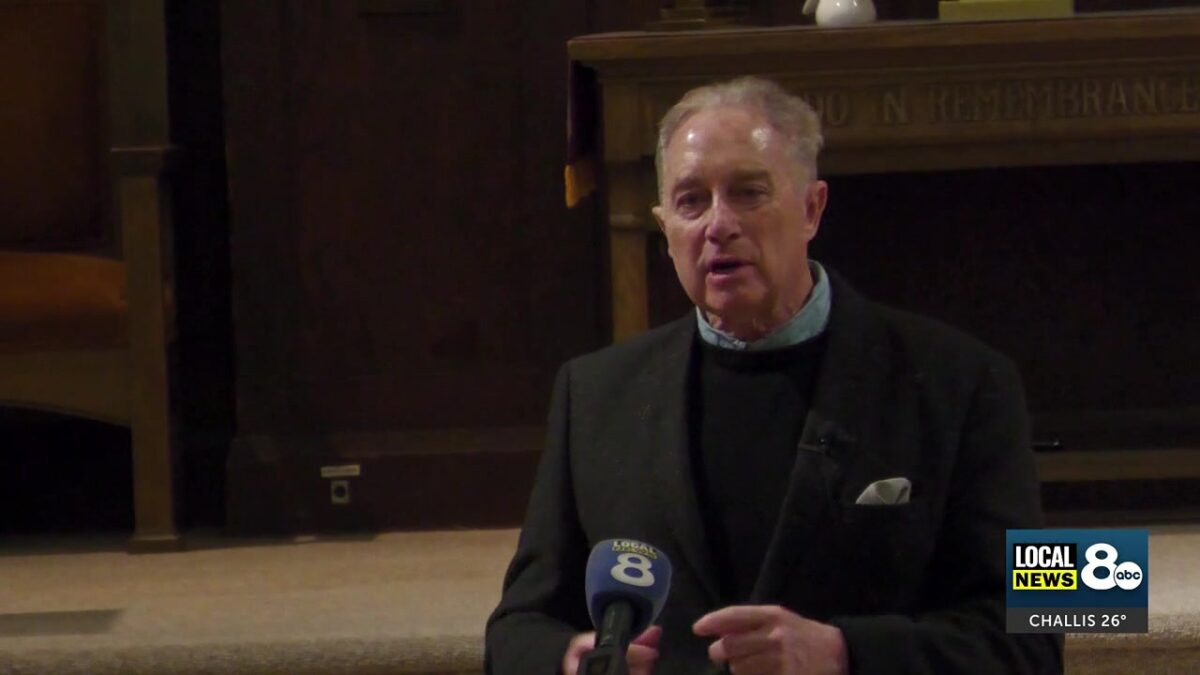
 Dr. David Adler, a constitutional scholar and president of the Alturas Institute, and Nick Contos, a local conservative leader, discuss civil liberties in the United States.