DOJ sues Idaho over alleged failure to turn over voter registration records

Seth Ratliff

BOISE, Idaho (KIFI) – A new legal battle is brewing between the federal government and the state of Idaho. On Wednesday, the U.S. Department of Justice’s Civil Rights Division announced a federal lawsuit against the Gem State, claiming Idaho didn’t hand over full voter registration lists when asked.

Idaho is allegedly among 30 states and the District of Columbia that failed to turn over voter records.

The lawsuit hinges on the Civil Rights Act of 1960. In a DOJ news release Federal prosecutors argued that this legislation grants the U.S. Attorney General broad authority to inspect and analyze election records to ensure compliance with federal law.

“The Justice Department will continue to fulfill its oversight role dutifully, neutrally, and transparently wherever Americans vote in federal elections,” said Assistant Attorney General Harmeet K. Dhillon of the Justice Department’s Civil Rights Division. “Many state election officials, however, are choosing to fight us in court rather than show their work. We will continue to verify that all States are carrying out critical election integrity legal duties.”

While the federal government points to the Civil Rights Act, the U.S. Constitution states that it’s the state’s role, not the federal government’s, to conduct and oversee elections. 

Voter records can include sensitive information like driver’s license numbers and partial social security numbers.

In a statement to Idaho News 6 in Boise, the Idaho Secretary of State’s office expressed confidence in their efforts to ensure secure and accessible elections.

“This includes our extensive voter roll maintenance efforts leading into the 2024 Presidential Election with Governor Little’s Only Citizens Can Vote Act. We have worked closely with the Department of Homeland Security to review all registered voters in Idaho to guarantee that only citizens vote in our elections. As previously reported, out of over 1 million registered voters, this work led to the identification of 11 non-citizens who have been investigated and referred to the Department of Justice for prosecution. Idahoans have confidence in how we run our elections. The county clerks and I are committed to ensuring that confidence continues into this year’s mid-term elections. We encourage Idahoans to visit VoteIdaho.gov to learn more about our efforts on security, to update their registration, and find their voting information. With everything going on, it is a great reminder of the importance of voting.”

Click here to follow the original article.

Limited dual credit classes aim to draw East Idaho high schoolers to in-demand careers

Kaeden Lincoln

Originally posted on IdahoEdNews.org on April 1, 2026

By: Kaeden Lincoln

IDAHO FALLS — The College of Eastern Idaho and the Idaho National Laboratory are launching a summer dual-credit program to steer local high schoolers toward careers in STEM.

The Summer STEM Bridge Program aims to connect students with the region’s most in-demand fields, like energy, cybersecurity and engineering, according to a CEI press release.

Enrollees will take Fundamentals of Network Security, a college math class and go on two field trips at INL facilities. The program offers five to six free credits, but seats are limited.

High school sophomores, juniors and graduating seniors can enroll.

The in-person program will run from June 2 to July 23 at CEI’s campus in Idaho Falls.

The program is the first for CEI’s new campus-based Battelle Energy Alliance Applied STEM Institute building.

The program is part of a broader push to help Idaho high schoolers earn free college credits through programs like Advanced Opportunities, which provides scholarships to pay for students’ dual-credit classes.

The college will host an information session for students and parents at 7 p.m., April 13, on the CEI campus.

Students can sign up on CEI’s website.

Click here to follow the original article.

Seven arrested in early morning Pocatello SWAT raid in ongoing narcotics investigation

Bailee Shaw

POCATELLO, Idaho (KIFI) — Seven people are behind bars today after Pocatello police executed a high-risk SWAT raid early this morning.

The Pocatello police department tactical team served a high-risk search warrant in the 1100 block of East Clark Street as part of an ongoing narcotics investigation with the Idaho State Police and the Bannock County Sheriff’s Office.

Authorities say the warrant was served without incident, and all seven suspects were booked into the Bannock County jail. In an email, police confirmed there is no threat to the public.

Police haven’t released names or charges yet.

Local News 8 is closely monitoring this developing story and will bring you updates as soon as they become available.

Click here to follow the original article.
Rigby man killed in early-morning head-on rollover crash on I-15

Bailee Shaw

UPDATE:

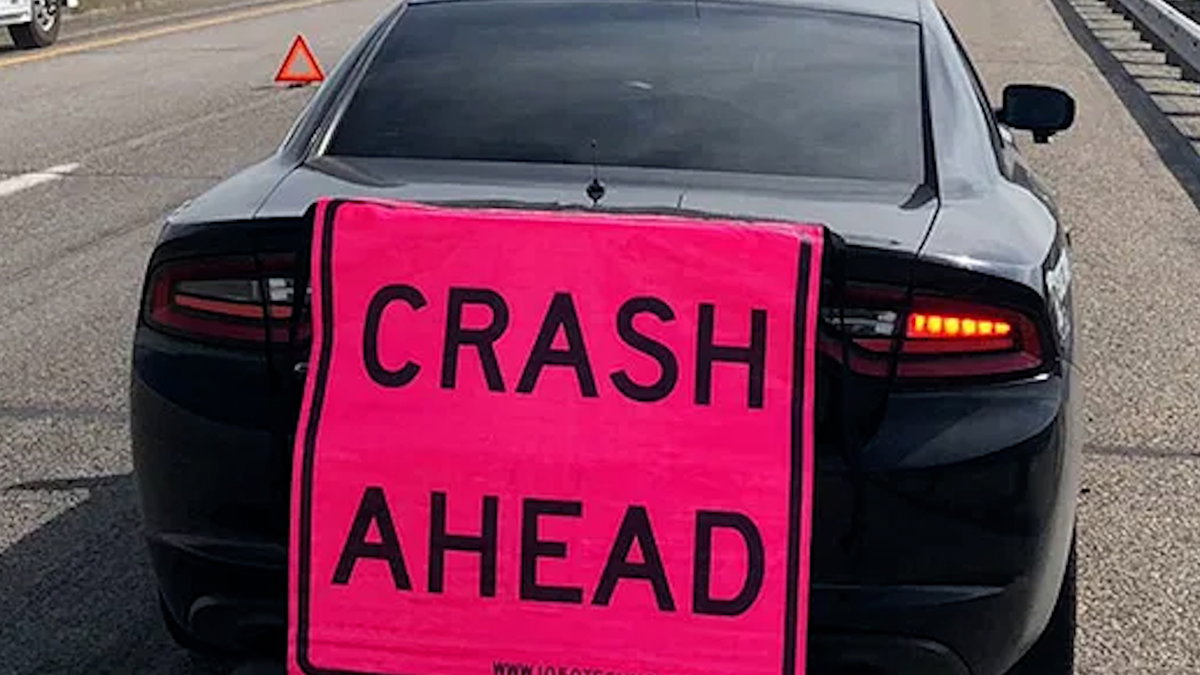
IDAHO FALLS, Idaho (KIFI) — A head-on rollover crash on I-15 has claimed the life of a 39-year-old Rigby man early Thursday morning. The accident, which took place near Exit 118 (Pancheri Drive) around 4:14 AM, paralyzed southbound traffic for nearly five hours.

According to the Idaho State Police (ISP), the 39-year-old victim was traveling southbound in a 2014 Chrysler Town & Country. At the same time, a 2026 Chevrolet Traverse, driven by a 65-year-old man also from Rigby, was traveling the wrong way—heading north in the southbound lanes.

The Chevy hit the Chrysler head-on, causing a rollover. Despite both drivers wearing their seatbelts, ISP says the 39-year-old driver died of his injuries at the scene.

The crash is still under investigation by the Idaho State Police.

ORIGINAL:

IDAHO FALLS, Idaho (KIFI) — A two-vehicle rollover crash on I-15 has claimed at least one life today. The accident, which took place near Exit 118 (Pancheri Dr.) around 4:14 AM has led to a heavy emergency response.

Traffic on Southbound I-15 at Exit 118 is being diverted onto Broadway. Both on-ramps from Broadway to southbound I-15 are closed.

The Idaho State Police (ISP) is leading the investigation into the cause of the crash. Idaho Falls Police is asking drivers to avoid the area and expect delays.

This is a developing story. Local News 8 will continue to monitor the situation and provide more information as it becomes available from the Idaho State Police. For updates on traffic and road closures, click HERE.

Click here to follow the original article.
Lunar liftoff: Artemis program boosted by ISU researchers at Craters of the Moon

David Pace

ARCO, Idaho (KIFI) – As millions of eyes watched the take-off of NASA’s first manned space flight around the moon in more than 50 years, an Idaho State University (ISU) scientist and National Park Ranger celebrated in awe at the Craters of the Moon Visitor’s Center.

ISU scientists researching at Craters of the Moon National Monument played a critical role in the development of the Artemis program.

“We are so close to being able to send humans to the surface of the moon for the first time since the early 70s,” said Shannon Kobs Nawotniak, a NASA-funded researcher and ISU Geosciences Department Chair. “This is the first crewed flight for Artemis. The Artemis I was an uncrewed, test run. Now we’ve got Artemis Two. It’s going to have four astronauts that are going to go around the moon.”

The flight will be the first human orbit of the moon since Apollo 17 landed on lunar soil in 1972.

“They’re going to be looking for impact flashes on the far side of the moon, where we don’t really have a view otherwise,” she explained.

NASA is aiming to land a crewed mission on the moon in 2028.

“Artemis II is going to be another sort of test bed for some of the robotics,” Kobs Nawotniak said. “That was a decision that came in February preparing for Artemis IV – sending humans to the South Pole of the moon, where we’ve got areas where we think we even have water deposits in permanently shadowed craters at the South Pole.”

Craters of the Moon National Monument in east Idaho played a vital role in NASA’s research.

“Craters of the Moon is such a unique environment,” said Craters of the Moon National Monument Chief of Interpretation and Education Michael Irving. “It’s about 750,000 acres. That’s about 1,200 square miles of just lava that is out here in the middle of the Idaho desert.”

NASA’s Lunar Test Bed in Idaho

Idaho’s famous national monument played a critical role in NASA training for Apollo 14.

Dr. Kobs Nawotniak and her team have continued NASA research at the location since 2014.

“We’ve now more than a decade of continuous research out here with NASA to be able to use this as a test bed for the moon, Mars and beyond,” Kobs Nawotniak said.

The rock composition at Craters of the Moon closely resembles the geology of the moon.

“Lavas that we have at Craters of the Moon are chemically really similar to the lavas and volcanoes that we have on the moon,” she said. “I don’t think people realize how similar that is, and how cool it is that we have this right here in our backyard that we can study things here to better understand the features we have on the moon.”

She says that Idaho and its unique environment are vital to understand what is happening on the moon.

“We can practice here, so that way we can be more efficient and effective for the work we do on the moon,” Kobs Nawotniak said. “[We’ll] be able to make sure we get the best possible research out of what we’re going to get from Artemis.”

Local News 8 will follow up with additional coverage about her research in days ahead.

ISU Geosciences Professor Shannon Kobs Nawotniak’s research directly contributed to the Artemis II mission.

Click here to follow the original article.
Pocatello Looking at Future of University Area Neighborhoods

Dylan Carder

POCATELLO, Idaho (KIFI)- The city of Pocatello is working on developing a 10-year plan for the residential area within the University area. That includes the Bonneville, Historic University, and Upper University neighborhoods near the campus of Idaho State University.

Jim Anglesey is the long-term planner for the city of Pocatello. He says the city wants the citizens of the Gate City to be a part of this process.

“We want to know what’s in your neighborhood. We want to know what’s going right, what you’d like to improve, and what the city should focus on as we, look towards ten, 20 years into the future. What do you want your neighborhood to be?” 

The University Area Plan is part of the overall 2040 comprehensive plan. It emphasizes communities that are authentic, affordable, and reflective of the city’s history. The goal is to create neighborhoods that are complete and unique, offering a strong sense of identify while remaining accessible to residents of different backgrounds and income levels.

The University Area Plan is intended to establish a shared vision for these three neighborhoods and guide future decisions related to development, affordable housing, transportation options, public amenities, and other priorities growth.

Anglesey says these neighborhoods are unique because of their proximity and connection to Idaho State University.

“Those are strong ties that we want to make sure that we preserve as the city grows. We want to protect that heritage, but also find ways that we can encourage, people to live here as well.” 

An open house was held at the Senior Activity Center on Wednesday, April 1. For those who didn’t make it, there is still a chance to have your say.

There is currently an online survey where people can identify which of the three neighborhoods they live in and then give feedback on what they value most where they live and what improvements, updates, and amenities the would like to see. The survey will run until the end of April.

People can also learn more about the plan and give their opinion at the city offices. Once the data is collected, the city will release a draft of the plan for citizens to view and to give comment.

Click here to follow the original article.

ISU President Wagner Delivers State of the University Address

Hadley Bodell

POCATELLO, Idaho (KIFI) – Idaho State University President Robert Wagner delivered the State of the University address this afternoon at Frazier Hall. Students, faculty and staff from the university attended the speech.

Coming off of a stressful Fall semester, the president didn’t shy away from mentioning the challenges ISU has been through in the last several months.

“We have faced budget reductions, restructuring, job loss and changes that touch nearly every corner of this university,” Wagner said. “For some, this can feel like a shift in professional or institutional identity. Certainly, ISU is evolving, adapting and changing in this dynamic landscape.”

Choosing to hold the State of the University Address in Frazier Hall was purposeful. It’s the oldest building on the campus, standing as a pillar of resilience through the test of time. President Wagner said it’s a reflection of the journey and ability to adapt that ISU has shown since 1901.

“This building has seen our institution face recessions, wars and conflicts, depressions, enrollment shifts, global pandemics, political change and a myriad of uncertainty,” Wagner said. “In the midst of all these changes, however, departments and colleges were created, disbanded, reorganized, and restructed as the institutions in need of the state changed.”

One thing is clear: ISU has endured changes before, and change does not equate crisis. While the administration endured the pain of letting employees go earlier this year and reworking the budget according to statewide cuts, the mission of the university remains a top priority.

Last semester, President Wagner revealed the Bold Path Foward initiative, a plan for keeping the university united through uncertainty with shared goals. Today, he explained a new framework for the future of ISU, “The Contract for Idaho.”

“The contract is not a response to change. It’s a declaration of purpose and impact. It’s our public promise to the people we serve, and will continue to serve for another 125 years,” Wagner said. “I hope that each of you here will see the valuable role you play in at least one of these areas.”

The following are the ten promises included in the Contract for Idaho.

We Will Train Idaho’s Workforce

We Will Keep College Accessible and Affordable

We Will Support Students for Success

We Will Expand Medical Education in Idaho

We Will Strengthen Rural Idaho

We Will Power Idaho’s Energy Future

We Will Partner, Not Compete

We Will Strengthen Idaho’s Economy

We Will Be Accountable and Transparent

We Will Lead with Integrity, Service and Civic-Mindedness

President Wagner asserted that everything begins here, at ISU. The root of the university is its purpose in helping students obtain an education that transforms their lives and benefits many of Idaho’s industries.

The president also shared statistics which reflect the success of Idaho State over the last year. Undergraduate enrollment is at its highest level since 2016.

“This enrollment growth supports Idaho’s workforce needs. In 2025, Idaho State University awarded more than 2,000 degrees in certificates in high demand fields such as health professions, business, education, engineering, computer science and career and technical education,” Wagner said.

ISU’s administration is also proud to announce that undergraduate tuition and fees are 22% lower than peer Idaho institutions. At the same time, in 2025 alone, they awarded $52.8 million in scholarships, discounts and waivers for students.

“Our job is not simply to admit students,” Wagner assured. “Our job is to walk with them across the finish line and learn of their impact within our growing family of Bengal alumni.”

President Wagner said the final pillar of the Contract for Idaho underscores all the others. Integrity at the university means making difficult decisions when necessary, and remaining transparent about those choices. Service means remembering who the university exists to serve, and succeeding with civic-mindedness means to model respectful engagement during moments of disagreement.

“These traits are reflected in everything we do from teaching, research, creative works, to keeping our grounds and facilities clean, serving in our dining halls, advising and supporting our students and employees in many aspects of their busy lives, in times of change,” he said. “Culture matters. We must continue fostering integriy and community inclusivity, teamwork, shared responsibility and learning.”

The address today ensured the audience and community that ISU is focused on reinforcing alignment with their mission and the long-term strategic plan. The Contract for Idaho is not only rhetoric, but a reality the university and its affiliates aim to live by in the years to come.

“You all are making a difference in making this contract a reality for the state of Idaho, and I am so proud to do it with you,” Wagner said.

Click here to follow the original article.

USDA to move Forest Service Headquarters to Salt Lake City

News Team

SALT LAKE, Utah (KIFI) — In a landmark shift for federal land management, the U.S. Department of Agriculture (USDA) announced Tuesday that the Forest Service will move its national headquarters from Washington, D.C., to Salt Lake City, Utah.

The USDA stated the move aims to place agency leadership closer to the forests and communities they oversee, especially in the West, where nearly 90% of Forest Service lands are located.

The move is a centerpiece of the administration’s broader effort to decentralize federal agencies. USDA Secretary Brooke L. Rollins emphasized that the relocation is essential to the agency’s core mission.

“Moving the Forest Service closer to the forests we manage is an essential action that will improve our core mission while saving taxpayer dollars and boosting employee recruitment,” Rollins said.

Utah leaders call it a big win for the state and say it will boost jobs and speed up decisions on issues like fire management and forest health.

“This isn’t symbolic. It means better, faster decisions on the ground,” said Utah Governor Spencer Cox. “Everyone who depends on our public lands, from hikers and campers to ranchers and timber producers, will benefit. Moving away from a regional model to a more state-focused approach strengthens federalism.”

While the move is celebrated in the West, critics warn the relocation could strip the agency of experienced staff unwilling to move and hamper its access to Congressional leadership and the appropriations process, potentially impacting long-term funding.

The USDA expects the relocation to be fully complete by Summer 2027.

Click here to follow the original article.

Idaho’s Medical Marijuana debate: Voters push for medical access as lawmakers dig in

Par Kermani

IDAHO FALLS, Idaho (KIFI) — A renewed push to legalize medical Marijuana in Idaho is gaining traction — but it is also facing pushback from lawmakers at the statehouse. A recent legislative resolution outlines concerns with legalization, while supporters work to get the issue on the ballot.

The Idaho Legislature recently introduced Senate Concurrent Resolution 127. It’s a formal “no” from the Statehouse, claiming that legalization in other states has led to “increased cartel activity, human trafficking, and crime.”

Advocates, however, argue that the legislature is ignoring the will of the people.

“For years, Idahoans have tried to engage the legislature in a serious conversation about medical cannabis access,” says Amanda Watson of the Natural Medicine Alliance. “Those efforts resulted in no action. Our polling shows strong support across the state. The claims in the resolution pertain to illegal practices that are not relevant to the lawful framework proposed in our initiative.”

For many Idahoans dealing with chronic illness or mental health struggles, the debate isn’t political—it’s personal. Layne Bowen, who lives with bipolar disorder, says traditional pharmaceuticals failed him for years.

“I spent years on nine different antidepressants and various anxiety medications, all of which led to severely bad outcomes,” Bowen shared. “I want to know: if this is proven to work for me, what is the answer? If we don’t legalize the one thing that works, what are people like me supposed to do?”

Concerns Over Regulation and Scale

But others see a grim reality beneath the surface. Opponents of the initiative, such as Victor Miller, argue that the proposed framework is far too broad and could lead to de facto recreational use. Miller points to the high possession limits and the variety of conditions that qualify for a card as primary red flags.

“You can get up to a quarter pound of smokable marijuana every month. That’s 240 joints, eight joints a day. And you can also alternatively get 20g of total THC to vape, which is about 25 cartridges at 80% pure THC. Or you can get 2000 tablets chewables pills per month,” said Miller. “Because you get the pills, they’re only allowed to be ten milligrams, and you’re allowed to get 20g. That just sounds crazy to me. And then you can have 12 marijuana farms, eventually 36 dispensaries, and even they will tell you they expect that they will only take in about $3.9 million of net money to the state. That’s .00 7% of the government’s $5.6 billion budget.”

The “Geographic Island”

With every neighboring state except Wyoming now offering some form of legal access, Idaho remains a geographic outlier in the Mountain West.

The fate of the policy may rest with the people. If the Natural Medicine Alliance gathers enough signatures, the decision will move from the halls of the Capitol to the ballot box this November, leaving Idaho voters to decide.

Click here to follow the original article.

New tax breaks for Idaho: How the ‘One Big Beautiful Bill’ has changed the 2025 Tax Season

Kaelyn Blessinger

IDAHO FALLS, Idaho (KIFI) — The deadline for the 2025 tax season is April 15th, and with the One Big Beautiful Bill Act passing last July, many Idahoans could be entitled to new deductions.

“The main change is back in July 2025. The big Beautiful bill included some new deductions and included overtime to the premium portion of overtime being, nontaxable tips,” Charles Brooks, the district manager for the 7th district Tax Aide, explained. “The senior deduction is probably the one with the most impact for the people we prepared returns for. And then there was another one for new car interest. Can’t be pre-owned cars. And that is deductible.”

These new deductions include

No tax on overtime

Senior tax deduction

New vehicle interest deduction

Tipped worker deduction

State and Local tax deduction cap

No tax on overtime means workers can deduct the extra pay they made on overtime. Up to $12,500 for individuals. Meanwhile, the Senior tax deduction gives seniors an additional $6,000 in tax deductions.

“It has nothing to do with whether they have Social Security or not,” Brooks said, “But anybody that had, or over 65, is entitled to that $6,000 additional deduction. So married filing, couples filing jointly. Couples got 12, $12,000 in deduction.”

New vehicle interest deduction means if you plan to take out a loan on a U.S.-made car, you can deduct up to $10,000 of the interest you pay on that loan.

Tipped worker deduction means workers who earn tips can deduct up to $25,000 from their taxable tip income. The State and Local tax deduction cap is $20,000 for individuals, potentially lowering your federal tax bill.

Be sure to file your taxes before the deadline, April 15th.

Click here to follow the original article.