Danielle Mullenix
IDAHO FALLS, Idaho (KIFI) — Some of the most ordinary and overlooked pieces of infrastructure in downtown Idaho Falls are getting a colorful new purpose this fall.
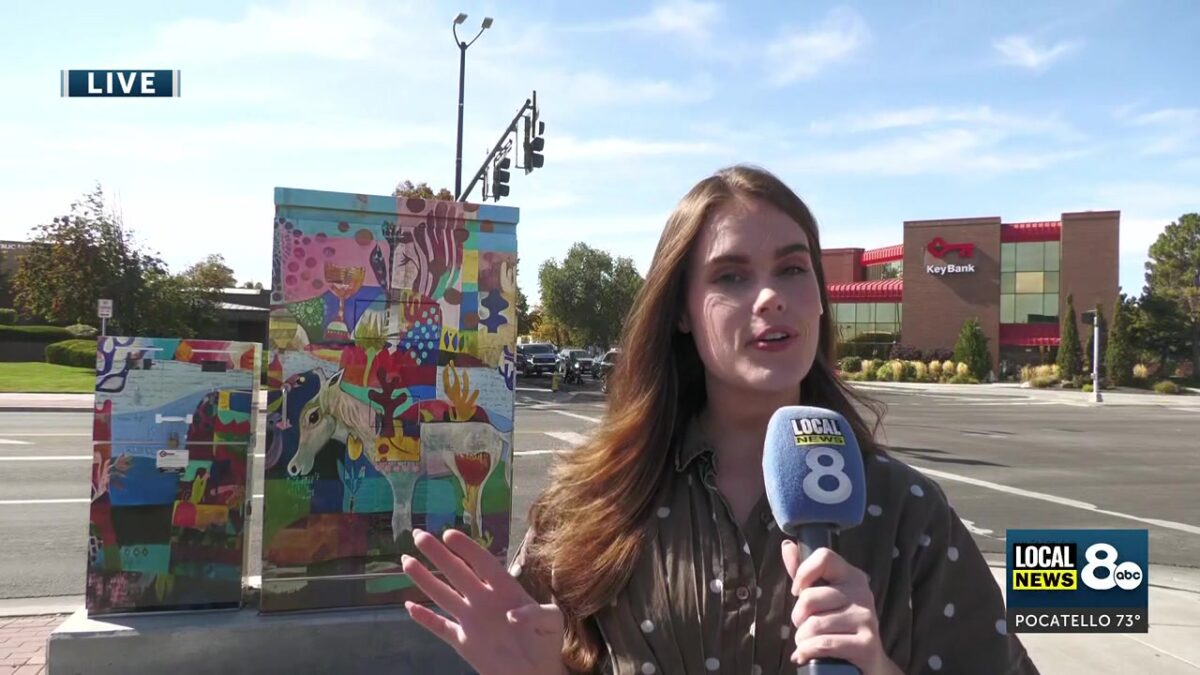
The Idaho Falls Downtown Development Corporation (IFDDC), in partnership with the Greater Idaho Falls Chamber of Commerce, has revived its Downtown Traffic Cabinet Art Program, turning utility cabinets into public art.
The first installation was unveiled at the corner of Broadway and North Capital Avenue on Oct. 1.
Eight traffic cabinets across downtown are expected to be wrapped with original artwork over the coming months, creating what organizers describe as an accessible, beautiful open-air gallery for residents and visitors. What could be better than fall leaves underfoot and a colorful display of local artistry on the horizon?
The program first debuted in 2018, following the popularity of the Idaho Falls Arts Council’s Art You Can Sit On decorative benches (still featured throughout the downtown area and the Riverwalk). The original traffic cabinet wraps quickly became a local favorite.
The program was revitalized for 2026 after the original cabinets were replaced with larger cabinets last year.
Regional artists submitted more than 135 pieces of artwork during the call for art earlier this summer.
Debut art piece kicks off Fall installations
The first two pieces featured in the program are “It Takes a Village” and “Inner Wilderness,” created by mixed-media artist Jenna Layton.

Artist Jenna Layton poses by her artwork now on display at the corner of Broadway and N. Capital Avenue/photo courtesy of IF Downtown Development Corporation
Layton’s artwork is known for its bold colors, textures, and dynamic linework, often incorporating themes of home, memories, and connection.
“These artworks, created in Idaho, grew from years of moving, settling, and wondering where—and what—home really is,” Layton shared. “They explore the relationship between the outer worlds we spend so much time creating and the inner worlds we carry with us, reflecting both the landscape around us and the landscape of where we are, right now.”
Organizers say the selected artwork also reflects Idaho and the surrounding landscape.
Each traffic cabinet will include a QR code that lets people learn more about the featured artist, including their biography, portfolio, and the inspiration behind the artwork.
“I really enjoyed the selection of artists and the diverse perspectives represented,” added Omar Corona-Sarabia, Art Instructor at the College of Eastern Idaho, who assisted in the artwork selection process. “The selected works capture a strong sense of Idaho and its influence, from the landscape and natural environment to more abstract interpretations of place. Together, they reflect the character, spirit, and visual richness of Idaho Falls and the surrounding region beautifully.”
The project is a collaboration between the IFDDC, local artists, Idaho Falls Power, the Idaho Transportation Department, and the IFDDC Public Art Committee.
The Idaho Falls Historic Downtown Foundation provided $7,500 to support the project, while IF Signs is providing the specialized vinyl wrapping and installation.
Broader effort for more local artistry visibility
The IFDDC says the traffic cabinet program is part of its broader effort to bring more public art and creative placemaking to downtown Idaho Falls.
“I love any opportunity to bring more artwork and color downtown, so I’m thrilled that we are bringing back the traffic cabinet program after the old cabinets were removed,” said Georgina Goodlander, Visual Arts Director at the Idaho Falls Arts Council and member of the downtown Public Art Committee. “I am very pleased with the variety of artwork that will be included this time; we have selected some fun and unusual pieces of art.”
Local businesses, organizations, and community members can also sponsor upcoming traffic cabinet installations. Sponsorships help cover the cost of producing, wrapping, and maintaining the artwork.
The Idaho Falls Downtown Development Corporation offers more information about the program and sponsorship opportunities on their Facebook page here or official website here.
Click here to follow the original article.

 Courtesy Photo: Heidemann Family