Gov. Little visits Idaho Falls to champion ‘Enduring Idaho’ Plan

Maile Sipraseuth

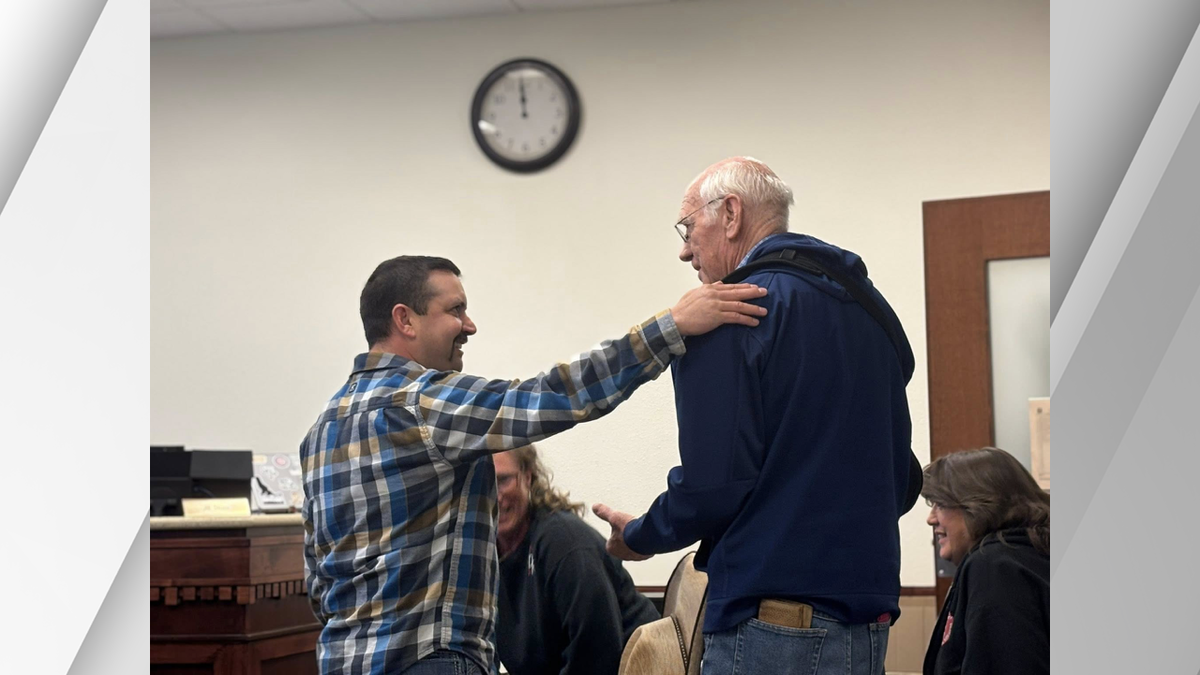
IDAHO FALLS, Idaho (KIFI)– Governor Brad Little outlined his Enduring Idaho plan during a stop in Idaho Falls Monday morning, presenting a budget framework that emphasizes public education funding, workforce development, and investments in rural communities and health care.

Protections for Public Education

Amidst statewide discussions on fiscal tightening, Governor Little reaffirmed his commitment to keeping school funding untouched.

“We asked all the agencies to take a 3% cut, but we exempted K-12 education,” Little said. “That remains a top priority. Between charters and traditional public schools, we have 160 different districts. Every one of them has a little bit of a different challenge.”

The Governor’s remarks follow a directive from the Idaho Joint Finance Appropriations Committee (JFAC) last week, which directed state agencies, including the State Board of Education, to draft plans for additional 1% and 2% cuts for the remainder of fiscal years 2026 and 2027. While other agencies submitted those plans by the January 30th deadline, Superintendent of Public Instruction Debbie Critchfield took a firm stance against the cuts to K-12 education.

In a letter to JFAC co-chairs Sen. C. Scott Grow and Rep. Josh Tanner, Critchfield rejected the proposal for school budget reductions.

“I will not be recommending further cuts to the public schools budget,” Critchfield wrote. “The public schools budget is more than numbers on a spreadsheet. It represents every one of our students, classrooms, teachers, and communities.”

In his visit, Governor Little noted that he’d met with Critchfield twice in the last week and was aware beforehand of her decision. “She gave us a heads-up on what her correspondence was going to be,” stated Little.

Medicaid Woes

The Governor also addressed growing anxieties regarding Medicaid, specifically how the substantial budget cuts have triggered layoffs at facilities like Teton Valley Health Care and eliminated some services for individuals with mental illnesses.

RELATED: Medicaid cuts, declining reimbursements lead to layoffs at Teton Valley Health Care

The loss of those programs was extremely unpopular with some members of Idaho’s law enforcement, who pointed to the ‘real-world public-safety consequences’ when Idahoans in crisis are left without support.

To combat this, Little pointed to federal support and legislative efforts led by U.S. Senator Mike Crapo.

“One of the things we talked a lot about, the one Big Beautiful Bill and some of the things that were in Senator Crapo from right here in this community. The Rural Health Care Transformation grants are going to make a huge difference for rural health care now,” Gov. Little said.

Supporting the workforce, agriculture, and rural communities

Touting his Enduring Idaho plan, Little highlighted provisions related to health care access, with a focus on rural areas where affordability and availability have been ongoing concerns. A cornerstone of the plan involves expanding Idaho’s medical workforce. Little used the growth of local technical training as a blueprint for statewide success.

“When this was Eastern Idaho Technical School District, we were graduating 25 nurses a year. Now we’re at 250, with a goal of 500,” Little said.

The Governor also emphasized that increasing the supply of professionals is the most effective way to lower consumer costs. “You want to lower the cost of health care? You need more nurses, nurse practitioners, and pharmacy techs. We can increase capacity, but you have to have the people and the ability to train them. This is the result of that incredible chemistry between the community college, the community, and the hospitals.”

Over the next five years, the state anticipates receiving nearly $1 billion in federal funding intended to support improvements in rural health care access and affordability.

The funding includes more than $150 million aimed at supporting the rural health care workforce pipeline, as well as an additional $1 million in state funding for graduate medical education. These investments are intended to address physician shortages, particularly in underserved areas.

For a full look at Gov. Little’s press release, click HERE.

Click here to follow the original article.

Driggs Elementary community leads donation drive and GoFundMe for local family after house fire

Seth Ratliff

DRIGGS, Idaho (KIFI) — The Teton County community is rallying around a local couple and their granddaughter after an early morning fire destroyed their home last week.

Donations at Driggs Elementary School have overwhelmed boxes and overflowed a car trunk with kitchen and bathroom essentials, clothing and brand new items.

“We just really care for the student who lost her home in the fire. Her grandmother also used to work here, so we have connection to her. And we know that they’re just a dear family and our heart just goes out to them. And that’s really big trial. And we wanted to support them in whatever way we could,” Driggs Elementary School librarian Patricia Jacoby said.

One of the homeowners, Tony Shupe, says he is still in shock but believes the outpouring support has been overwhelming.

“It’s kind of crazy. The overwhelming feels like the head spinning from the fire and all that. And then now all the donations are starting to come in, and part of this is going, okay, well, where do we put this stuff?” Shupe said, “We never expected this much love from the community and just some of them were just random people that just heard about this story.”

Garage Fire Destroys Nearby Home

The fire broke out last Friday, January 30th, when a nearby garage burst into flames, quickly spreading to the nearby home. While the homeowners, only identified as Jen and Tony, were able to evacuate safely along with their granddaughter, the fire left the house in ruins.

Quick intervention by local firefighters prevented the flames from claiming a second nearby home. However, the initial residence and nearly all the family’s belongings were destroyed.

RELATED: Early morning garage fire heavily damages Teton County home

How to Help: Donation Drive

The Driggs Elementary School community is coming together to support Tony and Jen’s family, that is now starting over. In a Facebook post on the school community page, neighbors outlined a list of items for donation:

Men’s Wear
Pants (40×32), Tops (XL/2XL), Shoes (10.5)

Women’s Wear
Pants (XL), Tops (XL), Shoes (7)

Youth Boy
Pants (32×32), Tops (M/L), Shoes (10.5)

3rd Grade Girl
Pants (Kids XL/Women’s M), Tops (Women’s M), Shoes (5)

Essentials
Hygiene toiletries, kitchen items, beds, linens, and furniture

Items can be dropped off directly at the Driggs Elementary School or Tetonia Elementary School building.

“Thank you, DES community, for always showing up with such generosity and care,” said Jacoby in the post.

GoFundMe

In addition to the donation drive, a GoFundMe organized by neighbor Kelli Grove is raising funds for temporary housing and immediate living expenses.

“Our hearts are heavy as we share the story of a loving grandmother (Jen) and grandfather (Tony) who have lost everything in a sudden house fire,” wrote organizer Kelli Grove. “Their home was not just a house—it was a safe haven where they have been raising and caring for their young granddaughter, providing her with stability, love, and a sense of family.”

“These grandparents have always put family first, stepping up to care for their granddaughter with unwavering love and dedication. Now, they need our help.”

As of noon on February 2, the fundraiser has reached over $2,900 toward its initial $5,000 goal. For more information, click HERE.

Click here to follow the original article.

Intermountain Health team helps young woman live beyond her diagnosis

CNN Newsource

Originally Published: 02 FEB 26 14:05 ET

By Emma Benson

Click here for updates on this story

    SOUTH JORDAN, Utah (KSL) — For most people, food is fuel. But for ShayLee Hunter, survival comes another way.

“At 6 months old, I had my first surgery and had a third of my large intestine removed,” she said. “By the time I was 2, I got my first feeding tube.”

Hunter was born with a rare digestive disorder called chronic intestinal pseudo-obstruction, a condition where the nerves and muscles of the gut don’t work properly. Food and fluid can’t move through her body as they should.

At age 16, she underwent ostomy surgery. Hunter relies entirely on Total Parenteral Nutrition — liquid nutrition delivered directly into her bloodstream through an IV line.

“My life expectancy was not to surpass 20 years old,” said now-27-year-old Hunter. “I was told I probably would never graduate high school, I probably would never get married or have kids.”

But Hunter refused to accept that prognosis.

“I was like, well, I’m gonna show them that they’re wrong,” she said.

For 25 years, one person has helped make that possible: Paul Wolford, a clinical pharmacist with Intermountain Health Home Services.

“We want them to be home and be as independent as possible and live as normal a life as possible,” Wolford said.

Wolford helps manage Hunter’s complex care — overseeing her customized IV nutrition, adjusting prescriptions and working closely with her doctors.

“We’re always in touch,” Wolford said. “We always work with her providers to try and coordinate care and make sure she’s getting the best care possible.”

To Hunter, that consistency has meant everything.

“He’s always right there, ready to answer any questions and just be there for you and his patients,” she said.

Despite decades of weekly calls and constant coordination, the two had never met in person — until Jan. 27.

“In a lot of ways, they sort of become like a second family,” Wolford said.

Hunter said that support has helped her live far beyond what doctors once predicted. She’s earned a college degree, traveled internationally and even competes in pageants to raise awareness for invisible disabilities. She has also worked as a child advocate for a domestic abuse shelter and is currently a chapter coordinator for a nonprofit that preserves the arts.

“I love that they’re willing to explore those options and help me with my dreams,” she said. “This is my life, and I think I should have that option to live it fully — I don’t think just a medication should hinder me from that.”

Hunter recently nominated Wolford for Intermountain Health’s L.OV.E. Award, recognizing exceptional caregivers. He received the award on the same day the two met face-to-face for the first time.

Intermountain Health Homecare Services includes home infusion therapy, infused specialty pharmacy medications and digestive health IV nutrition therapy. Nutrition therapy helps to deliver essential nutrients when a person cannot consume food orally or absorb nutrients through the digestive system. These therapies ensure that the body receives the necessary vitamins, minerals, carbohydrates, proteins and fats needed for energy, growth and healing.

In 2025, Home Services delivered high‑quality care to more than 135,000 patients across eight medical specialty service lines. Nearly 2,000 caregivers, including over 100 providers, traveled 8.5 million miles across five states (Utah, Idaho, Colorado, Montana and Nevada) to meet patients where they are.

Please note: This story was provided to CNN Wire by an affiliate and does not contain original CNN reporting. This content carries a strict local market embargo. If you share the same market as the contributor of this article, you may not use it on any platform.

The-CNN-Wire™ & © 2026 Cable News Network, Inc., a Warner Bros. Discovery Company. All rights reserved.

Click here to follow the original article.
Back to school with Adam Reader, “The Professor of Rock”

Linda Larsen

Blackfoot, ID (KIFI) — The hallways of Snake River High School have seen thousands of students come and go, but few return with a title quite like “Professor.”

Adam Reader isn’t an academic in the traditional sense, but to millions of music fans worldwide, he is the Professor of Rock. Recently, the Professor walked back through the familiar doors of his alma mater to reflect on a journey that didn’t begin in a high-tech recording studio, but in the front seat of his father’s pickup truck.

You can watch our full interview with Adam below:

A Connection Forged in Vinyl

Adam has been passionate about music for as long as he can remember. He reminisced about the times he and his late father Steve Reader would drive around Blackfoot and talk about music.

“We butted heads. We didn’t see eye to eye on many things,” Adam admitted. “But music and baseball, we did. He would quiz me on songs and say, ‘All right, for $100 or for a pop, (or) I’ll buy you a pop if you can name this song, or what year this came out?’ And we started doing these types of things with the oldies stations that were playing these one hit wonders. And I started getting them every time.”

Those drives became a masterclass in storytelling. As the oldies station played one-hit wonders, Adam’s father would share the memories he had attached to the melodies. “What I love most is that he would tell me the stories of his life connected to the song,” Adam said. “That connected me to him.”

The “Useless Information” That Built a Following

Not everyone saw the value in Adam’s obsession early on. He recalls being scolded in class for hiding Rolling Stone magazines inside his textbooks.

“The teacher would call me out in calss and say, ‘This is Adam Reader, the king of useless information. He’ll never use it in his life,’” Adam laughed. Today, he uses that “useless” information every day to fuel a YouTube channel with over 1.5 million subscribers and hundreds of millions of views.

As a teen, Adam spent his weeks transcribing Casey Kasem’s American Top 40 countdown, memorizing every chart-topper. He says it became his window to the world. This dedication eventually led him to interview over 800 musical icons, from Journey and Toto to the Beach Boys—the latter of whom actually gave him his “Professor” moniker.

“They said, You know more about us than we do, you’re like a professor of rock, if there were such a thing,” he recalled.

Meeting a Beatle and Staying Grounded

Despite his massive success, Adam remains a “fan first.” His interviews are built around his personal interactions with the songs he loves, remembering all the moments of our lives tied to the tune of each song.

Even after meeting Ringo Starr—an experience he joked could have been his retirement moment—Adam remains focused on the “checkpoints of our personal histories.”

“I met Ringo, and he gave me a pair of drumsticks. When he said, ‘Adam, Professor of Rock,’ I thought, ‘Okay, I’m done. I can retire now. I’ve met a Beatle,” Adam said. But the mission was far from over.

The Hall of Fame

Today, Adam’s portrait hangs in the Snake River High School Library’s Hall of Fame. While he has won numerous prestigious awards, he says this local recognition means the most to him.

“It means so much to me that the community would recognize me,” Adam said while standing in the school library. “No matter where we go, there’s always that same small town in each of us where we came from, our roots.”

Adam’s success proves that people still crave depth. By returning to his roots at Snake River High School, he’s reminded us that you don’t need a Hollywood zip code to change the cultural conversation. You just need a passion for the truth and perhaps a few good records borrowed from your dad.

From the halls of Snake River High School to international fame, the professor’s mission remains clear, making sure the soundtrack of our lives is never forgotten.

“Music is the common denominator,” he concluded. “It’s the great uniter. No matter what hardships we go through, there’s always music to help us through.”

You can follow Adam Reader on his YouTube channel, Professor of Rock.

Click here to follow the original article.
A prosecutor’s 18-year-old child was there when Charlie Kirk was shot. Is that a conflict of interest?

CNN

Originally Published: 02 FEB 26 04:00 ET

Updated: 02 FEB 26 08:00 ET

By Andi Babineau, CNN

(CNN) — The 22-year-old man charged with the murder of conservative political activist Charlie Kirk is due back court this week in Utah in his bid to get the prosecutor’s office tossed from the case.

Tyler Robinson’s defense team argues the county attorney’s office should be removed from the death penalty case because a deputy prosecutor’s 18-year-old child was at the September speaking engagement at Utah Valley University at which the conservative political activist was killed.

The county attorney’s office has denied any conflict of interest, saying the 18-year-old UVU student “did not see Charlie get shot” and “did not see anyone (in the crowd or elsewhere) with a gun,” court documents show.

On the heels of similar claims in two other high-profile murder cases, here’s what legal experts told CNN about whether the UVU student’s presence at the event where Kirk was slain could pose a conflict of interest:

What constitutes a conflict of interest?

The defense asserts the entire office of County Attorney Jeffrey Gray should be removed because “no effort was made to shield their prosecution of this case from his conflict,” according to a motion to disqualify filed in December.

Robinson’s defense cited Utah’s Code of Judicial Administration, which states attorneys can’t be involved in cases with “a concurrent conflict of interest,” which may include “a personal interest of the lawyer.”

But courts rarely accept conflict of interest arguments, said Paul Cassell, a criminal law professor with the University of Utah’s S.J. Quinney College of Law.

“There’s a presumption of good faith for prosecutors, and more broadly the government, and without some clear showing that there is reason to doubt the fairness of the proceedings, generally the proceedings will move forward,” Cassell said. “The chances of this prevailing based on other similar claims that have been presented are very, very low.”

Still, the court in Provo will weigh whether the parties “are making decisions predicated upon the merits, the facts, the law, and the circumstances only and that there are no outside influences that are going to impact the judgments that are being made,” CNN legal analyst Joey Jackson said.

Could a whole office be disqualified?

The defense has estimated some 3,000 people were at the event, according to a filing with declarations from five witnesses, some of whom described the scene as “pure panic” and “chaotic,” with one disclosing, “I thought I was about to die.”

The prosecutor’s office has said the 18-year-old would not be called as a witness because their knowledge of the incident “is based entirely on hearsay.”

The county attorney’s office, in its opposition to the disqualification motion, said comparing the defense’s witness statements to that of the prosecutor’s child shows “just how unnecessary (the child’s potential testimony) is in the case.”

“It’s ultimately going to turn on: How did the (adult child) witnessing that impact, impair, affect the decision, if at all?” Jackson said. “The issue before the court is whether an actual conflict – not a perceived conflict – has been presented and can be established based upon the chain of events.”

When Robinson’s case resumes Tuesday, Gray will finish his testimony before the defense calls three more witnesses: the prosecutor in question, his adult child and an investigator with the county attorney’s office.

If the judge agrees there is a conflict of interest, the response would more likely be “disqualifying a person who has been tainted by a particular conflict,” rather than an entire office, Cassell said. The latter would be a serious step, he said, because the Utah County Attorney is an elected official.

“If you disqualify an entire office, you’re essentially invalidating the results of the election,” he said.

If it happened, the case would likely be reassigned either to another prosecutor’s office in a neighboring county or to the state Attorney General’s office – all options which come with their own drawbacks.

Salt Lake County has resources similar to Utah County, but unlike Gray, its district attorney is a Democrat, which could impact the approach to the case. Counties to the south are smaller and may not have the resources necessary to prosecute a case of this magnitude, while reassigning it to the Attorney General’s office would remove it from the hands of an elected county official, Cassell said.

Did a conflict of interest play into death penalty pursuit?

The alleged conflict of interest may have influenced the prosecution’s decision to pursue the death penalty so quickly in the case, the defense further implied in its filing.

In Utah, prosecutors have 60 days after an arraignment to file notice of intent to pursue the death penalty against a defendant.

Robinson will not be arraigned until after his preliminary hearing, which is scheduled to begin May 18 and last three days. As such, he has not yet entered pleas to charges including aggravated murder, felony use of a firearm, obstruction of justice and witness tampering.

“The rush to seek death in this case evidences strong emotional reactions” by the county attorney’s office, the motion says.

The county attorney’s office pushed back in its response, saying, “There is nothing unusual or untoward about filing a death penalty notice before a preliminary hearing.”

The evidence and circumstances of the case “justify the death penalty,” and a delay “would have been unnecessarily unsettling and painful to Charlie Kirk’s loved ones and does not promote justice for anyone,” the court filing said.

“There’s going to be all kinds of information, of facts, that are going to come out in the hearing to determine if there was an … actual conflict,” Jackson said. “You want, at the end of the day, fairness in a system that doesn’t take anything into account but the case.”

Other high-profile conflict of interest claims

Though conflict of interest claims can be infrequent in court, they’re not unprecedented.

Attorneys for Luigi Mangione, the 27-year-old man accused of gunning down UnitedHealthcare CEO Brian Thompson on a Manhattan sidewalk in 2024, filed a motion to bar the death penalty in his case over a conflict of interest with US Attorney General Pam Bondi.

Mangione’s attorneys argued Bondi should have recused herself from decision-making in the case because she had previously worked for Ballard Partners, a lobbying firm that represents UnitedHealth Group, before she joined the Trump administration.

The judge in that case ruled Friday that Mangione won’t face the death penalty – but not because of the conflict of interest claim.

She dismissed the federal murder charge he was facing, his only charge carrying the death penalty, because it hinged on his stalking charges being classified as “crimes of violence,” which the judge disagreed with based on Supreme Court precedent.

Brian Kohberger, who pleaded guilty in July to the gruesome stabbing deaths of four University of Idaho students, faced a conflict of interest issue with his own attorney.

His appointed public defender, Anne Taylor, had previously represented the parent of one of the victims, a 2023 court record shows.

Taylor told the court though she represented the former client for roughly three months, she had never met them nor provided any legal advice. The record shows the judge, with Kohberger’s agreement, allowed Taylor to continue representing him.

The-CNN-Wire™ & © 2026 Cable News Network, Inc., a Warner Bros. Discovery Company. All rights reserved.

Click here to follow the original article.

Program cuts, staff cuts, furloughs: Education leaders say budget cuts would cause fallout

Ryan Suppe

Originally posted on IdahoEdNews.org on January 30, 2026

BOISE, Idaho — Another round of budget cuts would force immediate staff cuts and furloughs across Idaho campuses, college and university officials said Friday.

The cuts would lead to larger classes and reduced student support.

And cuts could affect some of higher education’s highest-profile programs. The University of Idaho would have to cut back its longstanding medical school partnership with the University of Washington, a training ground for Idaho doctors since the early 1970s. Boise State University said cuts could affect even its athletics programs — which is bankrolled largely by boosters and ticket and TV revenues.

Colleges and universities — and most state agencies — submitted budget-cutting scenarios to legislative staff Friday. The submissions capped a tumultuous third week of the 2026 legislative session, as key lawmakers cranked up the pressure to cut budgets in 2026 and 2027.

How we got here: a wild week in review

On Monday, legislative staff directed most state agencies to submit budget-cutting plans for 2026 and 2027 — setting a noon Friday deadline. The memos came at the behest of the co-chairs of the powerful Joint Finance-Appropriations Committee: Sen. C. Scott Grow and Rep. Josh Tanner, both R-Eagle.

The Monday memo exempted public schools. But on Wednesday, Grow and Tanner directed the Idaho Department of Education and the state’s Medicaid program to submit similar budget memos, also by noon Friday.

Tanner has said budget cuts are not a done deal. “We want to make sure all the options are on the table as we’re continually working through this,” he told EdNews earlier this week.

Superintendent of Public Instruction Debbie Critchfield speaks to legislative budget-writers on Jan. 21. (Sean Dolan/EdNews)

But the memos have caused consternation around the Statehouse — and drew a sharp response from state superintendent Debbie Critchfield. On Thursday, she said she would refuse to turn in a plan for budget cuts to public schools.

Friday’s submissions

Many of the agency submissions painted a grim short- and long-term budget picture.

State Board of Education Executive Director Jennifer White noted that colleges and universities have already absorbed budget cuts — starting in August, when Gov. Brad Little ordered most state agencies to reduce spending by 3%. For example, Lewis-Clark State College has already cut $400,000 for adjunct faculty positions, which means students “will face larger classes, fewer class options and sections, and reduced or delayed academic support.” Another round of cuts, across the board, and in the final months of the current budget year, ending June 30 — could lead to unintended damages and “are not a substitute for thoughtful reform,” White wrote in a memo Friday.

State Board of Education Executive Director Jennifer White fields a question during a Jan. 20 Joint Finance-Appropriations Committee hearing. (Kevin Richert/Idaho EdNews)

“We have prepared good faith submissions, but do not recommend or support further reductions,” she said.

Little’s budget chief said agencies made a good-faith effort to paint an honest picture. The scenarios track with what Little’s office saw last summer, when it explored cuts of 2%, 4% and 6%.

“There’s a reason we landed at (a) 3% (cut),” Division of Financial Management Administrator Lori Wolff told reporters Friday afternoon.

Beyond the education realm, other agencies said cuts could have even more dire impacts. The Idaho Department of Correction said it would have to furlough staff, with “far-reaching consequences across prison operations.” Idaho State Police furloughs would leave the agency with “fewer personnel for patrol and active threat response.”

Not every agency was required to turn in a cost-cutting plan, however. The directives applied only to agencies that receive state general funds — such as proceeds from sales and income taxes. For example, the Workforce Development Council was exempt. Its $75 million Idaho Launch postsecondary aid program and its staff costs all come from dedicated funds. 

What’s in the memos — and education thumbnails

The state agencies were asked to address a series of budget-cutting scenarios: 1% and 2% cuts in the current budget year, ending June 30, and 1% and 2% cuts in the following budget year, which begins July 1 and runs through June 30, 2027.

Here’s a thumbnail look at key education-related agencies:

Public school support

1% cut, $27.5 million per year

2% cut, $55.1 million per year

EdNews first reported Thursday on Critchfield’s pointed response to JFAC. “The public schools budget is more than numbers on a spreadsheet,” she said in her letter to Grow and Tanner. “It represents every one of our students, classrooms, teachers and communities.”

In an EdNews interview, the Republican Critchfield said she “already fulfilled the assignment” by cutting her $2.7 billion public school support budget before the legislative session. This included pulling back a $50 million special education block grant proposal that would have addressed about half of the state’s special education funding gap.

“I will not be recommending further cuts to the public schools budget,” she wrote Thursday.

Critchfield’s letter does not preclude lawmakers from cutting K-12 funding, the largest of all state budgets.

As a statewide elected official — as opposed to a hired or appointed agency head — Critchfield has more power to push back against legislative orders. And two other statewide officials, Secretary of State Phil McGrane and Attorney General Raúl Labrador, did not cut their office budgets after Gov. Brad Little imposed a 3% budget holdback across most of state government.

Colleges and universities

1% cut, $3.8 million per year

2% cut, $7.7 million per year

Boise State University said it could need to delay up to nine faculty hires “for in-demand career programs” such as engineering, health sciences and education. The university might also need to cut staff salaries in university research support and admissions and student support programs. The university also said the cuts could have an impact on charitable giving. “Donors have expressed frustration about being asked to fund basic university operations.” 

Boise State’s memo also addressed its most public-facing program: athletics. Cutting the athletics budget “undermines our ability to compete nationally,” and could translate into a $100,000 hit on maintaining aging facilities used by 600,000 spectators per year.  

University of Idaho officials say they would need to cut staff this year and next, leading to higher student-t0-teacher ratios and curtailed student support and advising programs. Undergraduate research programs would be cut. Faculty searches in research and ag extension programs would be put on hold. The U of I’s longstanding but controversial partnership with the University of Washington medical school — known as WWAMI, for the member states of Washington, Wyoming. Alaska, Montana and Idaho — could face $300,000 in cuts over two years. “A 2% budget reduction … would necessitate downsizing and reallocation of the (WWAMI) faculty workforce.”

Idaho State University would impose mandatory furloughs this budget year, affecting all employees making more than $60,000 per year. In 2026-27, Idaho State would make most of its cuts through staff reductions and restructuring. “(This) will impact student services and support and planned expansion of high-demand workforce programs,” Idaho State wrote. In 2026-27, Idaho State also would launch a $500,000 early retirement program “for eligible contracted employees.”

Cuts also could “jeopardize” a dental education partnership with Creighton University in Omaha, Neb.

Lewis-Clark State College says it could absorb a 2% this year through one-time savings, from midyear staff retirements. But that option would go away next year, and the college would have to cut five positions permanently. Three of the cuts would directly affect the classroom: a full professor’s position in physical life sciences, an associate professor’s post in English and an instructor’s job in social sciences.

Career-technical education

1% cut, $958,000 per year

2% cut, $1.9 million per year

A 2% budget reduction would force the Division of Career Technical Education to cut two full-time state positions. It would also defund CTE programs and faculty support for both K-12 and higher education, and it would defer training, including for rural and volunteer firefighters.

“Reductions affect students today and weaken Idaho’s long-term economic competitiveness by disrupting Idaho grown talent pipelines, reducing employer readiness, and limiting community stability, particularly in rural areas,” Director Pete Risse and other CTE staffers wrote in a memo to JFAC.

Community colleges

1% cut, $684,000 per year

2% cut, $1.4 million per year

College of Eastern Idaho said it would freeze most vacant positions and eliminate seven “crucial” roles in instruction, student support and student life. CEI also would have to reduce cohorts of students entering “high-demand” programs in medical and technology fields.

College of Southern Idaho said it would eliminate one-full time instructor position. Under a 2% cut, it would also lose about $320,000 in operational funds that cover outreach efforts and pay for supplies in science and medical classes. “Students may be asked to absorb some of those costs in order to successfully complete their programs of study.”

College of Western Idaho said every 1% the state cuts would eliminate funding for 2.25 full-time positions. CWI said it would also delay exemptions in “high-demand” and “high-cost” fields.

North Idaho College said it would enact a partial hiring freeze this year, and would limit travel, including for athletes. Next fiscal year, NIC would implement an “early retirement” program that leaves some positions unfilled while others are filled at a lower salary. “While this reduces personnel costs, it removes experienced and knowledgeable employees whose institutional expertise and knowledge cannot be readily replaced.”  

Health education programs

1% cut, $296,000 per year

2% cut, $590,000 per year

This program, which covers residencies for medical school graduates, is a rare growth area in Little’s budget proposal. He has recommended spending an additional $900,000 this year to add 15 residencies. Cuts this year and next year would undermine existing contracts and threaten the effort to grow the program. Cuts are unsustainable, said Ted Epperly, Moe Hagman and Lisa Nelson of the State Board’s Graduate Medical Education Committee in a memo to board leaders.

“The Legislature has made it clear that developing the health care workforce … (is) key in solving Idaho’s physician workforce problem,” they wrote Thursday. “Cutting funding for this priority simply doesn’t make sense.” 

Idaho Department of Education

1% cut, $120,000 per year

2% cut, $241,000 per year

While Critchfield declined to recommend cuts to the public school support budget, she sent JFAC a plan for cuts to her department, which administers public school funds and enforces rules.

Faced with 1% or 2% cuts, Critchfield proposed reducing funding for two “passthrough” programs: Advanced Opportunities and the Local Innovation School Act.

But she warned that the Trump administration’s plans to dismantle the U.S. Department of Education — which Critchfield supports — could mean the state will have a growing responsibility to distribute federal funding to schools.

“I believe it will require continued state funding for the department and its requirements to fulfill state and federal laws,” she said.

Commission for Libraries

1% cut, $49,700 per year

2% cut, $99,400 per year

Idaho State Librarian Dylan Baker said the commission would hold off on filling two “critical” vacancies — deputy state librarian and library consultant — this budget year to save 2%. Next fiscal year, Baker proposed eliminating two contracts through the state’s Libraries Linking Idaho database.

“This action would directly impact Idahoans by reducing access to statewide online research and information resources used by students, job seekers, educators, and the general public.”

STEM Action Center

1% cut, $34,000 for this year

2% cut, $67,000 for this year

Unlike many state agencies, the STEM Action Center only submitted a plan to cut this year’s budget. Staff savings would cover a 1% cut. But if the cut increases 2%, the center would have to reduce aid for rural students hoping to attend cut would affect science and engineering fairs.

Idaho Public Charter School Commission

1% cut, $2,000 per year

2% cut, $4,000 per year

The small commission, which oversees most of the state’s charter schools, would  “significantly limit travel and apply heightened scrutiny to all travel requests.”

Click here to follow the original article.
From Pocatello to the Grammys: How Jessica E. Jones Found Her Voice

Danielle Mullenix

Pocatello, ID (KIFI) In the world of opera — where careers are built over decades, and recognition is rare — Pocatello native Jessica E. Jones’ Grammy win is a remarkable achievement.

But the real story isn’t just the award.

It’s the journey.

A Voice Born in Idaho

Long before she ever stepped onto a national stage, Jessica E. Jones was singing in Pocatello, Idaho, surrounded by a family that valued music and creativity. With a piano in the house and encouragement at every turn, Jones found her voice early — and never let it go.

Young Jessica E. Jones growing up in Pocatello.

“I was a little mockingbird baby growing up,” Jones said. “I started speaking and singing super early, and I was always making up songs as a child. My parents – lucky me – saw that and wanted to foster and create an opportunity for me to explore that.”

As a teenager, she drove nearly 50 miles after school to Idaho Falls to rehearse for roles with the Idaho Falls Opera theatre, committing herself to an art form few her age even considered. From school choir to community theatre, Jones dove into the world of live performance and never looked back. It wasn’t just a hobby – It was work.

And it was worth it.

It was at the Idaho Falls Opera Theatre where Jones met and began training with the late Kristine Ciesinski, a world-renowned operatic singer and professor at BYU.

Kristine Ciesinski, an international Opera singer and Professor at BYU, also known for her love of piloting and instruction at Teton Aviation.

“She saw something in me, which was really special,” Jones said.

Ciesinski mentored Jones as a young artist and recommended her to the University of Houston for proper training as an operatic singer. After auditioning for the program, Jones was accepted and traded the Idaho mountains for Texas prairies.

Training That Made the Difference

Jones went on to earn both her bachelor’s and master’s degrees in vocal performance from the University of Houston, where her talent quickly stood out. But one of the most pivotal chapters in her career came when she joined the Utah Opera Resident Artist Program.

“I left my hometown at 18, but it’s amazing how many people are just supporting you that you don’t even realize, or watching your career,” Jones said. “I still think that my background and my personality and the way I thought about having an experience with other musicians were formative from my time growing up in Idaho.”

The program pushed her to learn music quickly, perform under pressure, and adapt — skills that would later prove essential.

“It was sort of my dream program to be an apprentice,” Jones said. “I took every opportunity I could with world-class musicians all around me.”

For young opera singers, resident artist programs are a proving ground – long hours, fast turnarounds, and little margin for error. For Jessica E. Jones, it was where preparation met opportunity.

That preparation paid off when Jones joined the Santa Fe Opera.

The Role That Changed Everything

That opportunity arrived at the Santa Fe Opera, where Jones was cast in the world premiere of The (R)evolution of Steve Jobs. She helped create the role of Chrisann Brennan, the mother of Steve Jobs’ first child, originating the character from the ground up.

The performance was recorded, and none of them expected what would come next.

In 2019, the recording won the Grammy Award for Best Opera Recording.

Jones at the 2019 Grammy Awards Ceremony.

Back in Idaho, Jones’ parents streamed the announcement from a parking lot, watching in disbelief as their daughter’s name became part of Grammy history.

“My parents took [the Grammy], and put it on their mantel,” Jones said. “And that’s actually where it still is.”

Jones expressed that her journey from Pocatello to the Grammys was paved by the mentoring she received and the fellowship of artistry back at home.

“When I started receiving all these messages from home, it really tethered me back to Earth,” Jones said. “People say, ‘Oh, I’ve never met anyone from Idaho’, or ‘Oh, people sing there?’ Like we’re somehow different people when we’re not.”

Jones went on to express her sentiment toward the artistic community around Eastern Idaho and how it shaped her story.

“There’s a vibrant community here of artists and musicians and people who just love music and love art,” Jones said. “This is as much their Grammy as it is mine, because we all can take ownership of that.”

More Than an Award

Today, Jessica E. Jones teaches opera to artists in Boise and focuses on the role of a lifetime – being a mother. She has gained an impressive resume performing at opera houses across the country, but she remains deeply connected to her roots. She continues to teach, mentor young singers, and advocate for making the arts accessible to new audiences.

“It doesn’t matter where you’re from, you have to be willing to bet on yourself and to take risks,” Jones said. “You have to put yourself out there. If there is an opportunity in life that interests you, we have a short time on this planet. Go for it.”

Jones’s journey proves that success isn’t just about talent — it’s about persistence, preparation, and believing that your voice matters. World-class talent doesn’t come only from major cities. Sometimes, it starts in small towns, with big dreams — and a voice brave enough to be heard.

Click here to follow the original article.

Kickstart into February with warm temperatures and clear skies

Danielle Mullenix

We are starting off the month of romance with sunny skies and warm temperatures. High pressure will dominate our forecast for the remainder of this first Sunday of February and the foreseeable future. There is some patchy fog still looming around the horizon for the overnight and early morning hours. With this high-pressure system rebounding in from the West, we’ll also see warmer daytime temperatures this upcoming week, with highs climbing into the upper 40s and lower 50s.

AIR STAGNATION ADVISORY IN EFFECT UNTIL NOON MST MONDAY:

WHAT…Poor air quality will continue. This is due to an inversion and stagnant air near the surface, which will continue to trap pollutants.

WHERE…Franklin/Eastern Oneida Region and Lower Snake River Plain.

WHEN…Until noon MST Monday.

IMPACTS…Periods of air stagnation can lead to the buildup of pollutants near the surface.

We can expect partly sunny skies on Sunday, with high temperatures ranging from 45° to 50° across the Snake River Plain. No hazards or weather impacts are expected to reach our region as we close out the weekend. A light north wind blowing in will cause a slight chill. An overall pleasant weekend in the Snake River Plain and mountainous areas. We are going to see above-average temperatures & clear skies into the late week and beyond.

A shortwave of cooler temperatures will move over the area by Monday, bringing a slight chill to our lows and the possibility of flurries in the highlands. Slightly breezy winds will blow throughout the week, bringing a slight chill to the air. We will see a warming trend on Wednesday, quickly heat the area back up, with highs getting into the 50s by the end of next week.

Click here to follow the original article.
Peaceful vigil and pro-ICE protest in Rexburg

Maile Sipraseuth

REXBURG, Idaho (KIFI)– Two demonstrations took place in Rexburg on Saturday, drawing community members to the Madison County Courthouse for both a vigil and a separate rally in support of ICE and Border Patrol.

The vigil began with speeches from the organizers of the event, followed by a moment of silence. Alongside candles, signs criticizing ICE were displayed by demonstrators.

Vigil attendees felt the event brought attention to issues they feel are especially important in eastern Idaho.

“Being in a red state it is most important in a city like Rexburg,” vigil attendee Blaine Sanderson Stevens said. “You can tell in the community that being here, out of anywhere else, is important to people, that there is a community here.”

Another organizer highlighted the importance of people showing up for their community.

“The whole point of our local political party existing is we want to engage civically with our community and help bring attention to issues that are very pressing and important to us. The recent killings of innocent people by ICE agents is obviously one of them,” Chair of the Madison County Idaho Democrats Ethan Sandford said.

Across the street, a separate rally was held in support of ICE and Border Patrol. One supporter said he believes the agency plays a necessary role in national security and law enforcement.

“I can understand where people are coming from protesting ICE, but I think ICE is actually pretty important for this country. I think there is a lot of crime that are going on through these immigrants, and it is causing a lot of issues in America,” attendee Josh Anderson said.

Both protests ended peacefully.

Click here to follow the original article.
Anti-Ice Protests Sparked by Minnesota Fatalities Spread Across Eastern Idaho

Hadley Bodell

POCATELLO, IDAHO FALLS, Idaho (KIFI) – Anti-ICE protests were held in both Pocatello and Idaho Falls today. Hundreds lined the streets of both cities in protest against ICE activity, sparked by the second shooting in Minnesota last weekend.

The Pocatello protest was organized by Southeastern Idaho Citizens for Democracy. Hundreds showed up to protest ICE activity. The protest began at Caldwell Park before protesters walked over to the Bannock County Courthouse.

Local News 8 spoke with protesters about what they would like to see change in the country and why they showed up with their signs today.

“I’m here because, what’s happening right now in our country is messed up,” said Finn, a protester. “All my life in school we’ve been told to be kind, help people, and do what’s right. And we’re not seeing that reflected right now.”

Another protester, Raye, told us she is disgusted by what she sees in the headlines and from the Trump Administration. Many of the signs protesters held today supported immigration and an impeachment of President Trump.

In Idaho Falls, the Young Democrats of Bonneville organized their own protest. It was held at the Broadway Bridge downtown, and over 320 people lined the street.

Miranda, with the organization leading the protest, told us everyone should care about the ICE issues because it could happen to them next. She says we never know when things could escalate.

“I believe sometimes the law enforcement works with ICE and we never know when it could be brought over here locally,” said Miranda. “We need to be ready.”

She added that organizations like the Young Democrats can help people find an avenue to speak out against the issues they care about and do good in their commuities.

In addition to these two protests, a vigil was held at the Madison County Courthouse in Rexburg in honor of Renee Good and Alex Pretti. More details can be found at localnews8.com.

Click here to follow the original article.