Andrew Gillies
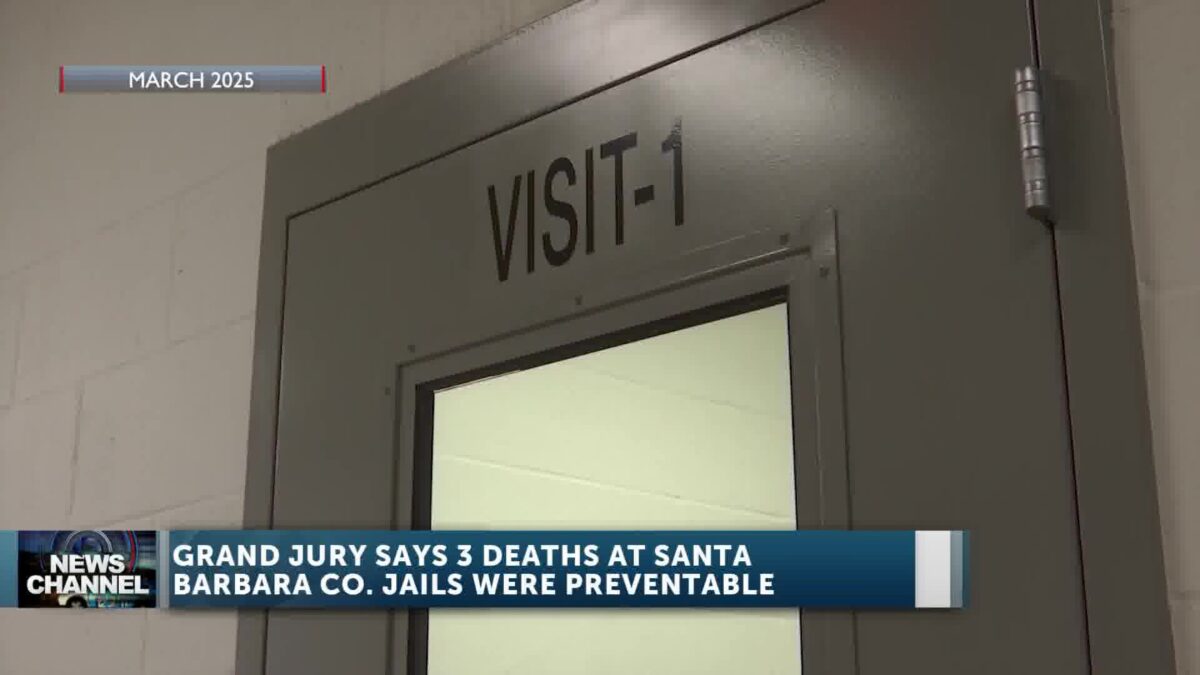
SANTA BARBARA COUNTY, Calif. – On Tuesday, the Santa Barbara County Grand Jury released the results of its investigation into three in-custody deaths at county detention facilities in the past 12 months finding that all three involved preventable situations that resulted in the inmates’ deaths.
The Santa Barbara County Grand Jury is an investigative body made up of local citizens that serve a one-year term and provide assessments and recommendations to local government agencies after their investigations.
You can find a catalogue of final reports and response back to 2011 on its website under the ‘Final Reports & Responses’ tab.
A run down of the previous session’s reports and responses can be found here.
The citizen-led watchdog group has investigated local detention facilities in the past, including previous custody-related deaths, finding an inherent conflict of interest regarding in-custody death investigations in the county.
For example, Your News Channel author noted in this article about an in-custody death’s conclusion that, “Detectives with the Santa Barbara County Sheriff’s Office are conducting multiple investigations into the in-custody death at the Sheriff’s Office-operated facility, including a Coroner investigation [an office within the Santa Barbara County Sheriff’s Office] detail Santa Barbara County Sheriff’s Office.”
This current Grand Jury investigated three in-custody deaths and made recommendations to prevent future deaths at county-operated facilities that are detailed below.
A.A.O
On Aug. 29, 2024, an inmate identified by his initials -A.A.O.- suffered a traumatic brain injury after he fell from standing height onto the linoleum floor of his housing unit seven hours after his initial booking into the Santa Barbara County Northern Branch Jail opened Tuesday’s Grand Jury report.
After 19 days in the hospital following his fall, A.A.O. was pronounced dead.
A.A.O. was suffering from an apparent seizure that may have been induced by alcohol withdrawal, something that the Grand Jury noted can not be conclusively confirmed as his indirect cause of death.
What was confirmed in Tuesday’s Grand Jury report was that custody personnel at the jail were aware of his well-documented history with alcohol abuse from multiple arrests and intake records finding, “deficiencies and limitations relating to the intake screening process and the electronic health record, which ultimately meant that medical staff could not and did not make fully informed decisions regarding AAO’s health needs and risks when he arrived at jail. The Jury further identified a lack of communication regarding inmate health risks an area of concern.”
According to the Grand Jury report, A.A.O. was a Spanish-speaking man who was 40-years-old at the time of his death and had struggled with alcohol use, homelessness, and had been incarcerated multiple times including in 2022, 2023, and 2024.
On Aug. 29, 2024, A.A.O. was arrested by officers with the Santa Maria Police Department on a felony no-bail warrant for a probation violation and told arresting officers that he did not have any medical issues requiring medical attention after he was asked in Spanish detailed the report.
Medical staff completed his medical receiving screening with 40 minutes of his arrival around 12:30 p.m. and an alcohol withdrawal symptoms alert was noted on his previous intake chart, but -through an English-Spanish interpreter on a language line- he denied having any chronic or acute medical problems as part of the 70-question medical intake process explained the Grand Jury report.
A.A.O. did note he was a user of alcohol and denied having experienced withdrawal symptoms and he was cleared around 1:10 p.m. for placement into a holding cell noted the report.
Tuesday’s Grand Jury report stated that the intake medical staff member who conducted A.A.O.’s assessment, “did not communicate any information regarding the patient’s history of alcohol withdrawal, nor did she communicate her finding that the inmate was demonstrating notable signs of anxiety” during the intake process.
Around 7:20 p.m., A.A.O was escorted from a holding cell to another area where he took a shower and was given jail clothing and at 7:45 p.m. he was taken into a booking area to undergo a full-body x-ray scan and it was documented that his eyes appeared glassy and bloodshot detailed the report.
Once deputies completed the search of his body, A.A.O. and another inmate were returned to their assigned housing cells in B-Unit around 7:50 p.m. and within a minute of his arrival, he became unresponsive while standing shared the Grand Jury report.
While a deputy in charge of supervising B-Unit was waiving his hand in front of A.A.O.’s face to get his attention, A.A.O. jolted his right arm upwards, became rigid, fell to the floor and slammed the left-side of his head into the ground and began to seize on the floor as blood poured from his head stated the report.
Within two minutes medical staff began to provide medical aid and A.A.O. was reported as conscious, disorientated, and at times combative before a cervical collar was applied and he was loaded onto a gurney by paramedics around 7:55 p.m. and A.A.O. arrived at the hospital around 8:20 p.m. explained Tuesday’s report.
According to the Grand Jury report, it was revealed during emergency surgery that A.A.O. had severe brain damage from bleeding due to recent head trauma and he spent the last 19 days of his life at Marian Regional Medical Center before dying from complications from his head injury on Sep. 17, 2024.
The Coroner’s report after an autopsy concluded that his death could only have been caused by a brain injury from his fall at the jail and that his fall was caused by a seizure.
Since 2017, Santa Barbara County has contracted with Wellpath for medical and mental health care for incarcerated people in the county and the company staffs jails with Registered Nurses (RN) who are responsible for completing health screenings for those arriving at local detention facilities.
Once completed, those screening forms become part of health records maintained by Wellpath and if a person being processed has previous health records on file, the RN is required to review their medical history detailed the Grand Jury report.
The County’s current (section 10.4) and prior contracts with Wellpath required that contracted employees, “shall maintain a comprehensive and accurate Problem List in each medical record” and a Service Level Agreement outlined in Exhibit H of the County’s current contact with Wellpath identified incomplete master problem lists as an area of concern.
If the contractor fails to reach 90 percent compliance on inmate medical records, it may face financial penalties noted the Grand Jury report.
During a previous incarceration in 2023 following an arrest for public intoxication, A.A.O. was placed under alcohol withdrawal monitoring, prescribed benzodiazepine, underwent routine symptom severity checks, and given vitamins and minerals every day detailed the report.
Additionally, A.A.O. had suffered a head injury during a previous incarceration at the Northern Branch Jail in March of 2024, which the Grand Jury noted would have been sufficient to establish a history of head injury and a potential traumatic brain injury when his medical records were reviewed in August of 2024.
Tuesday’s report concluded that A.A.O. prior intake health records and consistent indications to jail medical staff during his previous incarcerations showed he suffered from delirium tremens as a result of alcohol withdrawal within the last year and had suffered a sufficently notable head injury while in custody.
“The first 72 hours of an inmate’s arrival at jail is a time of particular sensitivity, requiring carefulattention from medical staff and custody staff,” concluded Tuesday’s Grand Jury report. “An incomplete master problem list in the electronic health record, which meant that medical staff could not accurately assess whether AAO needed alcohol withdrawal monitoring or not, encompasses important areas where AAO’s case demonstrates shortcomings in provided medical care at the County’s jails. Two Service Level Agreements in the County’s new contract with Wellpath demonstrate that the County is taking steps to correct these deficiencies. A lack of communication regarding withdrawal risk between medical staff and custody staff, or between their respective information systems, was also identified as an area of concern by the Jury.”
The Grand Jury then detailed a series of recommendations that legally require a response from the Santa Barbara County Board of Supervisors within 90 days and from the Santa Barbara County Sheriff’s Office within 60 days.
C.C.
WARNING: The following report details the death of an inmate from suicide.
On the afternoon of Nov. 13, 2024, an inmate identified as C.C. committed suicide using a wall-mounted telephone cord in a mental health observation cell while incarcerated at the Main Jail stated the Grand Jury report.
Tuesday’s report found, “several systemic problems within the Main Jail limited the staff’s ability to safeguard CC’s well-being, including insufficient numbers of properly equipped mental health observation cells. These issues resulted in a series of breakdowns leading to CC’s placement in an observation cell with a telephone cord, which ultimately resulted in her death. The Grand Jury finds that her suicide could and should have been prevented.”
The Grand Jury report shared that C.C. was a 41-year-old mother from Santa Ynez with a history of significant mental disorders and suicide attempts and was arrested on Nov. 8, 2024.
C.C. was initially pulled over for driving in a recklessly and was arrested after trying to evade law enforcement and using her vehicle as a weapon detailed the Grand Jury report.
A patrol car had conducted a pit maneuver on her vehicle which temporarily stopped her vehicle, but she reversed and collided with an occupied patrol car rendering her unconscious detailed the report.
She was taken to Santa Ynez Valley Cottage Hospital following the collision where she informed hospital staff that she may have been diagnosed with bipolar disorder and hospital staff found her to be at a high risk of suicide stated Tuesday’s Grand Jury report.
The Grand Jury report shared, “She believed she was the devil and must kill herself to save and protect her children.”
On the morning of Nov. 9, she was transferred to Santa Barbara Cottage Hospital for further mental health evaluation and she reported to hospital staff there that she tried to choke herself while visiting deceased relatives at a cemetery earlier that day detailed the Grand Jury report.
A member of the hospital’s mental health staff documented her suicidal ideation and that C.C. needed psychiatric hospitalization, but, a few hours later during an interview with a hospital psychiatrist, she denied being suicidal and was diagnosed with adjustment disorder with mixed disturbance of emotions and conduct before being discharged to the custody of the Sheriff’s Office shared the report.
While receiving further mental health evaluations at Santa Barbara Cottage Hospital, she was booked in absentia for felony evading an officer, assault with a deadly weapon, and driving under the influence noted the report.
According to Tuesday’s Grand Jury report, C.C. indicated to medical staff at the Main Jail’s Inmate Reception Center that she had bipolar disorder and depression and had attempted to choke herself the prior day, but did not have any current suicidal thoughts.
Because there were no prior jail medical records and and no diagnosis from medical evaluators at the jail, C.C. was assigned to a cell in general population and a psychiatric consultation was not sought stated Tuesday’s Grand Jury report.
On the morning of Sunday, Nov. 10, C.C. collapsed to the ground and made nonsensical statements as well as stating that she, “deserved to die” among other suicidal statements before being moved to Safety Cell 3 on suicide watch explained the report.
While in Safety Cell 3, C.C. attempted to choke herself and while that would usually trigger a response from Wellpath’s on-call psychiatrist and a call to the Mobile Crisis Team to assess C.C. within the hour, the on-call psychiatrist was off for the weekend and the Mobile Crisis Team did not evaluate C.C. until the evening of Nov. 12.
On Nov. 11, at 8:09 a.m., a mental health provider spoke with C.C. and she informed them that she was not suicidal and would not engage with a Collaborative Safety Plan, a mental health evaluation to determine warning signs, coping skills, and the patient’s reasons for living, detailed the report.
According to the Grand Jury report, the mental health provider decided that C.C. no longer needed a safety cell and she was moved to Holding Cell H-6 which had a wall-mounted telephone with a 12-inch cord.
Around 8 a.m. Nov. 12, C.C. stated she wanted to kill herself by hanging and told a mental health provider that before her arrest, she was prescribed Hydroxyzine and Xanax, but the mental health provider did not document her claims nor that she had stopped taking the medications stated the Grand Jury report.
The mental health provider told C.C. she would be evaluated by the Mobile Crisis Unit during its routine visit later that evening and had her moved into Safety Cell 4 until then noted the report.
C.C. was evaluated by the Mobile Crisis Unit at 10:30 p.m. on Nov. 12, where she stated she did not have suicidal thoughts and an evaluator from the Mobile Crisis Team, who was not a licensed mental health worker, determined that C.C. did not qualify for a 5150 psychiatric hold, did not document the denial, but noted C.C. was exhibiting bizarre behavior that necessitated further evaluation detailed the report.
The Grand Jury added that because there was no documentation of the assessment, it could not verify if the Mobile Crisis Team knew of C.C.’s bipolar disorder or recommended a treatment plan.
On Nov. 13, around 8:46 a.m., a mental health provider spoke with C.C. and she was scheduled to see a Jail psychiatrist later that day before being moved into an observation cell with a corded phone because when she was moved that morning, all non-corded observation cells were full explained the report.
C.C. was scheduled to be seen by a psychiatrist at 1:39 p.m. for a remote telehealth visit but C.C. refused to meet them and instead, the psychiatrist prescribed her Hydroxyzine and scheduled a follow-up visit for the following week shared the report.
According to the Grand Jury report, the psychiatrist took no further action regarding C.C.’s refusal, did not ask for more information from jail-based mental health providers, did not review C.C.’s prior mental health history, did not know C.C. had been in safety cells for suicidal ideation more than once in the last three days, did not know of a prior mental health diagnosis, and did not prescribe any antipsychotics.
Jail staff conducted safety checks on C.C. at 4:04 p.m., 4:19 p.m., and 4:31 p.m. with no unusual circumstances reported noted the Grand Jury report.
However, during the safety check around 4:48 p.m., a custody deputy say C.C. hanging from the 12-inch telephone cord wrapped around her neck stated the report.
The deputy radioed for additional deputies, the Shift Commander called for an ambulance, and deputies alongside jail medical staff administered medical aid until paramedics arrived around 4:57 p.m. detailed Tuesday’s report.
At approximately 5:31 p.m. paramedics ended their resuscitation efforts and C.C. was pronounced dead noted the Grand Jury report.
The County Coroner’s pathologist ruled her death a suicide by hanging after an autopsy added the Grand Jury report.
The Grand Jury report explained that some observation cells are used to hold new arrivals who are legally entitled to make phone calls and three of these observation cells at the Main Jail have wall-mounted, corded telephones inside.
At the time of C.C.’s placement, mental health providers were aware of the risk of placing any person into an observation cell with a corded phone, but, “were limited in recommending other options to the Deputies due to the limited number of observation cells” noted the Grand Jury report.
On March 11, 2025, performance audits by the Santa Barbara County Health Department and Behavioral Wellness found that the Main Jail was rated noncompliant in nine of 29 quality assurance measures and persistently noncompliant in five of those nine explained Tuesday’s report.
The Northern Branch Jail was found in the same audit to be noncompliant in eight measures with five of those considered persistent noncompliance detailed the report.
Since C.C.’s death, jail staff have removed corded telephones from multiple holding cells and now there are seven holding cells without any phone cords added the Grand Jury report.
During the same presentation to the County Board of Supervisors, Wellpath was found to have failed to meet contractual obligations to medically assess inmates put into safety cells every four hours, only doing so 73 percent of the time at the Main Jail and only 13 percent of the time at the Northern Branch.
The County Board of Supervisors approved a new two-year contract with Wellpath on April 1, 2025.
In 2020, a District Court decided in Murray v. Santa Barbara County that Santa Barbara County and the Sheriff’s Office housed inmates in facilities that were overcrowded, understaffed, and unsanitary and that both failed to provide minimal medical and mental health care.
The parties in that class action lawsuit agreed to a Remedial Plan to improve conditions at the Main Jail which required, among other things, that clinical input regarding housing placement.
According to the Grand Jury report, in the past seven years, six inmates -including C.C.- have committed suicide in county jails and one of those inmates, identified in a previous Grand Jury report as D1, had a history of suicide risk, was placed into a holding cell with a corded telephone, and used the cord to hang himself.
The 2019-2020 Grand Jury recommended that the Sheriff’s office, “not house inmates in cells with corded telephones.”
In the Sheriff’s Office’s formal response at the time, the county law enforcement agency refused to implement the recommendation stating it was inconvenient for inmates and unnecessary because phone cords had been reduced from 18 inches to 12 inches following D1’s suicide and that the new cord length, “does not allow for the ligature point and still provides inmates with a normalized telephone” shared Tuesday’s report.
The Grand Jury report noted that there were other options that could have been taken to potentially prevent C.C.’s suicide including:
Moving her to a County psychiatric holding facility or the Crisis Stabilization Unit if a bed was not available at the time
Called the Mobile Crisis Team to perform and emergency 5150 psychiatric assessment
Moved C.C. to a local hospital’s emergency department
Moved C.C. to another county’s psychiatric facility
Assigned a sitter to provide constant observation
The Grand Jury found no evidence that any of the above options were considered or sought.
“It is the Jury’s view that the MHPs [Mental Health Providers] exhibited integrity and compassion in treating CC given the inherent deficiencies discussed in this Report. Likewise, custody staff demonstrated dedication and sincerity in their mission of safeguarding inmates. But that should not end the discussion,” warned the Grand Jury report. “The systems and infrastructure used to evaluate and treat inmates with severe mental health concerns have failed inmates and staff. They must be given the necessary resources to ensure the health and safety of inmates, especially those with mental health conditions, or more individuals will die.”
The Grand Jury ended the report with a series of recommendations that legally require a response from the Santa Barbara County Board of Supervisors within 90 days and from the Santa Barbara County Sheriff’s Office within 60 days.
C.F.
On March 24, 2025, an inmate -identified in the Grand Jury report as C.F.– died from peritonitis, an infection in the abdominal cavity, caused by a perforated gastric ulcer on the fifth day of her incarceration at the Northern Branch Jail.
While the Sheriff’s Office stated that her death as unavoidable, the Grand Jury found that the 57-year-old had complained of abdominal pain for the final two days of her life, did not receive adequate medical care, and was never seen by a physician during her incarceration.
On Wednesday, March 19, C.F. was arrested at her Lompoc home by deputies on a felony no-bail warrant for possessing a firearm and ammunition as a prohibited person shared the Grand Jury report.
Deputies noted during C.F.’s booking process that she had a chronic back injury, PTSD, and psychosis and during a health receiving screening medical staff documented that C.F. denied having lower abdominal pain detailed the report.
C.F. self-reported prescription use of a narcotic for chronic back pain, but there was no documentation of C.F. abusing pain medicine nor that she otherwise consumed other narcotics noted the Grand Jury report.
On several occasions on March 20, C.F. was evaluated for withdrawal symptoms, but scored so low on those assessments that it raised no concerns from staff explained the report.
C.F. was also evaluated for withdrawal symptoms on March 22 twice and three times on March 23 with all of those evaluations showing no notable abnormalities shared Tuesday’s report.
Early the morning of March 23, C.F. was removed from her cell in G Unit and taken to a waiting cell at the Northern Branch Jail clinic at 5:23 a.m. after complaining of intense abdominal pain and pain in her arm. She indicated that she believed she was having a heart attack.
According to the Grand Jury report, there was no documentation in the electronic health record of her being evaluated by a medical staff member and no forms specifically designated to be used for documenting pain assessments were utilized in response to C.F.’s claims from March 23 until her death.
Instead, C.F. was placed into a mental health observation cell and was later seen by a mental health provider at 11:30 a.m. where she was documented as groaning, grunting, and grimacing due to pain explaining she felt her “guts are all twisted up”, and the observation cell’s floor appeared to be covered in spots of mixed saliva and vomit noted the Grand Jury report.
At 10:15 p.m. the same day, C.F. was assessed by a mental health staff member where she expressed she was has extreme abdominal pain and, at the request of mental health staff, a member of the medical staff conducted an assessment detailed the report.
The medical staff member stated that C.F. was experiencing opioid withdrawal symptoms and she was administered Tyelnol shared the Grand Jury report.
No pain assessment form was used during the interaction and neither was a hands-on medical examination performed stated Tuesday’s Grand Jury report.
A member of the medical staff conducted another withdrawal symptom assessment at 11 p.m. this time noting the C.F. has nausea, loose stool, diffuse comfort, increasing anxiousness, and an elevated resting pulse rate explained the Grand Jury report.
On March 24, around 8:15 a.m., C.F. was seen by a mental health staffer where she complained of abdominal pain and asked to go to an emergency room which was relayed to medical staff noted the report.
The request was not acted on and C.F. was relocated to G Unit later that day stated Tuesday’s report.
Medical staff arrived in G Unit for another withdrawal symptom assessment at 3 p.m. but because C.F. could not walk to the exam room, her actions were taken to be a refusal of clinical services and the assessment was not conducted detailed the Grand Jury report.
Around 5:35 p.m., C.F. was found unresponsive and slumped over in her cell with blue lips shared the report.
Custody and medical staff immediately began life-saving measures including the use of an automated external defibrillator (AED), chest compressions, five doses of Narcan, and two doses of epinepherine explained the Grand Jury report.
C.F. was declared dead at 6:11 p.m. despite those attempts and an autopsy revealed that her cause of death was due to a perforated gastric ulcer stated the Grand Jury report.
According to the Grand Jury report, there was “no indication that medical staff performed even rudimentary assessments of this pain. The Jury has found no medical documentation of the severity of her pain or its nature. Though CF was repeatedly given Tylenol, the Jury has found no documentation whether CF’s pain was ever reduced following medication administration. In addition, the Jury has found no documentation that any medical professional physically examined CF for abdominal tenderness during her incarceration. CF was never referred to, or evaluated by, a nurse practitioner, physician’s assistant, or physician following her many repeated complaints of pain to nursing staff.”
The Grand Jury report continued, “CF’s persistent complaints of pain were repeatedly left unaddressed by medical staff because they attributed her pain to the diagnosis of narcotic withdrawal. This perception led nursing staff to not appropriately assess her repeated pain complaints. In the records provided to the Jury, there is no evidence that medical staff ever utilized any evidence-based process or form to document the severity and nature of CF’s pain. The Jury learned that Wellpath nurses caring for inmates in the County’s jails are expected to document pain assessments in the electronic health record utilizing standardized pain assessment forms, but this was never done in response to CF’s repeated complaints of pain.”
The Grand Jury further found no evidence that C.F.’s request for a transfer to an emergency medical department nine hours before her death was documented or evaluated by a medical professional.
C.F.’s autopsy revealed that the nature of the fluid, inflammation, and adhesions found in her abdominal cavity indicated that the perforation of her stomach lining had happened days before her death noted the Grand Jury report.
The Santa Barbara County Sheriff’s Office released a Notice of In-Custody Death to local media including Your News Channel and then released a follow-up public update following the initial autopsy where the law enforcement agency stated her death was unavoidable.
The Santa Barbara County Sheriff’s Office has not revised its assessment of C.F.’s death.
As with the previous reports, the Grand Jury ended its assessment with a series of recommendations that legally require a response from the Santa Barbara County Board of Supervisors within 90 days and from the Santa Barbara County Sheriff’s Office within 60 days.
Click here to follow the original article.