New York firefighters union demands 9/11 toxins records be released after boxes of documents are uncovered

WCBS

By Jenna DeAngelis

Click here for updates on this story

    NEW YORK (WCBS) — Did New York City leaders know about the 9/11 toxin dangers more than two decades ago?

The truth could lie in dozens of boxes allegedly containing undisclosed documents about Ground Zero toxins that were uncovered 24 years after the terror attacks.

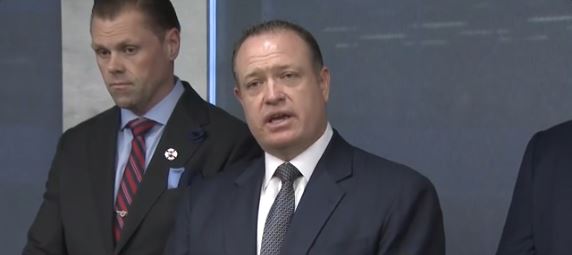
The Uniformed Firefighters Association, which represents active and retired FDNY members, and its legal team held a news conference Monday in Lower Manhattan to demand answers from Mayor Eric Adams and other city officials about the 9/11 records.

Sixty-eight boxes containing “Ground Zero toxin records” were recently uncovered, according to the firefighters union.

“New York City firefighters demand to know who in New York City government hid those documents all the way back in the beginning and continue to keep those documents held all these years,” Andrew Ansbro, president of the Uniformed Firefighters Association, said.

While union officials have not seen the documents, lawyers for the 9/11 Health Watch advocacy organization said they reviewed two dozen boxes last week.

Attorney Andrew Carboy said each box contains about 5,000 pages of records concerning the Department of Environmental Protection’s response in 2001.

“What was in them? Broadly speaking, two categories. Asbestos air testing in the immediate week following September 11, and chemical and metal contamination records of testing that was done in the days and weeks following the attacks,” Carboy said. “The type of risk assessment we have requested and should be getting, we have not seen yet.”

Carboy said the documents also include a City Law Department letter that reads, in part, “must be preserved to serve as evidence in the event future WTC-related legal actions are brought against the city.”

In July, the New York City Council took action to get the documents disclosed, which ultimately led to their release.

“It’s bittersweet because it took litigation, [Freedom of Information Law] requests, and it took the Department of Investigation through the efforts of [Councilmember] Gale Brewer to compel the city to find these documents,” attorney Thomas McManus said.

The legal team said its original request for documents was denied in 2023 and they were allegedly told by the Department of Environmental Protection that it did not have the documents.

“That totally underscores what a lie it was for DEP to have told us there were no records,” Carboy said.

The union leaders want all of the boxes of documents to be made available and are demanding to know why information was hidden.

“That wasn’t the only betrayal. Years later, we had to go down to Washington to fight for the World Trade Center Health Care Program. Had these documents been available then, it could have helped prove our case to get that lifesaving health care more available quickly. It would have been less of a fight. It would’ve also helped the doctors to help diagnose people had they had all the documents at the time,” Ansbro said.

Ansbro developed skin cancer years after responding to Ground Zero and lost his father, an NYPD member, to 9/11-related cancer.

“Throughout all the years of going down to Washington to try to get health care for sick first responders and civilians, this information could have helped,” he said.

“This is inexcusable,” said Michael Barasch, a 2-time cancer survivor and lawyer for the 9/11 community. “This should have been divulged to the public. We’re adults, we could handle it. We could have made our own decisions whether to go back to school, whether to go back to work, whether to go back to their homes.”

To date, more than 400 members of the New York City fire department have died due to 9/11-related illnesses.

A City Hall spokesperson said, in part, “Mayor Adams has been unwavering in his commitment to ensuring victims, their families, first responders, and survivors receive the care and services they deserve.”

“While we cannot comment on the specifics of pending legislation, the city has begun turning over documents to plaintiffs’ counsel,” the spokesperson added.

Carboy said the legal team filed to seek sworn testimony from DEP and other city officials in their push for answers for the thousands of people impacted. He said the team is still waiting to review the remaining boxes.

The union said it plans to continue pushing until all documents are made public.

This story was provided to CNN Wire by an affiliate and does not contain original CNN reporting.

Please note: This content carries a strict local market embargo. If you share the same market as the contributor of this article, you may not use it on any platform.

New VR simulator teaches drivers to navigate snow squalls, dangerous winter weather to drive in


WCBS

By Carolyn Gusoff

Click here for updates on this story

    NEW YORK (WCBS) — As winter approaches, virtual reality is being used to help train drivers to navigate dangerous weather, especially snow squalls.

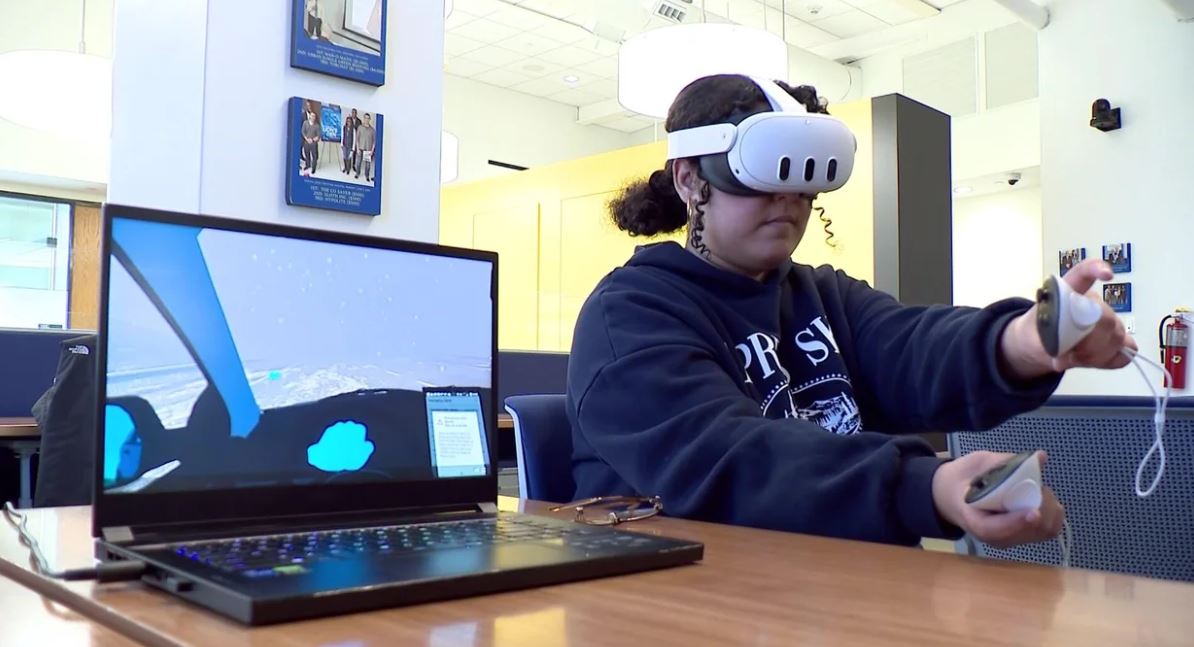
At Hofstra University on New York’s Long Island, drivers are strapping on simulation goggles and grabbing the wheel to learn how to navigate treacherous whiteout conditions caused by the sudden burst of snow.

“Snow squalls are the most dangerous type of winter weather driving phenomenon,” said Jase Bernhardt, a Hofstra meteorology professor.

With a $100,000 grant from the National Safety Council, Bernhardt created the virtual reality driving simulator to help teach the public to just get off the road when there is an emergency snow squall alert.

“You can see the snowfall is rapidly escalating. The visibility is getting much lower. I can barely see ahead of me. So if there is a car ahead of me that’s stopped, I may not be able to stop in time,” Bernhardt said. “You’ll also notice there is a car going really fast. That’s kind of a bad peer pressure that there’s always someone in bad weather that keeps driving.”

The simulator is scientifically accurate to help create muscle memory.

Adalia Rezkie, a Hofstra student, wanted to learn how to drive in snowy weather and gave the simulator a try.

“It was a bit scary because you see the snow piling up and then you can’t really see what’s ahead,” Rezkie said.

Bernhardt, a trained meteorologist, believes virtual reality has a unique ability to teach people about dangerous weather.

“It can be a little horrifying for people because you’re driving along, at first it’s a very normal looking day … and with the VR, we kind of want to scare people a little bit. It’s kind of good that people are reacting scared, because real life is very scary and very dangerous,” the professor said.

AAA Northeast agrees the life-saving information is needed.

“I don’t think we’ve had a lot of snow in the last few years and we tend to forget these things, and there is a lot of aggressive, bad driving going on,” AAA’s Robert Sinclair said. “So the simulator is going to be excellent I think.”

“If you slow down, you can get rear-ended. If you pull over in the shoulder, that’s like the most dangerous thing,” Bernhardt said.

Bernhardt’s free virtual reality simulator has been downloaded thousands of times from the Meta store.

It has been out for about a month and is available in Spanish, along with a free web version.

A snow squall is a sudden, intense burst of snow that comes on quickly and does not last long – usually just 30 minutes to an hour. It’s often accompanied by strong winds, which can cause visibility to drop sharply, making it difficult to see and drive.

Unlike a regular snowstorm, which can go on for hours, a snow squall can happen in a flash. It’s especially dangerous because it could catch people off guard. The combination of heavy snow and gusty winds can make roads slippery and create whiteout conditions.

A snow squall warning is typically issued when the squall is expected to hit within 30 minutes to an hour. If you’re in an area under a snow squall warning, it’s a good idea to be prepared for quick weather changes, slow down and avoid traveling if possible until the squall passes.

Justin Lewis contributed to this report.

This story was provided to CNN Wire by an affiliate and does not contain original CNN reporting.

Please note: This content carries a strict local market embargo. If you share the same market as the contributor of this article, you may not use it on any platform.

Penny shortage hits some restaurants hard when it comes to exact change


WBZ

By Penny Kmitt

Click here for updates on this story

    BOSTON (WBZ) — Businesses in Massachusetts are getting more creative to deal with the shortage of pennies.

Earlier this month, the U.S. Treasury stopped minting pennies because making the one-cent coins became too expensive.

Theo Christo has been stashing away pennies at his breakfast restaurant, Theo’s Cozy Corner, in Boston’s North End for months. He hopes to give his customers exact change for as long as possible.

“I prefer to be cash-only, so I don’t have to deal with fees, credit card fees,” he told WBZ-TV.

But that’s getting harder. Businesses are struggling to make change.

“The restaurant industry is literally an industry of pennies,” said Stephen Clark of the Massachusetts Restaurant Association.

He said businesses are now torn. Do they round up and risk frustrating customers or round down and lose money?

“Anytime you’re talking about profit margin or menu price, it comes down to pennies and how you’re actually making the difference between staying in business and going out of business. If you lose a lot of pennies, you’re going to feel the financial strain of that,” Clark said.

He added that Congress will need to decide how cash transactions should work without the penny, especially in states like Massachusetts, where businesses are required to accept cash payments.

“We need national guidelines to say, well, this is how we handle it,” he said.

Several national chains are doing away with the penny. McDonald’s told CBS News some of their restaurants now round cash payments to the nearest nickel.

That means a $1.22 order becomes $1.20, while a $1.23 order jumps to $1.25.

GoTo Foods, the parent company of popular brands like Cinnabon and Carvel, told CBS News it’s “recommending that franchisees round cash transactions in the guest’s favor.”

“With everything being so expensive these days, it’s really just growing more and more insignificant,” Mo, a visitor from Seattle, told WBZ about his stance on the penny. He’s noticed more cash-only spots in Boston than in other cities.

So would he pick up a penny on the sidewalk?

“I probably would for nostalgia’s sake, but not for the sake of saving that penny,” he said.

This story was provided to CNN Wire by an affiliate and does not contain original CNN reporting.

Please note: This content carries a strict local market embargo. If you share the same market as the contributor of this article, you may not use it on any platform.
Stolen community food pantry built by Girl Scouts has been returned


WJZ

By Kaicey Baylor

Click here for updates on this story

    PARKVILLE, Maryland (WJZ) — A wooden community food pantry built by Girl Scouts in Parkville was stolen and quickly returned.

Neighbors behind the Parkville Community Fridge said the pantry, which sits by a community fridge, disappeared between Friday night and Saturday morning.

Kim Becker, the troop leader for Girl Scouts Troop 1159, said her troop built the wooden pantry on November 15.

It’s unclear who removed the wooden pantry.

Becker alerted the Bmore Community Fridge Network to help track down the missing pantry. Becker said she even started a donation fund, thinking she would have to replace it.

However, on Monday morning, she learned the pantry had been returned.

“I’m disappointed that someone took the pantry,” Becker said. “I think the silver lining is that now more people know about this pantry who need it. More people can come and donate because they weren’t aware.”

Becker is grateful that community members jumped into action.

“I really wanted to show the kids that there might be a bad actor in the community every once in a while, but people will step up, and neighbors will help neighbors if we just ask,” Becker said.

Becker said neighbors have already started to restock the pantry.

She said the roughly $700 raised will be used to build a new pantry. Those funds will also be used to stock the shelves, making sure the Parkville community has food ahead of the Thanksgiving holiday.

This story was provided to CNN Wire by an affiliate and does not contain original CNN reporting.

Please note: This content carries a strict local market embargo. If you share the same market as the contributor of this article, you may not use it on any platform.
World War II veterans who were at same POW camp meet, become friends 80+ years later


WCCO

By John Lauritsen

Click here for updates on this story

    MINNESOTA (WCCO) — For many veterans, experiencing a war together creates a special bond, but eight decades after World War II, two veterans are just starting to form their own.

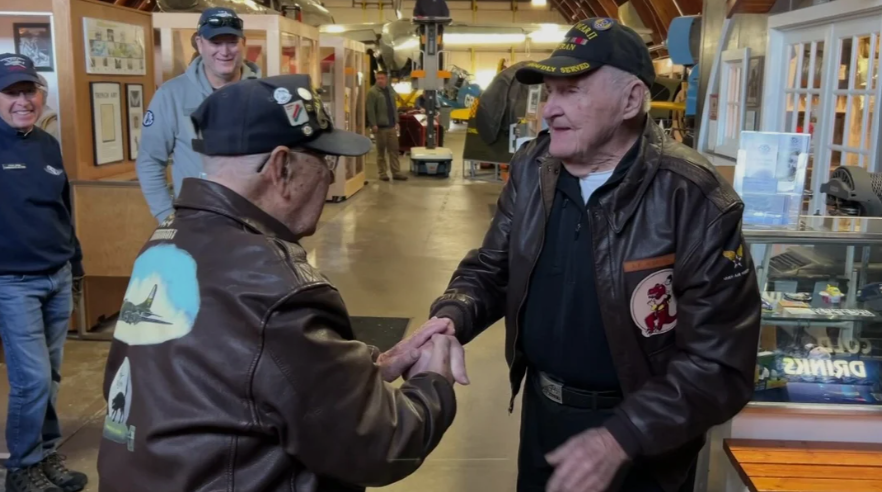
For more than a century, 102-year-old Les Schrenk and 101-year-old Casey Bukowski didn’t know each other.

“I corresponded with so many of the POWs I was with and every one of them is gone for a good number of years now,” Schrenk said.

But a couple of weeks ago, Schrenk got a pleasant surprise. Even though he lives in Bloomington, Minnesota, and Bukowski lives near Buffalo, New York, friends of the veterans got to talking and realized the two had a lot in common.

“Actually, unbelievable. Because I had doubts about what would occur and how to approach this thing,” Bukowski said.

When Bukowski flew to Minnesota for Schrenk’s birthday, his gift was memories and a lot of coincidences. Both men realized they were staff sergeants during World War II. Both were gunners on B-17s and both their planes were shot down on the same day: Feb. 22, 1944.

“I lost my eye at that time and had a shrapnel wound and I was knocked out,” Bukowski said.

After bailing out with parachutes, the Germans captured Schrenk in Denmark and Bukowski in Germany. Then they ended up in the same prison camps at the same time.

“That’s amazing. We were practically shaking hands, and yet, we didn’t know each other,” Bukowski said.

They were subjected to the same brutal conditions, and Schrenk and Bukowski were forced into the infamous 86-day German death march, which many of their fellow soldiers didn’t survive.

“We all had very severe dysentery, fleas, lice, and bed bugs. And, of course, the cold,” Schrenk said.

“Actually, they told us that was the worst winter in many years. The coldest winter,” Bukowski said.

From the pains of war to the joy of liberation. The British freed Schrenk around the same time American soldiers liberated Bukowski.

“Finally, for us, the war was over, and we were able to think of going home,” Bukowski said.

Though they were likely just feet from each other in the prison camps and on the death march, it took 81 years to finally meet.

One more coincidence — in both their flight crew photos taken during the war, Schrenk and Bukowski are standing in the same spot: back row, second from left.

“We each brought our own memories back to each other,” Bukowski said. “We were together but didn’t even know it.”

“We are both quite mobile and can clearly remember what happened even 80-some years ago,” Schrenk said.

Schrenk and Bukowski met at the Air Force Museum in South St. Paul. They want to thank Schrenk’s friend, Mike Johnson, and Bukowski’s friend and fellow veteran, Jared Cummings, for connecting them. Next year, the group is planning a trip to Poland to visit the camp sites where Schrenk and Bukowski were held prisoner.

This story was provided to CNN Wire by an affiliate partner and does not contain original CNN reporting.

Please note: This content carries a strict local market embargo. If you share the same market as the contributor of this article, you may not use it on any platform.
A 90-year journey of faith, family and service through the Salvation Army


KYW

By Wakisha Bailey

Click here for updates on this story

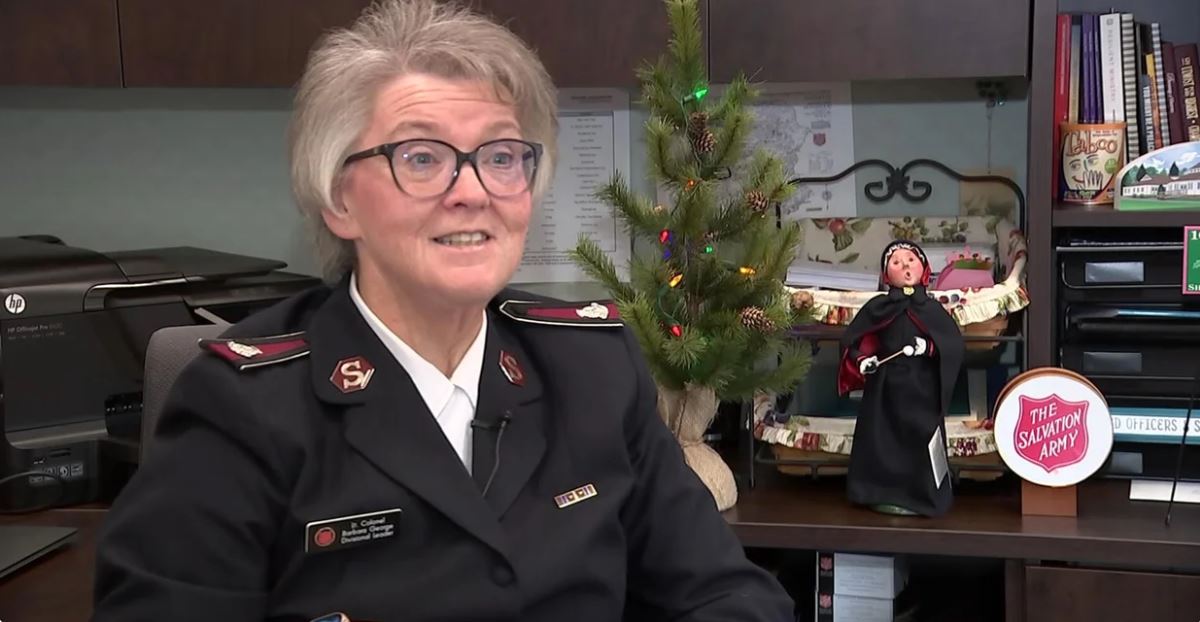
    PHILADELPHIA (KYW) — For Lt. Colonel Barbara George, the mission to make The Joy of Sharing with the Salvation Army possible isn’t just part of her work. It’s part of her family’s story.

Every time George buttons her Salvation Army uniform, she thinks about the path that brought her here.

“This uniform has opened so many doors for me,” George said. “It’s a reminder every single day of who I serve and why I serve.”

George has been connected to the Salvation Army her entire life — 62 years and counting. But her family’s relationship with the organization stretches back even further.

In 1934, George’s grandmother was suddenly widowed, pregnant with her seventh child and raising a family in Brooklyn with no support systems for widows.

“When she was 10, her dad died,” George said. “My grandmother was pregnant with her seventh child. It’s 1934, Brooklyn, New York. There are no services for widows.”

With few options, her grandmother turned to a small church for help — a church that would change everything.

That church was the Salvation Army.

The support George’s grandmother received sparked a lifelong connection. George’s mother grew up in that same church, fell in love with music and began serving others through it.

Her mother’s compassion and creativity shaped George’s childhood and ultimately inspired her own calling.

“I knew God was calling me to do something bigger,” George said, “and it involved giving back to people.”

Today, the Salvation Army provides far more than Sunday services. It offers meals, social services, emergency assistance, youth programs and spiritual support for families across the region.

During the holidays, their work becomes especially visible — and incredibly meaningful — through The Joy of Sharing campaign.

George and her husband, Lt. Colonel Edgar George, trade their uniforms for holiday hats this time of year, joining volunteers and officers who serve record numbers of families.

“Our officers work so hard. At every location, there are people in record numbers of need, and the need just continues to grow,” George said. “The joy of sharing, it’s something circumstances can’t touch.”

George met her husband in officer training college, and they were commissioned together in 1989. Their shared calling became a shared life.

Today, as divisional officers, they oversee toy distributions across the region — ensuring gifts arrive on time and spirits stay high.

“I’ll be down there next week handing out toys because that’s my joy, to be with the people,” George said.

Their commitment is generational. The George family’s legacy continues through their children, who also serve as Salvation Army officers. Even their grandson plays a role in holiday efforts.

What started as a single act of support for a struggling family in 1934 has grown into a multi-generational mission of service.

This holiday season, the George family’s story reminds us that compassion can echo through generations — and that the joy of sharing is one gift that never fades.

This story was provided to CNN Wire by an affiliate and does not contain original CNN reporting.

Please note: This content carries a strict local market embargo. If you share the same market as the contributor of this article, you may not use it on any platform.
Bay Area family divided over Cal, Stanford rivalry unites for massive tailgate


KPIX

By Loureen Ayyoub

Click here for updates on this story

    California (KPIX) — At the annual Big Game, choosing a side is usually simple: Cal or Stanford. But for one Bay Area family, the rivalry runs straight through the middle of their tailgate.

Rob Romine, a former Stanford football player, admits the household is a bit divided, but he says everyone can still unite over the season and the spread.

“We are here to celebrate Thanksgiving, and the only way a Cal/Stanford divided family can do it is with a massive tailgate,” Rob Romine said.

Different teams, one family, and plenty of tri-tip.

“We have kids that went to Cal, kids that went to Stanford, and we have grandkids that are rooting for both,” said Janice Romine, laughing as relatives in blue and red mingled under the trees outside Stanford Stadium.

The Big Game’s legendary rivalry has long drawn alumni, students, fans —and even their pets — to early festivities. Tailgaters said the setting only adds to the tradition.

“Now that it’s dark earlier, I feel like we all need to be getting our vitamin D,” said Natasha Glenn. “Being in nature is amazing. I feel like Stanford Stadium is very unique. We are not in a parking lot, like a concrete one. We are among the trees, and it’s such a nice, family-friendly vibe.”

The Big Game is for all ages, big and small, including Rob and Janice Romine’s granddaughter, Margo.

“She’s class of ’46. She’ll be here. She’s ready.”

The rivalry that began in 1892 still offers the same thing it always has: a chance to come together, even when they’re cheering for opposite sides.

This story was provided to CNN Wire by an affiliate and does not contain original CNN reporting.

Please note: This content carries a strict local market embargo. If you share the same market as the contributor of this article, you may not use it on any platform.

Deputies rescue older woman who fell, became trapped on roof


KCNC

By Christa Swanson

Click here for updates on this story

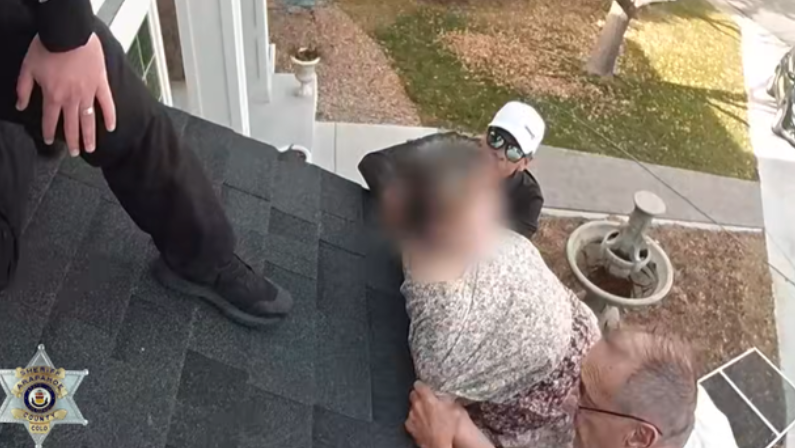
    Colorado (KCNC) — Deputies came to the rescue earlier this week when an older Colorado woman fell and became trapped on the roof of a host home for patients with dementia and Alzheimer’s.

Arapahoe County deputies were called to the scene in the 6500 block of S. Lisbon Street on Thursday to find the 69-year-old woman lying on her back with her legs dangling over the edge of the roof. She was bracing herself on the gutter as two caretakers on ladders, afraid she would fall, held her in place.

Deputies climbed onto the roof and pulled her back from the edge before helping her back inside through a nearby window. Authorities said the caretakers were hanging Christmas lights when the woman opened the second-story window and walked out onto the roof, where she slipped and fell.

The sheriff’s department said the woman was not injured.

This story was provided to CNN Wire by an affiliate and does not contain original CNN reporting.

Please note: This content carries a strict local market embargo. If you share the same market as the contributor of this article, you may not use it on any platform.

Colorado students turn high school into community food bank during shutdown


KCNC

By Justin Adams

Click here for updates on this story

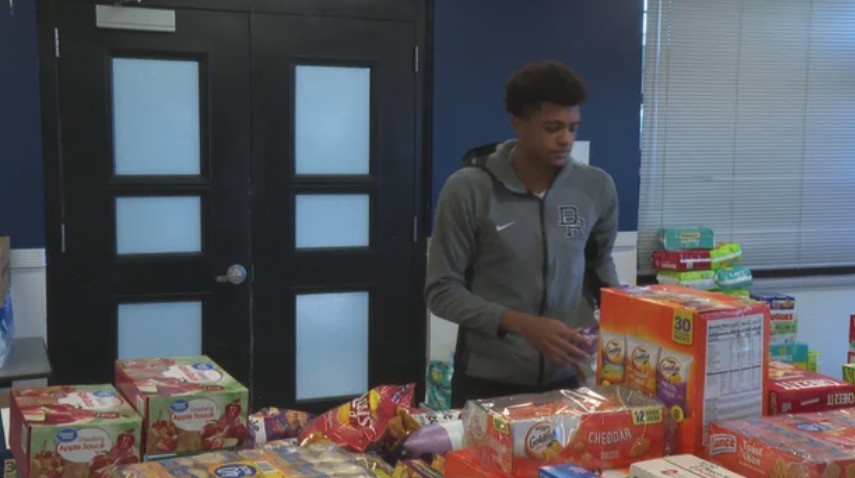
    LITTLETON, Colorado (KCNC) — As the Dakota Ridge Eagles prepare for their Football Friday matchup against Pueblo West, students at the school are earning attention for something far beyond the field.

During the recent federal government shutdown, Dakota Ridge High School was selected as one of several Jeffco Public Schools to operate as a temporary community food bank. The shutdown, the longest in U.S. history, left many families across Colorado struggling with delayed paychecks and reduced access to federal nutrition programs.

When five pallets of donated food arrived from a districtwide drive at Jeffco Stadium, more than 60 students from the school’s leadership team stepped in to help. The group unloaded, sorted, and organized everything from canned goods and kid-friendly snacks to personal hygiene items.

“It makes me feel good knowing that it’s not just the football team or the baseball team. Everybody is getting involved in this school,” said Breck Inmaynes, the senior class president.

Students worked for more than an hour and a half to transfer the donations from the trucks into the school, establishing a system that allows families to pick up supplies twice a week. The food bank is open on Mondays and Thursdays from 9 a.m. to 10 a.m. and again from 4 p.m. to 5 p.m. Any items not claimed at the school are donated to a nearby food pantry.

For many of the students who volunteered, the project was personal.

“Nothing but joy,” said student body president Jaxson Arnold. “Just knowing that what we’re doing is helping somebody else, it just makes you happy.”

The students say they plan to continue running the food bank even with the shutdown over, hoping to support neighbors who are still recovering from lost wages and unexpected financial strain.

“It makes a massive difference,” said student body president Caiden Dixon. “Any way we could help, we wanted to.”

Dakota Ridge High School, located in southwest Jefferson County, has a long history of community involvement. Staff members say the student-led food bank has become a point of pride for the school, and a reminder that the spirit of teamwork extends well beyond Friday nights under the lights.

This story was provided to CNN Wire by an affiliate partner and does not contain original CNN reporting.

Please note: This content carries a strict local market embargo. If you share the same market as the contributor of this article, you may not use it on any platform.

Anti-Islam protesters clash with Muslim community activists in Dearborn


WWJ

By Heath Kalb

Click here for updates on this story

    DEARBORN, Michigan (WWJ) — Anti-Islam demonstrators clashed with counter-protesters on Tuesday in Dearborn as a group of a few dozen marched toward city hall, shouting Islamophobic rhetoric.

“How are they coming to us and saying we’re all about division and all about Sharia Law? They’re coming here and giving us nothing but hatred,” said Ali Aljahmi, from Dearborn.

CBS News Detroit was at the scene along Michigan Avenue, where the dueling demonstrations stemmed from when Michigan Republican gubernatorial candidate Anthony Hudson falsely claimed that there was Sharia Law in Dearborn. He later walked back those statements.

“If we’re going to bring these people together, then we’re going to lead by example and come down here, put boots on the ground and walk with these people and show that we can come together,” Hudson told CBS Detroit.

Hudson led a march with supporters of his advocating for his slogan ‘Fix Michigan,” but it was another group of demonstrators, not condoned by Hudson, on that same route that stirred the pot.” Other people in the crowd included Jake Lang, a Republican who is running for a U.S. Senate seat in Florida. Lang was charged with assaulting an officer, civil disorder and other crimes in connection with the Jan. 6 riot before he was pardoned by President Trump.

CBS News Detroit was at the scene when Lang threatened to burn a Quran and taunt counter-protesters with bacon.

Dearborn police kept an eye on the protests and urged people to engage with demonstrators. One person was seen being led away in handcuffs. It’s unknown if that person will face charges.

Some protesters said they hope what happened on Tuesday sheds some light on what they call hateful demonstrations from people outside of Dearborn who are mischaracterizing the city.

This story was provided to CNN Wire by an affiliate and does not contain original CNN reporting.

Please note: This content carries a strict local market embargo. If you share the same market as the contributor of this article, you may not use it on any platform.