Police say new technology is contributing to recent rise in auto thefts


WCCO

By Conor Wight

Click here for updates on this story

    MINNEAPOLIS (WCCO) — Car thefts are spiking in Minneapolis, and police say that a newer method of stealing is partially to blame.

According to spokesperson Sgt. Garrett Parten, officers have found tablet devices in some stolen vehicles that can be used in conjunction with a generic key fob to get a car started.

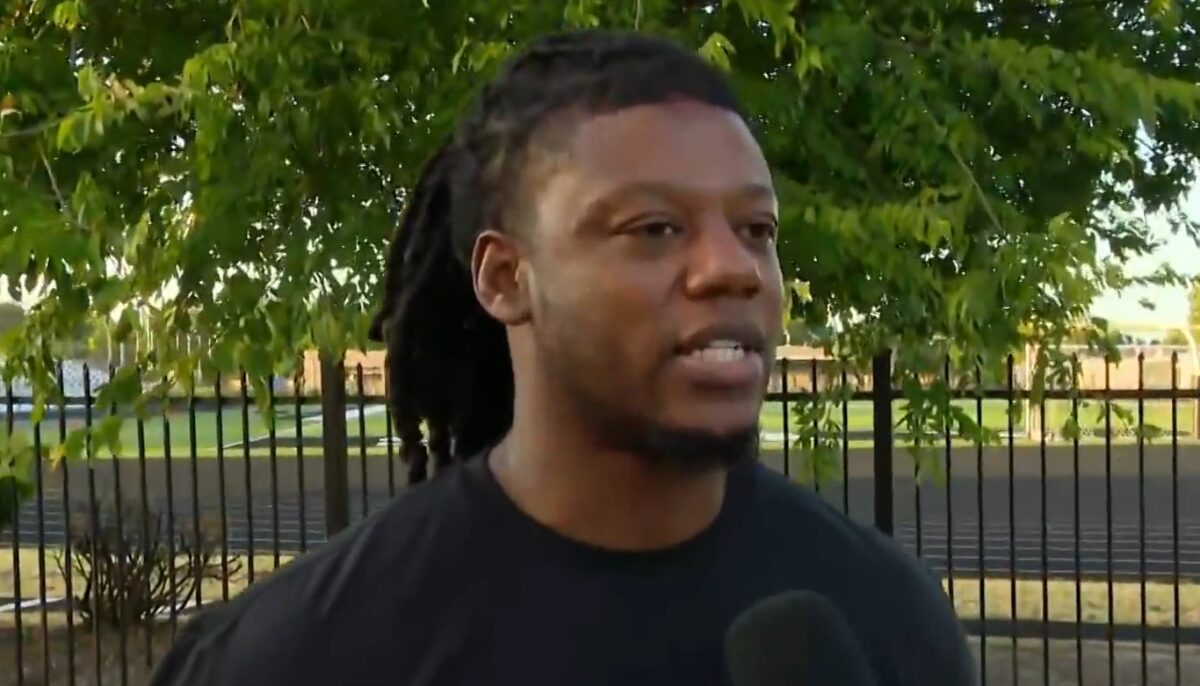
Locksmith Andrei Damian showed WCCO how the tools work. To begin, he calibrates a blank key fob to work for a specific kind of car brand. From there, he plugs his Autel tablet into the target vehicle, which then downloads data from the car and transmits it onto the fob. From there, that fob will unlock and start the car just like the one the driver would have walked off the dealership lot with at the time of purchase.

The whole process takes just minutes, though Damian noted that it’s rare that it will work on newer car models.

“We just plug in, and we read the file and you’re doing a clone of the existing key,” Damian said.

His device set him back about $2,500, though cheaper, less effective models can be found online. He wants to see laws change to require licenses to purchase these kinds of devices and for there to be increased penalties when people are caught with them in their possession. He and his peers in the locksmith industry use them to help drivers who may have lost their keys or are otherwise locked out of their vehicles; it’s why, he said, he and others have become targets themselves.

“I had a car with four young teenagers pulled right at the side of my vehicle,” Damian said, describing a time that a group stole equipment from him. “Four guys, with guns, what can you do?”

Parten said that while this method is new, it does not appear to be widespread. As of Monday, data from the Minneapolis Police Department shows there were 1,528 stolen vehicles so far in 2026. In just under 40% of those instances, he said, a driver had left their car running and unattended.

Still, data shows a 43% increase in the number of cars stolen without keys year-over-year.

Damien and other experts recommend looking into what’s known as a ghost immobiliser or kill-switch. These devices allow the driver to create a unique way of starting up the car. For example, a driver could make it so that they’d need to press the volume button or toggle the high beam lever before pushing the start button.

The number of car thefts in the city is about 8.8% lower than the three-year average after the records set in 2023.

Please note: This story was provided to CNN Wire by an affiliate and does not contain original CNN reporting. This content carries a strict local market embargo. If you share the same market as the contributor of this article, you may not use it on any platform.

Doctors prescribing books to help children traumatized by Minnesota ICE surge


WCCO

By Susan-Elizabeth Littlefield

Click here for updates on this story

    Minnesota (WCCO) — Even though the surge of federal immigration agents in Minneapolis is over, the memories remain. And some adults are especially worried about children in immigrant communities and what they saw.

That’s when a group led by a pediatrician stepped in.

“We hope that reading books with family members reduces stress for kids and their families,” said Kris Hoplin, Reach Out and Read’s executive director.

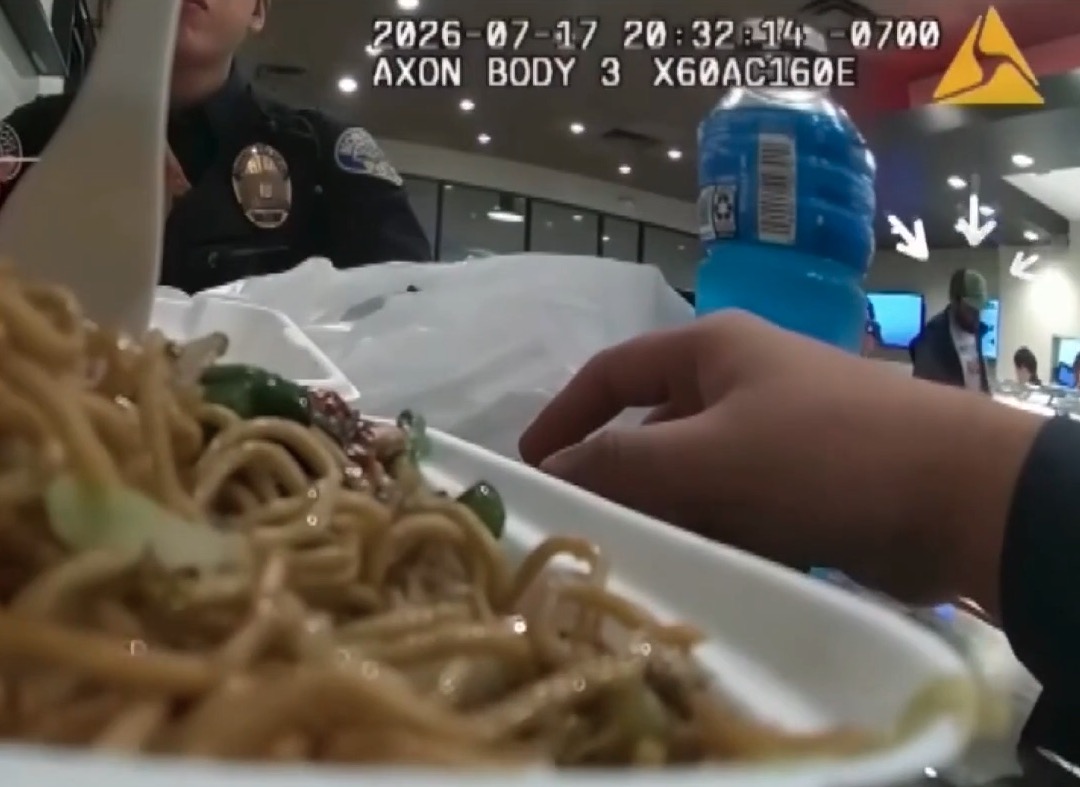
Reach Out and Read is a unique program where doctors directly hand books and prescribe reading to kids at their check-ups.

“Research shows that families, especially families with young children, really have a trusted relationship with their medical provider,” Hoplin said. “So when that medical provider comes in with a book and they start talking in a family-friendly way about early brain development, building your baby’s brain, the social-emotional sort of bonding that happens when you share books and create a routine around books, families really listen.”

It’s the program that helped get young Johannes well read. He got his first book from his doctor as a baby.

“He’s very proud of like having expertise,” said Ellen Saliares, Johannes’ mom. “He went into kindergarten on the first day and was like, ‘I am Johannes, I’m animal expert.'”

The focus now is to get kids who witnessed the ICE surge hooked on reading, too. They are delivering 10,000 books direct to those kids’ doors.

“We know that kids are resilient, but we want to meet them where they are and help to reduce stress, and so we know that books and shared reading, it does that,” Hoplin said.

Here’s where your spring cleaning could come in. Reach Out and Read is collecting new or gently used books in English, Hmong, Somali and Spanish. You can also donate to the group so they can buy more culturally specific books.

Please note: This story was provided to CNN Wire by an affiliate and does not contain original CNN reporting. This content carries a strict local market embargo. If you share the same market as the contributor of this article, you may not use it on any platform.

Garbage truck driver punched, kicked teen after mother tried to pass his vehicle, lawsuit says


WWJ

By Nick Lentz

Click here for updates on this story

    Michigan (WWJ) — A lawsuit filed earlier this month alleges a Washtenaw County, Michigan, teen was “violently assaulted” by a garbage truck driver after the teen’s mother tried to drive past the vehicle, leaving the girl with a concussion.

The incident happened on March 5 while the mother, identified as Doreen Whelan, was driving her two sons, ages 17 and 4, to school in Whitmore Lake, Michigan, according to the suit.

Whelan encountered the garbage truck, owned by Duncan Disposal, “during the course of her route,” the lawsuit said. She tried to pass it without realizing the driver, whose age has yet to be disclosed, was going to reverse the rig into a roadway.

According to the court document, “Upon realizing that the garbage truck was backing up, Ms. Whelan began to reverse her vehicle to move out of the garbage truck’s path.”

The garbage truck driver started yelling “vulgar obscenities and profanities” at Whelan and her children and “displayed his middle finger” toward them, the lawsuit said. He continued to yell at them after Whelan asked him to stop.

Whelan’s 17-year-old son then asked the driver to stop yelling at them, the lawsuit said. In response, the driver jumped out of the truck, sprinted toward Whelan’s vehicle and punched, kicked and grabbed the teen, according to the court document.

The lawsuit said the driver’s knuckles were visibly bleeding after the assault.

Whelan was panicked by the assault, according to the court document, and struggled to unbuckle her seat belt. When she did, the driver started to approach her “in an aggressive and threatening manner.”

Bystanders then intervened and de-escalated the situation, the lawsuit said. The driver was later arrested.

According to the suit, the driver winked at Whelan’s children in a “deliberate, menacing, and taunting gesture” while being arrested to “further intimidate and traumatize them.”

Whelan’s teenage son was diagnosed with a concussion, sprained ankle and possible rib fracture, the court document said. He has since been unable to attend school and extracurricular activities, including baseball and track.

The lawsuit accuses the driver, named as a defendant, of assault and battery, and intentional infliction of emotional distress.

Duncan Disposal, also named as a defendant in the lawsuit, is accused of vicarious liability, negligent hiring, retention and supervision, and negligent entrustment. The court document, citing “information and belief,” said the company “knew or, in the exercise of reasonable diligence,” should have known that the driver “had a propensity for violence, aggression, and/or volatile behavior.”

According to the lawsuit, the company also failed to vet the driver’s “fitness for employment” and provide adequate training and oversight during his time with Duncan Disposal.

The family is asking for at least $75,000 in compensation, per the suit.

A spokesperson for the company said they didn’t have a statement about the lawsuit and that the driver has since been fired. CBS Detroit has reached out to law enforcement authorities and is awaiting a response.

Please note: This story was provided to CNN Wire by an affiliate and does not contain original CNN reporting. This content carries a strict local market embargo. If you share the same market as the contributor of this article, you may not use it on any platform.
Colorado trade school campus creates growing opportunities for female students


KCNC

By Ashley Portillo

Click here for updates on this story

    DENVER (KCNC) — March is Women’s History Month: At Cherry Creek Innovation Campus in Centennial, the next generation of female trailblazers are passionate about pursuing careers in traditionally male-dominated fields.

The campus is opening the skies for Elizabeth Zuber, a senior pursuing a career in aviation maintenance.

“Aircraft mechanics work on every part of a plane,” Zuber said. “So any plane that you fly on, whether they’re airlines, whether it’s military, private, commercial.”

Zuber’s passion for aviation took off at a young age.

“My neighbor next door that was actually a retired mechanic from United would always talk about this, teaching me when I was little,” Zuber said. “And so, when I realized that this was this opportunity for me to do this at CIC, I knew I immediately wanted to do it.”

Aviation maintenance students like Zuber learn about aircraft systems such as engines, hydraulics and electrical systems, plus performing maintenance repairs, inspections, diagnosing issues and FAA regulations to ensure aircrafts are safe.

“Less than 3% of aircraft mechanics are women, so there’s not a lot of us, but it’s really amazing to be one of those women and help lead the charge and bring women into the industry,” Zuber said.

CICC senior Ally Langley and junior Alia Estares are pursuing pathways in automotive maintenance. Students in this pathway maintenance learn about shop operations, safety, tools and diagnostic equipment. They learn about the parts of a vehicle, including electrical vehicles.

“This is a very hands-on field, and I do love digging my hands into engines and getting dirty,” said Langley, who added what she’s applied what she has learned to working on her own car too. “Last year, we started learning about brakes and tires, then moved into doing oil changes.”

“In automotive, we are learning how to fix and take apart, replace different parts on different types of cars,” said Estares, who mentioned she and her classmates work on an American car, a Japanese car and a German car during class.

Their inspiration came early too.

“My dad is an overnight truck driver, and he drives semis, and I always watched him growing up on his weekends in the garage working on a semi,” Langley said.

“I’ve grown up around cars my entire life,” Estares said. “I wanted to work on classic cars, and for a lot of them, they don’t make the parts anymore. So I figured, if I knew how to manufacture my own parts, it would be a really great skill.”

Estares is also taking classes in aerospace manufacturing, a combination of art and science, where students incorporate automation, robots and 3D printing to create and design products

“We learn how to design and program objects and learn how to cut them out on the machine,” Estares said.

These high school students are gaining hands on real-world experience in high-demand careers.

But they’re also earning industry certifications in fields historically underrepresented by females.

“Don’t be afraid to put yourself out there,” Estares said. “I love the experience. Woman or not, you can do it.”

“It’s cool to show your knowledge,” Langley said. “There’s nothing that can stop you. There are only more opportunities that can open if you decide to go this route.”

They’re breaking down barriers and closing the gender gap, all while empowering other young women.

“Maybe you’re the only female in your class, which is something I definitely relate to, but I think it’s important to just go out there and do it, even if it is hard,” Zuber said.

A bond measure passed by voters is going toward expanding Cherry Creek Innovation Campus. The new space will add opportunities in automation/robotics mechatronics, aerospace technician, EMT, veterinary assistant, HVAC, welding, baking & pastry, film and motion design.

The district said CCIC is growing, and the expansion will provide space for 70% more students, as well as adding nine more high-demand career opportunities. These changes will allow more students to get hands-on, industry-aligned training — preparing them for college, trade certifications, apprenticeships and careers directly out of high school. All new programs will begin in the 2026-27 school year.

Please note: This story was provided to CNN Wire by an affiliate and does not contain original CNN reporting. This content carries a strict local market embargo. If you share the same market as the contributor of this article, you may not use it on any platform.
WBZ journalist who received co-worker’s kidney returns after open-heart surgery: “Humbling to think that someone could be that nice”


WBZ

By Lisa Hughes

Click here for updates on this story

    BOSTON (WBZ) — March 16, 2026, was worthy of celebration in the WBZ-TV newsroom. Four months and five days after assignment editor Andrea Courtois donated her kidney to photojournalist Jared Higginbotham, Jared returned to work. Hugs and applause marked his first day back in the office.

He felt healthy and energetic in a way he hadn’t for a very long time.

“I’d forgotten that I could be this person,” he explained. Jared suffered from chronic kidney disease for a decade and spent five years waiting for a transplant.

“I spent so much time … finding shortcuts and Band-Aids to feel like I had a normal life when it really wasn’t,” Jared said. “Now I’m like, I can do this again.” Asked how much of his good health he accredits to Andrea, he didn’t hesitate. “In my mind, she’s 100% why I feel that way,” he said.

Andrea is as humble and kind as she is generous. Jared’s return to work, she hoped, marked a return to normal for her friend and colleague.

“Just knowing that he can live his life again and not have to worry about dialysis,” Andrea said. “His coloring’s great.”

Life-changing transplant

It was Andrea’s decision, almost two years ago, that set in motion the life-changing transplant. After watching a story on WBZ about a living kidney donor with Type O blood, she filled out the Massachusetts General Hospital application online to become Jared’s donor. She went through months of testing (twice) without a word to Jared. She kept it to herself out of fear there would be a setback that stopped the transplant.

He was also keeping a secret. A member of Jared’s medical team had accidentally “let it slip” that Andrea was his match. In September of 2025—when Jared was cleared for the transplant surgery—he revealed to Andrea, with immense gratitude, that he knew that she was his match. With resolve and relief, they made plans for the operation.

Surgeons at Mass General performed the kidney transplant on November 11, 2025.

Andrea’s surgery took less time than Jared’s. When she awoke in the recovery room, she immediately asked about Jared. Confident in the surgeons and the outcome, she wasn’t worried, but she was eager to know that the kidney was working. Once he was out of surgery, a nurse wheeled her to the ICU where she found Jared eating pancakes. She laughed at the memory.

“I couldn’t believe it,” Andrea said. “I was nauseous. They were trying to give me food. And I was like, no.”

More importantly, it was clear from the beginning that Andrea’s kidney was functioning in Jared’s body. “It was weird to have so many conversations with a co-worker around pee,” she laughed.

Andrea’s medical team had warned her that she would likely be in pain immediately after the surgery. “They were like, ‘You’re gonna feel like you got hit by a truck.’ I felt like I got hit by a coach bus,” she said. But that discomfort didn’t last long.

Andrea was released from the hospital and back home a little more than 24 hours after donating her kidney. For that, she credits her medical team. “It’s really remarkable. Going to MGH and seeing a city within a city—what a well-oiled machine it was. From the check-in to the valet guy to the surgeons. I can’t even say enough about how wonderful they were. I was blown away. I have more gratitude for them, that they’ve figured out how to do this and make it so easy for the donors,” she said.

Andrea, who lives with her parents, was able to recover at home and, within days, start walking around her neighborhood. The ease with which she bounced back was a pleasant surprise. Before the transplant, she had never been hospitalized or even had stitches. “And to this day,” she explains, “I still haven’t had stitches. They glued me.” She has no scars from the surgery.

Jared suffers setback, open-heart surgery Andrea hoped Jared’s health health would also quickly improve. But 48 hours after the surgery, he suffered a major setback. The kidney function started to slow down. He couldn’t breathe. He felt a heavy weight on his chest. “Like it was a car or an elephant or something,” he recalled.

Rushed back to the ICU, he started receiving medication. “I’m asking them why they’re giving me the meds they’re giving me. And they say, ‘It’s the best solution when you’re having a heart attack.”

Suddenly, he was staring down a new crisis that would require open-heart surgery.

When Andrea found out, she was devastated. “I didn’t prepare for the emotional rollercoaster,” she said.

She and Jared stayed in touch. Doctors sent him home with medication to stabilize his heart and strict instructions to limit any exertion. His parents and brother moved in to care for him. The time at home (Jared joked that his dogs saw a lot of him this winter) also allowed the kidney to heal and get stronger.

On December 29 he returned to MGH for quintuple bypass surgery—a six-hour operation to create new paths for blood to flow around Jared’s blocked arteries. Andrea was one of his first visitors after the surgery. “Not only did she donate a kidney, but she’s been in constant contact with me the whole time,” Jared said.

Her dedication to a friend in need is not surprising. At their home in Attleboro, Andrea’s mom admits that she was nervous for Andrea and Jared before the transplant surgery but couldn’t be prouder of her daughter. “It’s kind of a miracle they both work in the same building, and he’d gone that long before finding a kidney,” Anne Marie Courtois said. “I’m very happy for him. She gave him a life. That’s what it’s all about.”

How to become an organ donor

Andrea’s living donor coordinator at MGH, registered nurse Alison Bomm, praised Andrea’s selflessness. “I really respect and admire her for coming forward,” she said. The two talked for months about Andrea’s testing, her overall health, and what to expect post-surgery. Bomm says that by talking about her experience, Andrea may encourage people to become living kidney donors.

The first step is to apply through the hospital’s website: mghlivingdonors.org. Prospective donors can identify an intended recipient (as Andrea did) or simply offer to donate a kidney to someone in need. Applicants receive a packet of information from the program and sign a medical release form so that doctors can review their records. Donors then talk with an MGH donor advocate—a social worker who provides support throughout the process.

As Andrea can attest, there’s quite a bit of testing to ensure that a donor is healthy enough to undergo the surgery and that the organ is suitable for the recipient.

“Red carpet treatment” for donors

Donors receive more education at each step of the process. Bomm said the team is in tune with their needs.

“They are giving an organ which is an extraordinary act of kindness,” Bomm said. “So, in return, we want to treat these patients with all the respect and the information that they deserve. We call it the red carpet treatment for these patients because they don’t need to have the surgery. It’s not something that’s going to help them or that they need to move forward. It’s just truly out of having a good heart to help another person.”

For Bomm, who was a dialysis nurse helping critically ill patients for more than 30 years, working with living donors like Andrea is particularly fulfilling. “It’s very encouraging,” she said smiling. “It’s very heartwarming that people want to help.”

Bomm also points to the National Kidney Registry as a resource for donors who may not be compatible with their intended recipient. A partnership between MGH and the National Kidney Registry allows for a “swap.” Someone else gets the donor’s kidney and the intended recipient moves up the transplant list to receive a kidney from someone else. Bomm says that about 25% of the kidney transplant surgeries are through the swap program.

“Ultimate way to help someone”

Andrea wants people to know that donating a kidney is “easy.” She said she feels great. “I’m completely myself,” she said.

“Maybe it’s the ultimate way to help someone if you can’t do it monetarily or if you can’t donate your time and volunteer—because of the hours we work.” She’s been listed as an organ donor with the Registry of Motor Vehicles from the time she got her first driver’s license. “So why not be a living donor if you can?”

Jared hopes that potential donors watch their story and consider following Andrea’s example. According to several organ donation networks, more than 90,000 Americans are waiting for a kidney transplant. The American Kidney Fund reports that fewer than 6,500 living donor kidney transplants were performed in 2024. Transplants from living donors are, statistically, more successful than those from deceased donors.

Jared’s message to patients waiting for a transplant is to stay as strong as possible—physically and emotionally—and remain hopeful that a donor will come forward. “Don’t stop fighting to find one. They are out there,” he said.

Jared is still healing. He will have more cardiac rehabilitation over the coming year and regular check-ups with his doctor. But for the first time in years, he can imagine going to concerts and taking vacations without worry. Standing just a few feet from Andrea in the newsroom, his gratitude was palpable.

“It’s just humbling to think that someone could be that nice,” Jared said.

Please note: This story was provided to CNN Wire by an affiliate and does not contain original CNN reporting. This content carries a strict local market embargo. If you share the same market as the contributor of this article, you may not use it on any platform.

Michigan judge calls out defendant for driving during virtual court hearing: “You cannot be driving, ma’am”


WWJ

By Paula Wethington

Click here for updates on this story

    WOODHAVEN, Michigan (WWJ) — A Southeast Michigan judge called out a defendant during a virtual court hearing, saying it looked like she was operating a vehicle while participating in the video conference.

“Am I crazy, or does it not look like you are driving that car?” the judge said.

The hearing took place on Monday in the 33rd District Court in Woodhaven, with Judge Michael K. McNally presiding.

Video conference participation is allowed on a case-by-case basis for court hearings in Michigan. The Zoom video platform shows an array of images of those participating, whether they are in the courtroom or another location.

The case involving the woman in a car was one of multiple cases recorded on the judge’s livestream that day.

When court officials noted on the record that the woman wasn’t signed into the video call at the designated time, McNally issued a declaration by default and began another conversation with the attorney.

A court staffer then interrupted the judge, saying, “I have an iPhone here that I haven’t been able to identify.”

The judge told the person on the iPhone to start the video function on their device and “tell us your name, please.”

The woman stated her name. She said she didn’t know how to virtually enter the hearing room correctly.

McNally again insisted that the woman sign in to the hearing with a video view, which she did. A video conference image shows her seated in a vehicle with a seat belt across her shoulder.

“I just ordered a default judgment,” the judge said as the connection was made.

“You cannot be driving, ma’am,” the judge said, shaking his head, as he looked at the computer screen. “What are you doing? Come on.”

“I am not driving. I’m a passenger in a car,” the woman replied.

The judge insisted he would not be hearing a case during which a participant was driving, or as passengers in cars.”

The woman said she would pull over, then continued to insist she was a passenger.

“I’m sorry. I have an emergency. I’m going out of town for a family member, but I will have my driver pull over. Hang on,” she said.

“What side of the car are you on?” the judge asked.

“I’m on the left-hand side,” she replied.

“How would you be on the left-hand side if you’re a passenger in the front seat? Am I missing something?” McNally asked.

She could be seen looking forward, and also out of the window as the vehicle appeared to be moving, but not directly at the phone screen.

“You know you’re lying to me, right?” the judge said. “Let me see the driver.”

She appeared to sigh. “Hang on one second. … I have to ask their permission.”

“Now,” the judge yelled.

The vehicle stopped. She exited the door as the vehicle appeared to be parked near a business. No one else was shown on her camera.

“You think I’m that stupid?” the judge said. “I’m going to go ahead and enter a default judgment. … You lied to me.”

The judge said his order for a judgment of $1,921.95 will reflect that the defendant was “not available at the time and then was driving a car and telling the court she was not.”

“Have a great day. Thank you,” he said as he ended the hearing.

Please note: This story was provided to CNN Wire by an affiliate and does not contain original CNN reporting. This content carries a strict local market embargo. If you share the same market as the contributor of this article, you may not use it on any platform.
TSA workers near breaking point as shutdown drags on, raising concerns for North Texas travelers


KTVT

By Marvin Hurst

Click here for updates on this story

    DALLAS (KTVT) — Transportation Security Administration officers are nearing a breaking point as a weeks-long partial government shutdown stretches on, threatening airport operations in North Texas and leaving workers without pay, union leaders say.

Chris Jones, executive vice president of the American Federation of Government Employees, said the strain is growing as employees continue working without regular paychecks. One TSA officer, identified as Brown, said his last full paycheck came more than a month ago.

“The last time I got a paycheck was one week’s worth, was five weeks ago,” Brown said, adding that deductions for benefits were still taken out.

The shutdown, which began Feb. 14 amid a standoff between Democrats and Republicans, is already affecting both workers and travelers.

At airports across North Texas, staffing shortages are beginning to impact security operations, raising concerns about longer lines and potential checkpoint closures.

TSA staffing shortages raise concerns about airport delays in North Texas

Brown said many officers are struggling to pay rent and cover basic expenses, with some calling out of work and others leaving their jobs entirely. Without a deal by the end of the week, he warned conditions could worsen significantly.

“I’ve heard it referred to by certain individuals in my organization — every level — as ‘Black Friday,'” Brown said, describing a potential tipping point if another paycheck is missed.

Lawmakers appear to be inching closer to a deal, but even if an agreement is reached soon, Brown said it would be too late to prevent another missed paycheck this weekend.

“We hope that it’s worked out in the next day or so,” he said. “It’s already too late for us to get paid by Friday or Saturday … but if they pass something tomorrow or the next day, we could probably be made whole by Tuesday or Wednesday of next week.”

In the meantime, the union is stepping in to help workers get by. The AFGE is coordinating the delivery of two truckloads of food on Friday to support TSA employees as they wait for a resolution.

If staffing levels continue to drop, Brown warned, multiple security checkpoints could close, a move that would likely lead to significant delays for travelers heading through North Texas airports.

Please note: This story was provided to CNN Wire by an affiliate and does not contain original CNN reporting. This content carries a strict local market embargo. If you share the same market as the contributor of this article, you may not use it on any platform.
14-year-old dog mauled to death at California park by loose dog, criminal charges possible for owner


KOVR

By Ashley Sharp

Click here for updates on this story

    WOODLAND, California (KOVR) — Following a vicious attack by a large, loose dog on a small dog at a Woodland park, both the Yolo County District Attorney’s Office and Yolo County Animal Control are investigating the incident, as potential criminal charges are pending for the owner of the dog responsible.

It happened on Saturday, March 14, at Campbell Park in Woodland.

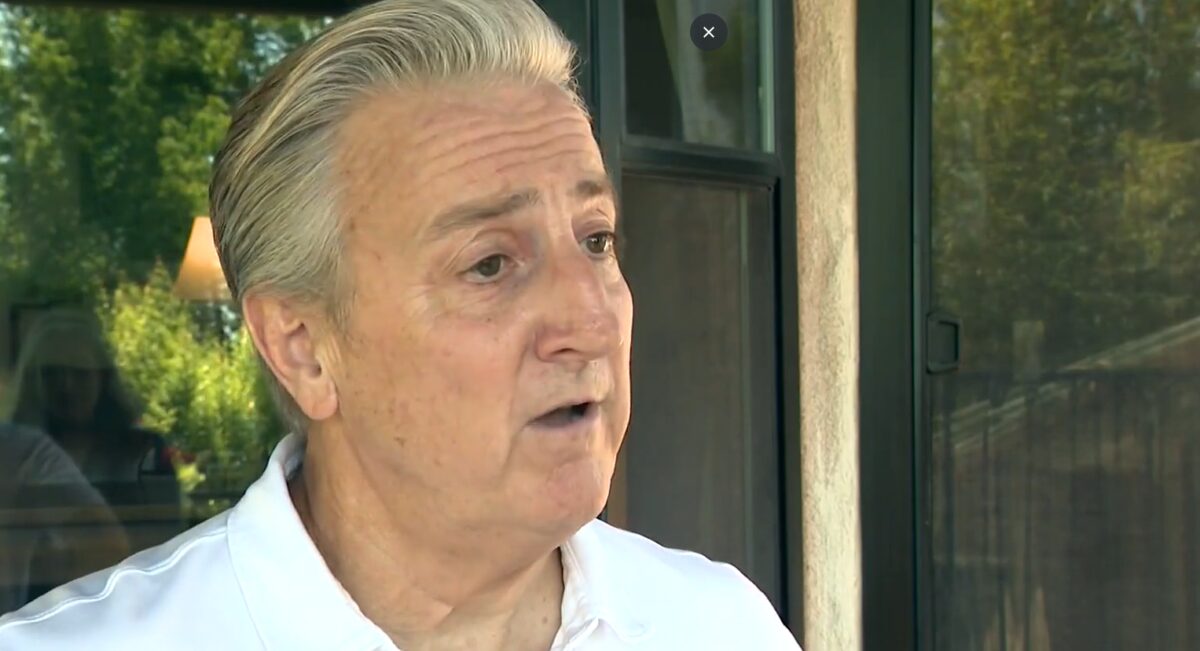
Neighbor Tom Bowler tells CBS Sacramento he was just wrapping up a walk at the park with his 14-year-old rescue dog, Petey, when a loose dog he describes as a pit bull came running from the garage of a neighboring home.

“I did everything I could to save him. I still feel some guilt,” Bowler said.

Petey was rushed to the vet, where he eventually died from severe injuries to his neck and torso.

“He took Petey into his mouth and he held on to him for about two minutes, mauling him. I did everything I physically could do to try and release the grip of the Pitbull while yelling for help,” Bowler said.

Bowler says mid-attack, the dog’s owner eventually ran out from the open garage to help.

That neighbor, he says, was the first to report the attack to animal control.

“I asked the animal control officer where the dog was. He told me the dog would remain with the owner, because the owner told him that this had never occurred before. Well, if I were the owner, I’d say the same thing,” Bowler said. “I’m being told by the animal control officer that the maximum penalty for this is $500 and I’m faced with $10,000 plus in vet bills, which I could care less about. I’d give every every dime I’ve got to get my dog back. But something needs to be changed in the laws regarding this kind of stuff, because, clearly, a $500 fine, it does nothing. It’s meaningless.”

Yolo County District Attorney Jeff Reisig told CBS News Sacramento on Tuesday that they have identified the dog’s owner and they could potentially face criminal charges, pending the completion of the investigation.

The dog responsible has not been taken by animal control at this time.

Across Campbell Park, Bowler hung flyers in Petey’s memory. He hopes other dog owners will be aware.

“It is kind of scary to hear that, because a lot of people here are dog lovers, you know, and so we want to protect our animals,” said Leslie Contreres, a neighbor walking her two small dogs at the park Tuesday evening.

She worries it could happen again and said she has had to run from another loose dog in the park in the past.

“It’s just being aware of what your abilities of your dog are, and if they can get out, you know. Accidents happen, but that’s a pretty serious accident,” Contreres said.

Last Tuesday, March 17, Bowler went to the Woodland City Council meeting and spoke in public comment to explain what happened and advocate for change.

“What I hope can come from this is some more proactive enforcement, maybe some new laws locally,” Bowler said at the podium.

“We’ll see what we can do, perhaps more patrols in that area if there is a continuing problem,” Mayor Tom Stallard responded, saying he, too, had lost a pet cat to a loose dog in the past.

It’s a petition for tougher consequences from a dog owner who says he never expected to lose the dog he adopted from the Yolo County SPCA at just 18 months old in this horrific way. He called Petey his best friend.

“The only reason I’m not crying now is I’m pretty much cried out, but to witness the carnage, the sounds, the sights, that’s something that’s in my head, and it is getting out of my head anytime soon, if ever,” Bowler said.

Almost exactly one month ago, CBS News Sacramento reported on another small dog being attacked and killed by a large dog in Natomas.

The Yolo County District Attorney’s office posted on social media Tuesday, reminding people of local leash laws across the county, sending a message that incidents like these will not be tolerated.

Please note: This story was provided to CNN Wire by an affiliate and does not contain original CNN reporting. This content carries a strict local market embargo. If you share the same market as the contributor of this article, you may not use it on any platform.
Bay Lights set to return to the Bay Bridge after $11M restoration project


KPIX

By Brad Hamilton

Click here for updates on this story

    SAN FRANCISCO (KPIX) — Hard work done in the dark is about to bring the famed Bay Lights back to the Bay Bridge.

Bart Ney, who has spent the majority of his 30-year career at CalTrans, has focused on one of the busiest and biggest overpasses in the world.

“I was on the team that built the new eastern span. I’ve worked on the Bay Bridge for 20 years,” Ney told CBS News Bay Area.

On one particular night, he’s happy to work the late shift to see firsthand the finishing touches on the revitalization of the Bay Bridge lights.

First introduced in 2013, the original collection of over 40,000 bulbs that lit up the structure sparked attention like never before.

“The original Bay Lights were such a hit globally. We had media from all over the world doing stories on the Bay Lights, kind of putting the Bay Bridge kind of back in everybody’s view,” he explained.

However, in 2023, the lights were shut off after years of environmental wear. That decision was made by the artist behind the project, Leo Villareal.

“There was kind of an uproar in San Francisco. People said, ‘We want this back, this has become part of my therapy,’ it has become part of the city,'” Villareal told CBS News Bay Area.

The project, privately funded, cost $11 million to replace the original installation and embark on a new chapter.

“The exciting thing for me is that the way it provokes a sense of wonder and awe,” Villareal added. “It just dazzles people and people can’t help but talk to one another.”

Ney adds that the positive feedback they’ve received since announcing the return is just another sign that this project was worth the time and effort it took to make it happen.

“There is 48,000 individual LED lights in this installation. The western spans of the Bay Bridge are two miles long. They are over 500 feet above the water at the highest points, so it’s a lot,” Ney said.

On March 20th, an official ceremony will celebrate the relighting of the Bay Bridge.

But on this night, the crews who made it happen are having a little celebration of their own.

They’ve spent countless long hours in the dark, bringing the shine back to the Bay Bridge.

Please note: This story was provided to CNN Wire by an affiliate and does not contain original CNN reporting. This content carries a strict local market embargo. If you share the same market as the contributor of this article, you may not use it on any platform.
Maryland family reunites with missing cat after 5 years: “I was in disbelief”


WJZ

By Ashley Paul

Click here for updates on this story

    HARTFORD COUNTY, Maryland (WJZ) — A Harford County family was reunited with their cat, who went missing five years ago.

Melissa and Brooke Garci thought they were never going to see their cat, Artemis, again, until the most unlikely scenario played out.

In September 2021, Artemis, who is an indoor/outdoor cat, never returned to her Hickory, Maryland home.

The Garcis made fliers in a desperate attempt to find her.

“I posted them around the neighborhood, rolled them up, and put them in people’s doors, knocked, and got nothing,” Melissa Garci said.

Emotional reunion

Five years later, a woman came into the Harford County Humane Society with a cat she found in her unfinished basement.

As standard procedure, the shelter scanned the cat for a microchip and called the listed number.

“This woman answered, ‘Hello?’ And we said we have your cat, and she was unbelieving. And she said, ‘Are you sure? My cat has been missing for five years,”” said Erin Long, with the Harford County Humane Society.

Long says she has never seen an animal reunited with its owners after that much time, and the Garcis were just as shocked.

“I was like, I couldn’t cry yet because I was in disbelief, but when I saw her, I was like, ‘Omg, she looks exactly the same,'” Brooke Garci said.

“It was a beautiful thing”

Photos from the tearful reunion show the moments Artemis stepped out of her carrier and laid eyes on her long-lost family.

“He kind of walked out of the kennel and looked at them and went right over and was rubbing on them, got in mom’s lap, got in daughter’s lap. It was a beautiful thing,” Long said.

While we’ll never truly know where Artemis was this whole time, what we do know is that the name Artemis comes from the Greek goddess for hunting and wilderness, and after surviving five years on her own, she certainly lives up to it.

“Her instincts are strong,” said Brooke Garci.

The humane society urges people to microchip their pets, and make sure that to keep the information associated with the chip up to date.

It could make all the difference if your pet is ever to get lost.

Please note: This story was provided to CNN Wire by an affiliate and does not contain original CNN reporting. This content carries a strict local market embargo. If you share the same market as the contributor of this article, you may not use it on any platform.