New Mexico program introduces curriculum to honor women’s contributions

By Alyssa Munoz

Click here for updates on this story

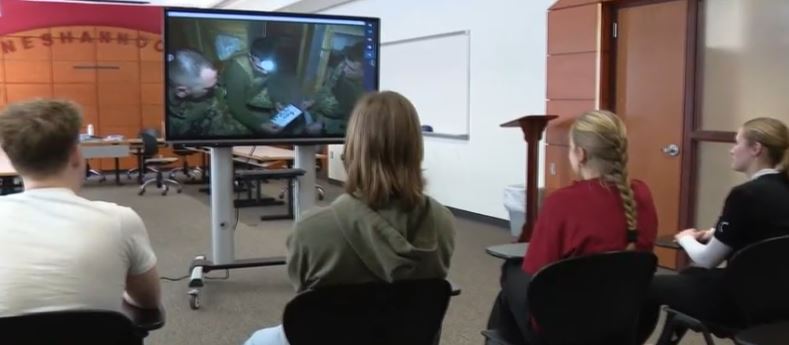
    NEW MEXICO (KOAT) — The New Mexico Historic Women’s Marker Program is introducing a K-12 curriculum to bring the stories of women who have significantly contributed to the state’s history into classrooms across New Mexico.

“It’s not only the women that one would know, like Georgia O’Keeffe, but it’s other people who have made changes within their community,” said Karen Abraham, a member of the program’s steering committee.

In 2007, the program installed its first women’s marker. Now, there are about 97 markers recognizing 125 women or groups of women, each with a sign detailing who they were and what they accomplished. Inspired by this initiative, seventh grade teacher Lisa Nordstrum, who is now the curriculum developer and education director for the program, developed a comprehensive K-12 curriculum for teachers statewide.

Nordstrum explained the curriculum’s accessibility, saying, “The ease of just clicking on to the little section of the groups of lessons and the very specific outlining of every step of that lesson, the materials that are needed, the PDFs that you just download.” She added that students could engage in activities like reading profiles, creating art projects, or having conversations in character as these historical women.

The lessons come with different ways to get students involved, and as the grades progress, the stories delve deeper. “Extending beyond the information that’s on the website and really inspiring older students as researchers and detectives, I’d like to think of history as doing detective work and digging into those historic documents,” Nordstrum said.

Both Abraham and Nordstrum emphasized that the program is not just about women but about people who have made a difference. “It is a program for everybody. It’s just not about women. It’s about people who have made a difference, that happened to be women,” they said.

Please note: This story was provided to CNN Wire by an affiliate and does not contain original CNN reporting. This content carries a strict local market embargo. If you share the same market as the contributor of this article, you may not use it on any platform.

‘Pure evil’: California man convicted for decades-old slayings of his infant children

By Lindsay Weber

Click here for updates on this story

    YOLO COUNTY, California (KCRA) — A California man was convicted by a Yolo County jury on Tuesday of multiple counts of murder for the deaths of his infant children over the course of a decade, according to the district attorney’s office.

Paul Allen Perez, 63, described by the DA as a transient throughout Central California, was arrested in January 2020 in connection with the slayings of his five children.

The Yolo County District Attorney’s Office said the conviction stems from murders between 1992 and 2001 in Central and Northern California. The investigation began on March 29, 2007, after one of the infants’ remains was found by fishermen, weighed down and submerged in a cooler in the Conway Slough east of Woodland. DNA testing determined Perez was the biological father.

“In my 40 years in law enforcement, I cannot think of a case more disturbing than this one,” Yolo County Sheriff Tom Lopez told KCRA 3 in 2020.

After investigators identified the infant’s remains as 1-month-old Nikko Lee Perez, further DNA analysis revealed the baby had siblings. Kato Allen Perez was born in Merced in 1992 and is known to be deceased, the sheriff’s office said at the time.

The three other siblings were also believed to be deceased by 2020, but their remains had not been located. They are: Mika Alena Perez, born in Merced in 1995; Nikko Lee Perez, born in Fresno in 1997; and Kato Krow Perez, born in Fresno in 2001.

Beyond the conviction of multiple counts of murder, Perez was also convicted Tuesday of one count of assault on a child under 8 with force likely to create bodily injury resulting in death. A case enhancement for multiple murders was also found to be true.

“These crimes involved pure evil,” said Yolo County District Attorney Jeff Reisig in a news release. “The defendant should die in prison. May the souls of his murdered children rest in peace.”

Perez faces life in prison without the possibility of parole. He is scheduled to be sentenced on April 6.

Please note: This story was provided to CNN Wire by an affiliate and does not contain original CNN reporting. This content carries a strict local market embargo. If you share the same market as the contributor of this article, you may not use it on any platform.
Car hits school crossing guard during morning drop-off

By Hannah Hilyard

Click here for updates on this story

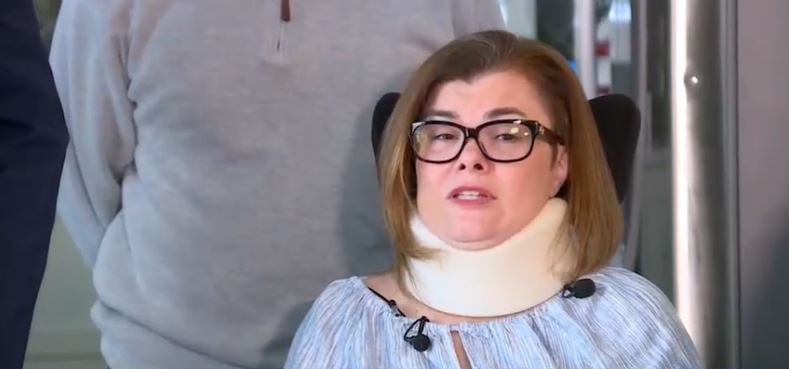
    MILWAUKEE (WISN) — A car slammed into a 70-year-old school crossing guard during morning drop-off at Pulaski High School, according to Milwaukee police.

The call came in just before 8 a.m. to South 25th Street and Oklahoma Avenue on Milwaukee’s south side.

“Having the children there witnessing it. They’re screaming. Parents are screaming. It was just all around not a good situation for all involved,” witness Annika Taylor told WISN 12 News Tuesday.

Taylor was traveling to work when she heard the crossing guard’s familiar whistle and stopped, but she said another car kept going.

“It pulled around,” Taylor said.

“Did you see that?” WISN 12 News Hannah Hilyard followed up.

“Yes, it pulled around the other car to get on through, and then they hit the crossing guard,” she replied. “I don’t think they realized that the whistle went off and that the crossing guard was standing there trying to help a child get through.”

Police confirmed that the driver remained at the scene, and first responders quickly transported the injured crossing guard to the hospital. The guard is well-known in the area for her consistent presence outside the school.

“There has not been a day that I’ve dropped (my son) off and she has not been there in the morning or in the afternoon helping the kids get … across the street safe,” one Pulaski mother who wished to remain anonymous told WISN 12 News.

She’d like to see traffic changes on Oklahoma Avenue for drop-off and pick-up times.

“A light or something, or maybe patrol officers, traffic patrol officers,” she said.

Taylor also emphasized the need for drivers to take their time.

“We need to all have a little bit more patience and take into account that if someone is stopped, there’s probably a good reason to it.”

Police did not arrest the driver. Instead, they said officers cited the driver for not having insurance. They said the guard did suffer serious injuries but is expected to survive.

Pulaski’s principal sent a letter to families on Tuesday, saying:

“Dear Pulaski High School Families and Staff,

“We value you as members of our school community, and we want to keep you informed.

“This morning while students were arriving for the school day, a crossing guard was hit by a car and was hurt. The Milwaukee Police Department and other first responders arrived to assess the situation and help the crossing guard. Unfortunately, we are not able to share any information on the person’s condition.

“We understand that some students and staff were in the area and that this event may be upsetting. If your child needs assistance, please contact the school office to be connected to the school counselor, nurse, psychologist, or social worker. School staff may access the Employee Assistance Program to learn about available options.”

Please note: This story was provided to CNN Wire by an affiliate and does not contain original CNN reporting. This content carries a strict local market embargo. If you share the same market as the contributor of this article, you may not use it on any platform.
Family of teen killed in DUI crash raises money for scholarships for future medical students

By Julie Salomone

Click here for updates on this story

    APOLLO BEACH, Florida (WFTS) — A Hillsborough County family has created a scholarship fund in memory of their 16-year-old daughter, who died in a DUI crash last month.

Lexi Ringo was in the passenger’s seat of her mother’s vehicle.

The day after Christmas, the mother and daughter were returning home from golf practice.

Hillsborough County deputies said a 21-year-old drunk driver ran a stop sign and crashed into the family’s car.

The family was just three miles away from home.

“She had a great lesson, and we were on our way home from the lesson,” said Chrissy Ringo, Lexi’s mother.

The crash happened at the intersection of 30th Street Northeast and Covington Garden Drive in Apollo Beach on Dec. 26, around 5:15 p.m.

“From the time she was hit to the time that she was pronounced dead was exactly one hour,” said Chrissy.

The 16-year-old attended Winthrop Prep. She loved golf, dance, cheer, and Disney.

She recently became a Tampa Bay Buccaneers fan. She was an honors student who wanted to become an orthopedic surgeon.

She volunteered on the weekends at Sarasota Memorial Hospital and the First Tee.

She had dreams of attending the University of Florida.

Her family has raised $100,000 so far to start a scholarship fund to help future medical students at UF.

“It’s called Lexi’s Legacy because we’re going to continue to honor everything that she did well and give scholarships to kids who are also on the same path — and then in a way, it allows me to still be connected to my daughter,” said Chrissy.

“I am amazed at something as tragic as my daughter’s death is now giving our family an opportunity to help other people and we’re so happy to do it. We’re excited to be able to do that and to me, that’s just God,” she added.

Her family said they rely on their faith as they cope with the loss of their daughter.

“I would love to tell people to focus on the present, the now, love your kids,” said Tim Ringo, Lexi’s father.

The Hillsborough County Sheriff’s Office said Dominic Frye, 21, was arrested and charged with DUI manslaughter and driving under the influence with property damage or personal injury.

Please note: This story was provided to CNN Wire by an affiliate and does not contain original CNN reporting. This content carries a strict local market embargo. If you share the same market as the contributor of this article, you may not use it on any platform.

Tampa police can now see what you see during 911 calls with groundbreaking new technology

By Jada Williams

Click here for updates on this story

    TAMPA, Florida (WFTS) — Since the age of dialing 911, all of your needs are met based on what you can tell the person on the other end of the call.

Tampa Police Department is now allowing callers to show as well as tell through a partnership with Prepared 911. And that’s just one of many new technology advancements happening this year.

Here’s what you can expect. Prepared 911 allows text-based emergency communication with live video streaming, real-time translation through body-worn cameras supporting 54 languages and an AI-powered policy assistance system for officers in the field.

“The goals of this technology is not to replace officers. It is actually to help our officers in their safety, ensuring that they can go home safe at night,” said Tampa Police Chief Lee Bercaw during Monday’s demonstration.

Tampa Bay 28 reporter Jada Williams went inside the dispatch center to see firsthand how these revolutionary tools are changing emergency response in the city.

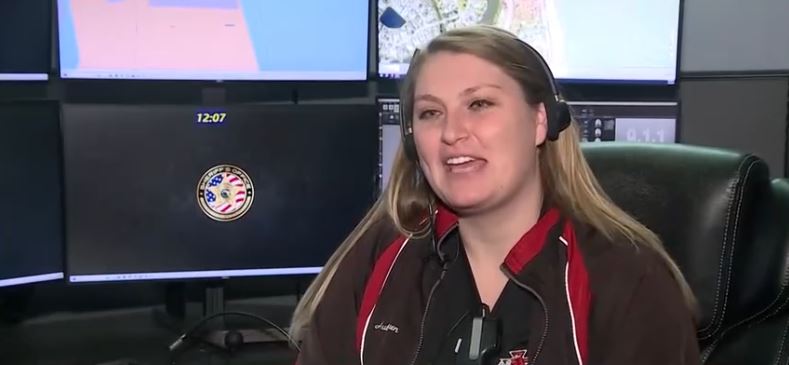
The Prepared 911 system represents the most significant advancement in emergency communication technology for the department. When residents call 911, dispatchers can now send a text link allowing callers to share live video and photos of ongoing situations directly with responding officers.

“You dial 911, dispatchers are typically trained to listen to everything, so they’re really relying on their ears. Today we get to go live and see things that callers are calling in about,” said Communications Supervisor Richard Parsons.

During the demonstration, Williams experienced the technology herself, receiving a text message from dispatchers and streaming live video directly to the 911 center. The process was seamless. After dialing 911 and speaking with dispatchers, she received a text link, tapped to begin live streaming, and granted camera permissions. Within seconds, dispatchers could see everything through her phone’s camera in real-time.

The video feed provides officers with crucial real-time intelligence about what they’re responding to, including details about weapons, suspect descriptions and scene conditions that could affect their safety and response strategy.

“If somebody’s on the phone saying someone’s with a gun, and we can’t get that type of information, now we can see it. What type of gun is it? Is it an automatic weapon? So all of that could change our response,” Chief Bercaw explained.

“It happens instantly, with no regard to drive time, no regard to, ‘hey, what’s your phone number?’ It’s on everyone’s phone,” Parsons said.

The body-worn camera translation feature addresses a critical need in Tampa, where approximately 25% of the population speaks a language other than English at home, according to Census data.

The system can translate conversations in real-time across 54 different languages without requiring backup officers or phone-based translation services.

Our cameras also watched as officers demonstrated the technology’s capabilities. An officer presses a button with two protruding dots on their body-worn camera.

“Translation, press and hold button, then say translate to x or auto detect,” the system announces. “Auto detect. Automatic detection enabled.”

The person in need of help can then start talking. The system will immediately identify the language and provide English translation.

“Time is of the essence. If somebody was just a victim of a crime and they have a suspect description, we need to get that information out so we can get that person off the street and keep our community safe,” said Jaclyn Douillard, a field training officer.

The technology proves particularly valuable in downtown Tampa and the Ybor area, where tourists and cruise ship passengers frequently need police assistance but may not speak English. Officer Douillard said Russian speakers have been particularly common among cruise ship passengers recently.

“It’s just something that really bridges that gap where they’re able to trust the Tampa Police Department to help them, and they’re comfortable coming here,” she said.

The hands-free design addresses a critical safety concern for officers. Unlike using Google Translate on a phone, which requires officers to hold a device and look down at screens, the body camera system allows officers to maintain their defensive stance and situational awareness.

“Officers don’t like things in their hands, and you’ll see a lot of officers stand in this manner, and having a phone in your hand with Google Translate is very detrimental. Dropping a phone is a lot harder than just releasing a button, so it does help with the safety,” officials explained.

The third technology introduces an internal AI chatbot system that allows officers to quickly access department policies and procedures through a mobile app. Officers can type questions like “I’m on a domestic violence call, what are some things I need to know?” and receive immediate responses.

Think of it like having a Google search specifically designed for police policies and procedures, officials explained. The system provides instant access to the department’s vast collection of policies without officers having to search through lengthy manuals or wait for supervisory guidance.

Future versions will integrate this capability directly into body-worn cameras, enabling voice-activated conversations with the AI system while officers remain hands-free in the field.

The video streaming system includes multiple safeguards to protect caller privacy and ensure public safety. Callers must explicitly grant permission through phone prompts before video access is enabled. Once calls conclude, the chat session automatically closes and callers receive notification that monitoring has ended.

“The caller has to give permission to the 911 dispatcher,” Parsons said. “Once the call is finished, then the entire chat will kind of go away, and basically, we will send you an updated chat that this call is closed.”

He adds that dispatchers would never direct callers to put themselves in danger for better video footage.

“We want to make sure that the caller is in a safe spot. We’re going to make sure that you aren’t going out to try to apprehend a suspect or make the suspect, ‘Hey, turn around so I can get you on camera.’ We want to make sure that everyone is safe,” Parsons explained.

All video and photo evidence collected through the system becomes part of the official case record and can be used in court proceedings.

The Prepared 911 system receives funding through Hillsborough County 911 services, while the translation and AI policy features are included in Tampa Police Department’s updated contract with Axon as part of an enhanced technology package.

Please note: This story was provided to CNN Wire by an affiliate and does not contain original CNN reporting. This content carries a strict local market embargo. If you share the same market as the contributor of this article, you may not use it on any platform.

‘Find purpose in sorrow’: Rexburg family helping others process grief with children’s book

By Erik Nielsen

Click here for updates on this story

    REXBURG (eastidahonews.com) — Halfway through Emily Miller’s pregnancy, she and her husband, David, learned news no parent ever wants to hear — that their long-awaited second son would not survive after birth.

Over the years, David channeled that grief into a poem, which has since been adapted into an illustrated children’s book. His hope is that the book can provide comfort and hope to anyone who has lost a loved one.

The book, “Twice as Well,” is self-published and available.

Baby Daniel had been eagerly anticipated by the Millers and their first son, Charlie, who is now 19 years old. Charlie was born after years of trying to conceive; Daniel came several years later.

But that anticipation quickly turned to sorrow when the family learned Daniel had a lethal form of dwarfism.

“There were already a lot of big feelings around it,” David said. “And then when we got the news of his condition, it just felt like a very significant period in our lives.”

From that moment on, the family lived with what grief counselors often call “anticipatory grief” — the weight of knowing what was coming without being able to stop it.

“We were told by the nurses and grief counselors that this was something that could either bring us together as a family or pull us apart,” David said.

“I knew it would be a significant period in our lives, (and) that we would feel the effects of for the rest of our lives,” he said. “So, I began taking notes. I would carry around 3-by-5 cards in my pocket — in my shirt pocket or my pants pocket.

“And I would journal on these cards. I would write down thoughts that were motivational and inspirational, things that came to me in conversations with Charlie when he was 4 (years old), or with Emily, or with other people. I really started to compile a lot of thoughts because I understood this was going to be an important time.”

At first, David had no ambition beyond helping himself and his family process their grief and remember Daniel in a way that also allowed them to move forward. As the Millers searched for resources to help Charlie, they found many lacking.

“They did a really good job acknowledging sadness and disappointment,” Emily said. “But we felt like they would actually make him feel worse, not better.”

“That’s when we started wishing for something different,” she said, “something that acknowledged the sadness but also helped build forward.”

Over time, David began sharing his writings with his family, reading them to his children and occasionally sharing them with others facing similar losses.

“People really connected with it,” he said. “Especially other fathers.”

Eventually, David realized the writing could be helpful to others in book form.

“This was never about turning it into a profit machine,” he said. “It was something that was useful for us as a family.”

David chose to self-publish the book, which allowed him to preserve its spiritual message.

“I think we all long for the idea that there’s more than this life,” he said. “That’s a pretty universal feeling.”

The illustrations, which have a soft, whimsical quality, were created by Shana Keegan, an artist the Millers discovered at BYU–Idaho.

“When approaching such a tender subject, I relied on David and Emily’s thoughtful input on what they wanted to see depicted,” Keegan said. “I tried my best to create warm and inviting imagery so readers could feel happy and hopeful. I also really enjoyed illustrating elements that were meaningful to the family, like the colorful hot air balloons, which are a symbol of hope. It was an honor to work on this story.”

Keegan visited the Millers’ home, met the children and incorporated subtle details from their lives. The family depicted in the book does not represent the Millers exactly, allowing as many families as possible to see themselves in the story.

For the Millers’ children, “Twice as Well” is more than a book; it’s a shared language for remembering their brother.

“Before every basketball game, I kind of think, ‘Whatever I do tonight is for Daniel,’” said Samuel, 12.

Daughter Ada, 9, described moments when she feels protected — times she believes her brother is still watching over her. “I think he’s like our guardian angel,” she said.

David hopes the book will provide encouragement to families as they move through the grief process.

“Even though you may be going through something really hard and tragic,” he said, “it doesn’t have to destroy the rest of your life.”

Instead, the book encourages families to honor the people they’ve lost by continuing to live fully.

“You can find purpose in sorrow,” he said. “You can honor the person you’re missing by continuing to live a full life.”

“This isn’t something we’re trying to make money from,” Emily said. “The hope is just that it can comfort people, freely.”

Please note: This story was provided to CNN Wire by an affiliate and does not contain original CNN reporting. This content carries a strict local market embargo. If you share the same market as the contributor of this article, you may not use it on any platform.

Colorado teacher arrested, accused of making children pretend to be hypnotized in sexually explicit videos

By Sadie Buggle

Click here for updates on this story

    BOULDER COUNTY, Colo. (KRDO) — A Colorado teacher who worked at multiple schools along the Front Range is now behind bars, accused of persuading multiple juveniles to act as if they were under hypnosis before directing them to perform sexually explicit acts on camera. Investigators say he sold the content online until a series of online safety alerts exposed the scheme.

According to the Boulder County Sheriff’s Office, 39-year-old Patricio Alejandro Illanes was arrested on Jan. 5 after a months-long investigation into tips from Meta, Inc., reporting that an account he owned and operated was creating and selling sexually explicit content.

Those tips led Boulder detectives to search Illanes’ personal cell phone, which revealed multiple sexually explicit videos involving apparent juveniles that had been shared on various messaging applications and paid subscription pornography sites.

The sheriff’s office said an investigation into that content revealed that Illanes had instructed juveniles to “perform a script” in front of a green screen while pretending to be in a hypnotic state. The sessions escalated to victims removing clothing and engaging in explicit acts at Illanes’ direction. Illanes allegedly filmed and photographed these sessions before editing the content “for sexual gratification” and selling it online.

Boulder officials say they’ve already identified four out-of-state individuals who were involved in these “hypnotic role-play sessions” as juveniles.

Illanes now faces 50 charges, including dozens of Class 3 felony counts related to sexual exploitation of a child – covering the creation, production, possession, and distribution of explicit material – as well as 10 misdemeanor counts of unlawful practice of an occupation or profession.

Detectives said they also recovered additional “hypnosis-like” photographs that appear to depict clothed students in a school setting, further raising concerns about Illanes’ access to minors through his multiple professional roles across the state.

At the time of his arrest, Illanes was an English teacher at Arvada Senior High School. The sheriff’s office confirmed that after administration was notified of the investigation, they swiftly placed him on administrative leave before terminating him.

However, authorities say Illanes had access to students for up to 10 years before that role in positions he held in schools, libraries, and youth programs across Longmont, Boulder, Lafayette, Denver, Erie and Arvada, including:

2010-2015: City of Longmont Children and Youth Services 2013-2017: New Meridian Alternative High School in Longmont 2015-2021: Longmont Library – Children and Teens Section 2017-2019: Centaurus High School in Lafayette 2019-2020: Mapleton School District in Denver 2019-2023: Erie Middle School & Erie High School 2024-2025: Arvada Senior High School Investigators are now asking for any current or former students and co-workers of Illanes who may have additional information related to this investigation to come forward.

Anyone who believes they or their child may have been a victim of Illanes is encouraged to contact the law enforcement agency where the incident occurred, the Boulder County Sheriff’s Office said.

The investigation involved assistance from multiple local, state, and federal agencies, including the FBI and law enforcement departments across Colorado, Oregon and Ohio.

Please note: This story was provided to CNN Wire by an affiliate and does not contain original CNN reporting. This content carries a strict local market embargo. If you share the same market as the contributor of this article, you may not use it on any platform.

Wedding barn restrictions take effect in 2026, but some lawmakers want to ease new permit law

By A.J. Bayatpour

Click here for updates on this story

    MILWAUKEE (WDJT) — For farm owners who rent out their barns for special events, including weddings, 2026 is ringing in a new state law that is forcing them to make a difficult choice.

Back in 2023, legislative leaders did some last-minute maneuvering to tuck new language into a broader bill that updates Wisconsin’s alcohol laws. That measure primarily allowed breweries to start making canned cocktails and seltzers while also allowing wineries to extend their hours.

Late in the process, leaders added language that regulated the wedding barn industry. Those restrictions, which took effect at the start of this year, require barn operators to either get a liquor license or a special non-sale event permit.

The new permits require barns to have a licensed bartender serving alcohol on the property, and the venues can only host a maximum of six events per year. Renters are only allowed to serve beer and wine.

A bipartisan group of lawmakers is circulating a bill that would loosen those restrictions.

“What the previous legislation is really trying to do is to force more venues to operate as bars that don’t want to,” State Sen. Andre Jacque (R-New Franken) said in an interview Friday, Jan. 2. “And this really isn’t making any sort of changes in terms of liability. This is simply preserving that consumer choice.”

The new proposal would allow wedding barns without a liquor license to host as many as 36 events in a year.

Renters would still be required to have a licensed bartender serving drinks, but they’d also be allowed to have liquor at their events.

“You ought to be able to serve a Wisconsin Old Fashioned at your wedding,” State Sen. Mark Spreitzer (D-Beloit) said. “And right now, even with those six events, you can’t do that.”

Afton Krysiak, co-owner of The Gathering Barn in Fort Atkinson, said she’s in the process of getting a liquor license for her venue. Hosting events throughout wedding season was part of the plan when they bought the land, so she said there was no real alternative.

“We, financially, would not be able to survive, seeing that we just bought the venue in 2022,” Krysiak said. “We wouldn’t have been able to survive on six [events] alone.”

Krysiak said the process of meeting liquor license requirements has proven costly. She said it cost about $30,000 to install necessary refrigeration equipment.

She added getting all of her questions answered about the licensing process has also been maddening.

“We’re still a little lost on what it is that we have to have,” Krysiak said. “Talking to the Department of Health, and the Department of Health says it’s the [Wisconsin] Department of Revenue, so we’ve gone back and forth a lot.”

For Jean Bahn, who owns the Farmview Event Barn near Oshkosh, getting a liquor license was never really an option.

“At my age, I do not want to start another business,” Bahn told CBS 58 Friday. “I have no experience whatsoever running a retail operation of any kind, especially alcohol.”

Bahn argued it was unfair to apply liquor licensing standards to farm owners who are only renting out their barns to private parties.

“We simply rent space,” she said. “This is no different than a group going to a city park and renting the pavilion and bringing in their food and drink.”

Others, including the Tavern League of Wisconsin, see it differently. Supporters of the law have argued it’s unfair for barns to rent out space for events where alcohol is served while avoiding the regulations other venues face.

Spreitzer said he believes the bill he and Jacque are now circulating represents a good compromise. He hoped to move forward with the bill before the current two-year legislative session wraps up in March, when lawmakers shift into campaign mode.

Since legislative leaders, including Senate Majority Leader Devin LeMahieu, approved adding the wedding barn language to the 2023 bill, it’s highly unlikely this bill would get a vote in the Senate.

Spreitzer said the bill’s supporters might try to get their bill in through the backdoor, adding their own language to a different bill as an amendment.

“For a lot of these venues, their wedding season starts in May,” Spreitzer said. “We still have time to fix this, but we don’t have a lot of time.”

Please note: This story was provided to CNN Wire by an affiliate and does not contain original CNN reporting. This content carries a strict local market embargo. If you share the same market as the contributor of this article, you may not use it on any platform.
The Krumbah family speaks out after court grants supervised release to son’s killer

By Dan Hanson

Click here for updates on this story

    RICHLAND, Wash. (KAPP) — A Benton County judge has granted supervised community release to the man found not guilty by reason of insanity in the killing of a Richland Instacart driver, allowing him outings from a state mental hospital despite strong objections from prosecutors and the victim’s family.

Aaron Kelly, who was diagnosed with schizophrenia, will now be permitted supervised outings with hospital staff and unescorted movement on the grounds of Eastern State Hospital in Centralia, where he has been confined since being found not guilty by reason of insanity in February 2024.

On Dec. 31, Benton County Superior Court Judge Jackie Stam granted Kelly’s request for “limited conditional release,” nearly three years after he shot and killed Justin Krumbah while the victim was working as an Instacart delivery driver at the Richland Fred Meyer on Feb. 7, 2022. Kelly also seriously wounded store employee Mark Hill in the random shooting.

The decision has reopened wounds for Krumbah’s family and reignited community safety concerns about the random nature of the violence that shocked the Tri-Cities area.

“We’ve always been taught to be responsible for our own actions and to be punished if we do something wrong, and I don’t feel like he’s being punished,” said Karen Mullins, Krumbah’s mother. “We no longer have Justin, and he gets to do basically whatever he wants.”

Krumbah’s sister, Krista Schaaf, remembered her brother as energetic and loving.

“ADHD in a bottle, but fun. He was all over the place. He was the best brother, the best uncle, the best friend. He was amazing, there’s just no other way to put it. You can ask anybody,” Schaaf said. Schaaf also sent Apple Valley News Now a statement she wrote with the support of her family:

“In our opinion, we have felt very unheard and felt we did not get the best representation we could have gotten through this process. The whole prosecution team was slowly phased out with job changes and retirement, as well as never having the same judge two hearings in a row; possibly overlooking crucial information as they “briefed” the case ahead of time. While Kelly was at Eastern State Hospital, he had multiple evaluations done, one in which Dr Yocum made a note that the hospital described Kelly as an “escape risk” due to the “very intricate maps” he previously drew of the hospital’s grounds, including the “surrounding hills, landscape, and where [patients] and staff congregate.” This was noted at a high-level security hospital, where Kelly was transferred to Western State Hospital and then again to Maple Lane. Maple Lane, which, according to their website, “[e]ntrances and exits are controlled by staff. The outdoor spaces for the residents are enclosed by fencing.” Not a highly secure facility, which I feel this individual needs.

Another important fact was another evaluation by Dr Brooke England states, “Mr. Kelly denied substance use, and this was confirmed by his friend, who reported only occasional experimentation with marijuana in college and no evidence of significant use before his arrest.” If this is the extent of his substance abuse, why such a need for treatment, which is off campus, to the hospital where he is placed? This supposedly is one of the needs for off-ground privileges?! In the last evaluation done by Dr. Wendi Wachsmuth before the final competency hearing, she states, “his greatest asset, intelligence, is also a liability for him and his success in treatment. There is a high likelihood that he will convince not only himself, but anyone untrained, of the diagnosis and treatment of mental illness and violent behavior, that he no longer needs treatment. Given the nature of his delusional belief system and his ability to mask his disorder from others, should he discontinue treatment, his likelihood of repeating similar acts is greatly increased from what is already considered high.” I don’t believe either doctor who evaluated him lately has worked with violent offenders, like those in the prison system, which I felt should be an extra priority, given prior information. Given these obvious factors, we believe the current prosecutors have effectively thrown in the towel and have denied the information and pro bono assistance Andy Miller offered to help get the case to trial, rather than agreeing to the insanity plea. It has made it especially difficult to navigate this process, trying to do what’s most important: getting justice for Justin. We believe that, given Eisinger’s lack of experience, he is not fit for the position and should resign to protect the community from individuals like Kelly.” – Krista Shaaf with support of her family.

Kelly applied for the conditional release on Feb. 20, 2024, about a year after his insanity verdict. Under the court’s order, Kelly can now visit restaurants and businesses with a staff escort from Eastern State Hospital and move freely around the hospital grounds without supervision.

The release comes with strict conditions tied to his ongoing mental health treatment and public safety. Kelly must remain in the care of the Department of Social and Health Services, adhere to his treatment plan, and attend therapy. He must remain in sight during supervised outings and requires court and hospital permission to leave Washington state. His release privileges may be revoked for noncompliance with hospital rules or for posing a safety risk.

Benton County Prosecutor Eric Eisinger opposed the release, arguing Kelly had not spent sufficient time in treatment and expressing concerns about public safety.

“With a staff escort from Eastern State Hospital, he can go into restaurants and businesses and engage with the public. I’ve had a lot of concerns about whether that would be safe to do throughout this litigation. As you remember it was only in February of 2024 he was found to be not guilty by reason of insanity,” Eisinger said.

However, multiple state agencies and independent mental health experts supported Kelly’s request, determining his likelihood of reoffending was “relatively low.” After an independent evaluation called a risk review board backed the recommendation, Eisinger said he had limited legal options.

“The law requires me to come forward with an expert that says it’s not appropriate, and here’s why, and after everybody weighed in and we had two separately hired experts that we paid for out of our county budget, we simply weren’t able to put on that kind of testimony,” Eisinger said.

The case has heightened community safety concerns due to the random nature of the violence. Kelly had no prior interaction with Krumbah and no known interaction with Hill. The shooting occurred in an everyday public setting, creating a sense of vulnerability among residents.

Community anxiety was further fueled by Kelly’s history of concerning behavior that had not led to significant legal intervention before the shooting. This included a previous burglary charge that was dismissed and a denied protection order request from a former roommate who accused him of unlawful harassment.

The victim’s family has criticized the prosecutor’s handling of the case. Schaaf questioned why Eisinger, a newly elected prosecutor, didn’t seek additional help with such a significant case.

“Why deny the help you obviously needed and could’ve used to fight your first huge case, especially a murder case like this?” Schaaf asked.

Eisinger defended his office’s efforts, saying they opposed the release as strongly as possible within legal constraints.

“I think the family is grieving. I think they’re upset, and I understand. I understand that they’re upset because this was terrible. At the same time, we developed our case and have opposed this as strongly as we could have,” Eisinger said.

For Krumbah’s family, each court proceeding reopens their trauma.

“It’s a new normal…something we just have to deal with. I mean, there’s no rule book, there’s no…we go…it’s day by day, and just about the time we heal or start to heal, then another court thing comes up and rips off the band-aid, and we start all over again,” Mullins said.

Under Washington state law, individuals found not guilty by reason of insanity are committed to secure mental health facilities rather than prison. The prosecutor’s office must be informed if Kelly requests greater freedom in the future.

Kelly remains in state custody and cannot leave Washington without court approval. The court noted that future reviews could further adjust those privileges, meaning the case could return to court if concerns are raised by hospital staff or prosecutors.

The Feb. 7, 2022, shooting shocked the Tri-Cities community when Kelly walked into the Fred Meyer store and opened fire. Kelly was found not guilty by reason of insanity on Feb. 12, 2024, and was immediately committed to Eastern State Hospital, where he has remained under supervision in a locked facility until this recent court decision.

Please note: This story was provided to CNN Wire by an affiliate and does not contain original CNN reporting. This content carries a strict local market embargo. If you share the same market as the contributor of this article, you may not use it on any platform.

Suspect in 1997 cold case murder of elderly woman arrested in Oregon

By Tim Fang

Click here for updates on this story

    SAN FRANCISCO (KPIX) — Nearly 30 years after an elderly woman was found dead in her East San Jose apartment, authorities in the South Bay have arrested and charged a man with murder.

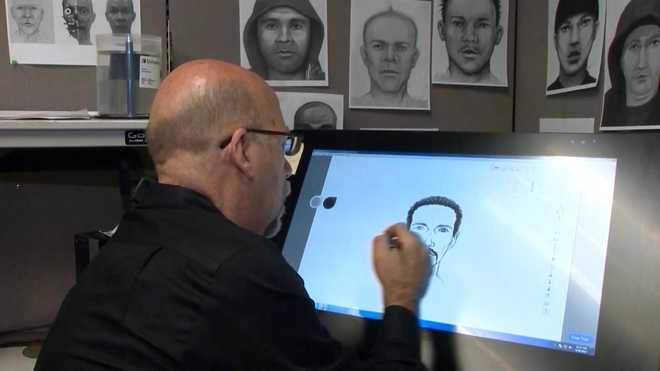
San Jose Police announced Wednesday that 75-year-old Joe Contreras of Dallas, Oregon was arrested Dec. 19 in the 1997 killing of 84-year-old Alice Sharitz. Contreras was extradited from Oregon to California and was booked into the Santa Clara County Main Jail.

“Time does not erase responsibility,” Police Chief Paul Joseph said in a statement. “And thanks to the relentless work of our Homicide Unit and the District Attorney’s Cold Case Unit, it never will.”

According to officers, Sharitz was found dead in her home on North Jackson Avenue on the afternoon of Oct. 6, 1997 by a neighbor who was delivering a card.

An autopsy revealed Sharitz had two stab wounds to the chest, multiple fractures, neck injuries and numerous facial abrasions. The coroner at the time determined the case of death to be multiple traumatic injuries. Despite what was described by police as “exhaustive investigative efforts”, the case went cold for more than 20 years.

A male DNA profile developed from DNA collected from the crime scene was submitted for advanced forensic genetic genealogy analysis in 2021. In Oct. 2024, police said the sample identified Contreras as a potential source of DNA.

Two months later, a DNA sample was collected from Contreras with the help of Oregon authorities. In February of last year, the Santa Clara County District Attorney’s Office crime lab confirmed the DNA from the crime scene matched Contreras’ DNA.

Detectives and an investigator from the DA’s office Cold Case Unit traveled to Oregon and interviewed Contreras. An arrest warrant was later obtained and the suspect was safely taken into custody.

“Justice for Alice Sharitz and her loved ones was long in coming, but it is here. It took DNA. It took genealogy. And it took the mindset of the SJPD and the DA’s Cold Case Unit to never give up on a victim, ever,” said District Attorney Jeff Rosen. Jail records show Contreras is being held without bail. He is scheduled to appear in court Wednesday afternoon.

Please note: This story was provided to CNN Wire by an affiliate and does not contain original CNN reporting. This content carries a strict local market embargo. If you share the same market as the contributor of this article, you may not use it on any platform.