Mother says she couldn’t care for her 3-year-old while zip-tied during Wilder raid

By Victoria Rodriguez

Click here for updates on this story

    CANYON COUNTY, Idaho (KIVI) — A Wilder woman says she was unable to care for her 3-year-old son as she was zip-tied during Sunday’s federal raid in Wilder.

During the law enforcement operation, agents took her father into ICE custody. He was just one of 105 people detained by ICE.

Juana Rodriguez attended the event at La Catedral Arena with her father and young son, unaware that alleged gambling was taking place at the venue.

“A lot of people would have been smart and would’ve known that, you know— not to go or not to be there, but it was a family event,” Rodriguez said.

Before agents restrained her with zip-ties, Rodriguez told her father to stay close to her and her son. Once her hands were bound, she says she couldn’t tend to her child’s basic needs.

“I told my dad I was like, please stay with me, don’t go anywhere— just stay with me and, and the baby,” Rodriguez said.

She noticed other parents with young children who weren’t restrained and asked agents for help.

“I did see a couple of people that had younger kids like mine that were, uh, not zip-tied, so I asked one of the agents, and I was like, ‘Can you just please untie me? My son needs me right now,” Rodriguez said.

Rodriguez watched helplessly as her son cried for food and water while she remained restrained.

“He kept asking me, ‘Mom, I’m hungry, Mom, I’m hungry, Mom, I’m thirsty,’ and I wasn’t able to do anything,” Rodriguez said.

After processing, her father was taken into ICE custody. Rodriguez says the most difficult part was that her son witnessed everything.

“My dad was doing his process, and unfortunately, he wasn’t able to make it out, so they ended up taking him. It’s just— it’s so hard. The thing that breaks me more is that my son [had] to be there and he had to witness everything,” Rodriguez explained.

Rodriguez says her son and father share a close bond. Now, she struggles to explain her father’s absence to the 3-year-old.

“Now he will see a cop car or any type of person with the suit, and if he knows he has weapons or anything, he will be like ‘the police, the police, [where’s] grandpa,'” Rodriguez added.

The raid fractured multiple families other than hers, affecting employment and daily routines, Rodriguez said.

“You’re affecting a lot of jobs; there are people that, you know, couldn’t return back to work, and my dad was one of them,” Rodriguez said.

The experience has left lasting emotional scars on both Rodriguez and her son.

“I might say it’s just a 3-year-old, but I know it’s hitting him because every day he’ll ask me and he’ll be like, ‘Where’s my grandpa?'” Rodriguez said. “He saw how we were separated from my father, his grandpa, and it’s just something that is going to haunt us for the rest of our lives.”

This story was initially reported by a journalist and has been, in part, converted to this platform with the assistance of AI. KIVI’s editorial team verifies all reporting on all platforms for fairness and accuracy.

Please note: This content carries a strict local market embargo. If you share the same market as the contributor of this article, you may not use it on any platform.
“It was magic”: A father hunts moose with his adopted son with Down syndrome

By Steve Dent

Click here for updates on this story

    BOISE, Idaho (KIVI) — Brady Murray drew a moose tag for unit 73 in southeast Idaho, and what followed captivated the hunting community, with his son Cooper attempting to harvest a moose.

Brady grew up in Idaho and now lives in Utah. In 2007, the Murray family welcomed their first son. Nash was born with Down syndrome, and after advocating to adopt orphans with disabilities, the Murray family adopted Cooper out of China.

“People with Down syndrome are super capable, you just got to give them a shot,” said Brady. “We loved Nash so much we felt in our hearts we should adopt another child that has Down syndrome, and that’s adopted Coop.”

This past summer, Brady and Cooper spent hours practicing shooting at the range. When August rolled around, they started scouting for moose in unit 73. This father-son duo spent essentially every weekend hunting through September.

“Yeah, that was one thing I was so impressed with Coop, he never complained once,” said Brady. “We were on long four-wheeler rides, big hikes, and we were up there when it was cold.”

In October, they brought along Nash and Cooper’s other brother, Mason. On this trip, they found a moose, and after about an hour of stalking it, Coop took his shot and harvested a giant moose after all that work.

“It was magic,” said Coop. “Were you nervous?” asked Brady. Coop let out an emphatic no. “He never gets nervous for whatever reason,” said Brady.”

Throughout the saga, Brady was posting updates in an Idaho Facebook forum, and the community started following their journey. Throughout the process, people offered advice. They supported the duo, and they cheered when they saw Coop with the moose. It also led to a big surprise.

“I was just so amazed when Chad Draper of Blue Ridge Taxidermy out of Blackfoot reached out and said, ‘I’ve been following the story and I want to donate a shoulder mount of Coop’s moose as a gift to him, ‘” said Brady.

“I just think that is a great representation of what our Idaho hunting community really is.”

Please note: This content carries a strict local market embargo. If you share the same market as the contributor of this article, you may not use it on any platform.
5-year-old battling cardiomyopathy to receive new heart after 137 days in hospital

By Erin Rosas

Click here for updates on this story

    LEXINGTON, Kentucky (WLEX) — LEX 18 has been following Malia’s journey as she waited for a new heart amid her battle with cardiomyopathy. Now, she is set to receive a new heart, according to the Facebook page “Malia’s heart journey.”

The page read, “It’s hard to put into words what this moment means. After months of praying, waiting, and holding on through some of the hardest days, Malia has been given the gift of a second chance at life.”

“We ask for your continued prayers as she heads into surgery tomorrow, and we want to thank everyone who has been here with us on this long journey — every message, prayer, and bit of love has helped carry us through,” the post added.

Malia’s mother, Jerrica Croley told LEX 18 in August, “She gets about 100,000 views on her videos, but I feel like every last one of those is a prayer, and it helps. It helps me every single day.”

In September, students at William Wells Brown Elementary in Lexington showed their support for Malia by creating colorful cards full of drawings and inspiration for Malia. The cards included phrases like “Keep Fighting Malia,” “We Miss You” and “Get Well Soon.”

The post on Monday concluded, “A huge thank you to God, who has held us through every single day and made this moment possible.”

Please note: This content carries a strict local market embargo. If you share the same market as the contributor of this article, you may not use it on any platform.
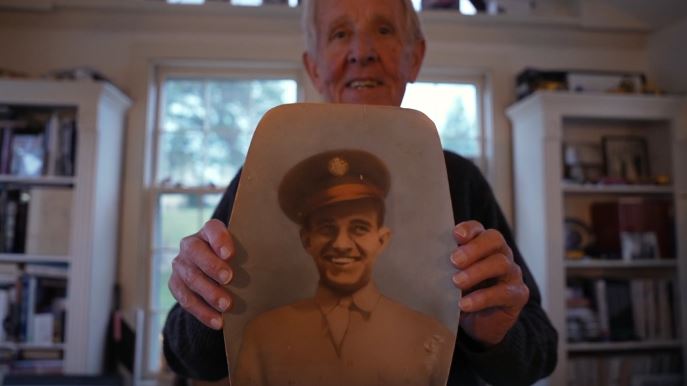
DC’s only outdoor statue of a Confederate general is back in a Judiciary Square park

By Jimmy Alexander

Click here for updates on this story

    WASHINGTON, DC (WTOP) — On Saturday, the National Park Service returned the statue of Brig. Gen. Albert Pike to its home after being in storage for over five years.

The only statue of a Confederate general in the nation’s capital was pulled down by ropes and chains and then lit on fire on Juneteenth 2020 by demonstrators who were protesting the murder of George Floyd.

The bronze statue of Pike, which was dedicated in 1901, was authorized by Congress and honors the leader’s more than 30 years as the Sovereign Grand Commander of the Ancient and Accepted Rite of Scottish Freemasonry.

Over the years, members of the D.C. government tried to have the statute removed, including in 1992, when the D.C. Council petitioned the federal government.

The statue’s return to the Judiciary Square neighborhood in the District is thanks to President Donald Trump’s executive order, “Restoring Truth and Sanity to American History.”

In August, the National Park Service put out a statement about the Pike statue that said, “The restoration aligns with federal responsibilities under historic preservation law as well as recent executive orders to beautify the nation’s capital and re-instate pre-existing statues.”

The statue of Pike sits on the corner of 3rd and D Street NW in a park by the headquarters of D.C.

As of Sunday, the statue, along with two John Deere cherry pickers, was surrounded by a chain link fence.

Please note: This content carries a strict local market embargo. If you share the same market as the contributor of this article, you may not use it on any platform.
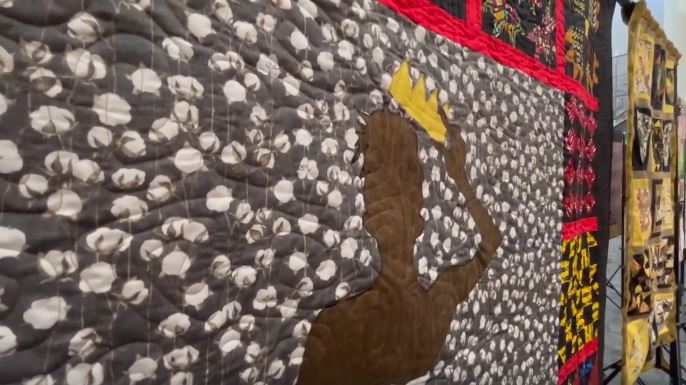
Middle schooler struck in head during PE by thrown ‘metal object,’ suffers brain injury

By Neal Augenstein

Click here for updates on this story

    MONTGOMERY OCUNTY, Maryland (WTOP) — The mother of a Montgomery County Public Schools middle schooler says her son suffered brain injuries after being struck by a thrown “metal object” during gym class last Wednesday.

Emily Diaz, who said her son’s name is Lenny, established a GoFundMe campaign, which has raised more than $30,000 as of Monday morning.

The boy was hit in the head “by what was described as a metal object thrown by another student,” according to an email to the Odessa Shannon Middle School community from Natasha Booms, principal of the school, located on Monticello Avenue, in Silver Spring, Maryland.

Diaz said her son’s injury “was an open skull injury and the bone fragments went into his brain,” she wrote. “He’s currently in PICU and on a breathing tube to help him breathe and recover.”

“Our thoughts and hearts are with the student and their family, and we are staying in contact to offer support and receive updates on their condition,” wrote the principal. “Our staff will continue to reinforce expectations for safety and appropriate behavior, and additional supports are available for students or staff who may need to talk about what happened.”

Diaz described her son as “a very smart, loving, adventurous young boy,” but “we are unsure of how he will be after recovery, but the possibilities of him being impaired are there,” in terms of speech, mobility and memory.

Please note: This content carries a strict local market embargo. If you share the same market as the contributor of this article, you may not use it on any platform.
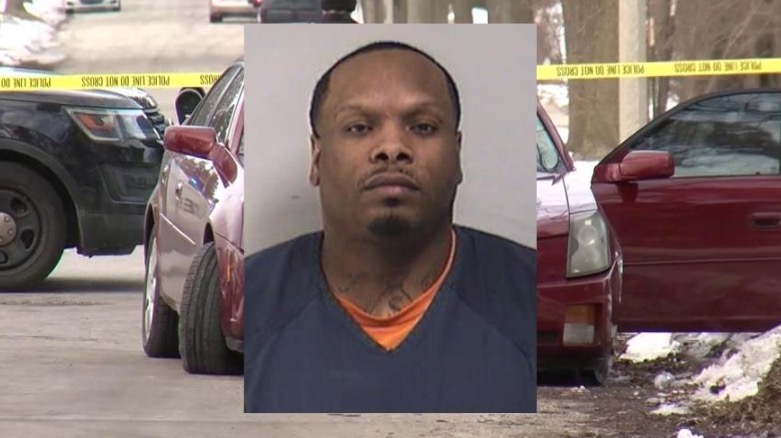
Pig kidney removed from man who set world record with pioneering transplant

By Neal Riley

Click here for updates on this story

    BOSTON (WBZ) — Surgeons at Massachusetts General Hospital have removed a pig kidney from a New Hampshire man 271 days after the innovative transplant.

Tim Andrews was 66 years old and suffering from end-stage renal failure when he received the genetically edited organ on Jan. 25. He holds the world record for longest time living with a pig kidney.

Mass General said Andrews has been experiencing “a period of decreasing kidney function.” He will go back on dialysis and is still on the list to receive a human kidney.

Upon receiving the transplant in January, Andrews said, “I believe this is the start of something that’s going to be fantastic.”

“It’s going to be the option for people that don’t want to be on dialysis, they want to be able to be with their kids and loved ones,” he said.

According to the National Kidney Foundation, there are more than 101,000 Americans on a waiting list for a kidney, but only 17,000 people receive one each year.

“Tim has been a selfless medical pioneer and an inspiration to patients with kidney failure around the world, and we extend to Tim our most heartfelt thanks for trusting the transplant clinical team with his care throughout this journey,” the hospital said in a statement.

Mass General surgeons performed the first successful pig kidney transplant into a living human in March of 2024. That patient, a 62-year-old from Weymouth, died two months later due to health reasons that were unrelated to the transplant, doctors said.

Mass General said it expects to perform a third pig kidney transplant later this year.

Please note: This content carries a strict local market embargo. If you share the same market as the contributor of this article, you may not use it on any platform.

Woman who lost her sight trains to run the New York City Marathon

By Nicky Zizaza

Click here for updates on this story

    BALTIMORE (WJZ) — A 66-year-old Baltimore woman is preparing to take on the world’s largest marathon even though she can no longer see the road ahead.

King was diagnosed with Retinitis Pigmentosa, a rare inherited disease that causes progressive vision loss. It began with trouble adjusting to dim light, then slowly narrowed her field of vision until, in 2024, she was declared legally blind.

But for Jackie King, seeing clearly has nothing to do with sight.

“I’m gradually losing my sight,” King said. “At first I didn’t understand what was happening. The movie theater would seem darker, and my eyes wouldn’t adjust.”

Dr. Stephen Pappas of the LifeBridge Health Eye Institute said there’s no cure for the disease, which damages the light sensitive cells of the retina. “Over time, the vision cells deteriorate and central vision can be affected,” Pappas said.

Instead of giving up, King found a new purpose. She started running.

“I saw other runners and said, ‘I want to run a marathon,’ even though I’d never run more than a mile,” she said.

King’s first race turned into a lifelong passion. But as her vision declined, she started missing obstacles, once tripping and falling during a half-marathon. That’s when she realized she needed help to keep running safely.

King connected with Achilles International, a group that pairs athletes with disabilities with volunteer running guides.

On Saturday mornings, she meets her guides, like Emmeline Leggett, and dozens of others at Patterson Park. Each runner and guide wears a bright yellow shirt, a symbol that no one runs alone.

“I’ve been with Achilles since the start of the Baltimore chapter,” Leggett said. “It’s about creating community and trust.”

With her guide by her side, King has regained her confidence. She’s spent 20 weeks training for the New York City Marathon after winning the lottery to run, she is set to run alongside other Achilles athletes from around the world.

Her daughter, Demerise, often cheers from the sidelines. “It’s awesome to see her run so well after everything she’s been through,” she said. “I’m so proud of her.”

For King, the race is about more than miles. It’s about perspective.

“I don’t want to be seen as a disabled athlete,” King said. “I’m an athlete with a disability. It’s a choice to keep going.”

When King crosses the finish line in New York, she may not see it clearly, but she’ll know she’s already won.

King will compete in this Sunday’s New York City Marathon with Achilles International by her side.

Retinitis Pigmentosa is a group of rare eye diseases that affect the retina (the light-sensitive layer of tissue in the back of the eye). RP makes cells in the retina break down slowly over time, causing vision loss, according to the National Institutes of Health (NIH).

According to the NIH the most common symptom is a loss of night vision that usually starts in childhood.

Please note: This content carries a strict local market embargo. If you share the same market as the contributor of this article, you may not use it on any platform.
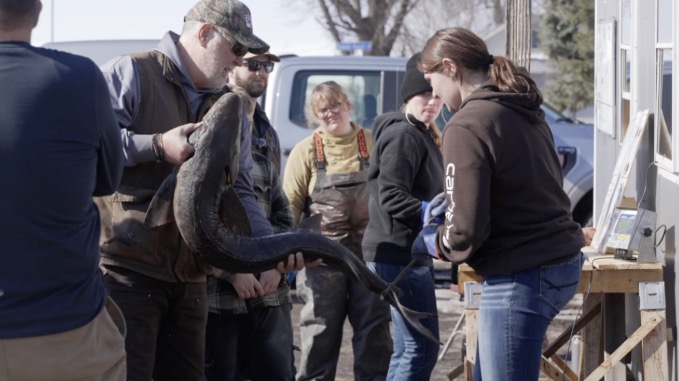
DNA test on Newton County black bear does not match Springfield man’s killer

By Shannon Becker

Click here for updates on this story

    LITTLE ROCK, Arkansas (KOAM) — The Arkansas Game and Fish Commission today announced that final DNA analysis from the Veterinary Forensic Science Laboratory at the University of Florida has confirmed that the DNA collected from the black bear killed in Newton County on Oct. 4 does not match the DNA of the bear responsible for the death of 60-year-old Max Thomas of Springfield, Missouri.

Thomas was found Oct. 2 in Sam’s Throne Campground of the Ozark National Forest. His body was discovered by a Newton County sheriff’s deputy during a welfare check at Thomas’ campsite requested by the man’s family.

A bear was euthanized by AGFC biologists three days after the incident, as size, physical characteristics and photographic evidence initially pointed to a high probability that it was the attacking animal.

The AGFC has had traps and game cameras in the area since shortly after the attack occurred. Only one bear has been seen on the game cameras and no bears have been caught in any of the traps deployed in the area.

Key Findings:

No Match: DNA samples collected from the victim of the fatal mauling at Sam’s Throne Campground in Ozark National Forest do not match the DNA profile of the male black bear killed in the immediate area. Concerns: Because the bear responsible for the attack is still at large, the AGFC is continuing efforts to locate and safely remove the animal from the vicinity. Safety Measures Remain: Sam’s Throne Campground and surrounding public areas remain closed to ensure public safety while the search and monitoring operations continue.

AGFC Director Doug Schoenrock says the agency will continue to be vigilant in its efforts to find the bear responsible for the attack.

“While we are disappointed that the initial search did not neutralize the threat, our commitment to public safety remains paramount,” AGFC Director Doug Schoenrock said. “We acted decisively based on the best evidence available at the time, and now that we have definitive forensic data, we are adjusting our strategy. Our teams will continue to work tirelessly to find the bear.”

The AGFC continues to urge all citizens and visitors in the Ozark National Forest area to remain bear aware:

Store all food, garbage and scented items in bear-resistant containers or secured inside a hard-sided vehicle. Never leave food unattended. Immediately report any aggressive or unafraid bear behavior to the AGFC radio room at 833-356-0824. Please respect the current closures of Sam’s Throne Campground and adjacent trails until further notice.

Additional information to help prevent bear conflicts is available at Bearwise.org

Please note: This content carries a strict local market embargo. If you share the same market as the contributor of this article, you may not use it on any platform.

Teen is first successful hunter of Missouri Bear Season

By Shannon Becker

Click here for updates on this story

    DOUGLAS COUNTY, Missouri (KOAM) — Missouri black bear season opened October 18 and we learn a teen was the first successful hunter on opening day 2025.

The Missouri Department of Conservation share a special family photo of Corbin Wallace, 16, who was hunting with his grandfather Robert Wallace on private land in Douglas County when he harvested a 300 lb. (boar) bear.

Black bear season runs through Oct. 31. You must have a bear tag obtained in the annual random draw earlier in the year to be eligible to hunt.

Read more how to apply in 2026 and read about the bear management zones including the harvest limits as the population continues to recover annually in the show me state.

Black Bear Management Zones Black bear hunting is allowed south of the Missouri River in three Black Bear Management Zones (BMZs). You may hunt only in the BMZ specified on your permit.

BMZ 1: The portion of Missouri west of a line running north from the Arkansas border on U.S. Highway 63 to U.S. Highway 60; west on U.S. Highway 60 to MO-360; west on MO-360 to Interstate 44; west on Interstate 44 to the Oklahoma border.

BMZ 2: The portion of Missouri east of a line running north from the Arkansas border on U.S. Highway 63 to Interstate 44; east on Interstate 44 to State Highway 47; north on State Highway 47 to the Missouri River; east along the Missouri River to the Illinois border

BMZ 3: The portion of Missouri south of a line running east from the Kansas border along the Missouri River to State Highway 47; south on State Highway 47 to Interstate 44; west on Interstate 44 to U.S. Highway 63; south on U.S. Highway 63 to U.S. Highway 60; west on U.S. Highway 60 to MO-360; west on MO-360 to Interstate 44; west on Interstate 44 to the Oklahoma border

Please note: This content carries a strict local market embargo. If you share the same market as the contributor of this article, you may not use it on any platform.

Former police officers create organization for first responders who encounter the unexplained

By Nate Eaton, EastIdahoNews.com

Click here for updates on this story

    PHOENIX (eastidahonews.com) — Two longtime Arizona law enforcement officers have launched a unique organization aimed at helping police officers, firefighters, EMTs and other first responders process encounters with things they can’t explain — from strange lights in the sky to unexplained voices on 911 calls.

The group, called UAP PD — short for Unidentified Anomalous Phenomenon Police Department — was co-founded by Mary Anne Robb and David Rich, both retired from the Gilbert Police Department after decades of service.

Robb and Rich said the idea came after realizing that while military pilots and civilians are increasingly coming forward about mysterious sightings, first responders largely stay silent — often out of fear of ridicule or professional consequences.

“Why aren’t law enforcement and first responders talking?” Robb told EastIdahoNews.com. “They see things on duty they can’t explain — lights in the sky, strange sounds, even figures — but they won’t say anything because of the stigma. They’re supposed to know what they’re looking at, and when they don’t, it’s terrifying.”

Rich knows that silence firsthand when, as a school resource officer in 2017, he was asked to respond to a chilling 911 call. It came from a phone at a local high school and, according to Rich, contained a whispered voice saying, “I scare.”

When Rich pulled surveillance footage from the school, he said no one was anywhere near the phone when the call was made.

“I checked everything — the phone company, the lines, the recordings. There was no logical explanation,” Rich said. “I was a total skeptic until that moment.”

When he brought the case to a supervisor, Rich said he was told to “drop it” and not file a report. Later, he learned other officers who responded were also warned not to speak about what they’d experienced.

“Police work is all about credibility,” Rich said. “If an officer says he saw Bigfoot or a ghost, that becomes a joke — and it can destroy his reputation on the stand. That’s why so many never talk.”

Robb, who spent 34 years with Gilbert Police, said she and Rich founded UAP PD to give those officers and first responders anywhere in the world a place to share their experiences safely.

“We have over 800,000 officers in the U.S.,” Robb said. “They’re out there every day, all night, under open skies. You can’t tell me they aren’t seeing things. They just need someone they can trust.”

Since launching two years ago, UAP PD has collected more than 80 firsthand accounts — from across the U.S. and as far away as Australia. Some involve UFOs or “unidentified aerial phenomena.” Others describe ghostly encounters or strange creatures.

Robb often travels to meet first responders face to face. She recently went to Utah after a police officer there confided he’d seen what he believed to be a Bigfoot.

“He thanked me for coming because he’d kept it inside for years,” she said. “He was afraid to tell anyone — afraid it would ruin his career.”

The organization also offers connections to counselors, clergy and peer support for those shaken by such experiences.

“These things create trauma,” Rich said. “First responders are trained to control chaos. But when something happens that doesn’t fit what they know is real, it can shake them deeply.”

Robb and Rich speak at conventions, symposiums and law enforcement conferences, urging others to share their stories. Their mission, they said, isn’t to convince skeptics — just to create a judgment-free space.

“We don’t need people to believe in ghosts or UFOs,” Rich said. “We just ask them to admit there are things in the world we don’t yet understand — and to give first responders the grace to talk about it.”

Robb added, “It’s about helping the men and women who protect us every day deal with experiences that don’t fit inside a police report.”

Please note: This content carries a strict local market embargo. If you share the same market as the contributor of this article, you may not use it on any platform.