Luigi Mangione-inspired musical coming to New York City this summer

By Alexa Herrera

Click here for updates on this story

    NEW YORK (WCBS) — A musical comedy based on Luigi Mangione, Sean “Diddy” Combs and Sam Bankman-Fried is heading to New York City for three dates.

“Luigi: The Musical” is about the three high-profile inmates who were held at the Metropolitan Detention Center in Brooklyn at the same time.

Staged readings of the musical will be held for three nights in June at The Green Room inside The Yotel. The cast has not yet been announced.

The show’s description says “it doesn’t glorify violence, it interrogates it,” and suggests it takes a deeper dive into how violence is portrayed in American media.

“The show takes aim at a culture where brutality is both entertainment and spectacle, inviting audiences to laugh while also asking why we’re so quick to tune in when someone gets hurt,” the description reads.

The three high-profile inmates are portrayed as exaggerated characters representing “three disillusioned pillars of American life: healthcare, Hollywood, and tech,” the show’s producers say.

Combs was being held there before being transferred to prison in New Jersey. He was found guilty of prostitution-related charges.

Sam Bankman-Fried was in Brooklyn before he was transferred to a California facility. The former cryptocurrency billionaire is serving 25 years on a host of crimes, including fraud, conspiracy and money laundering.

The Brooklyn detention center has had many other high-profile inmates, including R. Kelly and Ghislaine Maxwell.

Mangione, 27, is facing state and federal charges related to the shooting death of UnitedHealthcare CEO Brian Thompson in 2024.

He is accused of gunning Thompson down outside a Midtown hotel, setting off a manhunt spanning several states. He pleaded not guilty to all charges.

His state trial is set for June 8, while his federal trial is scheduled for September.

Please note: This story was provided to CNN Wire by an affiliate and does not contain original CNN reporting. This content carries a strict local market embargo. If you share the same market as the contributor of this article, you may not use it on any platform.


‘An extension of the Jumbotron’: New glass court to be showcased during men’s, women’s Big 12 Tournament

By Dre Bradley

Click here for updates on this story

    KANSAS CITY, Missouri (KSHB) — The Big 12 Tournament has hosted a variety of players, venues and teams throughout its nearly 30-year history.

But on Wednesday, something historic will take place.

For the first time at the collegiate level, basketball will be played on a glass court.

ASB GlassFloor, a German-based manufacturer that specializes in sports flooring, is the company behind the new court.

On Monday, I had the opportunity not only to see the technology firsthand but also to play some basketball on the glass court to get a feel for it.

While shooting and dribbling the basketball, I noticed virtually no difference between what ASB is offering for both the women’s and men’s Big 12 Tournaments and a traditional wooden court.

But of course, there’s more to basketball than just putting a couple of shots up. A player may dive for a loose ball or be on the receiving end of a hard foul underneath the basket, causing them to hit the court at an awkward angle.

Mike Simpson with ASB GlassFloor explained that this court is designed to withstand those scenarios, while also giving players peace of mind.

“It’s softer on your knees, your ankles, your joints,” Simpson said. “You dive on the floor, you’re not going to get floor burns. Players are going to feel better when they’re running and jumping on this court.”

According to the creator of the court, Christof Babinsky, the elasticity is slightly higher than on a hardwood floor and the glass becomes completely transparent when liquid is spilled on it.

There is also an important visual aspect involved with the court, where shapes and colors can flash, disappear and transform at the drop of a hat.

ASB GlassFloor CEO of the Americas Chris Thornton described the court as “an extension of the Jumbotron,” showcasing interactive displays for sponsorships and player introductions.

Sensors can track a player’s position, how many shots they take, and even give them stars on the bottom of their feet.

A glass court can cost upwards of $3-5 million, depending on its size, according to Simpson.

Still, Tyrel Kirkham, chief brand & business officer for the Big 12 Conference, believes the expense is worth the reward.

“We just thought that when you think about the new inventory it creates for sponsorships, the fan experience that it ultimately helps to enhance, we felt all of that superseded the cost,” Kirkham said.

Kathy Nelson, president and CEO of the Kansas City Sports Commission and Visit KC, said that this year’s tournament across both men’s and women’s games is expected to have an economic impact of over $34 million.

The Cincinnati Bearcats and the Kansas State Wildcats will be the first two teams to use the new glass court Wednesday morning during the Big 12 Women’s Tournament. Tipoff is set for 11 a.m. at the T-Mobile Center in Kansas City, Missouri.

The men’s tournament begins March 10 between the 12th- and 13th-place teams.

Please note: This story was provided to CNN Wire by an affiliate and does not contain original CNN reporting. This content carries a strict local market embargo. If you share the same market as the contributor of this article, you may not use it on any platform.

Video shows driver narrowly avoid disaster as loose boat darts across 91 Freeway

By Michelle Fisher

Click here for updates on this story

    BELLFLOWER, Calif. (KABC) — A boat trailer came loose on the 91 Freeway on Sunday, jumping the median into oncoming traffic, and it was all caught on dashcam video.

“I’m driving, and I’m looking, and I’m like, ‘There is an expletive boat!'” said Cassandra Sorrell. “I had seconds to respond. I mean, it was surreal.”

Sorrell said she’s thankful she’s alive.

Her Tesla cameras captured the heart-stopping moment she narrowly missed the boat as she traveled westbound on the 91 Freeway around 5:30 p.m. in Bellflower.

“I braced myself very, very tightly for impact. I was certain I was going to hit the boat,” Sorrell recalled.

Another car captured dashcam video of the runaway vessel seconds prior — crossing three lanes of the eastbound 91 Freeway after becoming unhitched from a vehicle.

California Highway Patrol shut down the freeway for several hours, leaving drivers in disbelief.

“A boat is on the freeway! That’s what’s holding up the whole 91 Freeway guys,” a witness said in Citizen App video.

Sorrell says she suffered whiplash, and her Tesla is slightly damaged with a few scratches.

She’s now hoping the ship hasn’t sailed on finding the person responsible.

“What I understand from the CHP is they contacted the registered owner of the boat. The registered owner is claiming that they sold the boat, and they don’t know who they sold the boat to. I mean, that’s a little fishy,” she said. “Please help us find who was driving.”

CHP says it is investigating the incident, trying to locate the driver responsible. Anyone who may have video of the incident is encouraged to contact authorities.

Please note: This story was provided to CNN Wire by an affiliate and does not contain original CNN reporting. This content carries a strict local market embargo. If you share the same market as the contributor of this article, you may not use it on any platform.
Lawmakers mull bill to address child abuse in response to West Haven boy’s 2024 death

By Tim Vandenack

Click here for updates on this story

    SALT LAKE CITY (KSL) — The 2024 death of Gavin Peterson, due to abuse at the hands of his father, stepmother and brother, has spurred legislation to augment the ability of state officials to intervene when they believe a child may be at risk of harm.

SB124 would create a means for juvenile court officials to issue special “investigative warrants” permitting law enforcement reps or child caseworkers to check on the status of children they fear may face health, safety or welfare threats. The warrants could be issued when law enforcement officials or child caseworkers have been thwarted in other efforts to check on such children.

The Utah Department of Child and Family Services “can sometimes be powerless, even when credible threats of harm exist. That’s what SB124 is trying to do here, is closing that gap,” said Sen. Luz Escamilla, D-Salt Lake City, the bill’s sponsor. The warrants outlined in the bill could be authorized, she said, “when there is credible, evidence-based concern for serious harm, access to the child has been denied and removal is not yet warranted.”

The measure narrowly received a favorable recommendation from the House Judiciary Committee last week, 5-4, and has yet to be heard by the full House as the 2026 Utah Legislative session, to end Friday, winds down. The Utah Senate approved the measure 23-4 on Feb. 18.

Escamilla cited the case of Gavin Peterson, the 12-year-old West Haven boy who died in 2024 after years of abuse and malnutrition. His stepmother, Nichole Scott, father, Shane Peterson, and older brother, Tyler Peterson, are serving prison sentences in connection with his mistreatment and death. Between 2013 and 2024, there were multiple reports and red flags indicating the boy was at risk, Escamilla said, but DCFS officials were unable to check on him due to restrictions and limitations spelled out in law.

“This is not just a loophole. This is a failure of the state of Utah. We failed Gavin for one entire year. No one saw him. We can only imagine what he endured in isolation,” Escamilla said.

She also cited the case of the two young children of Ruby Franke, who was convicted of a range of child abuse charges along with Jodi Hildebrandt in connection with the abuse and mistreatment of the kids, isolated, like Gavin, from others. The father and older sister of the two Franke children, Kevin Franke and Shari Franke, also back SB124.

“Utah’s current child welfare system makes it too easy for abusive parents to hide what they’re doing. Current laws essentially turn the system into a game of ‘cat and mouse’ between authorities and offending parents, and the loser is always the children,” Kevin Franke said in a statement to KSL.com. “This needs to stop. SB0124 will empower professionals and authorities, through the oversight of the state juvenile court system, to act upon the concerns and tips of those closest to the children.”

The bill has its critics, worried about overt government interference in family matters. The four lawmakers who voted against favorably recommending SB124 didn’t address their apparent concerns during the hearing, but two reps from the conservative Utah Eagle Forum, among others, voiced their worries, Olivia Dawn and Dalane England.

Dawn cited her own negative experience with DCFS officials related to the care of one of her children and warned of government overreach.

“Parents have the fundamental interest in the care, custody and control of their children, and expanding the state’s powers based on predictive concerns rather than demonstrated abuse risks serious harm to innocent children,” she said.

England expressed sorrow over the death of Gavin but pointed a critical finger at DCFS and said the organization already wields considerable power.

“Sadly, they did fail Gavin. I do not feel that it is the law that failed him, but I do feel like DCFS did fail him,” she said. As written, SB124, England worries, “can be used as a weapon against people with a false accusation.”

Numerous others spoke in favor of SB124, while Escamilla said the new law wouldn’t grant authorities new powers to remove kids from their homes.

“It does not erode parental rights. It requires a judicial review. It requires probable cause,” she said. “It protects family integrity while ensuring that isolation cannot be used as a shield for abuse.”

This story was reported on-air by a journalist and has been converted to this platform with the assistance of AI. KSL verifies all reporting on all platforms for fairness and accuracy.

Please note: This story was provided to CNN Wire by an affiliate and does not contain original CNN reporting. This content carries a strict local market embargo. If you share the same market as the contributor of this article, you may not use it on any platform.

Board grants parole to accomplice in Sgt. Cory Wride’s shooting death

By Pat Reavy

Click here for updates on this story

    SALT LAKE CITY (KSL) — The woman convicted for her role in the 2014 shooting death of Utah County Sheriff’s Sgt. Cory Wride has been granted parole.

The Utah Board of Pardons and Parole says as long as Meagan Dakota Grunwald remains compliant with her current treatment plan and doesn’t have any major disciplinary violations, she will be released on April 28.

The decision follows an extraordinary parole hearing in December during which Nannette Wride-Zeeman, Wride’s widow, spoke in support of Grunwald, whom she now calls her “friend” and hopes to stay in contact with once she is released from prison. Wride-Zeeman told KSL.com she has “100% forgiven” Grunwald, and is at peace knowing she’ll never have to attend another parole hearing.

On Jan. 30, 2014, Wride had stopped to check on a vehicle pulled off to the side of the road in Eagle Mountain. Grunwald, then 17, was driving and her boyfriend, 27-year-old Jose Angel Garcia-Juragui, was also in the vehicle.

As the sergeant sat in his patrol car checking the couple’s information on his laptop, Garcia shot and killed Wride without warning. That shooting of Wride set off a series of events that day that included Utah County sheriff’s deputy Greg Sherwood also being shot and critically wounded, Grunwald and Garcia carjacking another vehicle and a police chase with Grunwald driving that culminated with a shootout with police outside of Nephi during which Garcia was killed.

Although she did not fire a shot, Grunwald was originally determined to be equally responsible for Garcia’s crimes and was convicted of murder and sentenced to 30 years to life in prison.

But in 2021, the Utah Supreme Court ruled that the jury in Grunwald’s trial was not given proper instructions and threw out her murder conviction. Rather than a new trial, however, Grunwald accepted a plea deal, admitting to lesser charges of manslaughter and aggravated assault on a peace officer, second-degree felonies. She was resentenced to consecutive terms of one to 15 years in prison. At the time, prosecutors expected the new sentence would result in about five more years of prison time.

The day before Grunwald’s last parole hearing, Wride-Zeeman met with Grunwald, now 29, at the prison face-to-face for the first time.

“I saw this little girl come out from the holding area, terrified to meet me, like terrified, shaking and crying. She told me how terrified she was to meet me. And I was like, ‘You don’t have to be afraid of me.’ I don’t have any hate toward you. I don’t have anything. But I want understanding, and I think that’s where my grief process has brought me — I wanted to understand her,” Wride-Zeeman said.

“I wanted to get to the point that I finally found peace and to where I could encourage her to ‘live her happy.’ Because I’m happier now than I’ve ever been in my life. And I want her to be able to find that, too. And so there was a lot of tears, a lot of laughter, a lot of hugs, a lot of explaining and a lot of understanding. And a lot of honesty, and that’s (the) biggest (part) of our friendship. And as long as she’s always honest with me, I’ll always be her friend.”

Following the three-hour meeting, Wride-Zeeman said she had “completely and fully” forgiven Grunwald and wants to be part of her support group when she is released.

This story was reported on-air by a journalist and has been converted to this platform with the assistance of AI. ­­­KSL verifies all reporting on all platforms for fairness and accuracy.

Please note: This story was provided to CNN Wire by an affiliate and does not contain original CNN reporting. This content carries a strict local market embargo. If you share the same market as the contributor of this article, you may not use it on any platform.
Cell phone ban brings girls basketball team closer, turns season into run at California state title

By Nicole Comstock, Dean Fioresi

Click here for updates on this story

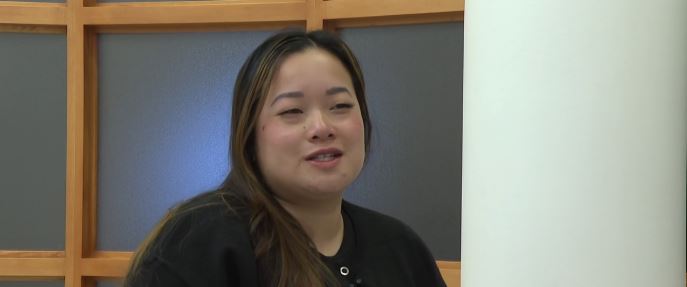
    SIERRA VISTA, California (KCAL, KCBS) — An unlikely run at the California state title has put the Sierra Vista High School Dons girls’ basketball team’s cell phone ban in the spotlight, which they say has not only brought them closer but also helped them dominate their competition.

Head coach Sandra Duckering says that the decision has “made a world of difference” since losing 11 of their first 15 games to start the season.

She says that she believes the Dons kept losing games because they were making TikToks, texting and scrolling social media instead of being present with each other.

“The one thing I noticed is: we were super disconnected,” Duckering said.

From then on, she has confiscated each of the girls’ phones before each practice and game, separating them from their lives outside of basketball to focus on what is now their best season in school history.

She collects the phones in a bucket every day, centering the girls’ attention on their team.

“Once they connected, we got flow. It was just amazing,” she said. “Their game changed. Their bond changed.”

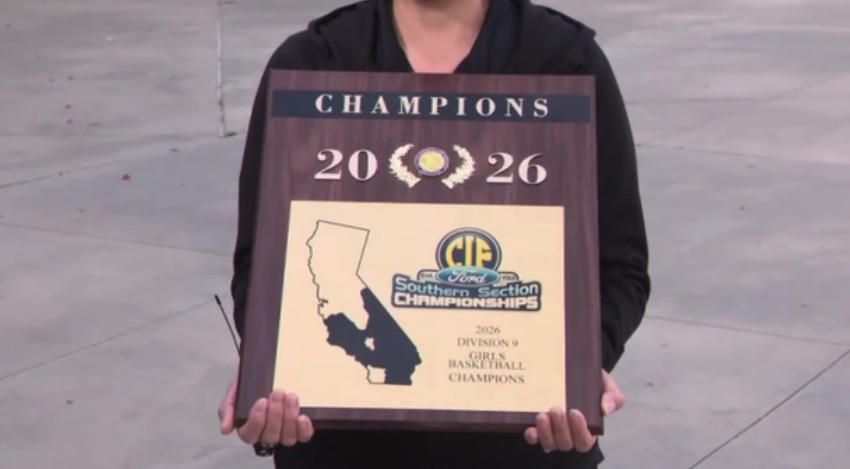
The Dons then began winning games by monstrous scores on their way to SVHS’s first CIF Southern Section Championship and trip to Bakersfield on Tuesday, where they’re taking part in the school’s first-ever State Championship playoff game.

“We’ve been ranked lower, so we’re kind of like the underdogs in this story,” said Cailei Buna, the team’s point guard. “We took that in a way to show the underdogs shouldn’t be slept on.”

On Feb. 18, they scored a season-high 71 points in a playoff matchup, just two games after dominating another opponent 68-7. They’re 14-2 after their rough start to the year, and are averaging nearly 58 points per game.

The team says that the phone ban freed up their attention so that they could focus on working together as a team.

“Before we would argue a lot,” said Mareessa Navarro. “We would have this distance.”

Now, they work hard not just for themselves, but for each other.

“Talking with each other as a team, just being with each other, I think that really got us close, and we’ve just been working hard,” said Evanna Malloy.

They say that hard work pays off, thanks to a simple drop in the bucket.

“I wanna be able to come home with another championship if we can,” said Alyssa Winlock. I wanna work hard. I know my teammates wanna work hard, so we need to hustle and push with everything we have.”

The Dons have to win just four more games to become the state champions. Their first game, against the Foothill High School Trojans, was an unfortunate 55-45 loss, ending their season.

Please note: This story was provided to CNN Wire by an affiliate and does not contain original CNN reporting. This content carries a strict local market embargo. If you share the same market as the contributor of this article, you may not use it on any platform.
‘You’re very romantic.’ Morro Bay couple celebrates 75th anniversary

By KSBY Staff

Click here for updates on this story

    MORRO BAY (KSBY) — Chuck and Rusty Slover are toasting to 75 years of marriage.

The couple tied the knot on March 3, 1951, and have six children.

Rusty took care of their large family while Chuck built PGA golf courses around the country.

So, what’s the secret to a long marriage?

Chuck said, “Every morning when you get up and they’re laying there beside you and you turn over and they’ve got a big smile, it just, it’s just the start of a good day and it goes on and on and on, and I think that is a key to a happy life and a long life and a great marriage.”

“You’re very romantic. I love the way you say that,” Rusty said with a laugh. “But you’re right.”

On Tuesday afternoon, their children joined them at their Morro Bay home to celebrate.

Please note: This story was provided to CNN Wire by an affiliate and does not contain original CNN reporting. This content carries a strict local market embargo. If you share the same market as the contributor of this article, you may not use it on any platform.
Daughter asking community for 75 birthday cards for veteran father turning 75

By Molly Demrow

Click here for updates on this story

    LEXINGTON, Kentucky (WLEX) — Larry Clark is turning 75 on March 8, and his daughter Mattea has one simple goal: 75 birthday cards for a man she calls her hero.

Mattea Clark, who is active-duty military, recently moved back to Lexington, choosing orders closer to home to be near her father.

“I just moved back from Washington state, and I chose orders out here because I wanted to be closer to my dad, and I just wanted to do a very kind gesture for him because he means so much to me,” Mattea said.

Larry is a Vietnam veteran who served in the military, worked 26 years as a mail carrier and spent another decade as a school bus driver.

“He’s had a life full of many experiences, but with much knowledge and just a lot of experiences to share,” Mattea said.

After losing her mother in 2019, Larry and Mattea leaned on each other even more.

“It was back in 2019 when I first joined the Navy. So, it was a little tough for both of us,” Mattea said.

Mattea was adopted from China after her parents spent years trying to grow their family.

“They were able to fly over to China to go get me and explore because the story was my mother, my birth mother, left me in a basket at a bus station,” Mattea said.

She describes her father as a simple man with simple pleasures.

“He likes fishing. He likes food. And he likes watching TV,” Mattea said.

But for Mattea, her father is anything but ordinary.

“Being a female in the military and I think the first female in my family serving is something to be very proud of and my dad is extremely proud of my service, and he’s definitely somebody I look up to,” Mattea said.

For a man who, by his daughter’s account, has everything and wants nothing, Mattea says the cards are about something deeper.

“For a man who has everything and wants nothing, why not do something? I mean that’s more meaningful,” Mattea said.

Please note: This story was provided to CNN Wire by an affiliate and does not contain original CNN reporting. This content carries a strict local market embargo. If you share the same market as the contributor of this article, you may not use it on any platform.

Choctaw Academy may hold the story of America’s first Indigenous trained physician

By Megan Mannering

Click here for updates on this story

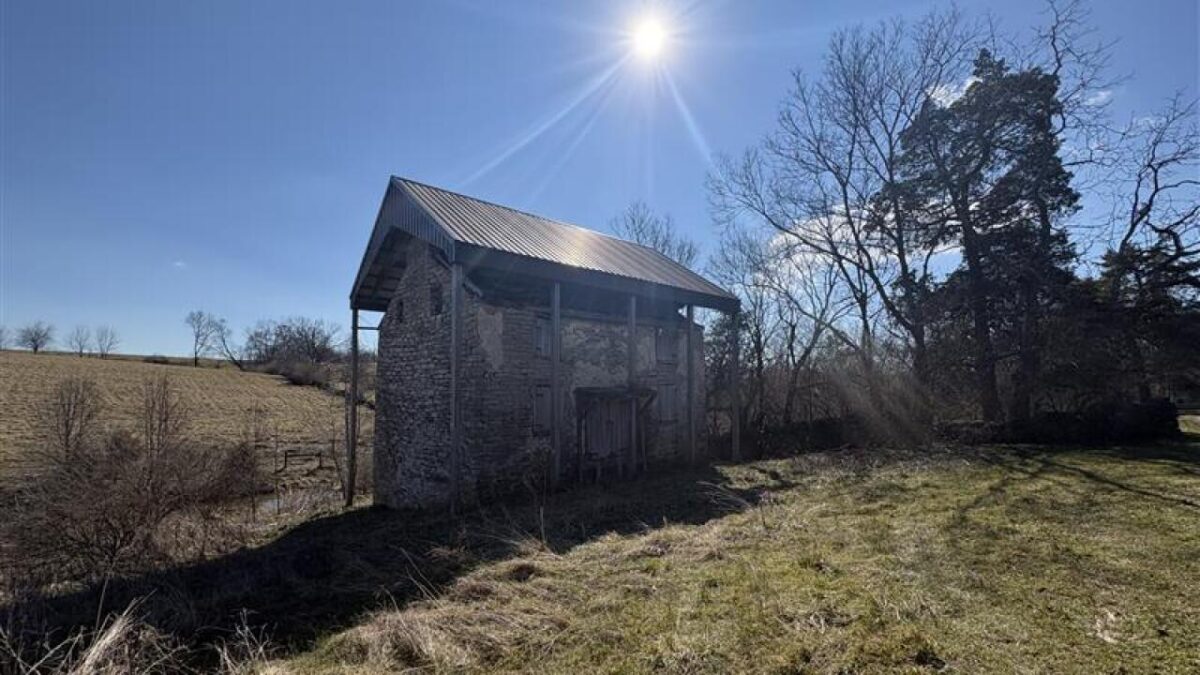
    SCOTT COUNTY, Kentucky (WLEX) — The last-standing structure of the Choctaw Academy — the nation’s first federally controlled Native American boarding school — sits on farmland in Georgetown, Scott County, and a new discovery about one of its students could bring fresh attention to the deteriorating site.

The Choctaw Academy was established in 1825 on U.S. Vice President Richard M. Johnson’s Scott County farm. It was the first federally controlled boarding school for Native Americans, following a treaty in which the Choctaw secured a perpetual $6,000 annual education fund from the federal government. The academy educated more than 600 boys from 17 tribes. Some students went onto Transylvania University and studied law and medicine.

Georgetown Ophthalmologist Dr. Chip Richardson acknowledges the complicated history of Native American boarding schools but says the academy’s role in American history must be remembered.

“I think you could say this was the most unique place in antebellum America, and as much as the Native Americans pulled support at the end, I think the degree of impact this left is immeasurable,” Richardson said.

The building still standing on the site would have served as a dormitory, but Richardson says his latest discovery isn’t about a structure — it’s about a person who studied at the Choctaw Academy and went on to do remarkable things.

“In 1842, a Native American by the name of Joel Barrow was accepted to Transylvania University. He chose a course of study in medicine, and graduated in 1844. What’s really interesting about Joel Barrow, he not only defended his thesis but he went back to his tribe in 1848 to serve them as a physician and I have proof of that in a newspaper article I found,” Richardson said.

Records point to few Native American physicians with a college medical degree from that era.

With help from author Christina Snyder, Richardson traced Barrow’s story. Barrow was known as Arcmuggue to his Potawatomi people. Richardson confirmed the story through the Choctaw Nation’s Historical Preservation Officer, including an article announcing Barrow as a tribal doctor.

“It says ‘We’re announcing this individual Joel Barrow as a servant to the tribe in the capacity of physician, and he went to Choctaw Academy and graduated from Transylvania.’ There’s no question we’re talking about the same person at this point,” Richardson said.

Richardson says Barrow may be the first Indigenous, college-trained physician in America — and deserves recognition.

“What we’re doing right now is getting the state to recognize Joel Barrow through legislative resolution and I hope that opens the door for more public interest in this story,” Richardson said.

For Richardson, that attention is urgent — as the Choctaw Academy continues to deteriorate.

“I’ve been looking for a long time to get an angel to save the Choctaw Academy because I don’t think there’s a more important place in antebellum America,” Richardson said.

Please note: This story was provided to CNN Wire by an affiliate and does not contain original CNN reporting. This content carries a strict local market embargo. If you share the same market as the contributor of this article, you may not use it on any platform.

FAMU doctoral student builds seawater battery that could revolutionize underwater exploration

By Justin White

Click here for updates on this story

    COLLEGE TOWN, Florida (WTXL) — A FAMU doctoral student is developing a seawater-powered battery that could transform how military submarines operate underwater and underwater expeditions.

A Florida A&M University doctoral student is developing a battery powered by seawater that could dramatically extend the range and stealth of unmanned underwater military vehicles.

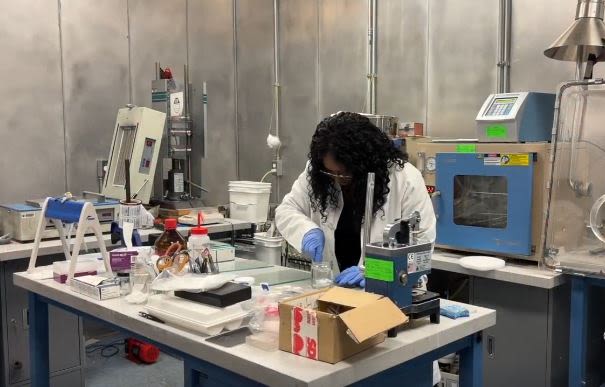
Destiny Law, an electrical engineering Ph.D. candidate at the FAMU-FSU College of Engineering, is building a lithium seawater flow battery designed for unmanned submarines and underwater vehicles.

Law said the technology could solve a critical vulnerability for military operations.

“For submarines, right now they have to come back to the surface to recharge, and they can sometimes have to stay for hours, sometimes even days to recharge, and that’s like very dangerous for our soldiers. So with our battery, they won’t. If they do have to come back up to recharge, it’s only for like a few, maybe max 30 minutes,” Law said.

By incorporating seawater into the battery’s chemistry, Law said the system could deliver more than 10 times the energy of traditional lithium-ion batteries.

Her research is the first of a renewed partnership between Florida A&M University and The Boeing Company.

Petru Andrei, an electrical and computer engineering professor, said Law’s dedication drove the project forward.

“Working with Destiny actually made this quite exciting, because Destiny was so dedicated to the project she loved it from the very beginning and not only that you could see her coming on the weekends to do work for, shows she was really excited…it’s been great actually to have Destiny work with this one and we hope that she will actually continue this project for the next 3 or 4 years again, in fact we have already are looking for other students to continue her work,” Andrei said.

The path to that breakthrough was not without setbacks. Law said the challenges she faced made the success even more meaningful.

“Finally being able to get that success, after all those fails was like the best part of like my research because coming in I had very limited battery knowledge didn’t really have like battery knowledge behind me so I was like it’s a whole new world for me and that was like the most exciting part like to open up a new space that I’ve never been in as an electrical engineer,” Law said.

After graduating this spring, Law will head to Boeing full-time, where she will continue her work on the technology.

This story was reported on-air by a journalist and has been converted to this platform with the assistance of AI. WTXL verifies all reporting on all platforms for fairness and accuracy.

Please note: This story was provided to CNN Wire by an affiliate and does not contain original CNN reporting. This content carries a strict local market embargo. If you share the same market as the contributor of this article, you may not use it on any platform.