Woman’s quilt to be featured in Smithsonian’s state fair exhibit

By Kayla James

Click here for updates on this story

    DES MOINES, Iowa (KCCI) — An Iowa woman is getting the chance to see one of her creations hanging in the Smithsonian American Art Museum’s newest exhibit, State Fairs: Growing American Craft.

The exhibit is described as a culmination of five years of work and research dedicated to artists’ crafts at state fairs across the nation. There are more than 240 works on display, with each gallery looking at “personal stories of craft found in different areas of the fairgrounds, from the art exhibits and heritage villages to the parades, dairy barns, and rodeos.”

One of Mary Shotwell’s many blue ribbon-winning quilts, called My Millefiori, will be displayed in the exhibit.

“Millefiori is actually the name of a style of quilting that goes back quite some years to British quilting, where it was all done by hand,” said Shotwell. “What you would do is you’d take a small piece of fabric and wrap it around some cardboard. Then you would stitch that so you could hardly see the stitches to the piece right next to it, and you’d keep doing that until gradually you built blocks.”

For the next year, the exhibit is up in the Smithsonian’s Renwick Gallery.

“The Smithsonian is an institution I’ve been to several times, and I’ve always been in awe,” said Shotwell.

Shotwell began working on the quilt in the late 2010s. She remembers finishing it in 2022 and then showing it at the Iowa State Fair and in the Des Moines Quilter’s Guild show in 2023.

“The fact that it got a special award at the Iowa State Fair for handwork also meant a lot to me, because English paper piecing is a very time-consuming but relaxing kind of activity,” said Shotwell.

By November, she received a letter from the curator of the Smithsonian Renwick Gallery.

“It was telling me that they had seen my quilt at the State Fair and they had selected it to be part of a state fairs special exhibit,” said Shotwell, who said the curator was asking for permission to display the quilt. “I won blue ribbons, that sort of thing, but this was beyond my wildest dreams.”

Quilting is something Shotwell is passionate about, but she’ll be the first to tell you it didn’t come too easily to her.

“When I first started, frankly, I wasn’t any good at it at all,” said Shotwell.

However, nearly 30 years later, something she says she wasn’t good at is now taking her to D.C. for the exhibit’s gala opening.

“The more I learned and the more I got into it, the more I loved it,” said Shotwell. “I’ve been very fortunate. I’ve had very good teachers. I’ve had very good friends who encourage me.”

The exhibit began Aug. 22 and goes on until Sept. 7, 2026.

Iowa’s iconic State Fair butter cow is also part of the year-long exhibition.

Please note: This content carries a strict local market embargo. If you share the same market as the contributor of this article, you may not use it on any platform.


Georgia Southern unveils statue honoring beloved bald eagle mascot, Freedom

By Frank Sulkowski

Click here for updates on this story

    STATESBORO, Georgia (WJCL) — Gone – but certainly never forgotten.

“It’s bittersweet, but more than anything, I’m just touched by being part of Eagle Nation and the embrace of Eagle Nation,” said Steve Hein, executive director of the Center for Wildlife Education at Georgia Southern University.

Hein has felt that embrace since the spring.

Back in late March, Freedom, the beloved live bald eagle mascot of Georgia Southern passed away at the age of 21.

Rescued as a nestling in Florida in 2004 with a permanently injured beak, Freedom became a symbol of strength and pride, inspiring the community through appearances at sporting events, commencements, and various community engagements. His passing was mourned by the university and Eagle Nation.

But as a new football season kicks off in Statesboro, Freedom will now continue to soar.

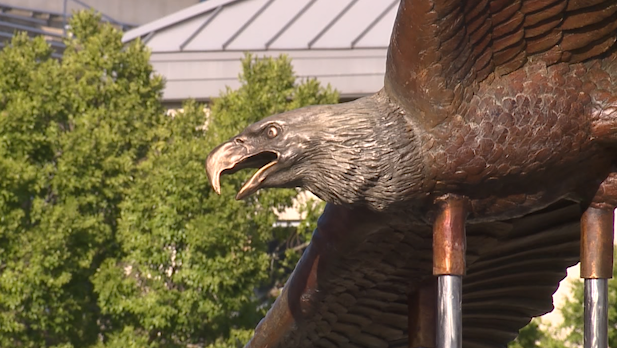
Georgia Southern unveiled a bronze statue Friday evening honoring Freedom.

The ceremony, held outside Bishop Field House, brought together university leaders, state officials, donors, alumni and fans to celebrate Freedom’s enduring legacy.

“Freedom wasn’t just a mascot. He was a symbol of strength, unity and that True Blue pride that defines Georgia Southern,” said Georgia Southern President Dr. Kyle Marrero.

Hundreds were on hand for the statues unveiling – a gift made possible through the generosity of Mitch and Tonya Kincaid.

The Freedom statue now a permanent reminder of this feathered friends place among Georgia Southern legends – right there beside the statue of legendary coach Erk Russell – and soon, three more Eagle greats.

Georgia Southern President Dr. Kyle Marrero, sharing with WJCL 22 News, that in the works are three more additions to the plaza just outside Paulson Stadium.

Sculptures of College Football Hall of Fame members Paul Johnson, Tracy Ham and Adrian Peterson should be installed by the 2026 football season.

Please note: This content carries a strict local market embargo. If you share the same market as the contributor of this article, you may not use it on any platform.
Hellcat used in street racing, valued at $100K, crushed at impound lot

By Alex Suckow

Click here for updates on this story

    LOUISVILLE, Kentucky (WLKY) — A 2021 Dodge Durango Hellcat, valued at $100K, was pancaked on Wednesday in Louisville.

Louisville officials said it was seized as part of the city’s street racing ordinance, which has been in effect since 2022.

LMPD said the car was confiscated last year during the Street Rod Nationals, and described it as a “Frankenstein” vehicle — because many of its parts had been stolen.

Normally, the seized cars are auctioned or used by LMPD, but police said this one poses too many liability and cost concerns.

They crushed the car publicly as a message to street racers that seized cars may get destroyed.

Earlier this year, Mayor Craig Greenberg said in 2024, the city seized more cars than any year prior in the Louisville’s history.

Please note: This content carries a strict local market embargo. If you share the same market as the contributor of this article, you may not use it on any platform.

Police warn about ‘alarming uptick’ in carfentanil overdoses

By Imani Fleming

Click here for updates on this story

    MANCHESTER, New Hampshire (WMUR) — Manchester police are warning the public about what they call an “alarming uptick” in carfentanil-related deaths.

According to the U.S. Drug Enforcement Agency, carfentanil is a synthetic opioid that is 10,000 times more potent than morphine and 100 times more potent than fentanyl. The drug is meant to be used as an animal tranquilizer.

“It is not meant for humans, so it’s typically used on elephants, lions, giraffes, things of that nature,” said Christopher Stawasz with American Medical Response.

According to the state medical examiner, carfentanil has contributed to 10 deaths in New Hampshire so far this year, including three in Manchester. That’s up from seven deaths statewide in 2024.

“A tiny, tiny gram, grain if you will, can literally kill you. We like to say that the first time you use carfentanil is generally the last time you use carfentanil. There’s no way that you can tell that carfentanil is in a product you’re using,” Stawasz said.

First responders said unlike heroin or fentanyl, overdose reversal drugs such as naloxone are generally ineffective when it comes to carfentanil.

“In some cases, it’s not able to be reversed. It will instantaneously put you down, knock you out, stop you from breathing and by the time someone figures out that you need help, unfortunately it’s too late,” Stawasz told News 9.

While carfentanil overdoses are up, Manchester police said overdoses from other drugs, like methamphetamine and fentanyl, are down.

Please note: This content carries a strict local market embargo. If you share the same market as the contributor of this article, you may not use it on any platform.
911 call shows fear, concern from couple trapped in car sinking in canal

By Ari Hait

Click here for updates on this story

    MARTIN COUNTY, Florida (WPBF) — A 911 call released Tuesday shows how frantic a couple was as they were trapped inside a car sinking in a Martin County canal.

The Martin County Sheriff’s Office released the call Tuesday afternoon.

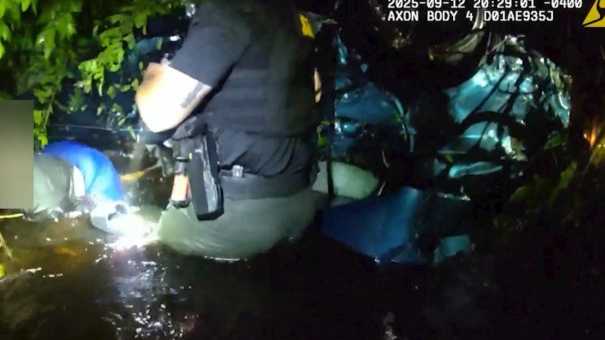
Investigators said the couple was driving on Rte. 714 in a remote section of northwestern Martin County when they were hit by another car, sending them off the road where they landed upside down in the canal.

The other car kept on going.

Fortunately, the woman in the car was able to get to her phone and call 911.

“Please! We need you!” she said to the dispatcher.

The woman, whose name has not been released, explains the situation to the dispatcher who asks if the car is sinking.

“Yes!” the woman replied. “That’s what it feels like. The car is sinking, sir.”

“Where’s the water now?” the dispatcher asked.

“We’re in the ditch outside,” she said.

“Is the water in the car and how high is it?” the dispatcher asked.

“It’s up to my stomach,” she said. “We don’t know how much time we have!”

The woman explained to the dispatcher that the power in the vehicle was out, and they could not open the doors nor the windows.

“How far in the water are you?” the dispatcher asked.

“We’re deep in the water!”

“And there’s no way to get that window down?”

“No. We tried everything! We’re scared!”

After about 10 minutes, the call appears to drop.

“You still there, sir? Ma’am?” the dispatcher asked.

There was no reply.

Fortunately, deputies arrived a short time later and were able to bust out the cars’ windows and pull the couple to safety.

Both victims were injured, but investigators said both are expected to fully recover.

The sheriff’s office said they are still looking for the other car involved in this crash.

Please note: This content carries a strict local market embargo. If you share the same market as the contributor of this article, you may not use it on any platform.
A look at a family’s life after a father’s deportation to Mexico

By Katie Nielsen

Click here for updates on this story

    LIVERMORE, California (KPIX) — It is perhaps the defining question about immigration of our time – what to do with the millions of people who entered the country illegally and lived here for decades as Americans?

That story is playing out in communities across the country, and also in Livermore with Miguel Lopez and his family.

His journey through our country’s immigration system begins in 1996. At 18 years old, he crossed the border illegally and got caught. He lied to Border Patrol Agents falsely claiming to be a U.S. citizen, but he was sent back to Mexico. A few months later, he tried again, and this time, made it to Livermore with his family.

In 1998, Miguel was arrested for DUI and was ultimately convicted of a lesser charge. The following year, in 1999, he met his now-wife Rosa, a U.S. citizen. They got married in 2001 and started a family.

In 2007, Miguel applied for U.S. citizenship, arguing that he was married to a citizen and now had two children born in the U.S. who were also citizens.

In 2008, the Department of Homeland Security ordered Miguel to be deported. That long-ago decision to enter the country illegally – and to lie to border agents – had come back to haunt him, and also start a long legal battle.

In 2012, a judge sided with Miguel and blocked the deportation order. In 2016, DHS once again submitted an order for Miguel’s removal – an order he’s been fighting it ever since.

In May of this year, he was detained by Immigration and Customs Enforcement during a routine court appointment and was deported a few weeks later in June.

His family is still living in Livermore, and for his wife Rosa, their family is everything. That’s why her Livermore home plays host to these kinds of family gatherings almost every Sunday night – now with a noticeably empty chair.

“When we have people over, he’s usually right there. Where my sister is or that one,” said Rosa.

She and Miguel have been married for 24 years. They have three children and one grandchild, all U.S. citizens, which is why she never thought they’d have a problem getting Miguel his papers when they first applied almost 20 years ago.

“I didn’t think it would be hard. My sister had filed for her husband at the time too. Her whole process was pretty smooth,” explained Rosa.

While he was waiting for his citizenship, Miguel was able to get a work permit and worked as a welder at Wente Vineyards in Livermore, while Rosa stayed home with the kids.

They bought a house and went on family vacations. They went to their son’s football games and say they were living the American dream, until that routine check-in at immigration court in May changed everything.

“He’s telling me he’s getting detained, and I was like you’ve got to be kidding me right? You’re lying. And I was like Miguel? Miguel? And Miguel didn’t answer anymore,” said Rosa.

Miguel had been detained by ICE.

“He’s the one who provided everything for us, and a whole bunch of stuff started going through my mind like what’s going to happen with us if he’s not here. I can’t get a job right away, am I going to lose my home? Am I going to end up on the streets with my kids? Just a lot of stuff. Is he going to be OK? It was just hard,” Rosa said through tears.

Miguel’s lawyer asked a judge to allow him to stay in the U.S. while they appealed, but just four hours before the judge signed the order saying he could stay, Miguel was deported.

“Where are you at? And he said, I’m in Tijuana. And I’m like, what do you mean you’re in Tijuana? It’s not supposed to go like that. He’s like I don’t know. They took me from McFarland to Bakersfield and now I’m in Tijuana,” Rosa said crying.

What happens once someone is deported from the United States, like what happened to Miguel Lopez? CBS News Bay Area’s Katie Nielsen traveled 2,000 miles to Mexico City to talk with Miguel.

“It’s different from over there. You used to live better over there than here,” said Miguel.

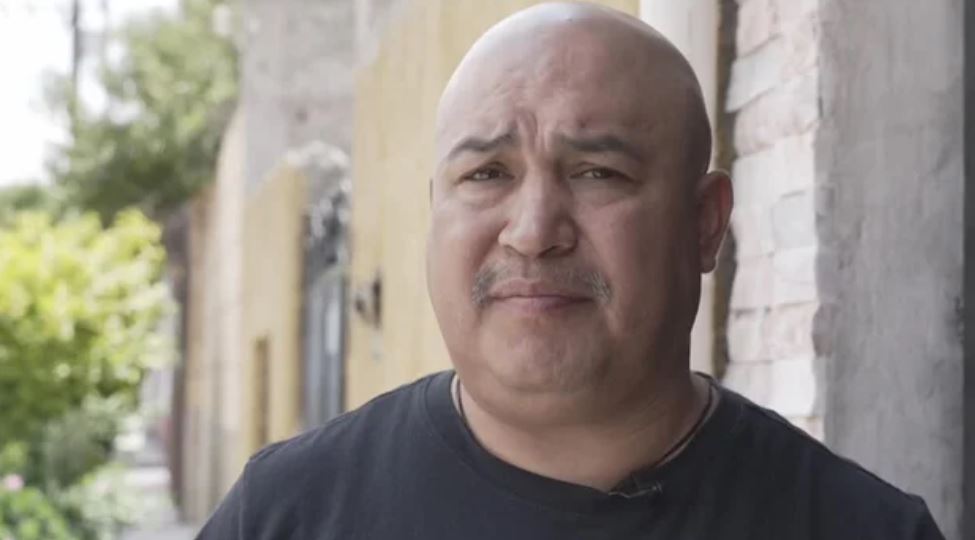
Miguel now lives in Chimalhuacan with his father, which is about an hour and a half outside Mexico City. Even though he grew up here, he says none of this feels like home.

“I want the best for my family. Not this. I mean, it’s pretty dangerous at nighttime, and even during the day there’s robberies all day long,” said Miguel.

He said his brother was shot and killed two years ago during a carjacking just a few blocks from where Miguel is living now.

He said his father’s house has been shot at multiple times in the middle of the night by what they say are roving gang members who demand money from residents in exchange for safety. Miguel and his father said they refused to pay, so they were targeted.

“I wouldn’t like my family to live here. Especially my granddaughter. I don’t want her to grow up here. It’s different,” said Miguel.

In the few months Miguel has been in Mexico, he said he’s tried to find work, but the only jobs he can find as a welder pay $65-70 USD a week for a 60-hour work week.

“You don’t make enough money. Not enough to support myself and support my family,” said Miguel.

He spends most of his time inside his father’s home, waiting for the few moments a day he can talk to Rosa and the kids.

“Hi, Mama!” Miguel said to Rosa as they FaceTime. It was the only time we saw him smile. Otherwise when we asked about his family, the emotions were just too much.

He started sobbing as he said, “I feel bad I’m not with them. Providing what they need. Like I did.”

Democratic Congressman Eric Swalwell, who represents the Livermore, California area, flew to Mexico City to meet with Miguel.

“The way he’s been treated is just awful, and it’s not the way that you treat somebody who wants to contribute to our country,” Swalwell told CBS News Bay Area.

“Removing the invaders is not just a campaign pledge. It’s my solemn duty as commander in chief. I have an obligation to do it,” said President Trump during a speech on April 29, 2025.

“Miguel was here illegally to begin with. Why are you fighting for his right to stay?” Katie Nielsen asked of Swalwell.

“Miguel represents the best of America. He came here chasing the American Dream. And he didn’t take anything from us. He gave to his community, and now he’s been ripped apart from his family, sent to a place he doesn’t know, and what I want people to know is there are thousands of Miguels right now out there living this nightmare,” Swalwell said.

Mr. Trump promised to deport a million people a year, targeting violent criminals first, but as ICE agents conducted raids all over the country, they soon began detaining people who’d only committed nonviolent offenses and those with jobs, families, and deep roots.

“We’ve been working on getting dangerous criminal, illegal aliens out of our country. Murderers, rapists, drug traffickers, human traffickers. Going out, arresting them, and removing them from our communities so our families can be safe again at night,” said Kristi Noem, the Secretary of Homeland Security during an August 8, 2025 speech.

CBS News Bay Area reached out to the Department of Homeland Security to get a statement regarding Miguel’s case.

In a statement it said he is “a criminal illegal alien from Mexico, has had final order of removal from an immigration judge since 1996. Lopez’s criminal history includes a conviction for driving under the influence. Lopez exhausted all due process and legal options to remain in the U.S.…After nearly 29 years of appeals and delays, ICE deported Lopez on June 6, 2025.”

“Nobody signed up for this. Americans wanted the worst of the worst offenders in our community to be deported. They didn’t want the best contributors like Miguel to be separated from their families,” said Swalwell.

In Miguel’s case that’s exactly what happened – teaching Rosa a hard lesson – that the only emotion more powerful than love is loss.

“Just everything is very different, how empty our home feels without him. This man worked so hard, and I’m like this is so unfair. He’s like I feel like I’m failing you guys, and I’m like, you’re not. You’re not. It’s not you. I know you’ve done everything for us, and at the moment you can’t, so now it’s my turn to do everything for you,” said Rosa, wiping tears from her eyes.

“What are you going to do if he really isn’t going to be allowed back?” Nielsen asked Rosa.

She responded, “I don’t think about that. I think he’s going to come home.”

Swalwell has introduced a bill that would allow Miguel to become a citizen. It’s called the Miguel Lopez Naturalization Act, but he said there’s almost no chance that will pass as long as Republicans control the House and the Senate.

CBS News Bay Area reached out to half a dozen Republican members of Congress from California to ask them about the bill, but none wanted to comment.

Miguel’s family has not given up their fight to bring him back. He has another court hearing on October 7th.

Please note: This content carries a strict local market embargo. If you share the same market as the contributor of this article, you may not use it on any platform.
Family fights for access to lifesaving drug for infant with Barth syndrome

By Karen Morfitt

Click here for updates on this story

    COLORADO (KCNC) — A Colorado family is in a race against time to secure access to an experimental drug that’s keeping their infant son alive.

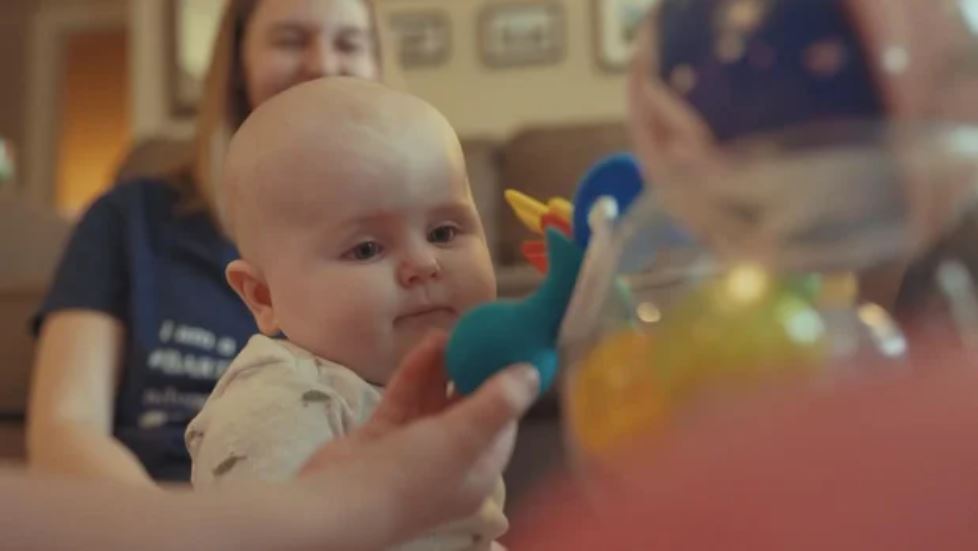
Gilbert Dryden was born with Barth syndrome — an ultra-rare genetic condition that affects only one in 300,000 births, almost exclusively boys.

The disease compromises the mitochondria — the energy-producing structures in nearly every cell — and can lead to heart failure, even in infancy.

For Gilbert’s mom Madison Dryden, the condition is one she feared. Her brother, Ben, died from heart failure as a baby — a tragedy that left the family without answers for decades.

“His heart basically turned … it was turning into scar tissue, kind of like turning into stone,” Madison’s mother, Jeanne Eiss said, “There was nothing we could do.”

When Gilbert was admitted to the NICU shortly after birth, Madison’s thoughts went immediately to her late brother.

“Once we were admitted to the NICU, that was immediately where my mind went — to my brother Ben,” said Madison Dryden.

“I think it would be worse for her because she has hope,” Eiss said through tears as she thought back to losing her son.

At Children’s Hospital Colorado, pediatric cardiologist Dr. Kathryn Chatfield helped identify Gilbert’s condition.

“It’s so rare that in any given state there may be only one or two patients diagnosed,” Chatfield said. “When the mitochondria can’t produce enough energy, the heart muscle weakens. If that dysfunction progresses, the heart can fail — and ultimately, patients may die or require a transplant.”

The drug, elamipretide, is not yet FDA approved. But for critically ill patients like Gilbert, the FDA has made it available under emergency use authorization.

Dr. Brian Stauffer, a cardiologist and researcher at the University of Colorado Anschutz Medical Campus, worked with Chatfield and others on initial research into the drug starting in 2015.

“When we treated hearts with elamipretide, we saw significant improvement in mitochondrial function. More energy production, which we believe improves heart function,” said Stauffer.

For the Dryden family, the results were immediate and dramatic.

“Within a month of being on elamipretide, he got his NG tube out. The next month, he came home,” Madison said.

Despite a recommendation from an FDA advisory panel last October, final approval was delayed and then rejected in May. The agency cited the small trial size — and requested more data.

“We don’t have the luxury of waiting many more months or years,” said Chatfield. “Companies must eventually turn a profit to stay in business. If this stalls too long, they may have to stop production entirely.”

Rep. Jason Crow, who represents Colorado’s 6th Congressional District, is now leading a bipartisan push for action, with almost all of Colorado’s congressional delegation signing on to a letter urging the FDA to make a timely decision.

“If this is the only drug keeping your child alive — give people the damn drug,” Crow said in a Zoom interview. “We understand there’s a process, but make government work.”

In August, the FDA agreed to reconsider and a new drug application was resubmitted under an accelerated pathway. A final decision is now expected Sept. 26.

In the meantime, the Dryden family is counting every remaining vial in their refrigerator.

“We get a three-month supply,” Madison said. “We are talking end of October.”

“We had to sit down with our daughters and say: ‘We’re working hard on this because if Gilbert doesn’t get his medicine, his heart might stop working. And if his heart stops working, he will die,'” she said.

The FDA did not respond to a request for comment when contacted for this story. CBS Colorado will provide updates as more information becomes available.

Please note: This content carries a strict local market embargo. If you share the same market as the contributor of this article, you may not use it on any platform.

How Philadelphia Eagles WR DeVonta Smith and his fiancée helped surprise a cancer patient

By Josh Sanders

Click here for updates on this story

    PHILADELPHIA (KYW) — For four years, Theresa Schmus and her mom, Pat, have been living in the shadow of stage four ovarian cancer.

“There’s only so much you can do,” Theresa Schmus said. “You just have to be there as much as you can … but you can’t physically take it away.”

Since Pat Schmus’ diagnosis, there’s been a constant cycle of treatments and recurrences, long days spent at Penn Medicine, fighting through fatigue, fear and chemo. But one thing that has never changed is her love for Philadelphia sports.

“She’s a diehard,” Theresa Schmus said with a smile. “We had a Flyers mailbox growing up. We didn’t even have a number on our house; that was the only distinguishing feature.”

Whether it’s the Phillies, Flyers, Sixers or Eagles, Pat doesn’t miss a game. And lately, she can’t stop talking about one player in particular: Eagles wide receiver DeVonta Smith.

“Yesterday was one of the really long chemo days,” Theresa Schmus said. “She was scrolling through her Facebook reels, talking about DeVonta. He’s my favorite. Look at his outfit. He looks so good!”

That’s when Theresa Schmus’ roommate had an idea: “Why don’t you just DM his fiancée?”

At first, it sounded far-fetched. But Theresa Schmus decided to take the chance.

“I messaged her asking if there was any way I could get a jersey signed for my mom,” she said. “Even if I bought one, maybe I could get it to her to sign?”

To Theresa Schmus’ shock, she said, within 20 minutes, Mya, DeVonta Smith’s fiancée, replied. She asked for Pat Schmus’ jersey size and said she’d be at the hospital in 15 minutes.

“I walked downstairs and was in complete shock,” Theresa Schmus said. “She had a signed jersey and a card; I couldn’t stop thanking her.”

Theresa Schmus posted a video of the surprise on TikTok and it quickly went viral, racking up more than 600,000 views. But more importantly, it lit up her mom’s entire day.

“She’s never had a jersey in her life,” Theresa Schmus said. “She was smiling so big, calling everyone. She kept asking, ‘How do I thank them?’ It meant the world. It brought her so much joy.”

It was a small act of kindness, but for a family that’s been through so much, it meant everything.

Now, Theresa Schmus is holding onto one more hope: that her mom can meet Smith in person.

“Oh my gosh,” she said. “She’d freak out. I really hope so.”

Please note: This content carries a strict local market embargo. If you share the same market as the contributor of this article, you may not use it on any platform.
Times Square casino is dead after community board votes no

By Natalie Duddridge

Click here for updates on this story

    NEW YORK (WCBS) — New York’s Times Square will not be getting a casino. The Community Advisory Committee (CAC) voted down the proposal Wednesday morning by a 4-2 count.

It’s a major blow for the developers behind the Caesars Palace bid, effectively killing the project before it even reaches the state’s licensing board.

The Times Square proposal centered around the Minskoff Theatre building, home of the Broadway hit “The Lion King.”

The show would have gone on, but everything above the theater would have been transformed into a casino and resort.

Developers SL Green, Caesars Entertainment and Jay-Z’s Roc Nation said the project would generate an estimated $7 billion in taxes for the city and state, as well as thousands of jobs, and would boost local restaurants and shops.

A Caesars spokesperson said the company is disappointed, but respects the CAC’s decision.

“While we are disappointed by the outcome, our commitment to New York remains unwavering,” Caesars said in a statement. “We are proud of our strong partnerships across the state as anchored by our Caesars Sportsbook platform, where we continue to invest and innovate to serve New Yorkers. New York is a dynamic part of our national footprint, and we look forward to exploring future opportunities.”

A second vote was also held Wednesday on a separate casino bid, called The Avenir near Hudson Yards on Manhattan’s West Side.

The Avenir requested the Community Advisory Committee delay that vote, saying the CAC asked for more information Tuesday night and it hadn’t had enough time to respond. However, the committee decided to move forward anyway, voting against the project 4-2.

“Despite the Avenir team working in good faith throughout the process to respond to questions and concerns and amend our proposal as needed, last night at 10:50 p.m. the Community Advisory Committee made a very significant request and our team has not been given a chance to consider this request before today’s vote,” a spokesperson for The Avenir said in a statement Wednesday morning. “This action taints the CAC process and today’s vote should be postponed.”

Supporters of the project argued the massive entertainment complex would help revitalize an area that’s still struggling to bounce back after the COVID-19 pandemic.

Both casino bids drew criticism, especially from Broadway producers and community members who raised concerns about adding more congestion to already crowded streets and diverting audiences away from shows, instead of boosting them.

New York is looking to award three downstate casino licenses, and there were eight proposals in the running. Each must win support from its local Community Advisory Committee before it can be considered by the state Gaming Facility Location Board.

There is still one more proposal in Lower Manhattan, along with others in Brooklyn, the Bronx, Queens and Yonkers.

Please note: This content carries a strict local market embargo. If you share the same market as the contributor of this article, you may not use it on any platform.

Holocaust survivor beaten to death by 95-year-old dementia patient inside NYC nursing home, police say

By Andrew Ramos

Click here for updates on this story

    NEW YORK (WCBS) — Nina Kravtsov survived the Holocaust only to be beaten to death inside of a New York City nursing home last weekend, police say.

A 95-year-old woman is now facing murder and weapons charges.

On Tuesday, the 89-year-old victim’s heartbroken daughter spoke by phone to CBS News New York about the unspeakable tragedy her family is now dealing with.

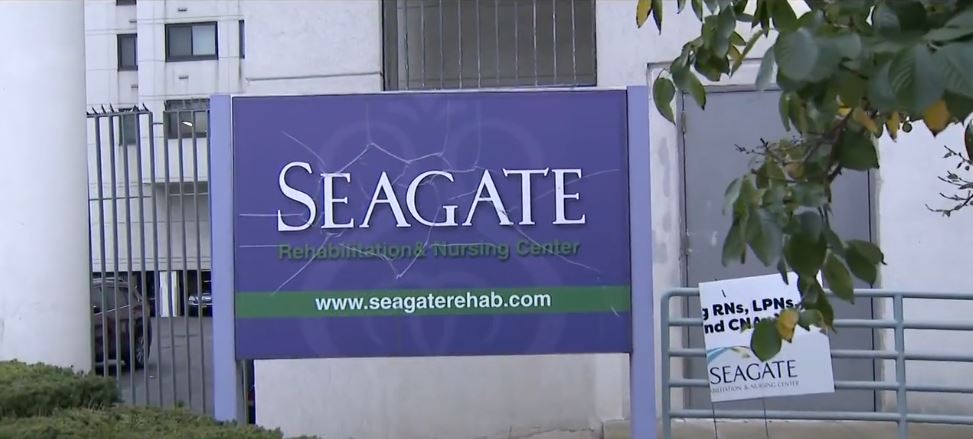
Kravtsov had called Seagate Rehabilitation and Nursing Center in Coney Island home since 2020.

Late Sunday evening, the nursing home became a crime scene after police say she was brutally beaten by another resident, using a metal object part of a wheelchair. That resident was identified by police sources as a 95-year-old dementia patient.

“I thought maybe she fell, and they said, ‘No, no, that’s not it. Your mom is in bad shape,'” said Lucy Flom, the victim’s daughter.

Kravtsov was taken to Lutheran Hospital in critical condition. Flom, who flew in from Florida, shared her final words to her mother.

“They told me she would not respond but they think she could hear, so I told her the final words. I told her I loved her,” Flom said. “That happened while I was waiting for the flight, and as soon as I arrived to New York … they said that she passed.”

As she prepares for her mother’s funeral on Friday, Flom said she has a lot of questions about what led to the shocking attack at the nursing home.

“It’s difficult to say what exactly happened because, as I understand, the door was locked. How did they even know what could’ve happened?” Flom said.

CBS News New York reached out to administrators at Seagate to find out how something like this could happen and was simply told in a statement that “an investigation is being conducted,” and that they had no comment.

Please note: This content carries a strict local market embargo. If you share the same market as the contributor of this article, you may not use it on any platform.