Woman finds success after prison as Georgia faces nation’s highest incarceration rate

By Monique John

Click here for updates on this story

    ATLANTA (WUPA) — Georgia’s incarceration rate is higher than the national average, with nearly 900 out of every 100,000 residents having spent time behind bars, according to the Prison Policy Initiative.

For many, the struggle doesn’t end at release—rebuilding a life on the outside can be overwhelming. Formerly incarcerated individuals and advocates say the path to reintegration is often filled with stigma and barriers.

Janine Battista of Snellville knows those challenges firsthand. She’s opening up about her own journey, hoping her experience can help foster greater understanding and acceptance for people with criminal records.

“Going to prison interrupted everything in my life,” Battista reflects. “I might have been a little lost at the time, but I’m not that person anymore.”

While incarcerated, Battista discovered a passion for writing and pursued her education through the nonprofit Common Good Atlanta. But after her release in 2019, she faced a daunting job market.

“It’s terrifying,” she said. “When you lay out your past, you have to ask, ‘Do you feel comfortable trusting me?'”

Despite these obstacles, Battista has rebuilt her life. She became a published poet, found love, and now serves on the board of Common Good Atlanta, advocating for others making the same transition.

“There are stressful times, but the perspective I’ve gained keeps me moving forward,” she said.

It’s a challenge many Georgians face. The Georgia Justice Project estimates that about 4.5 million people in the state have a criminal history.

Brenda Smeeton, Legal Director at the organization, says Georgia’s reliance on the criminal legal system to address issues like poverty and homelessness contributes to its high incarceration rate.

“We tend to have high arrest rates and high conviction rates, which makes us a bit of an outlier with other states,” Smeeton explained.

The Georgia Justice Project works with Fulton County to help people expunge their records—opening doors to jobs and housing.

Battista is now a mother of two. She dreams of becoming a personal trainer and continuing to reach people through her writing. Despite the hardships, she says her time behind bars helped her find confidence and a deeper understanding of herself.

“I can look back and say I did that—even in a really difficult, isolated situation. I found things I liked and discovered more of who I believe I am,” Battista said. The Georgia Justice Project is partnering with Fulton County for a record expungement event later this month.

For more information, visit gjp.org.

Please note: This story was provided to CNN Wire by an affiliate and does not contain original CNN reporting. This content carries a strict local market embargo. If you share the same market as the contributor of this article, you may not use it on any platform.
Former housing director sentenced after admitting role in fake contract scheme

By CBS News Atlanta Digital Team

Click here for updates on this story

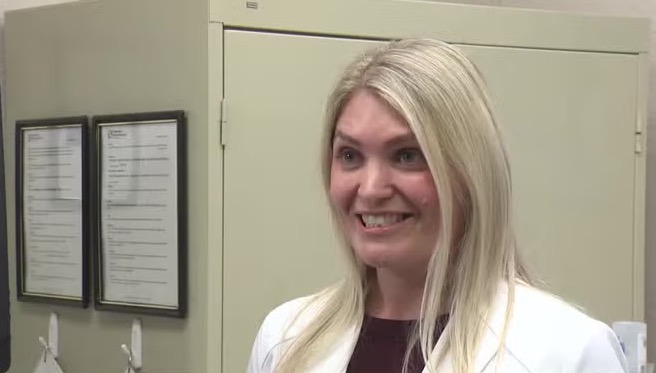
    ATLANTA (WUPA) — Four people have pleaded guilty in DeKalb County to defrauding the State of Georgia out of nearly $200,000 through fake contracts tied to housing services, according to the DeKalb County District Attorney’s Office.

District Attorney Sherry Boston announced the convictions Tuesday, saying the defendants used two separate schemes to trick the Georgia Department of Community Affairs into paying for work that was unnecessary or never completed.

The most recent plea came on Monday, Jan. 12, when Corey Alston, 48, admitted guilt to violating Georgia’s Racketeer Influenced and Corrupt Organizations Act, commonly known as RICO. Prosecutors said Alston played a key role in deceiving DCA.

DeKalb County Superior Court Judge Courtney L. Johnson sentenced Alston to 20 years, with three years to be served in custody. As part of his sentence, Alston is barred from working for any government agency or holding any job that would give him access to public money. He was also ordered to pay $30,000 in restitution to the state. Alston’s sentence will run at the same time as a federal prison sentence in an unrelated case.

Another defendant, Quinton Tate, 44, pleaded guilty to one count of conspiracy to defraud the state. Judge Johnson sentenced Tate to five years of probation, a $5,000 fine, and 250 hours of community service. Tate is also prohibited from working with any government entity, contracting with the government, participating in any U.S. Department of Housing and Urban Development programs, or handling public funds. If he completes probation, he will be treated as a first offender under Georgia law.

Alston and Tate were the last of four people charged in the case to enter guilty pleas. The other defendants were Toyoa Andrews, 52, and Shawn Williams, 62.

According to investigators, Williams served as the director of DCA’s Housing Assistance Division from 2017 to 2019. The division was responsible for helping Georgians find safe and affordable housing. Andrews, who is Williams’ cousin, also worked at DCA and reported directly to Williams.

Prosecutors said Williams and Andrews approved a cleaning contract for a DCA satellite office with a company owned by Andrews. From 2017 to 2019, DCA paid more than $64,000 to that company, even though the building’s landlord was already providing cleaning services.

A second scheme unfolded in 2019, when DCA began looking for a vendor to develop an online tool for the agency. After the state rejected Alston’s company as an authorized vendor, investigators said Alston, Andrews, and Tate agreed to submit the work under Tate’s company instead.

Andrews later sent invoices from Tate’s company totaling $120,000. Prosecutors said DCA leadership approved and paid those invoices after Andrews and Williams claimed the online service had been completed and was in use. Investigators determined the online tool was never created.

Shawn Williams pleaded guilty on Dec. 18, 2025, to one count of violating the RICO Act. Judge Johnson sentenced her to 15 years of probation, 400 hours of community service, and ordered her to pay $104,170 in restitution. Williams is also barred from holding any job that would give her access to public funds. She was selected as the CEO of the Greenville Housing Authority in South Carolina in 2020 and placed on leave in 2023 after being indicted by the Dekalb County Grand Jury.

On the same day, Toyoa Andrews entered a non-negotiated guilty plea to one count of violating the RICO Act. She was sentenced to 20 years, with two years in custody. That custodial sentence will be suspended if she pays $50,000 in restitution, completes 500 hours of community service, and meets other conditions, including a ban on government employment or access to public funds. Andrews was also fined $10,000.

The case was handled by the DeKalb County District Attorney’s Office Anti-Corruption Unit. The Office of the Inspector General led the initial investigation.

Please note: This story was provided to CNN Wire by an affiliate and does not contain original CNN reporting. This content carries a strict local market embargo. If you share the same market as the contributor of this article, you may not use it on any platform.
Fields to fajitas: The partnership changing school meals in Boyle County

By Megan Mannering

Click here for updates on this story

    DANVILLE, Kentucky (WLEX) — The days of rectangle pizza and processed fruit cups are dwindling in Kentucky schools. Since the pandemic, federal grants helped schools across the state buy locally grown produce and meat, transforming school meals. At Boyle County High School, even with less federal help now, the push to serve balanced, locally sourced meals is stronger than ever.

“Most days, honestly, I’m gonna give it a good 9.5. It’s pretty good,” said sophomore Nora Coleman, showcasing the fajitas and street tacos on the menu when LEX 18 stopped by.

Boyle County School District Food Service Director Cheyenne Barsotti welcomes the positive feedback from students.

“I love it because I know that means they’re enjoying it,” Barsotti said.

While USDA meal guidelines haven’t changed, the menu has transformed with colorful, flavorful options that differ significantly from what Barsotti remembers as a former Boyle County student. To satisfy both federal rules and teenage taste buds, her staff often cooks from scratch, tests new recipes, and prioritizes locally grown food where possible.

“We do prioritize those center-of-the-plate items, so items like beef that are going to feature as an entree, as a director, I prioritize that because I know the quality is noticeable when you buy the local product, and I think our kids notice that as well,” Barsotti said.

Circle G Farms, a diversified agricultural operation located just seven miles away, provides much of that local beef. The farm operates on a sustainable model where they raise crops to feed their cattle, cut their own hay and use manure to fertilize their fields.

“That’s the origin of Circle G Farms,” explained Carly Guinn. “We try to utilize every division of our farm to its highest potential and keep it sustainable.”

Spencer and Carly Guinn’s partnership with Boyle County schools began several years ago when the farm started selling produce to the district’s summer feeding program. The relationship has grown, and today their beef often serves as that “center of the plate” protein.

“It’s one thing to hear it from your kids, but it’s when their friends come up to us and say ‘We had the sweet potatoes’ or ‘We had tacos at school’…it’s really satisfying, that full circle moment where we can see our products going into making the community better, and we’re just one of the farmers doing that,” Spencer said.

“I think as parents it’s okay to question, ‘Where does that come from?’ and I think more schools are doing more than what you think and providing more local food than you realize,” Carly said.

Across Kentucky, nearly 150 farms sell to more than 90 school districts. For more than a decade, the Kentucky Department of Agriculture has connected farms to schools, assisting with crop planning, preparation and business development. According to the KDA, schools are some of the largest and most consistent buyers of locally grown meat and produce.

“We know that when they’re able to purchase from us, they will, and we are ready to supply them with what they need whenever they’re ready,” Carly said.

From November 2022 through April 2025, pandemic-era federal grant funding made it easier for Kentucky schools to buy local. Kentucky received a $3.2 million Local Foods for Schools grant that helped connect about 140 farmers with school districts. In 2025, the USDA halted additional funding for the next round of the program, and those grant dollars wound down, tightening budgets for future purchases.

“It is hard, you have to evaluate what you think you’ll get your most bang for your buck with now that the grant is no longer active,” said Barsotti. “We just have to say, ‘These are the items that are worth it,.'”

Even without the same level of funding, many farm-to-school partnerships have continued. Food service directors buy local when they can, and producers say seeing students eat what they raise makes the work worthwhile.

“I hear a lot of people say ‘You farm, we eat,’ but we take it a step further and say, ‘We get to farm because you eat,’ because there is no way we could do what we’re doing if the community weren’t involved with us,” Spencer said.

The Kentucky Department of Agriculture says it’s committed to finding solutions that bring more local foods into cafeterias while providing economic benefits to local producers.

Please note: This story was provided to CNN Wire by an affiliate and does not contain original CNN reporting. This content carries a strict local market embargo. If you share the same market as the contributor of this article, you may not use it on any platform.

$4,000 Pokémon card bought with stolen credit card, store owner says

By Mike Sullivan

Click here for updates on this story

    BOSTON (WBZ) — A Pokémon card store in Franklin, Massachusetts is out thousands of dollars after the owner said two men bought an expensive card with a stolen credit card. When the store owner posted about the incident on social media, he says other stores started messaging him about similar incidents at their stores.

“If there’s 10 stores that I know about, there’s probably another 10 stores that didn’t report it or don’t know about it yet,” said Rod Crochiere, owner of Pokémon Trainer’s Universe.

Their surveillance footage shows the two men scouring the store for the cards they want. Crochiere said the men were educated in the hobby and knew what they did and didn’t want. He says they originally bought several cards for $3,000 before coming back to buy a $4,000 card.

Crochiere said the men told him their brother wanted the card, but wasn’t with them, and they were going to use his card for the purchase. Two days later, the store was informed that the card was stolen.

“We are out not just the $4,000 purchase, but I suspect the $3,000 purchase is also going to end up fraudulent, so that’s $7,000 from one store,” Crochiere said.

He posted about the purchase on social media, and quickly he started getting responses from other stores in New England saying they had similar incidents. At one point, a store in Ohio called.

“They said the gentleman came into the store to buy some expensive cards, and they realize they were our guys from the video, and the charge came out fraudulent,” said Crochiere.

The Ohio store would not speak to WBZ on camera, but they said the purchase did come back as a stolen card. After that store called, Crochiere contacted Franklin police to file a report. WBZ reached out to police for more details on the case but have yet receive the information.

“If they are out in Ohio, there is no telling if they are buying at sports card stores in Ohio or other parts of the country,” said Crochiere.

Please note: This story was provided to CNN Wire by an affiliate and does not contain original CNN reporting. This content carries a strict local market embargo. If you share the same market as the contributor of this article, you may not use it on any platform.
Over 50 animals rescued from Indiana home, pair arrested and charged

By Griffin Glasscock

Click here for updates on this story

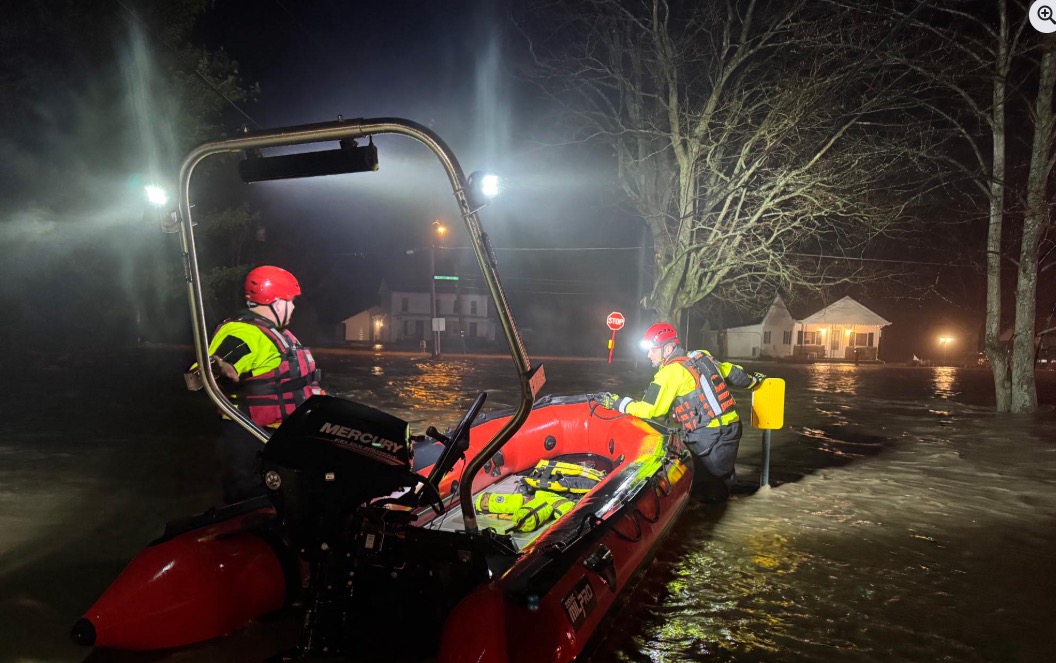
    EVANSVILLE, Indiana (WEVV) — Dozens of animals were rescued from an Evansville home Tuesday night after police and animal control officers uncovered what they described as severe and unsafe living conditions.

According to an affidavit, officers were called to a home on Franklin Street to assist animal control following reports that multiple animals were living in the home without access to food or water. The residents were identified as Joshua and Alee Nelson.

Police say officers discovered 15 dogs confined to kennels throughout the home, many of which contained feces and urine. Investigators reported the dogs had no access to food or clean water.

Outside the home, animal control officers found five ducks and four chickens kept in a fenced-in backyard, also without proper food or water.

As animal control began removing animals from the property, officers were informed of an additional room in the basement that had not initially been disclosed. Inside that room, animal control discovered 25 cats living in extreme conditions. Four additional cats were found upstairs.

According to the affidavit, the ammonia smell coming from the basement room was so strong that animal control officers exited the home in tears. Police put on breathing masks before entering.

Inside the room, officers observed a kiddie pool and multiple buckets filled with feces, with waste covering much of the floor. Animal control officers had to walk through the feces to reach the cats. No food or water was found for the animals.

Several cats were suffering from untreated injuries and respiratory issues believed to be caused by prolonged exposure to the toxic air. One cat reportedly had a leg injury wrapped with what appeared to be human medical bandaging.

Animal control officials told police that several of the cats were suffering from respiratory issues due to what they described as “toxic air” inside the room.

In total, 15 dogs, 29 cats, four chickens, and five ducks were removed from the property. Animal control documented the conditions and took custody of the animals.

Joshua and Alee Nelson were arrested and taken to the Vanderburgh County Jail. Both are charged with animal neglect and are each being held on a $5,400 bond.

The case remains under investigation.

Please note: This story was provided to CNN Wire by an affiliate and does not contain original CNN reporting. This content carries a strict local market embargo. If you share the same market as the contributor of this article, you may not use it on any platform.
Kids Who Care: First-generation college student surprised with full scholarship

By David Tilmans

Click here for updates on this story

    NORTH MANCHESTER, Indiana (WFFT) — Kalli Davis has visited Manchester University plenty of times throughout her childhood, but up until recently she did not think that she would be able to attend the school.

“It’s kind of always been on my radar. 6th grade, I actually did a project on why I wanted to come here. But I never thought I would, because people would always tell me how expensive it is,” Davis says.

Still, the Wabash High School senior has been verbally committed to play softball for Manchester since her sophomore year. She officially signed for the Spartans this past December, and her signing day also brought the surprise of a lifetime.

University administrators were on hand to present Kalli with Manchester’s Honors Scholarship Award, a four-year full scholarship recognizing Davis’s academic excellence and leadership. She is one of just two high school seniors to earn this scholarship.

“I walked in with my parents and my principal and I saw them there and I just felt so emotional,” Davis recalls. “This is such a wonderful opportunity and I am just so grateful to have it.”

Davis is preparing for her fourth season of varsity softball at Wabash and has been invited to national showcases. However, her talents and accomplishments extend far beyond the diamond.

Kalli currently serves as President of Wabash High School’s Key Club, where she has a role organizing service projects and opportunities for students to volunteer within the community. She highlights recent fundraising efforts by the school for UNICEF, and also invites folks out to a blood drive at Wabash High School on Wednesday, January 28th.

Additionally, Davis is part of the school’s academic team, book club, and band programs. She has attended leadership seminars such as the HOBY State Leadership Seminar. Kalli is also a part of the Apaches’ band programs.

Upon graduating high school, Kalli is also set to earn her associate degree thanks to dual credit courses and summer classes. She plans to major in applied mathematics at Manchester with dreams of becoming a teacher in secondary education. She has had chances to foster her love for education through internships with other Wabash City Schools.

“Right now with my high school, I do an internship with fifth grade. I work with Ms. [Heather] McKee, I think it’s really awesome what she does,” Davis explains. “She’s one of my other inspirations, along with Mr. [Austin] Terheide, who have made me want to go into teaching.”

Davis also gives thanks to her parents and Manchester University Softball Coach Sara Emerich for helping her along her journey.

Please note: This story was provided to CNN Wire by an affiliate and does not contain original CNN reporting. This content carries a strict local market embargo. If you share the same market as the contributor of this article, you may not use it on any platform.

Hawaiian duck that died on Kauai confirmed to have bird flu

By Jeremiah Estrada

Click here for updates on this story

    HANALEI, Hawaii (KITV) — A Hawaiian duck that died on Kauai in late November was confirmed to have been infected with bird flu.

The Hawaiʻi Department of Health (DOH), Department of Agriculture & Biosecurity (DAB) announced on Tuesday that a Koloa Maoli (Hawaiian duck) had avian influenza (bird flu) when it was found sick on Nov. 26, 2025. The sick duck was found in the U.S. Fish and Wildlife Service’s Hanalei Wildlife Refuge in Hanalei, Kauai.

The Hawaiian duck died within 24 hours after being discovered and the positive bird flu case was recently confirmed by the National Veterinary Services Laboratories.

Bird flu can cause severe illness leading to high mortality rate to certain bird populations such as poultry. Human infections are rare but are possible with close contact. This duck on Kauai likely contracted the virus through an infected migratory waterfowl.

DOH, DAB and Department of Land and Natural Resources will continue to monitor public health reports, poultry operations and wild bird populations for any signs of bird flu spreading.

With migratory bird season underway, more birds traveling through the islands may carry avian diseases and it is recommended that the public avoid touching or handling wild birds, especially waterfowl or shorebirds.

DAB provided these precautions if you encounter sick or dead birds, such as waterfowl:

Avoid touching or handling wild birds, especially waterfowl or shorebirds. If capturing a dead or sick bird is necessary, wear gloves, minimize contact and follow biosafety protocols. To report multiple or unusual illnesses in poultry, livestock or other wild birds or animals, contact DAB’s Animal Industry Division.

Please note: This story was provided to CNN Wire by an affiliate and does not contain original CNN reporting. This content carries a strict local market embargo. If you share the same market as the contributor of this article, you may not use it on any platform.

Eminent domain debate reignites in Iowa with new pipeline bill

By Natalie Reittinger

Click here for updates on this story

    DES MOINES, Iowa (KWWL) — Property rights and eminent domain are under discussion again in the wake of a new legislative proposal concerning pipeline projects. The issue resurfaced after Gov. Reynolds vetoed a similar bill last year.

The current proposal, listed as House Study Bill 507, aims to prevent the use of eminent domain for acquiring right-of-way for constructing or operating pipelines primarily meant for transporting carbon dioxide.

Eminent domain allows the government or its agent to seize private property for public use, with compensation. However, there has been ongoing debate over its application to pipeline projects, and no consensus has been reached.

Under current Iowa law, property owners may be compelled to allow easements on their land for projects deemed in the public interest, with compensation determined by a county commission. Disputes often arise over whether carbon pipelines serve the public interest.

Sherry Webb, a farmer from Shelby County, expressed support for the bill. “Our farm is in Shelby County. We appreciate all the work you’ve done on this, thank you very much representatives. House Study Bill 507 is a fair and reasonable bill. It gives the pipeline the ability to find a route, and landowners a right, which they deserve, to say no,” Webb said.

Summit Carbon Solutions, a company seeking pipeline approval, opposes the bill. Jake Ketzner of Summit Carbon Solutions stated, “We support widening the corridor to allow for route adjustments to make this possible and significantly reduce any deeper eminent domain. However, in certain cases, like how you exit an ethanol plant, crossing rivers or roads, there might be only one option for the route, which is why this bill doesn’t work. Unfortunately, this bill would eliminate new and emergent low carbon markets for Iowa ethanol like sustainable aviation fuels.”

The House Judiciary Subcommittee has voted to advance the bill to the full committee. This action comes seven months after Gov. Reynolds vetoed a previous bill that would have introduced additional complications for proposed pipelines.

Please note: This story was provided to CNN Wire by an affiliate and does not contain original CNN reporting. This content carries a strict local market embargo. If you share the same market as the contributor of this article, you may not use it on any platform.

Illinois family roots pilot program invites community to reclaim ancestry

By Jasmine Chameis

Click here for updates on this story

    CARBONDALE, Illinois (WSIL) — History isn’t just written in books, it lives in families, memories, and sometimes, in the very DNA that connects generations. That powerful idea takes center stage at the Carbondale Public Library, which is hosting a Community DNA Collection & Information Session for the Illinois Family Roots Pilot Program. It’s a groundbreaking effort designed to help residents reconnect with their ancestry.

The public is invited to this three-hour event, where participants can learn how science and storytelling intersect to restore chapters of history long separated by time, migration, and systemic erasure. The program uses DNA testing paired with genealogical research to help Illinois residents trace ancestral roots and rebuild family narratives that stretch far beyond state lines and sometimes across oceans.

During the session, attendees will hear an overview of the Illinois Family Roots Pilot Program, ask questions, and, if they choose, provide a DNA sample on site with the guidance of trained team members. Free DNA kits will be available to eligible Illinois participants, removing financial barriers to what organizers call a journey of reclamation and remembrance.

For many African American families, traditional genealogical records are fragmented or missing altogether due to slavery, segregation, and displacement. Organizers say this initiative helps turn those historical gaps into bridges, allowing descendants to reclaim names, places, and legacies once obscured.

The event will take place at the Carbondale Public Library, located at 405 W. Main Street, with parking available on W. Monroe Street. The program is free and open to the public, welcoming anyone interested in learning how DNA can help illuminate the past and empower the future.

Those seeking additional details can visit the Carbondale Public Library’s website for more information on the Illinois Family Roots Pilot Program.

Please note: This story was provided to CNN Wire by an affiliate and does not contain original CNN reporting. This content carries a strict local market embargo. If you share the same market as the contributor of this article, you may not use it on any platform.

Beloved dog who has walked for peace alongside Monks is healing now after undergoing surgery

By Kaitlyn Ross, Reeves Jackson

Click here for updates on this story

    ATLANTA (WXIA) — Aloka the Peace Dog is making steady progress in his recovery, according to those caring for him, following surgery that temporarily sidelined the long walks that made him a familiar presence to many.

Aloka is now undergoing physical therapy, with caretakers saying the sessions are focused on helping him regain strength and mobility in a calm and measured way. His therapy is described as gentle and intentional, designed to allow him to move comfortably and confidently as he heals.

Those working with Aloka said his recovery mirrors the quiet patience that has defined his journey.

Once a stray in India, Aloka began following Buddhist monks as they walked, eventually becoming part of the Walk for Peace. For years, he has accompanied the monks on their journeys, earning the nickname “Peace Dog” for his steady presence and calm demeanor.

Now, supporters say, the compassion Aloka has offered others is being returned. He is recovering under the care of veterinary staff and members of the Walk for Peace team, who are allowing him to heal at his own pace.

There is no set timeline for his return to walking long distances, but those closest to him say progress is being made daily.

As Aloka continues his recovery, supporters are sharing messages of encouragement and well wishes as he takes each step forward — slowly, patiently and peacefully.

Please note: This story was provided to CNN Wire by an affiliate and does not contain original CNN reporting. This content carries a strict local market embargo. If you share the same market as the contributor of this article, you may not use it on any platform.