A survivor’s story: Former KCFD firefighter Chris Anderson remembers career-ending fire

By Taylor Hemness

Click here for updates on this story

    Missouri (KSHB) — On Oct. 12, 2015, Kansas City, Missouri, firefighters Larry Leggio and John Mesh were killed while fighting a fire near the intersection of Independence and Prospect avenues.

One exterior wall of the building collapsed, burying them both under a pile of bricks.

Their names are likely remembered from the tragedy, but two other KCFD firefighters were buried under the same rubble that night.

They survived, but what exactly does a survivor’s story sound like? I asked one of them to answer that question.

There are a couple of words people always use when they feel like their profession was the only one they were ever meant to have.

“I know it sounds corny, but I always felt that that was what God wanted me to do,” Chris Anderson told me. “That was my … that was my purpose. It was just … it was a calling, and I absolutely loved every minute of it.”

Chris spent thousands of those minutes fighting fires. But he didn’t know that he only had a few minutes of firefighting left when he arrived on scene that October night.

At one point inside the building, surrounded by flames, he had a premonition that, thankfully for him, never came true.

“My captain and I got trapped,” Chris said.

That was when he imagined he was standing in his living room.

“It was very real to me,” Chris said. “And I was looking out of our window, and watching the chief’s buggy pull up, and the captain and the chief getting out to come and inform my family [that I had died.] It was just a very real feeling.”

What actually happened was other firefighters guided Chris and his captain out of the burning building.

He ended up in the alleyway spraying water into a pair of windows, unaware his firefighting career was just seconds from being over.

“Right above the two windows, the bricks bulged out about six inches,” he said. “And I spun on my … on my right knee, to get my back to the building, to get behind my fire truck. From seeing the bulge, within a second, I was hit by bricks. As soon as I got my back to the building, that building was down.”

Chris, called to be a firefighter, was now buried under a collapsed wall of brick.

“When I shifted my shoulder, there was a small hole that opened up by my left wrist,” he remembered. “And I stuck my hand out and waved and yelled that we were alive.”

His team got him out and into an ambulance, and he called his wife, Heather.

“He just said, ‘I got thumped,’” Heather told me. “[He said,] ‘I’m okay, I’m going to the hospital.’ By the time I ended up getting logged on to the news station, they were announcing that a firefighter had died at a local hospital, and I was terrified.”

When Heather got to the hospital, she followed her nose.

“There’s a certain smell that goes along with a structure fire,” she explained. “And being that there was a number of firefighters already with him, you could smell the path that they took.”

Heather told me Chris looked like a tank had run over the left side of his body.

He’d torn muscles in his arm, shoulder and ribs, and he suffered a traumatic brain injury. But when he spun on his right knee to turn from the building, he tore all the cartilage away, making a return to firefighting impossible.

Battered and bruised, he held onto life. Meanwhile, his career, his calling, had slipped through his fingers.

I asked him to describe what the last decade has been like for him and his family.

“Definitely the first 18 months to two years, we did nothing but go to doctors’ appointments eight hours a day, five days a week,” Chris said. “It took five years to heal completely with different surgeries and treatments, and rehabs and everything else.”

But the fire, and all those injuries, also took a different kind of toll.

“When that fire happened, I crawled into a bottle for three years,” Chris said. “I mixed that up with a lot of prescription drugs, a lot of pain pills, a lot of anti-anxiety, and I did that for three years, just trying to cope.”

Heather described the time after the fire in an even harsher light.

“In 2015, we were married 20 years,” she said. “And this year, we’ve celebrated our 30th anniversary. You know, the past 10 years have been completely different. Completely. I’ve been married to a different man. That night, my best friend just didn’t exist anymore.”

Chris and Heather aren’t living in the same place anymore, either. They chose a quiet life away from the city lights and sounds.

Despite the alcohol and drug abuse, and the survivor’s guilt he carries, Chris says he wouldn’t change anything about what’s happened to him. He told me that maybe he spared someone else from the same fate.

When I asked him how he describes his survivor’s story, he said his story is “still being written.”

“I can’t tell you if it’s good or bad yet,” Chris said. “I believe that everyone has a predetermined expiration date. We just don’t know what that date is. Maybe God’s not done with me yet and … has something else in mind.”

Chris Anderson was not the only KCFD firefighter who sustained career-ending injuries when that building collapsed.

Dan Werner was also partially buried under the rubble. I spoke with Werner when I first started working on this story.

He decided not to speak on camera but did say, “My family will forever be grateful to all the people of Kansas City for the love and support we were shown after the accident. It’s our wish as a family to step aside and let the focus remain on the loss of two legends, in John (Mesh) and Larry (Leggio).”

Please note: This content carries a strict local market embargo. If you share the same market as the contributor of this article, you may not use it on any platform.

A hidden infection is spreading through Florida avocado trees — and it could impact your wallet

By Briauna Brown

Click here for updates on this story

    FLORIDA (WFOR) — There’s a new threat that may affect a mainstay fruit source for many of the state’s growers – Florida avocados.

Agricultural experts in Florida are warning this month about a disease, sunblotch viroid (ASBVd), that can severely stunt avocado tree growth by spreading through the groves and deforming the fruit. This could mean fewer locally grown avocados available in Florida stores, leading to higher prices, according to researchers at the University of Florida.

UF’s Institute of Food and Agricultural Sciences said sunblotch viroid was first reported in Florida in 1941.

The disease is caused by a viroid, which is one of the smallest known infectious organisms to disrupt a tree’s growth and fruit production. It spreads through root grafts among trees, contaminated pruning or grafting tools and propagation materials.

Viroid is known to reduce crop yields by 80% — leaving trees both stunted and weakened, researchers said.

UF/IFAS experts said a part of the issue is that infected avocado trees may look healthy for years before symptoms appear. Growers will notice anything from streaked and blotched fruit to unusual coloring on stems and leaves or a drop in yield.

Trees can also be free of symptoms and can quietly spread the disease through their seeds or pollen.

“Hundreds of grafted avocado trees are being produced to establish orchards in new areas, driving the industry’s expansion northward,” Romina Gazis said. She’s the associate professor of plant pathology and director of the Plant Diagnostic Clinic at UF’s Tropical Research and Education Center.

“At the same time, growers are replanting in orchards where trees were lost to laurel wilt. Because our industry relies on seedling-grafted trees, and the seeds themselves may carry the viroid, it’s critical to scout and test for its presence to protect new plantings,” he continued.

UF/IFAS experts said at this time, there’s no program to check that budwood or seeds are free of viroid. And as thousands of new trees are planted, it’s important to take steps in trying to prevent ASBVd.

Experts said nurseries should test budwood trees annually and growers should train their staff to spot symptoms of the disease, ensuring that infected trees are destroyed, and equipment is sanitized.

Gazis said in the past, growers and nurseries were able to eradicate ASBvd by following these sanitation practices.

“Today, many new growers and nurseries are not aware of this threat to the industry, but with our UF/IFAS Extension renewed effort to educate the industry, we can once again control this disease,” Gazis said.

Experts urge homeowners to watch for symptoms too and have them tested by professionals. If there’s a positive result, that tree should be removed from the property.

If you’d like more information, contact the UF/IFAS TREC Plant Diagnostic Clinic in Homestead.

Please note: This content carries a strict local market embargo. If you share the same market as the contributor of this article, you may not use it on any platform.
Firefighter credits department’s mandatory cancer screening for saving his life

By Tod Palmer

Click here for updates on this story

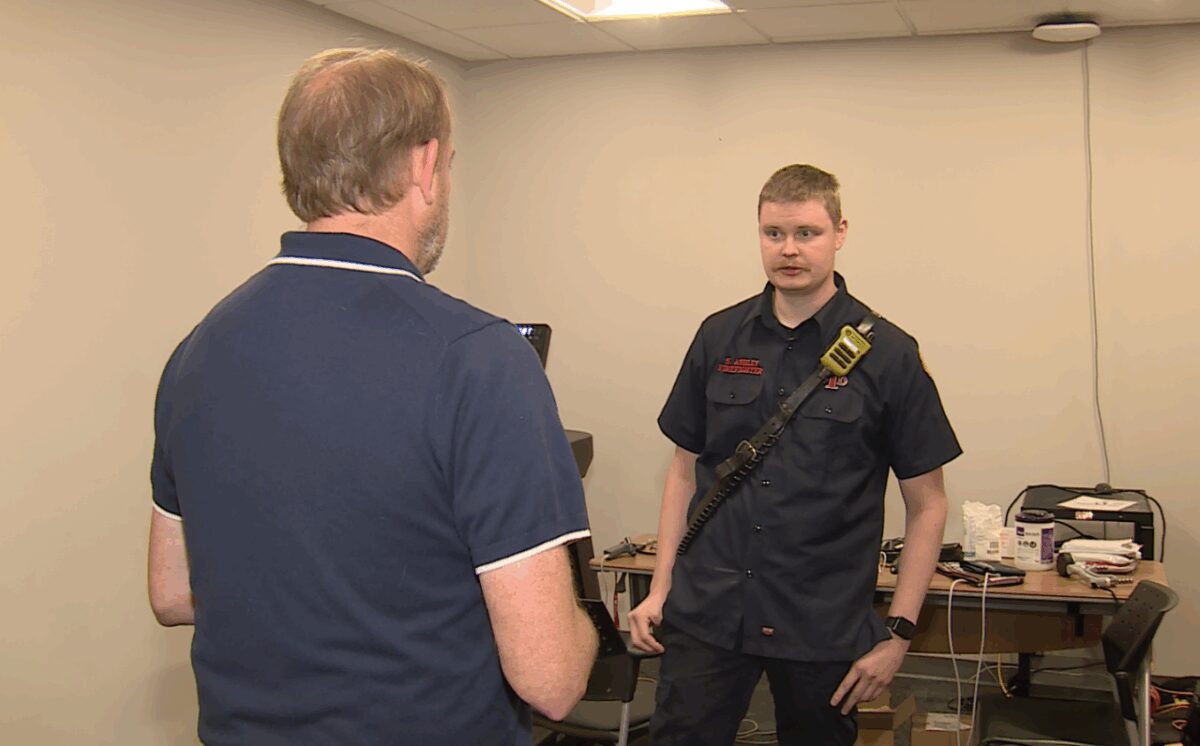
    Missouri (KSHB) — For three years now, the Independence Fire Department has partnered with Lifescan Wellness to provide annual physicals for all department members.

Firefighter Spencer Ashley said the scan he underwent last October saved his life.

“It was just another normal day,” Ashley said.

He was 24 years old in his second year as a firefighter with IFD — following in the footsteps of his father, Richard, who spent 35 years with the department.

“This was my second LifeScan,” Ashley said. “The first one, it was all clear. … The second one is where everything changed.”

Lying on a non-descript table in a makeshift ultrasound screening room, the technician noticed that the lymph nodes in his neck were excessively enlarged — three times bigger than normal, Ashley recalled.

“The way that she responded to me, her reaction to it and sending me back to the nurse practitioner to go get looked at for the second time — that’s when I was like, ‘OK, I’m gonna make an appointment with my primary care physician and get it looked at,’” Ashley said.

Tests confirmed the doctors’ fears.

“I was diagnosed with classic Hodgkin lymphoma with a syncytial variant subtype, which is a rare variant form of classic Hodgkin lymphoma,” Ashley said.

Studies show firefighters are at a higher risk of developing cancer than the average person and that cancer is the leading cause of firefighter deaths in the line of duty by a wide margin.

“Generally speaking, across the board, it’s about one and a half times more likely depending on the cancers,” IFD Assistant Fire Chief Craig DuPlantis said. “It’s 15 to 19 times more likely for certain cancers. … It’s going to happen. It is a part of the job. It’s an inherent risk that’s understood.”

After Ashley’s diagnosis, 12 rounds of chemotherapy infusions, each followed by a stomach injection the next day to keep up his white-blood cell count, lasting from Jan. 8 to June 27, 2025.

“Eating, going up and down stairs, everything was just exhausting,” Ashley said. “Not to mention the mental side that goes along with it — the depression, anxiety, PTSD, all of it.”

Still, it was better than the alternative.

“With the rare variant form of cancer that I had, my oncologist told me to my face that if you hadn’t gone to your primary care physician to do this follow-up, you would have been dead in six months,” Ashley said.

IFD has worked with the firefighters union, IAFF Local 781, in recent years to make the annual physicals mandatory.

“We haven’t gone through a single year where we haven’t found at least one person with a problem,” DuPlantis said. “Not specific to say cancer like this, but we’ve caught health threats and life threats in multiple people every year we’ve done this.”

Initially, the firefighters union was concerned about how the information would be used, but DuPlantis said the reality of screenings in recent years helped create buy-in and allay those fears.

“The fact that all of the problems we’ve located have been with personnel in the operations division, rank-and-file personnel, goes a long way towards kind of spreading our message that this is for your benefit,” DuPlantis said.

Ashley is certainly grateful for the screenings — and hopes that other firefighters, or people in general, don’t put off recommended preventive screenings, like the one he credited with saving his life.

“I thank God we do this,” DuPlantis said. “I’m very happy that we were able to make this mandatory, because, if it were optional, a lot of younger personnel would go, ‘Well, I’m 25 years old, so I don’t need to do this.’ We would have missed that, and we probably would have lost him, but I’m glad we didn’t.”

Please note: This content carries a strict local market embargo. If you share the same market as the contributor of this article, you may not use it on any platform.

Classic horror story gets hilarious revamp in “Dracula: A Comedy of Terrors” at Massachusetts theater

By Courtney Cole

Click here for updates on this story

    TAUNTON, Massachusetts (WBZ) — Laughter, not fear, is the goal of “Dracula: A Comedy of Terrors,” and the community theater production at the Taunton Performing Arts Center aims to defy expectations.

The unexpected take on the classic horror tale arrives just in time for Halloween.

“This is not scary whatsoever. You may be horrified, but not for the reasons you think,” said actor Brendan Pione.

“It is lovingly based on Bram Stoker’s ‘Dracula,'” explained actor Fred Halperin, “but it more aligns to campiness and a lot of innuendo and funny situations, funny scenarios.”

The gender-bending play is quick with the jokes.

“It goes in a completely different direction than the original, but still holds certain plot lines to it,” said director Natalie Cabral. “This Dracula is very different. It’s very sexy, very comical, very conceited sort of.”

Christopher Francis is having a blast playing the Count from Transylvania.

“It’s a very funny Dracula. It’s a very sexual Dracula. It’s a very promiscuous kind of guy,” he explained.

Actor Cassandra Gilbert added, “Honestly, this show, we push the envelope, which not a lot of shows do in community theater.”

For the cast, that community aspect is crucial to performing a piece like this.

“There’s a level of freedom to it. There’s a safeness to it. There’s an understanding that when you’re performing, you’re becoming a different person who’s not you,” Halperin said.

“It’s a less intimidating first step to take to say, I want to try this out. I want to try to express myself this way. And I want to do it in a place where I feel supported and there are lower stakes,” said Francis.

Pione added, “Everyone I know who finds out about this place is just surprised they never heard of it, wishes their own town had one.”

In the end, it’s all designed to show the audience a good time.

Cabral said, “It’s both what you love about Dracula and what you love about comedies all in one.”

“What I really hope that they’re talking about is how much fun they had,” said Francis. “I think that’s the overall goal.”

“Dracula: A Comedy of Terrors” will be at the Taunton Performing Arts Center on Main Street from October 16 through the 19th.

Please note: This content carries a strict local market embargo. If you share the same market as the contributor of this article, you may not use it on any platform.
Woman can finally take honeymoon after $1M lottery scratch-off win

By WTVD Staff

Click here for updates on this story

    RALEIGH, North Carolina (WTVD) — Cheryl Bach of Holly Springs and her husband have been married for 31 years but have never taken a honeymoon.

That will change after Bach won $1 million prize on a scratch-off ticket.

“I’m going to take a vacation with my husband that will finally be our honeymoon,” she said. “I haven’t decided where yet.”

She bought a $10 Million Spectacular ticket from the Harris Teeter on Village Walk Drive in Holly Springs. She said she called her husband immediately to share the big news.

“He didn’t believe me,” Bach said. “I had to take a picture to show him.”

She said it took her some time to calm down.

“I had to put my glasses on to make sure I was seeing it right,” Bach said with a laugh. “I was shaking for the rest of the day.”

Bach went to lottery headquarters in Raleigh on Friday to claim her prize. Given the choice of an annuity of $50,000 for 20 years or a lump sum of $600,000, she chose the lump sum.

After required state and federal tax withholdings, she took home $430,514.

In addition to her honeymoon, she said she plans to pay some bills.

The $10 Million Spectacular game debuted in December 2023 with five top prizes of $10 million, 20 prizes of $1 million and 20 prizes of $100,000.

All the $10 million prizes have been claimed.

Please note: This content carries a strict local market embargo. If you share the same market as the contributor of this article, you may not use it on any platform.
Family sues John Muir Medical Center after son seriously injured in a swimming accident

By Sarah McGrew

Click here for updates on this story

    LAFAYETTE, California (KCRA) — Sitting in the backyard of the home she shares with her husband and daughter, Ofelia Noroozi constantly feels the absence of the fourth member of their family: her son Amin Noroozi.

“Just those everyday little moments are just so cruel,” Ofelia Noroozi said. “It’s like we’re missing what could’ve been. The future.”

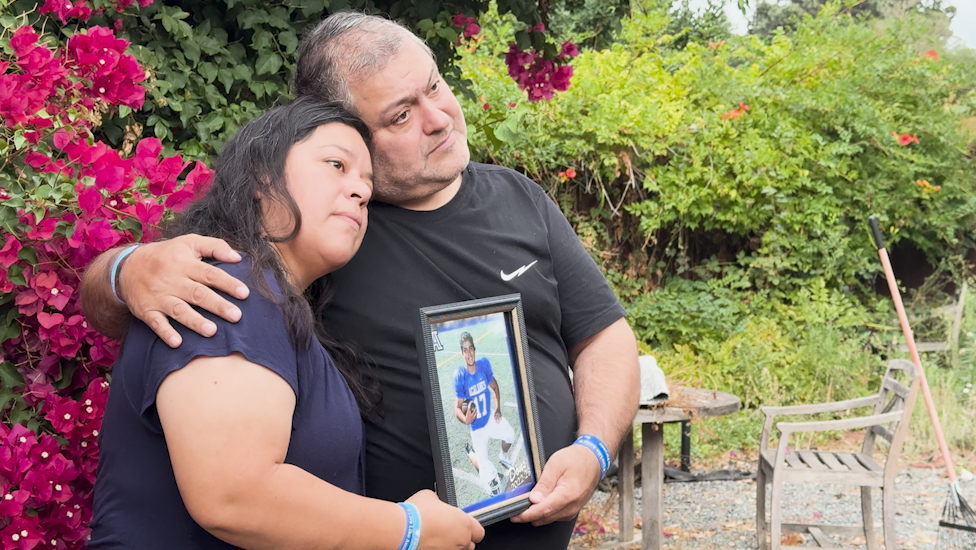
Amin Noroozi was a 17-year-old student and multisport athlete at Acalanes High School.

In April, he and his girlfriend, Audrey, and some of their other friends headed to Stinson Beach for the day. Ofelia Noroozi had told her son to be safe while driving on the winding roads leading into the beach community in Marin County.

Later in the day, Ofelia Noroozi’s phone lit up with Amin Noroozi’s name, but when she picked up, it was Audrey’s voice.

“It was Audrey saying that he had gotten into an accident and that he couldn’t feel his legs,” Ofelia Noroozi recalled. “They were waiting for the helicopter to land to airlift him somewhere.”

Amin Noroozi and Audrey had been out in the water, diving through the waves. After going through a wave, Audrey looked behind her to find Amin Noroozi floating face down. When she reached him to flip him over, Amin Noroozi told her he could not feel his legs.

He was airlifted to John Muir Medical Center in Walnut Creek. The same hospital where he was born. His neck was broken, and the doctor told the family that Amin Noroozi was paralyzed from the chest down. He needed emergency surgery.

Before going into the operating room, Ofelia Noroozi told her son that she would go to the ends of the Earth to make sure he was OK.

Ofelia Noroozi said one of the last things her son told her before heading back to surgery was, “These legs may not work anymore, but these lips are always going to kiss you.”

The surgery was a success. His parents and younger sister said that, at one point, he wiggled a finger and indicated he could feel a touch on his leg. But in the days after surgery, his condition became increasingly critical.

“You think they would do everything possible for your son,” Amin’s father, Payman Noroozi, said. “There was no point where we were thinking of him dying.”

His parents said his temperature hit 109 degrees, and his heart rate plummeted. Four days after he was admitted to the hospital, he went into cardiac arrest and died.

A lawsuit the family filed on Oct. 9 alleges that “despite the successful surgery, the critical post-surgical care was deficient, disorganized, unsupervised, and spun out of control, directly and unnecessarily causing Amin Noroozi’s suffering and death.”

With tears threatening to spill over, Payman Noroozi said, “I feel like if they couldn’t have done it, they should have told us so we could take him somewhere else. That’s where I feel like failed [Amin].”

The family says Amin Noroozi should have been transferred to a Level 1 pediatric trauma center. John Muir is a Level 2.

In a statement obtained by our colleagues at the San Francisco Chronicle, John Muir declined to comment on the specifics, given the pending litigation and patient privacy policies.

“We extend our deepest sympathies to the family and loved ones of Mr. Noroozi,” the hospital said in a statement. “We stand behind the professionalism and dedication of our physicians, nurses, and staff, and we remain focused on patient safety, quality, and continuous improvement.”

The Noroozis know they cannot bring their son back, but they want to prevent something similar from happening to another family.

“No seeing him coming back from school every day — it was going to be his senior year,” Ofelia Noroozi said. “It doesn’t get better. It doesn’t. You just kind of have to keep going.”

Please note: This content carries a strict local market embargo. If you share the same market as the contributor of this article, you may not use it on any platform.

Sacramento Zoo celebrates its first okapi birth, welcoming a male calf

By Lindsay Weber

Click here for updates on this story

    SACRAMENTO, California (KCRA) — It’s a boy! The Sacramento Zoo announced on Monday that its okapi Kivuli gave birth to a healthy male calf last week.

The zoo said the Oct. 9 birth was the first okapi birth in the Sacramento Zoo’s history. The birth was also partially visible to guests in the side yard of the okapi habitat.

Officials said Kivuli and the calf are both healthy, but the animal care team and veterinary staff will monitor them closely over the next few weeks. The focus of care will be on bonding, nursing and growth monitoring.

Zoo officials said that within the Association of Zoos and Aquariums, there are fewer than 100 okapi across 27 institutions, making the birth a key contribution to conservation.

In the wild, officials said okapi are endangered, with their population estimated between 10,000 and 15,000. Their primary habitat is the dense forests of central Africa.

The Sacramento Zoo said the mother and calf will not be on exhibit while the calf reaches critical milestones in its growth.

Please note: This content carries a strict local market embargo. If you share the same market as the contributor of this article, you may not use it on any platform.

County of Monterey expands indigenous interpreter services

By Jacquelyn Quinones

Click here for updates on this story

    SALINAS, California (KSBW) — The County of Monterey is enhancing health care access for indigenous communities by training interpreters and expanding services in local hospitals, with Natividad Hospital leading the initiative.

For years, the county health department and Natividad Hospital have partnered to train indigenous language interpreters to ensure patients can communicate clearly and receive better care.

Natividad Hospital is one of the first hospitals to provide interpreter services for the indigenous population, and as of today, the hospital has about 20 indigenous interpreters and is actively seeking more.

Monterey County is home to a large Hispanic and indigenous population, and that diversity is driving a push for more indigenous language interpreters, especially in local hospitals.

“They are different communities that identify with certain language groups, and for more than a decade we’ve realized that there weren’t suitable services for language access,” said Victor Sosa, the Interpreter Services Manager at Natvidad Medical Center. “Generally, some of the community would interpret for their parents, and that just wasn’t appropriate and didn’t really give families access to health care.”

Staff at Natividad Hospital decided to take action by creating a pipeline to train and certify interpreters from indigenous communities.

In 2017, Sosa co-authored the indigenous interpreter textbook, a first-of-its-kind resource.

“In using that, we’ve trained over 200 interpreters that identify belonging to indigenous communities, and some work here in the hospitals and others work throughout Monterey County,” said Sosa.

Natividad Hospital was also recognized for its OB-GYN department, which has improved the birthing experience for both Latina and indigenous mothers.

“They went out to the communities, provided more research and training so that when moms got appropriate prenatal care, they came to the hospital and had a better birthing experience,” said Sosa.

The county’s health department has also partnered with Natividad and other groups to expand interpretation services into mental health programs.

“Many of our indigenous women in South Monterey County, specifically Soledad, Greenfield, and King City, may not be comfortable accessing mental health services,” said Elsa Jimenez County of Monterey Director of Health Services. “So we’ve partnered with CBDIO out of Greenfield to develop a community-based program.”

The health department is partnering with Natividad and, pending board approval, plans to hire a full-time indigenous interpreter who would be based at the Alisal Health Center.

Please note: This content carries a strict local market embargo. If you share the same market as the contributor of this article, you may not use it on any platform.

Police release dashcam video of off-duty officer shooting

By James Stratton

Click here for updates on this story

    MILWAUKEE (WISN) — Milwaukee police released dashcam video showing an off-duty officer shooting and killing Elijah Wilks after Wilks’ family called for its early release.

The confrontation occurred between Elijah Wilks and an off-duty Milwaukee Police Department officer Thursday at 49th Street and Mill Road in Milwaukee, where 26-year-old Wilks died after an exchange of gunfire with the officer.

Milwaukee police typically release video to the public within 15 days of a shooting, per department policy. This release happened roughly four days after the shooting. Milwaukee Police say they released the video “in the interest of transparency.”

The family called the shooting justified and wanted the video released because they believe it shows everything that happened. The off-duty officer shot and killed Wilks after video shows Wilks hit him with his gun. The plea and urgent release of the video came after grainy surveillance video was posted on social media over the weekend.

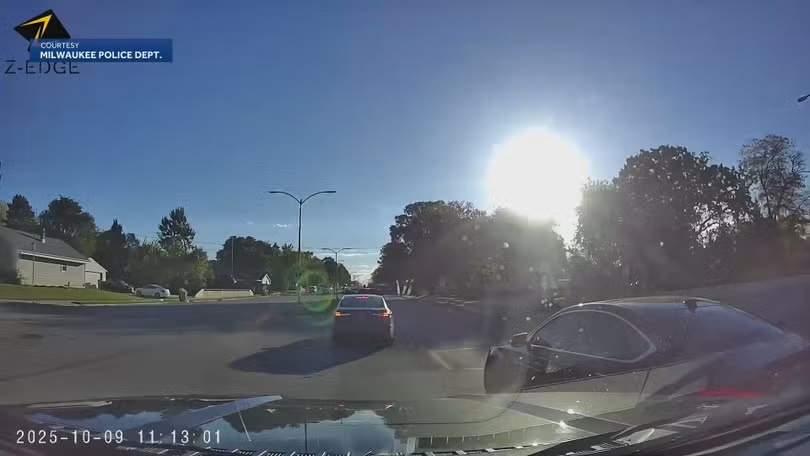
Police say, and the officer’s dash camera video shows, the pair were involved in a crash. Then, video shows the pair get out of their cars and quickly exchange words, and Wilks then pulls out his gun and hits the officer with it. The entire exchange is 26 seconds long.

“Elijah pulls out a firearm with his right hand, and that, he’s essentially swinging it in the direction of the off-duty officer. One time. It’s almost like a punch is what actually transpired,” attorney B’Ivory LaMarr, who represents the family, said.

The pair exchanged gunfire, according to police. The officer had his service weapon, and video shows Wilks had a gun of his own.

Last Thursday, a neighbor said police pulled a 10 mm bullet from his living room wall. Wilks was facing that direction, according to video. Milwaukee police say they do not have any 10 mm service weapons.

Balloons and photos now sit where Wilks died as the family works to grieve his death.

“What this family has done is made the difficult decision, while they’re grieving, to put aside their privacy, put aside their grieving to allow again the opportunity for accountability to actually exist where the public can see what they saw. And just try to move past the situation and heal this city,” LaMarr said.

Please note: This content carries a strict local market embargo. If you share the same market as the contributor of this article, you may not use it on any platform.

Milwaukee mother killed with rock, court documents reveal daughter’s violent past

By Hannah Hilyard

Click here for updates on this story

    MILWAUKEE (WISN) — A Milwaukee mother is dead after police said someone hit her with a rock in her own backyard.

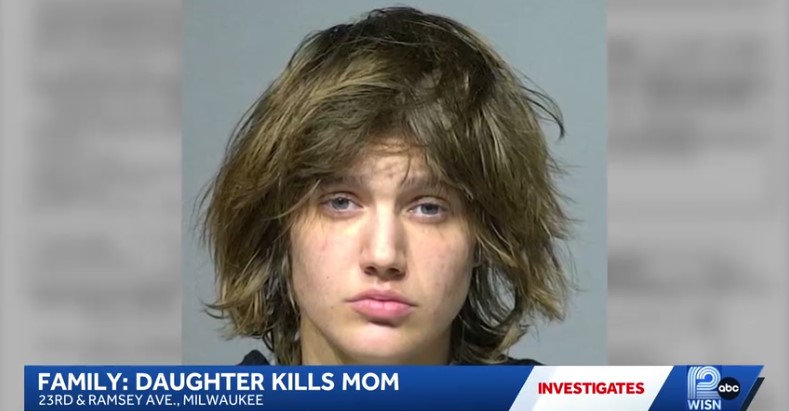
The medical examiner identifies the woman as 64-year-old Carrie Zettel. On Monday, WISN 12 News obtained a search warrant that identifies the suspect as 29-year-old Lauren Spors, Zettel’s daughter.

“She called me at 3:53 this morning,” close family friend Loretta Moyer said. “Lauren was here beating on the doors, throwing rocks, trying to break in. She called the police.”

Less than 12 hours later, police returned to Zettel’s home near South 23rd Street and West Ramsey Avenue to find a violent crime scene.

The search warrant revealed that Zettel called 911 at 2:06 p.m. Sunday, claiming her daughter was “being violent.”

MPD District 6 officers responded and found Zettel dead.

“It happened in the backyard, and she beat her mother to death with a rock,” said Susan Henderson-Hoffmann, another family friend.

The warrant states that officers found Spors “covered in blood” and arrested her.

“I cannot believe Carrie is gone, but you want to know something? I’m not surprised,” Henderson-Hoffmann said.

She’s not surprised based on Spors’ violent past. 12 News uncovered a trail of run-ins with the courts.

In 2018, Zettel was granted a restraining order against her daughter after penning a handwritten plea detailing her fears of Spors, who struggled with mental health issues. Court records show Spors is accused of violating that order four times. Each time, Spors was found incompetent for the case to move forward.

Court documents show she was taken to the county mental health facility after the fourth event, when she had “thrown a rock through one of the double pane windows” at Zettel’s home. Public records do not indicate how long she was held.

“The girl should have been stopped years ago, and I don’t understand why. And that angers me,” Henderson-Hoffmann said.

Zettel’s restraining order against her daughter expired in 2022.

Spors has not yet been formally charged in Sunday’s crime. Police booking records show she is in custody for first-degree intentional homicide.

Please note: This content carries a strict local market embargo. If you share the same market as the contributor of this article, you may not use it on any platform.