University of Iowa study finds lead in water from standalone kiosks

By Abigail Kurten

Click here for updates on this story

    DES MOINES, Iowa (KCCI) — A new study from the University of Iowa shows water from standalone water kiosks could contain higher-than-recommended levels of lead.

Researchers tested 20 kiosks, including all 14 in Iowa. While the kiosks were sufficient in removing forever chemicals, also known as PFAs, 15 had lead detected in their supply.

“We found some instances of lead that exceed recommendations from the American Academy of Pediatrics, we found some instances of lead that exceed levels from the EPA,” researcher Samantha Zuhlke told KCCI.

Specifically, kiosks that use reverse osmosis are more likely to test positive for lead due to the plumbing system used.

While the plumbing inside the kiosk is considered “lead-free,” it still has a small amount of lead in it as allowed under the Safe Drinking Water Act.

However, when water that’s been purified by reverse osmosis interacts with that plumbing, it can become more corrosive.

As lead accumulates in the body, it can cause brain, kidney, and nervous system damage, especially in pregnant women or children.

But because these kiosks are privately owned, they aren’t held to the same standards as municipal water.

“In general, water kiosks, particularly in the state of Iowa, just fall into this regulatory gray space where they’re not really required to be tested and no one’s really testing them,” Zuhlke said.

KCCI spoke with several individuals purchasing water while at the kiosk in Des Moines off of SE 14th Street.

While no one wanted to go on camera, several said they purchased kiosk water because they had concerns about municipal water.

However, tap water must be lead-free when it leaves a municipal facility.

Additionally, the source water for these kiosks is municipal tap water, which is why researchers say legislative change that would require more frequent monitoring and testing of these sites is a good solution.

“I think it’s important for people to have all that information so that they can evaluate trade-offs they’re making when they decide where they’re going to source their drinking water from,” Zuhlke said.

It’s important to note that the study did not look at water kiosks found inside grocery stores.

KCCI reached out to Highland Pure Water and Ice, the owner of the Des Moines kiosk, for comment, but did not immediately hear back.

Please note: This story was provided to CNN Wire by an affiliate and does not contain original CNN reporting. This content carries a strict local market embargo. If you share the same market as the contributor of this article, you may not use it on any platform.
Pennsylvania is home to a nearly century-old, 18-foot giant coffee pot

By Christopher DeRose

Click here for updates on this story

    BEDFORD COUNTY, Pennsylvania (KDKA) — A few years ago, KDKA traveled west on the Lincoln Highway to bring you a story about the World’s Largest Teapot in Chester, West Virginia, a roadside attraction from the 1930s that’s still encouraging people to get off the highway and stop along the byway.

But now, we have traveled east down Route 30 and paid a visit to another local landmark that’s the pride of its town. The nearly 100-year-old giant coffee pot in Bedford, Pennsylvania, is “steeped” in history.

Brian Butko, the director of publications at the Heinz History Center, has written several books on the Lincoln Highway and the many interesting roadside attractions that have sprung up alongside it. He said there are several names for these, but he calls them “roadside giants.”

The Lincoln Highway stretched from coast to coast and is considered to be America’s first transcontinental roadway for cars. Butko says that when this coffee pot was built, it was meant to catch your eye as you were driving by so you would stop and spend some money.

“[David] Bert Koontz had a gas station on the West End of Bedford and in 1927 decided to add a café, and that’s when he added the coffee pot,” Butko said. “At the time, there wasn’t actually even an exterior door on the coffee pot. You had to go through his station. What better way to advertise your business then to actually shape the building like what was being sold?”

The coffee pot didn’t just sell coffee and food to passing motorists. Over time, it sold other things.

“Eventually it became a bar, over the years, a pretty well-known local establishment around here,” said John Holbert, one of the board members at the Bedford County Fair, the organization that maintains the Coffee Pot today.

Holbert says that once the larger highways came in and redirected travelers away from the coffee pot, it fell into disrepair both physically and possibly morally.

“I was told at one time that it was what my grandmother would have called, ‘a house of ill repute,” Holbert said, laughing. “I don’t know whether that is true or not, but that’s what I’ve been told.”

True or not, what is factually accurate is that by the late ’90s and early 2000s, something had to be done with the old structure that was falling apart.

That’s when the Bedford County Fair stepped in and in the middle of a snowstorm in 2004, they had the Coffee Pot moved several hundred yards from its old location to where it sits today at the entrance to the county fairgrounds.

Holbert says that once the larger highways came in and redirected travelers away from the coffee pot, it fell into disrepair both physically and possibly morally.

“I was told at one time that it was what my grandmother would have called, ‘a house of ill repute,” Holbert said, laughing. “I don’t know whether that is true or not, but that’s what I’ve been told.”

True or not, what is factually accurate is that by the late ’90s and early 2000s, something had to be done with the old structure that was falling apart.

That’s when the Bedford County Fair stepped in and in the middle of a snowstorm in 2004, they had the Coffee Pot moved several hundred yards from its old location to where it sits today at the entrance to the county fairgrounds.

Please note: This story was provided to CNN Wire by an affiliate and does not contain original CNN reporting. This content carries a strict local market embargo. If you share the same market as the contributor of this article, you may not use it on any platform.
Hip-hop artist Arsin spreading message of hope through music

By Wakisha Bailey

Click here for updates on this story

    PHILADELPHIA (KYW) — A West Philadelphia hip-hop artist is using his music to inspire others and bring people together.

Arsin — a self-taught writer, producer and performer from the Mantua neighborhood — recently released his latest album, “When the Sun Falls.” Through his music, he hopes to remind people that no matter where they come from, their story matters.

Arsin is known for raw and uplifting lyrics that often focus on healing, personal growth and community.

One of the album’s singles, “Buried Alive,” encourages listeners to let go of the parts of themselves that no longer serve them.

“This isn’t a tribute to someone who’s dead. The person is alive and well,” Arsin said about the song.

When the cameras are off, Arsin spends much of his time in the studio creating. He said the process of making music is deeply personal, but it also helps others.

“It’s healing for me, but it’s also healing for other people,” he said.

The Mantua native said music has always been “like a soundtrack to life.”

Over the years, his work has reached audiences across the city, including performances during Philadelphia’s Wawa Welcome America celebrations.

But for Arsin, the most meaningful moments happen when his music brings people together.

One powerful example happened at Belmont Plateau, where hundreds gathered for an event connected to his song “One Day.” People brought photos and mementos of loved ones who had passed away.

The gathering wasn’t about grief. It was about celebrating life.

The event even featured cameos from members of the legendary hip-hop group Bone Thugs-N-Harmony.

Participants shared stories, formed a prayer circle and supported one another.

“We had a prayer circle, had a moment to share our stories,” Arsin said.

Through it all, Arsin said his message is simple: spread love and encourage others to keep pushing forward.

“I’m living proof anything is possible if you put your mind to it and consistency,” he said.

Arsin said one of his biggest inspirations is his mother, with whom he remains very close.

His latest album, “When the Sun Falls,” is available now on major streaming platforms including Spotify, Apple Music and ArsinMovement.com.

Please note: This story was provided to CNN Wire by an affiliate and does not contain original CNN reporting. This content carries a strict local market embargo. If you share the same market as the contributor of this article, you may not use it on any platform.

Natural hair club teaches 4th graders how to love their locks: “Kids used to make fun of me”

By Noelle Lilley

Click here for updates on this story

    NEW YORK (WCBS) — Discrimination against natural hair and hairstyles became illegal in New York in 2019 with the passage of the CROWN Act. Now, a local school is teaching students how to love, honor, and care for their natural hair.

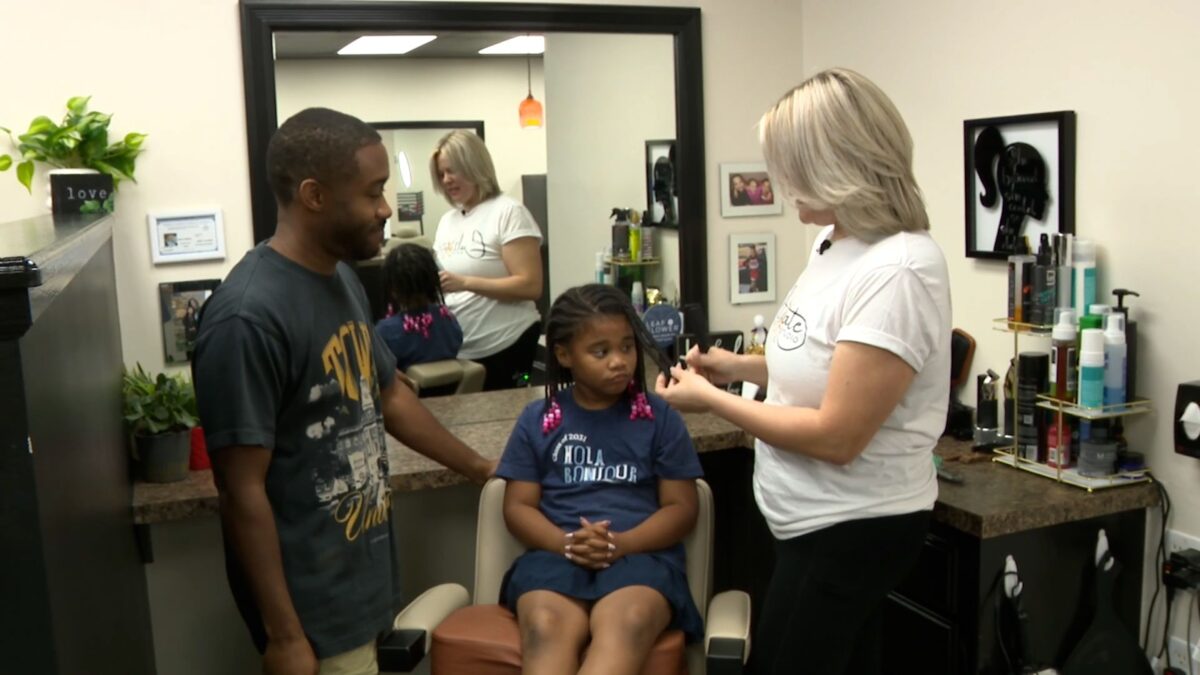
In October 2025, Jade Lambert, a teacher at Patrick Henry Prep, created an after-school natural hair club. Through a grant, she received funding to provide hair tools and products, and Lambert even created a curriculum that covers everything from what hair type you have to the history of hair discrimination.

“I just remember how I felt about my hair at that age, and I see it a lot in them.” said Lambert. “So, it was natural once I started teaching, it was the one of the first things that came to my mind because it’s something that we have in common.”

Lambert said for students of color, learning to love your natural hair can be a complicated process.

“Kids used to make fun of me. They would be like, they can’t see around me in class because my hair was so big,” she said.

Growing up raised by her father in South Carolina, Lambert had to teach herself how to do her hair, often emulating the styles of her aunts and older cousins. Over time, her skills improved so much so that now people pay her for her services. Her fourth graders, of course, are picking up these cultural skills for free.

“I just feel proud that I can give that information to them.” Lambert said.

Research from groups like the Intercultural Development Research Association and Arizona State University found that Black students are more likely to report being teased or discriminated against for their natural hair, compared to their non-Black classmates.

“Natural hair isn’t some form of being unkempt or isn’t you not caring about it. Maintaining your natural hair is probably the most care you can take to do hair at all,” Lambert said. “It’s quite literally an act of protest to wear your natural hair out.”

Please note: This story was provided to CNN Wire by an affiliate and does not contain original CNN reporting. This content carries a strict local market embargo. If you share the same market as the contributor of this article, you may not use it on any platform.
Trombone emoji designed by Maryland students headed to iPhones everywhere

By CBS Baltimore Staff

Click here for updates on this story

    ABERDEEN, Maryland (WJZ) — The trombone emoji designed by a group of Maryland students is headed to iPhones everywhere.

The instrument was officially adopted by the Unicode Consortium last year and added to its long list of approved emojis. Unicode oversees and ensures that emojis are consistent across platforms. It’s a major hurdle for new emojis to pass before companies like Apple and Android will add them to their libraries.

Unicode’s approval last July cleared the way for the trombone’s inclusion in Apple’s next iOS release – 26.4 due out later this month. It is already available for Android users.

The trombone was submitted for approval by a group of students from the Science and Mathematics Academy at Aberdeen High School in 2019. The school credited 2020 and 2021 grads Brendan Althoff, Brandon Brown, Dillon Capalongo, Gabriel Cardell, William Davis, Evan Demos, Nathaniel Dimick, Kristen Doresy, Ian Leach, David Oguh, Cristopher Pappas and Mark Rosser with the design.

The teens said they designed the emoji to represent the “womp womp” sound associated with playful mistakes.

When iOS 26.4 is released in late March, it will include several new emojis. Joining the trombone are a treasure chest, distorted face, hairy creature that resembles Big Foot, ballet dancer, an orca, a landslide and a fight cloud.

Please note: This story was provided to CNN Wire by an affiliate and does not contain original CNN reporting. This content carries a strict local market embargo. If you share the same market as the contributor of this article, you may not use it on any platform.
Student-run coffee cart helps students learn teamwork and inclusion

By Alexa Liacko

Click here for updates on this story

    POWDER SPRINGS, Georgia (WUPA) — At Compton Elementary School in Powder Springs, math teacher Caleb Garrett turned a love of coffee into a program that’s building community inside his school. What looks like a classroom at first glance is actually a coffee shop project with a bigger purpose.

At the Compton Coffee Café, the baristas are pint-sized, and the store manager is also a math teacher.

The Compton Coffee Café is a student-run coffee cart where fifth graders team up with classmates with special needs to deliver iced coffee to teachers throughout the school.

“So S is strawberry, P is peach, and R is raspberry,” Garrett tells students as they prepare drinks.

The project was started by Garrett and special education teacher Elizabeth Evans.

Teachers place their orders online, and students prepare the drinks before delivering them throughout the building.

“Here’s your coffee!” one student says while handing off a drink.

For the teachers receiving them, the deliveries are just as sweet as the drinks themselves.

“Thank you!” one teacher says.

“Best day ever!” another adds.

Evans said the program has had a meaningful impact on students who participate.

“This has such a great impact. So, when our kids walk around the school, other children are recognizing them. They’re saying hello and they’re building that natural communication in that really safe environment,” Evans said.

For the fifth graders working alongside them, the project is also a lesson in teamwork and acceptance.

“It’s so fun because we get to talk to each other, and we get to talk to the other teachers when we’re delivering to them,” said Alani, a student.

And when things don’t go perfectly, Garrett uses those moments as teaching opportunities.

“It’s okay to reset,” Garrett said.

Fifth grader Alani remembers a moment when she accidentally spilled a drink.

“I was upset that I spilled it, and he had told me just like, it’s okay… “It’s just a little mistake,” she said.

For Garrett, the program is about more than coffee.

“Just to think about how do we treat others that maybe are different than us … just building that community and spreading kindness throughout the world,” Garrett said.

The coffee sales also help fund opportunities for students. Money raised from the café helps pay for field trips for classmates who might not otherwise be able to afford them.

“Last year, we got to downtown Atlanta, and one of the students just shouts on the bus, ‘I didn’t know they could make buildings this big,’ and just being able to give them those moments and opportunities is so, so, so exciting and heartwarming,” Garrett said.

Garrett also encourages students to take time for themselves, reminding them during class to pause and breathe.

“Deep breath in!! Let go of anything that’s on your mind!” he tells them in class.

Students say those moments matter.

“It helps us. Like it helps me feel much better,” one student said.

Whether students are solving equations or learning to make the perfect latte, Garrett believes they are capable of more than they think.

“Give them the opportunity, and they will crush what you had set as an expectation for them,” Garrett said. “This is our next generation, and we have to not only treat them with kindness but inspire them to be the best versions of themselves.”

At Compton Elementary, that confidence is growing — one cup, and one student, at a time.

Please note: This story was provided to CNN Wire by an affiliate and does not contain original CNN reporting. This content carries a strict local market embargo. If you share the same market as the contributor of this article, you may not use it on any platform.
Soccer fans flock to Gillette Stadium for Boston Legacy’s first game, “women’s sports is just as important as men’s”

By Paul Burton

Click here for updates on this story

    FOXBORO, Massachusetts (WBZ) — Soccer fans were fired up at Boston Legacy’s inaugural home opener at Gillette Stadium against New York’s Gotham FC.

“It means everything we’ve been working to this day for over two years to make sure the instadium presence and that the fans are ready to support this team,” Boston Independent Supporters Association member Anna Esten said.

The game set National Women’s Soccer League records, becoming the highest-attended inaugural home opener in league history. But before the game, a Boston Legacy Fan Fest got fans even more excited with face painting, games and hair braiding. Boston Public High School’s marching band got the crowd

“This is a monumental moment not only for Legacy but for us from BPS. We are bringing together high school students from 10 high school band programs to be a major part of the home games Boston Legacy will have going forward,” Tony Beatrice said.

Thousands of fans went wild when their team took the field and showed off their relentless skills against Gotham FC.

Sarah Lewis from Cranston brought her nine-year-old son, Granger, to witness history.

“It is important for me to make sure that my three boys and it’s really important for me to show them that women’s sports are just as important as men’s sports,” Lewis said.

And for many of these fans having a women’s professional soccer team was well worth the wait.

“To me, it’s huge. I am a soccer coach now, and it means the world. I never thought we would be here. It’s a dream,” Lewis said.

At the half Boston’s own New Kids on the Block performed. Donnie Wahlberg stopped to grab photos and sign autographs with fans after the performance.

Boston Legacy home games will be played at Gillette and at Centreville Bank Stadium in Pawtucket, Rhode Island, until White Stadium is completed in 2027.

Please note: This story was provided to CNN Wire by an affiliate and does not contain original CNN reporting. This content carries a strict local market embargo. If you share the same market as the contributor of this article, you may not use it on any platform.

Arabbers launch app to keep the tradition alive

By Janay Reece

Click here for updates on this story

    BALTIMORE (WJZ) — If you are from Baltimore, chances are you’ve seen two things: horses and the fruit men — also known as arabbers.

“I remember going to get her ‘grandma the fruit– the horse outside, let’s go’,” said Baltimore native and fellow arabber, Keno Washington.

Arabbers have walked Baltimore’s streets since the 19th century.

“I didn’t think it was work you have to really – feet on ground – I didn’t look at it like that — you know I was a kid,” Washington said.

But there are fewer in the city these days, as the trade ages along with the men and women who act as its driving force.

This is part of what inspired Anthony Duncan to develop Row and Wagon — a new app to help keep arabbing alive.

“To be able to really provide a platform for the arabbers to be more successful, right? So that they are able to transact with even more customers who traditionally might not have been able to pay,” said app developer Anthony Duncan.

On the app, you can pay for fresh products on the wagon using the digital wallet on your phone.

“To be able to use Cash App, PayPal, Venmo, and then soon, hopefully, we hope to be able to open up for EBT transactions as well. So really be able to address the food desert issue kind of head-on to some of our communities,” Duncan said.

Duncan worked alongside the nonprofit Stable Baltimore and the Arabber Preservation Society to bring this idea to life and get new arabbers involved.

“You know, I know that there’s been efforts the last couple years for like, getting young men off the street from like squeegeeing and things like that, and I think that this is like the perfect pipeline to introduce them into a very entrepreneurial endeavor that they can own and be able to grow and build from,” he said.

Washington is among the new generation keeping this tradition alive — in the digital age – using the app to help customers find them.

“I built what’s called hot routes using some artificial intelligence, so it allows the arabber to have recommended routes based on the neighbor’s engagement,” Duncan said. “You could just, like, quick add features, and so they can see your inventory in real time, and they can also see where you are.”

About 95% of the money earned goes directly to the arabber, while 5% goes towards their nonprofit.

“I am a part of history,” Washington said.

Duncan hopes to officially launch Row and Wagon soon. You can download it early on Google Play and the App Store.

Please note: This story was provided to CNN Wire by an affiliate and does not contain original CNN reporting. This content carries a strict local market embargo. If you share the same market as the contributor of this article, you may not use it on any platform.

‘St. Ryan’s Day’ meetup aims to unite people who share the same name – and break a world record

By Christie Ileto

Click here for updates on this story

    PHILADELPHIA (WPVI) — A nationwide effort to unite people named Ryan is coming to Philadelphia this month, transforming a shared first name into a community movement.

Organizers say the upcoming “Ryan Reunion” is about more than novelty-it’s about connection.

Ryan Fisher, who helps lead the Ryan Meetup group, said the gatherings create an instant bond. “You walk into a Ryan meetup, and it’s like, hey, Ryan’s here! And everyone… It’s the ultimate icebreaker, and it just brings this bonding together,” he said. “And then the feedback we get from every Ryan who attends a Ryan meetup is, when’s the next one?”

The event, known as St. Ryan’s Day, is billed as the fastest-growing organization dedicated to bringing together people who share the name.

The idea began three years ago with a flier posted in Brooklyn.

Since then, an online community of thousands of Ryans has formed, hosting meetups and events nationwide.

Organizers say the appeal goes beyond the joke. “Something we hear about a lot, especially post-COVID, is people trying to find their community, and find their people, and find a sense of belonging, and find something that’s unique,” Fisher said.

This year’s meetup is scheduled for March 21 on the steps of the Philadelphia Museum of Art.

The group plans to attempt a world record for the most people with the same name simultaneously climbing the Rocky Steps.

The organizers say the goal is simple: bring people together – one Ryan at a time.

Please note: This story was provided to CNN Wire by an affiliate and does not contain original CNN reporting. This content carries a strict local market embargo. If you share the same market as the contributor of this article, you may not use it on any platform.

Doulas say they were removed from delivery room by staff and security during client’s labor

By Chase Houle

Click here for updates on this story

    STOCKBRIDGE, Georgia (WXIA) — Two birthing doulas say they were forced to leave a delivery room at Piedmont Henry Hospital while their client was in active labor, sparking questions about hospital policy and patient rights.

Shira Lawrence and Jetaime McKinney say they were acting as birth doulas for a mother delivering at the hospital. Doulas are trained professionals who support pregnant women by offering education, advocacy, and emotional support before and during childbirth.

In a video recorded during the encounter, the mother can be heard telling staff she wants the doulas to remain in the room. However, Lawrence and McKinney say they were still escorted out.

“We were stripped of our rights. It felt like we weren’t safe. It felt like anything could have happened to us, and there was no one to advocate or protect us, and that’s the job we show up to do is to help others,” Lawrence said.

The doulas say the conflict began over the mother’s delivery preferences.

According to Lawrence and McKinney, the mother wanted to deliver the baby naturally. However, they say the doctor recommended a C-section because the baby was in a flipped position.

“She has the right to personal autonomy of her body and she said, ‘I don’t want to be cut, I want to labor and do my best to have this baby vaginally and she deserves that right,'” McKinney said.

The doulas say the mother was not refusing care and that neither the baby nor the mother was experiencing medical complications at the time.

In a video from the incident, hospital staff can be heard telling the doulas they were being removed because of the facility’s visitor policy.

However, Piedmont Henry Hospital’s labor and delivery visitor policy states that “two visitors and a doula, if applicable, may be present in the labor room at one time.”

11Alive’s Chase Houle reached out to Piedmont Hospital for its perspective on what happened, and a spokesperson sent this statement:

“Although we do not comment on specific cases due to our commitment to patient privacy, we can say that our priority is enabling good outcomes for our patients by providing safe, quality care.”

McKinney says removing them from the room went against the type of care the hospital says it provides.

“Safe and quality care doesn’t mean taking the support people that she hired to come into a space and support her and advocate for her and love on her in this experience and to put them out,” McKinney said.

According to the doulas, the mother did ultimately end up getting a C-section when she was 10 centimeters dilated.

Both she and the baby are home and doing fine.

Please note: This story was provided to CNN Wire by an affiliate and does not contain original CNN reporting. This content carries a strict local market embargo. If you share the same market as the contributor of this article, you may not use it on any platform.