Inflation Climbs to Nearly Three-Year High as Consumer Sentiment Weakens

By Christopher Cicchiello | Quincy News Correspondent

Click here for updates on this story

    Washington (Quincy News) — Core inflation rose 0.2% in April, a Thursday report from the Commerce Department’s Bureau of Economic Analysis shows. The Federal Reserve’s preferred inflation gauge, the Personal Consumption Expenditures (PCE) price index, increased a seasonally adjusted 0.4% for the month, bringing annual inflation to 3.8%, the highest level in nearly three years.

This latest data comes as Americans’ confidence in the economy continues to weaken. The Conference Board Consumer Confidence Index slipped 0.7 points in May to 93.1, as the share of respondents describing business conditions as “good” dropped to 18.5%, down from 22.3% in April.

The Conference Board’s Chief Economist Dana Peterson attributed this decline in sentiment to growing concerns over the economic impact of the war in the Middle East. “Consumer confidence edged downward in May as the inflationary impacts of the war in the Middle East intensified,” Peterson said. President Donald Trump said Friday on social media that he plans to issue a “final determination” on the conflict.

In Thursday’s White House press briefing, Treasury Secretary Scott Bessent dismissed concerns about the findings from the latest PCE report. “One month does not a trend make,” Bessent said, adding that he believes “prices could come down very quickly” at the conclusion of the war.

“This constant whipsaw of ‘there’s a deal, there’s not a deal, there’s a deal, there’s not a deal’ weighs on people,” Professor David Mitchell, the Director of the Bureau of Economic Research at Missouri State University, told Quincy News. “Everybody knows why gas prices are high … For lack of a better word, people need some stability in their lives.”

Mitchell noted one statistic that illustrates just how people are “falling further and further behind” came from The Wall Street Journal: 90-day delinquencies on credit cards are at the highest levels since the 2008 financial crisis.

“It’s a source of consternation,” Mitchell said. “It makes you say, ‘What’s going on here? What can I do? I’m playing by the rules, I’ve done everything I can and I’m still falling behind.”’

Results from The Conference Board survey align with the University of Michigan’s Surveys of Consumers, as sentiment fell for the third straight month. Across party lines, confidence among independents and Republicans dipped to the lowest levels since Trump began his second term. Chief among respondents’ concerns was an “eroding of personal finances,” the report reads. Separately, Commerce Department data showed personal income decreased by $0.1 billion in April, while disposable personal income fell by $19.9 billion.

This is the economic landscape facing newly sworn-in Federal Reserve Chair Kevin Warsh. Economists and policymakers will be watching June’s Federal Open Market Committee meeting for signals on his approach to interest rates, after Trump suggested Warsh will be more amenable to rate cuts – a position that could create divisions within the Fed.

“The first thing I’d be looking for is that first meeting interaction with him (Warsh) and all the other fed governors,” Mitchell said. “It’s one thing to say here’s what I want to do. It’s another thing when you’re in the sausage factory trying to make the sausages. It’ll be interesting to see how he deals with these dissenting opinions.”

Mitchell is referring to divided opinions within the Fed on what to do about interest rates. Federal Reserve Governor Lisa Cook said Wednesday that while she believes the central bank should keep short-term interest rates firm, she is prepared to raise rates if necessary.

The next PCE report is scheduled for release June 25.

Please note: This story was provided to CNN Wire by an affiliate and does not contain original CNN reporting. This content carries a strict local market embargo. If you share the same market as the contributor of this article, you may not use it on any platform.

83-year-old woman attacked by wild turkeys as city warns residents to take precautions

By Tim Johns

Click here for updates on this story

    ALAMEDA, California (KGO) — One week later, and the bruises still haven’t healed on 83-year-old Mary Jo Kelly’s face.

Last Thursday, the longtime Alameda resident was on her nightly walk when suddenly she was attacked from behind by a pair of wild turkeys.

“I went headfirst, and I broke my glasses. I hit the palm of my hand, my thumb. I bled in the nose,” Kelly said.

After managing to get away from the turkeys, Kelly was able to call her husband, who took her to the ER. It was there that she got a CT scan, as well as six stitches in her right hand.

The incident has left her shaken but also frustrated.

Kelly wants Alameda to do more to protect its residents from the turkeys. She worries that what happened to her could soon happen to someone else.

Following the attack, Kelly says she called the Alameda Police Department to file a report, something she says officers were unable to do since the incident involved wildlife.

“If a dog bites you, of course they’re going to pick him up. But that’s domestic. So they’re ignoring the problem basically,” Kelly said.

Emily Crum is an animal control officer with the Alameda Police Department. She said, for now, the city is unable to remove any of the wild turkeys.

Crum said spring is mating season for the animals. During this time, APD advises residents to take extra precautions. The department said a turkey also recently attacked a pet dog.

“Try to not approach them. Go on the other side of the street. Make sure you have a leash on your dog. And just try to stay as far away from them as possible,” Crum said.

As for Kelly, she’s determined to not let the attack frighten her for good. But for the time being, she’s staying a little closer to home and a little further from any turkeys.

“It was just pretty scary. Kind of shell shocked. A little afraid to go too far,” she said.

Please note: This story was provided to CNN Wire by an affiliate and does not contain original CNN reporting. This content carries a strict local market embargo. If you share the same market as the contributor of this article, you may not use it on any platform.

Amy Sherald finds her people

By Leah Asmelash, CNN

Click here for updates on this story

    May 29, 2026 (Houston Style Magazine) — Diana Beasley knew she wanted to spend her 12th birthday at Atlanta’s High Museum of Art, surrounded by the paintings of Amy Sherald.

She dressed up for the occasion, wearing a sparkly pink crown reading “BIRTHDAY GIRL” over her neat braids. Diana learned about Sherald in school, she said, and she likes how her art is “realistic, but also a bit cartoony at the same time.”

Her favorite piece by Sherald, she said, was the official portrait of former first lady Michelle Obama. In it, as in most of Sherald’s portraits, the subject looks straight ahead at the viewer. Her skin is not a naturalistic brown but rendered in grays, in the artist’s signature style, draped in a vivid black and white dress with multicolored geometric details and a soft baby blue background.

Obama looks determined, Diana said, like “she’s serious about her job.”

That Michelle Obama portrait, presented in front of two benches for attendees to sit and take in her gaze, is one of the main draws of the “Amy Sherald: American Sublime” exhibit, which arrived in Atlanta this month for the final stage of a 17-month national tour.

When the painting was unveiled at the Smithsonian’s National Portrait Gallery in 2018 — in tandem with Kehinde Wiley’s presidential portrait of Barack Obama — it seemed to mark Sherald’s enshrinement in a new official establishment, one in which Black figures and Black perspectives were uncontroversially part of the canon.

photo

Eight years later, Sherald’s work is traveling through a different cultural landscape. “American Sublime” was supposed to have brought Sherald back to the National Portrait Gallery last year, after the tour spent a few months at the Whitney in New York. Then Sherald learned that the federally funded institution wanted to accompany her painting “Trans Forming Liberty,” which shows a Black transgender woman in the stance of the Statue of Liberty, with a video of people reacting to the work — “to contextualize the piece,” as the Smithsonian put it.

Instead, Sherald withdrew the entire show, sending it to the Baltimore Museum of Art instead, and the Trump administration declared that “Trans Forming Liberty” had “fundamentally strayed from the mission and spirit of our national museums.”

Unavoidably, then, Sherald’s mid-career retrospective doubles as a look at the crisis of artistic expression in the country.

Two years ago, her works, with their ordinary subjects, felt celebratory, said Sarah Roberts, who curated “American Sublime” for the San Francisco Museum of Modern Art. Shortly before the exhibit’s premiere, SFMOMA purchased Sherald’s “For love, and for country” painting of two Black men kissing while holding sailor hats, a restaging of Alfred Eisenstaedt’s “V-J Day in Times Square” photograph of a sailor kissing a nurse, as a nod toward the LGBTQ community’s impact in San Francisco.

But as federal and state governments restrict LGBTQ rights, the act of representation becomes one of defiance.

“It feels like more of a commitment,” Roberts said. “Like a reassertion of no, actually this is the America that exists in this museum, in this city, and we are not letting that go.”

The show was a hit in Baltimore, becoming the BMA’s most popular exhibit of the 21st century and drawing more than 80,000 people to the museum. (The museum’s second most popular exhibit since 2000 was its 2016-2017 “Matisse/Diebenkorn” exhibition, which drew 46,000 visitors.)

Sherald’s popularity is in part due to her ability to capture an alternative vision of the US to the one the federal government is promoting. In his second term, President Donald Trump has posted racist social media imagery, squashed research and initiatives that helped minorities, welcomed white South African refugees while banning other African refugees and those from Central and South America, and attacked health care and policies helping trans people.

Sherald’s work, meanwhile, uplifts the lives of everyday Black people. The viewpoint at trial, both politically and in Sherald’s art, is whose history and whose lives get to be considered American.

Robyn Palmore-Amos, who visited the High on the opening day of Sherald’s exhibit, said it felt as if the subjects could be her aunt, her uncle or her kids. Sherald’s restaging of “V-J Day in Times Square,” especially stood out to her. It was a reminder that Black men and women were just as much a part of the post-war period as white people were, she said.

“She’s portraying that we’re just as American as any other person who feels they’re American,” Palmore-Amos said. “We are American history. We have shaped the fabric of this country. There’s no part of America that doesn’t include Black people.”

The New Yorker and Vanity Fair have used Sherald’s portraits for their covers; the show includes a painting of Breonna Taylor that was specifically commissioned by Vanity Fair for its September 2020 cover. Days before the High’s opening, Sherald was at the Met Gala, where she was on the gala board, in an outfit referencing her own “Miss Everything (Unsuppressed Deliverance),” of a young woman sipping from an outsized teacup. She has also been photographed for the cover of Harper’s Bazaar and was named one of Time’s 2026 Women of the Year.

But that mass popularity means that her work is often seen in reproduction, either through a screen or on a cover of a magazine, rather than in its physical, painted form.

Her style can seem simple and understated on paper or on a screen, but in person, the portraits are colossal, sometimes up to 10 feet tall. The grays of the skin are richer than they appear in print, with subtle shifts in tone and lightness. While her work brings out each subject’s interiority in their stance or setting, her mastery is especially seen in the details: the etching on a bamboo earring, the fold of a jeans cuff, the sheen of fresh lip gloss. And there is the feeling of each character’s eyes taking in the viewer, creating a question of who is perceiving who. That doesn’t mean the works feel sad, or haunting; instead, taken together, they feel like peeks into life.

photo

That these figures and their lives stand within American history is a key part of the exhibit. Sherald’s “If You Surrendered to the Air, You Could Ride It,” featuring a lone man in a red beanie, nods to another famous photograph — “Lunch atop a Skyscraper” — of laborers eating lunch atop a steel beam. The titles, too: “American Grit,” of a boxer with no legs; the play on words of “Trans Forming Liberty”; even the exhibit title “American Sublime.”

That title had been bouncing around in Sherald’s head for years before the exhibition was even a thought, Roberts said. When she and the team were first putting the show together, they knew there would be an election in the fall of 2024, and the way the show would be perceived could change depending on the outcome. But the title, and the entire exhibition, highlights the beauty of being a Black American, Roberts said, and points to the possibility of a sublime future.

When the show opened in San Francisco the week following Donald Trump’s win, some visitors wept at the sight of Sherald’s towering portraits. As Trump’s first months back in office unfolded, encountering Sherald’s paintings began to feel “like a balm,” Roberts said.

Revisiting the works now, Roberts said they feel like “a bulwark against a difficult time.”

The Atlanta stop brings Sherald’s work back to the state where she was born and the city where she went to college. Jennifer Freeman Marshall visited the High’s exhibit on opening day with her daughter, a student at Spelman College a few miles away, her brother and their 82-year-old mother, who was rolled along in a wheelchair. As they moved through the works, Freeman Marshall admired Sherald’s “commitment to telling a story about the Black experience here in the United States.”

“It’s a narrative that’s as diverse as we are,” she said. She and her family could point to certain images and name the side of the family the subjects remind them of, she said, making the entire collection feel “very intimate.”

There is a tension between what Sherald imagines and what happens outside the walls of the exhibit. Her portrait of Taylor is situated between two other portraits of Black women, making the trio appear almost like a friend group. Nearby, Obama gazes on, and across from them is “Miss Everything (Unsuppressed Deliverance).” In this room, these women are peers. Outside of it, one of them is dead.

One painting, an earlier piece from 2009, cuts to this question. Titled “They Call Me Redbone, but I’d Rather Be Strawberry Shortcake,” a young girl in a yellow sundress printed with strawberries cocks her head to the viewer. How we are perceived is often not up to us, the painting declares.

Can artists paint a way to a different future? Part of Sherald’s goal is to create “images that she wants to see in the world,” said Angelica Arbelaez, who curated the show for the High.

“The images that she has seen in her life have changed the world, whether they’ve affirmed or distorted a certain kind of idea,” Arbelaez said. “She understands that images have the power to do that, and in her body of work, she is actually enacting that change.”

Please note: This story was provided to CNN Wire by an affiliate and does not contain original CNN reporting. This content carries a strict local market embargo. If you share the same market as the contributor of this article, you may not use it on any platform.

Kierra Lee
KIELEESTYLE@GMAIL.COM
4096658446

Blood testing is now included in screening recommendations for colon and rectal cancer

By Jacqueline Howard, CNN

Click here for updates on this story

    May 29, 2026 (Houston Style Magazine) — The American Cancer Society is adding some new testing options to its screening guideline for colorectal cancers – and for the first time, that includes a blood test.

Colonoscopies are still considered the gold standard for detecting colorectal cancer, which starts in the colon or the rectum. The procedure, performed under anesthesia, allows doctors to closely examine the colon and rectum for warning signs of disease. People who would rather avoid an invasive exam might opt for other visual exams or stool-based tests, which have also remained a widely recommended option, even if the idea of collecting a fecal sample can make some people squeamish.

But many people tend to skip screening altogether because they don’t want to or can’t complete these options, even as there has been a rise in colorectal cancer cases at younger ages.

To help close that gap, the American Cancer Society now recommends another screening option: blood testing.

In an updated guideline released Wednesday, the American Cancer Society has added blood-based screening tests to its list of recommended choices for adults age 45 and older who are at average risk for colorectal cancer and who have not completed or have declined visual exams and stool tests.

The blood-based screening test the group recommends is the Shield test, by the biotech company Guardant Health. It was approved by the US Food and Drug Administration in 2024.

The guideline also includes additional stool-based tests: an upgraded version of Cologuard, called Cologuard Plus, and a new FDA-approved test called ColoSense, which was developed by the biotech company Geneoscopy. Each is an at-home stool test, in which samples are collected at home and sent to a lab, where the test can detect molecular markers associated with colorectal cancer.

Blood test still isn’t the ‘first choice’

The researchers who published these updates in a report in CA: A Cancer Journal for Clinicians wrote that “at this time, blood‐based tests should be recommended only to individuals who decline or do not complete preferred screening tests,” which would be visual imaging exams like a colonoscopy or stool-based tests.

A blood-based test is not the “first choice” because it’s not as sensitive as the other testing options in detecting precancerous polyps, but “I do think it is the right option for the right population of patients,” said Dr. William Dahut, chief scientific officer for the American Cancer Society.

“There are a lot of people who can’t or won’t do a colonoscopy, or the idea of collecting their own stool for testing they just won’t do,” Dahut said. “Having more options hopefully will allow more people to be screened to find cancers earlier on, and we’ll be able to cure more patients.”

Screening can dramatically improve survival if a cancer is diagnosed before symptoms begin, because that means treatment can also start early. It’s estimated that more than 90% of people who detect colorectal cancer at stages I and II will survive at least the next five years.

When cancer is found at a more advanced stage, it may have spread into surrounding regions or other parts in the body, making it more difficult to treat and the patient less likely to survive, regardless of their age.

Getting screened also can help reduce the risk of developing colorectal cancer because almost all colorectal cancers begin as precancerous polyps in the colon or rectum. Through a visual exam, like a colonoscopy, these polyps can be identified and removed before they turn cancerous. Stool tests can also pick up signs of precancerous polyps, and if a stool test is positive, it must be followed up with a colonoscopy, which provides an opportunity for prevention, according to the American Cancer Society.

The updated screening guideline is “very forward thinking and reality based,” said Dr. Ursina Teitelbaum, a professor of gastrointestinal oncology at the University of Pennsylvania and section chief of gastrointestinal cancers at Penn Medicine, who was not involved in the American Cancer Society’s recommendations.

Teitelbaum added that blood-based testing remains another option, “albeit imperfect since it may miss early-stage cancers and precancerous lesions. It all harkens though to ‘perfect’ is the enemy of good and these new guidelines acknowledge the need to broaden the capture of screening, particularly in younger vulnerable populations,” Teitelbaum said in an email.

Although the Shield test is the first blood-based to be recommended, more could be on the horizon, said Dr. Scott Kopetz, a gastrointestinal medical oncologist at The University of Texas MD Anderson Cancer Center.

“This is the first blood-based test but won’t be the last, and the hope is that future tests will continue to reduce the barriers to access to effective screening and will have improved performance. The technology will only improve from here,” Kopetz, who was not involved in the American Cancer Society’s updated guideline, said in an email.

For now, “the blood-based screening does not perform as well for detection of pre-cancer as the other screening options and therefore should be reserved for individuals who will not complete other recommended screening,” he wrote. “Importantly, patients who otherwise would be willing to be screened by colonoscopy, stool-based tests, or other recommended methods should not swap to the blood-based assays.”

What to know about your options

The American Cancer Society recommends three types of colorectal cancer screening tests: blood-based tests, visual exams and stool-based tests.

Dahut noted that the updated guideline and recommendations around the various screening options are only for adults at average risk of colorectal cancer.

Adults who may have a personal history or family history of colorectal cancer or advanced pre-cancer lesions, or other risk factors associated with colorectal cancer, are recommended to talk with their doctor about getting a colonoscopy.

“If you have symptoms of colorectal cancer, potentially – bleeding, pain, problems with your stool, abdominal pain – then the stool and blood tests are not appropriate,” Dahut said. “Then you should go in for a visualization.”

Blood-based tests

Blood-based tests, like the Shield test, involve simply having your blood drawn at a health care facility. To screen for cancer, the Shield test is recommended every three years.

“For individuals whose doctors are seeing that another year has gone by and they have not been screened, the blood-based test is probably the easiest to do because you can walk into your doctor’s office, get the blood and head home,” Dahut said.

The Shield test can detect signals for colorectal cancer from tumor DNA that may have shed into your blood. If it returns a positive result, a colonoscopy is recommended.

Test sensitivity

Clinical trial data shows that the Shield test has around 83% sensitivity for the detection of colorectal cancer, which is the test’s ability to correctly identify someone with the disease, and 90% specificity, which is the test’s ability to rule out whether someone has cancer.

Blood-based tests tend to have lower sensitivity for stage I cancers than stool-based tests and visual exams, Dahut said. “This test is very good at picking up stage II, stage III and stage IV cancers. It’s not as good at picking up the stage I or the adenomas, the precancers,” Dahut said. “That’s why we still prefer the other tests.”

Cost

The Shield test is a Medicare-covered service, according to its website, with $0 co-pay for most Medicare beneficiaries. The list price is around $1,495.

Visual exams

Visual examinations – including colonoscopies every 10 years, virtual colonoscopies every five years and flexible sigmoidoscopies, which examine only the lower half of the colon, every five years – involve using medical instruments or special imaging tests to look inside the colon and rectum to identify and, in some cases possibly remove, any polyps or lesions that might be cancer or precancerous.

Test sensitivity

Visual exams tend to have high sensitivity. For instance, it’s estimated that colonoscopy can have 95% sensitivity and up to 89% specificity. Potential risks of colonoscopy or other visual exams may include issues with anesthesia, bleeding or infection, but serious complications are rare.

Cost

Although most insurance companies fully cover visual exams for screening, “costs really can vary if a patient has to undergo follow-up exams for additional procedures. In spite of the rules under the ACA, some patients have reported surprise billing,” Dahut said of the Affordable Care Act, which requires both private insurers and Medicare to cover the costs of all colorectal cancer screening tests that are recommended by the US Preventive Services Task Force.

Stool-based tests

Stool-based screening involves collecting a sample of your feces and sending it to a lab to be tested for signs of cancer, such as small amounts of blood or traces of altered DNA or RNA from cells in the stool. These are recommended every year or every three years, depending on the test.

Test sensitivity

With Cologuard Plus, it’s estimated that 95% of adults with colorectal cancer will test positive, a measurement of its sensitivity, and 94% of adults without precancerous polyps or colorectal cancer will test negative, a measurement of its specificity, according to the product’s website. And ColoSense has demonstrated 93% sensitivity for detecting colorectal cancer, according to Geneoscopy, the company behind the test.

Cost

These types of tests are typically covered by insurance, but for people without insurance, they can cost hundreds of dollars. Without insurance, the self-pay price for the Cologuard Plus test is $599. Most insurance companies cover all recommended stool tests for colorectal cancer screening.

Deadliest cancer for young adults

The updated guideline reaffirms that average-risk adults should begin colorectal cancer screening at age 45 and continue through 75 for those with a life expectancy of more than 10 years. The guideline recommends that doctors discourage screening in people older than 85 because by that age, the risks outweigh the benefits.

The US Preventive Services Task Force also recommends starting screening at age 45, but it does not include blood-based testing as a recommended screening test. At the time the USPSTF recommendation was last updated in 2021, there was no FDA-approved blood test for primary screening in people at average risk.

The task force’s recommendations guide doctors and inform insurance coverage. It’s unclear whether the USPSTF will follow the American Cancer Society’s decision to recommend blood testing.

The task force has not met in over a year, and US Health and Human Services Secretary Robert F. Kennedy Jr. appears to be restructuring its membership. The USPSTF aims to keep all of its recommendations current by reviewing each topic every five years for either an update or reaffirmation, which means its recommendation on colorectal cancer screening is due for another review.

It’s estimated that more than 90% of people complete screening when they have a blood-based test for colorectal cancer, compared with 28% to 71% of people who complete colonoscopy or stool testing, according to Guardant Health.

“The problem is the participation rate to colonoscopy and stool-based tests is not very high,” said AmirAli Talasaz, co-founder and co-chief executive officer of Guardant Health. “By making colorectal cancer screening more accessible with a blood-based option in conjunction with other established methodologies, we can get more people screened.”

In general, about 1 in 3 adults who are eligible for colorectal cancer screening still have not been tested with any screening option as recommended, according to the American Cancer Society. And colorectal cancer has surpassed other cancer types to become the leading cause of cancer deaths among people under 50 in the United States, as of 2023.

It’s estimated that more than 60% of colorectal cancer patients under 50 are diagnosed after the disease has advanced to stage III or IV.

Dahut said the American Cancer Society has been reviewing its screening guidelines and continues to look at data to evaluate whether the recommended age to start screening should be lower than 45.

“We were one of the first to lower it to 45, and if there’s evidence to lower it to 40 or 42, we’ll certainly be doing that,” he said. Kopetz, from MD Anderson, said for now “it is reasonable” to start screening at age 45 for average-risk people.

“Unless there is a family history or cancer predisposition syndrome, it is reasonable to start screening at age 45. Research is ongoing to develop screening strategies that may address the growing incidence of early-onset colorectal cancer,” Kopetz said “There is a hope that future blood-tests may be sufficiently accurate and cost-effective for cancer screening in a population younger than 45 years old, but we do not yet have that evidence or the right test for this.”

Please note: This story was provided to CNN Wire by an affiliate and does not contain original CNN reporting. This content carries a strict local market embargo. If you share the same market as the contributor of this article, you may not use it on any platform.

Kierra Lee
KIELEESTYLE@GMAIL.COM
4096658446

2 women, infant dead after triple stabbing in California, police say

By Nijzel Dotson, Jeremiah Martinez, Peyton Headlee

Click here for updates on this story

    MODESTO, California (KCRA) — Two women and an infant were found stabbed to death in Modesto, and the suspected attacker was found hiding in a nearby home on Thursday, police said.

The Modesto Police Department said officers responded to a home near Monterey and Thrasher avenues after 9:20 a.m. regarding a reported disturbance.

When officers arrived, they found a 23-year-old woman with multiple stab wounds who was pronounced dead at the scene, police said.

Officers continued to search the home and found a second woman, 54, and an infant, both with stab wounds. The 54-year-old woman was pronounced dead at the scene, while the infant died at the hospital, police said.

An additional child, 4, was found inside the home and taken to the hospital for treatment.

“This is a tragedy. Words cannot express how terrible this incident is,” Lt. Eric Schuller with the Modesto Police Department said.

The suspect, identified as 28-year-old Joaquin Escoto, was later found hiding inside a nearby house and was taken into custody without incident, police said.

Investigators believe Escoto shared a child with one of the victims.

KCRA 3 spoke with family members of the victims who were at the crime scene on Thursday.

“Unfortunately, it was my family. My aunt and her daughter, my cousin, and her son passed away. Unfortunately, it was murder,” Javier said. “The baby was about two weeks, three weeks.”

He said his family is devastated to lose three loved ones.

“Suspect’s caught. You can’t really do anything to bring them back no more, but we just know that he’s going to be in there for a long time, you know, suffering, thinking about what he did. That’s what’s going to be killing him,” he said.

Orville Wright Elementary School was placed on a precautionary lockdown, as it is near the investigation scene.

A note was sent to staff and families that said police placed the school on lockdown around 9:30 a.m.

“Orville Wright Elementary will remain on precautionary lockdown for an extended period of time while law enforcement completes its response,” read the note from Orville Wright Elementary School Principal Javier Lara. “All students and employees are safe and secure on campus. Staff continue to support students and maintain normal classroom activities as much as possible during the lockdown.”

Monterey and Empire avenues are partially closed, according to the school’s note.

Modesto City Schools precautionarily relocated students and staff to La Loma Junior High School. Reunification efforts were successfully completed, police said.

Police said detectives believe the assault was an isolated incident and there is no ongoing threat to the public.

Please note: This story was provided to CNN Wire by an affiliate and does not contain original CNN reporting. This content carries a strict local market embargo. If you share the same market as the contributor of this article, you may not use it on any platform.

Kentucky senior celebrated for perfect attendance over 13 years

By Ashley Kirklen

Click here for updates on this story

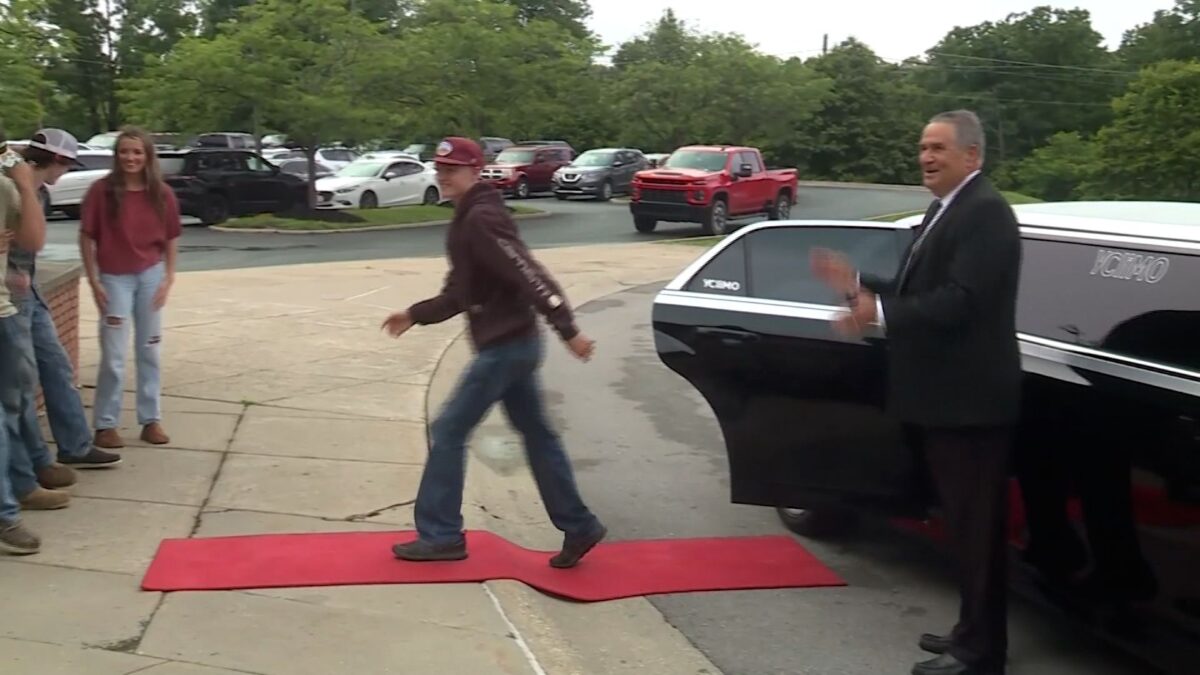
    FALMOUTH, Kentucky (WLWT) — A Pendleton County High School senior was celebrated for achieving the rare milestone of perfect attendance over his entire 13-year school career.

Klaber Wolfe, a senior at Pendleton County High School, did not miss a single day of school in 13 years, an accomplishment his school says is incredibly rare.

Family, friends, and a chauffeur gathered to honor Wolfe’s achievement, which the school says hasn’t been seen in over a decade.

Joe Buerkley, superintendent of Pendleton County Schools, said, “I believe it’s the first time since the 2015-16 school year, we’ve been able to recognize someone that has achieved this feat.”

Wolfe’s dedication to attending school every day, even during the challenges of the COVID-19 pandemic, earned him a VIP experience on his last day of high school.

“As everyone knows, that doesn’t get accomplished that often,” Buerkley said.

The celebration included a limo ride with his best friends, applause from family and staff members, and a red-carpet welcome at Pendleton County High School. Wolfe posed for pictures, laughed and enjoyed the spotlight as his school community honored his achievement.

“We are very excited to see what it’s going to do in the future. We know that he’s set up and ready to do great things. So, we couldn’t be more proud of Klaber this morning, and we’re just really excited to have the opportunity to recognize him and all the things that he’s accomplished,” Buerkley said.

Wednesday marked Wolfe’s last day of high school, and the school superintendent said Wolfe’s work ethic will ensure the limelight continues to follow him wherever he goes.

Please note: This story was provided to CNN Wire by an affiliate and does not contain original CNN reporting. This content carries a strict local market embargo. If you share the same market as the contributor of this article, you may not use it on any platform.

California plans female surfer statue to honor women in surfing

By Jacquelyn Quinones

Click here for updates on this story

    CAPITOLA, California (KSBW) — The organization behind a proposed female surfer statue, “Honor,” is moving forward with plans to bring the project to Capitola after months of discussions with the city of Santa Cruz.

The statue is designed to honor women’s contributions to surfing and would serve as a counterpart to the iconic male surfer statue on West Cliff Drive, which has been in place for over 30 years.

“This is only going to be the third female surf statue in the world. There are only 40 male surf statues, so for us to find such a prominent spot in Santa Cruz County to honor her is phenomenal,” said project founder, Kari Lockhead.

The statue, named “Honor,” is not modeled after a specific person but represents all women who find connection to the water.

“She’s a strong, athletic, confident woman,” Lockhead added.

Kaila Pearson, a member of the committee behind the project, said the initiative is personal for her.

“As a female, I was able to see myself in three other females, and that gave me the confidence and the capacity to assert myself in the lineup and go into male-dominated areas in life,” Pearson said.

Pearson also shared that her father, Bob Pearson, who shaped the board for the male surfer statue in Santa Cruz, will shape the board for the female statue if the project is approved.

Capitola Vice Mayor Gerry Jensen expressed his support for the project and its proposed location.

“It was just an opportunity that I thought Capitola should just jump on the opportunity, embrace the statue, and it really symbolizes what the surfer reserve is about,” Jensen said.

“I think this will be a nice resting place for her. I think she’ll be seen all throughout the day. We get tourists year-round, and I think [it will provide] really great visibility for our young gals that do the Junior Guard program,” Jensen added.

A local female surfer also shared her enthusiasm for the project.

“I love the idea. I love it. I feel like it will be inspirational to all the young girls,” she said.

The city of Capitola stated that the next steps involve the organization submitting an application to the Arts and Cultural Commission. The commission will make a recommendation, and the proposal will then go to the city council for a vote.

Please note: This story was provided to CNN Wire by an affiliate and does not contain original CNN reporting. This content carries a strict local market embargo. If you share the same market as the contributor of this article, you may not use it on any platform.

California warns of wild mushroom poisoning outbreak after 50 cases and four deaths

By Alicia Alvarez

Click here for updates on this story

    SACRAMENTO, California (KSBW) — California is seeing a resurgence in poisonings linked to picking and consuming poisonous wild mushrooms.

Mushrooms such as Death Caps and Western Destroying Angels are growing in multiple areas across the state, prompting the California Department of Public Health (CDPH) to issue a warning.

The CDPH is urging Californians to not pick or eat wild mushrooms. There have been 50 cases of mushroom-related poisonings between November 2025 and May 22. Those cases have included severe liver damage and four deaths. There are less than five reported cases of mushroom poisonings in a typical year.

Nine counties have reported poisonings, including Monterey County.

The CDPH says the outbreak coincides with a widespread bloom of Death Cap and Western Destroying Angel mushrooms across the state. That bloom includes areas where these poisonous mushrooms are not commonly found.

The CDPH recommends that people avoid picking and eating wild mushrooms at this time, to keep pets and children away from mushrooms, to purchase mushrooms from trusted grocery stores and to be aware of symptoms.

Symptoms of wild mushroom poisoning are nausea, abdominal pain, watery diarrhea and dehydration. These symptoms can occur within six to 24 hours after consuming the mushrooms and usually go away within a day. Despite the relief, patients can still develop serious to deadly liver damage.

Please note: This story was provided to CNN Wire by an affiliate and does not contain original CNN reporting. This content carries a strict local market embargo. If you share the same market as the contributor of this article, you may not use it on any platform.

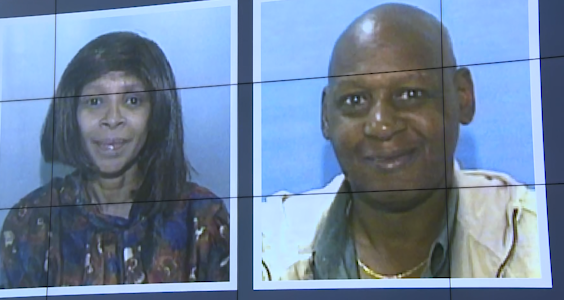
Baby found dead in Cincinnati field in 1979 identified 47 years later

By Emily Sanderson

Click here for updates on this story

    HAMILTON COUNTY, Ohio (WLWT) — The county coroner, FBI task force and police came together to identify a child homicide victim whose body was found in a field in Springfield Township in 1979.

Hamilton County Coroner Dr. Lakshmi Sammarco, along with Springfield Township police, Cincinnati police and the FBI’s Southern Ohio Cold Case Task Force, announced the identification at a news conference.

The child, 18-month-old Velina Jeter, was discovered Feb. 4, 1979, on Eiler Lane.

The case quickly gained attention, with the child being dubbed “Baby Angel.”

Investigators said her body was found in a field on Eiler Lane near Clovernook Country Club and the former Providence Hospital site. She had been badly burned and was not recognizable. An autopsy later determined she died from head trauma and that her death was a homicide.

“Any homicide investigation is very difficult when you don’t even know who your victim is,” Cincinnati Police Specialist Jeff Smallwood, said.

Officials said the case remained unsolved for years until the child’s body was exhumed in 2008 so DNA could be collected and sent to the Ohio Bureau of Criminal Investigation. That work helped investigators build a large genealogy tree profile and eventually identify her.

Springfield Township police called the killing a “heinous crime” and said the case remains a reminder for the community to come forward with information. Cincinnati police said they are continuing efforts to solve cold cases through DNA and genetic genealogy.

“We’re talking about an 18 month-old girl at the time that was heinously murdered and killed. We couldn’t even identify this person. We take these cases with great importance and great significance,” Chief Chris Niehaus with the Springfield Township Police Department said.

Smallwood says CPD will start offering DNA test kits that are entirely voluntary for those who choose to be genetic witnesses.

Officials said the child can now be given her name back and they are able to give her a proper headstone, saying that was important to them.

Officials shared the names of the child’s biological parents: Sharon Jeter and Barry Lee Valentine. Sharon died in 2013, Barry died in 2011. The parents were from Columbus, as was the child. It’s unclear who had custody of Velina at the time of her death.

The coroner shared both parents have since died.

Authorities hope now knowing the child’s name will help lead to information about her killer. The next stage now calls on community assistance, finding the child’s possible connection to being found in Cincinnati.

Anyone with information is asked to contact Crime Stoppers.

Please note: This story was provided to CNN Wire by an affiliate and does not contain original CNN reporting. This content carries a strict local market embargo. If you share the same market as the contributor of this article, you may not use it on any platform.

‘The boldness’: Judge gives Russell murder suspect additional charge after courtroom kiss

By Matthew Keck

Click here for updates on this story

    LOUISVILLE, Kentucky (WLKY) — Two men charged with murder in the Russell neighborhood appeared in court Thursday, and it ended up with one of them receiving an additional charge.

Joshua Langlois and Leangelo Sullivan were both arraigned for murder and assault.

Police say the two men shot and killed Quantay Workman and injured another person on May 14 in the 1000 block of Magazine Street.

Langlois was arrested at Dismas Charities on Wednesday, where he was under supervision for a federal drug conviction.

As Sullivan was leaving the courtroom Thursday, he kissed a woman who was arrested along with him in a different case during a traffic stop. This was despite a no-contact order being in place.

The judge called Sullivan back into the courtroom, where he was found in contempt.

“Excuse me! Hey, I don’t know what just happened, but that needs to be addressed immediately,” said Judge Tanisha Hickerson. “Who is this right here? Who is this third young lady right here? Cause this is an issue. I don’t know why you thought you were special that you could do something like that but you cannot. The boldness of it all, that’s going to get you 10 days to serve.”

Both men will be back in court in the murder case next week.

Please note: This story was provided to CNN Wire by an affiliate and does not contain original CNN reporting. This content carries a strict local market embargo. If you share the same market as the contributor of this article, you may not use it on any platform.