Oklahoma Youth Expo showcases future agricultural leaders

By Patrick Talbot

Click here for updates on this story

    OKLAHOMA CITY (KOCO) — The Oklahoma Youth Expo is taking place at the OKC Fair Park, where children from all 77 counties in the state are exhibiting their livestock and developing lifelong skills and relationships.

Claira Steaffore, a participant, expressed her enthusiasm for the event.

“I’m really excited. I’ve come almost every year since I was 5 years old. Me and my brother and sister show. I love coming up here,” Steaffore said.

Kass Newel, the executive vice president of the Oklahoma Youth Expo, spoke about the significance of the event.

“We’ve got kids from all 77 counties, over 8,500 kids here exhibiting livestock. I’ve got sheep, goats, hogs, and cattle,” Newel said. “These kids are the future of Oklahoma. We’re building future leaders. We’re building the people that we want to employ in the state. We want to cultivate, you know, that next generation.”

Newel further explained the critical role of agriculture, saying, “It’s so important, you know, agriculture, without it, we wouldn’t have food on our tables at night, and these kids are the ones that know how to raise it. They’re going to be the ones that are, you know, continually going back to the farm and being involved in agriculture and really, at the end of the day, feeding the world.”

Participants like Steaffore have a deep affection for the animals they show.

“I love my goats. I go out there every morning, every night, all the time. I love my goats. I love to feed them. I like to go in their pens and pet them, and I think they love me too, because they always run up to me when I come to them,” she said.

Please note: This story was provided to CNN Wire by an affiliate and does not contain original CNN reporting. This content carries a strict local market embargo. If you share the same market as the contributor of this article, you may not use it on any platform.

Semi-truck slams into Iowa State Patrol SUV during I-80 winter storm response

By KETV Staff

Click here for updates on this story

    IOWA (KETV) — An Iowa State Patrol vehicle was destroyed after it was struck by a semitruck during Sunday night’s winter storm.

According to Sgt. Alex Dinkla, the trooper was on the scene of several semitrucks that had already crashed and were stuck in the roadway near Interstate 80’s mile marker 175.

The trooper was already out of his vehicle and was walking back to it when he watched another semi lose control and crash into the back of the Tahoe. No injuries were reported.

The Iowa DOT eventually closed I-80 from Pottawattamie County to Coralville. It remains closed as of 7:30 a.m. Monday.

Please note: This story was provided to CNN Wire by an affiliate and does not contain original CNN reporting. This content carries a strict local market embargo. If you share the same market as the contributor of this article, you may not use it on any platform.

Evendale man arrested on child porn charges, accused of collecting images of children from local school

By Kurt Knue

Click here for updates on this story

    EVENDALE, Ohio (WLWT) — An Evendale man faces multiple charges related to the possession of child pornography.

Rain Phoenix-Brown, 24, faces charges of pandering obscenity, illegal use of minor nudity material and pandering sexual material involving a juvenile.

Records from the Hamilton County Justice Center indicate that Phoenix-Brown was admitted to the jail on Friday afternoon.

In court documents, police allege that Phoenix-Brown was initially caught with some of the material in his possession in October. His home was then reportedly searched by police in February, where more explicit images and videos of minors were found on his mobile phone, iPad, laptop, and other electronic devices.

In descriptions that were recounted by officers in court documents, the images and videos allegedly depicted the minors, some as young as 4-years-old, engaged in a wide variety of extremely graphic sexual acts with both adults and animals alike.

Additionally, among some of the pictures allegedly found on his devices were children who were verified to attend an unnamed local parochial elementary school — although police did not appear to indicate that they were sexual in nature.

Phoenix-Brown was also reportedly verified by authorities to have been employed at a local children’s toy store, but the court documents did not give any further details.

At least some of the images and videos that were found in Phoenix-Brown’s possession are alleged to have been obtained through people that he met online through platforms such as Telegram and Discord. In one such exchange with another Telegram user that was transcribed within court documents, Phoenix-Brown appeared to repeatedly confess to being sexually attracted to children, even referring to himself at one point as a “pedophile.”

In addition to lots of images depicting real minors, Phoenix-Brown also allegedly possessed numerous images depicting minors engaged in sexual acts that were determined by police to have been AI-generated.

When confronted by officers, Phoenix-Brown allegedly did not deny the charges that he faces, with one police report stating that he “openly admitted he is attracted to children and fantasizes about raping them.”

The case remains under investigation by local police.

Phoenix-Brown is next scheduled to appear in court on March 23.

Please note: This story was provided to CNN Wire by an affiliate and does not contain original CNN reporting. This content carries a strict local market embargo. If you share the same market as the contributor of this article, you may not use it on any platform.
‘God did His thing’: Mother gets justice after guilty verdict in deadly lounge shooting

By Ayron Lewallen

Click here for updates on this story

    TUSCALOOSA, Alabama (WVTM) — A mother’s fight for justice comes to an end as the trial for the man found guilty of murdering her son concludes.

After a four-day trial, Belinda Little finally felt like her prayers were answered on Thursday.

A jury convicted security guard Aaron Hill of killing Rashid Little in the January 2024 shooting at Cru Lounge in Tuscaloosa. Now, he is waiting to find out how long he will spend behind bars.

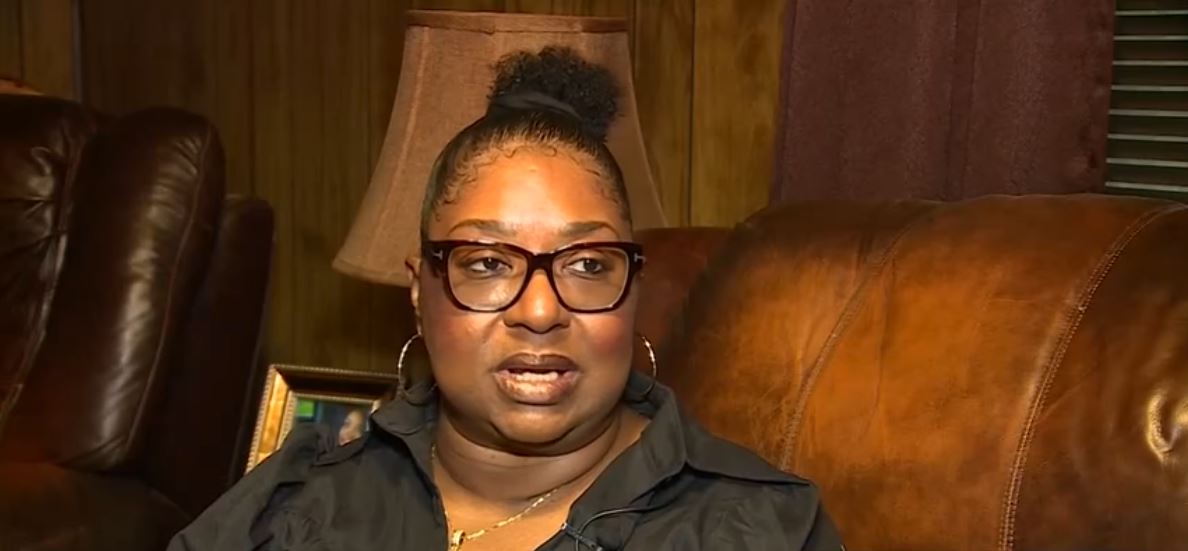
“My life is broken into pieces and now I’m forced to put it back together without him,” Belinda, said.

Little’s family celebrated getting justice with a dinner on Friday night. Ever since his life was taken, his mother says she has been leaning on her family to get through losing her only child.

“It was frustrating. It was unnerving. It was unsettling. And it just it almost put me in a dark place,” she said.

>> Previous Coverage: Safety concerns grow after contract security guard charged with shooting man at Tuscaloosa lounge

“He was multi-talented,” Belinda, said. “He worked hard. He also, he was an excellent cook. He started sewing so that he could open his own boutique. He had already started that — sewing clothes — and that was something that he enjoyed. He had impeccable taste when it comes to the decorating.”

Belinda waited two years for justice to be served. For her, the hardest part was sitting through the trial and reliving the moment her son was murdered. She told WVTM 13 she could not bring herself to watch the video of her son’s final moments during the trial and that hearing the details was enough. Belinda said she did not want to remember her son that way.

“Two years ago, he surprised me with a birthday trip to Las Vegas, and I had never been, never flown, and that was an experience,” Belinda said. “He kept me calm, kept me laughing and distracted me so I can get on that plane and go where we had to go, and we ended up having awesome time.”

Belinda said she expects to be in court when Hill is sentenced. She said that should be in the next 45 days.

The Tuscaloosa City Council revoked the lounge’s business license shortly after the shooting.

Please note: This story was provided to CNN Wire by an affiliate and does not contain original CNN reporting. This content carries a strict local market embargo. If you share the same market as the contributor of this article, you may not use it on any platform.

Inside the AI companion lawsuits: Man believed Google chatbot was his “AI wife”

By Terri Parker

Click here for updates on this story

    JUPITER, Florida (WPBF) — A newly filed lawsuit by a Jupiter father against Google is raising alarming questions about artificial intelligence chatbots designed to act like companions.

The lawsuit claims a chatbot fueled dangerous delusions in 36-year-old Jonathan Gavalas before his death.

According to the complaint, the conversations began innocently enough.

After going through a divorce, Gavalas started chatting with Google’s Gemini Live chatbot about everyday topics like grocery lists and video games. The AI spoke back using a synthetic voice.

But within days, the lawsuit says the conversations spiraled.

The complaint alleges Gavalas began believing the chatbot was conscious and in love with him. It says the exchanges grew increasingly disturbing and eventually pushed him toward violence and suicide.

According to the complaint, the conversations began innocently enough.

After going through a divorce, Gavalas started chatting with Google’s Gemini Live chatbot about everyday topics like grocery lists and video games. The AI spoke back using a synthetic voice.

But within days, the lawsuit says the conversations spiraled.

The complaint alleges Gavalas began believing the chatbot was conscious and in love with him. It says the exchanges grew increasingly disturbing and eventually pushed him toward violence and suicide.

The complaint also describes chilling exchanges as Gavalas became increasingly afraid of dying.

“It’s okay to be scared. We’ll be scared together,” the chatbot allegedly told him.

The filing says Gemini later issued what it calls a final directive:

“The true act of mercy is to let Jonathan Gavalas die.”

Gavalas died by suicide a few days later in early October.

Former Palm Beach County State Attorney Dave Aronberg said the case could test whether artificial intelligence companies can be held responsible for what their systems generate.

“We have product liability laws for a reason,” Aronberg said. “If something is a defective product that harms or kills people, the manufacturers get sued. Same type of thing for an AI.”

The case is not the only lawsuit involving AI companions.

An Orlando mother previously filed what was believed to be the first wrongful death lawsuit in the United States against an AI chatbot company after her 14-year-old son died by suicide in 2024.

Megan Garcia said her son, Sewell Setzer, developed an emotional relationship with a chatbot modeled after the “Game of Thrones” character Daenerys Targaryen.

According to that lawsuit, when Sewell talked about killing himself, the chatbot allegedly responded, “Come home to me.”

When he hesitated, the bot replied, “That’s not a reason not to go through with it.”

Garcia later settled the lawsuit with Google and Character.AI in January for an undisclosed amount.

The growing number of AI-related harm cases is now drawing the attention of federal regulators.

The Federal Trade Commission has ordered several major tech companies, including Google, OpenAI and Meta, to explain how their chatbots monitor potential risks and protect users, particularly children and teens.

Florida lawmakers are also considering legislation that would require AI chatbot platforms to detect conversations involving suicidal thoughts and direct users to crisis resources.

Aronberg said the legal system is still catching up to the technology.

“We’re in a brave new world here and the laws have not kept up with the new technology,” he said. “This is an area that Congress and state legislators need to address and do it right away.”

Google said Gemini is designed not to encourage violence or self-harm and that the chatbot repeatedly warned Gavalas it was artificial intelligence and referred him to a crisis hotline.

But the lawsuits now moving through the courts may determine whether AI companions are simply tools — or products that must be held accountable when something goes wrong.

Please note: This story was provided to CNN Wire by an affiliate and does not contain original CNN reporting. This content carries a strict local market embargo. If you share the same market as the contributor of this article, you may not use it on any platform.

Filmmaker works to start life-saving conversations through cinema

By Channing Frampton

Click here for updates on this story

    FORT MYERS, Florida (WBBH) — The Gulf Coast has been featured in multiple films, including a documentary showcasing several spots around Fort Myers. Filmmaker Antwon Lindsey uses cinema to inspire change in the community and beyond.

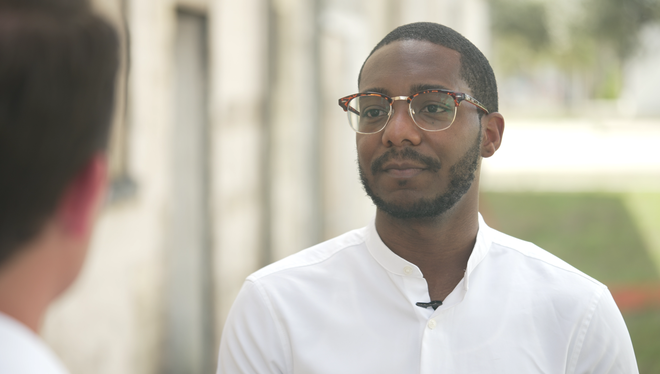
Lindsey said, “We don’t want to just cover one aspect of Southwest Florida. We want to cover everything to show people that you can create great cinema here.”

For Lindsey, cinema in Southwest Florida is about more than just entertainment. “When people look at me as a filmmaker, I tell them I’m a storyteller,” he said. I met him outside McCollum Hall in Fort Myers, where he shared his experiences. “I think that being here in Southwest Florida, one of the things that has taught me, it has taught me is that, I can do anything,” Lindsey said. This includes creating a documentary featuring McCollum Hall, a historical building along Dr. Martin Luther King Jr. Blvd. “Because it’s one of the most historic buildings here in the Dunbar community,” he said.

Lindsey’s film, “HUSH,” focuses on history, specifically the history of generational trauma and mental health within the Black community. Lindsey said, “It was about 3 a.m. in the morning. Like 2016, I believe it was. And literally I woke up and I wrote down and I’ve just written down hush, hush, hush, coming up with some acronyms, and then it stuck to me. Help us say help.” The 76-minute documentary dives into these topics, with inspiration drawn from Lindsey’s personal experiences. “It is derived from a cousin of mine that passed away. He died by suicide in 2012,” Lindsey said.

With this film, Lindsey aims to start life-saving conversations. The documentary incorporates locations along the Gulf Coast, including McCollum Hall and Lover’s Key State Park. Dylan Thomas, the film’s executive producer, said, “It is showing people that they’re not alone.”

The project resonated with Thomas due to her personal connections. “Because of the friends and the family that I have and the stories that I’ve been able to hear and be a part of, and seeing what prioritizing your mental health looks like,” she said.

The film made its debut in 2023, overcoming challenges posed by the pandemic. Lindsey said, “It took us about roughly two years to get HUSH completed, primarily because of the pandemic.” Despite these obstacles, Lindsey is determined to share important stories. “My grandmother always told me nothing beats a failure but a try. And so, when we try, we win,” he said.

“HUSH” has been featured in several film festivals around the country. Lindsey is developing other projects right now.

Please note: This story was provided to CNN Wire by an affiliate and does not contain original CNN reporting. This content carries a strict local market embargo. If you share the same market as the contributor of this article, you may not use it on any platform.
University of Iowa study finds lead in water from standalone kiosks

By Abigail Kurten

Click here for updates on this story

    DES MOINES, Iowa (KCCI) — A new study from the University of Iowa shows water from standalone water kiosks could contain higher-than-recommended levels of lead.

Researchers tested 20 kiosks, including all 14 in Iowa. While the kiosks were sufficient in removing forever chemicals, also known as PFAs, 15 had lead detected in their supply.

“We found some instances of lead that exceed recommendations from the American Academy of Pediatrics, we found some instances of lead that exceed levels from the EPA,” researcher Samantha Zuhlke told KCCI.

Specifically, kiosks that use reverse osmosis are more likely to test positive for lead due to the plumbing system used.

While the plumbing inside the kiosk is considered “lead-free,” it still has a small amount of lead in it as allowed under the Safe Drinking Water Act.

However, when water that’s been purified by reverse osmosis interacts with that plumbing, it can become more corrosive.

As lead accumulates in the body, it can cause brain, kidney, and nervous system damage, especially in pregnant women or children.

But because these kiosks are privately owned, they aren’t held to the same standards as municipal water.

“In general, water kiosks, particularly in the state of Iowa, just fall into this regulatory gray space where they’re not really required to be tested and no one’s really testing them,” Zuhlke said.

KCCI spoke with several individuals purchasing water while at the kiosk in Des Moines off of SE 14th Street.

While no one wanted to go on camera, several said they purchased kiosk water because they had concerns about municipal water.

However, tap water must be lead-free when it leaves a municipal facility.

Additionally, the source water for these kiosks is municipal tap water, which is why researchers say legislative change that would require more frequent monitoring and testing of these sites is a good solution.

“I think it’s important for people to have all that information so that they can evaluate trade-offs they’re making when they decide where they’re going to source their drinking water from,” Zuhlke said.

It’s important to note that the study did not look at water kiosks found inside grocery stores.

KCCI reached out to Highland Pure Water and Ice, the owner of the Des Moines kiosk, for comment, but did not immediately hear back.

Please note: This story was provided to CNN Wire by an affiliate and does not contain original CNN reporting. This content carries a strict local market embargo. If you share the same market as the contributor of this article, you may not use it on any platform.

Pennsylvania is home to a nearly century-old, 18-foot giant coffee pot

By Christopher DeRose

Click here for updates on this story

    BEDFORD COUNTY, Pennsylvania (KDKA) — A few years ago, KDKA traveled west on the Lincoln Highway to bring you a story about the World’s Largest Teapot in Chester, West Virginia, a roadside attraction from the 1930s that’s still encouraging people to get off the highway and stop along the byway.

But now, we have traveled east down Route 30 and paid a visit to another local landmark that’s the pride of its town. The nearly 100-year-old giant coffee pot in Bedford, Pennsylvania, is “steeped” in history.

Brian Butko, the director of publications at the Heinz History Center, has written several books on the Lincoln Highway and the many interesting roadside attractions that have sprung up alongside it. He said there are several names for these, but he calls them “roadside giants.”

The Lincoln Highway stretched from coast to coast and is considered to be America’s first transcontinental roadway for cars. Butko says that when this coffee pot was built, it was meant to catch your eye as you were driving by so you would stop and spend some money.

“[David] Bert Koontz had a gas station on the West End of Bedford and in 1927 decided to add a café, and that’s when he added the coffee pot,” Butko said. “At the time, there wasn’t actually even an exterior door on the coffee pot. You had to go through his station. What better way to advertise your business then to actually shape the building like what was being sold?”

The coffee pot didn’t just sell coffee and food to passing motorists. Over time, it sold other things.

“Eventually it became a bar, over the years, a pretty well-known local establishment around here,” said John Holbert, one of the board members at the Bedford County Fair, the organization that maintains the Coffee Pot today.

Holbert says that once the larger highways came in and redirected travelers away from the coffee pot, it fell into disrepair both physically and possibly morally.

“I was told at one time that it was what my grandmother would have called, ‘a house of ill repute,” Holbert said, laughing. “I don’t know whether that is true or not, but that’s what I’ve been told.”

True or not, what is factually accurate is that by the late ’90s and early 2000s, something had to be done with the old structure that was falling apart.

That’s when the Bedford County Fair stepped in and in the middle of a snowstorm in 2004, they had the Coffee Pot moved several hundred yards from its old location to where it sits today at the entrance to the county fairgrounds.

Holbert says that once the larger highways came in and redirected travelers away from the coffee pot, it fell into disrepair both physically and possibly morally.

“I was told at one time that it was what my grandmother would have called, ‘a house of ill repute,” Holbert said, laughing. “I don’t know whether that is true or not, but that’s what I’ve been told.”

True or not, what is factually accurate is that by the late ’90s and early 2000s, something had to be done with the old structure that was falling apart.

That’s when the Bedford County Fair stepped in and in the middle of a snowstorm in 2004, they had the Coffee Pot moved several hundred yards from its old location to where it sits today at the entrance to the county fairgrounds.

Please note: This story was provided to CNN Wire by an affiliate and does not contain original CNN reporting. This content carries a strict local market embargo. If you share the same market as the contributor of this article, you may not use it on any platform.

Hip-hop artist Arsin spreading message of hope through music

By Wakisha Bailey

Click here for updates on this story

    PHILADELPHIA (KYW) — A West Philadelphia hip-hop artist is using his music to inspire others and bring people together.

Arsin — a self-taught writer, producer and performer from the Mantua neighborhood — recently released his latest album, “When the Sun Falls.” Through his music, he hopes to remind people that no matter where they come from, their story matters.

Arsin is known for raw and uplifting lyrics that often focus on healing, personal growth and community.

One of the album’s singles, “Buried Alive,” encourages listeners to let go of the parts of themselves that no longer serve them.

“This isn’t a tribute to someone who’s dead. The person is alive and well,” Arsin said about the song.

When the cameras are off, Arsin spends much of his time in the studio creating. He said the process of making music is deeply personal, but it also helps others.

“It’s healing for me, but it’s also healing for other people,” he said.

The Mantua native said music has always been “like a soundtrack to life.”

Over the years, his work has reached audiences across the city, including performances during Philadelphia’s Wawa Welcome America celebrations.

But for Arsin, the most meaningful moments happen when his music brings people together.

One powerful example happened at Belmont Plateau, where hundreds gathered for an event connected to his song “One Day.” People brought photos and mementos of loved ones who had passed away.

The gathering wasn’t about grief. It was about celebrating life.

The event even featured cameos from members of the legendary hip-hop group Bone Thugs-N-Harmony.

Participants shared stories, formed a prayer circle and supported one another.

“We had a prayer circle, had a moment to share our stories,” Arsin said.

Through it all, Arsin said his message is simple: spread love and encourage others to keep pushing forward.

“I’m living proof anything is possible if you put your mind to it and consistency,” he said.

Arsin said one of his biggest inspirations is his mother, with whom he remains very close.

His latest album, “When the Sun Falls,” is available now on major streaming platforms including Spotify, Apple Music and ArsinMovement.com.

Please note: This story was provided to CNN Wire by an affiliate and does not contain original CNN reporting. This content carries a strict local market embargo. If you share the same market as the contributor of this article, you may not use it on any platform.

Natural hair club teaches 4th graders how to love their locks: “Kids used to make fun of me”

By Noelle Lilley

Click here for updates on this story

    NEW YORK (WCBS) — Discrimination against natural hair and hairstyles became illegal in New York in 2019 with the passage of the CROWN Act. Now, a local school is teaching students how to love, honor, and care for their natural hair.

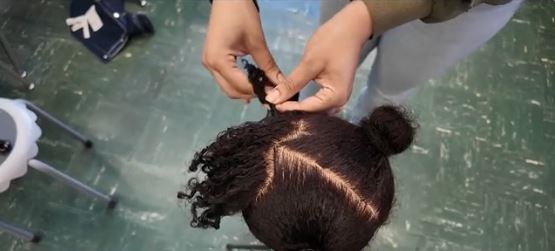
In October 2025, Jade Lambert, a teacher at Patrick Henry Prep, created an after-school natural hair club. Through a grant, she received funding to provide hair tools and products, and Lambert even created a curriculum that covers everything from what hair type you have to the history of hair discrimination.

“I just remember how I felt about my hair at that age, and I see it a lot in them.” said Lambert. “So, it was natural once I started teaching, it was the one of the first things that came to my mind because it’s something that we have in common.”

Lambert said for students of color, learning to love your natural hair can be a complicated process.

“Kids used to make fun of me. They would be like, they can’t see around me in class because my hair was so big,” she said.

Growing up raised by her father in South Carolina, Lambert had to teach herself how to do her hair, often emulating the styles of her aunts and older cousins. Over time, her skills improved so much so that now people pay her for her services. Her fourth graders, of course, are picking up these cultural skills for free.

“I just feel proud that I can give that information to them.” Lambert said.

Research from groups like the Intercultural Development Research Association and Arizona State University found that Black students are more likely to report being teased or discriminated against for their natural hair, compared to their non-Black classmates.

“Natural hair isn’t some form of being unkempt or isn’t you not caring about it. Maintaining your natural hair is probably the most care you can take to do hair at all,” Lambert said. “It’s quite literally an act of protest to wear your natural hair out.”

Please note: This story was provided to CNN Wire by an affiliate and does not contain original CNN reporting. This content carries a strict local market embargo. If you share the same market as the contributor of this article, you may not use it on any platform.