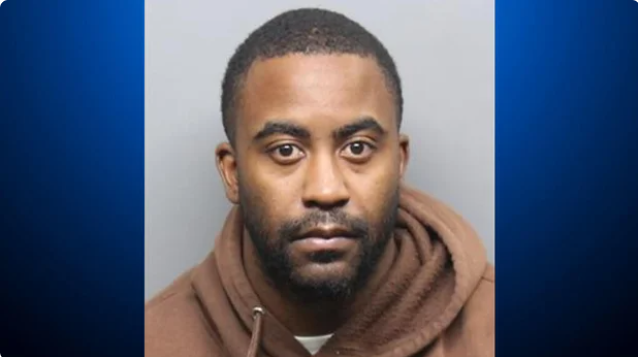
3 18-year-olds charged with first-degree murder in death of 64-year-old Kansas City, Kansas man

By Dre Bradley

Click here for updates on this story

    KANSAS CITY, Mo. (KSHB) — Three 18-year-olds are facing first-degree murder charges after a shooting Sunday evening resulted in the death of a 64-year-old Kansas City, Kansas, man.

At around 7:15 p.m., officers were called to the 3000 block of N. 82nd Terrace regarding a shooting.

Once officers arrived, they found a man outside a residence suffering from an apparent gunshot wound.

He was transported in critical condition to an area hospital, where he died from his injuries Monday.

The victim has been identified as James Dodds, 64, a resident of the home.

On Monday, 18-year-olds Aaron Johnson, Mark Elliott Nash, Jr., and Marquel McGee, all from KCK, were taken into custody in Newton, Kansas. They were each charged Tuesday in Wyandotte County District Court with first-degree murder.

— If you have any information about a crime, you may contact your local police department directly. But if you want or need to remain anonymous, you should contact the Greater Kansas City Crime Stoppers Tips Hotline by calling 816-474-TIPS (8477), submitting the tip online or through the free mobile app at P3Tips.com. Depending on your tip, Crime Stoppers could offer you a cash reward.

Annual homicide details and data for the Kansas City area are available through the KSHB 41 News Homicide Tracker, which was launched in 2015.

Please note: This story was provided to CNN Wire by an affiliate and does not contain original CNN reporting. This content carries a strict local market embargo. If you share the same market as the contributor of this article, you may not use it on any platform.

‘Why the Pecks’ house?’ Neighbor says man indicted in North Carolina killings was a handyman

By Kimberly King

Click here for updates on this story

    POLK COUNTY, North Carolina (WLOS) — Randy Smith, a neighbor of Robert and Wendy Peck in Saluda, said the man indicted on two counts of murder in connection with their killings was a known person in the community.

District Attorney Andrew Murray confirmed Tuesday, June 9, that a grand jury indicted Christopher Shane Turner, 42, on two counts of murder in connection with the deaths of the Pecks of Saluda, both 80.

As News 13 previously reported, emergency responders went to a reported structure fire on West Fork Creek Road in Saluda on Sunday, May 24. Later, the Polk County Sheriff’s Office announced that the deaths of the Pecks, found dead in the house, were ruled as homicides following autopsies.

“He was a handyman,” said Smith. “But that house, why the Pecks’ house. I mean, why?”

Smith doesn’t know if Turner ever worked for the Pecks. But he said he knows Turner lived with a woman in the Melrose Lake community.

“I am glad they have someone in custody,” said Smith.

Smith is also aware that Turner faces an additional vehicle larceny charge. Warrants show authorities took Turner into custody on that alleged charge on May 31, seven days after the house fire and discovery of the bodies.

Thursday, June 1, Smith said detectives and deputies from the Polk and Henderson County Sheriff’s Office came to his property and adjacent properties to search, bringing scent dogs.

“He says, ‘we’re conducting a search of adjoining properties looking for evidence,” Smith said.

Smith’s outdoor surveillance footage showed investigators walking around his property.

Smith and other neighbors are grateful that investigators were able to arrest a suspect in less than three weeks. Defense attorney Steve Lindsay said it points to strong detective work. But he said he doesn’t expect many facts or a motive to be made public because of the grand jury proceeding, which is a secret hearing.

“They listen to a certain amount of evidence,” said Lindsay. “Then the grand jury’s job is to decide has a crime been committed. We keep the process secret so information that is sensitive isn’t leaked out.”

During Turner’s initial appearance on Tuesday in Polk County Superior Court, Judge Athena Brooks said Turner filled out paperwork to state he was indigent and wanted a public defender. Brooks said he already had a public defender for other pending cases in district court.

Brooks confirmed with court staff that Turner will have a probable cause hearing next Tuesday, June 16, on the vehicle theft charge and possession of a stolen vehicle charge.

A source familiar with the investigation indicated the alleged stolen vehicle didn’t belong to the Pecks.

Brooks said the indictments for two counts of murder could ultimately result in a capital murder trial for Turner, which would mean he could potentially face the death penalty if a jury finds him guilty.

Please note: This story was provided to CNN Wire by an affiliate and does not contain original CNN reporting. This content carries a strict local market embargo. If you share the same market as the contributor of this article, you may not use it on any platform.

New Minnesota law means children under 13 can’t face prosecution

By Ashley Grams

Click here for updates on this story

    Minnesota (WCCO) — A new state law goes into effect on Aug. 1 in Minnesota, which will no longer allow 10-, 11- and 12-year-old children to be prosecuted. Instead, children under 13 who are considered delinquent, or who have broken a state law, will be redirected to social services.

The Minnesota Association of County Social Service Administrators (MACSSA) represents social service staff across the state’s 87 counties and is asking the state to step in and make changes to the law.

Anne Broskoff is the Human Services Director in Brown County; she’s also part of MACSSA and says while violent acts in that age group may be few, counties aren’t prepared for those situations.

“From a human services perspective, that’s a role that we’re not used to dealing with in terms of addressing public safety for people that commit crimes against other people,” Broskoff said. “We really are looking for some reasonable exceptions for those violent crimes.”

Broskoff says they have concerns about finding the right place to house a child if they are a danger to themselves or the community.

“I think that this law change will be really helpful for youth that are starting to go down a path that they shouldn’t, that we can try and bring alongside those families and youth some well-needed resources and supports,” Broskoff said. “But I’m worried about our capacity to serve the breadth of what this law can bring, and I have some worries about community safety and youth safety.”

Broskoff says they are asking the state to amend the law to make an exception to prosecute and securely house children ages 10 to 12 years old who commit a serious violent crime.

The Minnesota Association of Community Corrections Act Counties, representing over 40 counties, and the Association of Minnesota Counties share these worries.

“There are concerns around the kids that may commit the serious offenses and the lack of available placement options for them,” Emilio Lamba said, representing both groups. “Whether they are going to end up in secure detention, if that mechanism exists, or if county staff may have to potentially sit with these children in county offices, hotels, until they can find the appropriate placements.”

Minnesota’s Juvenile Justice Advisory Committee (JJAC) is also asking the state to pump the brakes, to complete more research and ensure services outside of the juvenile delinquency jurisdiction are properly set up for children in the 10 to 12 age range. JJAC members are appointed by Gov. Tim Walz’s office and advise state lawmakers on juvenile justice and law.

Kate Richtman, vice chair of JJAC, said while they support the age change, there are a lot of questions at the county level about what this law will look like in practice.

“But what should that [secure] place be, and are there beds available, and what do you do at two o’clock in the morning?” said Richtman. “We aren’t sure what the capacity is going to be, and where those services are really going to need to be put in place.”

During the legislative session, JJAC asked state lawmakers to delay the law another year, but no changes were made.

JJAC said there are two other states that have the minimum age set to 13: Maryland and New Hampshire. But unlike Minnesota, Richtman said in both states there are “carve-outs” or exceptions for kids under 13 who commit certain offenses.

JJAC data collected from state agencies show 747 kids between the ages of 10 and 12 were arrested in 2023; 423 of them were referred for court proceedings, but fewer than 100 were placed in detention. Richtman says it can be difficult to get a full picture of how many kids in this age range will be impacted by this law change because often kids are referred to diversion programs.

Though Hennepin County Attorney Mary Moriarty says Minnesota’s most populous county is ready for the new law come August. Moriarty argues that, often, kids don’t face charges and instead are found unable to stand trial under the current system.

“When a judge finds them incompetent, we can no longer prosecute; that child cannot be held in the juvenile detention center, which means they walk out the door with no services,” she said.

Moriarty says since kids are already walking out the door without charges, the law change will help get child offenders the resources they need.

‘We need to get them the help they need so that they don’t continue to cause that type of harm,” she said.

A spokesperson for the Minnesota Department of Corrections said they are preparing to notify juvenile detention facilities across the state about the law, clarifying that as of Aug.1, the facilities will not be able to place a child under 13 on a hold.

“The [DOC] is also working with facilities on how they might continue to work with that age group if they are interested in doing so,” the spokesperson wrote in a statement. “The state of Minnesota will be offering training to the courts and law enforcement agencies about these changes soon.”

The spokesperson also said the only juvenile facility operated by the state, which is in Red Wing, has not admitted a child under the age of 13 to its cognitive treatment program in more than 20 years.

Please note: This story was provided to CNN Wire by an affiliate and does not contain original CNN reporting. This content carries a strict local market embargo. If you share the same market as the contributor of this article, you may not use it on any platform.

Philadelphia Eagles head coach Nick Sirianni on A.J. Brown trade: “It was a good run”

By Tom Ignudo

Click here for updates on this story

    PHILADELPHIA, Pennsylvania (KYW) — The Philadelphia Eagles are ready to move on from the A.J. Brown trade.

For the first time since the deal went through, Eagles head coach Nick Sirianni spoke to the media about the highly anticipated trade to the New England Patriots and said Brown had a “good run” in Philadelphia.

“I would say there’s a lot of good years here,” Sirianni said Tuesday on Day 1 of the team’s mandatory mini camp. “Done a lot of good things with A.J. here. Two times in the Super Bowl, I think he was an All-Pro multiple times, Pro Bowl multiple times, so I would say it was a good run.”

In the past, Sirianni called Brown one of the best players and leaders he’s been around.

Brown recorded the best numbers of his career in Philadelphia, posting back-to-back 1,400-plus yard seasons in his first two years with the Eagles. He set multiple franchise receiving records over his four seasons in Philadelphia, but ultimately, Brown’s frustrations over the offense in recent years led to him being dealt to the Patriots.

While Brown’s production will be tough to replace, Sirianni said he’s excited for the team’s new wide receiver room.

DeVonta Smith will have a much larger role as the No. 1 receiver in Sean Mannion’s offense, and the team made several moves over the offseason to plan for Brown’s eventual departure.

The Birds drafted Makai Lemon in the first round, traded for Dontayvion Wicks and signed veterans Marquise Brown and Elijah Moore. Plus, Johnny Wilson and Darius Cooper return to fill out the bottom of the depth chart.

“Howie [Roseman] and I discuss everything,” Sirianni said. “As you know, we talk through everything. So many things that [Brown] did that was good for our football team, and will wish him the best of luck.”

Throughout the Brown saga, his relationship with quarterback Jalen Hurts was put into the spotlight after a season filled with cryptic social media posts.

In an interview with NBC’s Maria Taylor after the trade, Brown said there was “no bad blood” between him and Hurts, who were once close friends. The two had grown apart over the years.

Hurts also said before the trade that he and Brown were in a “really good” place.

When asked if Hurts and Brown’s relationship was ever a problem managing the team last season, Sirianni said no but acknowledged that not everyone needs to be best friends.

“I think it can look a lot of different ways, but it is so important that we all understand that we have a shared mission and that we need each other to get to where we want to go,” Sirianni said. “We need each other. Not in this sport can we do it alone. If you want to do it alone, you’ve got to pick another sport.”

Please note: This story was provided to CNN Wire by an affiliate and does not contain original CNN reporting. This content carries a strict local market embargo. If you share the same market as the contributor of this article, you may not use it on any platform.

Free exhibit at historic Philadelphia church looks at role of religion during American Revolution

By Nikki DeMentri

Click here for updates on this story

    PHILADELPHIA, Pennsylvania (KYW) — As the United States continues the countdown to its 250th anniversary, a new, free exhibit in Philadelphia focuses on religion during the American Revolution.

“Coming to Christ Church is almost like taking a step back in time,” executive director of Christ Church Preservation Trust Zack Biro said.

There are more than three centuries’ worth of stories to tell at Christ Church, especially when it comes to the Revolution and those who led that effort, including George Washington, who attended services at the church.

“Christ Church and the American Revolution: Fractured Symbols, Traditions and Congregations” is open at the nearby Neighborhood House.

“This was a piece of George III’s coat of arms. We think it hung inside the church, we’re not exactly sure where, but it was likely vandalized in July 1776,” Biro said.

That’s one example of what’s on display. Visitors can also see a 1766 prayer book — with some revolutionary edits.

“In July 1776, when the vestry of Christ Church voted to support the revolution, they went through the Book of Common Prayer and crossed out any mention to the king, the royal family, the empire, anything that had to do with England. This was quite an act of treason to actually go through the book and cross out any mention of these things,” Biro said.

Some of the documents and artifacts in the exhibit will rotate. There’s also a virtual exhibit.

“The exhibit focuses on showing both loyalists and patriots who were at Christ Church, who sometimes sat in the same pews, who had conflicting allegiances and thought differently about what was happening at that time,” Biro said.

The free exhibit remains at the Neighborhood House at Christ Church, located at 20 North American Street in Old City, through the end of the year.

Please note: This story was provided to CNN Wire by an affiliate and does not contain original CNN reporting. This content carries a strict local market embargo. If you share the same market as the contributor of this article, you may not use it on any platform.

Wildlife filmmakers race to make sure their images aren’t the only evidence Florida panthers existed

By Michael Paluska

Click here for updates on this story

    HENDRY COUNTY, Florida (WFTS) — The Florida panther once roamed the entire southeastern United States. Today, a small pocket of South Florida is all that remains of its habitat east of the Mississippi River.

Now, a team of wildlife filmmakers is using photography to fight for the big cat’s survival.

Tampa Bay 28 reporter Michael Paluska trekked deep into panther territory with the team from the fStop Foundation. The non-profit is dedicated to tracking the panther and putting up trail cameras to give viewers a secret glimpse into their everyday lives.

On our first stop in the Greater Ok Slough Ecosystem, we saw footprints in the soft sugar sand of a massive male panther.

“This is the first time I’ve seen panther tracks in the wild,” Paluska said with excitement.

“It’s a panther stronghold,” wildlife biologist Sean McHugh said with a smile.

“The panther got shoved into South Florida because of the inaccessibility of it before roads were here. The Everglades, areas like this, and the Okeechobee Slough ecosystem were wild enough for it to escape that persecution from humans,” McHugh said.

Nearly hunted to extinction, the Florida panther is critically endangered. At one point, only 10 to 20 remained in the wild. Today, an estimated 120 to 230 panthers roam South Florida.

The nonprofit is working to change the panther’s fate — deploying trail cameras across the state to document the animals and inspire public support for their protection. Father and son William and Max Freund, along with McHugh, make up the core of the team.

Their method is methodical: scout the terrain, find tracks, position cameras, and wait.

The payoff comes when the team retrieves the cameras. Scrolling through hundreds of images, William Freund spotted something remarkable.

“Got 269 with her kitten walking right by the camera — nice,” William Freund said while scrubbing through the SD card.

For Max Freund, those moments carry weight far beyond the excitement of a single capture.

“I think to be able to show people an animal that we’ve never seen. I’ve personally never seen a panther, and we see them in the cameras, and we know that they’re around, and they’re thriving, and they have their challenges, but to be able to show people and let them experience something they’ll never see is really important,” Max Freund said.

McHugh said protecting enough land is the key to the panther’s future.

“These are the types of places that save the panther. If you have enough space, they will reproduce, and from there the population can continue to sustain itself.”

But wild places are disappearing fast. A joint study by 1000 Friends of Florida and the University of Florida estimates 190 acres of land could be lost per day to development over the next 50 years.

“It goes from sort of virgin land to some kind of agricultural use, whether it’s ranching or citrus or growing tomatoes, and then eventually that becomes the last, what we call the last crop in Florida, which is rooftops,” William Freund said.

The panther is not the only species at stake. McHugh said the big cat serves as an umbrella for an entire ecosystem — one that includes, bears, bobcats, alligators, snakes, and countless other species.

“People have a tendency to focus on the panther. It is an umbrella species. It’s a flagship species of fStop. There are so many other important species too, and it’s all part of the same ecosystem.”

Even after years of work, the team said the thrill of finding a panther on camera never fades.

“No, no, no, you never know. And that video starts playing, you just get excited, and you can’t wait to share it with everyone else,” Max Freund said.

The hope is that 250 years from now, these photographs will not be the last witness of Florida panthers roaming the wild.

“The key for us at fStop is the storytelling part of it. The old saying of you’re going to protect what you love, and you’re going to love what you understand, and so if we can tell the stories of these absolutely incredible resilient animals, we have a chance to make it happen,” William Freund said.

Please note: This story was provided to CNN Wire by an affiliate and does not contain original CNN reporting. This content carries a strict local market embargo. If you share the same market as the contributor of this article, you may not use it on any platform.

Future Leaders winner developing treatment for women’s reproductive disorder

By Libby Smith

Click here for updates on this story

    HIGHLANDS RANCH, Colorado (KCNC) — Throughout the year, CBS Colorado recognizes high school students who are excelling in science, technology, engineering, and math, STEM. Future Leaders award winners get $1,000 and a profile on CBS News Colorado. The newest Future Leaders award winner is Mishika Bhatia, a recent graduate of Rock Canyon High School.

Bhatia has spent the last two years researching a treatment for Polyendocrine Metabolic Ovarian Syndrome, PMOS.

“PMOS…it’s a reproductive and endocrine disorder,” Bhatia explained.

PMOS is the new medical name for PCOS, polycystic ovarian syndrome. PMOS is very common, effecting 1 in 10 women of reproductive age globally. It leads to irregular periods, cystic acne, hair loss, and infertility.

“I actually, two years ago, was diagnosed with PCOS or PMOS. And I went through seeing doctors, looking for potential treatments, discovering there was really nothing that could cure this disorder,” Bhatia told CBS Colorado.

Finding a therapeutic drug that targets the symptoms of PMOS became a passion project for Bhatia.

“I discovered that (the plant) saw palmetto targets a pathway in males that a lot of research has been done on, but it targets the same pathway in women and that pathway hasn’t been explored yet, so I’m applying the science that has been done in males to PMOS and women,” Bhatia said.

She partnered with Dr. Joshua Johnson on the University of Colorado Anschutz Medical Campus and was able to begin her research in his lab. She started with cell studies and then moved on to pharmacological testing.

“Isolating the enzyme pathway I believe is at work in the cells and then testing saw palmetto in a variety of dosages on the enzyme itself. I’m also starting the process of breaking down saw palmetto into its different components,” she explained.

Bhatia has presented her work at various competitions along the way. At the Denver Metro Regional Science and Engineering Fair, she won second place overall and first place in her category. At the International Science and Engineering Fair, she took second place in Translational Medical Science. She was also named a top 300 Science Scholar at the Regeneron Science Talent Search.

“I think if anything going to those competitions provided PMOS a lot more awareness and attention,” Bhatia said.

“Why do you think that your success is so important in the future?” asked First Alert Meteorologist Lauren Whitney.

“My goal is if I can get this research enough attention, I would not only be able to help women with PMOS, but also hopefully make discoveries and more research in all the other fields that reproductive science actually impacts,” she replied.

Bhatia is not only a trailblazer in the lab, she is a member of the Lady Trailblazer organization. She’s started five chapters of the Girl Persist program at high schools along the Front Range.

“It is essentially a program that runs leadership and development and professionalism programs for young girls all across Colorado,” she said. “I really love the mentoring and the teaching. Even through biotech, I’ve gotten to mentor some wonderful young women, help them do similar research projects.”

“You’re going to the University of Michigan. What are you hoping to do in college?” Whitney asked.

“I’m studying pharmaceutical sciences and drug development on a pre-med track and then I’m also studying business, so as of now I hope to go to medical school,” she responded.

Bhatia hopes to one day be a physician scientist with a fully developed drug treatment for PMOS already under her belt.

Please note: This story was provided to CNN Wire by an affiliate and does not contain original CNN reporting. This content carries a strict local market embargo. If you share the same market as the contributor of this article, you may not use it on any platform.

House report says MN officials ignored fraud warnings as early as 2019; Walz’s office calls oversight committee “a joke”

By Eric Henderson

Click here for updates on this story

    MINNESOTA (WCCO) — A congressional report released Monday accuses senior Minnesota officials, including Gov. Tim Walz and Attorney General Keith Ellison, of ignoring clear warnings of widespread fraud in federally funded social programs as early as 2019, and retaliating against state employees who tried to raise concerns.

The 205-page report was released by the Republican-led House Committee on Oversight and Government Reform. Committee investigators allege state officials had the authority to stop payments and ban fraudulent providers but repeatedly failed to act. The report estimates roughly $300 million in meal program fraud and also flags potentially $9 billion more in questionable Medicaid payments.

The report also alleges that state employees who raised concerns about fraud faced retaliation and intimidation.

“Minnesota Governor Tim Walz and Attorney General Keith Ellison are responsible for one of the most stunning oversight failures this Committee has ever examined,” committee Chairman James Comer, a Republican from Kentucky, said. “Billions of dollars were stolen because Minnesota state leaders turned a blind eye to rampant fraud and retaliated against state employees who dared to raise concerns.”

Comer also sent a letter to Vice President JD Vance, urging the White House Task Force to Eliminate Fraud to conduct a thorough review of Minnesota’s social services programs dating back to 2019. On social media, Vance said he referred the allegations to the Department of Justice.

“If state officials in Minnesota or anywhere else in the country facilitated fraud or looked the other way while this theft was happening, if they actively prevented state and federal officials from stopping fraud and bringing fraudsters to justice, or if they intimidated and harassed whistleblowers who courageously tried to shine a light on this problem, they must be held accountable,” Vance wrote.

Both Walz and Ellison have appeared before the House Oversight Committee in the wake of the Feeding Our Future fraud case. In March, Comer questioned both officials on why payments from programs impacted by fraud were not stopped sooner. Walz responded, “We’re not going to stop payments that feed children until we have the proof that things happened.” Ellison said his office “doesn’t have the authority to do a stop payment.”

Walz’s spokesperson responded Monday afternoon, saying the committee “has proven time and time again to be nothing more than a joke,” adding that Walz “is glad to see fraudsters are going to prison. If the committee is concerned about corruption, they should investigate why President Trump continues to let fraudsters out of prison.”

A spokesperson for Ellison on Monday said his office “disagrees with much of the contents of the report and believes it mischaracterizes much of what actually happened,” saying “Republicans in Congress issued a report riddled with inaccuracies and misrepresentations in an effort to politicize the issue of fraud, instead of actually helping Minnesota protect tax dollars and go after fraudsters.”

Ellison’s spokesperson added, “The only type of criminal fraud that state law gives the Attorney General’s Office the jurisdiction to prosecute is Medicaid fraud. Other criminal fraud falls under the jurisdiction of county and city attorneys or the federal government. It’s also important to note that the Minnesota Attorney General’s Office does not have the authority to oversee state agencies like the Department of Human Services or the Department of Education, it cannot dictate what actions those agencies do and do not take, and it does not have the authority to order those agencies to stop payments to providers or other vendors. In fact, federal regulations require Attorney General Ellison’s Medicaid fraud team to be entirely separate from the Department of Human Services.”

Please note: This story was provided to CNN Wire by an affiliate and does not contain original CNN reporting. This content carries a strict local market embargo. If you share the same market as the contributor of this article, you may not use it on any platform.

City leaders urge people to stop feeding squirrels due to swelling population

By Nicole Comstock, Dean Fioresi

Click here for updates on this story

    SANTA MONICA, California (KCAL, KCBS) — Santa Monica city officials are urging people to stop feeding the squirrels at Palisades Park due to a swelling population and potential environmental concerns.

The hundreds of ground squirrels, which typically spend their time combing the grass for crumbs and approaching visitors in search of a treat, are native to the area. However, they’re traditionally found burrowing deep into the cliffs overlooking the Pacific Ocean.

In recent years, wildlife experts say that people who have fed them junk food and provided an abundant supply of food have caused their population to explode.

“The problem is, it’s always the food supply,” said Marcia Rybak, the director of Coast and Canyon Wildlife Rehabilitation. “Everything is shelter and food with wildlife, or all animals, really.”

Rybak says that any drastic measures taken to eradicate the squirrels likely wouldn’t work, and that if people simply stopped feeding them, the population would naturally dwindle to more sustainable levels.

On Monday, CBS LA reporters witnessed the squirrels munching on cheesy crackers and a packet of ranch dressing.

“They’re very dominant squirrels,” said Nicole Smith, who was visiting on Monday. “This is their park. They’ve taken over.”

As far as erosion problems, Ryback said it’s unclear if it’s actually an issue, but with the number of squirrels now living in the area, it’s certainly a possibility.

Visitors say that the challenges that come with the squirrels create a moral dilemma.

“I do understand both sides, and you don’t want to go down the path of getting rid of what’s naturally there,” said Joe Affleck.

Rybak said that 20 years ago, city leaders floated the idea of giving the squirrels birth control, but it never happened. She says that one potential issue that could come with a sudden decrease in food is more aggressive behaviors.

Santa Monica city leaders have not yet responded to CBS LA’s request for comment on if the population is larger than it was last year, when they posted signs around the park asking people to stop feeding them.

Please note: This story was provided to CNN Wire by an affiliate and does not contain original CNN reporting. This content carries a strict local market embargo. If you share the same market as the contributor of this article, you may not use it on any platform.

Florida’s District 20 race heats up as Black candidates seek to avoid split vote and defeat Debbie Wasserman Schultz

By Manuel Bojorquez

Click here for updates on this story

    FLORIDA (WFOR) — A major shakeup is brewing in the race for Florida’s District 20.

CBS News Miami has learned that four Black candidates had a private meeting to discuss consolidating down to one or two candidates. They believe it would improve their chances of defeating Congresswoman Debbie Wasserman Schultz in the August primary.

“It was good to see that we could come together and have a cordial conversation,” said Dale Holness, one of the candidates.

“It’s a tough conversation, but the sense in the room that we should have someone with the lived experience of the majority of the people in that district was very, very strong,” he added.

District 20 is one of Florida’s few majority-Black districts and has been represented by Black lawmakers for the past 34 years. Sheila Cherfilus-McCormick represented the district until she resigned amid a congressional ethics investigation. She is running again and confirmed she was part of the meeting.

“I don’t think people understand that this is a national issue, how this really affects everyone,” she said. “And all of us called to run at this moment have the responsibility to ensure that we can preserve the district,” she added.

Elijah Manley is running, too.

“It makes it easier for her to win when the Black vote is split, but I think that the strongest candidate can build a coalition to win this race,” he said.

Candidate Luther Campbell was out of town for a fundraiser and was not available for comment.

It is unclear exactly how the group of candidates would determine who should move forward. But they have about 10 days to make the decision. The deadline to file to run for the seat is Friday, June 12.

Wasserman Schultz has blamed Republican redistricting efforts to gain more GOP seats after her current district was overhauled by the state legislature.

Her campaign told CBS News Miami she is traveling and was not immediately available for comment.

Please note: This story was provided to CNN Wire by an affiliate and does not contain original CNN reporting. This content carries a strict local market embargo. If you share the same market as the contributor of this article, you may not use it on any platform.