Asheville marks 25 years since 9/11 with remembrance ceremony

By Itinease McMiller

Click here for updates on this story

    ASHEVILLE, North Carolina (WLOS) — Twenty-five years after the terrorist attacks on Sept. 11, 2001, first responders and city leaders in Asheville gathered Friday to honor the lives lost and reflect on the lasting meaning of service and sacrifice.

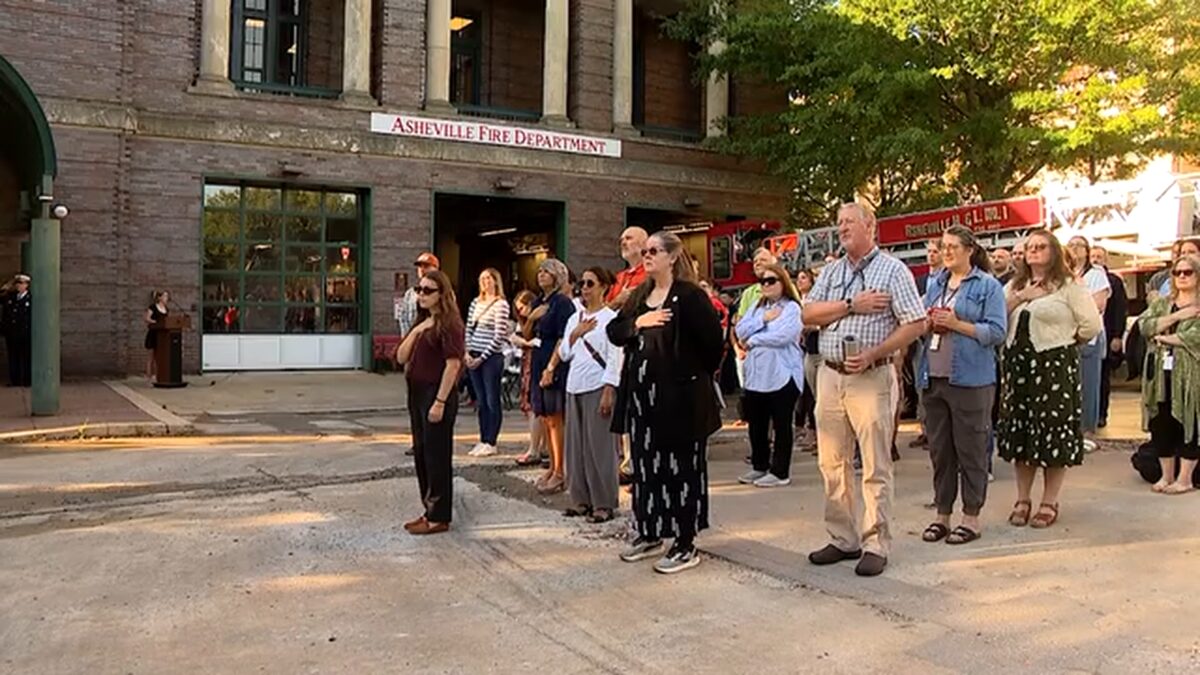
The City of Asheville held a remembrance ceremony outside the Court Plaza fire station, bringing together firefighters, police officers, city officials and community members.

The ceremony began with a moment of silence and the traditional ringing of the bell in memory of the firefighters and victims who never came home. The Asheville Fire Department’s Honor Guard also presented the colors as those in attendance paused to remember the nearly 3,000 people killed in the attacks.

Local first responders said the anniversary serves as both a moment of remembrance and a reminder of the responsibility that comes with public service.

Asheville Deputy Fire Chief Chris Budzinski said the legacy of 9/11 continues to influence how first responders do their job.

“It is a reinforcement, too, that our firefighters, first responders and police officers put the public above themselves, and it reinforces the need for them to be ready for any type of event, any time of the day, so it reinforces our training needs,” Budzinski said.

Leaders from the Asheville Fire Department, Asheville Police Department and City Manager’s Office reflected on how the attacks changed the nation and the lessons that continue to resonate 25 years later.

Asheville City Manager DK Wesley said the courage shown by first responders that day remains at the heart of public service today.

“They put the safety and lives of others ahead of their own,” Wesley said. “That kind of commitment and courage is at the heart of public service, and it is something I am proud to see every day here in Asheville and across the community we share.”

Interim Asheville Police Chief Jackie Stepp also emphasized the importance of continuing to serve with the same courage and dedication shown by those who ran toward danger that day.

City leaders said remembering 9/11 is not only about looking back, but also about renewing a commitment to service, unity, and hope.

They are encouraging people across the community to take time to remember those who were lost, honor those who served and make sure their sacrifices are never forgotten.

Please note: This story was provided to CNN Wire by an affiliate and does not contain original CNN reporting. This content carries a strict local market embargo. If you share the same market as the contributor of this article, you may not use it on any platform.

Tattoo artist’s marketing stunt involving Flock cameras goes viral

By Terell Bailey

Click here for updates on this story

    DETROIT, Michigan (WWJ) — Flock cameras have become a growing point of debate in communities across Metro Detroit. Now, one local tattoo shop owner in New Baltimore is adding a little humor to the conversation.

Steven Jean, owner of The Alien Body Shop, recently posted an unusual offer on Instagram: Bring him a Flock camera, and he’ll give you a free tattoo. The post was meant as satire and entertainment, but Jean says it quickly took on a life of its own.

He told CBS News Detroit that more than 2 million people have seen the post. People have also sent him photos and videos of damaged Flock cameras.

“I’ve had people send me pictures of damaged Flock cameras — videos of themselves damaging Flock cameras,” Jean said.

Jean says the offer isn’t meant to encourage people to remove or damage the cameras. That’s especially important because damaging or removing someone else’s property can have legal consequences.

Former Detroit Police Assistant Chief Steve Dolunt told CBS News Detroit that there’s a difference between accidentally hitting a Flock camera with a vehicle and intentionally damaging one.

“It’s one thing if you hit it with a car — but these guys are going over it and painting over it. Well, guess what? You’re going to jail,” Dolunt said.

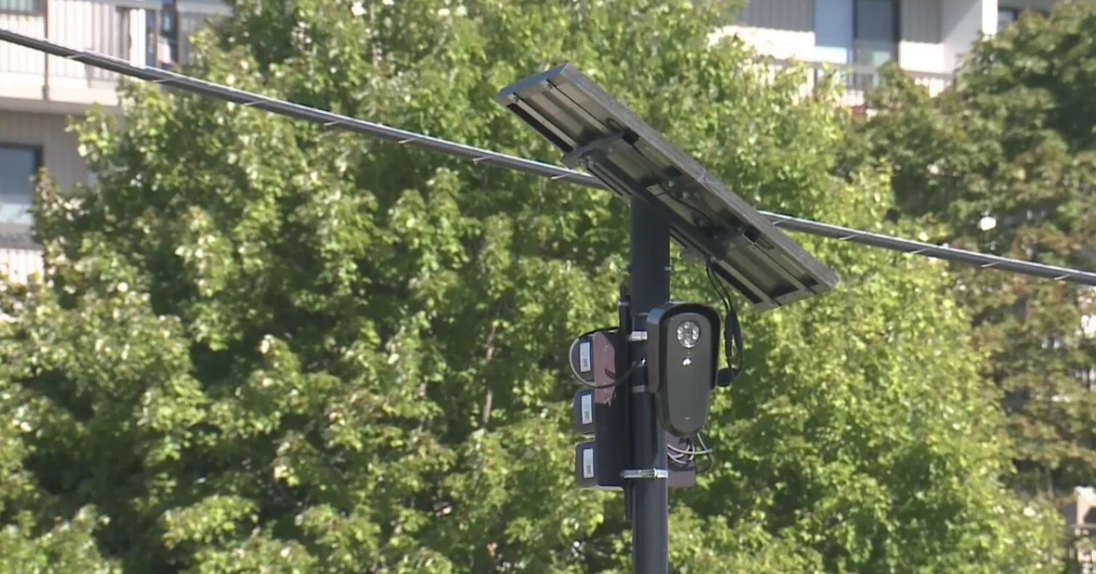
CBS News Detroit spotted several Flock cameras in New Baltimore. City records show the New Baltimore City Council approved a $7,500 agreement for two Flock cameras in 2025. The technology uses cameras to capture license plates and other vehicle information as vehicles pass through an area.

Jean said he understands how beneficial the cameras can be, but also understands why some people are concerned about how the technology is used.

“Maybe they should be around places where a really high crime could be committed, something like a kidnapping, or a sexual assault,” Jean said.

Dolunt said Flock cameras can be useful, particularly when investigating serious crimes, but said there should also be limits on how long the information is retained. He also said there should be stricter penalties if an officer is caught using the technology for non-police purposes.

“Keep the data in there for a week or two unless it’s an active investigation,” Dolunt said.

For Jean, the viral post is ultimately about starting a conversation. He says the reaction to the post shows how strongly people feel about the technology.

Jean told CBS News Detroit that someone even contacted him, claiming they had been arrested for vandalizing a Flock camera. He joked that the story might qualify for a free tattoo. He’s also open to doing tattoos inspired by Flock cameras.

However, he has one important message for anyone considering taking his original offer literally: “Please do not bring Flock cameras to my shop! It’s all about obeying the law and having a good time.”

Please note: This story was provided to CNN Wire by an affiliate and does not contain original CNN reporting. This content carries a strict local market embargo. If you share the same market as the contributor of this article, you may not use it on any platform.

Police warn of scam targeting older, non-English speakers

By Tori Mason

Click here for updates on this story

    AURORA, Colorado (KCNC) — The Aurora Police Department is warning the public about a scam often targeting older and non-English speakers.

APD says a woman accused of stealing an older victim’s necklace in a grocery store parking lot may be connected to other so-called “blessing scams,” a type of jewelry theft investigators say has surfaced about a dozen times in the city over the past year.

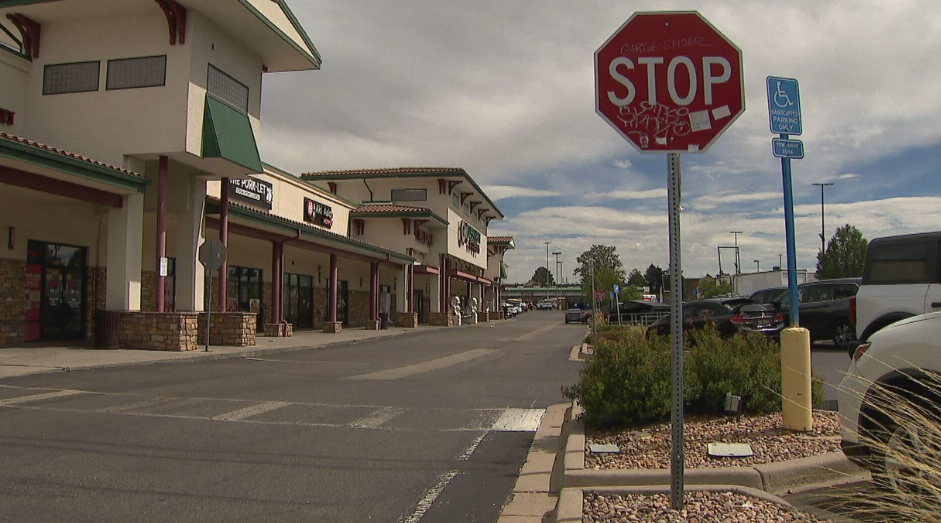
Carolina Pavel, 29, of Denver, was arrested Thursday on charges of theft and crimes against an at-risk person in connection with an Aug. 25 theft outside Pacific Ocean Market in Aurora.

Police say Pavel and another woman approached an older woman who does not speak English and repeatedly tried to sell her jewelry.

Investigators say the suspects eventually placed a cheap necklace around the woman’s neck. While putting it on, they allegedly used sleight of hand to remove and steal the woman’s expensive silver necklace.

The victim did not realize her necklace was gone until she returned home.

Kristopher McDowell with the Aurora Police Department said the method is a variation of a scam seen around the country.

“They’ll use this piece of jewelry as an offering, and they’ll offer to put it on the victim,” McDowell said. “And when they’re putting this fake jewelry onto the victim, they’ll remove their real jewelry and steal it while it’s still on them.”

McDowell said scammers may offer a gift, prayer or blessing as a way to get physically close to their victims.

“It’s very quick. It’s a sleight of hand operation,” he said.

Police say the scammers often seek out people they perceive to be vulnerable, including older residents and people who may have difficulty understanding what the scammers are saying.

José works at the market collecting shopping carts. He told CBS Colorado in Spanish that he has witnessed suspicious jewelry encounters involving customers there before.

He recalled an incident about a month to a month-and-a-half ago in which he saw people who appeared to be selling jewelry approach an older woman.

He said a woman approached the customer and appeared to be trying to sell her something. Then he saw the woman get into the older customer’s car. He said the older woman had a gold chain around her neck.

He said the woman who approached the customer suddenly got out of the car and ran toward a companion before leaving. He said the older woman then emerged from her car visibly frightened and holding her neck.

“It is something very sad for the community,” José said.

Police are still searching for other suspects and investigating whether Pavel could be connected to additional thefts.

“There’s potential that they’re part of a ring, a larger ring involving other suspects,” McDowell said.

Police say the scams commonly happen in public parking lots. Investigators say suspects may linger in the area, watching for people wearing visible jewelry before approaching them.

Investigators are concerned the number of victims could be higher than the cases reported to police.

Some people may not realize until much later that their real jewelry was removed and replaced. Others may be reluctant to report what happened. McDowell said police still want to hear from those victims, even if time has passed.

Police also want family members to talk with older relatives and others who may be vulnerable about how the scam works.

Anyone with information about the Aug. 25 theft or similar blessing scam cases is asked to contact Metro Denver Crime Stoppers at 720-913-STOP (7867). Tipsters can remain anonymous and may be eligible for a reward of up to $2,000.

Please note: This story was provided to CNN Wire by an affiliate and does not contain original CNN reporting. This content carries a strict local market embargo. If you share the same market as the contributor of this article, you may not use it on any platform.

Lina Hidalgo Speaks to HSM: Budget Battles, Police Pay and the Flock Camera Privacy Debate

By Francis Page Jr.

Click here for updates on this story

    September 12, 2026 (Houston Style Magazine) — Democracy often gets its grandest moments at the ballot box, but its toughest tests can arrive later—in spreadsheets, tax bills, public-safety budgets and decisions about how much information government should collect about ordinary citizens.

In responses provided to Houston Style Magazine – Harris County Judge Lina Hidalgo addressed three issues now commanding public attention: Harris County’s FY2027 budget challenge, Law-enforcement compensation and the expanding use of Flock cameras and Automated License Plate Readers, or ALPRs.

The questions initially referenced an approximately $189 million budget shortfall, a figure used during the evolving budget debate. Harris County’s September 8 FY2027 proposed budget subsequently put the projected gap at about $181 million, reflecting updated estimates for healthcare and jail-related expenses. County budget officials identify multiple pressures, including employee healthcare, jail costs, indigent defense, law-enforcement compensation, contract patrol expenses, reduced federal funding and state mandates.

Review Harris County FY2027 Budget Documents

Budget: “We Created This Structural Deficit Ourselves”

Asked how Harris County reached its current financial position, Hidalgo did not soften her assessment, telling HSM, “By and large, we created this structural deficit ourselves.”

She acknowledged that inflation and state-imposed revenue limitations contribute to the pressure, but argued that spending decisions by Commissioners Court are also central to the problem. “Since 2023, we have approved spending time and time again, knowing that there was no revenue source to pay for that spending,” Hidalgo said.

Her office points to $141.9 million in selected spending decisions as evidence for that argument. The document includes items involving prosecutors, detention operations, staffing, technology and law-enforcement compensation and records Hidalgo’s position on the individual votes.

That $141.9 million compilation represents Hidalgo’s framing of the spending debate; the County’s official budget documents describe the deficit as the product of several overlapping costs rather than one category alone.

Hidalgo’s larger argument is about recurring expenses meeting recurring revenue. She told HSM that the county cannot continue adding programs without knowing how it will finance them in future years, saying, “Until we build a healthy, sustainable budget, it’s not right for taxpayers to pay a higher tax rate.”

That debate became more concrete September 8 when Commissioners Court voted 3-2 to approve a combined tax rate of roughly 67 cents per $100 of taxable value. Commissioners Rodney Ellis, Adrian Garcia and Lesley Briones supported the rate; Hidalgo and Commissioner Tom Ramsey opposed it.

Asked how she would reduce the deficit while protecting services, Hidalgo described the challenge as “a both and.” She said, “We need great police. But we also need mental health. We need programs against homelessness. We need the hospital,” while noting county responsibilities ranging from roads and bridges to elections.

photo

Her proposed efficiencies include consolidating human-resources operations, restructuring engineering and general services, reviewing countywide park maintenance and purchasing, pursuing additional grants and nonprofit resources, and exploring consolidation of certain services with the City of Houston.

Or, translated from government-speak: before asking taxpayers to reach deeper into their pockets, Hidalgo says government should first check its own couch cushions.

Law Enforcement: Fair Pay—and a Sustainable Way to Fund It

On police compensation, Hidalgo emphasized that her disagreement is not with paying officers competitively.

“I believe officers should be paid fairly,” she told HSM.

The dispute is over financing.

Harris County has committed substantial resources to bringing Sheriff’s Office and Constable compensation closer to Houston Police Department levels. The FY2027 budget continues those pay-parity commitments, while growing personnel costs remain one of the County’s major fiscal pressures.

Hidalgo said she would have preferred putting a long-term funding proposal directly before voters. “I would have let the voters decide by holding a bond election,” she said, contending that voter approval could have established a sustainable revenue stream rather than leaving Commissioners Court to later choose between taxes and service reductions.

The debate became especially visible with compensation for Harris County’s eight elected constables. In August, Commissioners Court approved salaries of at least $305,000 through 2030, along with back-pay settlements. Hidalgo was the lone vote against the August back-pay and raise action, according to recent reporting.

“When I saw the proposal to raise elected constables’ salaries to $305,000,” Hidalgo told HSM, “I had the same instinct the people of Harris County have had: This doesn’t make sense, on many levels.”

Her concern, she said, is that large recurring raises without dedicated funding can force taxpayers into future choices that were never directly presented to them.

Flock Cameras: “Help Save Lives and Solve Crimes”—But Who Watches the Watchers?

The third issue moves Harris County squarely into the digital-age debate over public safety and personal privacy.

Commissioners Court approved a renewal with Flock Group, Inc. for license-plate-reader and sound-detection technology covering June 6, 2026 through June 5, 2027. The official May 28 agenda record lists the renewal at $868,975. A July amendment clarified that the agreement could be used countywide at no additional cost.

Read the Official Harris County Flock Renewal Record

Hidalgo is not dismissing the crime-fighting benefits. She told HSM, “I agree that ALPRs help save lives and solve crimes. At the same time, I share the privacy concerns and believe we must urgently implement proper governance.”

Her concern centers on transparency: How many cameras operate in Harris County? Which agencies administer them? Who can search the data? Who actually has searched it—and under what rules?

Hidalgo has publicly called for a special Commissioners Court discussion devoted to those questions and acknowledged that the May renewal went forward without the privacy safeguards she believes should accompany the technology.

Read Judge Hidalgo’s Statement on Flock Cameras

“Residents deserve clarity” before the debate even reaches final safeguards, Hidalgo told HSM. She said she would also like to see a citizens’ committee participate in continuing oversight after new rules are established.

Taken together, the budget, law-enforcement and Flock debates ask Harris County residents three remarkably simple questions beneath some remarkably complicated government paperwork: What should government spend? How should it pay for it? And how much power should government possess in the name of keeping people safe?

Those questions belong not merely to one county judge or five members of Commissioners Court.

They belong to the public.

And that may be democracy’s most enduring assignment: follow the money, question the decisions, demand the facts—and participate.

photo

Lina Hidalgo – Harris County Judge

Please note: This story was provided to CNN Wire by an affiliate and does not contain original CNN reporting. This content carries a strict local market embargo. If you share the same market as the contributor of this article, you may not use it on any platform.

kierra lee
KIELEESTYLE@GMAIL.COM
3465287733

Jasmine Crockett Says Supporting Letitia Plummer Will Benefit James Talarico

By Francis Page Jr.

Click here for updates on this story

    September 12, 2026 (Houston Style Magazine) — Democracy has always worked best when voters understand that the biggest name on the ballot is not the only name that matters. U.S. Rep. Jasmine Crockett is now putting that principle into action by supporting Dr. Letitia Plummer, the Democratic nominee for Harris County judge—and political experts say the alliance could also benefit Democratic U.S. Senate nominee James Talarico.

According to the Houston Chronicle, Crockett has pledged to use her political influence to elevate Democratic candidates in less-publicized down-ballot contests. Plummer is among a newly announced group of Black women running for county judge whom Crockett plans to support during the November campaign.

That endorsement matters because Harris County is not merely another blue dot on the Texas political map. It is one of the state’s largest concentrations of Democratic voters and home to a diverse electorate capable of influencing races far beyond county government. When Harris County turns out, Texas takes notice—and sometimes grabs a calculator.

Crockett has said she does not intend to campaign directly for Talarico, her former Democratic Senate primary opponent. Yet politics occasionally produces an interesting plot twist: helping Plummer attract Black voters, women, young adults and previously disengaged residents could strengthen the entire Democratic ticket, including Talarico’s campaign against Republican Ken Paxton.

Michael Adams, a political scientist at Texas Southern University, described the strategy as “reverse political coattails.” Rather than depending solely upon a statewide candidate to pull local candidates across the finish line, a compelling county candidate can generate enthusiasm from the community upward.

That is where Plummer’s candidacy becomes especially significant.

A dentist, businesswoman and former Houston City Council member, Plummer represents the kind of public-service journey familiar to many Houston families: professional accomplishment combined with neighborhood-level advocacy. Her campaign speaks to residents concerned about public safety, county finances, healthcare, infrastructure, government transparency and the everyday question voters ask most often: Is anybody at the table listening to us?

Crockett brings something equally valuable—an unmistakable ability to command attention. During her Senate primary campaign, she built enthusiasm through church visits, neighborhood gatherings, community conversations and appearances in places where traditional statewide campaigns do not always venture. Her political style is direct, energetic and rarely mistaken for a lullaby.

University of Houston political science lecturer Nancy Sims told the Chronicle that Crockett’s impact will depend on translating endorsements into genuine grassroots activity. Photographs, mailers and social-media graphics can introduce the partnership, but sustained appearances in churches, clubs, civic organizations and neighborhoods will be needed to convert excitement into votes.

The stakes are particularly important among Black voters. An August Texas Southern University poll found that many Black respondents believed the Democratic Party had taken their support for granted. With no Black candidates heading the statewide Democratic ticket, trusted local candidates such as Plummer—and respected voices such as Crockett—could help rebuild enthusiasm and remind voters that local government affects everything from emergency management and healthcare to criminal justice and neighborhood investment.

An internal Plummer campaign poll recently placed her ahead of Republican Orlando Sanchez, although independent experts correctly cautioned that campaign-sponsored polling should be interpreted carefully. The more important measurement will come from voters themselves.

Early voting in Harris County runs October 19–30, with Election Day scheduled for Tuesday, November 3. Polls will be open from 7 a.m. to 7 p.m. on Election Day.

Crockett may not be campaigning beside Talarico, but by investing her energy in Plummer and other down-ballot candidates, she could still help build the turnout he needs. That is not sour grapes. It is coalition politics—and perhaps a reminder that in democracy, coattails can run in both directions.

Dr. Letitia Plummer for Harris County Judge Jasmine Crocket

Please note: This story was provided to CNN Wire by an affiliate and does not contain original CNN reporting. This content carries a strict local market embargo. If you share the same market as the contributor of this article, you may not use it on any platform.

Kierra Lee
KIELEESTYLE@GMAIL.COM
3465287733

Dozens of dilapidated boats abandoned in Marina del Rey

By Hunter Sowards

Click here for updates on this story

    California (KCAL, KCBS) — Dozens of abandoned boats are piling up, sitting, or even sinking to the bottom of Marina del Rey.

“This isn’t just a Marina del Rey problem, it’s a state problem,” said Capt. Sean McCarthy from the nonprofit Catalina Crew. “It starts with someone not paying their slip fee or they owe more than the boat is worth.”

Sgt. Time Gannon with the Los Angeles County Sheriff’s Harbor Operation estimated that at least 40 abandoned boats are sitting in their impounds. He said a lot of the time people can’t afford the upkeep.

“I think some people think it would be really great to live on a boat in the Marina, and then a few months down the road they’re like, wait a second,” Gannon said.

Gannon said that budget cuts, which caused the Surrendered and Abandoned Vessel Exchange to lose half of its funding, have complicated removing the boats.

“It does need to go through the process,” Gannon said. “It goes through the DMV, the entire lien process.”

On top of the cuts, Harbor Operations can work with only one contracted vendor to remove all the boats, leading to a backlog.

McCarthy and Catalina Crew hopes to help alleviate the buildup in Marina del Rey by raising money through private funds and donations to either remove or recycle the boats before they become an environmental hazard.

“Our goal, eventually, is to have people call us before it gets to the abandonment time,” McCarthy said. “Some are hoarder-ish where there’s a lot of stuff piled up.”

Deputies said they are listening to concerns and working as quickly as they can.

“There’s a lot that goes into it,” Gannon said. “It’s not a simple process at all.”

Please note: This story was provided to CNN Wire by an affiliate and does not contain original CNN reporting. This content carries a strict local market embargo. If you share the same market as the contributor of this article, you may not use it on any platform.

High teacher arrested after students find phone recording in campus locker room

By Brandon Downs

Click here for updates on this story

    TRACY, California (KMAX, KOVR) — A Tracy High School teacher was arrested Friday after students discovered a phone recording students while they changed in a campus locker room, police said.

Police responded Thursday evening to a call from a parent after the student discovered the phone. Officers said the student and several classmates found the phone recording them while changing.

The students stopped the recording, deleted the video and gave the phone to a teacher, police said.

Officers and detectives identified that the phone belonged to 48-year-old Jeffrey Pribble, a teacher at Tracy High. Pribble was arrested Friday and placed on leave pending the investigation.

The school’s principal sent a letter to parents, saying the school district is cooperating with law enforcement.

“We understand that this news may raise serious concerns in the District community,” Tracy High Principal Jon Waggle said in the letter. “The District too is concerned about the well-being of its students and staff and is committed to holding its employees to the highest professional and ethical standards.”

The investigation is ongoing. Anyone with information is urged to contact the police department.

Please note: This story was provided to CNN Wire by an affiliate and does not contain original CNN reporting. This content carries a strict local market embargo. If you share the same market as the contributor of this article, you may not use it on any platform.

Trump administration blocks California law requiring reusable propane cylinders

By Darrielle Fair

Click here for updates on this story

    California (KMAX, KOVR) — A California law aimed at phasing out the sale of certain single-use propane cylinders will not take effect as planned after the Trump administration determined the state law is preempted by federal regulations.

The Pipeline and Hazardous Materials Safety Administration (PHMSA), part of the U.S. Department of Transportation, issued its determination this week, saying California’s reusability requirement conflicts with federal hazardous materials regulations.

The law, Senate Bill 1280, was set to prohibit the sale of certain non-reusable and non-refillable propane cylinders in California beginning Jan. 1, 2027.

The small, typically one-pound cylinders are commonly used for camping stoves, portable heaters and lanterns.

California officials and environmental groups have argued the disposable cylinders create a safety and environmental problem when they are thrown away.

The California Product Stewardship Council says between 4 and 7 million of these single-use tanks are sold in California each year, and only about 25% of those are recycled.

“The rest of them are typically landfilled,” Doug Kobold, executive director of the California Product Stewardship Council, said. “They cause explosions in our material recovery facilities, our landfills. So they’re a danger to the workers.”

Kobold said the goal of the law was not to eliminate propane use, but to move consumers toward refillable cylinders.

“We really want folks to have a cylinder that is designed like our 20-pound barbecue tanks,” he said.

PHMSA’s determination came after Worthington Enterprises, a propane cylinder manufacturer, asked the federal agency to intervene.

The company argued California’s requirement is preempted by the federal Hazardous Materials Transportation Act because it imposes additional design and manufacturing requirements on propane cylinders that are authorized under federal regulations.

PHMSA agreed.

The agency said California’s law creates a separate state standard for propane cylinders and conflicts with the federal government’s goal of maintaining uniform hazardous-material transportation requirements.

California Attorney General Rob Bonta had argued against that position.

Bonta’s office said the state law does not conflict with federal requirements and argued California can require reusable cylinders while still complying with federal hazardous-material regulations.

Bonta also said the law was designed in part to protect workers who handle waste and recycling.

State Sen. John Laird, the author of SB 1280, also criticized the federal decision.

“This is a disastrous decision for our environment, and it will make an already difficult problem harder for California communities,” Laird said in a statement.

Laird has not said whether he plans to introduce the measure again, but the law was never intended to ban propane in California.

What happens next? The federal determination means California cannot enforce the reusability requirement while the federal preemption determination remains in effect.

Bonta’s office said it is aware of the decision and is evaluating its options.

Kobold said advocates have spent years trying to address the waste and safety problems associated with the cylinders and expect the fight to continue.

“We go multiple years trying to get laws in place that will make sense and make everything better for California citizens,” Kobold said. “Most of the time it’s a marathon, not a sprint.”

Please note: This story was provided to CNN Wire by an affiliate and does not contain original CNN reporting. This content carries a strict local market embargo. If you share the same market as the contributor of this article, you may not use it on any platform.

Girl, 15, charged with pushing man from CTA train, killing him to remain in custody

By Asal Rezaei

Click here for updates on this story

    CHICAGO (WBBM) — A 15-year-old girl who police say pushed a man out of a Chicago Transit Authority Red Line train earlier this week will remain in jail.

Chicago police say they arrested the teenage girl just on Friday, four days after they say she pushed that victim off the train. She was charged with felony counts of first-degree murder, mob action, murder by other forcible felony, and aggravated battery to a transit employee.

The teen appeared in juvenile court on Saturday. The Cook County State’s Attorney’s Office said the court made of finding of probable cause on all counts and ordered her to be held in custody.

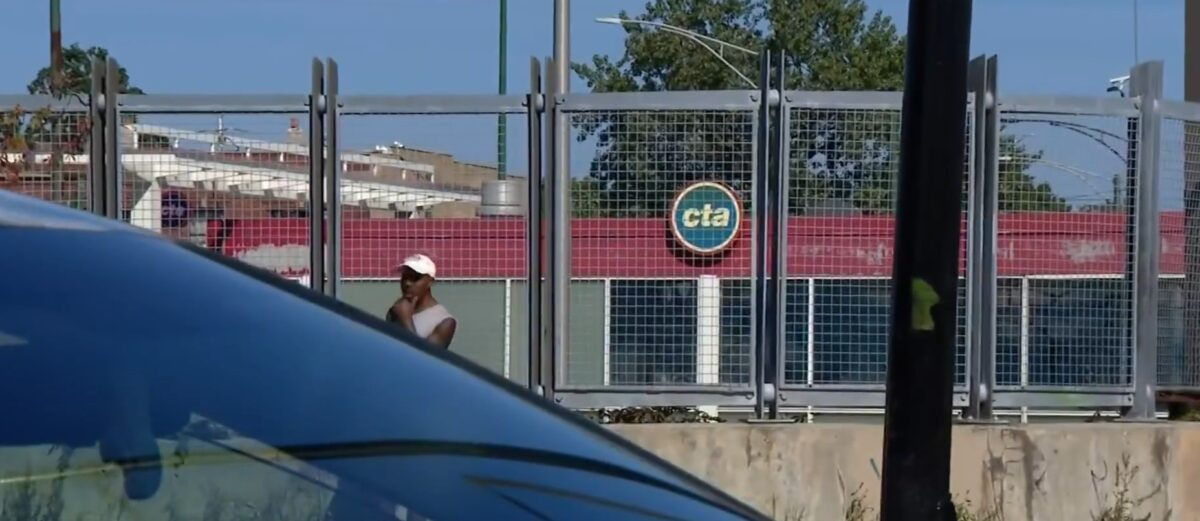
CPD says on Monday around 2:30 p.m., the 15-year-old used force to push a 29-year-old man from a moving CTA train, causing his death near 69th Street.

The family of the victim, identified as Kyle Bickham, 29, said he was on his way back home in Lansing from working at an Amazon warehouse in Cicero when his parents said he was attacked. He died after falling onto the electrified third rail and being hit by another train.

His death was ruled a homicide. CPD says a 15-year-old girl is responsible.

The tragedy comes as the new Northern Illinois Transit Authority takes over the CTA, Metra and Pace lines, with safety as a major concern for riders.

The girl is due back in court on Monday, Sept. 14.

Please note: This story was provided to CNN Wire by an affiliate and does not contain original CNN reporting. This content carries a strict local market embargo. If you share the same market as the contributor of this article, you may not use it on any platform.

FBI investigates suspected ricin exposure at apartment complex, hospital

By DeJanay Booth-Singleton

Click here for updates on this story

    Michigan (WWJ) — The FBI Detroit Field Office says on Friday it is investigating a suspected ricin exposure that was detected at an apartment complex and a hospital in Hastings, Michigan.

According to the Barry-Eaton District Health Department, officials received information about potential exposure at Tyden Lofts and the Corewell Health Pennock Hospital’s emergency department. Initial testing showed the substance to be ricin, but additional testing will be completed to confirm the results.

Health officials say there is no threat to the public, and the impacted areas have been contained. They say one person came to the hospital and was isolated.

Officials say apartment residents were evacuated, and patient care and health care operations remain available at the hospital.

The FBI says it is working with county health officials, the Barry County Emergency Management Department, Michigan State Police, Corewell Health, the American Red Cross, and other local, state and federal agencies.

“The safety of our communities remains our highest priority,” said Special Agent in Charge Jennifer Runyan in a statement. “We recognize that the response to an incident like this can be disruptive and concerning for residents, but it is important that our personnel and our partners have the time and space necessary to safely collect evidence, evaluate the material, and determine exactly what occurred.”

Health officials say ricin is a natural poison that comes from the beans of the castor plant or oil. It is harmful if swallowed, injected or breathed in. People can be exposed if they come in contact with someone who has ricin on their body and clothes or through powder in the air.

Symptoms of ricin poisoning may occur four to 24 hours after exposure. Those symptoms include difficulty breathing, fever, cough, nausea, tightness in the chest, heavy sweating, fluid buildup in the lungs, blue skin, low blood pressure and respiratory failure.

Please note: This story was provided to CNN Wire by an affiliate and does not contain original CNN reporting. This content carries a strict local market embargo. If you share the same market as the contributor of this article, you may not use it on any platform.